Email Deliverability: What Every B2B Marketer Needs to Know
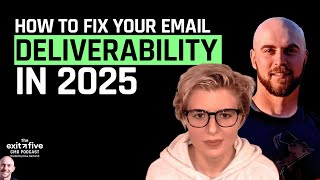
Alex and Sarah break down email deliverability for B2B marketers, covering tracking metrics, security bots, IP management, and why reply rates matter. They explain how platforms differ and what actually moves your emails into inboxes instead of spam.
How do you deal with security bots opening and clicking emails? I know, for instance, HubSpot has like a little, like, open rate calculator, like how much the open rate with bots and minus bots. I have no idea the logic behind how they do that, but it seems to be something that's happening more, and I imagine it's only going to become a bigger part of every email marketer's thinking. And headspace is bots reading emails and stuff for them. So how do you deal with this issue?
Yeah, well, that's why we don't track opens and clicks, because it's going to happen no matter what. Right. If you're sending to an enterprise that uses spam filters, it's going to show up. And there's so many different ways bots can show up on clicks and opens, which is why we don't track it and why I don't think it's a good indicator anymore of deliverability or the quality of your campaign. And that's why we switch completely to replies. Positive replies is the only metric that we actually track. And we also track reply to opportunity.
I would say a lot of the. A lot of the platforms now are trying to address this. Like they're trying to have their own little algorithms to pick up IP addresses or different, like, bots that are out there. I would say in addition to that, just look for any kind of trends. I like to go into my database and see if someone is opening every single email, but they're never clicking through, never responding, and their email address looks a little funky. Usually that is some kind of, like, honeypot or a security bot. So just look for unusual behavior like that. All right.
Hi, everyone. Welcome to today's session. Let's do a quick mic check. Can you chat in and let me know you can hear me? And you don't count because you're backstage. Sorry. All right, Nathan Junior, thank you. Thank you. As we always do, kind of an icebreaker just to get to know our audience a little bit. Chat in, let us know where you're joining from today. So let's do where you're joining from today and what the weather is like. Because I feel like this time of year, across the world, but especially across the US And Canada, weather is very, very different. So it is. I'm in Phoenix, Arizona. I'm looking at my watch as if I have the temperature. I don't. It does not have that capability, but it's probably about 80 degrees. I just went for a walk. It's sunny. It's probably going to get to about 95 today and I see people joining. Let's look. We got Cincinnati, Massachusetts. Sounds like it's good in Boston right now. We always have a ton of people coming from Boston. That's exciting. It's raining in Ann Arbor. Nashville. Can't decide if it wants to rain or not. I've been there. I know that climate. Aaron joining from St. Petersburg, Florida. Cloudy day in Florida. Okay. Allison's in Asheville. We were just talking about that. Sunny in 72 is perfect. So so far you're winning, Allison. It's ungodly hot in Dallas. I heard it's really hot in Austin as well today. We were just talking about that backstage and everybody's joining. This is great. I don't want to kill too much time because a lot of people are joining and I have two awesome experts here on email deliverability that I want to invite up to the main stage. So let me add Alex and Sarah. Sarah, Alex, thank you so much for joining today. Let's do some intros. You're hearing from some of our audience members here. We have. What do we have? 178 people live so far. That's great and growing. But Sarah, tell us a little bit about yourself, a little bit your background and how much of an email marketing, sorry, email under billing nerd are you.
I'm an email marketing nerd too, so that works. So I'm currently the rev ops and GTM strategy lead at Vector, a martech company, but previously actually started in email marketing within marketing operations. So really kind of cut my teeth there. That was my intro to marketing operations and then continue to move upwards to more and more strategic engagements. But email continues to be a really important part of everything that we do. It's one of the highest performing, highest ROI channels whether you're in sales or marketing or customer success all across the revops. Org. So yeah, I've seen it all. I have a few stories to share too if we have the time.
Yeah, amazing. Yeah, I bet. It's great to be here. It's great to have you here, Sarah. Thanks for being part of this. All right, Alex, where are you from background and how much of an email deliverability nerd are you?
So I am from Atlanta, Georgia but I am currently in Austin for SAS Doc and yeah, I own and operate an agency called Understory. So we help SaaS companies scale via email, GTM Engineering and paid media. I would say I live and breathe this stuff. It's a massive component of our business and if we don't deliver for our clients. Typically it's only because of deliverability. So it's become a core focus for us and it's something that I focus very heavily on myself still.
And Alex, in talking with Alex and Sarah briefly before we started today's session, sounds like, Alex, you have a little bit more experience on the outbound and signal based email which obviously is a little bit different than sort of organic or opted in email lists like newsletters, right?
Yeah, exactly. So outbound tactics, signal based, trigger based could be inbound things that lead to outbound activity. But yeah, primarily that versus newsletters and things like that.
Yeah. Cool. All right, one housekeeping item or two, maybe, maybe I'll invent a third. But at least two housekeeping items before we get going here with some questions. First of all, we are recording today's session. You will get the session after. Please join though, because today's session is intended as all of ours are to help you with your questions. Right. So we're going to spend a lot of time here, answer questions. I have a few that I have to ask Sarah and Alex to kick us off. But please join and also please use the Q and A panel to ask your questions. It just makes it a little easier. I can go in there and I can do this cool fancy thing where I click show on screen, which I've never done before. I'll be honest, the thing I'm most nervous about today, Sarah and Alex is making sure I appropriately add the poll question because it looks amazing on the screen. We can see it and who asked it and we could talk about it and answer it. I'm hoping I can execute that well. But I really want to hear from everybody. Sarah and Alex have been gracious enough to to dedicate the next 60 minutes to answering your questions on email deliverability. So if you have a question, head over to the Q and A panel, drop it there and we will hopefully get to all of them depending on how many questions there are. But before we do that, I have a few questions that I want to ask Star. I think we can start with you kind of a broader question. But most teams blame low open rates on subject lines. We optimize, we a B test. We spend so much time thinking about the subject line and how that's going to impact our open rate. But when should marketers suspect it's actually a deliverability issues? When they feel like their open rate is declining or is too low.
So the great news on this is that a lot of tools this has gotten A lot easier over time. It used to be that you'd have to manually be going through all the stats for every email to try to figure out like, okay, what, what's going on here? Now if you have a, like a tool like HubSpot, they actually have a performance and they call it an email health piece campaign that you can go to. So I highly recommend see if your platform has that out of the box. That'll tell you like, hey, how are things going? Usually they'll rate you against kind of like the benchmark in your area. So that, that's a good first place to start. But I think, I think a huge mistake is to look at like subject lines and open rates and click through rates rather than unsubscribe rate is a huge one. And if in a perfect world, if you can get an unsubscribe like reason form on the website, that's awesome because then you can see where there might be misalignment and why people might be unsubscribing. And then the other piece is the bounce rate. If you see that a lot of people are bouncing, go in and see. Usually the email service provider will send you a reason and use that to help determine what's going on there. And it might be something as simple as you have a misconfiguration on a technical basis, or it could be that your emails are flagging spam for some reason.
So. So, Alex, I want to kick it over to you, but before I do, I want to actually ask the audience, could you chat in and let us know what email platform you're using? I think that would help. So our office reference HubSpot, that's what we use. I imagine it's going to be the majority of the people that answer it's been straight HubSpot's couple marketos, intercom pipedrive. Wow. A lot of trying to keep up outreach. Pardot. Okay. Just helps us, I think, contextualize the conversation a little bit to, you know, to answer your question. So a lot of HubSpot, I see some Pipedrive, a lot of Marketo is probably the second most popular here. Alex, let's kick it over to you. So let me go back to the question. So the question was when teams blame their low open rate on subject lines. You know, Sarah was talking a little bit about how obviously that's not the only indicator open rates of low deliverability. But when should marketers really suspect that a deliverability issue might be at play?
So I'm going to throw a curveball in here, but we don't even track opens or clicks. We only track replies and positive replies. So for us, a good indicator in whether or not you're delivering in the primary inbox is if you found a tactic or an angle that works really well for you. And all of a sudden you see you went from a 7,8% reply rate down to 5, down to 3, down to 1, down to 0.5. Pretty good indicator that you're not landing in the primary inbox anymore. There is a chance that you've, you know, you're going through copy fatigue as well. And it could be a copy related issue that Clay just made a post about this. But GTM Alpha, basically where the tactic that you are using is no longer working, but it's also a really good indicator that you're just no longer delivering in the primary inbox. Tying that back to subject lines. Something that we do for all of our clients is we mix up the subject line for every single email that we send. So they're always a blend of, you know, a couple different variations. So we might have four different variations that basically say the same thing, but they're all formatted differently and personalized uniquely. And what that does is it helps you also just get past spam filters. And spam filters are a massive component of pretty much every enterprise company that you want to sell into these days. So if you can't get past that, there's a good chance you're also going to start landing in spam.
Okay, Alex, for the reply rate. So let me ask you, Alex, what tools are you primarily using for email? A lot of it I know is outbound and signal based. What are those tools that you're primarily using to?
To be honest, we've migrated all of our clients to instantly and we've seen a lot of success with it. The reason we use instantly in particular is because they also have a much better warmup pool than a lot of the other email warmup tools that exist. And that's something everyone should be doing with their inboxes as well. But they, they isolate basically spam inboxes from the warmup pool so those don't exist and those are the ones that can harm deliverability pretty quickly. So you're in a pool of real senders and real companies that are actually doing quality work versus, you know, a spam cannon that might be sending a million emails a day for an info product or something like that.
Yep. Okay, Sarah, on the opted in newsletter side, right, so people that you're have opted into your list reply rates. So I know in terms of we're talking about warming up, you know, domain keeping a, you know, good sender score essentially. And I don't know if I'm using that term right anymore, but, you know, replies actually do matter. How do you think about reply rate and is that a metric that you're using when it comes to deliverability?
So this is an interesting question because I feel like replies are often neglected on the marketing side and sales are ultra important, but I think they aren't taken advantage enough in marketing. Like often I try really hard to discourage any clients from using a no reply email address because then you can't see if someone's replying and like the whole point is to start a conversation. So I would recommend that. And then in terms of replies, I think that try to get a tool like back in the day it used to be Sift Rock, where you can actually see the replies coming in and manage them because I think that's it's important to not neglect it because those are your most engaged people. So you should have someone reply to them.
Okay. All right, I want to try our first Q and A. This is the big, big moment of truth. Can I actually get it up on the screen? I'll just read it to you. I think I. I think I unsuccessfully. All right. No, pin the screen. Hold on. There we go. Yes, I made it happen. All right. This is from Aaron. I think you know, this probably more a question for Sarah, but. But Alex, feel free to chime in too if this is one that you feel like you could help answer. How have you seen email performance deliver really vary by platform? So we started talking about HubSpot. We're talking about Marketo. We talked about Sift Rock a coup, for instance. I feel like I saw a slight improvement switching from HubSpot to Par Dot, but I prefer HubSpot in every other way and I don't have enough data to confirm the difference was platform related. So I feel like this one was super right up your alley. Do you have a good answer here for Aaron?
Yes. So I would look into the backend of how your server is managed for each platform. So if you're in the Salesforce ecosystem, you tend to be managed across all, all marketing products for Salesforce. So that can be good or bad. Kind of like Alex talked about earlier, the probe instantly is that they take out anyone who has poor deliverability out of that pool. So the marketing tools, they aren't quite as progressive in that space. What they do offer though is you can buy a dedicated IP address, which I would highly recommend you do because then you could control your own destiny. So I would actually like, I saw the comment about switching from HubSpot to Pardot and I would look into like, did you buy a dedicated IP address with Pardot? Because that might actually be why you're seeing better deliverability. It might not be the tool itself and that's most likely the case.
So there was another question, actually I don't think someone chatted this in, but I was reading your guide and I had a question. When do you buy a dedicated ip? How many emails are you sending? I think usually the measurement is per month is about how most people would measure it. When do you think is the right tier of, of how many emails per month you have to send basically to be at a point where you're ready for a dedicated IP address?
That's a great question. I, I mean I prefer to have it regardless, to be honest with you. Like, I don't, I don't like to share with others just because then if they, if they get on a bunch of blacklists, for example, yeah, then that could impact my deliverability and I have zero control over it. So I don't really see it so much as like the amount of emails as how important is it that we land in the inbox. Yeah, like how strategic are we about email? How invested are we in it? And if you invested in it, I would invest in the IP address.
And then I guess the national follow up question there would be like, so how do you, not everyone maybe be able to afford it? I think I understand the investment argument. Like hey, if you're really going to do this, do this right. I don't know. I remember last time I bought dedicated ipa. I forget exactly how much more, but it was, you know, it was a significant amount of money more was it nothing. If you, if you can't afford it and you're evaluating platforms, how do you evaluate platforms for their deliverability? Like will they tell you? Do they give you a benchmark of their deliverability? Is that something that like in the sales process you should be able to identify?
You can ask them. Oh, go ahead, Alex.
Oh, sorry, yeah, could I chime in? Yeah, please check on the last question too. So when it comes to dedicated ip, Mike, put a comment in here. IP is important as it used to be. It's double edged sword. If you screw up, you're in trouble. I echo that sentiment. So it is a good thing to diversify because like you said if you have all your eggs in one basket and that basket falls apart, then all your eggs are going to fall out of that basket. So it's good to have a handful of different eggs in multiple different baskets. Which is why I actually don't subscribe to having your own IP address because if anything goes wrong, you can end up in a lot of trouble. Now, a lot of these sequencing tools these days, they'll rotate IPs and they'll put your inboxes in and out of multiple different IPs. A lot of them rotate on a bi weekly basis or something like that, which can substantially help with deliverability. That's what I would personally recommend today, is using a tool that rotates IPs and also one that keeps out spammers.
Awesome. All right, Alex, thanks for chiming in. I actually have a question. I hope I didn't lose it, but I do have a question teed up for you. More on the sales side. Let me answer and add it to our screen. This is from Cam. So the question for you, Alex, is when does sales actually. I'm sorry, you might be able to answer this one too. When sales doesn't care to improve their data hygiene, how can I incentivize them to remove duplicates? Sales claims they need duplicates for multiple location businesses. So I don't know if I understand that use case specifically, but Alex, and you know, Sarah was a marketing office person. You probably had experience here incentivizing the sales team to keep their data hygiene clean. It's like updating their CRM. It's hard. Right? The incentivizing has. I've either review had, you know, some experience here successfully getting the sales team to update and keep their data clean.
We do it as one of our services for our agency. So yeah, definitely seen. I mean we use clay and we do a lot of de duping and data hygiene projects to clean up people's Salesforce and HubSpot. So have we seen other teams do it themselves? Occasionally, but usually they just come to us and we do it for them because it's a nightmare of a process if you don't know to do it.
Yeah. Okay.
I think it depends upon your sales kind of culture as well. Like I, I've had some clients where sales leadership is like, hey, I'm having SDRs like spend all this time getting this data and so that they don't enter it into Salesforce, then I'm losing money. And so they will put it into their like kind of not right into the compensation Structure, but into like their performance structure. If you are not filling in the data as you get it, then we're losing money and so you're not going to be viewed as as good as others.
Just to remind everyone I know there's a chat panel and there's also the Q and A panel. To the best of your ability, you can add to the Q and A panel. It just makes it easier for me to pull up your question and sort through it and keep up all the questions. We have a lot that have come through. I'm trying to see which one we want to do next. We talked about reply rates already. Let's do this one right here. It's from Barb. Let me put it on screen. Does this discussion apply only to large emailers or do some things also apply to onesie2z mailing solopreneurs? I'm not quite sure what that part means, but I think it's smaller businesses that are doing. I have a smaller email list. Sarah and Alex, does your advice apply to a certain threshold of business size or does it apply across the board?
I would say it always applies, but it really applies more during automation. So if you're sending manual emails one or two at a time, you really don't have much to worry about, to be honest with you. Unless you're sending total spam in those one or two emails, then you should be completely fine. And honestly, your deliverability is going to be best if you're sending those manual emails one or two at a time.
And those manuals be coming from your Gmail account, your, you know, co prospecting or your outreaching. Yeah, yeah.
They could be coming from anywhere.
Yep. Whereas in a tool outreach, a HubSpot pardot, those are all automated systems.
Yeah, it really gets tricky when you start automated adding automation. That's really where it gets tricky. If you're sending manual emails, business as usual. Keep doing what you're doing and honestly, you're going to see the best results from doing manual outreach.
Yeah. Sarah, anything to add there?
Yeah, I would say the one thing I would add is that email service providers are sensitive. So like for example, way back in the day when I was working at an agency, we had someone approach wanting to be a customer. They're like, we need you to fix our, you know, our IP sending reputation. And what they had done was they had abused each IP address and they kept trying to switch it out. But the problem is that the email service provider is smart enough to know that that's that same business that's trying to buy the new domain and the new IP address, all stuff. So they would auto flag them, which to me is wild. But they would just be able to see, you know, who owns this domain. Oh, it's the same person or the same business. And then they would auto. They're like, this is an abuser. So I don't say that to raise an alarm, but to give an example of I try to be thoughtful whenever I can because that's my reputation and I don't want to start flagging myself. You know, it's like, is it really worth it to just send some stuff that's kind of like spammy? I'd rather just be thoughtful across the board if I can for sure.
Okay, let me go to the next question because I think I got a good one here.
Dan, I think you have the hardest job of all of us, to be honest.
Do either you know how to juggle while I or or do or do stand up. You're an Austin Alex. Maybe you can do a little stand up while I pull up the next.
My brother, I'm not even kidding. My brother is actually a stand up comedian for a living.
Oh really?
That's what he does.
That's awesome. Okay, I found the question here. I'm probably going to mispronounce her name. Sushanda. Sushanda I think it is. The question is do you prefer to include a unsubscribed link versus saying if you don't want to hear from me, reply no thank you.
I have a lot of thoughts on this.
Okay. Far away.
We've tested a lot. From what I've seen actually the link with newsletters is that's the way to do it with newsletters. But when it, when it comes to outbound email and you're trying to prospect the no thank you for multiple different reasons, can really increase your sender reputation. The reason why is because one, whether it's an unsubscribe link or any other link, it's a link. And having a link in an email, whether it's an open tracking pixel, a click tracking pixel and unsubscribe link a link to a resource and anything like that. The way the ESPs actually see it is they think of it as a sign of potential phishing so it can become suspicious. So I would avoid using a link for outbound emails. Now the reason I would put an opt out like no thank you or something like that is because it also increases your sender reputation. So people replying to your emails, whether it's no thank you. Whether it's, you know, a catchphrase that you have, it's an opt out message, something like that, it's showing ESPs that people are replying and actually replying to your emails, which helps your sender reputation. So whether you're getting opt outs or positive emails in return, regardless, you're enhancing your sender reputation and you're not going to get flagged for phishing.
Sneaky. It makes sense. I hate it from the experience standpoint of receiving those emails and having to respond. But I do understand the logic of it.
Yeah, totally.
So Alex is right. I would just add for marketing you got to be careful. Legally, like in most interpretations of most compliance laws you cannot require someone to reply to unsubscribe. So in that case, like of course, you know, work with your legal group or person or look at where you're emailing to and look at that compliance and the laws there. But that's why you typically see an unsubscribe link in a marketing email because it has to be easy to unsubscribe and easy usually doesn't fall within like you have to respond to someone.
I'm not even sure if it's possible to not have an unsubscribe in HubSpot. Like you have to have an address.
Yeah, exactly.
And I think even if you're sitting a basic and you have to have an unsubscribe. Right, yeah.
HubSpot. I will say this and Sarah, I don't know if you agree with me on this, but I will say HubSpot is designed for marketing emails. It's not designed for outbound email. People are using it for outbound email. Should be using a different tool.
Yeah.
Yep.
And I'm a HubSpot partner and I'm still telling you that I love HubSpot.
Totally agree.
But also I think sometimes we've run into this distinction, an outbound versus a marketing email. A marketing email doesn't have to be like a heavy HTML heavy design email. If you can send plain text emails in HubSpot, just send it to your opted in list. Right. Like if you're uploading a new list that is not opted in and you're going to send a mass email, that's where you're going to run into some issues with deliverability. But I think again just sometimes get that distinction. Like you can send a newsletter, can be plain text if you really want it to be, you know, follow up email, you can ask for a reply. We do it all the time in our HubSpot emails, we ask people to reply for that very reason of improving our sender score. And that's a, you know, that's a legitimate way of using it. We just don't send it to people outbound, we send it to people that are off today.
Yep, you're spot on.
Cool. All right, next one, we're going to get into some bots. So from Alina, how do you deal with security bots? And I've been seeing this more and more, especially in HubSpot, how do you deal with security bots? Opening and clicking emails? I know for instance, HubSpot has like a little like open rate calculator. Like how much the open rate with bots and minus bots, I have no idea the logic behind how they do that, but it seems to be something that's happening more and I imagine it's only going to become a bigger part of every email marketer's thinking and headspace is bots reading emails and stuff for them. So how do you deal with this issue? That's the number one reason.
Yeah. Well, that's why we don't track opens and clicks, because it's going to happen no matter what. Right. If you're sending to an enterprise that uses spam filters, it's going to show up if you're sending. There's so many different ways bots can show up on clicks and opens, which is why we don't track it and why I don't think it's good indicator anymore of deliverability or the quality of your campaign. And that's why we switch completely to replies. Positive replies is the only metric that we actually track. And we also track replied opportunity.
I would say a lot of the, a lot of the platforms now are trying to address this. Like they're trying to have their own little algorithms to pick up IP addresses or different like bots that are out there. I would say in addition to that, just look for any kind of trends. Like if you see, I like to go into my database and see if someone is opening every single email but they're never clicking through, never responding and their email address looks a little funky. Usually that is some kind of like honeypot or security bot. So just look for unusual behavior like that.
And it's a shame too because I remember when I was in enterprise sales, I was selling to like the biggest corporations in the world. So it was low velocity but super high ACV deals. And there was this one guy who clicked 97 times on one of my Emails. I was like, no way. Of course, that's a lot. And he clicked 97 times. But then I get an email from someone that works for him because he was like, in the C suite at a Fortune 500 company. So I was like, of course it's fake. You know, someone in the C suite. Yeah, Fortune 500 company. It's not going to click 97 times. But I get an email, I said so and so requested that I reach out to you to talk about tax compliance software. And I was like, really? I was like, how did you get my information? He goes, well, he's been reading your email and sending it to us for the last month. I was like, oh. So he did click 97 times, but you can't do that anymore. It doesn't work anymore. That was about three years ago.
@ this point, he's been sending the same email multiple times, telling the team, he's a C suite. He's telling his team to look at it. You got to send it that many times.
Well, it was tax compliance, and he was worried about a mandate that was coming down in a particular country that they operate in. And he was like, guys, how are we going to fix this? Guys, what are we going to do, Guys?
Yeah, Come on, team, get moving.
Yeah, exactly. But it doesn't work anymore.
You can see the inner working team. Yeah, yeah, Those are the good old days. Exactly. We will probably not live in those times again. All right, next question is from Stacy. Any tips to get around company firewalls to get my emails delivered?
Sarah, you want me to go first or you want to go first?
Don't spam people. Yeah, like most IT groups, at least in my experience. Alex, I'd be curious to hear your thoughts on this and your experience, but most of them will take the approach of, like, looking for spam terms and, like, weird phishing behavior, and then otherwise they're not going to add you to their. Their spam list unless someone requests it. So my biggest advice is just to try to avoid really irritating people. So that's where a lot of these other pieces come in. Right. Like, make it easy to unsubscribe.
Yeah.
Make sure that your message is not offensive, that you're not over messaging people. You know, keep an eye on those metrics. If you start to see someone mark you as spam at a company and then you start to see other people, then you're, you know, it's only a matter of time before people start running into it and being like, hey, get these. You know, get this company on our block list.
Can I actually jump in? Alex, before you answer and just ask a really simple, stupid question, but I think it's actually really important to define what is spam?
Like, what would you consider spam?
An email with very little value.
Both say don't spam people as your first reaction. So I just want, I think it actually is relevant to the audience to kind of define it a little bit because I almost like, I think we all almost at this point have our own little definitions of what's spam and what's not. And I would love to hear from both of you what, how you define.
Spam in my, in my opinion, if you're reaching out to a company that has 5,000 plus employees and you reached out to a hundred different employees and sent the exact same message and that message never contained any value in the first place, that's spam.
Yeah.
And it's not updated. Yeah, correct.
If I had to put it in a sentence, it's like not relevant, not valuable, over communicated.
Okay, I love that. That's a great, great definition. Yeah.
Alex gave the example. You gave the definition in that with your answer. That's kind of perfect. Alex, I cut you off. What were you going to say in response to this question about.
I don't remember, to be honest.
Sorry. I would actually not go. Company firewall. Okay, cool. Moving on.
I would say actually one other piece I'd have on the firewall. You can include a section like for example, say if you're running a newsletter, like for my newsletter, when people subscribe, I have an auto send that's like, hey, if you want to make sure you get these emails, reply and whitelist me in your thing. So that makes people self aware of like, okay, if I want to get these, I need to make sure that I'm setting myself up to get these emails. And if I see it marked as spam, I want to get it out of the spam folder and things like that. So I find that can be helpful too.
All right, I'm trying to pull up the next question. I keep losing it. All right, here we go. Let's talk subdomains. So subdomain or subdirect or secondary domains, which do you prefer for email campaigns? And how many emails per domain should we create? It's like a rental.
I'm a big believer in secondary versus sub domains because sub domains are tied back to your primary domain. So secondary domains, meaning they have no association with your primary domain, is always the way to go. You can do some variation of always exit5. So instead of exit5.com, it'd be try exit5.com, getexit5.com, something like that. We also recommend no more than three inboxes per domain. The reason for that, there's not like a rhyme and reason on the actual number, but the reason is to diversify. So if you have a hundred inboxes associated with one domain and they're each sending 15 emails a day or something like that, and that domain develops a bad reputation, all 100 of those inboxes are now in jeopardy versus if you're spreading out the volume across multiple different domains and inboxes, you're increasing the longevity of your campaigns and deliverability because you're diversifying across. Have a hundred inboxes associated with one domain and they're each sending 15 emails a day or something like that. Those alternative domains versus just having all your eggs in one basket. Again, the name of the scam really is don't put all your eggs in one. And that domain develops a bad reputation, all 100 of those inboxes are now in jeopardy versus if you're spreading out the volume across multiple different domains and inboxes, you're increasing the longevity of your campaigns and deliverability because you're diversifying. Cross basket.
When you say inbox, Alex, do you mean like, like dan@exit5.com dave@exit5.com, like, those are two different inboxes?
Yep, exactly.
And then what about if we use like, now I'm just getting my own personal advice here from Alex. Sorry, but hopefully this is relevant. Everyone, what if we use something like we always Send our emails? Hiigexit5.com It's a group, right. And all of our inboxes are attached to it. We all receive as a team those responses, and we can actually. We do a lot of replies, a lot of conversations that way. Is that in your. Is that a no. No in your book or is that another. Is that a third inbox?
It depends. It depends what you're trying to do. Right. So if you're trying, like if you're emailing on behalf of a sales rep or an SDR or something like that, I would always recommend using their actual name or some variation of the name. So if people wanted to look them up on LinkedIn, they could. That's also why I don't recommend using fake aliases on LinkedIn, email, anything like that. You should be using real people. Yeah, yeah. But for marketing, what you're Doing is totally fine.
Yeah. Okay. I feel better now.
Yeah. I don't know what's your take?
Yeah, I would, I agree with you. 100. I would just add as long as you are operating in good faith, that advice will work. If you tank, you know, you're like one domain and you think you can just move to another, it's still tied to your business and they will pick up on that, especially if you're a repeat abuser. So just keep that in mind. Like, it's no, like, I agree with your statement about it's like you want to have the multiple domains to work off of. But just please no one use that as an excuse to be like, oh, I'm just going to like send a bunch of junk out of one and then switch to the other. Because that will not work long term.
Yeah, 100% for us. 100% of our list. If you, if we're emailing you, you opted in on a form on our website to get it. So good to know from a best practice in plan. All right, next question's from Brian. We're pretty link heavy in everything we send. What are good alternatives since that may affect deliverability? So there's too many links. I know images definitely, but just too many links affect deliverability. I'm the guest. Yes. And then what would be some good alternatives for Brian if he's really link happy today with his emails?
So the answer is yes, it's absolutely going to affect your deliverability. We've ran a ton of, we run a test on this honestly every single quarter because we're always hoping that one day links will be okay to send and that way we have way more effective email once in a, in an email campaign. With that said, as of right now, it's still a big no. No. So something that you can do to fix that is you can tease whatever resource you want to send in that email. So does it make sense if I send over this guy? Does it make sense if I send over my calendar link? Does it make sense? You know, something like that. And you get the reply which is good for deliverability. And then you can also still get these exact same concepts. The other thing I'll say which isn't related to this webinar, is you can use LinkedIn instead and send whatever things you want. With LinkedIn you have a hundred percent inbox rate.
So yeah, true.
Yeah, I would agree. I think marketing is a little trickier. I do like what I like that I'm seeing more and more is the intersection of Sales and marketing. So I like to run experiments like that. Like hey, if I, you know, not for a newsletter like someone asked about a newsletter, I think that was a bunch of junk out of one and then switch to the other because that will not work long term.
Yep, a hundred % for us, 100% of our list. If you, if we're emailing you, you opted in on a form on our website to to get it. So good. Good to know from a best practice in point. All right, next question's from Brian. We're pretty link heavy in everything we send. What are good alternatives since that be.
Hard because they tend to link out to a lot. So I wouldn't want someone to respond for each link but if it is a shorter email I like to try stuff like that and I've seen some success with that newsletters. I would say the biggest thing there is to just have a really valuable newsletter because I do think that having a high open rate, high like people interacting with that email and reading through it thoroughly and even in a lot.
Of cases respond may affect deliverability. So there's too many links. I know images definitely but just too many links affect deliverability. I'm going to guess yes. And then what would be some good alternatives for Brian if he's really link heavy today with these emails?
So the answer is yes, it's absolutely going to affect your deliverability. We've ran a ton. We run a test on this honestly every single quarter because we're opening because.
They enjoyed it and they want to continue the conversation. That can help work, you know, against.
Some of always hoping that one day links will be okay to send and that way we have way more effective email. Once in a in an email campaign.
The negative points for the links.
Okay in our example I'll just use it to hopefully draw an answer that's relevant to everybody. We have a section for jobs and so we have a job board and right now we link to maybe just in that section alone maybe 8 to 12 jobs. So would your recommendation Alex or Sarah be for us if we said hey, we want to increase our deliverability?
With that said, as of right now it's still a big no. No. So something that you can do to fix that is you can tease whatever resource you want to send in that email. So does it make sense if I send over this guy? Does it make sense if I send over my calendar link? Does it make sense? Something like that and you get the reply.
You want to make an effort here? Maybe the suggestion would be we list the jobs with a quick explanation of what they are. The title, location. Hey, click here to check out our job board and it's one link that goes to our job board and lists out those jobs which is good for deliverability.
And then you can also still get the exact same concept. The other thing I'll say which isn't.
Related to that, you can explore versus an individual link to each individual job listing. Right.
I'll defer to Sarah on this one but to be honest with you, that sounds like the right move to me is list them out text and then have one webinar is you can use LinkedIn instead and send whatever things you want. With LinkedIn you have a hundred percent inbox rate master link. Also, these are all opt in people, right?
Yep, they are.
Yeah. So that's going to help a ton. It's going to make a huge difference.
If they're all opt in on a technical basis. Yes. But I would, I like I feel like I'm a.
So yeah, true.
Yeah, I would agree. I think marketing is a little trickier. I. I do like what I like that I'm seeing more and more is the intersection of sales and marketing. It's broken record on like just don't focus on just one metric though. If you do that and then the. So I like to run experiments like that like hey, if I you know, not for a newsletter. Like someone asked about a newsletter, I think that would sp is like it. But then you piss off your audience and they start to unsubscribe. Well then you defeated the whole purpose. So look across all the metrics. If you make a change, see how people interact with that. If they don't mind, then it's a win. If they do mind then it's like what's the point?
Yep. Yeah, I think it'd be hard because.
You tend to link out to a lot. So I wouldn't want someone to respond for each link. But if it is a shorter email I like to try stuff like that and I've seen some success with that Newsletters. I would say the biggest thing there.
If we wanted to test that it would be incremental improvement. Very, very, very small impact probably in our case, but okay. Hopefully that helps everyone else too. Let's jump to the next question. Oh, it's like a step away from.
Is to just have a really valuable newsletter because I do think that having a high open rate, high like people interacting with that email and reading through it thoroughly and even in a lot of cases responding because they enjoyed it and they want to continue the conversation that can help work, you know, against some of the negative points for the links.
Okay. In our example I'll just use it to hopefully draw from email deliverability. But you know I think, I think this hopefully so relevant because it's, you know it's about asking about replies. But what are B2B sales list email strategies to get more responses? Alex, we'll start with you because I know you talked about this is like the key metric that you're using to measure performance. What are some an answer that's relevant to everybody. We have a section for jobs and so we have a job board and maybe basic overview ideas on asking for replies.
Extreme granularity and segmentation is critical. So you need to be sending relevant emails to the right people. Don't send a general message to seven different Personas and expect a great response.
Right now we link to maybe just in that section alone, maybe 8 to 12 jobs.
It's not going to work. And then also you need to really be validating and cleaning those lists. So not only checking for valid email addresses.
So would your recommendation, Alex or Sarah be for us if we said hey, we want to increase our deliverability, we want to make an effort here? Maybe the suggestion would be we'd list the jobs with a quick explanation of what they are the title locations.
But if they're catch alls also validating for those as well. There's a handful of tools you can use out there.
Hey, click here to check out our job board and it's one link that goes to our job board and lists out those jobs.
We personally use a waterfall in clay with lead magic finding l cross bio icps and then we validate every single thing whether it's catch all or not with bounce band. So we're dump validating every single thing to make sure before we ever add it to an email sequence. But we're also segmenting and personalizing based on, you know, relevance.
Is there any strategies that you would suggest for getting more responses?
Yeah, I mean I, I would, I would agree with a lot of that. It's another area where sales, I treat sales differently than marketing and I'm glad this person specified. Yeah because in marketing you'd want to be careful in the marketing automation platforms about like Alex mentions like send like almost one to one emails. But the way that the marketing automation platform will measure that is if you try to send a one to one email and it bounces, well it's 100% bounce rate and then we'll get upset about it. So this is where the tool that you're using matters. Like I know someone was asking earlier like what about HubSpot for sales emails? That's another reason why you might like look at the tool and make sure that it's the most appropriate tool and best positioned to get you that deliverability to get you the responses.
Awesome. Okay, next question. Let me unpin this one. The next one I wanted to pull up is who was going to do the stand up for us while I pull up the.
I think. No, I think Sarah mentioned she has some jokes.
I'm. I'm getting distracted talking about this, but I'm. I'm still struggling to find the question. I had a good one I was excited about. Okay, here we go. This one is from Taryn or Talk. I think it's Taryn Best strategies to re engage contacts that have not been that are that were not being sent emails due to low engagement. What is your best strategy? I guess to in this case warm these low engage contacts. Back up.
When you say not being sent emails, do you mean not receiving or that you're avoiding sending them emails? I see Taryn in the chat so maybe they can respond. Yeah, because the answer might vary depending upon that.
What do you got Taryn not sending?
I would say you could have sales send a one to one email to number one because then you can send a more personalized one to one email. You don't have some of those downsides you have with within the marketing automation platform and I would send them a high value asset in that email too and see if you can then get them to like say if it's like you know, a high value report that has a marketing form, then they'll go check out that report, they'll fill it out and then hopefully that either either they can update their email address or update their information or they just start to to be marked as re engaged. You know, they aren't stale. That would be one of my first approaches. What do you think, Alex?
This is a tricky one. Honestly I don't have a great response. I'll stick with your response. I just don't really understand the question that well, to be honest with you.
I'm going to guess. I probably shouldn't just guess but I know like for instance like a lot of tools like HubSpot you can decide not to engage low not to email low engage. It's just a checkbox. And so I'm going to guess Taryn might be not sending those people who have low engagement Using that setting for her more recent newsletters or something. And now it's like, well, there's 10,000 people here. Like, what should I do? And should I, you know, protect that? But Taryn, feel free to chat in and give us a little more context and maybe we can circle back to it and try to give you a more comprehensive answer. Yeah, not to take away from Sarah's answer.
I think it depends why. If it's that the content isn't resonating, then I would say change your content or get them on a different, you know, list. It depends.
Okay, next question from Max. Again, I do think this fits in the bucket. It's one step removed from deliverability, but it does matter. A B testing. So what are some starting points to find stronger results in? Subject line A B testing. Sarah, let me ask you first, is there a threshold to how many contacts that you should have before you actually get meaningful results that you can explore versus an individual link to each individual job listing?
Right, I'll defer to Sarah on this one, but to be honest with you, that sounds like the right move to me is list amount of text and then have one master link.
Also.
These are all opt in people, right?
Yep, they are.
Yeah. That's going to help a ton. It's going to make a huge difference.
If they're all opt in on a technical basis. Yes. But I would like. I feel like I'm a critical mass.
That you need in your list to get meaningful results from. Subject line A B testing.
Usually you want at least 30% even more. So I would like to at least have broken record on like just don't focus on just one metric though. If you do that and then the email going to a thousand people. Otherwise I think it relies too much on personal preference. It's not a big sps like it. But then you piss off your audience and they start to unsubscribe. Well then you defeated the whole purpose. So look up sample. The biggest mistakes that I see in a B testing that I would avoid would be number one, AB testing. Just look across all the metrics. If you make a change, see how people interact with that. If they don't mind, then it's a win. If they do mind, then it's like what's the point?
Yep. Yeah, I think it's to AB test.
And then there's no plan on what to do with the information because that's just a waste of everyone's time. And then. And it could actually impact your deliverability because if you're A B testing with bad subject lines, then it's like a percentage of your audience is consistently getting those. So always have a reason why you're doing it and what, like what, what do you do then with that information? And then also make sure that you have a large enough audience to actually statistically be meaningful.
Yeah, I mean I agree with you 100% on the number. The, the number that we actually use as a rule within our agency is 500 people minimum in a test. So if there's not a minimum of 500 people, you don't know what you're actually testing. You could just have some.
If we went to test that, it would be incremental improvement. Very, very, very small impact. Probably in our case. But okay, hopefully that helps everyone else too. Let's jump to the next question. It's like a step away from email deliverability. But you know, I think, I think this hopefully so relevant because it's, you know, it is about asking what replies but what are B2B sales list email strategies to get more responses, some outliers.
In there that like a certain word better. So I agree with you on that number. In a. In terms of a good place to start, what we typically do is something relevant in the subject line and also something about the reason that we're actually reaching out. Usually no more than three or four words.
Okay, three or four words. That's, that's your, your max. Very short or subject line, very short. Capital, capital letters. No capital letters. Any tricks like that. Alex, we'll start with you because I know you talked about this is like the key metric that you're using to measure performance. What are some maybe basic overview ideas on asking for replies?
Extreme granularity and segmentation is critical. So you need to be sending relevant emails to the right people. Don't send a general message to seven different Personas and expect a great response. We don't do any capitals. The whole point what you want it to look like. I don't remember who said this, but I'm going to say it on, on air right now that I did not say. This is not my original thinking here, but someone said that when you're sending it out it's not going to work. And then also you need to really be validating and cleaning those lists. So not only checking for valid email address about an email, it should look like a conversation that's being have that's happening internally within your company and that's going to get people to read it the most. And we've lived by that and it's worked really well. Like I said. I don't remember who exactly said that. I wish I could give credit to somebody here but we use that and it works really well.
But don't send it. Don't send a meeting invite though. I have to, I have to give that.
Don't send a meeting.
Practice.
No FWD or res in this.
But if they're catch alls also validating for for those as well. There's a handful of tools you can use out there. We personally use a waterfall and clay with lead magic finding L crossbo icps and then we validate every single thing whether it's catch all or not with bounce band. So we're dump validating every single thing to make sure before we subject line.
Right?
Yeah yeah. So like for example if you're selling a tool that tracks four camera added to an email sequence but we're also segmenting and personalizing based on you know, real lasting for a company or something like that. Some sort of SaaS product that helps forecasting you could say like quarterly earnings and then the name of the company or the name of the person. Something like that, you know.
Yeah, I've kind of seen that as a trend if you think about it from that lens. Like people writing subject lines and definitely emails I pay attention to. I also like we're a little bit off top of the. Is there any strategies that you would suggest for getting more responses? Yeah, this is probably hopefully relevant to everybody still. Like I also like when you write your email, your marketing email or outbound like write it as if you're just emailing a friend. Right. And explain what you want to explain to them. Like you're just pick a friend and write.
I mean I, I would. I would agree with a lot of that. It's another area where sales. I treat sales differently than marketing and I'm glad this person specified. Yeah because in marketing you'd want to be careful in the marketing literally you.
Can put their name like Dear Allison. Right. And then you just. Or hey Allison. You probably wouldn't say Dear Allison. Right. Here's a good example of. Of how your copy changes. That's another way of a little extract to help you write really good copy your emails.
Yep.
I think an automation platform is about like Alex mentions like send like almost one to one emails. But the way that the market's going to become more and more important too especially more the more that people use AI to write content the more repetitive and kind of like inflexible that it's going to come across. So the more casual within reason that you can be like the more conversational the better it's going to stand out for sure.
All right, question from Peter. Let's see if we can answer this one. With the move to permission based email marketing, I think that means opted in email list. I'm not totally sure but that would be my guess. How would you approach building a new audience from scratch, a new list of contacts?
The automation platform will measure that is if you try to send a one to one email and it bounces, well it's 100% bounce rate and then it'll get upset about it. So this is where the, the tool that you're using matters. Like I know someone was asking earlier like what about HubSpot for sales emails? That's another reason why you might like look at the tool and make and.
Obviously I think we're thinking about how do we build a list that we can send and deliver to regularly and have high deliverability.
I personally feel like that list should come from another source outside of outbound, right? Probably some sort of marketing campaign, maybe with paid ads, maybe it's with events, something like that to build that list of opt in people and then you should be reaching out to them via email. I don't know, maybe I'm missing the mark here. Sarah, what do you think?
Yeah, I mean I think the big sure that it's the most appropriate tool and best positioned to get you that deliverability. This thing is like I think a lot of people think about how do I build a list and instead I would recommend start with what kind of content do I want to put out there and why does it, why is it valuable to my target audience? And then in my experience the people will come like if you put content out there that's good. Especially with marketing audiences. They love to share with each other and be like oh, I found this awesome newsletter. You can get a lot of kind of more organic referrals and continue to build that list. But if you're, I mean you can like for example you could put paid ads out there and you can get someone to sign up. But then if your content is not good, they're going to unsubscribe or be unengaged. So I'd focus on the content first and then like Alex mentioned, once you get that kind of keyed in then you can put some like paid ad spend behind it, social ad spend and get people to that page and aware of it.
I'm gonna, I'm gonna Chime in on this one. Cause I definitely have thoughts for Peter. Everything you both said, I would just take it one step further and build it out as a little formula for you. I would start with the one key offer. I think if you feel like it's a good enough offer that you can gate and get people in, I would focus on go interview your customers, figure out what they care about, what they want to know. I'll give you an example for us. We launched our B2B salaries report. So we actually have a huge audience. We're able to get a bunch of people to respond with salary data and information. We did analysis. I mean 1200 people were saw an analysis of like what they actually like, benchmarking different titles, roles. That report became like a 30 page PDF for the breakdown of locations and everything. Like, what is your like that's a great offer for our audience. We're putting, you know, LinkedIn ads behind that. We put a gate up, we asked for some information to provide that to people. And then we have a welcome sequence from that of people that are coming in. We welcome them in and we, and we kind of introduce them to our newsletter. And like that's the right way. I know it's not like a 2025 AI take. It's, it's probably like a 15 year old strategy, but like it still works and it works really, really well. You know, especially if you have a good brand, people trust you. So that's the way I would probably do it. And sorry for, for jumping in here. I'm not supposed to be the expert today, but I wanted to answer this one because I just feel like that was good advice. Works, you know, so cool. Sorry. All right, I'm going to shove and bring this one back to both of you. So this one's for Michael. The question is, after how many unopened emails would you consider be disengaged or uninterested, particularly for campaign sending it to a group of 2,000 cold leads. This one has Alex written all over it. I am trying to reduce the amount of dead leads I am chasing which might harm my sender reputation. This is like a, this one is TDEF for you. Alex, what do you got for us on this one?
We will never send an email sequence that's over three emails ever. And the reason for that is one, you can reach more contacts if you're sending less volume to each individual prospect because you can send more prospects because you're limited on the amount of emails that each inbox can actually send. Not the amount of contacts. So that's, that's number one there. But two also, if you've sent someone three emails and they haven't responded to you, what makes you think they're going to respond to the fourth or the fifth? What they're probably going to do is mark you to spam and say stop messaging me, stop emailing me, you're pissing me off. So that's my answer.
Yep. I always respond on the third email. Sorry, not interested or nothing.
Yeah, exactly. Three is enough.
Yep. Sarah, do, do you anything to ask this one?
It's funny, the number three came to my mind as well and I'm like, was there some kind of like why is three the magical number? I don't know. I don't remember why that is.
Yeah.
But I think maybe it's just an experience. It's just if they haven't opened by the third email, chances are they aren't going to.
And I think actually if I could just add to this question. Flip it a little bit. So I'm with you and I hear you're on the, on the cold outbound sign. Sarah, how, how many emails should. Because I actually recently got educated. We just had, we just hired someone to come in and help us with some of our email automation. How many emails do you think should be like in a welcome sequence? So now we're talking about the opted inside. For instance, maybe the example I gave people opt in an offer. We want to get them, you know, to take action. Is it three? Is it more like what where do you think is? I know it depends but like what kind of guardrails would you give for like an opted in welcome sequence?
I'm going to be really annoying and say as many as you can have valuable content for. What I see happen a lot, especially in marketing is people will be like well we need five emails because somewhere to get you the responses.
Awesome. Okay, next question. Let me unpin this one. The next one I wanted to pull up is who is going to do the stand up for us while I pull up the.
I think call your brother. No, I think Sarah mentioned she has some jokes.
They said it should be five emails but then they don't have the content behind it.
Yeah.
So then it's like you're just sending a half hearted email. What's the again I go back to what's the point? Because you could lose subscribers like once they unsubscribe, they're gone. So I would, I would look at. Okay, I'll start with how much like which how much content can I create before I launch this? And maybe you start with just one.
I'm getting distracted talking about this, but I'm still struggling to find the question. I had a good one I was excited about. Okay, here we go. This one is from Taryn. I think it's Taryn Best strategies to reengage contacts that have not been that are. That were not being sent emails due to low engagement. What is your best strategy? I guess to in this case warm these low engage contacts back up when.
You email and see how that goes and then continue to build out like oh they love this email. They'd probably love this other content offer too and then build that in later. I would, I would again focus on like the. The subscriber experience more than the like a random number to hit.
Yeah. Some metric that someone somewhere on a webinar said. Sarah said five emails. We gotta add five emails.
What if the four say not being emails? Do you mean not receiving or that you're avoiding sending them emails? I see Taryn in the chat so maybe they can respond. Yeah because the answer might vary depending upon that.
What do you got Taryn? Not sending.
I would say you could have sales send a one to one email to number one because then you can send a more personalized third, fourth and fifth.
Email is just useless and then it doesn't help in any way. Yeah cool. Let me unpin this one. Let me just jump back into the chat. I know people have. I haven't been keeping as good of an eye. I know Alison, Anna are in there. We have time for maybe like two more questions. I'm going to jump back into the Q and A panel and just pull out a few things that might make sense. The question's been great. This has been awesome. I know I probably one to one email.
You don't have some of those downsides you have within the marketing automation platform and I would send them a high value asset in that email too and see if you can then get them to like say if it's like you know a high value report that has a marketing form then they'll go check out that report. They'll fill it out and then hopefully that either. Either they can update their.
Oh Alex and Sarah like they're probably going to invoice me after this. Just go through some of the value that I've gotten so far from here.
The Last Exit 5 let's go. The Last Exit 5 webinar. I did I a box of macaroons.
Email address or update Their information or they just start to. To be marked as re. Like re engaged, you know, and that was great.
Oh, you did?
Yeah.
Wait, from us?
Yeah, from you guys.
It's probably. It's probably Allison or Anna who are on backstage here that made that happen. But that's awesome.
Cool.
All right, this question's from Martin. For a new company, how concerned should we be about domain health?
They aren't stale. That would be one of my first approaches. What do you think, Alex?
This is that you're given advice to warm up our domain and not send more than a few hundred emails a day. But how do you.
Tricky one. Honestly, I don't have a great response. I'll stick with your response. I just don't really understand the question that well, to be honest with you.
I'm gonna guess I probably shouldn't just guess, but I know start increasing so we don't have roadblocks of back sending in workflows.
Can I jump in here on this one?
Yes, please.
Go for it.
As a new company, do not send any cold emails from your primary domain. Only if you're doing very manual outreach and it's like one or two or maximum five people. Other than that, use your email just consistently over the next couple of years to reach out to customers, partners, employees.
Like, for instance, like a lot of tools like HubSpot, you can decide not to engage low and not to email low.
Engage, it's just a checkbox, things like that to build your sender reputation. But if you're going to start cold emailing, definitely do not use your primary domain. Especially as a new company, that's the quickest way you can get blocked forever. So. And to answer your question about how do you get past it?
And so I'm going to guess Tara might be not sending those people who have low engagement using that setting. For her more recent newsletter.
You have to set up alternative domains. Definitely don't send hundreds of emails on those domains either. Sending a hundred maybe, or something.
And now it's like, well, there's 10,000 people here. Like, what should I do? And should I be a day per.
Domain and break it out between three inboxes? And that's going to be your best bet for marketing.
You know, Taryn, feel free to chat in and give us a little more context and maybe we can circle back to it.
If you look in my guide that I think Allison shared in the chat, it has like a little example schedule that you could follow. But I would say my. My blanket statement would be just start Slow. See how your emails do and continue to build out from there. Like usually you start with like, try.
To give you a more comprehensive answer. Although. Yeah. Not take away from Sarah's answer. Yeah.
A thousand or two. And you want to start with the emails that you feel the most confident will land. So we're talking very friendly customers or very friendly people who you know will get the email, who you feel will interact with the. Don't just pick like a random old list from somewhere or any kind of cold list. And then usually you kind of double and triple over time. But I would say do not rush it. Like Alex said, don't use your main domain and then also do not rush it because it's. It's hard. It'll take you much more time to undo, in my experience than to just do it the right way.
Awesome. I'm going to attempt to share my screen and show this guide that Sarah put together and is ungated. She built it in ocean. We shared the link in chat, so we saw that from Allison. It's pinned at the top of the chat. But she just referenced this warmup schedule, which I believe Sarah. I think it's the next section now. Yep, here it is right here. So this is Sarah, what you're talking about, the warmup schedule, week by week, with volume, a description of the audience and some additional notes to help you gear up. So this is in the chat. You can go take this and seal this. I forgot.
I think it depends why. If. If it's that the content isn't resonating, then I would say change your content or get them.
I think it was Michael that might have asked the last question. You can take this and go use this. This is Sarah's recommendation for how to warm up your. Your email.
Yeah. And it depends on your database too. Like, this is the best kind of blanket thing I could come up with if you had. Because some people might look at this and say my. Well, my entire database is like, you know, 10 million. That's going to take forever. So I would say look at this. And it's the spirit of it. Start with like the most engaged, you know, smaller audience, continue to expand and then work your way out to the more like kind of older records. That's the spirit of this and your calcul. The calculations within it may change depending upon your audience.
Yeah, you could, you could just feed this screenshot to chat CBT and say, hey, this is for a list of maybe 16,000. Like how would this work for my list of a million or to 300,000 or whatever. And they probably help you break down the ratios the way Sarah laid it out here. Cool. Feel free to check out this again. This is a full. This pretty robust guide. Sarah, thanks for putting this together for everybody. I remember everybody posted this on LinkedIn, went kind of viral. This is a great detailed guide of everything, email deliverability. And you should go and check this out. A great thing to have. All right. We are basically at time. We tried to answer as many questions as we could. I know there's still more to answer. Feel free to check out Alex or Sarah on LinkedIn. I think they both shared their LinkedIn URL or Sarah did. Alex, if you have your LinkedIn, if you want to throw it in chat just so people know, is that the best place for people to contact you?
Alex, I'm on mute. Definitely. I am, Yeah. I have three screens I work from. One is LinkedIn, the other two are work. So my LinkedIn is always up.
So how many emails have you sent while on this webinar?
I don't know. I'd have to check.
I don't know.
I'm on a different, you know, list. It depends.
Okay, next question from Max. Again, I do think this fits in the bucket. It's one step removed from deliverability, but it does matter. A B test.
We have 35 active clients right now, so I don't know, could be thousands.
Yeah, great, Ken, thanks for the shout out there. Hey, before we hop off real quick, could everybody just do me a favor and just chat in scale from one to five, how valuable you thought today's webinar was? Five being amazing, great, perfect. One being complete. Waste of your time and I don't know why I'm here. 59 minutes in does not look like that's the case for many people. A lot of fours and fives. That's super helpful.
We got an eight.
Appreciate it.
Yeah, in there.
Nice. That's awesome. And thanks everyone who stuck around for the whole time. It's awesome. We try to make these as interactive and answer as many of your questions as possible. So I'm really glad we were able to get to many of them. Check out Sarah's guide. Check out Sarah on LinkedIn. Check out Alex. So what are some starting points to find stronger results in? Subject line A, B testing. Sarah, let me ask you first. Is there a threshold to how many contacts that you should have before you actually get meaningful results? A critical mass that you need in your list to get meaningful results from? Subject line A, B testing.
Usually you want at least 30%. Even more so I, I would like to at least have.
He doesn't have a very complicated name to search on on LinkedIn, so you'll be able to find him there or his, his link we can pop into the chat, but we'll send the recording out after this. So you have that. And thank you to our sponsor nac, who sponsored today's session on email deliverability. Sarah, Alex, thanks very much. Appreciate your time.
Thanks, guys.
Thanks.
Bye everyone. Have a great day.
The email going to a thousand people, otherwise I think it relies too much on personal preference. It's not a big enough sample. The biggest mistakes that I see in a B testing that I would avoid would be number one, AB testing. Just to AB test. And then there's no plan on what to do with the information because that's just a waste of everyone's time. And then. And it could actually impact your deliverability because if you're a B testing with bad subject lines, then it's like a percentage of your audience is consistently getting those. So always have a reason why you're doing it. And what, like what, what do you do then with that information? And then also make sure that you have a large enough audience to actually statistically be meaningful.
Yeah, I mean, I agree with you 100% on the number. The number that we actually use as a rule within our agency is 500 people minimum in a test. So if there's not a minimum of 500 people, you don't know what you're actually testing. You could just have some outliers in there that like a certain word better than others. So I agree with you on that number. In a. In terms of a good place to start, what we typically do is something relevant in the subject line and also something about the reason that we're actually reaching out. Usually no more than three or four words.
Okay, Three or four words. That's, that's your, your math or subject line. Very short, capital, capital letters, no capital letters. Any tricks like that.
We don't do any capitals. The whole point. What you want it to look like that. I, I don't remember who said this, but I'm going to say it on, on air right now that I did not say. This is not my original thinking here, but someone said that when you're sending an outbound email, it should look like a conversation that's being have. That's happening internally within your company and that's going to get people to read it the most. And we've lived by that. And it's worked really well. Like I said. I don't remember who exactly said that. I wish I could give credit to somebody here, but we use that and it works really well.
But don't send it. Don't send a meeting invite though. I have to, I have to give that a try.
No FWD or res in the subject line, right?
Yeah, yeah. So like for example, if you're selling a tool that tracks forecasting for a company or something like that, some sort of SaaS product that helps with forecasting, you could say like quarterly earnings and then the name of the company or the name of the person, something like that, you know.
Yeah, I kind of seen it as a trend if you think about it from that lens. Like people writing subject lines and definitely emails I pay attention to. I also like we're a little bit off topic, but this is probably hopefully relevant to everybody still. Like, I also like when you write your email, your marketing email or outbound, like write it as if you're just emailing a friend. Right. And explain what you want to explain to them. Like you're just, just pick a friend and write literally you can put their name like Dear Allison. Right. And then you just. Or hey Allison. You probably wouldn't say Dear Allison. Right. Here's a good example of, of how your copy changes. That's another way of a little extract to help you write really good copy your emails.
Yep.
I think that's going to become more and more important too. Especially more the more that people use AI to write content, the more repetitive and kind of like inflexible that it's going to come across. So the more casual within reason that you can be like the more conversational, the better it's going to stand out for sure.
All right, question from Peter. Let's see if we can answer this one with a move to permission based email marketing. I think that means opted in email list. I'm not totally sure, but that'd be my guess. How would you approach building a new audience from scratch, a new list of contacts? And obviously I think we're thinking about how do we build a list that we can, can send and deliver to regularly and have high deliverability.
I personally feel like that list should come from another source outside of outbound. Right. Probably some sort of marketing campaign. Maybe it's with paid ads, maybe it's with events, something like that. To build that list of opt in people and then you should be reaching out to them via email. I don't know, maybe I'm missing the mark here. Sarah, what do you think?
Yeah, I mean, I think the biggest thing is, like, I think a lot of people think about how do I build a list? And instead I would recommend start with what kind of content do I want to put out there? And why does it. Why is it valuable to my target audience? And then in my experience, the people will come. Like, if you put a content out there, that's good, especially with marketing audiences, they love to share with each other and be like, oh, I found this awesome newsletter. You can get a lot of kind of more organic referrals and continue to build that list. But if you're. I mean, you can, like, for example, you could put paid ads out there and you can get someone to sign up. But then if your content is not good, they're going to unsubscribe or be unengaged. So I'd focus on the content first. And then, like Alex mentioned, once you get that kind of keyed in, then you can put some, like, paid ad spend behind it, social ad spend, and get people to that page and aware of it.
I'm gonna. I'm gonna chime in on this one because I definitely have thoughts for people.
More from Dave



Asynchronous work isn’t a trend. It’s how teams actually get things done without burning out.

AI is changing product marketing. Here's how top B2B teams are scaling without cutting corners.

How Product Marketing Is Evolving in 2025: Lessons on AI and Leadership with Jennifer Cannizzaro

Why referral programs look different outside of SaaS (and why that’s a good thing)

The secret to scaling dual GTM? Give every marketer ownership and get out of their way.

From content to CMO: how Jess Cook made the leap (and built her first budget from scratch)

Leading B2B Marketing for the First Time: Strategy, Budget, Content & Team with Jess Cook

Most B2B advice is built for SaaS. But what if you don’t have demos, PLG, or lead goals?
