Enterprise Pipeline Growth and Channel Optimization Strategies
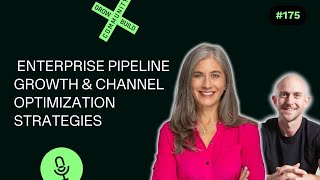
This is a YouTube video titled "Enterprise Pipeline Growth and Channel Optimization Strategies" created in September 2024. It features a detailed podcast-style conversation between Dave Gerhardt and Ruth Zive, the CMO of LivePerson. They discuss marketing leadership, enterprise sales and marketing strategies, budget allocation between pipeline generation and brand reputation, team structure, and the challenges of balancing work and personal life. The conversation covers practical insights into managing marketing in a public company with a focus on pipeline growth, channel optimization, and organizational alignment.
Leave room for experiments because it isn't like a fixed notion. Markets change, processes change, sales cycles change, messaging changes. And you always want to have a piece of the budget that's left for some experimentation. You know, we're a creative organization. At the end of the day, I want the team to feel emboldened, to take some risks and try new things. I always try to leave some of my budget for that. Outside of generating new leads and new pipeline, there are other levers that can be pulled inside of the organization to deliver more revenue. How do you increase. Increase conversion rates on the sales side? How can marketing support that? How do you grow adoption of the product to drive better expansion inside of existing customer accounts? The solution to revenue growth isn't always just, you know, get me more leads. There are other ways to drive efficiencies and growth opportunities inside of the organization that marketing can support.
All right, Rude, thanks for coming on the podcast. Love your, love the name Ruth, by the way. That was my gram. That was my grandmother's name. It's my daughter's middle name. We're gonna name her that. But we didn't. So it's nice. Nice to have a Ruth.
Very. It's a very grandmotherly name. I get told that all the time that somebody's grandmother had the name Ruth.
But I, you know what, the second I heard that.
So there you go.
I heard that coming out of my mouth and I'm like, no, she's totally, she's totally going to take this the wrong way.
But, you know, I'm flatter a.
It's a great. It's a great name. Bring back. Bring back more Ruth. You know what, we're going to get some messages from people that listen to this that also have the name Ruth.
But let's get that trending.
I call my d. I call my daughter that all the time. It's very endearing to me. So. So you're the CMO at Live Person. We're going to talk about that. I. When I have a CMO on the podcast, like I said to you backstage, before we do these podcasts, we either like to kind of go deep on a topic, AI SEO, abm, or if I have a marketing leader, kind of do a conversation hearing about what it's actually like to marketing what your org looks like, what do you do, how do you set goals? So that's what I'm going to dive in on this episode with you. But first, before we do that, just give me quick backstory. You've been at Live Person For a little over a year. But what's your, what's your marketing leadership journey? A little bit of your career story is helpful.
Well, I've been at this for a few decades now. This is my third turn as CMO at Live Person. I've been there. It's actually going to be two years in about a month. But like a lot of CMOs, this wasn't a straight line journey. I actually had a decade long career in, in the nonprofit world doing mostly fundraising and marketing. Fundraising, I always say, is basically sales. You're just selling goodwill instead of goods and services. So I did that for a while, especially while my kids were young. And then through happenstance I got asked to start doing some freelance writing for a software company and I caught the bug. I just loved the fast pace of the software world. I loved learning new stuff. I loved that I kind of had some autonomy to make my own decisions. Unlike the nonprofit world where every decision was made by committee. And that engagement really, I parlayed that into a full service agency. I launched a full service marketing agency. I left my nonprofit job and most of my clients in that agency were in the software space. I did that also for about eight years and then one of my clients coaxed me in house a software company. And I really enjoyed that. Spent about five years there, moved, moved up through the ranks into the role of cmo. I think I started with a director level title and inside of two years or three years maybe was promoted into the CMO spot. Then I was headhunted out of that job into a smaller startup company called Ada and joined as that classic startup title, head of marketing. And that kind of evolved into a CMO role. And then Live Person came knocking about two and a half years ago and eventually convinced me to join. And that's where I've been ever since. So it wasn't a straight line and a few moves along the way, but that's kind of my one minute summary.
It's interesting. I talked to a lot of people who maybe were at an agency and then there's a client or something and, and seems to be a path where like you end up going to work for a client and that that brings you in house.
Yeah, I, you know, agency life was great. I learned a lot. It was very cool to build my own business and you know, I was CEO there. And so I, you know, I touched a lot of parts of that business and you know, I was proud of what I had a partner. I was proud of what we did. We grew that agency and, but it's really hard, it's really hard to have your mind spread across so many different brands as a marketer. And it just was, you know, taking a toll. And the idea of being in house and being singularly focused on one brand, one, one process, one budget, that, that appealed to me at the time.
Yeah, that's like the agency story. I, Everybody kind of gets to that realization at some point. There's, there's definitely, you know, see, you know, career long agency people. I do feel like that's the pitch. I, I don't have nearly a similar story, but I worked an agency for two years. It was my first job right out of school. And even I felt like, man, I got, I got six clients. It's hard to be. Really not. You can be knowledgeable about an industry, but it's hard to do this. I was doing PR and I ended up going in house for a software company called Constant Contact. And I remember just doing PR for one like product line inside of one company. Man, I felt like I'd been bench pressing with like, you know, three plates on the bar and I was able to take all the weights off and just like really focus and that was, that was a really fun, really fun feeling. You mentioned in passing, and I, I didn't plan on asking you this, but you mentioned something about like your kids were young, the timing and everything. Like, do you think you could be, you think you could be take this role now, CMO with, of a public company with, with young kids? It's something I, I think about a lot and there's, there's obviously a lot to unpack there. And I also think me coming at this as a man and not somebody who actually has kids, like I have kids of my own, but I didn't give birth to them is a completely different SC scenario. But it's a topic that I think a lot of people want to kind of hear from. So I'm just curious if we could kind of dive into that first.
Yeah, sure. It's a great question. So my answer is that I personally don't think I could. I don't think I could do this job that I do today. If I reflect back, you know, 15 years, could I. 20 years, because I have kids that are in their 20s, could I have done this job back then? And I don't think I could have. But that's not to say that another woman under similar circumstances might not have been able to. I made a choice. I, you know, the nonprofit industry suited that choice. It was much Slower paced, very flexible. No travel pay wasn't as good, candidly. But you know, it was a time in my life, given my circumstances especially where I really did need to be much more focused on my children and available to them. I wanted to be. And the demands of my job today are such that I don't think I personally would have been able to do that and would not have felt good about it. And then I do think I posted about this on LinkedIn recently. I do think as a woman, when you give birth to children, and honestly as a woman generally there are certain physiological considerations that even inside of the most accommodating understanding company do make it very difficult to devote yourself to the job at hand in the way that it requires, I think, to execute effectively.
Yeah, it's crazy. I mean, this is a little bit of a side note, but my kids are 7 and 5 and my wife and I will often talk like recently she's like, man, I'm just starting to feel like myself again. And you know, you get, however you get like three months off or you know, something insane and then you're supposed to go back to work and like, you know, you might not be feeling great. You're, who knows what's going on in your mind. Like there's just so much happy, I can't even imagine.
Yeah, you're probably not sleeping. You are likely breastfeeding, feeding. You're right, you, you give up, you relinquish your body as you know for often two or more years to this person that you've brought into the world.
Insane. And then you, you get, you got to hop on, you got to hop on a one on one with, you know, John on your team who, who feels like he should be getting a raise and you're like, I don't want to deal, like, how am I going to deal with this right now? This is insane.
Yeah, fair. So I, I don't want to create an impression that it's not possible.
Yeah.
But for me it wasn't preferable, let's put it that way. I don't, I don't think I could have done this job justice under those circumstances at that time in my life.
It kind of comes down to like, guess understanding what the role of a CMO at a public company or how many, what's the, how many employees are at Live Person?
About a thousand.
So CMO of a thousand person company. I think if you throw out the emotions of like, is that fair? Is it not? Like if you just separate that and it's like, well that just kind of is what that job is, what that job is. And I remember having a conversation with, you know, my, my boss at the time of like I had, I had young kids and I really wanted to not work as hard and I wanted to be home a lot more and I wanted to leave the office at 4 o' clock and pick up my kids. And you know, my boss was like, look, please don't take this the wrong way but like it's going to be hard for you to be CMO here and come, you know, coming into the office at 9:30 and leaving at 4. And that wasn't personal at all. It just was like the reality of it. And so I think everything comes in waves. But now you're at a point in your life where like, yes, this is the perfect time for you to take this job. And I just think it's a. We often talk about the tactics in marketing but I think you have to be able to zoom out and like look at the, you know, the 50,000 foot view of your career and say like, okay, what, what chunk of time am I in right now? Is this? You know, five years, ten years? Like it doesn't mean no, never. Just like for right now maybe I got to find a job that's more right for me. During this time of my life.
This season, Randy Zuckerberg, Mark Zuckerberg sister actually wrote a book called Pick three. It's on my shelf there somewhere and I'm actually referenced in the book. I knew her at a time and we used to have regular phone calls because she was ahead of marketing. And the premise of the book is that there are, I think five or six different priority areas in anyone's life. You know, there's family, there's health, there's friends, there's work. I forget what all five or six of them are, but the premise of the book is that at any given time of your life, to really be effective in all areas, you need to pick three. The idea that anyone can do everything to its full potential at any given time is a fallacy and sets us up, I think for disappointment and failure. And you know, you have to make, you have to prioritize, you have to pick three or two or whatever makes sense for you given your disposition and the time in your life. And so yeah, so at this time in my life my work is definitely a top priority. My children are too. My family is as well, but they're less demanding of my time and attention.
So I think even just having that framework, it's it's freeing to be like, oh, yeah, I'm putting all my. I'm putting all this pressure on myself to be like an A in every area. And that's just not possible. And so, like, let's just limit the decisions a little bit and focus on one or two.
Exactly.
Do you work out?
I do. So now. Now that is also, you know, ebbed and flowed at different times of my life. But for the last year or so, I've prioritized that I walk a lot. I try to walk about two hours a day, and I'm fortunate that I work from home. So I get up early and I go for a walk for an hour. And then I try to go one other time either during a break or at the end of the day. And then I do strength training and I go on the peloton once a week and I try to do once a week yoga. So I mix it up a bit. Nothing extreme, but it's important to me. I know you.
Important in. In what way? I want to. It's a topic that. That doesn't get covered enough. And I just think it's so important and I just want to hear you say why.
So it's time just for me. So that's probably the number one reason why it's important to me. It's. I'm not doing it for anyone other than me. It's not because of my job or because of my family or my friends. Even though I, you know, there. There's a value to me from those experiences. This is just me. Nobody else is involved. And at this stage of my life, I think a lot about sustaining good health into this next phase of my life. I imagine in the next decade, hopefully I'll retire. And I want to be healthy through my retirement. And it's been important to me to establish a rhythm and a lifestyle that is conducive to that. So what physical activity can I integrate into my life that is really sustainable in the long term? Walking was the number one. Strength training is important to me to diminish the likelihood of injury. And so it's. It's really important to me. Just as I think about this next phase of my life and maintaining a good sense of health, I think this.
Is an area that I would like to see more leaders talk about and lead by example. And just like I. I know a lot of people who've been really successful in business at the. I don't know what the right word. I'm. I'm lacking the word at the Mercy or at the trade off of their personal relationships, their physical health and somebody who has run an amazing business. But just like looks like, look like completely, you know, and I don't, I don't even, not even a character about like, it's not a personal slight to say that just like, you can just tell they're not eating right, they're not sleeping right, they feel terrible. And I just think it's so important. You only have your body, you only have this, this is your job. Like the number one thing is like to take care of yourself and to, you know, be in a good mood and be in good health. And I was a young marketing leader, first time marketing leader and I had somebody on my team and she was like amazing designer, like top talent on the team. And she had been at the job for like a year. And she told me that since working at the company she hasn't. Yoga was her thing, but she hasn't, hadn't felt like she'd been able to get to a yoga class in a year because she was grinding so hard on work. And I was like, man, that's so backwards. And like, how do I enable this person to like facilitate that? She's like, I just feel like I can't leave work work at 5 o' clock because someone is gonna like judge me for leaving the office early. And I'm like, man, I can. How do we create a culture where that's never the case anymore? Like, because you leaving work at 5 o' clock to go and take that yoga class and prioritize yourself is gonna only make you a better person at home, a better employee at the company. And it's just, it's a topic that I'm just have become really passionate about now. And I wanna see more leaders like prioritize like showing their teams. Like I think it's for your team to hear you say, like, yeah, she's up early in the morning, she's walking. Two, she's strengthened. I think that's a very underrated, important part of like leadership. And your team is going to mimic those things. And I think that it's contagious inside of the company.
Yeah, I agree with you. I think it speaks to sort of this broader notion of work life balance. And if you go back to this pick three framework, perhaps exercise isn't at the top of everybody's list at all times, which I think is okay. I agree with you that prioritizing your health and your fitness is important and makes you more effective in other areas of your Life, but so is making time for friends, making time for family, having hobbies. And you know, as a leader, it's definitely important that you lead by example on that front and reinforce a message to your team that like, you are a whole person. And sure, your job is an important part of your day, but you need to make space for the other things that are important.
All right, let's talk about marketing. We could, we could do Dave's therapy hour for, for, for half the day.
Fair enough. Which is.
No, no, this is my, this is my doing. This is me. I led us this way. So let's talk about the marketing Org. So Live Person is a thousand person company. What does the marketing Org look like? Let's start there.
Sure. It's the usual suspects. So product marketing, content comms, design, revenue marketing or field marketing, growth marketing, which is demand and marketing ops. And then at Live Person. And in fact, in all three of my turns as cmo, the SDR organization also reported into marketing. So those are sort of the sub functions.
Do you think that can work regardless or do you think that because you've managed the SDR Org before, it makes sense? There's, there's usually a lot of back and forth on this. I've kind of seen the playbook of like, if the CMO has experience doing that before, it makes sense, but oftentimes it lives in sales. I don't know if you have a strong opinion on that in one way or the other.
I, I do have a strong opinion on it. Selfishly. I, I think overseeing that function makes me a better marketer. It gives me more skin in the game, deeper into the pipeline, makes me more accountable to what it is that I'm handing over to sales and I think makes the entire market more accountable. So I suppose if the marketing leader doesn't have experience doing that, yeah, it wouldn't make sense. But my argument would be that marketing leaders should aspire to learn about that function. And I believe it will make them better marketers if they embrace it and have a willingness to take it on.
All right, so you, you roughly laid out the team, the roles. Let's. I should have asked this part first, but what is the. How do you articulate the overall marketing strategy of the company? Like, we have an inside sales team, we have enterprise, we're product led, abm. How do you articulate the go to market strategy that marketing is responsible for?
Marketing is responsible for a lot of things. But I bubble it up to two strategic imperatives. The first is that marketing is responsible for delivering and influencing qualified pipeline for sales to hit their revenue numbers. That's imperative number one. And all of our strategy is tied to that imperative or I should say all of our activities are tied to that imperative. And then the second imperative is to grow brand awareness and reputation so that within the context of a sales cycle, prospects are more likely to do business with us. And I see that as kind of air cover to the pipeline strategy. You know, from, from a go to market perspective, Live Person is the world's leading enterprise vendor in digital customer conversation solutions. That's kind of how we position. So we do focus on enterprise. There's some vertical specific orientation, some geo specific orientation and the segmentation of the go to market strategy is very tightly aligned to the sales strategy.
So this is a enterprise focus Org. Great. This is great. I've recently talked to more of like bottoms up type of companies. So what are the best marketing channels and what does it look like to drive qualified pipeline when selling to the enterprise?
The best performing channels are the ones that are optimized on three fronts. And when I look at channels, I'm talking about like where is the pipeline originating? Like what, what channel is it coming through? There are inbound channels, digital channels, SDR could be a channel. And of course partnerships, you know, can also be treated from a channel perspective. I'm looking at three variables. One is the volume of leads coming through that channel. Two is the quality of those leads. And the quality would be measured by virtue of conversion to pipeline and then ultimately conversion to close one business. And then the last variable is cost. And the best channels are the ones that are optimized on all three fronts, although that's rare. But you're always looking at those levers. What can you pull to best optimize? So you might have, you know, SEO has often been a high performing channel, fairly low cost. Once you sort of figure it out and optimize pretty high volume of leads that come through and they converted a pretty high rate pipeline. But you might have high cost channel like events. Events are very high cost or paid ads are very high cost. But if they're also driving a high volume of leads that are converting at a, at a healthy rate, then that's an investment that I'm willing to make. So I'm sort of scrutinizing all channels on those three fronts. And at Live Person I would say we have a strong SDR outbound motion insofar as it drives a lot of qualified pipeline. But you know, these are not the hand raisers necessarily so those tend to move a little bit more slowly through the funnel and maybe with a slightly lower close rate. On the inbound front, events do really, really well for us as a measure of influence. We host a lot of events to influence renewal opportunity set to close in quarter or existing pipeline set to close in quarter. And we find that those events, you know, having facetime with those prospects is really effective. But from a strictly first touch, you know, sourced pipeline perspective. Strangely, email works very well for us at live Person. SEO works very well for us. And then we use our own product, which is a chatbot on our website. And while that's not necessarily a first touch because the leads that come through the chatbot, you know, originate from email or ads or other inbound channels, but when they go through the chatbot, we see a higher velocity and we believe that's because it's sort of a mini product led growth motion where prospects are kicking the tires.
Nice. This is really good. I got some notes and I want to just circle back on some of the things. So the first touch, you know, inbound, what, what's working? Is it, is it content? Like, is it. Because there's this narrative today that like lead generation is dead. You sell the enterprise, you should only focus on a hundred, you know, X number of target accounts and don't do any lead generation. But you're talking, you know, for you, lead generation is a big part of this enterprise business. So I'm just curious about the specific like channels and offers. Maybe if you just have an example or two about like what a good first touch type of lead generation playbook would be. Because theoretically you could just go get an outbound list of the companies you want to sell to and just try to email them to death and try to get them to talk to you. But I bet you're talking about something different.
Well, I, you know, in an enterprise sales cycle, those things, it's not a straight line, those things are all connected. You know, we do target priority accounts for sure like that, that goes on and then we tailor ads and email and events to those accounts. We're trying to drive some brand awareness. But then by the time the leads come inbound, you know, to me it's all about qualification at the top of the funnel. So are we qualifying based on sort of firmographic information? Is it an account that is the right size, is it a contact that's the right contact for our purposes? Is it in the right Geo or the right industry where we're best suited and really doing that scrutiny right out of the gate when the lead converts, and then also sort of scoring for behavior and using that as a measure of qualification. What are they downloading? Are they going through our website chatbot? Are they asking for a demo? And the leads that perform the best, the ones that really have great velocity are the ones that we have correctly qualified as being suitable for our purposes from an ICP perspective and also are indicating strong buying intent. So now, that said, you know, I always, I dispute this idea that you want to separate inbound and outbound. It just, it's not real. In an enterprise sales cycle, you, you can have SDRs very effectively outbounding a particular account, and it's crickets for months. They get nothing. And then you hit up that account with an ad and the, the person, the contact that you, you put the ad in front of is like, oh, yeah, I remember I got an email from somebody and they click on the ad and then it's counted as an inbound lead. But, you know, you can't discount the brand equity of having a strong outbound motion as well. So I really just believe so wholeheartedly that inbound and outbound in an enterprise sales cycle are inextricably linked.
I love that. Very good. That's how, that's how marketing should work, right?
Yeah. And then, and then add to that the influence of a partner network.
Right.
You know, like, because you can have the same argument. Does this get attributed to the partner, or is it the SDR or is it an inbound motion? The best opportunities are the ones that have been touched by all of those.
You must be all aligned at the management level because it is this simple. It's hard, it's challenging in that. What I think I like to type notes in my slack while we do this. But like you said, enterprise, like I paraphrase, like enterprises, enterprise, you know, sales and marketing is not a straight line. And that's true. The challenge, though, is like we marketers and sales team, we, we want credit and so we want to get the straight line. And so you've obviously done this a bunch in your career. How do you set up the company to be successful? So, like, yeah, we don't care if it's inbound, outbound, partner, event, whatever. We're all one team. We're all trying to measure this. Like, we just want to win deals together. How do you get everybody to, to be in the same direction? I've worked at one company where literally the sales team was fundamentally, like, pitted against marketing, because if it was marketing source, then it wasn't sales source and we were misaligned and my comp plan as a head of marketing was not aligned with the sales leaders comp plan. And so we would clash all the time over this. Yeah, if you're set up like that, what you're talking about, while it makes ton of sense, it's never going to work. So what's going on? What, what goes on inside of the company strategically to be aligned around this?
Some of it is, is comp and just KPIs. And so my marketing team is not held accountable TO leads or MQLs. They're held accountable to pipeline outcomes and the SDRs are held accountable to pipeline outcomes and even have skin in the game on closed one business. So I do think comp plan matters. I don't think marketers should be held accountable to leads. I think that takes them too far away from the sales process. Some of it is culture though, and I do think that's top down. And I think that, you know, at the end of the day, it doesn't matter if we're hitting as long as we're hitting our revenue targets and we can validate that the contacts associated with these opportunities are interacting with marketing assets or activities, then that's a check mark for marketing, no matter who sourced the deal. You know, these turf wars over who sourced it are absurd and they tend to be most contentious when you're not hitting your numbers. I think that the CEO sets sort of the tone here and there's always going to be some tension between marketing and sales. Marketing is always going to say sales isn't appropriately nurturing and following up the opportunities that we're delivering. Sales is always going to say marketing isn't appropriately qualifying the opportunities that they're sending our way. I think that tension is necessary. It holds us both teams accountable. But the real challenge is in ensuring that the leadership on both teams is aligned to addressing that tension in a way that serves the business. That's what matters at the end of the day is are we addressing it in a way that serves the business. So we actually document what constitutes pipeline readiness, what constitutes a first touch, how do we attribute, how do we measure influence? So cracking the nut on that front, and I don't proclaim to have solved it all together, but I do think if you can represent influence and not just attribution, then you can make a different kind of claim from a marketing perspective.
Yeah, well, it's interesting because also, don't you feel like, and I want to come back to this later but you mentioned your efforts to like build your brand and reputation. Right. So in a world where sales might go outbound to somebody and book a meeting, marketing might not get credit. But what if somebody knows that live person exists because you have built a great brand? Then out. But it's not this perfect funnel. And so like if you're getting this tit for tat credit game. Well no, no, I want credit because I help build the company like I helped build the name of the company. The reason that this works is because you're reaching out to them with our content. But if you're not set up to be measured on that, the whole thing breaks.
Yeah, I like to distinguish between sort of business as usual activities on the marketing front which are more so about brand awareness, reputation, third party validation, content, assets and true pipeline creation activities. And I actually allocate my budget along those lines as well. I think about how I distribute my budget on both of those fronts because I do think they're just as important. Now I will say that if your pipeline and revenue aren't growing in a healthy way and you're continuing to invest to the same measure on the brand and reputation front, you need to think about whether or not those investments are working. Because I see the brand and reputation investments as air cover for your pipeline and revenue growth. And if you're not growing from a pipeline and revenue perspective, well then you have to wonder whether or not you're really having impact on the other side the ledger.
Can you talk a little bit more about that? Actually the just, just the mix of like I often see questions in our Exit 5 community about like how do I think about the budget and like, you know, these brand slash. I like the term reputation actually. I really like that because it's, it's a longer term thing. You're not just going to do a billboard and get a reputation.
Right.
But is it like a 70, 30 split of budget and people? Is it 80? Do you have some type of a measure for it? Because I often see like, well it's kind of like this, it's this weird thing where like you, you need to do these brand initiatives but if you're so far behind and you can't, you're not even hitting your number for this quarter, you can't really justify those brand initiatives. But if you never take the time to do them, they're not going to pay off in a year or two when you need them. So how do you think about. I guess what the question that I'm trying to ask is like the balance of, you know, pipeline building this quarter and like things that will make your pipeline goals easier six months, 12 months, two years from now.
Yeah, I don't think there's a formula that holds true at all times. I think it's very dependent on the age and stage of your company. So you know, a series A company I would argue should be spending more on Pipe Gen. Like revenue and growth in those earliest stages matters a great deal and you're not likely going to grow your brand and reputation in those early days in in a way that's going to take over the market and that's the other variable is the nature of the competitive landscape. If you're in a highly, highly competitive space, then bigger investments in brand and reputation probably matter. If you're trying to carve out new ground then I think that can be a slower burn in some cases. So I think all of those things need to be taken into consideration. Currently I probably split around 4060 between I'm spending about 60% of my budget on pipegen and 40% on brand and Reputation. We are an established public company that's been around for three decades at Live Person but we're still pretty small and relative to the competition not nearly as well known. So we want to continue making investments and showcasing our differentiated value in a market that is changing. Very variable is the nature of the competitive landscape. If you're in a highly, highly competitive space, then bigger investments in brand and reputation probably matter. If you're trying to carve out new ground then I think that can be a slower burn in some cases. So I think all of those things need to be taken into consideration. Currently I probably split around 4060 between fast and Furious but Pipe Gen and growth is, is top priority for us as well. So I've distributed a little bit more to to that side of the business.
Any lessons or learnings to those out there navigating how do you allocate budget? How do you think about those things? Strategically it's an area where I've made a ton of mistakes and more specifically like not being able to think long term enough and so like you're so focused on hitting the plan right now, not having enough to things to test and learn and scale and so like well next year the plan grew 20% but I don't know where I'm going to get that 20%.
I'm spending about 60% of my budget on pipegen and 40% on brand and.
Reputation from Just curious if you have any wisdom on that area. The business and the job.
So one we are an established public company that's been around for three decades at Live Person but we're still pretty small and relative to the competition not nearly as well known. So we want to continue making investments and showcasing our differentiated value in a market that is changing very thing I'll say one lesson learned is that the investments that you make today in marketing and again this is based on an enterprise sales cycle so I'm bringing that bias. But the investments that I make today on marketing front especially when it comes to pipe growth are going to impact revenue six to nine to 12 months from now. So if the plan is going to grow so you have to work very closely with finance fast and furious but pipe gen and growth is top priority for us as well. So I've distributed a little bit more to that side of the business.
Any lessons or learnings to those out there navigating how do you allocate budget? How do you think about those things strategically it's an area where I've made a ton of mistakes and more specifically like not being able to think long.
Term and that's with sales to set your targets 3, 4/4 out. If you want to build a marketing plan and allocate your budget in service of that plan today and and you know you need to use math there. So if my revenue target is $10 million greater I need to understand how much pipe coverage am I going to need to hit that number? How many MQLs am I going to need to deliver in order to achieve that pipeline outcome. And then I look channel by channel, what channels are going to deliver the most MQLs at what cost, where, how do I want to distribute my investment.
So when it comes and so like you're so focused on hitting the plan right now not having enough things to test and learn and scale and so like well next year the plan grew 20% but I don't know where I'm going to get that 20% from. Just curious if you have any wisdom on that area the business and the job.
So when it comes to generating new pipeline I guess my advice would be use math and know that your investments it's a staggered impact. It's not a flip the switch proposition takes time for a lead. One thing I'll say one lesson learned is that the investments that you make today in marketing and again come an opportunity that's actually going to be won. So that would be one good takeaway. The other would be leave room for experiments because it isn't like a fixed Notion markets, change processes, change sales cycles, change messaging changes and you always want to have a piece of the budget that's left for some experimentation. And I, you know we're a creative and this is based on an enterprise sales cycle so I'm bringing that bias. But the investments that I make today on marketing front, especially when it comes to pipe growth are going to impact revenue six to nine to 12 months from now. So if the plan is going to grow so you have to work very closely with finance organization at the end of the day I want the team to feel emboldened to take some risks and try new things. And that's with sales to set your targets 3, 4/4 out if you want to build a B test. So I always try to leave some of my budget for that. And you know, outside of generating new leads and new pipeline, there are other levers that can be pulled inside of the organization to deliver more revenue. How do you increase conversion rates on the sales side? How can marketing support that? How do you grow adoption of the product to drive better experience expansion inside of existing customer accounts? So it's not just that this sold a marketing plan and allocate your budget in service of that plan today. And you need to use math there. So if my revenue target is $10 million greater solution to revenue growth isn't always just get me more leads, give me more at bats. I need to understand how much pipe coverage am I going to need to hit that number? How many MQLs am I getting Other ways to drive efficiencies and growth opportunities inside of the organization need to deliver in order to achieve that pipeline outcome. And then I look channel by channel what that marketing can support.
I wanted to circle back on on a couple things here. So you got this overall strategy you're trying to drive pipeline. Oh also this is what I say what you mentioned there is really important and this is a one of the many mistakes I've made. It's easy to get on this hamster wheel of like net new, we need net new, we need net new. We need more pipeline. More pipeline. When it's like well actually let's look at the whole funnel and like this conversion rate in this segment is channels.
Are going to deliver the most MQLs at what cost where, how do I want to distribute my investment so when.
It comes really low and we're not winning these deals and so like looking at the budget it's, it's not always.
Just going to be comes to generating new pipeline. I guess you know my advice Would be use math and know that your investments it's a staggered impact. You're you it's not a flip. The switch proposition takes time for a.
Lead more ad spend more events. There's so much like middle to bottom of the funnel stuff that I think.
Become an opportunity that's actually going to be won. So that would be one good takeaway.
You learn it's like actually a huge investment in sales enablement might improve the conversion rate by 20% in a segment. I see you nodding along seems like something this is. Yeah absolutely.
And especially diagnose stage by stage conversion. You might find that at stage three, you know 60% of your pipeline is falling out. Well how do you plug that hole? In particular is there a marketing asset or emotion that you could introduce at that stage that will drive better conversion?
You got the overall strategy. You're trying to drive net new. You're trying to do some things that help existing deals, renewals. Do you have any like root root.
Like the other would be leave room for experiments because it isn't like a fixed notion. Markets change processes change, sales cycles change messaging changes. And you always want to have a piece of the budget that's left for some experimentation. And I you know we're a creative.
Routines and rhythms for marketing. Do you like to plant like something that I think is hard is like.
You have organization at the end of the day I want the team to feel emboldened to take some risks and try new things and the year long.
Plan but then you got to operate like monthly and quarterly. Do you like campaign planning? Do you have themes? How do you like chop up the year into the rhythms to keep to keep things exciting and interesting but also a lot changes and you need to be able to like you can't just have the plan for the year and roll it out and see what happens. You're kind of always coming up with new campaigns and themes. I'm curious to see how you how you run run the the marketing, you know, rhythms quarterly, monthly.
Yeah. Well the good news is that we do all of that. We do you know campaign planning around themes. We meet as a marketing lead a B test. So I always try to leave some of my budget for that. And you know outside of generating new leads and new pipeline there are other levers that can be pulled inside of the organization to deliver more revenue. How do you increase conversion rates on the leadership team every week and every every other week we review our progress against our quarterly target sales side. How can marketing support that? How do you grow Adoption of the targets and those are pipeline targets and we sort of hold the discussion in the areas that aren't green. And then on the other week we're just reporting against, you know, our operational adduct to drive better expansion inside of existing customer accounts. So it's not just that the solution to revenue growth isn't always just, you know, get me more leads, give me more at bats. There are other ways to drive efficiencies and growth opportunities inside of the organization that marketing can support.
I wanted to circle back on, on a couple of things here. So you got this overall strategy, activities.
And what's happening over the course of the next two weeks. As a marketing wide organization, we meet monthly to review our progress against those. KPI's campaigns have pipeline targets. They're tied to product launch. At Live Person. I actually love that, that rhythm where when you can tie your campaigns and your big events to product launch, I think that drives a certain rhythm of the business that's really, really healthy. But what I will say is that, you know, it's not always smooth. There are always, you know, pivots and changes thematically. I mean when Gen AI hit the scene it was like pandemonium. How are we going to adjust our themes? What are we going to launch differently? What are we going to say differently?
You're trying to drive pipeline. Oh also this is what I'm going to say. What you mentioned there is really important and this is a one of the many mistakes I've made. It's easy to get on this hamster wheel of like net new we need net new we need.
So it's not always altogether smooth but there is a, there is a regular rhythm that I think holds us accountable.
Net new we need more pipeline. More pipeline. When it's like well actually let's look at the whole funnel and like this conversion rate in this segment is really low and we're not winning these deals. And so like looking at the budget it's, it's not always just going to.
Be those targets that we set quarter over quarter and we don't always by the way have a year long view. I wouldn't say it's that clean. You know we sort of ballpark have a year long view but really it's quarter over quarter.
Take me to more ad, spend more events. There's so much like middle to bottom of the funnel stuff that I think you learn. It's like actually a huge investment in sales enablement might improve the conversion rate by 20% in a segment. I see you nodding along seems like something this is. Yeah, absolutely.
And especially if you can diagnose stage by stage conversion, you might find that at stage three, you know, 60% of your pipeline is falling out. Well, how do you do that?
Marketing leadership meeting. What do you, what do you do in that meeting?
Well, we have a document that we maintain. Every leader that reports to me has to fill out every week what their top priorities are if there are any problems that they want to discuss. And then if there are any asks of anyone else on the team that gets filled in advance of the meeting. And then like I said, every other week we actually just go through that document, particularly the columns. If there are problems or ask tasks of other folks on the team, we just round robin it. And then on the other week we address that document. A slug, that hole. In particular, is there a marketing asset or emotion that you could introduce at that stage that will drive better conversion?
You got the overall strategy, you're trying to drive net new, you're trying to synchronously.
And we spend our time together talking about our progress against our quarterly KPI.
You do some things that help existing deals, renewals. Do you have any like root, Root.
Like it's a half hour meeting because I just try to get things done.
As quick routines and rhythms for marketing. Do you like to plant like something that I think is hard is like.
You have please possible. Although I will say if anyone on my team is listening to this, just, you know, being honest, we often go over the half hour, but I set the meeting for a half hour and try my best to stay true to that time frame.
I, I love that. I think, I think it's just very easy to default to an hour meeting. And then it's just like, like I have a, we have a planning meeting actually right after this and it's an hour and it should have been 30 minutes. And if we go the year long plan, but then you got to operate like monthly and quarterly. Do you like campaign planning? Do you have themes? How, how do you like chop up the year into the rhythms to keep, to keep things exciting and interesting, but also a lot, a lot changes and you need to be able to like, you can't just have the plan for the year and roll it out and see what happen. We go over. But I think an hour, like you get to 10 minutes of small talk and introductions and all of a sudden. No, no, I. Let's, let's be efficient here.
Yeah, it used to be an hour and then I thought, well, let's See what happens if I, you know, you're.
Kind of always coming up with new campaigns and themes. I'm curious to see how you, how you run, run the, the market habit.
And, and we've been pretty good. I, I would say if we go over, it's usually not for more than five or 10 minutes. So that's what the meeting looks like. And I, it's, it's a little bit tactical, but it holds the team accountable to those KPIs, which, you know, that that's what I love most about marketing. I know you've interviewed a lot of marketing leaders. I always say marketing is part art, part science. And I have skills in both. But I am much more comfortable on.
This marketing, you know, Rhythms Quarterly, monthly.
Yeah. Well, the good news is that we do all of that. We do, you know, campaign planning around themes. We meet as a marketing science side of marketing. And I just love this idea that you set targets, you track against those targets every week and every, every other week we review our progress against our quarterly targets. You measure your progress, you know, and you use the data to actually inform your targets. And those are pipeline targets. And we sort of hold the discussion, decision making as a marketer. And so that's what we spend a lot of our time doing.
Okay, two questions that I'm gonna, gonna finish with. One of them is I wanna come back to. I guess this is a hard question to answer in two minutes, but you're gonna have to do it anyway. How do you think about measuring brand? This is, this has come up a bunch lately in the Exit 5 community. Your LinkedIn headline is like evidence based marketing or something like that. So how do you apply evidence to the brand and reputation? Do you have a simple school of thought for measuring the live person brand?
Yeah, I do use some measures and I wish I could take credit for this logic. Somebody far smarter than I am shared this with me and I've used it ever since. I use branded keyword clicks as a leading indicator of brand awareness. The thinking being that if somebody is searching for your company by name, that means that they are aware of you and they know your name. And so I hold the brand team accountable to a growing measure of branded keyword clicks. Quarter over quarter. With an expectation that we're growing brand awareness. Quarter over quarter. We do survey brand awareness, both aided and unaided, to just see how we're doing again against the competition. We do that, I try to do that twice a year. And then we also look at things that like share a voice, social Follows, you know, willingness of our customers and Forrester and Gartner to publicly share their good feelings about our company. You know, third party validation is a measure of reputation and brand awareness. I know that's a little bit, you know, outcomes based like tactical, but those are the measures that I use on the brand awareness.
I love that. I love when things are simple. So branded keyword clicks would be is this organic or does this include paid?
Also it's anytime somebody is searching live person along with any other term or live person on its own. So I think.
Oh, by the way, I just would like to say I'm sorry for asking all these questions. There was one, I got a nasty review. I got a one star review in this podcast and some someone wrote it was a guy. It's always a guy that women are never nasty. And he's like, does this guy even know anything? Like how Was he a CMO? He asked the most basic questions to CMOs and I'm like, I don't know everything you. And then also be like, I'm trying to ask the questions that someone is listening to in their headphones and they want to know. So I didn't know that. Now I asked the question. So let me get that off my chest.
There you go, There you go.
So, so okay, because I, I was just looking at like Google search console for like Exit 5 as an example. We basically have entirely branded search right now because we don't have anything with SEO yet. And I can see month over month, quarter over quarter the volume. The volume in searches of people literally going to Google and searching for Exit 5. I love that as an indicator.
It's very simple that that's the now it is a leading indicator of brand awareness. But to me it's, it's just very logical. It says that people know your company name and if they know your company name it must be because you've put it out there in an effective way to be more top of mind. So you would expect that to grow over time.
And do you do anything like benchmarking your like share of voice versus competitors? Are there ways that you do that?
Yeah. So like you, I don't know everything. So this isn't my specific area.
Whoa, whoa, whoa, hold on. We're going to get a net. We're going to get another one star review. Now I have a guest who is admitting she doesn't know everything.
I'm a dumb, dumb in many, in many, in many domains. But what I'm good at is hiring people that are really, really smart in their area of expertise. So on the social front, we do benchmark against a universe of competitors. Now, share voice, though, is tricky because sometimes, sometimes it's for bad reasons that you've had more coverage over a certain time horizon. So, you know, live person has, like a lot of other brands, had bad press. From time to time, you'll see your share of voice skyrocket. So you have to take that measure to some extent with a grain of salt. I also like social following as a measure of brand awareness. You know, if somebody's inclined to follow you as a brand, it's because they're aware of you. Now, it could be because they want to get a job at your company, but that's okay. Employer brand also contributes to brand awareness. So none of these metrics on the brand front are perfect. But I do think it's important that we measure because, you know, costs a lot to invest in brand and you want to have some indication that those investments are paying off.
Okay, last question. If you had one wish as a CMO and you could solve any one marketing problem that you've seen in your career could snap your fingers and solve it, what would it be?
I love this question, Dave.
Thank you. Thank you. I wrote my own questions here on the X ify podcast. That's very kind of you.
I like this one and I'd love it even more if you could make it come true this wish. So my wish would be that folks treat marketing with the respect that it deserves as experts in their domain. I think that because everyone can read and write, they have this idea that they all know how to market. And nobody presumes this with finance or with engineering or with so many other functions across the business. But in marketing, everybody has an opinion and everybody weighs in with that opinion. And often, you know, as a marketing team, you run the risk of becoming order takers to everybody's kind of whim around what they think will work with marketing. And I just think think crowdsourcing a marketing strategy from across the business is a losing proposition. We should always be open to feedback. But it's a slippery slope. And I do think that instinct exists that people just believe that they know how to market because they're human beings. And I just don't think that's true. And it's hard to market effectively. And I wish that if I could snap my fingers and everybody would suddenly realize that and treat us us accordingly, that that would make things a lot easier.
Just like. And let that breathe for a second.
Catharsis right it is.
I've said the exact same thing so many times and use the exact same analogies. Like, because everybody writes and communicates. Like, my least favorite thing in the world is like, let's pull up the website and let's let our five VPs give feedback on the website. Oh, great.
Yeah, agreed.
It's like, oh, yeah. So, yeah, I help my, you know, my, my aunt, like, sells pottery and I help her with her Shopify store and so I'm qual to give you opinions on the. On the website.
Exactly. Infuriating.
All right, Ruth, this has been fantastic. Thank you so much for coming. I got a ton of notes in here. This will be a great episode. You're going to get a bunch of LinkedIn messages after this. So go find Ruth. Ruth, ruth zive on LinkedIn. Send her a message. Just tell her you like this episode. If you thought I asked two basic questions, leave me another one star review. I need more of them. They fuel me. Thank you. Ruth, great to meet you. Thanks for hanging out. Thanks for coming on this episode of the X.
You. This was a pleasure. Exactly.
More from Dave



Asynchronous work isn’t a trend. It’s how teams actually get things done without burning out.

AI is changing product marketing. Here's how top B2B teams are scaling without cutting corners.

How Product Marketing Is Evolving in 2025: Lessons on AI and Leadership with Jennifer Cannizzaro

Why referral programs look different outside of SaaS (and why that’s a good thing)

The secret to scaling dual GTM? Give every marketer ownership and get out of their way.

From content to CMO: how Jess Cook made the leap (and built her first budget from scratch)

Leading B2B Marketing for the First Time: Strategy, Budget, Content & Team with Jess Cook

Most B2B advice is built for SaaS. But what if you don’t have demos, PLG, or lead goals?
