Episode 1: The Long Game with Dave Gerhardt
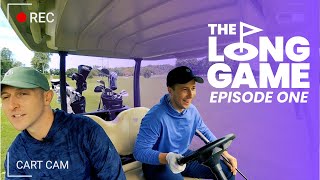
Dave Gerhardt talks about his path from sports dreams through marketing and podcasting to his work at Drift. He shares stories from his early ambitions and how he built his career, with the conversation woven through casual moments on a golf course.
We're in Vermont. We're about 20 minutes outside of Burlington. We have a drive. Our first event for exit 5. Mark hit me up and was like, can we do an interview with you before drive, but let's do it on the golf course. And I was like, absolutely.
I was not expecting you to say yes in, like, five minutes.
I twist my arm. It's much better. Yeah, this. This is fun. So let's. Let's have. Have some fun.
Yeah.
Yeah. Yeah. This what it would feel like to be a YouTube. A YouTube golf celebrity. Do you think this could go anywhere? So buckle up.
That's a guy who knows how to golf.
It's a Titus Pro V1X. That's what we play. Oh, smooth. You didn't hit breakfast ball. You play that. I don't know what to expect out of Mark's golf game today. I'll give you a rate between us, I'll give you a rating like three or four. Four homes in. Okay. See where he's at. All right, here we go. The Ridge.
I granted, I didn't really know anything about Vermont, and I still don't, but, yeah, I totally, I think, realize that there were going to be hills and mountains.
Oh, yeah. It's beautiful. It's amazing. Also, I think, you know, staying downtown, I think a lot of people are going to realize, like, I think when I tell people I live in Vermont, everybody thinks I live in, like, a cabin in the woods. And then you go to Burlington and you're like, oh, this is like. You're like Eddie's petty kind of little sitting.
Chunked it. All right. Cutting that one.
You're cutting that one. No, no cuts. No cuts. This is what people want.
I know. All right, so I was doing my research, and I found. I was actually reading it on the way here, but I found it when I was putting the outline together.
Okay.
A medium article that you wrote in 2016. Yeah. Funny part is everything that you wrote in there, like, still pretty much holds true today. But you mentioned that you wanted to be an NBA player at one point.
Yeah. I just loved sports growing up, and basketball was my favorite sport. So, like, that's. I wanted to be any. Any Maybe a pitcher, an NBA player. I think when I wrote that, I thought NBA player would be funnier because I'm short, you know, I hope you're rolling because 93 is a good number. Mark. Oh, sit. Okay.
That's. Yep. He knows what he's doing.
Yeah. Yeah. I think, like, I meant not even specifically about NBA, but I just Like, I think there was a point in my life where I didn't. I didn't think of, like, ever having a real job. Like, I just loved sports and stuff growing up that I just was like, yeah, that's all I. That's all I did. That's all I. That's what I. That's all I wanted to be.
You played some college baseball for a bit, too.
I did for a bit.
Yeah.
So I went. I went to college, and I wasn't going to play any sports. And then I was pretty good. I was a pretty good baseball player in high school. I was a pitcher. And then I went to college, and I made a bunch of friends on the baseball team, and I thought they were all kind of clowns, and I was like, well, if they can. If they can be on this team, maybe I can. And then. And then they were like, you should try out. So we. We played catch. I tried out. I made the team, but I was wrong. They were so much better than me.
Yeah. Yeah.
It was a small D1 school, so I, like. I didn't play that much. I think looking back now, I wish. I wish I went to, like, a D2, a small D2 or D3 school and, like, actually played.
Yep.
And by my senior year, I wasn't playing at all, so I just quit and just enjoyed my last year in college, like, not doing that whole dance.
All right, let's do this. No, I was trying to get it through.
I know. I wish. I wish we talked through that a little bit. I hope you got this on camera. My guy didn't even look like. All you had to do is a low punch. He had 80 yards. He just got to get you to hit that low one.
I. I surveyed it. How much running did you have to do as a pitcher?
So much. You're so dumb.
You want to go.
Go all the way up here? Yeah. Come on. I'm very type A on the golf course. Like, you got. There's just a place you got to be. You got to be in a certain spot, like Mark. There you go. All right.
Much better.
Oh, we had to run all the time, but I hate. It was so dumb. I hate it. And I didn't run for, like, 10 years, and now I run basically every day, but because it feels amazing. It's for my mental health. Like, it's just. It's different.
As you were running back then, did you ever think you would enjoy running down the line?
No. In much better shape than I even was then. Cause, like, I just. You're just younger. Like, it doesn't really matter. You know, you just kind of, like, you basically run. Like, we used to have, like, a fitness test, and you, like, you run to cram before the test.
Yep.
Now. All right. Why not? Why not us today, Mark? Why not.
This guy? You're good.
Might have been missing some fireworks out here today. All right. Okay.
All right. So you give up the pitching in the majors. You give up the NBA dream. Yeah. Then comes a PR internship.
Then I. I decided to be a B2B marketing influencer, obviously.
No, you're cutting to the.
The final chapter. Yeah. So I, I.
What did DAVID the. The PR intern do?
David? So I graduated college in 2009, and there was, like, no job. There was no jobs. What's funny is, I have. My degree was in marketing. And everybody that sees that now, it's like, oh, you must have always been into marketing. No, it's like I couldn't do anything but, but write and communicate. And so I just. I took that as a major because I didn't know, like, I had no serious ambitions to do anything. I graduated from college, I couldn't get a job, so I just stayed working at this golf course that I grew up working at until I graduated in May. Until, like, October of that year, I just applied to everything that I could. And I applied to this PR internship at this company called Lois Paul and Partners. And it was $10 an hour for a PR intern. And, like, they were the only person that said yes. And so I just took that job, and that was the first thing that got me into work. And early on in that internship, it turns out I was good at that. Like, I was. This was, like, old school. Like, 2009 PR clients. Like, I was writing tweets for them. And, like, we'd write tweets in an Excel sheet.
No way.
Send over the client. They would approve them. We'd post on their behalf. I was, like, pitching bloggers and stuff like that, doing, like, you know, briefing docs and kind of like 101 level PR stuff. And I. I was pretty good at it. Not intentionally. And it was like this amazing feeling of, like, I would get a reporter to write back to me, or I'd land some coverage from my client, or the tweets and stuff, or the copy that I wrote was good, or I'd write. I'd get a lot of feedback on writing and stuff. And it was like, oh, cool. This is actually, like, I've been competitive my whole life in sports or something, but, like, I'm starting to get good at work and I think that just that was fun. It was fun to feel that. And I just kind of like took off there. I had some really awesome mentors. There might be this one guy that I work with there. He would like. I couldn't even write an email to the client without like the manager like looking at a draft of it. That's how like much they had the reins on me, right?
Yeah, yeah.
And then he'd send me emails back with like red lines and all the sh T that I should have changed and everything and I hated at the time. But it was like an amazing way to learn how to like how to write in a client facing role. I think that's, that's kind of what was like the foundation for me.
I had stuff to follow. Do you still keep in touch with that person or.
No, no, no.
What were some of the clients that you would do PR for?
It was all, it all actually was tech, like unintentionally. It was all like data security. Yeah, let's go.
There we go.
We'll take that.
So is that where you started the, the first podcast then?
No, I didn't start that until a couple years later. So I worked at this PR agency for like two years. And then there's a theme in my career where like until I went to Drift, I jumped around a lot. I basically went to a new company every year or two. I get bored. I get bored a lot. I get bored, I guess really, really easily and I can be pretty impulsive. So. So I did that and then I, I wanted to. The PR agency that I was at, it was, it was a great learning experience. But I didn't, I just didn't feel like I was going to be there for a long time and I, I wanted to go in. Out somewhere. Yep. And there was a software company called Constant Contact. They were like, they basically got disrupted by mailchimp. But they were like the first company really doing, you know, market.
I remember back in that.
Sure. And they had an in house PR job, like a PR associate or something. So I applied to that and I got it and I ended up leaving the PR agency and I. That was my first reality, real moment at work. Like they were real mad when I left, like heartbroken. Like I was like a young and up and coming person there and I think the Vasa I had to get really took it really personally and that was like a weird, that was a weird thing. But I went into constant contact and it was cool because I Got to be in house and work on one product.
Yep.
They were launching this, like, social media product, and so I got to work with a bunch of, like, entrepreneurial type of people inside of a company and. And see how, like, a software company worked and quickly realized, like, oh, I don't just want to do pr. I want to be involved in all the marketing stuff. And after, like, a year in this PR job, they had a product marketing job opening, and I applied for that inside the company and made that switch, and that was when I first really got into, like, marketing, I guess.
So then.
Hold on. Not to put Mark on blast, but just. Can you just show where my ball is real quick?
But to also put Mark on blast?
I mean, come on. That.
That.
See that one way out there?
Yeah, yeah. As soon as I told one of my user evidence buddies that you said yes, he was the one who looked you up and screenshotted your handicap, and I was like, I wish I could take this back.
I'm sure. All right. Doesn't always happen that way. Golf is.
So then you're at constant contact.
Yeah, so. So it's pretty cool because they. They basically, they acquired this, like, social media company, and I got to work as, like, kind of like the pr. Like, they acquired this social media company, and then the founder of that company became part of their company. Right. He was like the GM of this business unit. I was basically, like their PR person. I was trying to get them in TechCrunch, and we did all that, and it was like, I got to see, like, an entrepreneur, and I. I was so, like, in awe of that. I was like, man. Man, this dude is amazing. Like, man, I went to south by Southwest with them for the first time, and I got to see, like, the. The inside of, like, building a product and building company. And then I was there for. Let's see what we got. This is, like, a weird shot.
Where's the hole at?
It's around here. It's like, over this willow tree. All right, look out. I just don't know if I can get it high enough.
Oh, oh. In the drink, in the hazard.
Now we can still make a five from.
We can cut that out too.
No, absolutely not. You better not cut that out, because that was flush. It just was a little bit. A little bit too far up there. So then I'm at constant contact and, like, similar thing. It was a big company. There was a lot of a very impatient. And there was, like. I remember sitting in meetings and just like, watching so much, like, just nonsense. Hap. Like, so slow to make things happen. Or this is this person's job or that person's job. Yeah, perfect. Nice shot. And through being there, so I saw. I started to get into, like, I got started to get into startups because my job in PR was like, I was reading TechCrunch, and this was like, 2000, 2010, 2011 TechCrunch. Like, it was like, the thing. And I was learning all about startups, and it was so cool to me. And my cousin starts dating this guy, and his brother is starting this company called Trivi, and they were kind of in a similar space as Constant Contact. And so he. So she ends up talking to him. He's like. He's like, oh, I'll meet with him and maybe we could, like, you know, I'm kind of building out this company and so I have lunch with this guy and he's like, yeah, I think I could. I think I could find a job for you on our team. We just don't have any marketing jobs open right now. He's like, could you do, like, account management, customer success? Which is really funny now to think about me doing that, seriously. But I said, yeah. And I just. I just wanted to, like, get the job. I just wanted to work at a startup. And so I think I. I think my salary was like, 50 grand. And it was like a company raised like, a million dollars. The team was like seven, eight people, and it was like the coolest thing ever, like, just going to start, like, a true startup. There's, like, no rules, no hr. Like, everybody's just figuring this thing out. And so I went to. So that was like, my first stop at Privy. And I went there and my job was they had, like, you know, 20 customers, and my job was to be there, like their point person. But, like, a common thread is I ended up kind of just, like, doing more than I pulled a little bit. I helped with marketing a little bit. I was really close with the product guys and the founders and stuff. And I was broke and we were getting married, and Mike Volpe, who was a CMO at HubSpot, was an investor and advisor at Privy. I had started my podcast at Privy called Tech in Boston, where I was going around interviewing, like, startup founders in Boston area.
The Medium article that I saw was when I think Ben offered up the Privy office. Yeah, he.
It was so cool because, like, I wanted to start it, but I didn't know, like, where to go or do it or do anything. And he was like, dude, you should just do this. Start like recording in our office. I'll be your first. And that was so cool. I know a lot of bosses who would not be down for that. Especially today. Everybody's like, well, you're going to build your personal brand, you're going to become bigger, whatever. He was totally down to support it. And I. Nobody was really doing a podcast like that at the time. He seems so crazy now, but basically everybody said yes. And so I'm like this little like 25 year old kid with my microphone in my backpack. I'm going to all the top VCs and CEOs in Boston.
Yeah.
I would go to their offices and record. I did 60 episodes. And like, I got to go out and meet all these people. And I built my own network. I built an email list, I got sponsors for the first time. That was all while I was at Privy.
Yeah. Yeah.
And that was my first taste of like, yes. I worked at Privy. I went to drift, I did HubSpot, did all this stuff. But I think that was the thing for me. That was like my first real thing of my own.
Yeah.
Like the first company to pay me like three grand for a sponsorship of the podcast was like, I'm the richest man in America.
Yeah.
But it was cool because it was my thing. Like, I did that. But anyway, Privy basically went out of business. And Mike, who was the CMO at HubSpot, he was like, hey, we want to start a. We want to start a podcast at HubSpot. We want to hire a full time podcaster. And this was like a nuts idea.
Yeah.
Back then.
What year is this then?
This was 2015. 2014. 2015. He's like, I know what's happened with Privy. Come to HubSpot, help us launch his podcast. I was like, wait, this is going to be my full time job to do the podcast? And he was like, yeah, we're going to do it. And HubSpot's always done it. They've hired like journalists, whatever, whatever. Now to have a podcaster at your company is like, well, yeah, yeah. But that back then it was not. And so I work for this guy, Joe Chernov, who's a CMO at Pendo, and Mike Volpe. And we launched this podcast called the Growth show. And that was my job. So I left Privy. I went to HubSpot, I worked there for a little bit, and it got to number one in iTunes. Like in the first six months, it was number five in the business category.
Well, there was a. I think it was one of your LinkedIn posts. We were Talking about setting goals, and you're like, oh, I want to set a goal for something.
And.
Yeah, no, Joe was like, no, Joe.
Was like, no, we're at. You're at HubSpot. Like, this is. You can't set, like, a goal. Like, published 12 episodes. It's like, the goal has to be like, we need to create the number one business podcast. But we had an amazing network. We had that network of, like, Dharmesh and Brian Halligan and Opie. And so we got amazing guests. Mike was the host, and there's some crazy stuff that happened, and him and Joe ended up leaving the company nine months after that.
Yep.
And I was kind of feeling like even while I was there doing the podcast, I kind of had the same itch again. Like, I feel like I should be doing so much more. I'm not just the podcast guy.
Yeah, yeah.
And in July of that year, after being there for nine months, I had David cancel on tech and boss in my podcast.
Was that the first time he was. Met him.
First time we met him, they were launching Drift. He was like this mythical entrepreneur to me, and I just DM'd him, and he said, hey, we're doing a launch party for Drift. Like, do you want to come? And then also, like. And I. And when he said that, because I had, like, a mini media outlet, so they wanted me to, like, write about.
Yeah, yeah, yeah.
And so I took that as my chance to ask him to come on the podcast. He did. We hit it off in that podcast episode. The next day, as I'm writing the show notes, like, that night, I see on Angel List that they have a job opening for marketing manager. And I applied, and I immediately got a message back from Keith, who is the recruiter, and he's like, hey, thanks for applying. Like, we just filled the role. Sorry. I was like, damn. That same afternoon, I get another email back from Keith, and he's like, actually, never mind. David wants to have you in and meet Unreal. And so I went in, I met with them, and he was like, oh, you're like. We talked about working there. I met with Elias. Things went. And literally their office was directly across the street from HubSpot. Like, I left my. I was working on the payroll at HubSpot. I went across the street.
That's it.
Will you pull the card up and grab my Putter?
Yeah. Yes, Mr. Gerhart.
Normally, I would putt this, but I don't want to wait. All right. So then I literally walk across the street, I meet with David. I Meet with Elias, things go really well. But then they're like, I was getting married, like, the next month, and they're like, yeah, you know, we. This is really interesting. Like, we really want to work with you. But they're like, go get married. Go on your honeymoon. Come back, we'll talk. And it was like the first thing in my life that I was like, no, these guys are like, tier one. Like, they. David was the chief products officer at HubSpot. Elias ran engineering. HubSpot bought their last company for 30 million bucks. Like, they were big deals. They raised $15 million from Sequoia without having, like, done anything yet. I was like, they want me to possibly work at this company? No way. This is my. This is my chance, like, to get in, Right? But they were like, yeah, go away and then we'll talk when you come back. I pulled it. That's a six mark. Too many stories in here.
All part of my plan.
Yeah, so. So I was like. I came home and I was like, no way. I can't. I can't go away. They had, like, tier one network. I'm like, dude, they're going to find a real marketing person. Like, if I go away on to get married, they're not going to hire me. I still feel this way about myself. Like, just. Everybody has imposter syndrome, right? And this time I'm like, you know, 26, 27. I haven't done anything. So it just wasn't. I didn't. It just didn't feel right. And I was like, no, I've never done this. And I was like, no, I was like, I need to meet. I need to meet with you tomorrow. And I think they love that. Like, I think looking back, they were like, really? And I. I never have pushed back on something like that before, but I remember. I remember I met with Elias. David was somewhere, and I was like, I need this job. I was like, I. You need to hire me. I'm the guy for this job. I need it. And they basically were like, yeah, we love it. Done. We're in.
So what was going through your head as you were getting ready to, like, tell them that? Like, you had to have been nervous.
I was nervous, but, like, I had nothing to lose. Like, it was like, it's a confident move. I think being, like, in a. Being like, in a relationship, like, if there's somebody you really think that is, like, right for you to be with. Yeah, you just have to. It was that. That moment in the rain where you're out there. I just had to do it.
Yep.
And so I was like, I'm not. If I'm gonna do this, I'm not going away on this honeymoon without an offer because they're gonna get some, you know, some actually good marketer from Sequoia or something, like, while I'm gone. And I got. I got an offer, I signed it, and then I got back from my honeymoon and I started adrift, and it was kind of like it. But even so, I wasn't. I wasn't running marketing. I just was like a guy.
Yeah, yeah, yeah.
Just to help them start stuff, you know?
How fired up were you on the honeymoon?
Probably so far, I think I was fired up, but I also had no idea what to expect. It just was in such a different league of, like, where I was at anyway. Oh, boy. Okay, Mark, look at this guy. Good shot. We're so short. I got it.
Sometimes consistency is what I'm fighting right now.
Yeah.
Nothing like a. An old gas golf cart.
Oh, yeah. This is what you get out here.
I love it. Wow.
Oh, wow. We hit that camera for a sec. The way. The way he said wow right there is actually, like, what did he expect?
So when you. And we're not going to talk about Drip too much, because I feel like people kind of know you from Drip, what's the first thing you remember having to do when you were at Drift? And it was the marketing manager. All right.
Yeah, the first thing was just like, start. And so we started writing content. And I just kind of, like, I would say the first thing that I remember was really not like, a specific thing, but just kind of like, I just took on everything, like, okay, we got to get the website going, we got to get email going. We gotta. You know, some of that stuff already existed, but, like, it was very clear from the beginning that, like, David was really into, like, my style of working. And we. We really meshed well together. And I think until, like, he had a vision of the things he wanted to do, and he kind of finally had this, like, young, hungry person who was, like, ready to do more stuff. And I remember, like, a couple months in, he wrote this, like, internal wiki post about just, like, talking about the company and, like, how they want to build this company of, like, getting stuck in autonomy and this other. This. He shout out this designer, and then me as somebody who, like, has come in and there's no roadmap for marketing, and maybe he's not done this before, but this guy's just kind of like, taking everything on and just like, started to figure it out. And that was just, you know, looking back now, that was so important in my career to be, like, to get a job where, like, you can do all this stuff for the first time. Yeah.
All right, let's drain this, Mark.
He's gonna drain it. Let's go. You gotta hit it, son. Oh, good. Pot. We'll give him that one. I'll give it to him.
What would you say your favorite memory is from the Drift days?
Let me just bang this in and I'll tell you. I think it was just, like, being around a team that, like, had really high expectations, and I got access to a lot of things. Like, one time, Elias and I went to. We did this, like, CMO tour with Sequoia, where we went to Sequoia's office with Pat Grady, who's our investor there.
Yep.
He, like, took us around to all these cool companies, and we had an hour with the CMO of Facebook at the time to just, like, sit and just talk to him. And I think.
And you're how old at this point? I was probably 30, sitting there talking with the CMO on Facebook. Like, that's amazing.
Yeah. I'm a professional podcast host, so I could. You know, we could talk about anything, but I think it was just like. It was just like, these people that you're working with, they. They wanted to be, like, build this amazing company, and I think their expectations of me were higher than those that I had for myself.
Yep.
I think that was uncomfortable at times, but also pushed me to learn how to. How to work, you know?
More from Dave



Asynchronous work isn’t a trend. It’s how teams actually get things done without burning out.

AI is changing product marketing. Here's how top B2B teams are scaling without cutting corners.

How Product Marketing Is Evolving in 2025: Lessons on AI and Leadership with Jennifer Cannizzaro

Why referral programs look different outside of SaaS (and why that’s a good thing)

The secret to scaling dual GTM? Give every marketer ownership and get out of their way.

From content to CMO: how Jess Cook made the leap (and built her first budget from scratch)

Leading B2B Marketing for the First Time: Strategy, Budget, Content & Team with Jess Cook

Most B2B advice is built for SaaS. But what if you don’t have demos, PLG, or lead goals?
