Founder Brand Creation with Dave Gerhardt
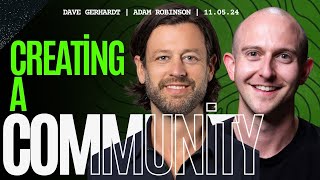
Dave Gerhardt talks founder branding and B2B SaaS marketing with Adam Robinson and Santosh. They cover how to build a personal brand alongside your company, what actually works on social media, and why most founders get it wrong.
I'm trying to run. I don't know if you've seen a post of me talking about this or whatever, but I'm trying to like run a Russell Brunson type playbook. Yeah. For rbdb, but slightly differently than him.
Okay.
I'm trying to keep the, keep the, keep the freemium offer and then we get a 10 conversion rate on who should be our ICP, but we're not quite there because our product sucks. And for the 90% of users who we were never charging, I'm trying to have like a paid course community and coaching offer.
Okay.
That they're basically coming into. And as part of this offer that we. So my whole story, by the way, you should come to this Thursday webinar because you and Dave cancel are slide number two. Literally slide number one is the title slide. Slide number two. I'm like, in 2019, when I was starting to get emails, there were these two guys, Dave Gerhardt and Dave Cancel had this brand called Drift. Came out of nowhere. Hottest brand in B2B SaaS. Hey, what's up, buddy? And they were creating dope content and all I wanted to know was how they were doing what they were doing. But all I could learn was what you were putting out and listening to your podcast. So I'm like, the story of the community is basically like fast forward today. Our B2B is kind of like a similar position brand. Came out of nowhere. We're growing super fast. I'm making a community out of opening the entire kimono and showing everybody everything that I wanted to know about Drift at the time. So I'm like, that's a pretty good offer. What's a really good offer? I would have probably paid $30,000 to talk to you and Dave cancel every week. Just about what I was doing. Right. So for 2997, we're doing a one to many call with me, Santosh, Diana, Pete, our growth guy. Rob, who's our customer success dude, my cold email agency, my LinkedIn agency.
Nice.
Talk to any of these experts, ask them any question that you want and then go work on it. Come back the next week and work on a different part of your business. 2997, one time payment and you wrap in a paid plan of the pro. So, so yeah, it's. We're, we're two weeks in. We've had, we've had two of these group coaching calls and they're, they're pretty interesting. I mean, nice.
Is that, Is that what, is that what this is? Or this is separate?
No, no, this is just like a top of funnel.
Funnel.
Yeah, yeah. Like, it's basically a podcast that we have a live audience.
For. Sure, sure. You got to be careful. Nobody, if you talk about Russell Brunson on LinkedIn, you'll get flamed. But you're used to that. Everything you say, you're gonna get flamed. So it is.
Yeah. So by the way, for those of you hearing me describe that offer, it's a 29.97 annual payment. Yes. And it rolls to 297amonth after that. And it includes the RBDB Pro plus plan, which we're like. Anyway, it's a 349amonth RBDB plan that comes with it. So if you're interested, hit me up adamantretention.com you know.
Yeah, I like that. We did, we did some crazy stuff. Like we did. We did this thing called the Inner Circle where it was like 10 grand a month and you got like the highest level of our product, but then also access to myself, David Elias, our cto, the team, and what was amazing, but we maybe had like a half a dozen people do it. But there's something that, and this is like similar to social media. It's not just the value. Like, I think you learn so much at the same time. Like, you learn about problem, you learn about problems, you learn, you get content ideas. Like, it goes beyond just like product features and stuff. So it's not going to be like applicable to everybody. But I feel like there's some slice of that. There's some people who, especially in the early days of the company, who want that level of access and content. And I think it's an amazing part of the feedback loop.
So that was $10,000 a month. I'm trying to do this for $3,000 per year, but my audience is a bit different. Right. I think the people who are my superfans are like, it's half zero to one founders. So like, we'll do a poll here. There will be 75% founders. Half of them are 0 to 1 and half of them are like basically 1 to 10. Right.
Also, what's cool is you're not. You don't have a. Like, you're you. This is a bootstrap business. Right. And so I think a lot of people that raise venture capital money, you can't, you can't open the commodity. Like, there's a fear of opening the kimono because, like, you don't want to share numbers, you don't want to share metrics, because that opens up a can of worms. And so I think you're in a more of a position of power of to do something like that. And so it's your business, you can do whatever the heck you want. And I think that is a fun marketing opportunity.
It's super fun. And like, and this is what I say in my presentation and what I will say again, like, I know Mike, like this probably blow your mind that I say it's like I know that my work in public content is good, but because it's what I wanted to see out of you guys in 2019. I know for a fact everything I write is exactly what I wanted to see from Drift when you guys were at 5 million ARR and I wanted to know how the hell you were doing it. Yeah, right. Like, yeah, I know this community is money because it's exactly what I want would have wanted from you guys. And then that one to many call, I just know it's worth five times as much as that because like I would have paid five times as much for that. Right. Like even before I started my last company. So anyway, thank you for joining us. You know, I have a weird parasocial relationship with you because I got to know you really well through your book and through your content at Drift. And I'm just really pumped that you're here because, oh, by the way, we show we shared the, the stats of the roles people have. So it's like 58 founder today, 30 growth, marketing, 8% sales. So, um, you know, I just want to ask you some stuff I've never gotten to ask you before about this book. So like, obviously everybody knows who's on this call. It's like transformational for me, this whole founder brand thing. So how, like what, what about each of the stops on your journey led to that book being written is my question.
Well, I think so. I wanted to write a book. So I wish I could say like, you know, I had this burning desire to talk about a topic, but I think I was in an in between stage in my career. Drift had sold, I left Privy, Privy sold. And I was kind of trying to figure out what the next part of my journey was going to be. And I knew I was gonna, I knew I wanted to work for myself and start to establish some type of, you know, content pillars. Right? And so I thought about, man, I see a lot of these people writing books. I got something to say. I could write a book. Let me try to write a book. And so I started thinking about like, what is the. What's the thing that, that kind of overlaps in the sphere of marketing. Things that I've done that I feel like I truly know and compassionately talk about. And I looked back through Drift, I look back through Privy, I look back through my personal stuff and, and I was like, yeah, it wasn't specifically like LinkedIn, but it was more like this concept of the founder or key executive at the company sharing content on social media. It seems so obvious when you say it that way. This was an advantage. It was an advantage for us at Drift. And so for me it actually starts at Drift. So when I joined Drift, the company had like 10, 10 employees. I was the first full time marketing person. And when I came in they were like, you know, what are you gonna do? Like we tell me what your playbook is going to be like, what should we start to do here? And they were a little bit pre product. They had a product but it wasn't like fully featured yet. The website wasn't built out yet. And so they were like, we want to start making some noise and building awareness for us as a company. And at the time they had nothing. They had no website. It was Drift with two T's. They had no social media, they had no organic traffic, they had, you know, no email list, whatever. And so I was looking at the list of ingredients, I was like, well, I got this guy David, who's this well known, well known founder in the space. So he had just before they started Drift. So it was this guy David Cancel and Elias Torres. They were, you know, the two founders. They had come from HubSpot. Before HubSpot, David was the chief product officer at HubSpot. Elias was the VP of engineering. They had a marketing automation company that they sold the HubSpot. Years before that, they kind of went into HubSpot, changed the product culture and really did some amazing work on the product there. After four or five years at HubSpot, they left to start their own thing. So they were both kind of well known founders. And so I was like, man, this is, this is amazing ammo for me as a marketer. I came up through pr, but I've done a lot of work in social media. Like my first job out of college was I was a PR intern. And my job now I see all the threads. My job was to write tweets for clients. I would literally write tweets for a client, put it in a spreadsheet, send it back to them. They would approve it and then we'd ship that content and so, and then When I was at Constant Contact, I worked on the PR team that managed their social media products. And so this was, like, 2010, the heyday of, like, TechCrunch. They had acquired this social media company. I was working with the founder on helping him tell that story. So I get to drift. And I'm like, man, this is like a dream. I got this founder that has 50,000 followers on Twitter. He's very well known, they're connected to Sequoia and all these, like, tier one people. That this is an amazing opportunity. And in the interview that I had with David, he was like, one of the first things I want to do is I want to start a podcast, and I want to start a podcast, and I want it to be called Seeking Wisdom. Here's what it's going to be about. So, like, I didn't come up with the name for that. He had this idea coming in. He just needed somebody to help help tell it. And so that was like, the first three months there was like, you know, ghost writing for him, writing social media content, helping launch this podcast, Seeking Wisdom. And that now I hear people like you say this years later, that became the thing we'd be literally walking through. Our office was in this mall in Boston called the Copley Square Mall. We'd be walking through the mall and someone would be like, seeking wisdom. Like, they would see us and shout us out, right? And he was a very. He was also a very recognizable figure, right? He was a bald, brown man. There's not many founders, like, in that, you know, of that ilk. They, they. They oftentimes look, look more like me. And so he. He stood out. He had really strong things to say. He was saying, like, really pithy things on his own without me coaching him. Like, he just was like a, you know, he would say, whatever, like, here's why you should never hire for your product team. And I was like, really? Tell me about that. I interviewed him and we create content for that. And so that was a key ingredient there that helped build the company, build the brand. Then I go to Privy. Similar thing with Ben, the founder. We started a podcast for him. We started helping him write social media content. That thing made it created an advantage for him. Then in my personal life, LinkedIn had become the number one asset in my toolkit, right? I had like 50, like 70,000 followers on LinkedIn. I was able to launch a successful Patreon off of that, which now became Exit 5. And so I'm like, there's something here. And then there's also this, like, mega, you know, maybe meta trend, meta lesson or mega trend, which is like, people want to buy from people. I fundamentally think that people still are sleeping on social media as a marketing channel for B2B. They think that social media is a consumer play. I don't even think there is social media and marketing anymore. Like, this is social media is how marketing happens today. Right? Like, you know, David Ogilvy would be like, rolling in his grave to get at some of the things that we're able to do with social media that they couldn't do back then. And so nobody had really talked about this topic. And I was like, I'm going to call it founder brand and I'm going to write a book about it and talk about how we did some of those things. And then, you know, like anything, you end up stumbling your way into some of these advocates. And so people like Adam Robinson come along and, you know, this guy talks about the book more than I do. And he's, he's writing, he's, he's done it himself now and he's built his own audience and it's had an impactful, it's made a huge impact on his business. And so it's just kind of taken on a life, life of its own. If I, if I'm honest with you, if Exit 5 hadn't become such a thing, like, I actually was going to go do something, I think there's something bigger to, like, I could have started a, a company, an agency, some, something in the founder brand space. The reason I don't talk about it that much is just because I've like, the entrepreneurial journey as you kind of stumble your way into a business. And I'm like, man, Exit 5 is this amazing thing. I'm just going to focus there right now. But I, I love talking about it. It's also been the thing that's helped us grow. Exit 5 is content and social media. And I think there's a big gap from, from people who actually want to do it. And before I shut up, my favorite part about the whole thing is that everybody, people will say, well, it's hard and it takes time and I don't want to put myself out there. And I'm like, well, not for you then. We all want this, like, magic, you know, we want this magic bullet. We want it. We want this, like, secret recipe. And I'm like, it does take time. It is uncomfortable. You have to do it. And so there's a small percentage of people like Adam and who take it and Run with it and, and have seen the power of it firsthand.
And, and if I, I heard a, an objection I haven't thought about in a while because I'm not contemplating selling my business. I got asked earlier today, am I concerned with the fact that I'm inextricably linked my personal brand to this business when it comes time to sell? I was like, well, you know, yeah, like that, that's a downside. But like, man, when you're starting a startup, like, what are your options? Like, it's so freaking hard. Like, this has to be the most efficient way there's ever been to get a startup off the ground. And it's like, what are you going to do? Either this or go raise a bajillion dollars. I don't do that. So it's like, I'll figure out later how to like, untie myself from this if and when.
I feel like that's also a crutch too. It's like, people, we want to find the app. It's like you haven't even had a successful business yet and you're worried about, like, what's going to happen if, you know, I would much rather it's. I'd much rather pay taxes on a bunch of money that I made when I finally made money for the first time than, like, pay all this money when I'm broke. Let's deal with that when it happens and let's get to that point. Also think it doesn't have to necessarily be tied to just you. I think now you're seeing more people. Like, again, to my point about this is the marketing strategy I would deploy if I ran any type of business. It is social media marketing. It's not going to be just the founder. Oftentimes there's lots of subject matter experts inside of your company. I've seen a bunch of Santosh's stuff. Now I see other people. It starts with the founder, but then if you look at Drift, like we had a company full of personalities. It maybe was started with David, but then I found my voice. Elias is writing. Our head of sales is writing. The head of customer success is writing. It becomes multiple people inside of the company. And that drove so much traffic and awareness for. For the business. So it doesn't just have to be tied to that one person. Right.
I'll turn it over to Santos.
Yeah. So, Dave, great to have you. So I remember those early days of Drift. I dropped by your office initially in Cambridge and later in Copley Square. My question to you is, how has Founder brand strategies changed from like the 10 years ago when you guys were pioneering it to say the next 10 years?
Oh, it's a good question. I think the big, the biggest trend has been short form video. I think a lot more is possible. Like when, when we were doing it back then, it was just straight up like just text posts on LinkedIn. And you know, we used to get comments all the time, like this is LinkedIn, like who's writing content here? And I think people what, what was happening behind the scenes is LinkedIn was shifting from like a Rolodex, your, your social. Like I go to a meeting, I meet Adam at a meeting, then I connect with him on LinkedIn. Right? That's how you LinkedIn used to work. Now it's it, you know, follower following platform. And so video has changed a lot, but also just the, the abundance, the noise there. Like back then you could just be early. It's almost like I use this example all the time. But HubSpot as a company built a moat with SEO because they were like the only company that was blogging in the B2B software space, like in, you know, 2007, 2008. And so they ranked for everything and they just held onto that forever and they've drove a ton of traffic. We were able to just write plain text level content. And I think now what's changed is there's a lot of that. You can't just win with the fluff anymore. It's like again, another content marketing lesson. Listicles don't work. You can't just write listicles and rank for them on SEO and drive a bunch of traffic. And so I think there's more noise, there's more competition. You have to find your voice and your unique angle. There's also multiple platforms that I think you can be successful on. I think we talk about LinkedIn, but I, I really think that you can, I think you could do, do this on any channel. It could be TikTok, it could be YouTube shorts, it could be Instagram, it could be Twitter, it could be LinkedIn. I think you have to pick one to start, but there's also more, more channels and platforms out there. So no different than.
Can I cut you off real quick? To be clear, you're talking about B. You think you could aggregate a valuable audience of B2B people using TikTok?
Absolutely. Have you seen Corporate Bro?
Good point.
Corporate Bro, he had a video a couple weeks ago. He told me he got death threats from it, which is like, that's the fun Part about being a creator, when you have a video that goes viral, makes my problems look small. But he had a video that did 40 million views. Or this guy. There's a guy right now called Vin, Vin Matano. He used to work at Demand Base. He's a sales rep at Demand Base, and now he's doing this whole creator, B2B creator thing. But he's, he's really good at video. He's been editing video since he was, like, legitimately, like a little kid. And he's making videos now, and he's really good at it, and he gets the style. And so he's someone who was a sales rep in B2B. Now he's created content. He probably has, you know, 50, 60, 70,000 followers. I feel like on, on TikTok, I think people are everywhere. I think that you have to. The content is going to be different. I think on, on LinkedIn, people are going to be more open to, like, work content. And so the angle you take in the play might be different, but I still think people are people. When we're scrolling our phones, like, I don't sit down on the couch, pull up my phone, and I'm like, it's time to be personal, Dave. And I only want to see golf and fitness content on my LinkedIn. It's like, no, I love my work. I love writing, I love entrepreneurship, I love marketing. If I see something interesting in my feed, I'm going to save it, I'm going to share it, I'm going to comment on it. I think you just got to, you got to work a little bit harder to find your angle. And you have to be realistic about the audience. Right. And so could you be on TikTok talking about, you know, website visitor identification or, you know, however you classify what you do on TikTok? Like, no, the angle would have to be different, but I think you could go hard on, like, the Adam Robinson bootstrap entrepreneur, super vulnerable, like, you know, open. I think there's a track there that would work on that channel for sure.
Yeah. Cool. Audience, please feel free to drop questions for Dave in the chat. I, I, yeah, go ahead, Sandra.
I just gotta follow up, Dave. So I know David cancel, and I see a lot of parallels in Adam's personality with David's given both, like, talking, sharing thoughts. When you think about founder, brand, and especially moving into the future. We want sales teams to do a lot of this or replicate a lot of this. What kind of personality is this? Something you think that can be taught or learned or Cultivated or you just have to be sort of, you know, a certain personality trait to kind of be successful at this.
Adam and I just did the same thing. Okay. Am I not. So. So I think you can. I think you can. I think you. I think it's like any skill you can, you. You have to learn. I think you have to be willing to put out lots of content, like a key. You know, I've seen this with Adam, right? Like, did he start writing on LinkedIn and all of his posts have the same response that they do today? No. I think I've seen a presentation for him where he shows, like, this chart when, like, things started to take off. Like, you have to put out literally hundreds of pieces of content to understand what your voice is and what your lane is. And so I do think anybody can learn it. You have to be curious. You have to be, like, looking around at what other people are doing. You can't just do it in a vacuum. You have to understand what content works. I don't always think you have to play to the algorithm, but you have to understand the game a little bit and you have to. You have to be observe, you know, observe what other people are doing. So I think you can learn it. I think a key part of it, though, is if you're going to do this at a company, it only works if this person is truly passionate about the company. And so in the early days of Drift, what we had was, yes, the founder brand thing was great, unintentionally, right. But people at the company were on this rocket ship. We were one of the fastest growing SaaS companies of all time. The company had this amazing culture in the first couple of years. Like, you know, the. We were ringing the gong, the smoke machine was going off. People were hanging out at work until, you know, 6, 7pm they wanted to be a part of this thing that is an intangible, that is a key ingredient. You know, if it's like, I hear this question from, like, you know, comms professionals or PR people all the time, which is like, how do we get the company to post More on LinkedIn? And it's like, well, do they want to work there? You know, like, nobody wants to do it because they're told to do it. And I think we didn't tell, like, we didn't tell people to do it at Drift. And that day, in those days, it was like, people genuinely wanted to, like, bang the drum and, like, be proud of what, what their company was doing. And they saw, like, it was a badge of Honor to work there and they wanted to help promote that. And so they were, they were willing to share. And then we, from a marketing standpoint, then we're like, oh, wow, people want to do this, let's channel this. And so I would do sessions with the sales team about like, how to write on LinkedIn, what to say, like how to, how to come up with takes and how to format your stuff. But I don't think anybody can be for. I think if you force someone to do it, you know, it's. They got to do it on their own will. And that comes from being at a company that you're passionate about for sure.
So I wanna, I wanna, by the way, if you are curious about what I was talking about earlier, this like, what I believe is like a new way of going to market which involves personal. The. The Russell Brunson Playbook. I'm just gonna keep calling it that. The cornerstone of it is this weekly webinar I'm doing. We'll see how long I can keep doing it and keep it fresh or whatever. But like I'm doing one this Thursday. Come check it out. I'm not even asking you to buy, but like, if you're just generally curious about like, like. Nathan Laka thinks that like this is what SaaS sales is going to be. And I think there's a strange argument where it's like predictable revenue book got written and a bunch of people got put in desks to send outbound emails to people in like over the last.
He thinks what is going to be the playbook, like webinar.
So, so he thinks like QVC is going to be the Playbook, like bringing like three people in and they're giving these speeches and then everybody's buying and there's all this social proof or whatever, which in a way that was kind of what Russell was doing with this. He was, I'm literally trying to do what he was doing, like weekly webinar stack and close all that stuff.
Like, I did this. We were selling early Days of Drift. I wrote like a whole script and we, we, we were following this company leadpages at the time and they had this amazing webinar where they would like have an offer and sell. And so we, we did that. We could just never get it to. It worked really well in like when the product was like $20 a month, $10 a month and we could do some type of discount. I don't necessarily, I don't know if I agree with Nathan at the like, higher end because it's like when you get into longer sales cycles, like there's no type of hook or offer that you can come up with that's going to drive the urgency needed to get someone to buy right now. But if you have a high volume SaaS product, I think it could be a play for sure.
Totally, totally. And I think it's, I think that, that. One thing I think is interesting about founder brand is that I think if you combine founder brand with freemium, it's totally future proofed because the two, it's like field cells will always work. It always has, it always will. In person, real life networking, you know, maybe using some digital facilitate that that will always work. I think freemium will always work. Right. Even in a zero response rate environment to all the spamming you can do, a free product will still distribute itself if it's valuable. So like the kind of combination of founder brand and freemium, like as sure as response rates are going down next year, the power of founder brand is going up. I'm positive of it.
Yeah, I would take that and I would expand on it just in a different angle. It's like, okay, what do you need in freemium? You need traffic. You need a high volume of traffic. Right. If you can't get people to your website, you're not going to be successful. Sold freemium, I think how you drive traffic in 2024 and 2025 has changed. It is not just write articles that rank and hope you get traffic. It is not do backlink outreach, outreach to try to get traffic. It is you use social media to drive traffic to your website. And so absolutely, if you're going to use founder, if you're going to build an audience somewhere using founder brand, you're going to Dr. The more people like to say that followers are a vanity metric. Absolutely not. You could map the, you could, you could map Adam's followers on LinkedIn and probably map it directly with the traffic to your business and you'd see the impact. So I, I completely agree. I just want to call it out from that angle because I think it comes back to understanding where does traffic come from? Like where do babies come from? Where does traffic come from Today traffic comes from social media. How are you going to play, what's your play going to be on social media to drive traffic? It could be ads, it could be other content. I think founder brand is a great strategy. It's also a great strategy because people want like, there's too much noise, there's too much bullshit out there today. People want to buy from experts. And so the founder, this is the. The premise of founder brand. Right. The founder is someone who, you know, didn't just wake up and have a dream, I'm going to start this SaaS company because I want to get rich. It's usually there's some story there, like, you know, Eric Yuan, the founder of Zoom, he was like VP of engineering at WebEx or something like that before that. Right. And so that's a. I talk about in the book. That's a great ingredient. There's your history, and all your learnings play into how you started this company now. And so typically, the ingredients of what made that person start the company, and then they're an expert. Now you're the one having the industry conversations. You're talking to investors, advisors, customers, partners. You know the market. You have to shape the product roadmap. You have to. You have to know what's coming. You have to know what's interesting. That is all the best type of fodder for marketing content.
Yes. Can I ask you the question about the biggest objection that I get to people starting?
Sure.
Other than just pure paralysis, which was my objection, is I even had paralysis after I read your book. I'm like, I'm not just gonna put a calendar, an hour in my calendar every day and start tweeting against the LeBron James of Twitter. I need some help from people who know the game. But I found this dude, Tommy. He showed me how to write on LinkedIn, and then a year later, I kind of knew the game. Here's the biggest objection that I get, though, Adam. You are your IDEO customer profile, and your ideal customer profile lives on LinkedIn. What do I do if I'm not selling to my ideal customer profile? Is this still a path worth pursuing? The founder brand specifically? Right.
Yeah, maybe not.
But by the way, like, in that question, it's like, Bennett Privy was not that. Right. He wasn't an E Commerce guy. He was a SaaS. He was what I was with the Shopify audience. So with that, that is the question.
Okay, so in the example, so Ben was not that. And so what we did for him was he knew the product really well, and he knew the space really well. And he had been operating in the company for 10 years. And so technically, was he in E Commerce? No. But I would argue he had one of the biggest wealths of knowledge about conversion optimization for E Commerce because he worked with thousands of businesses at Privy. And so for his angle, it was much more tactical. It was like, here are Three plays you can run to double the opt in rate on your homepage. And so I think you can make it more tactical. I would also say that there's a couple of things. We just talked about this. I forget when it was, but there's like a billion. There's a billion. I don't know if it's the active monthly usage, but there's a billion users on LinkedIn. There's a good chance your, your people are on LinkedIn. I would, I would triple click on that and like go down that. And because everybody, we all care about work, we all have jobs in some form, we all have LinkedIn profiles. It's like, I have so many friends that don't ever write on LinkedIn, but they have a LinkedIn profile and they exist there. And so you can reach those people who are going to help spread your word. But maybe for your audience, maybe they're not on LinkedIn still, the founder brand concept applies. It's just a different way of saying, like, go, do go. You know, speaking at industry conferences has been a playbook for like 50 years or however long. Right. That you could argue that's founder brand. Okay. Your audience is that your audience goes to these events. How do you get there and how do you get. It's thought leader, we call it founder brand, but it's really like at the intersection of it's thought leadership, it's pr, it's public speaking, it's. It's being in front of your audience. And I think that that part has not changed. What we're just seeing now is like, it's easier to do it digitally because of, because of LinkedIn. And then I would say if you run through all those exercises, maybe one out of 10 businesses and industries, maybe you're, this doesn't make sense for you. And then like, well, we're never going to be able to talk to them anyway, so.
So it's interesting, you say 1 out of 10, I think people look at me and probably 9 out of 9 out of 10 say, I can't do that. You know, I can't do that. Because, like, he has.
And do you, how do you answer that? Like, do you believe them?
So I answer it in a. Like when I was trying to write for Shopify stores, it just wasn't nearly as prolific as when I turned the canon towards B2B SaaS people and started talking about my tumultuous experience in 2023 of growing and then shrinking a BDR team. Because it stopped working. Right?
Yeah, well, that I Mean that, that lets them.
So I answer it in a. Like, when I was trying to write for Shopify stores, it just wasn't nearly as prolific as when I turned the canon towards B2B SaaS people and started talking about my tumultuous experience in 2023 of growing and then shrinking a BDR team. Because it stopped working. Right.
Yeah, well, that, I mean, that, that lets red meat for the B2B SaaS crowd. So that, that's perfect. On the Shopify thing, though, Like, I think you could have done it. You just need a different angle. Like, there's a whole. If you go to YouTube, there are videos with millions and millions of views about how to do things for your Shopify store, how to, how to generate sales, how to grow revenue. And so maybe it just would have had to have been a different tactic. You can, you can find videos for, you can go do the research, go to TikTok, go to, go to YouTube, and you can find basically any topic. Topic. From from golf to fitness to SaaS to cyber security. There's videos on every. Everything. I think it mostly comes back to, like, you weren't able to crack the content formula for that audience. Is that audience there? Yes. But were you able to crack the content formula? No. On LinkedIn, it's a little bit easier to be like, this thing didn't work. This is a problem that, like 90% of my audience has. That's red meat.
Yeah. And, yeah, I like that. I guess in a way it was like, easier for me to crack the content code for B2B SaaS people because it was so in front of my face. But I was so determined at the Shopify thing that if we hadn't have pivoted, I probably would have figured out eventually. I mean, I was giving so much to trying to figure it out.
So everything is relative to me also, though, because, like, what is. What does success mean? Like, I have a bunch of examples of, I know founders, they're in the B2B space, but they don't have a hundred thousand followers on LinkedIn. They have like 7,000 followers on LinkedIn. And they will say that LinkedIn is the number one channel for your business. And so it doesn't need to be these, like, super crazy viral posts to make a big impact. And especially in B2B where like, one deal from LinkedIn can make your quarter depending on your pricing.
Yep.
Let me bring in a couple of questions from the audience. So, Dave, there's a question. How do you balance influencers or using channels or influencers versus founder led, founder led strategies. The other. I'll ask just two of them quick. Are there any blind spots that you see where founder led initiatives are not being executed properly? So let me pause.
Are there any blind spots? I think the biggest blind spot now is it's, it's not the same opportunity that it was maybe even like two or three years ago. And so I think you got to be more obsessed with the, the content. Just like business and marketing. Like the offer really matters. Like what is your angle? What are you going to talk about? How are you going to do it that, how are you going to do it differently? You know, Adam has his way. Chris Walker, I know you, you guys have talked about him I'm sure in the past as it relates to this. Like very strong definitive takes about marketing. Like he clearly has a playbook. And so I think you got to, it's less about just, just be there, just post, just post every day. That's how it used to be. Now it's much more about like let's measure twice and cut once. Like what is our angle? How are we going to do things? How are we going to make something that's, that's really unique? I think the, what you say and having something to say is the most important part. And this also goes all the way out to like the biggest challenge. I, you know, obviously like see a lot of startup stuff. A lot of companies these days, number one things companies struggle with right now is differentiation. There's so many tools, there's so many similar products. How are you different? I think that flows all the way down into like the founder brand stuff because you have to truly have something meaningful and unique and different. Or maybe you, maybe you're more aggressive or maybe you're funnier or maybe you're pithier, maybe you have more research and data and that's your way to do it. You have to have an angle. So the offer has to be better. On this question about influencers and founder brand, I don't think they're the same thing. I think of influencers as like content distribution and I think if it's like the same way you would turn to Google or Meta to give your money to help amplify your content. I think it's just a different, it's a different content play and you would do something different with influencers where founder brand to me is more of, more always on. But you might find influences, influencers in your space and have them share content and have them work with your brand. But I don't think it's the same as founder brand.
Can I. Can I just. The. The. Your first response. That I agree that people are struggling with differentiation more than anything else. And that one of the things that I love about founder brand is it has to be different. Right. Like, there's not, like, people. People cannot copy you. And that's, you know, why I'm trying to do. This Russell Brunson thing also is like, I think that that's a moat, too. It's like, who is a SaaS CEO that is, you know, teaching on LinkedIn as much as me and can actually, you know, like. Like Russell says in one of his books, it's like, when people are willing to pay you for advice, it opens up a whole world of possibilities to you.
Yep.
Right. Like, you can sell anything, you can tell them to do anything, whatever. And I think that, you know, in a world where it's easy to copy any software, everyone's, you know, any. The second anyone catches a whiff that something's working, you have 10 competitors. It's like, like, you know, Dave Cancel said this about Drift. He's like, when we entered the chatbot space, there were 600 chatbots already. Right. So what did he do? He's like, I was looking at Proctor Gamble. It was like, there's no question. Was like, brand. It's like, how do you build brand around software? And like, to me, the easiest way would be founder brand, because that's just you. It's like, you know, you're muted.
The point on differentiation, the differentiation is like, yeah. The niche can. The niche can be you. Right?
Yeah. Yep. Yep. Love it. So if you were to start from zero.
Yeah.
What would you start doing? In your book, you say just kind of, you know, make some time and start posting. But like you mentioned, you mentioned this. I think, I think. I think the thing that I say is like, you can, like, do a Justin Welch coach the course, and he'll say, decide what your content pillars are and then break it down from there. Right. But it's not that simple because. And by the way, content pillars, for everybody listening, it's like this idea that they're the core things that you speak about, and by speaking about them all the time, you are creating and reinforcing this idea in your audience of who you are. And it's the same way politicians are created. It's the same way any public figures created. Right. And we have a very quick feedback loop to do that on social media, but same basic principles apply. And that's why you could take your LinkedIn strategy, change the tactics, and it will work on another platform. So the question is, the problem with content pillars is you can't just decide yourself. You have to figure out what's resonant with your audience, which is also consistent with who you want to be. Right. So I think that that is your angle. Right? That's what you're saying is the angle is what I'm saying is the pillar.
Yeah.
So how do you find your angle?
Well, you just answered the question. That's how.
Make it easier for me. Dave, you wrote the book.
I think you do have. I don't. I think you said, you said this was not the answer, but it is the answer, which is ultimately, you have to go and test. You have to go and you. So you have to have some. For me, I would start with, I would start with the content pillars. It doesn't need to be this big formal exercise, but it needs to be like the simple question of, like, ultimately you're doing this to drive results for your business. Right. If you were just doing it for just straight up followers and fame, then I would be like, shirtless pics, running ice bath meditation, you know, doing a bunch of nonsense. Like, you ever see these videos on TikTok about, like, I'm a product manager at so and so company, and like, this person, like, doesn't actually work at all. It's just like, I go in the kitchen, I have a good snack, I go, do I go take a nap in the nap room? Like, somebody sent me, actually, somebody sent me this guy's YouTube channel today. And they were like, hey, look at this guy. He's blown up on YouTube. And I go and look at it and he has a, you know, half a million subscribers on YouTube. I'm like, that's great. All the videos, though, are like, perfectly YouTube. Like, it's like, I got. I was fat because I got addicted to Oreos. Here's the science behind why Oreos are addictive. Like, that is amazingly YouTube fodder. Like that. That's, that's, that's gonna be there. So I think we're talking about this in the context of business, though. And actually, Alex Hermosi has talked about this. Like, I don't know if you have followed him at all, but basically he was making a ton of content online. And for a while he was making all this, like, stuff about talking about working out. And he would, he would do these things called mosey meals where he would show, like, how to get one Hundred grams of pro. He would make these ridiculous meals and show more like lifestyle content. And he's like, the views on those videos went way up. But they, after like six months, they were driving nothing to our site. They were not driving any business. And so he's like, we're going to stop doing that. We're just going to focus on like, the education and not do any of like the fun, funny stuff. And so let's, let's start with that as like the principle. Let's be clear. We're doing this to drive business, not just for like, you know, virality and followers on Instagram or so. So we want to drive business. And so it starts with the question of, like, what is the topic that it's valuable for you to be known for? And then from there I would work backwards and then come up with the content pillars. Now a big content pillar is you, is your personal story, is your personality. And so that could either be its own track or it could just be injected into like, the way that you write. I try to insert my personality and humor into some things that I write until people who actually have no idea who I am completely misinterpret a joke that I make on LinkedIn and write horrible things about me, which is always a amazing. Like, I wrote this post, you get this all the time. I wrote this post like 2 a week or so ago, and I love golf. And I, I, I made a joke about golf which I knew was like not going to apply to 99.9% of my audience. And it was basically this guy that I played golf with. He told me he was a sales guy back in the day and he had an interview with the CEO one time and the CEO said, they were in the final round of the interview and the CEO said, oh, you play a lot of golf. What's your handicap? And he said, I'm a scratch golfer. And the CEO said, I can never hire you, man. Nobody, nobody who wants to work hard enough can be that good at golf. Like, and so I basically turned a LinkedIn post and some guy, this like, well known guy in the space, like, comes at me and he's like, man, I, this seems really off brand for you. What about if someone has hobbies? What if someone has this? And I'm like, dude, give me a break. You don't know me at all. Like, anyway, so, so what's it, what, what's it valuable for you to be known for? And then like, what are the, what are the one or two consistent, consistent tracks and and takes and that then I do think it is posting because you're going to learn. You need to learn. You need to put out. I call it daily. I would say I would be posting every single day because I need to understand which pocket of something that I write about hits with somebody. And then I'm going to go deeper on that topic. And so it starts with what do you. What's valuable? What, what topic is it valuable, valuable for you to be known about? What do you have to say about that topic? How are you going to say it in your way that nobody else is saying it? What's different about you? And then you need to just start putting in the work and writing the content. I wish there was, I wish there was a cooler answer than that, Adam. I'm sorry.
Well, in another Russell Brunson quote, he said, you don't start posting every day to get audience likes, deals, leads, whatever. You start posting every day because you're one day closer to finding your voice. And when you find your voice, that is when the whole world gets unlocked.
Yeah, I think he taught, I don't know, I think he called it like he was talking about this in the book in the early days and he was talking about it like as it relates to email. And he's like, I like to write a daily email. Or he did his marketing secrets like marketing in your car podcast for a while, which is like 5 to 10 minute short episodes on his drive to work. And that is an incredible part of the feedback loop and I think that's what people don't pick out. And so I would, I would start with a rough idea of the content topics, but I really would get into posting. Actually one fun exercise that you can do is like I like to go to TikTok or YouTube and I like to. And find a popular creator that you, that you like or whatever or maybe some niche person who makes videos about like, you know, frying pans in, you know, in your, in your world. Go back and find the videos before they. They actually got views. It's very humbling to do that because it's happened for everybody. And you'll see before. Like you do you know this guy? Jay Clouse, Creator Science.
I know.
Okay, he's great.
What's his stick?
So he, he's. He has a community and podcast and newsletter talking about creators like creator economy type st and he was, he. I think he just crossed like a hundred thousand YouTube subscribers. But it all happened within like the last year or two. I don't follow him Religiously, So I don't know all the details, but I did do it recently and I went back to his YouTube page and as recent, as recently as like a year ago, his YouTube videos were like 74 views, 311 views. Now all of his videos are like hundreds of thousands of views.
He.
He just got through that, you know, he got through that, that chasm. You have to do that. And I think most people are not willing to make a hundred videos and hope that 101 is the one that jumps off for you. I think that's the playbook for any creator. Now there might be a situation where you might go quicker than that, but I think that's got to be the way.
Excellent. So we spoke a lot about content. I'm curious, how does your LinkedIn ops or YouTube ops looks like where you convert the engagers into closing or getting something out of them? So let's talk about that.
Yeah, I have nothing. I don't. I have no automation. I have no automation, no DM strategy, nothing like that. Basically we just use it as. I have a large audience on LinkedIn, I write about marketing stuff. People see me as the creator of Exit 5 and they're gonna go to our stuff. And so it could be something like posting about a webinar and get a couple hundred people to sign up. And that takes them off of LinkedIn. It's, it's like the lead. It's like a lead magnet strategy. And so we try to talk about our newsletter. I think you need to have some strategy to like capture, to take traffic from these rented platforms, which is like social media, to owned platforms. And so it's great to have a big audience on LinkedIn. But how I would, I think email is still the number one marketing channel. And so I'd be like religious about how do I get these people on my email list. There's lots of plays you could do with followers and DMs to do that. We basically create a lot of content on LinkedIn. We don't, we don't really link to anything that often. I think people just see the, the affiliation of Exit 5. And I noticed that like when I grow followers and impressions on LinkedIn, the correlation between our traffic goes there. I would say the best thousand dollars a year I spend or whatever it costs is on LinkedIn Premium only. So I can have that like link in the top of my profile that says subscribe to my newsletter. That's our number one driver of, of newsletter subscribers. Consistently. As people see that, I think little Things like that. But then also people are not dumb. You have to understand that if the content matches. Now if I only wrote about like dad and fitness content on my LinkedIn, then of course Exit 5 traffic is not going to grow from that. But I talk 90% of the time about what we're doing at Exit 5, about B2B marketing, about marketing lessons. And so naturally people are going to want to go and go Google Exit 5 and show up there. I think if I had a little bit, I think if I had a little bit more time and wanted to do it, I think you could, I think I could run a bunch more like true outbound related plays. But we're selling a product that's 300 a year and so I haven't found a way to make the economics work for what some of the like LinkedIn folks charge to help build out some of those automations. That's hard for me to figure out. I would do more of that if I could.
Yeah, I'm paying, I'm paying Alec 12,000amonth and he doesn't even write for me. And I'm paying Kyle to do all this, like to do all this LinkedIn automation stuff. Another 50.
Yeah, that's what I mean. So I talked to Alec, I talked to Alec because I was like, ah, I want to get really aggressive about growing active 5. Like I think there's a whole play here where like we could, we could be DMing. We could be DMing people. That's sends all my DMs. We could be DMing people. But I just, I couldn't make it work. But if I was selling a SaaS product that had, you know, that we sold for much more money, like if I was at Drift right now as an example, we, we should absolutely be doing that.
Can I, so can I share something that I thought about when you were answering, studying other people? So this is something that I, that I've only shared one other time. This is a spreadsheet that came from me driving back from Aspen two years ago alone and I listened to six hours of Chris Walker's podcast and in hour six I noticed that he had said the same five things the entire six hours.
Yeah.
So I was like, hold on. So then I go listen to his podcast from a year ago and he's saying the same five things over and over and over again. And that was when it hit for me that like this was how you, you create something like Chris Walker. So I went and looked at all of the stuff he was posting about And I wrote down, I just dropped the spreadsheet in the chat. I wrote down the topics he was talking about in the quote, unquote, enemies. And then I wrote what my potential version of those could be. Yeah, and those literally became my pillars. And they, they popped, man.
Right? Like, but here's the thing though. He didn't, he didn't guess at what those were like, to the point of like, where would you get started? He's been posting on LinkedIn for so long. He knew that. He knows that, like, okay, these are the topics that like go nuts when I talk about them. Like, I have this one post that I've written about, like, you know, 15 things you can do to get ahead and don't show them my credit card. I have this, I have this list of things that it's like 15 lessons I learned growing my career from PR intern to CMO. And I have this picture of me like with hair and without hair. And I, I just po. I have a calendar reminder and once every three months I repost it and it goes viral every time. So I know that works. Chris, Chris is a smart. Chris has been posting on LinkedIn. So he knows I want to just go back to that because I don't want people to be like, oh, that's lame advice. You just have to get started. But like you do. You have to find your pillars and then once you figure out what content works, you just got to say it over and over again. Because you know What? I have 170,000 followers on LinkedIn, but I probably get between 30 and 50,000 impressions per post. And so only a tiny percentage of my audience is ever actually seeing my content. And so you have to post it more. Or like, look at Benioff. Benioff is the master at this. They have one or two key messages at Salesforce and they just repeat those messages until the end of time. That is the way. So you gotta go and find what works and then you just keep innovating on that. Or I mentioned that guy Jay Clouse as an example. If you go to his YouTube channel, you can clearly see that the pocket he found, the content that takes off for him, is talking about how YouTube creators have grown. So he went from talking about creators to the videos that popped off on YouTube. We're talking about YouTube creators. So now he's doing more of that. It is this self fulfilling thing and you go triple down on that until it doesn't work anymore and you find more new topics. Last thing on that. Once you are successful with One topic like you, you had messaged me a couple months ago about YouTube and I was like, yes, I absolutely think you could be successful with YouTube because you already have a sense of like, dog. Yeah, he's in kindergarten. I have. You have a sense of what's working and how to go create content. So I absolutely think start with one and you can be successful with others.
So another way to say that, my buddy Andy Muborn says it, he says the reason you post on LinkedIn is not to get followers and likes. It's to get a library of greatest hits which then get you followers and likes. I think that, like, perfectly articulates what.
Absolutely. Or like, I, one day, years ago, I just wrote like some pithy line like, life is too short to work for a CEO who doesn't get marketing. Like, you know, probably sitting on the toilet and wrote that, right? And that post, yeah, that was funny. That post. That post went nuts. That post went nuts. And so I'm like, boom, there's something here. This is how it really happened. So that post went off and then I was like, I was working with a video editor at the time and I was like, oh, what if we make a funny video about like, all these people who work for the CEO who doesn't get marketing? So we invested, you know, probably 10 grand, we made a video. That video worked. Now I say that line all the time. This is how these ideas happen. You just have to be posting because you never know when, like, your thing. You have to be willing to just post something every day because you never know when your thing is going to take off. And Adam, I'm sure you feel the same way. I could sit here for an hour and I could try to write the best LinkedIn posts I could. But then I could, like, be on a run or come back to my house and just have an idea and like, literally scribble it into my phone and post that. And that's the one. I, I work with the guys at Hatch. They do our podcasts and video clips and we've been trying to do more with vertical video and get them going on LinkedIn. And an average video clip that I post gets like, you know, 70 likes and 12 comments. I posted a video. My wife and I went on a hike the other day. It was a seven second long video. And I posted the video of that of us on the hike. And I wrote like, whenever I'm stuck, I go out for a walk. Whenever I'm stuck, I go work out. Whenever I'm stuck, I go For a hike. That post had like a hundred thousand impressions, fifty thousand video views. And I was like, this is what drives me nuts about being a creator. It's like sometimes the highest production value stuff, you spend all the time and then you just have one idea. But you have to be open to doing that. You have to be willing to publish and to get that feedback loop going.
Absolutely love it.
So valuable.
Santosh, any closing thoughts for Dave?
How much?
We have five minutes.
Somebody said earlier in the chat, it said, like, how do you. Somebody asked about, like, how do you compensate someone who has like a. Built a personal brand at your company? And I love this. And I've heard Chris talk about this. Actually, he had the best answer for it. He's like, pay them more. Like, what do you. What do we want the answer to be there? Like, if this person has created something that is now it's like you've, you have a 10x engineer who is like super valuable to your product because they help, you know, write the initial code, whatever. You're going to pay them more to stick around. You have a top sales rep. You're going to pay them more to stick around. If you have somebody on your team who has built a strong personal brand that's helping your company grow. Yes, it is. You're not going to be fair to other people because they're giving you an unfair advantage as a company. And so you're going to pay them more. I think this is the new part of work that people are going to have to navigate.
Awesome show.
That's, that's. It all connects, right? We are trying to differentiate. You're trying to cut through the noise. There's going to be more and more competitors. More, more vendors for the same category. What we are talking about around content LED or founder led is going to be so valuable in coming years.
Yeah, stay. You got to just stay. If you want to be successful, you have to commit to doing it. And number one thing would be to get curious. Maybe you're not ready to do it now, but start following adam. Go to YouTube, go to Tik Tok, go to Instagram, Start doing the research. Adam just said he'd listen to six hours of Chris. Like, that's what it takes. And I'm, I, I don't want to hear people who say what takes time. Well, yeah, because now you have this incredible advantage where you can literally post a link to a zoom webinar and you had 165 people show up and now those people are part of your business. Like that's what happens. And so if you're willing to put in the work to do it. It's an unbelievable marketing channel, Dave.
Where can people find you? This was such an awesome episode. Thank you for coming on.
Yeah. I'm gonna see you next week. You're gonna. We're gonna have dinner. We're having dinner in Austin. I heard. I heard you might go for a run at some point. That's. The people have told me you're going to be there. I don't know if you will or not. Yeah, I know.
Do you want to go for a run?
Yeah. Yeah. Thursday morning, I'd love to go for a run.
Yeah.
Okay. We'll talk about it and then we'll have dinner that night.
Sonic cold plunge. A run in a Sonic cold plunge. I would love that.
Is there a place we could go to?
I do.
Yes. That's the LinkedIn content we need. So I'm on LinkedIn. Dave Gearhart. Check out Exit 5. I think we've built the best community for B2B marketers. We have 5,000 members. We've built a amazing business here and we're going to keep doing more. So follow me on LinkedIn and thanks for having me. It's always fun to talk a little bit inside baseball with people who know what's going on.
You're one hell of a guest, Dave. Thank you very much. And thank you for inspiring me so much when I was trying to start get emails five years ago and leading me to create a community around what I wanted from Drift at the time.
I love that everybody needs inspiration from somebody else, right? So.
Yeah, exactly, man.
See you guys later. Thanks for having me.
Thanks, everybody.
Later.
Okay, bye.
Adios.
We ending it. Thanks, everybody. That was great, man. He's. Yeah, I'm still live button. And there we go. Bye, everybody.
More from Dave



Asynchronous work isn’t a trend. It’s how teams actually get things done without burning out.

AI is changing product marketing. Here's how top B2B teams are scaling without cutting corners.

How Product Marketing Is Evolving in 2025: Lessons on AI and Leadership with Jennifer Cannizzaro

Why referral programs look different outside of SaaS (and why that’s a good thing)

The secret to scaling dual GTM? Give every marketer ownership and get out of their way.

From content to CMO: how Jess Cook made the leap (and built her first budget from scratch)

Leading B2B Marketing for the First Time: Strategy, Budget, Content & Team with Jess Cook

Most B2B advice is built for SaaS. But what if you don’t have demos, PLG, or lead goals?
