Goldenhour Recap, Listener Questions, and The Future of E5
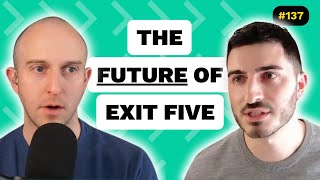
This is a YouTube video titled "Goldenhour Recap, Listener Questions, and The Future of E5" featuring a conversational podcast episode recorded in 2024. The episode includes Dave Gerhardt, founder of Exit 5, and Matt, a team member involved in marketing and community. They discuss topics such as building credibility between sales and marketing teams, advice for starting a marketing agency, the role of podcasts in brand awareness and lead nurturing, the relevance of live webinars, and reflections on community and event-building efforts for Exit 5. The content is informal and interactive, including listener questions and voice notes, providing insights into B2B marketing and the future direction of Exit 5.
You can't really be a great partner without a shared goal. Similar to how you build credibility in anything, really is getting in there and, like, working on something together. It's tough to build a relationship with somebody until you actually get in there and do the work together. Even just saying that, like wanting to be a partner and going to the marketing leader and saying, like, hey, I want to be. I want to be a partner to you, I think that's definitely step number one. Step number two is you can't really be a great partner without a shared goal.
Ex.
How do you think this has been going so far? Have you. Has anybody. Has anybody emailed you about it?
I think it's been going good. It seems like for every episode, there's been at least a couple of people who have shared one insight from it on LinkedIn. And when I'm speaking to people, a lot of them will be like, oh, by the way, I loved what and Dave talked about last week. So cool. People seem to be liking it.
All right, that's good.
I'm.
I'm enjoying doing it. And the episodes have been, you know, as well received as the other one. So I think we should keep doing it. All right, let's do it. I'm ready.
Okay, cool. So the first one, we got our first voice note, which is awesome. Okay, so, okay, if you send. If you're listening right now, if you send a Voice Note to hi, exit5.com, we're going to play your voice note during the episode and we're going to answer it. We're going to give our advice. So, hey, look, if you can get 10 minutes of Dave Gerhardt's time, I mean, I think you should take it. Right.
Some people. Yeah, some people, I'd have to pay them for that, but for this audience, yes, maybe. Fair. Fair.
You could even email. So we will. We will read out an email if you email in, but voice notes are going to get the priority. So let me play our first voice note. It's from Amy Tarkington. She sent four of them. I was only able to choose one, and there was one of them about LinkedIn, but. Okay, I didn't want to play that one. I think we always talk about LinkedIn. So this one's about. She just started her marketing agency. What should she do to generate some attention and get her thing going?
By the way, shout out to. Shout out to Amy. Sending four voice notes out of the gate, like, MVP status right there. I'm ready.
All right.
Hi, Dave Gerhardt, this is Amy Tarkington. I'm a owner of a new marketing agency called Chen Industries. And my question for you is, when you start a marketing agency, how do you go about creating a portfolio? If you're just starting, I am assuming that you can't use work that you've done for previous companies who you've worked for. So how do I show, you know, my chops without making my company angry? Thanks.
First of all, great question. How great is that? That's great. It's why we got you that good mic. That was. That was like, awesome. I was like, oh, these are going to be great, but we have to edit them in. That's great. Liter held up the phone. Yeah, to the speaker.
Exactly.
All right, Amy. So my perspective on this is you don't. I think that if you have a. So ultimately you're starting an agency because you have experience in a niche, and I think that's going to be the most important thing. And so it's more about, like, narrowing down to define your story, what and what are you offering? And so as an example, let's use Tim Davidson. He's been on the podcast. I saw him last week. He went. He left his company. He was VP of marketing at a agency type company, and he left to start his own thing. Excuse me, sir. He left us. He left to start his own thing, and he niched all the way down to LinkedIn ads. And so I think number one is like, that's most important because then what you're gonna do if your company can't know about it, you're going to be on LinkedIn and you obviously have a LinkedIn profile. And so I would make sure that your LinkedIn profile and even your personal website explains who you are and what you have experience doing. And so now if I see. If I get. If I get a outbound message on LinkedIn from someone who's like, you know, hey, Dave, my name is Amy. I've spent the last 10 years, you know, doing X, Y and Z at these type of companies. I'm actually about to start my own agency where we're. Where we do LinkedIn ads for B2B SaaS companies. I think we could help you. Would you be interested in learning more? Like, that seems like an effective strategy where you don't have to have public work showing, but you have enough of like a. A name, A name and resume and background you've niched down to define, like, what your offer is. And then you're going to do outbo. I don't think that your Company needs to know about that. You don't have to broadcast it. I will say, though, one of that, that would be how I would get, like, my first one or two clients. And then I do think eventually you have to make the decision of, like, either staying or going by yourself. Because I just talked about this with somebody last week at Golden Hour. They were like, I really want to go full time on my. My new thing, but I can't get enough demand because I can't tell anybody I'm doing it. And that in that sense of, like, love that phrase, the obstacle is the way, right? In that world, like, okay, way you're going to get more clients is if you quit your job and then go to LinkedIn and say, hey, attention everyone, I'm starting my new business. It's called X, Y and Z. And so you have to do that little dance and eventually make a decision. But for now, I would take this approach and hopefully be able to get one or two clients, then be able to go in full time, do this on your own, and then build a portfolio. What's. What's your risk? I see you nodding along, but what's your reaction to that?
Yeah, yeah, I definitely like the advice of, you know, finding your niche. Um, I may or may not have went to your website, Amy, and may or may not have thought it was a little broad what you're offering. So I think that's the first thing. And I think the Tim Davidson example is awesome. I think another one too. Like, I. I've never done it, so I can't speak from experience, but, like, can you do a couple free projects for people? Like, can you approach people and say, here's what I'm good at. Like, I noticed maybe based on your website or based on something that maybe you need help here. Like, I'll do it for free. And the reason I would do that is because, I mean, a, you're working, so it's not the income that you need, it's just the fact that you want to start a business, right? And then that free work is going to be the stuff that you can show to future clients. So if the issue is, I don't have the work to show, it's like, go do some for free, build up your portfolio the next three months, learn from your mistakes, and then come out with a bang and say, I have an awesome offer. I've done it for three companies. Here's why you should work with me.
Yeah, and you. You can. What's cool that that's good advice to do it for free. And you could try both approaches. You could try the free approach. You can try. I do think there's some value into, like, I think the free. Whether it's the free approach or just get started, there's value in, like, the. You really need to. I've made the mistake in the past of, like, obsessing over packaging and pricing, especially for the first handful of clients or customers. I think the way you really learn about what the right engagement and right work is going to be from actually doing it. And like, wow, that was completely out of scope. Like, I got. That was not. That's not what I want to do. Let's trim back. Or. Oh, interesting. This went really well. But we could do it this way. So in either case, if you're going to take Matt's advice and do it for free or mine and try to get paid for it right out of the gate, I think the most important thing is that you. If you want to go do this, you got to go do it. Go do it for a company, go do it for a customer and. And build from there. I think it's easy to worry about how you're going to get client number 5 and 6 and 7 and 8, 9, 10. Like, just focus on one or two customers. Also. I see this all the time from people that I know myself personally in. In our network and stuff. Like, so often it. It's. It is the network effect. And so you do good work for. You do good work for someone. All of a sudden someone's like, in Exit 5 as an example, like, and says, hey, I hired so and so for this video project, and they were awesome. Or the CEO gets asked like, hey, who did that video? So getting that. Doing that work for the first time is really what matters the most.
Yeah, exactly. Think of even these clips for a podcast. Hatch does them, and we recommend them all the time. So if you do good work for people, they're going to talk about you. There's no doubt about it.
Yeah, it's funny, somebody who commented. I posted a clip of one of the things we talked about was utms UTM links on this podcast. And I, I posted that clip and somebody had a great comment. He said, you know, it's kind of funny. Like, u utms are. Are a problem created by marketers to solve where, like, if the thing you. If the thing you created was so good and so interesting to people, they would most likely just find it on their own and then tell you about it. And I think we've seen that with Exit 5. I've seen it a bunch of times in my career as a marketer. It's, it sounds really nice to do that. But I also understand why inside of a company you would use the, the trackable, the trackable stuff.
Yeah, yeah, exactly. Exactly. Cool. I think we answered that one. Well, I got another.
Good, good, good luck. Send us a. By the way, just, we don't have to share it on the show, but just Matt and I, out of curiosity, when you listen to this, email us back. I, I just am curious what type of agency you're going to start and we can trade a couple emails on this if you want to.
Cool. Cool. Last mailbag, we actually had someone write in. As a sales leader, what are the best ways that I can build credibility with my marketing peers?
Oh, sorry, sir, Sorry, madam, sir, whoever you are. We don't take, we don't take sales leader questions on this podcast. You're going to have to go to GTM Fund or Pavilion or somewhere else.
So here you go.
Next question. No, just kidding. What? That's awesome. First of all, shout out to you, whoever you are, can you email, can you email us and tell us who you are? Because I, I, I want to know, like, what type of sales leader is listening to this podcast? That's like inception levels. It's awesome. So the question was, I got caught up in my own yapping, Matt. The question was, how do I build credibility with the marketing team?
Yes.
Wow. Usually, usually it's the other way. Yeah, usually it's the other way around.
Exactly.
I think, I think you build credibility with the marketing team by, similar to how you build credibility in anything really is getting in there and like working on something together. You know, I think it's tough to build a relationship with somebody until you actually get in there and, and, and do the work together. And I think number one is just like, even just saying that, like wanting to be a partner and going to the marketing leader and saying like, hey, I want to be, I want to be a partner to you. I think that's, that's definitely step number one. Step number two is you can't really have a, you can't really be a great partner without a shared goal. And so if ultimately, if Matt and I have different incentives, we can have a part, we can have a partnership on the surface and we might know each other's coffee order and enjoy working together, but something's going to break down the road. So I think really getting aligned on, on a goal and then understanding how at your Company sales and marketing contribute to that goal and then work together. I, at Golden Hour last week, John Miller, who's the founder of Marketo and Engagio, he said, he was on this panel and he said, you know, ultimately like, he said something like the ulta. The, the dream scenario would really be sales and marketing have one shared goal and that's how the whole thing is measured together. And, and they're, they're one team and I, I really like that concept and so I think that's the fundamental level and then, and then that's like the macro level and then like the micro is like in the day to day things like giving real, you know, giving real feedback, meeting halfway and saying like, you know, here's what we do, here's what you do, how can we work together? But then not, not just doing that at a fluffy level, like finding in play right now that you can collaborate on and, and, and make better. I feel like that's where the relationships get built. And so it's like, hey, actually we're, we need, we've been working on this new sales deck, like to have the head of sales, like deep in that process in a positive way with marketing. Okay, great. Oh yeah, now, now I feel like I just spent a bunch of time with the sales that are, we worked on something specific together. Those are a couple of things I would, I would think about.
Cool. Yeah, yeah, I, I agree with a lot of those things. I find that at last, companies, when I didn't have the greatest relationship with sales, not like it was bad blood, just like we didn't have the best working rhythm. It was because both of us or the sales team was like reactive in how they would approach marketing. It's like they would do a project and then when it didn't work well or all the emails sucked, they would go to marketing and be like, oh, actually can you help us rewrite all these? And it's just like, why don't you tell me about this? In the beginning, you know, I could have done this work and then we both could have done this project together and gotten the win together. So it's like be proactive in how you use marketing and actually use their strengths. Like if you have your sales team writing a bunch of emails, like, is that really the best use of their time or should you get the good marketing copywriters to do that? Right. It's almost like in a way in the past I would find it, and maybe this is my ego, but I would find it a bit offensive if it's like they were doing something that I could definitely do better. So it's like, please use me for the things that I could do well and I'll use you for the things we can do well. So I think that's a big one. And then the second one is like, let's not point fingers at each other. I think both teams need to do better at that. But it's like when something gets brought up, like not saying, oh, that's a marketing thing, right? Cause then it's just like, oh, like it kind of puts you on, on, on the defense, right? It's like instead of trying to point fingers, it's like, all right, marketing, like let's meet tomorrow and let's game plan and how we can tackle this and share resources. Because I mean, a lot of the time too, like sales is like a eight person team and marketing is like a one or two person team. So it's like it can't always be a marketing thing because they're super under resourced. Right? So I think those are the two big ones from my personal experience and.
The more you can understand that, both how, how each team can work together and what each role will be and then you can figure out, hey, we're going to work together to close deals. Oh, marketing contributes this way. Sales contributes this way.
Yep, exactly. Exactly. Cool. Next one. This is not a write in. So these are now the popular topics from the community and social this week. The first one was someone asked in the community, should a podcast be for brand awareness or for lead nurturing?
Oh boy. Well, I think it depends on what you mean by lead. Lead nurturing. I do think that the podcast is a great nurturing tool, but it's not very linear, it's not very time based. I mean, we see it all the time with Exit 5, right? Matt, somebody might say something like, I've been listening to your podcast for six months and I finally became a member today. Right now we have a subscription product and a community that we're selling. That's our product. But that to me is no different than a SaaS company selling, you know, any one of their products, right? You're going to entertain, educate, inform with your content. And then when someone is ready to buy, which we know 95% of people are never, are not in the buying bucket, only 5% of people are in market to buy, then they're going to think of you. And so maybe something, maybe there was a catalyst, maybe it was an ad in that episode after six months, or maybe it was at work that week, their boss was like, yeah, we really want you to, you know, here's, here's $300. You can invest this in some type of, like, learning tool. And that was what prompted her to, to go and sign up. So I do think the podcast can be a nurture tool. I also think it's a brand building tool. Brand building. I think it builds awareness and affinity for your brand. And if that's something that you want to build, podcasting is a great tool. I also see it separate from the kind of regular marketing and demand machine. It's not going to instantly generate sales. It does contribute to sales over time in different ways. It's not going to be direct response and contribute to sales. So you might need to still, you, you still need to do some of those things. But if you're like, hey, we want to start a PODC because we believe it's something that will help us build our brand and awareness and consideration all these things over time, then yes, I think it's a. I think it can be a great channel.
Yeah. Yeah, agreed. I, I think it's both. I think it's going to help you build brand. It's going to help you nurture leads. I think the big thing too is, like, you're talking to people in your space and you're learning, so you're getting smarter as a team and as a company. And all of the great content you get from the podcasts can be shared everywhere. So it's definitely going to help you with brand awareness, even to a slight degree in the beginning. And then lead nurturing. Yeah, we see it all the time. And there's the play where it's like, it can be an ABM tactic too. So you could actually invite the people that you want to have sales conversations with on the podcast and then hit them up again at a later date. I think that's a great play.
The content really matters here too. Like, if it's. If your podcast is just web webinar replays, then you're, you know, nurturing. Lead nurturing is going to feel different than if it was more of, like an entertainment approach. All right.
Yeah.
What else we got?
Totally. Next one is, does anyone care if a webinar is actually live?
No. What did I write on that?
You wrote. I mean, I have to scroll through a bunch of comments here. I think it was something along the lines of, like you said. No, it depends. Yeah, usually the hosting company, the ones putting on the webinar, I'm not going to read you actually left a long comment here, but there was something along the lines.
I know what I said. All right. Yeah, I think. I don't, I don't think so. I think that that has kind of changed. I think that's kind of changed. And actually the only thing that people spend time in their lives and watch live anymore at all is pretty much sports. Yeah, there's, there's really nothing else every. I, I can't think of anything maybe there. And so to think that someone's gonna be there at one o'. Clock. Now, the company hosting the webinar has historically been the one that, that it matters to them if you show up live, because showing up live, it shows more intent than somebody, you know, just registering or whatever. But I think that's kind of an outdated way of looking at it. I think that I would think of. I would think of webinars as part of, just a part of a content strategy. And some percentage of people are going to want to be there live. And we see it with our webinars as an example, like, because we're, we're marketers in the group and everybody's kind of peers. It's fun to be on the chat and like, chime in and add, convert and discuss stuff. But is there any reason anybody has to be there live? No. And so we treat it, but I think we then market it as such. I think that's the best strategy is to be like, we actually literally write that in the marketing copy for it. We're like, hey, this is a webinar. I like when people show up live because it's more fun to have you in the chat and to get your feedback and ideas and help each other out. But if you can't make it live anyway, no worries. Just register and we'll send you the recording. And I think ultimately most people care about that question about live attendance or not, because they're trying to measure some level of like lead engagement or lead capture or some, some part of the funnel. Well, you can still get the same thing if you just think about it like, oh, yeah, who consumed this video at some point. Why does it have to be live? If you want it to be live and it has to be live, then you better have a damn good offer and reason for people to be there live. Otherwise, for most people, it's never gonna, it's never gonna apply or you're only gonna have a very small number of people there. So, no, I think I know why this question was asked, and I don't remember who asked it specifically. But this is a perfect ex. The reason this question gets asked is because probably inside of that company there's some discussion about like a live webinar attendee should be scored higher as a lead versus someone who watched the video. And so therefore how do we make it so people show up live? And I just don't think that that's really possible. And so I wouldn't even play that game unless you, you know, unless you're a sports franchise of some kind.
Yeah, yeah, yeah, I totally agree. Whenever, when I wasn't on the Exit 5 team, I would always like to come to live events because I felt like, oh, like I'm, I'm making it live. I'm like I'm getting it while it's playing so I don't have to go watch it later. But with that being said, like, there's so many platforms now where you can record something and then play it that date and make it look like it's live. So it's really not the biggest deal. Like sometimes you can't even tell. I do like the element though of like, if people are in the comments saying funny things that you can make that part of the dialogue. But again, like, I don't think it takes away from anything. I think whether you have that or not, it's not going to happen. Change the perception that much.
Yeah. I do think though this is separate. I do think that live people who are there live, it does perform. It is better. Right. It's the same reason why like events are back right now. People like the in person connection. Even though this would be online, the, the knowing, knowing something is happening live like does create a certain level of energy and, and community and it's different. I just think it's really, it's a really hard metric to influence. And so like we, we might get 800 signups or webinar and pretty consistently like 200 of those people will show up live. I don't think it's valuable to be like, well how can we get those 600 other people to show up? Because I feel like that's just not being realistic. That's understanding our consumption habits. Like, let's be realistic. People don't want to come to. Most people don't want to come to this live. And so let's make it easy for those other 600 people to still get this content.
Yeah, yeah, exactly. Cool. Last but not least, I had something, but I saw what you posted today about, you know, six months ago, I decided to stop working alone. Hire a team and what we've got going on. And I figured what better time to chat about this live than inside Exit five?
Yeah. All right, so you put me on. So, so basically so last week I went to. Last week I went to Golden Hour, which is Audience Plus's event. And it was in Brooklyn and we had already started to plan our in person event. And I think we, we've been excited about that. But then this was the first event that I've really traveled to for work in a long time, maybe five years. I went to Austin for something that Pep did two years ago, but it wasn't really, it wasn't, it was different than this. And I couldn't believe how many people like knew who I was and knew what we were doing with Exit 5. And I say that with no ego attached to that at all. I'm just saying it as a fact. Like I haven't been out of the house in. So I forgot like, oh yeah, like there is something like we have a strong community and connection in this world and like, I wasn't ready for it. I was a mouse. So drained. I messaged you. Like, I was so drained after a day because like within two hours of going to this event, I talked to more people than I in person, I talked to in like a year. I just couldn't believe it. And I think that's the showing you the power of like a social network like LinkedIn and the community that we've built. And that was really cool. And so that got me like, man. And I've, I've talked to for a while, but like, I wasn't going to do Exit five. I was going to do something else, maybe shut it down. I don't want to do this. That just like, was like a cult. It was a slap in the face. And I saw Kaylee Edmondson, who I've talked to, I talked to about this before, and we, we sat, we sat together for a minute at lunch and I said, I'm mad at myself right now because I almost like didn't go do something in this space. And here I am at this event and like so many people know who we are and what we're doing and it's so obvious that the company that I should be building is in this because, you know, business is hard and why not go somewhere where the wind is at your back a little bit? And so that just whole thing, that whole experience got me like just super, super fired up. And I totally see the power of the in person event and why that's really important. And the connection and energy and buzz was. Was just different than something I felt in a while. So that paired with how many people were like, I'm coming to your event. I was like, are you serious? Well, first of all, prove it. Like, when my kids tell me that they're tired before bed, I say, prove it, because usually they're still running around two hours later. But you. You tell me, tell me that you're coming to my event. But this is on. I know who you are. You've told me you're gonna prove it when those tickets launch. But that made me feel like, man, we gotta. We gotta do something in this space. And then everybody. So many people that I know love Pavilion, and Pavilion does these great CMO summits and events, and they're part of this group. And I'm like, we have. We have some of that. We have that, and I want to go and build there. And so I think the clarity that I' over the last couple weeks is like, I think the community is one product that we have, but we have. We're truly building a media company in this space. And I think events is an area that I want to explore now. This could all fail. Fail horribly, and that's the reality of it. But, like, we're doing our first event. I'm excited about the next event and the next event after. I want to hire an events person. I want events to be a big part of our business. And so what I wrote really, on LinkedIn today was just expressing some of that. And I like to write some of these things every now and then to. To. To give a little tease and glimpse into the future. I think when you let people in on where your business is going, they're more likely to be involved today. And I think if people are like, oh, it's just a community, that's different than, like, oh, actually, what they're doing at exit 5 is really interesting. And so even though we're not there yet, I think sharing it along the way, you know, builds some awareness and affinity. It also, who knows who we might work with and hire and companies in the space. There's just so much going on that I wanted to write it. And usually when I. They write something like that, it then solidifies in my mind and it's like, oh, yeah, kind of here are the three. The three pillars. What, what's, what's your reaction of that being on the. The other end of a thousand Slack messages?
Yeah, yeah, yeah. No, it's. It's pretty like Unreal what we have. I just don't think people have the opportunity even like once in their career if they're lucky to work with a brand like this.
But when you say that, I just want to, I just want to explain that for people like when, when you say that what we like, what is the sign? What for you? Because it still is almost like surreal to me that you're in my business and, and you think it's cool, you know, but so, so I'm curious is like, what is the sign?
So if I had to sum it up, it's like, do you feel like you're fighting uphill or, or downhill?
And the reality is we actually, we did this is, this is on top of like a down month. Like we're struggling to grow trials right now. And so we're trying to figure that out. But even though things, even though it was a bad month, I'm excited about the vision and it seems like you've bought into that and so there's like these, these feelings. This is why I talk so much about how do you know if something's working? They. People will tell you. I mean, Matt, if people saw like our slack, our love slash proof slack channel, like that says it all.
Yeah. Yep.
And so this is like the meta, like the back to marketing lesson. Not, not just me like boasting about Exit 5 and being so happy. But the marketing lesson is like when you have something you will know and people will tell you. And so if you over index on how to measure it, it, you don't, you don't get this. And I think now what we're learning is people want more and I think we're in an opportunity to do that and do it and do some interesting things in this space.
Totally, totally it. And I think you feel it in a company like when it's when some of the fundamentals are broken, you hit a point where you're like, I'm just not going to change how leadership thinks about this. I'm just not going to change how crappy the product is. I'm just not going to change how dead the industry is. Like, like, I don't, you know, you just don't feel any of that here. It's almost just like if we need to tweak things, okay. But all the fundamentals are so sound. And couple that with how people feel about Exit 5. It's. Yeah, it, it, it's really something. I even spoke to a couple friends today that I haven't in a long time and like haven't talked to them since I joined Exit 5. And the first thing was like, how's Exit 5? Like, how's it working with Dave? And I'm just like, these are people where it's like, I don't even know if they would have known who Exit 5 is. They're just marketers. Right.
So it's like, I don't know. He just sends me a lot of slack messages.
No, it's funny. They were like. They're like, is he intense? And I'm like, no, actually, like, quite the opposite.
Like, you don't think I'm intense? I feel like sometimes, like, when I'm on it, when I'm on, like a. A thread about something, it can feel. I'm like, do people think this is intense? And then I'm trying to, like, say it in a way that sounds like this.
Yeah, yeah. No, no, I. I don't. Intense, I think, has negative connotation to an extent, so. Or it can. So in that sense. No, but I think you're. You're passionate and you care deeply about the details.
You know what's weird? A bunch of, like, a couple people that I met were like, oh, you're much nicer than I thought you would be.
Yeah.
And I never know how to. I don't know how to react to that.
Yeah.
And again, back to, like, the in person thing. I think there's so much value in like. Or, like, the intense piece. Like, we've. You've spent a bunch of. We. We've done so many video calls and phone calls, and you've heard me rant and you've heard intonation and sense of humor. And, like, once you have that, don't you feel like that context of someone also helps, like, how you interpret their writing? And if you don't. If you only have the writing, you don't get any of that.
Yeah, absolutely. Absolutely. I feel like now that I've been here for a couple months, it's like. I know, like, I know, like, the way you say certain things, it's like, this is one of Dave's ideas. Or like, this is like, you should definitely do this. Or this is like, maybe you should or shouldn't. Like. Right?
Yeah, yeah, yeah. But I'm always like, what do you. But. And then is that on you? Like, the fact that you thought I was not as nice? Is that on you or is that on me? I don't. It's very confusing.
I don't know. I mean, I think people are just always going to try and make those judgment calls.
You got to be careful out there, though. Then I saw. I met Adam Robinson for the first time, and he was, like, literally three times taller than I was. And I was like, see, this is. This is why you never know.
Yep, Yep. The height one is always the biggest. It's like, how. How. How tall are people?
Right.
I mean, I don't think of it that often, but it's always, like, they. It always surprises you. It's never what you think.
Well, the. The other hard part is somebody who doesn't look like what they look like in their LinkedIn picture at all.
Yeah.
And they're, like, right up in your face, and it's like, dave, how you doing? And you're like, oh, oh, oh. Who is this? Yeah, I. I, like. Luckily, I'm just, like, like, short with Short man with a bald head. And so, like, I. Oh, yeah, that's me. That's me. I was. I'm not wearing a hat. You'll know who it is.
Yeah, exactly. I feel like you're, like. You're spottable a mile away, so you're lucky.
Yeah, but there's, like. There's, like, a million other people who look like me at the same time. But, yeah, and then an event like that, you're. You're right.
Yeah, exactly.
All right, well, thank you, everybody, for listening to this little short episode of the Exit 5 podcast called Inside Exit 5, where Matt. Matt is here, works with us at Exit five. He's on the team marketing. He does marketing. He does community. He does a bunch of stuff right now. He.
He's.
He's a Swiss army knife, which is awesome. And then I'm Dave. I'm the founder of this thing. Every now and then, we do an episode like this where it's not an outside guest, it's us talking about what questions we've seen, what's popular inside the community. I think we have an interesting view. We have our finger on the pulse of what's happening in B2B marketing. And. And this is a fun way to talk about it, so thanks for listening. Subscribe to the podcast if you haven't. And, Matt, I'll see you back in Slack in a little bit. All right, cool.
Thanks, Dave. Example.
More from Dave



Asynchronous work isn’t a trend. It’s how teams actually get things done without burning out.

AI is changing product marketing. Here's how top B2B teams are scaling without cutting corners.

How Product Marketing Is Evolving in 2025: Lessons on AI and Leadership with Jennifer Cannizzaro

Why referral programs look different outside of SaaS (and why that’s a good thing)

The secret to scaling dual GTM? Give every marketer ownership and get out of their way.

From content to CMO: how Jess Cook made the leap (and built her first budget from scratch)

Leading B2B Marketing for the First Time: Strategy, Budget, Content & Team with Jess Cook

Most B2B advice is built for SaaS. But what if you don’t have demos, PLG, or lead goals?
