High-Pressure CMO Roles, Avoiding Burnout, and Growing your Personal Brand
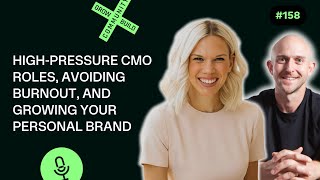
Amanda Natividad and Sam Balter discuss the pressures of CMO roles, how to avoid burnout, and building a personal brand. They cover social media strategy on Twitter and LinkedIn, brand frameworks, and the rise of fractional CMOs as an alternative to traditional leadership positions.
I get a lot more trolls on Twitter, but I think it's just because I reach a lot more people. And it's funny, there's certain content topics that if I touch them, it's just an invitation to please say horrible things to me.
I've been on Twitter forever and it just doesn't really move the needle. Like, I have, I don't know, 37,000 followers for like seven years. I go back and forth between, like, just deleting it and not even having it. But then I don't really have a straight strategy there. I just kind of like randomly post things. I found that it's really toxic. People just take what you say and completely flip it. This is nuts. So Amanda's. Amanda's here. And you just said, right before we started recording, you said you're deal. You said you lost 15,000. LinkedIn follow. I wanted to talk about this on the podcast because this is people who listen this are. This is the LinkedIn geeks. And so if you don't get it result, this podcast is not going to come up for a couple of weeks. I hope you get it resolved. But so what can you tell me what happened yesterday?
I got a security breach, which happens when you're a creator. You know, they're like, change your password, whatever. I've been locked out of my Twitter before. Some things have happened. And I got that yesterday, logged back in, everything was fine. And then today, like 30 minutes before this podcast, literally, I watched my follower account go from like, I think it was like close to 28,000 and it jumped to 11,000. And like, well, that's not normal.
And how did you notice it? Did you just happen to look and.
Like, I just happened to pull up LinkedIn. Like, I do, you know, 80 times a day. And I literally saw the number change. It was so I'm like, that's a glitch. And then I went into my analytics and there's this huge cliff. And I like, look, I've been on social media for a long time now. There's several things that could be happening. Path one is it's bots. And if so, okay, followers are a vanity metric. And that's fine. I'd rather have quality, you know, followers. But the second thing is that something happens through, like, I have third party plugins that, you know, I use a scheduling tool. Who knows?
Yeah, what do you use? I. So I use Taplio. And I just happen to look at something on your post. And this is actually my friend tas. She said LinkedIn is also cracking down on use of third party tools like Taplio. And, and I've read multiple, multiple people have asked me that and I've never seen it, but now I'm like, oh, I literally just made myself a post it note like, should I remove Taplio?
Well, so it's funny because I've used it for eight months and actually partnered with them because it truly is incredible for me. Like, I had been scheduling my content. I schedule my content out a week at a time. It's great. But if that's actually happening and all of a sudden LinkedIn removed all the followers I gained from Taplio, that would be a big concern.
Imagine they're like, these don't count, right? We're taking them back.
Right.
Well, the good news is this guy Michael commented on your post, this must be a mistake or glitch. Well, and he said, you have gained a real follower in me.
So that's 11,001.
Yeah. Shout out to you, Michael. Well, all right. Well, I hope that by the time we post this, I hope this gets resolved and I hope those come back.
Um, we'll do a brown too, and I'll let you know where I'm at.
Yeah, I'm sorry to hear that, people. I got a message the other day that somebody was, who knows? And it was like, hey, this is Dave Gehart. Like, I have something urgent. Can you please call me?
Well, I had a Twitter thing happen probably two years ago now that was horrible. So people who follow me, they know, like, I'm. I'm a single mom, I've got three kids. I've. I've been tweeting. I have now 110,000 followers on Twitter, but I share openly about what I'm going through and life as both a marketer and a mom. I got locked out of my account. The per. It was somebody in Europe. They locked me out of my account, detached everything, so I couldn't change my password, I couldn't get in, couldn't even verify my identity, that it was my account. And they were dming people saying, hey, I know I never do this, but my kids really need some money. Can you please send. And. And I felt horrible. I offered free coaching to. And I tweeted out. Once I got my account back, I tweeted out, if you were a victim of this, like, let me know what I can do. Like, I will do free coaching, free consulting calls. Like, I was trying to help however I could because I felt horrible.
Yeah. And it's like. And that's such a hard thing because it's like you have no idea who or how or any control over that. People write mean things to you sometimes on, on, on Twitter. Have you noticed a difference between Twitter versus LinkedIn and, and how people react?
I think that, look, I reach anywhere from 20 to 40 million impressions a month on Twitter and I'm not near that on LinkedIn. So I don't think it's apples to apples because I get a lot more trolls on Twitter, but I think it's just because I reach a lot more people. And it's funny, there's certain content topics that if I touch them, I know it's going to. It's just an invitation to please say horrible things to me. But LinkedIn so far has been. I've grown really slowly and steadily. Like, I just started being really intentional on LinkedIn a year ago. It's only. It's been very steady, so I haven't. I know people say LinkedIn can be a little crazy, but you tell me, what's your LinkedIn experience like?
Well, so I've been on Twitter forever and it just doesn't really move the needle. Like, I have, I don't know, 37. I've had 37,000 followers for like seven years. I feel like. And I go back and forth between, like just deleting it and not even having it. But then me, the V. And I don't really have a strategy there. I just kind of like randomly post things. And then I used to share a lot more and I noticed that, like, it is really. I found that it's really toxic. And I've seen, I mean, you, you. I've seen some of the stuff you write about, right? You write about your life and your family and single mom and kids and whatever. And like people say, people just take what you say and completely flip it and it's like, wait, what? And then that comment goes nuts. And it's just like the, the. I have a harder time with like the mental health side of side of Twitter and. But anyway, my point is. So at the same time, like seven years ago, when I was working at this company, Drift, we really started writing on LinkedIn a lot. And LinkedIn launched LinkedIn video when we were there. And I was very comfortable being on video. And so I was doing marketing at a company that sold marketing software. And the company had a really strong brand and buzz and got a lot of attention. And they. People really liked the way we were doing marketing. And so I was sharing like regular updates about the things that we were doing. And I would do it by like videos walking and talk, talking, like, literally, like drinking a smoothie on my way to the office, like, sharing what we were doing. And LinkedIn had just launched video at that point, and I noticed my videos were getting like hundreds of hundred thousand views. Like, it's sim. Like, you know, any social, any new social platform, any social platform, when they roll like a new feature, they kind of prioritize that thing. And so it just went nuts. And so I, I went from just using LinkedIn, like, to remember, it used to be just like, per, you know, I'm, oh, I met you at golden hour. I send you a connection. I was like, great to meet you. And, and we, we send a connection request. And now you're in my Rolodex. But it shift content platform. And so I just started like connecting with everybody and requesting connections. And I had 50,000 followers, 60,000 followers, 70,000 followers in like a year, in the time it took me to go on Twitter, you know, Twitter for 10 years. I've been on Twitter since 2009, and now I have 165,000 followers on Twitter. But it's mainly because I focus on B2B. And I think I have to play a different game, I think, to grow on Twitter. And so now I just have Twitter. My new strategy is like, once a week, once a day, I'll share something that I wrote, mostly long form, mostly from LinkedIn. I just put it over there because what I notice is the value of Twitter for me is the DMs. Like, there's people that will only reach out to me in the DMS. Like, I've become close with the CMO at HubSpot, this guy Kip Bodnar. We're on LinkedIn. We have each, each. We have email, we have text messages. But like, dm, he'll DM me, be like, hey, I'm coming up to Vermont this week. Like, we should play golf.
Yeah, It's. It's another WhatsApp for many people. Like, LinkedIn feels still like the Rolodex. Like, it's very buttoned up. But yeah, anybody. It's like another texting platform for me. I am talking to my friends, my Twitter friends on Twitter in the DMs all the time. And I mean, I raised $2.6 million for my last company, and I would say 80% of it, if not more, came from Twitter.
And from being. Do you feel like, from posting on Twitter or like, like having a presence, but like looking good post and then like, Having active dms. Like, I. The DMS that I get are. Are amazing. Like, I got a shout out on the. My First Million podcast because I. Those guys somehow were paying attention to exit 5. And Sean, his co founder, this guy Ben. Like, I find out, you know, like, when you. You ever click on someone's profile and you're like, this person follows me.
Yeah, all the time. I think there, he follows me.
What?
Yeah.
Hey, maybe. Maybe he used to be a former. Like, maybe he loves CBD gummies. I don't know.
Well, actually, no. I. I actually got invited. I grew so fast on Twitter that I was invited by the Twitter executive team when Jack was still very active there. And I got to do a phone call with the entire executive team as part of their, like, monthly team meeting to understand how they can make Twitter better for women.
Well, when was that?
I did a YouTube about it. It was probably like 2021.
So you got. Were you nervous before that conversation?
Yeah, I didn't think Jack would actually be on it.
Was it a straight up phone call or were you on video?
It was video.
And he. He was on video.
I, I have. I. I've created maybe four YouTube videos in my life, but that was one of them.
And so now, so. So if LinkedIn didn't get rid of your 15, 15,000 followers, do you have a different. Do you have a different content strategy for Twitter than you do LinkedIn?
If you would have asked me, like, six months ago, I would have said yes, because Twitter was my primary focus. But now I'm in maintenance mode with Twitter because I think that I've reached this kind of global maximum of, like, I have the contacts I want, and it's just about staying connected to people. And LinkedIn is my primary focus right now because I believe that you can grow faster to your point. Like, you plateau on Twitter, you can grow faster more intentionally. There's an actual system behind LinkedIn growth. Twitter just feels a lot more like. And I there recently, I had the most viral tweet on Twitter for the day. You get like, an email when you're. You have the most viral tweet. It was the Stanley cup when that caught on fire and the CEO responded, yeah, I maybe got like 200 followers from that. And it was the most viral tweet of the day. You. There's no.
Remember how many impressions? Do you remember the impression number?
It was 30 million.
30 million impressions and you got 200 followers?
Yeah. It was crazy. It was wild. There's no rhyme or reason with Twitter. It's harder. But LinkedIn, there's like a real approach minus when you get 50,000 followers removed. But I saw it like the formula was very consistent. If I post twice a day, engage with 10 people a day, I'm showing up after I post and engaging with the comments for, you know, at least 30 minutes. If I did these, if I pulled these levers, I watched the number just keep going up, up, up.
You wrote something. You actually, you actually wrote this earlier. Three years of tweet, and I think this is a fantastic advice for just a general content strategy. Um, three years of tweeting with no intention or system. A hundred thousand followers, zero dollars. Two months of tweeting with intentions in a system. 101,000 followers and 30K. Create a goal, optimize your system. Focus on quality of content, not quantity of followers. Can you give me the narrative behind that?
So I quit my kind of corporate career. For those that don't know me, I started two companies. I led marketing at the Knot in between my first startup and my second startup. So I was at the Knot for five years. And then after that, I sold my last startup in 2022 and went on to just go be a VP of marketing. Kind of just trying to figure out what I wanted to do next and decided I was going to go on my own and do this whole solopreneur thing. So I quit my job with no safety net. I was like, okay, I've got. I'm going to figure this out. Like, that's my founder brain. I like the forcing function of just, I'm going to figure this out and I need to. So I quit my job in September. I gave myself six months to hit a five figure a month mrr. And I did it in the first two months. So.
And what, what was intentional? Like, what was intentional about the content strategy? Like, how did you like going from tweet? Like, tweeting just because. And I'll give you, I'll give you an example. Like, if you think of Justin Welsh, you think of solopreneurship, right? I've seen even in my own content, like, the reason I've grown on LinkedIn was because I wasn't growing when I was sharing everything. Like, here's my workout, here's what I did this thing with my kids. Check out this thing I like when I just focus on. And I often say, like, oh, you wouldn't believe how much more I do in life beyond marketing. But on LinkedIn, that's just what I talk about because that's the topic. And I know, I think you and I have talked about in the past, but when you were first starting your newsletter, you're like, I don't know, everybody says, like, niche down, but it seems like you do from a content standpoint, if you want to grow and if you want to monetize that in some way, you do need to have like, one or two things that you're known for. Is that. Did you develop a content strategy based off of that?
Yeah, two things. I developed a much clearer icp and then I had an offer, because obviously you can't make money if you have no way for people to give you money. And so I actually had to spend the time building the products on the back end. So the ICP was really, really important work because social media for me was just like, hey, I'm just kind of. It was almost like a diary, but a somewhat filtered diary. I mean, other times it wasn't as filtered, but then I actually said, well, what do people come to me for? And I did surveys. I had a newsletter for a few months before I got really intentional about making money. I sent out a survey. And the funny thing was I thought people wanted to learn from me. Marketing. You know, I've been a CMO several times. When I did the survey, the thing that came back was people want to know how I get shit done. They're very curious about how, you know, there's a lot of productivity gurus that have no kids, and they'll tell you how to structure your day. And you're like, you have no clue what it's like to. To run a marathon in my day before 9am so I realized that my ICP is actually people who are building and they're teetering on the edge of burnout, and they know that they don't want to go there, so they're trying to create sustainable momentum.
So you create it. So. So you created that. You're like, okay, I'm going to. I'm going to write content about this topic. What does your writing process look like? How do you create content? Because it seems like you went from, you know, you're creating content that's like this diary. Like, I just did this thing. And you can still mix in some of those things, but I want to know the system behind your content. And can you also say, what's the offer that you created? Was it your newsletter? Not having a newsletter.
So my flywheel is social media feeds to my newsletter, and then as I learn what works and resonates in my newsletter, that feeds my social media. So that's the first flywheel then of my newsletter. I drive people to one of two things. They can either take my course that's very do it yourself or they can join my community. The community is very hands on. I'm there. We're in Slack every day. It's about building accountability. We teach best practices around branding and then that I learned from that. That feeds my social, that feeds my newsletter. Then the last tier is the high ticket prices where I do coaching. I have eight people that I'm coaching on their business, but both like inner work as well as the external stuff. Because I've, I have been in therapy for six years. I've had a Harvard trained coach for 10. Like I, I think a lot of people's blockers are a lot more internal than they are. You know, what's the algorithm? It's like, no actually, let's talk about why you're struggling to take up space. And then the other, the highest ticket price is actually working with me as a fractional CMO and I do CMO workshops and stuff like that.
I love that you mentioned the feedback loop. So most of the people that listen to this, I think your story is relevant for two reasons. Number one, I think you're a master at the content and social media world and I think that flywheel is the most underrated thing. It's something that I relate to. That's my whole strat, that's, that's been my whole playbook as a marketer. Especially in a B2B world. There's we people, we get caught up on ABM, this strategy, this thing, this thing, this. I don't have a framework, I don't have a funnel. What I'm good at is understanding my audience, creating content for that audience and then getting the feedback loop going. I mean just, just this week we did a whole new rebrand, we did a whole new logo, whole new website, whole brand redesign, everything. And we already are making changes because we launched it. A couple things we didn't like. We heard some specific comments and feedback and so we're going to change it. We have the, we have an advantage, we have an audience. We have such an advantage. We're doing our first event which you said you're going to buy a ticket to which everybody, like I say to my kids, when, my kids, when it's like 6:30 and my son yawns and he's like, I'm so tired, what do I say to him? I say prove it, prove it, prove it by going to bed like, oh, I'm stealing that. I say, prove it. Yo, you're so tired. Prove it. Because usually you know what happens, right? They eat dinner, they take a shower. Then, like, everybody gets a second win, and it's like 9:15, everybody's still up. So my line has been saying to everybody who says they're going to buy a ticket, I say, prove it. I know you will. But anyway, we. So we came up with the whole concept for the event, all the speakers, everything. This whole, this whole podcast, right? Like the whole Exit 5 media business is this flywheel that you talked about. And I just think it's such an advantage, you know, you're. When you have a clearly defined icp, the world, the marketing world that we live in today, this is. There isn't social media and content and Mark. Right? And I talked about that. I think I talked about this with you with Alex Lieberman at Golden Hour. Like, this is mar. This is how you do marketing today. And you get it on a personal level. And I just would love to see more B2B marketers and brands adopt this strategy. And people say, well, no, it's different. She's talking about productivity. Nope, it's the same. Because people are people and they want knowledge and expertise and information. And you can do it whether you're trying to help somebody be more productive or you sell payroll software. Do you. Do you agree with that?
I agree immensely. I. I'm working on my a marketing strategy right now for my client, and I sat down with them and they're like, okay, you know, what's the. What's the social strategy? What's the content strategy? What's the email strategy? And I was like, whoa, whoa, whoa, whoa, whoa. We have to first come up and say, okay, what do we stand for? Who are we talking to? And then content strategy. Because content strategy is your email strategy is your social strategy. And so I take people through the content strategy framework and say, okay, what are. Teach me. Inspire me. Help me. Like what. What are your kind of big pillars? What are you actually trying to teach people? And I think help me is such an important content pillar, because when you say help me, that forces you into a lens of what are their pain points? What are they asking for help?
Yeah, this is really good. Is this like a framework that you've used or just. Are those bullets that you. I love this. For people listening. This is such a good tip for a content. For your strategy, for your company. Teach me. Inspire me. Help. Help me. You can apply those to any niche, any industry. The person who's there wants to get one of those three things. I love that.
Yeah. And then the last one I'll throw in is sell me. But we sell by showing, not by selling. And showing means testimonials. It means like I teach this in my office hours. And like if you're trying to own the. It's like the art of the humble brag, right Is there's so many ways you can say this, like, oh, I was just talking to a client today and their biggest thing was this. And I did this. And all of a sudden human psychology is just like, oh, they have clients. Oh that person, oh, I was just talking to a client that's doing 100 million in revenue. And their biggest pain point is this. Now you're in their mind as an expert and you have hundred million dollar clients. So there's the art of the humble brag is the fourth pillar in that. And so selling me does not mean sell me, it means show me.
Oh, I love that. That's, that's like really similar to the concept of why I wrote this book. Founder brand, which is basically like you're the founder of this company. Like think about your, your journey. Like just using an example, starting house of wise, right? Like you are the, you're the one in this, in these meetings every day you're meeting with investors, advisors, employees, partners, branding, this and that. If you just share, you don't even, it doesn't have to be. The company doesn't have to be growing. But if you're just documenting like what you're doing, you're going to attract like minded people. And that, that kind of ended up being your being your story. And I think the same is true in B2B. If you're a founder, marketing team at a B2B company, what are the meetings you're in? What are the thing. Like nobody's there just for fun, like, hey, let's start this B2B services company because we want to get super rich. It's like, oh no, you must have had deep experience in some industry somehow. So share, share that st stuff. I love that. The heart, the heart of the, the art of the heart of the art of the humble brag is really good.
I was just saying, I, I know I have found our brand. Some.
Oh, you're in it.
I know. Look at this.
Love that. It's great.
Right next to me.
That's great. I get, I get about 33amonth in royalties from that. No big deal.
I mean I have a book coming out next year and I definitely am like let's not add that to the line item of revenue.
No, you can't, you can't, you can't. However, you could be knows you could be presently surprised. You have a great audience. The thing that I, it did open up, it opened up a lot of interesting relationships and conversations though for me that I haven't, I can't really quantify that. I think if you're trying to do it, if you're going to like I'm going to sell X number of books at this number of price, it doesn't.
Work like that is. Yeah, you always say is it a means to an end or the end? And if it's the end, that's probably not the right use of time because it is a lot of time.
Hey, you talked about working so I, I really like this. So you talked about working with companies and helping them come up. Like the very first piece is like you can't, you can't come up with the email strategy and a social strategy and a content strategy. People like you and me, we can do that stuff in a heartbeat if we know what you stand for. What take, take me into that exercise with founders, with companies. How do you go in there and unpack what, what you stand for? I think sometimes in this world we call it like the company story, the strategic narrative positioning. I think people get lost in the weeds of like the having the perfect framework for like if you and I could just text each other and come up with like yeah, we're going to start this new company, here's what we stand for. We could do it over messaging. What's your framework for coming up with? How do you, what do you stand for?
So a couple of tools that I use are the brand strategy pyramid. Like the brand pyramid is the kind of my holy grail of what I use because takes you through it's very maslow hierarchy of needs for any I'm sure everybody listening to this knows what a brand pyramid is but starts with the very functional benefits of your product. So you are software or you are a energy drink. You are served in a plastic bottle or if your house of wise my last company it's like okay, we are sleep gummies, stress gummies, etc. But then you start moving up this pyramid and it's a forcing function to really get to this top say what is your brand essence? What do you want someone to feel when they're connecting with your brand? Which is very maslow hierarchy of needs. You Move up to like emotional and then self actualization and at the self. The self actualization of a brand is really like, what's that? Like essence? What do you want somebody to feel? Coca Cola infamously is like, it's share a Coke. Because they are all about community. When you're drinking a Coke, whether you're a polar bear or people on the street, it's this idea that you're with your family and community. You feel connected. They added that as like the wrapper to a very functional product. And so for me, I am a very emotional brander. I always care about what emotion do you want someone to feel when they are using your product, experiencing your customer service? Are they super inspired? Do they feel related to. Do they feel like at ease? And so that's the first tool that I use. The second tool is starting to really chip away at the language and the semantics of the language. So I use an only statement. So like, you are the only blank for blank to do blank in a time where blank. If you do an only statement, you're starting to really finesse that language even more. And the third tool is what are we not? And that's when I'll do the chart and I start plotting different things on the opposite end of the spectrum and say, okay, are we social or we personal? Are we focused on a community or are we actually focused on an individual? And like Exit 5, you know, it's like, are you. Do you. Are you focused on it growing as a community and the support of the community and getting. Or are you really focused on growing the person? And so I start plotting those things and I say, show me where you think we are, like on a spectrum. Are we over here or here? Because when you force people to do that, you start to see where there's disconnect. Especially if you get all the executives in a room. What's my favorite thing?
This is really good. I'm furiously scribbling notes like, like I do. But if you. How often do. So I think this is great. I can see founders and executives in this meeting though. How do you balance what you can do today versus where the company is going? I feel like the variable here is so often like the product and the roadmap and specifically that only conversation is that where is there a lot of friction there early trying to figure out like, we're the only. There's a lot of nuance. Like, especially today, there's so many products in so many industries. How do you really come up with a strong differentiator?
It's usually in the psychographics and the emotions, but for sure, chief product officer, chief cto, they're the ones that are like, whoa, whoa, whoa, whoa, whoa. But I have to always remind them this is aspirational. Where do we want to go as a brand? And then we're going to build a roadmap to get there. We may not be there today, but where do we want to live in the consumer's mind and especially in early stage companies. Beehive is a great example. Like they came out and they said, we're going to be the fastest, we're going to ship the most. And even though they couldn't compete with Substack right away, they started chipping away at that. And you see that when you live in the consumer's mind as being something, you will work into that and you will develop a roadmap with that lens.
Interesting. So you, you can go after the. We might not have, we might have similar features as someone else, but the way that we talk and the emoji. You said emotions and psychographics, that is like how we come off as a brand and who. And who we focus on could be our differentiator.
And the people, like, I think B2B, the world of B2B is needs to kind of peel back the layers of your employees and bringing creators into the fold and ambassadors and who's a part of it. As a cmo, I'm looking around to say who else is working with them, who works there? What do they stand for? I think it's a really cool opportunity when you have amazing people that work at your company. Getting them to talk about your company is such a no brainer for me. I mean, morning Brew starting with like you just were watching like Alex and Austin and Dan Toomey and you know they're all tweeting at each other and they just, you're like, well, these are cool people. Like, I'll read this thing. That's how brands work nowadays. There's. It's a, it's the humans behind the brands. Golden Hour is a great example. Like meeting the team behind that. Like, I was like, yeah, I will do whatever I can. I'll promote you guys. You're just a good human.
Yeah. So, so like using that and using that to your advantage in your marketing versus trying to be like, well, this product that we compete with has these 10 features, but we have these 11 and we're going to win on this variable.
When you, if you look at the brand pyramid, if you're competing down here, you're going to lose. I launched a company in the. One of the most competitive markets when I launched House of Wise cbd. Gummies had. And products had been out for years. The place that I wanted to hold in someone's mind is that we are helping women take up space, because when they took one of our gummies, they were making space for their workout, making space for sex, making space for sleep. And it was so much more than this gummy. It was like giving yourself permission to have those things. And so I wasn't competing down here in fear function. You know, there's lots of gummies out there with these same ingredients. I had to compete at the top.
The emotions, when you talk the brand pyramid so people can look this up. Is it literally called the brand pyramid?
Yeah. If you just Google brand pyramid, you'll see tons of examples.
So you have brand essence, brand personality, emotional benefits, rational benefits, functional benefits. So you could literally print this out and, like, get a pen and paper and fill it out and do the exercise. Yeah. People, there's a. There's this company that is much bigger than we are that's doing something similar. And I'm starting to get more questions about how we're different. And I just want to scream through the microphone sometimes and be like, this is because it's our way, but I have to. We got to do a better job of articulating that over time. But, like, there is something there. Like, the niche can be you. And we're.
It's.
It's our fl. Our flavor. We. We make the pizza. We make the pizza differently.
Just wrote this. This is my newsletter yesterday, which was all content is chicken. It just is. You have to decide what your flavors and spices and recipe are. So it's okay. There are so many people talking about productivity, but my flavor, my recipe is that I'm a single mom and I have four businesses that I'm building. The people that like my recipe will come to me. Your flavoring is the blend of you, your team, how you make people feel, the existing people that are in the community, that are like the energy and heartbeat of the community. Those are parts of your seasons. And it's like kfc. It's the special blend of herbs and spices that you can't really put a finger on.
And you'd never feed it to your children.
You shouldn't feed it to your children.
No, I like that. That's something. Okay. That. That makes me feel better because I've been going hard in this narrative. Like, I didn't I didn't create this company to copy somebody. Just like, I got here because I started podcasting and writing about the lessons that I learned going from PR intern to cmo. I'm building the resource that I wish that I had as a marketing leader. We're focused on B2B marketing because, like, none of us really went to school for B2B marketing. You didn't really wake up one day. We all wanted to be athletes or creators or artists or whatever. And this is what we. You gotta learn how to do this. And so I'm just. We're leaning into that, and I think if we can build trust and get people to watch our videos and listen to our stuff and be in the community, it's like, oh, okay, I can see how this is different.
Even with my community. I have people who are building the same type of community in my community, and I let them in. I don't filter it out because part of my flavors and spices is that I am accessible. And I want people to feel like this is accessible, tangible, learning, and, like, if I were to start, like, blocking people out, that's against what I want somebody to feel.
Have you ever done anything with brand. Brand archetypes? So this is like. I think this is an. Initially, this guy, Joseph Campbell came up with this concept, but there is. You might. This might be up your alley, but basically there's. There's 12 different brand archetypes that you can have there, and their names like the explorer, the outlaw, the magician, the hero, the lover, the jester, everyman, caregiver, ruler, and you basically define the characteristics of that brand. So, like, are you really edgy, are a challenger, or are you more interesting? I'll send you the link, but. All right, let's talk about. Let's talk about this idea of fractional cmo, and we'll wrap with this. So you've done a bunch of things. You've been a VP of marketing, you've been a cmo, you've been a creator. Now you're going back into the fractional CMO game. There's a lot of people who actually, this is very relatable for a lot of people who are working marketing, maybe want to break out, go do their own thing, or companies that want to hire a fractional cmo. What is the world of fractional CMO look like, and why has it become so popular?
I think as the creator economy just continues to blow up, people are really, really interested in owning their calendar and not feeling tied to a single company, being able to take on multiple revenue streams. And unfortunately, the creator economy is moving way faster than the corporate economy. Like in thinking corporate world is still very much like, you're loyal to me, you can't tweet about something else. And just the way that the world is with rising costs. And I saw the Professor Galloway's thing about how we're the first generation to not surpass our parents and income and all of that. But I really think that corporations are stunting their own growth by not embracing the creator economy, which is spinning out more and more fractional employees. Now what I'll say is, as I'm, I have a lot of people who are looking to become fractional CMOs that join my community, you have to run the same process of what's your icp? Who are you for? Because what happens is when you step out of the CMO world and now you're injecting yourself as a fractional cmo, you have to have a very clear value prop. You have to understand what your strengths are. So you have to run all the things that you do when you go in to be a fractional cmo, you have to flip it on yourself and run all of these same processes. And so I, when I first was starting out, I'm like, okay, what is my brand pyramid? When I'm putting on the CMO hat? And I found that I help early stage pre series A companies get their marketing ready for a series A. So I am the person that comes in and make sure the brand is ready to go for that huge capital injection where you're going to do a lot more growth marketing. So I'm not a growth marketer. I never claim to be. But my, my specialty is going in and making sure all of this brand work, that emotional connection, every touch point that you and experience with a brand, you feel that. So that when you open up the top of the funnel, all the leaks are gone. I'm great at retention marketing, email marketing, so I get all the leaks gone so they can turn on the faucet.
And in, in the, in the fractional role, like do you or I don't, I don't actually know much about it from other people either. Do you manage a team? Like, are there people. How do you work with other people with resources? What does the setup look like?
The setup's very similar to a regular CMO role, just less hours, which honestly, because of the way I work, like they're getting a full time employee, I just am way more efficient with my time. You're still Running and operating like an operational heartbeat. You have your okrs are set, you're managing the team, you're doing standups, you are making sure everybody knows where they're going, what the next milestone is and you're managing agencies. I think that meeting hygiene is so important as a fractional CMO because you could just spend all 20 hours in meetings if you're not careful. But I'm just make sure that the team, when you're working in the stage, I am, it's smaller teams now. There are fractional CMOs that go into way larger companies. They don't manage the teams, they're coming in to do the RFPs and the agencies, they lock in all the people, they look at the org chart, they say we're under resourced here, we're over resourced here, we're going to set the structure of the team. But it's really nice. Fractional CMO works really well. You have a lot of soldiers but no lieutenants and you have a lot of people that can do the work. You have no one telling them how does this all bundle together towards one vision and one roadmap? Because you have a lot of people doing stuff like over here and here and you're like, well, nothing's working. It's like, well, yeah, because you don't have someone that's actually coming up and like connecting it.
Do you feel like the soldiers listen to you?
That's an interesting question. The culture, the culture piece is difficult for sure. And you need to have complete buy in from the executive team of your purpose there.
Like, yeah, basically, like how do you not, how do you not get treated like the substitute teacher? You know, like I think it could work great if the team is like pumped to work with you, pumped to learn from you. But if all of a sudden you're like perceived at this as this like part time person who then is like has to do one on ones and manage people. I don't know if you've run up against that, but I'm just thinking of the other side.
Yeah, I've done this now with I think about six companies and the ones that work the best are when you have an existing operating rhythm that works and you're plugged into that. Second, you have a CEO that you're in lockstep with and they are supportive and they are embracing feedback loops. Because I'm coming in and these people may have been working there for five, seven years and I need to know that they feel comfortable giving me feedback. And if they're triangulating the whole time. It's never going to work. If they have to go feel like they're, hey, I don't. I got to go tell the principal that I don't like what the substitute teacher is doing, that's never going to work. And so I go in very clearly with like a, hey, I'm not. I'm going to come listen. I'm going to. Listening to her for a few months. Here's my background, here's why I'm here. Here's what I want to do to help you. And I always just try to phrase it as, like, you're frustrated. Usually they bring in somebody because the team is frustrated. They're not making the progress they want. And so you come in and you just really make sure that you're. You're speaking in their language. You're trying to make their job better.
So, so for you. So for people that, for you and for people like that might be. There's a couple interesting things, I think. One, there is this trend of, like, you can now work for. You can work for yourself and you can work remotely. And so there is a whole career path where it's like, if you're listening to this podcast and you're not happy in your current role and you're like, I don't want to go work for a company anymore. There's a path, right, Amanda, where you could, you could pick, like, you could be a fractional CMO for two or three companies and probably make more money than you're than you were before and work less hours or be more efficient in those hours. And so, like, I think it's an interesting career path if you're a marketer and you're like, I'm tired of this one company thing. I could go do fractional CMO and, and, and rotate. But it sounds like the qualifier has got to be CEO, has to be involved and care and passionate about marketing. If it's like, we just want to outsource this, I don't really. I'm not invested in this department. I'm. I want to hire you. I don't. I want to hire you to, like, babysit marketing and, like, give me the updates. Is that the. That's when it's not going to work out for you.
Right, Right. Exactly.
Okay, let's wrap up. What do you. What's your workout today?
I'm gonna go do. I'm trying to get my run time down, so I'm gonna go do sprints. I am trying to get back to like a seven minute mile. I'm not.
We'll see a seven minute mile.
We're trying. I did it two years ago summer. I broke seven minutes and I was.
Like, okay, it's still one for one mile. Like you're trying to just. Okay.
All right. Yeah. So I'm sprint training. So I have this little workout I do on the treadmill. It's 30 minutes, but it's a lot of sprint. Calm down for a minute. Sprint. So I do that for 30 minutes and then I'm just gonna do arms today.
Oh, yeah. Friday afternoon, arm day. Let's go. Love that.
I'm in Miami.
Yeah, of course. I have so much respect for that. And when you're running, when you're walking, when you're outside, are you headphones on? No headphones.
Headphones.
And what are you listening to?
Taylor Swift all the time.
Never heard. I've never heard of that person. Oh, yeah. Friday afternoon arm day. Let's go. Love that.
I'm in Miami.
Yeah, of course. I have so much respect for that. And when you're running, when you're walking, when you're outside, are you headphones on? No headphones.
Headphones.
And what are you listening to?
Taylor Swift all the time.
Never heard. I've never heard of that person.
Never.
That's exciting. My wife and her friends are going to. They're going to her show in Paris in a couple of weeks.
It's. She's in Paris right now. Is she coming?
She's exciting. My wife and her friends are going to. They're going to her show in Paris in a couple of weeks.
It's. She's in Paris right now. Is she coming? She comes back.
Yeah, it's. Or maybe it's neat. I don't even know. It's somewhere in France and it's at the end, at the beginning of June or end of May.
I'm so jealous. I might go to London. I've been once. I might go again.
Yeah. It's like they found this, they found this hack. They found this hack where it's like, it's cheaper to go to Paris. And they're like, well, we're going to Paris. I'm like, well, that's nice.
The cheapest tickets I can find in Miami. She's coming to Miami on my birthday. $3,000. So I'm going to London.
No, let's get you a sponsor. Let's get you a newsletter sponsor. Three grand, one time placement. You could run a bundle.
Get your marketers, founders, and you want me to wear your logo at the Taylor Swift concert. Let me.
Yeah, you could be like, like Alex Lieberman did at the Michigan game with HubSpot, but this could be for. For Taylor Swift. All right, Amanda, good to see you. Thanks for hanging out. People will go, we'll. We'll plug all your stuff. People go find you on LinkedIn. We got to get your LinkedIn following, right?
Please follow me on LinkedIn.
We got to get you. We got to get you back boosted up. All right, Good to see you. Enjoy. Enjoy your weekend. Thanks for coming and hanging out with us on the Exit 5 podcast.
Sam.
More from Dave



Asynchronous work isn’t a trend. It’s how teams actually get things done without burning out.

AI is changing product marketing. Here's how top B2B teams are scaling without cutting corners.

How Product Marketing Is Evolving in 2025: Lessons on AI and Leadership with Jennifer Cannizzaro

Why referral programs look different outside of SaaS (and why that’s a good thing)

The secret to scaling dual GTM? Give every marketer ownership and get out of their way.

From content to CMO: how Jess Cook made the leap (and built her first budget from scratch)

Leading B2B Marketing for the First Time: Strategy, Budget, Content & Team with Jess Cook

Most B2B advice is built for SaaS. But what if you don’t have demos, PLG, or lead goals?
