How Edgy Can B2B Social Content Be? Advice For First-Time Marketing Leaders and Product Launches
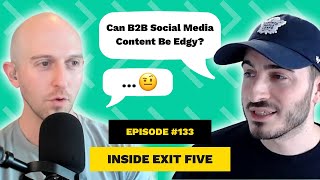
Dave Gerhardt and Matt discuss how much edge B2B brands can get away with on social media, and what first-time marketing leaders should know about product launches. They cover when bold content works and when it backfires.
I would say the number one thing that matters is that you are aligned on what does the company need out of marketing? Right? What are the goals and what is marketing going to deliver? And can you shrink that down as small as possible? And so instead of worrying about the annual plan or the two year plan or maybe even the half a year plan, can you get really tight on what does marketing need to do this quarter, this month, shrink the plan and just take it one month or one quarter at a time? I think this starts by stepping up and having a conversation with the CEO or whoever marketing reports into and getting really clear about the strategy and the goals for marketing. Because I find if you can really shrink that down, there's lots of things you can do, but not all of it matters. If this is the first time you're listening, my name is Dave. I host the Exit 5 podcast here. This is Matt. Matt's a marketing manager here at Exit 5 and we do this podcast every now and then. Although I canceled on Matt last week because I had something going on where we do a exit 5. It's not a guest, it's just me and Matt. We take some of the hot questions and topics that we've seen around the community from podcasts, from listeners. We talk about them here on this show. So, Matt, what do we got?
Cool. So we actually got our first email from somebody wanting us to cover something in this episode. So if you email HIIT5.com with a question, we'll feature it and ask it in this episode.
This is big. Listen. The feedback loop is on and popping. We got our first listener email. All right, Matt, read me the listener email and let's do it.
All right, so I won't say their name because I'm not sure if they want me to say their name. So I'll just say the question itself. It's how edgy can a B2B social media profile be? I'm asking this because they're addicted to the funny videos by Apollo's company page, but their team seems to not really agree on even simple, fun, edgy stuff. So how edgy can companies be on social media and B2B?
I think ultimately you can be as edgy as you want to be. And the result, the proof will be in the response. Now, just because something works doesn't mean you should do it. And I think that's where the catch kind of is here, which is like you could post a bunch of edgy content and memes and funny stuff. And I think in the world of edginess, we're probably talking about very low on the edgy scale. However, I think it is important to listen to your team, right? And it just depends, like, if your team has a vision for the brand. And I think it depends on who's articulating this also. But if the team has a vision for the brand and this doesn't feel right, then we shouldn't do it. Right? Like, just as an example, like, if I did something and you and Dan saw that, Matt, even if it worked, you might message me and be like, look, I know this worked, but, like, kind of make me feel uncomfortable. All right, let's not do that again. And so I do think part of this is being a good teammate, being a good partner, being. Being good. Being a good. A good person. However, I'm trying to read into where this might be coming from, and I feel like oftentimes this means that the team has just historically not done anything that way. The brand has always been this way. We've always kind of stayed in this lane. And so there. I would try to look at. Then when you're talking about edgy, what does that really mean? Is it actually. Is it. Is it inappropriate? Probably not. Is it making people uncomfortable? Probably not. Is it just unlike something you've done before as a company? Maybe. And then can you treat it as a test and say, hey, look, all right, I want to try this thing. We're going to do it for 30 to 90 days. Here's what we're going to measure. We want to do this because we think it's going to grow engagement on our page and we'll report back on the results. I think if you box it like that, you'll have a little bit more success with it and be able to frame it up. I think people don't, like when all of a sudden someone just starts posting random stuff and you're like, wait, what's going on here? But if you can take a step back and articulate the strategy and explain what you're trying to do, you might have more success. And then, last thing I'll say and shut up, because I want to. I want to hear your opinion on Smat. But not all growth is going to be good. And so as an example, we're trying to really focus on B2B marketing pros and the doers and the directors and Future directors and VPs in B2B marketing. I think we could grow a massive page on LinkedIn by posting silly marketing memes. I don't think that that would also translate into the right audience for us to then sell things to. Right, like Exit 5 subscriptions or future products or whatever. And so I think it really matters. And I've seen people grow massive accounts on TikTok, Instagram, LinkedIn with very top of the funnel type of content. But that doesn't always translate into an audience. And so I think you really want to be able to like the followers and engagement and audience that you build. Doesn't matter if it's not the right people for your, for your business. What's, what's your reaction to those comments and how would you have answered that?
Yeah, I think it's you who always says to win with depth. So if you can win by posting, you know, in depth educational content about your niche that is professional, then I think that's always a good way to go and you should always favor that in B2B. And then if you could sprinkle in personality, like if you're naturally a funny person, I mean, some people think they're funny and they're not, but if you're naturally a funny person and you could sprinkle in the odd joke like you know, 20% of the time, like do it, try it out and see how it lands. Right? And if you get responses, people saying, haha, that was funny, or haha, I'm in Toronto too. Yeah, it's super cold this week. Like then maybe you're doing something right. Maybe that's the way to go. But you know, otherwise I wouldn't go too crazy in the edgy scale. I would stay a little safer and then slowly break into it. So that's how I'd approach it.
Good answer. I'm trying to see if I can find these edgy videos that they said Apollo post quickly. I don't see them. I don't know if you know what.
They'Re referencing, but I don't, I don't. Edgy, I think, is the word that's throwing me off. I know what they mean, mean. But it's like edgy can be not a great thing.
I think what they, I'm looking, they're just posting more like they're posting TikToks, they're reposting memes, they're posting, you know, screenshots of stuff. I get it. I think most of the time though, you're going to have to do that. I think social media is about pushing the boundaries and envelopes, especially in B2B. And I think you need to try a bunch of things and figure out what your, what Your lane for content is. But hey, thank you for the question. I hope this helps. Send us an email back. Even if you don't want us to know who you are, we won't tell anybody. So send Matt and send us that email at high exit 5 and like, oh, if you want, we'll give you, we will give you personal. We'll give you free personalized advice to you who ask this question. Write us back and we want it, we want to know more.
Cool. Next one is a post in the community. Somebody wanted guidance on being a first time head of marketing. So you know, they talked about, yeah, they're. They're the only market. They're the first person doing marketing full time and they're the head of marketing.
What do we know? Give me some specifics. What do we know about this person? What do we know about this question?
Let me pull it up. So they're in a healthcare startup stepping into a big challenge. They're trying to reach both B2B and B2C in different countries across Europe. First person to solely focus on marketing. Until then, some people in the team, around the team have done some marketing things, but now they're in charge.
I think the number one thing without a ton of context, I think if you're. And this is they're stepping into the role as a first time marketing leader. Mm. Okay. Now do you feel like they got promoted into this role or is it like no one's really doing marketing. You do it now and you own this thing?
The latter. What you just said.
Okay. So I would. I think of this as an opportunity first of all to understand if you want to be a marketing leader in the future, which is great because you're going to have the opportunity to do it right now. I had a similar opportunity earlier in my career where I wasn't the VP of marketing, I wasn't even the director of marketing, but I was like one of three people and they were like, you know what, you're going to kind of take the lead on this and if after, if it keeps going well, maybe there's a promotion in there for you. So personally I would think, okay, like what do I want out of this opportunity? Selfishly, do I want, do I want to explore a career in marketing and marketing leadership, then I'm going to really be hungry and I'm going to go after this thing. You know, like, I see that even with you, Matt and Exit 5, I think you're doing a couple specific things for us. But I think that I can see that you have a vision of what you want to do and things you want to own. And so you're like, sure, I can do that, I can do that. Let me take that, let me take that. I think you have to have a conversation with yourself about what you want. If you want that, then this is a great opportunity to go all in and try to go for it. And oftentimes this is how it happens. You kind of get thrown that role because there's nobody else right now, or there's no budget or there's no other team. This is your opportunity to take that and go for it. So I think that could be great for you. I think the number one thing that matters, and it is very tough to give advice for a broad question like this, but I would say the number one thing that matters is that you are aligned on what is the company need out of marketing? Right. What are the goals and how. What is marketing going to deliver? And can you shrink that down as small as possible? And so instead of worrying about the annual plan or the two year plan or maybe even the half a year plan, can you get really tight on what does marketing need to do this quarter, this month, shrink the plan and just take it one month or one quarter at a time. And I think this starts by stepping up and having a conversation with the CEO or whoever marketing reports into and getting really clear about the strategy and the goals for marketing. Because I find if you can really shrink that down, there's lots of things you can do, but not all that matters. And so as an example, when I was that kind of junior ish marketing manager coming up at Drift, we had a very clear goal. We had a free product and we were trying to drive signups for that free product. And we had a goal of we wanted to get a thousand signups for our new product in that first quarter. That was the best thing I could have gotten, was a clear goal like that. David, who's the CEO, was like, nothing else matters. This is what you're focused on. Fantastic. I don't know what the heck I'm doing as a marketing leader, but I can figure out how to come up with a plan to drive those a thousand new signups, and the more you can shrink the plan to get very clear, specific goals and just focus on nailing that one thing and building. You need momentum. You need to achieve some goals, have some wins on your side. And the way to do that is get really clear on one or two specific goals and focus on that. Know there's going to Be lots of stuff that you're not going to get to right now, but who knows, maybe a year from now it's you and a team of three other people. And now you can start to get at some of the longer term initiatives.
Yeah, I like the focusing on one goal. I think a big thing that goes along with that too is can you make some kind of impact on that goal? Really early on, like a lot of the 30, 60, 90 day advice for marketing leaders is like, go talk to customers and then go dive into the data and do this and that. And I think all that's great and I think you should absolutely do that. But if you can make some kind of impact and do something cool in week one or week two that's related to that goal, like I think that that's going to help your image a lot and buy you some time and take some of the pressure off.
Yes, I love that. That's a great answer. And this is something you've done really well here. I remember very early on in that drift example where I wrote a blog post and we used to do this thing called show and tell where on Fridays every team would go and show what they worked on. At the time there wasn't really anybody doing marketing. It was like engineers showed all this stuff and I was like, so embarrassed. I'm like, man, they're showing code, they ship, designers are showing new design. My first show and tell, I was like, this week I wrote a blog post and everyone was like, all right, cool. Well, I learned my lesson. The next week I came back and I said, hey, remember about last week I told you we wrote that blog post? Well, today I want to talk about why and I want to talk about what our strategy is. And so we don't have any traffic right now. We need to grow traffic because we want to drive trials. And we think that we're going to do that through website traffic and we're going to try to rank for these keywords and blah, blah, blah. And so remember that article I told you about that we recreated last week? Well, 1200 people have actually already visited that article and we generated 52 new email signups. And as of last week our email database was zero. And now we have 52 opt in contacts. And I saw the engineers like light up and they were like, wait, what? People are starting to pay attention to our company. This is so cool. And that was an example of just like shrinking down. Now the goal wasn't to write a blog post, but that was one example of showing them That I also think you said something great there, which is go in and fix the problems. Like, you know, I'll see my father in law will come over our house. I'm not very handy, I'm good at the words, but I'm not, I'm not the guy you want, you know, hammering and drilling stuff. He'll see something broken. He'll see like a door that's off. He'll just come in and like, you know, get his tool, just fix the door real quick. It's like, man, how can you be that person? Right? Don't do any of this. Like, well, it's not my job. It's not in the plan. Like if there's a page on the website that needs to be fixed and updated, just go do it. And then at the end of the week share progress on like all the stuff that you shipped and did this week. And you want to show momentum and you want people to feel like, hey, this is cool. Like we've never really had any marketing. Matt's in here just doing a bunch of stuff for us and making things better. I think that's a very important piece of this, of the job also. Right? Just quick wins and man, you spoke, you're speaking my language. People get upset when I say this. I'm not saying don't talk to customers, but I hate with the capital H. I hate the advice that like when you start a new job you should talk to customer. I think that's a crutch for spending the first three months work like not actually doing anything when oftentimes they hired you to fix something or create something or do something that didn't exist before. Especially in this example. You know, it probably doesn't work if you, you're one of hundreds of people on a marketing team. You're not going to join, you know, week one and go and go and change something. But in this example, you're the first person, you're the first time marketing leader, first person doing marketing there. Go put some very simple points on the board and make some things happen. I think that's a great way to earn credibility inside the company. Nice.
Cool, cool, cool, cool.
By the way, can I just tell you, one of my favorite things is the funnel that we have at exit 5. So I wrote a post earlier just like we're like, we need some more trials. And so I wrote this post and made a video and I just want to shout out, I want to shout out Lauren Murdoch. She just left a comment on my LinkedIn post. Listen to this. This is like when the journalist does, like, the parentheses. I've been thinking about joining Exit 5 for a while. Just listened to one of your podcasts on a plane to Quebec City and then saw this. I'll be signing up for the trial this week. How awesome is that? But imagine if we tried to, you know, if we tried to, like, perfectly, like, structure that funnel, right? Like, how are we going to measure this? Right? And just this is the power of this type of content. Somebody was on a plane to Quebec City listening to us talk about B2B marketing. So. Dang cool. My only beef with Lauren is I don't like this part. I'll be signing up for the trial this week. No, you do it now if you have Internet access to comment on the LinkedIn post. Lauren, you go to exit5.com. You sign up now. Anyways. Yeah, yeah, yeah. Lauren, we'll see you inside exit 5.
Cool. And that stemmed from Dan just saying, hey, how can we drag more trials? And you were like, let me write a LinkedIn post about it. Right? So it was that fluid.
It's just a small things that I can do. You know, I'm out having, you know, I'm out having breakfast with CMOs, doing the. Doing the real tough work. Matt, every now and then I can write a LinkedIn post, you know.
Yeah, no, I see. I see you out there. Cool. We got 20 minutes, right? So I'm gonna. I got two things, but I think I'll just pick one of them. This was a LinkedIn post by you that blew up. You talked about how you'd rather have strong point of view, differentiation, creative, original marketing ideas, you know, shipping work quickly over the abm, roas, cac, ltv, all that stuff. So, yeah, I think it'd be a good topic to go over. Like fundamentals. Like, when do you know your fundamentals suck? And maybe when it's time to pitch leadership or the CEO, that needs to change.
All right, well, I can say this now in the podcast, but I wrote that as a cheeky way to, like, you know, LinkedIn is a little bit of a game, and you got to write some things to get attention and get people to read the message. And so I'm not poo pooing ABM or any other strategy. I just feel like no matter what happens in marketing now, what I've learned is going to be timeless. And it really does all come back to positioning. One of the most fundamental books that I read in my marketing career is, well, there was two. Number one is Positioning by Al Rees and Jack Trout. And the other book is their book the 22 Immutable Laws of Marketing. I think that now that I've seen this at a bunch of different companies in a bunch of different industries and over and over again the tactics and the channels, that is how you execute on these things. But so often it comes down to the thing you're selling their book, the 22 Immutable Laws of Marketing. I think that now that I've seen this at a bunch of different companies in a bunch of different industries and over and over again the tactics and the channels like that is how you execute on these things. But so often it comes down to the thing you're selling, the positioning, it's the story that drives everything. And we so often don't want to go address the big problem. There's. We just had a. I talked to a founder, I talked to a founder and a head of marketing two weeks ago and they wanted advice on their company story and this direction versus this direction, this narrative. And they were so misaligned. And the founder had one vision. The head of marketing didn't believe in that vision, knew that they couldn't deliver on that. From a product standpoint, that's what's broken at that company. Not that their ads are not working or not that this channel isn't working. It is so often is the positioning, it's the offer. Think marketing is involved cross functionally in creating that. That's where it gets hard. It's not just marketing, it's creating that. It's marketing working with the founders, working with product, working with sales. That's how you position your product and your company in the market. I love how April Dunford says it's context setting. It's the most important thing you can do. And I just find that so often that is the root cause of why something is not working. And if you, if you peel away all the layers, that's usually there. And people don't want to go and do that because it usually involves some uncomfortable hard work. It's not just changing the marketing messaging. It's like, oh, do we have the right product roadmap? What is the product roadmap? Do you have the right icp? Can we change the icp? We just told our board we were going to sell to the enterprise, but it involves those types of things and it's much easier to just continue to play whack a mole with different channels. When you nail the story and the positioning, then the channels become much easier. And I'M a believer in that any channel could work. I actually think that there's a world where we could make, like, direct mail work for Exit five. Right. If the offer was right. And that's. That's kind of where that comes from.
What's your stance on, like, you know, let's say you're at a company for two, three years, and you know deep down that this stuff is broken. Like, and you've tried and they've tried. Like, at some point, you just have to leave a company where that's the case, because it just won't change.
Yeah, I mean, I worked at. I worked at five companies. Companies in six years before finding the one company that's. That's stuck. And I worked there for four years now. A lot of that was me and being impatient and not being excited about some of the things that I was doing. I think people should just be more proactive about looking and finding the right company. Obviously, there's a time and a place. Like, you're not always going to be in a place in your career where you have the leverage to be like, oh, that company doesn't have product market fit, or that company has this misalignment thing. And so I'm. I'm not going to work there. That's why I think you have to be able to look at your career in stages and say, man, this company is out of whack, but I can't fix this right now. Given my seniority, given my role, even you might be very senior. Okay, then stop trying to fight that battle and find the lane that you can get into for a year or two. And what can you learn at that company? Right. I was a CMO at privy in March of 2020, and I took the job in December. And I was so excited because I got to hire a new team, I got a fresh budget. I got to put my imprint on this and do things. And then Covid came, and we, you know, gave away millions of dollars in budget. We couldn't hire all the people that we wanted. And it was like, wow, okay, so this is it. All right. Okay, well, then how do I get myself excited about this? Okay, well, let's understand what this challenge is. The challenge is for the next year and a half, we're gonna do it this way. We're gonna try to win with no investment. We're gonna do it through content, we're gonna do it through SEO, we're gonna do it through conversion optimization, and I'm gonna learn. I think you can try to Find a way to give yourself challenges. But to answer the initial question, it's all about the product, the market, the vision. That was what made our marketing so good at Drift in the early days was not that on this and do things. And then Covid came and we, you know, gave away millions of dollars. We had some great ideas for channels and tactics. It was like we had such a good narrative and that that framed everything. And I wrote about this on LinkedIn earlier this morning. But like, that helped even shape short term versus long term decision making because I knew even in the first year of the company, I didn't know what things were going to look like in the fourth and fifth year of the company. But I could see the vision and the founders could get on the whiteboard and be like, today we're doing this, but we're doing this because we want it to get to here. And then after that we're going to make this move and we're going to go here. And our vision is to be the X. And it's like, oh, all right, I understand that and I believe that. And like right now we're going to just market like part one of this. And that framed everything that we're going to do. And so I think just the more you can push in there, the more you can push on the story, the differentiator, the positioning, that's where a lot of it. That's why they pay April Dunford so much money to go into companies and fix it. Because that is the thing, right? The rest of the things, you know, that is the obstacle. The obstacle is the way if you can figure, if you can fix that, you can fix anything.
Cool. So last one is someone asked about legendary product launches. So there were like, you know, examples of legendary product launches in B2B. Wanted to hear from you if you have any good examples, things that you've done in Drift or things you've heard of.
The best product launch that we did was because we already knew the product was going to be successful. And the best product launch we did was for Drift Video, which similar to like Vidyard or now. It's now Loom is the really popular one. We built a. I actually think we might have bought a company. I don't even remember. We. We had our own video tool and it was amazing because we built this narrative around conversational marketing. And the product launch that we were doing was called Drift Video. And we came up with the hook for it. And the hook was just based on the existing narrative. Right. Video is the way that everybody consumes information. Today, Drift is the conversational marketing platform. Right. Video is the number one way to start a conversation with a potential customer or existing customer. And so that's why today we're launching Drift Video. Like, it just fits so well in the narrative that the positioning for it was like two minutes. I remember Craig, who is the head of product, and Alexa, who is the product manager on that. I remember us being in a room together, and in like 10 minutes, we put the story together. That's a perfect example of what we just talked about earlier. When the company strategy is right and the narrative is right, it's not like you don't have to spend hours and weeks and weeks trying to find the creative angle for how you're going to announce this. And so it fit really well in our narrative. And so why was it a great launch? Because it was strategically important in the business. It made a lot of sense. We also let customers use it for weeks and months before we announced it on stage. And so when we announced it at our event, we already had people using it. We already had case studies and testimonials and examples. And so I think the more you can get people in, like, you know, we were talking about this in a small way before. We're reorganizing and changing some things in our community. Right. We're going to do that and get it right and get feedback and make tweaks and get examples and proof and testimonials before we go out to the world and say, check out this new thing. Right. I think as. Especially as a software company, you have the opportunity to do that and you're going to learn through your customer stories. So getting the product, like at Drift, like, let's separate the internal launch from the marketing launch. Like, we can have this product and these features available that we don't have to go tell people about them yet. Right. I think that was. That's a really important part of product launches. It doesn't have to be like, the minute it's done, you go and announce it. So the more it ties back to the story, I think product launches, to me, it's not about the party or some crazy thing or having a blimp fly over Miami Beach. It's the same thing. It's back to the timeless principles and how well does it fit in the narrative. And if you really want to get smart on this, go to YouTube and type in 2007 Steve Jobs iPhone Keynote and the way he builds up the narrative there and the way that the iPhone fits in their vision as a company is perfectly done. And that's how I like to think about product launches as a company. I mean, you've been working with me now, right? How many times do we talk about, like, in any type of update we do, what do I always say? I'm always like, go back and use this as an opportunity to retell our story and retell the vision. And I think using a product launch to do that, not just being like, here's this new thing. It's like at Drift, it was like when we launched Drift Video, it wasn't like, here's Drift Video, it was as a reminder. Our mission is to do X, Y and Z. We're here to help you achieve A, B and C goals. And that's why today we're launching blank, right? Use the product launch as an opportunity to go and retell your bigger company narrative. And it's a way to just, like, continue having momentum on that. It's also why I like the idea of trying to ship something monthly, because it works that way. So, Matt, we gotta get outta here. Thanks, everybody, for listening to this episode. Inside Exit 5. Send us more messages Hixit5.com Put questions in there. Hixit5.com we'll give you personalized free advice here on the Inside Exit 5 podcast. Matt, good to see you. I'll see you back in Slack later. Exit, Exit.
More from Dave



Asynchronous work isn’t a trend. It’s how teams actually get things done without burning out.

AI is changing product marketing. Here's how top B2B teams are scaling without cutting corners.

How Product Marketing Is Evolving in 2025: Lessons on AI and Leadership with Jennifer Cannizzaro

Why referral programs look different outside of SaaS (and why that’s a good thing)

The secret to scaling dual GTM? Give every marketer ownership and get out of their way.

From content to CMO: how Jess Cook made the leap (and built her first budget from scratch)

Leading B2B Marketing for the First Time: Strategy, Budget, Content & Team with Jess Cook

Most B2B advice is built for SaaS. But what if you don’t have demos, PLG, or lead goals?
