How To Build A B2B Community with Dan Cmejla, B2B Community Expert
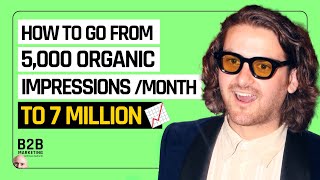
Dan Cmejla and Dave Gerhardt discuss how to build and scale B2B communities. They share frameworks from companies like Apollo and Chili Piper, covering community marketing, organic social growth, and customer advocacy through authentic engagement and multi-channel content distribution.
This is how you can go from 5,000 organic impressions a month to 7 million. Because each piece doesn't have to be massive. Let's say I have 50 people in the customer advisory board and half of them participate in each marketing campaign. I have a sales advisory board of 500 people. Apollo has one. It's 4,000 now. We grew it. It was awesome. I have like 20 friends on social. I have 100 affiliates. I've got two influencers on. They have to post because it's their job. Partners. I've got 50 partners, I've got partner communities. Then I have 100 employees. I've got all my executive one piece of content. I can distribute that piece of content a hundred times. That means that each post can get 1000 impressions and I'll reach a hundred thousand people organically. Just take a second to think about that. What if it's 5,000 impressions per post? Just kidding. I know the math. It's 500,000 organic impressions. So when you think about this, it becomes like it changes the game entirely.
This is one of my favorite topics in B2B, and I think we have one of the best people to talk about it. Dan's done a bunch of interesting stuff at Apollo, at Chilly Piper, and I've seen his slides and community is one of those things. I think everybody's like many of the topics, everybody's talking about it, everybody has different definitions for what it is. And he has some really good frameworks and he's going to help. Think about this and actually take a bunch of your questions live during this session. Next up, how to build a community. Dan Schmila.
Let's hear for Dave. Woo. We're good, we're good. Oh, my God, that band's amazing. It's my friend's band, Jake, swamping the pine. Look it up. Song is Drive, Drive, Drive. But I'm actually here. Show of hands, who here's from Vermont? I'm keeping my hand up because I'm from Burlington. Woo. So there's a saying in Vermont that what happens in Vermont stays in Vermont, but that nothing ever happens in Vermont. Dave, you're proving you're bucking the trend. Something's happening in this state. It's so cool. We've got like Ben and Jerry's and Bernie Sanders and Dave and it's awesome. They're all like very white guys. But it's Vermont. We're working on it. Whoa, whoa, whoa, whoa, whoa. Did you see my shoes? Yeah. You are so hip, man. Thank you. Okay, cool. Well, let's get into it. To be honest, I didn't prepare the content for my slides, so even I don't know what's going to happen. But I did prepare all of the jokes. So let's get going here. This is me. They're all Vermont centric photos. And Jesse was there when we took this one on Sterling Pond. That's my dog, Tumble. I've never caught a fish fly fishing. I just tried. This was a couple weeks ago. We did an earth oven where we cooked a bunch of food in the ground. And then this was at the DNC a couple weeks ago as well, where I'm excited about Vermont. These are all very Vermont centric stuff. Very Vermont. Not demure. Taking a selfie at the dnc. Sorry. But some of the places I've worked, some Vermont companies, vpirg, Sun, Common, awesome Vermont companies. Then I got involved in politics. I worked for Bernie, I worked for Hillary. I did persuasion work there. Then I joined tech. Has anyone ever heard of the community? Modern sales pros. All right, yeah. So I was a general manager of there. We scaled that community from 1,000 to 14,000 members. Also working with Atrium, which was the company that owned that community. Worked for Bernie again, another big link. Then I won working with Biden. That was great. I joined a company called Chili Piper as their community manager. Two years later, I was the VP of content in and community there, working with a lot of really amazing people in this room who I have so much respect for. Chili Piper is really showing up. And then I worked at a company called Apollo I.O. where I was their VP of Community. Managing customer marketing, field marketing, social media marketing, pr, evangelism, A lot of personalities and it was a lot of fun. Right now I'm working for the Harris Walls campaign, helping support their events. I also put something stealth because you're like, supposed to be doing something, but honestly, I'm just like doing earth ovens and not catching fish until I go on the road. Okay, so this is gonna be a lot of fun. Who here from Canada? Show of hands. From Canada. All right. So, yeah, I mean, I think it's exciting that we all came from all over the world to Vermont because, like, simply put, learning at the pace of experience is often not fast enough. So you're all here to pay attention. You came from Canada. You should pay 27% more attention because of the attention exchange rate and about 30% more laughter. My jokes because, like, I freaking need it. Okay, next slide. Today we're going to discuss what is community marketing. We're going to discuss cross community evangelism and customer relationship. And then also we're going to determine your community strategy. It's going to be a lot of fun. But first, I want to talk about how community marketing transforms brands. And I think there was something indicative earlier that I saw from Dave's slide, where it was the first slide. And Dave, I've been obsessed with your work. I've been following your work for a really long time. Like when, when Ross was talking about, like, oh, LinkedIn video is back. You knew when LinkedIn video first came there, we all saw you got your entire team to post about what was happening at Drift in such a real authentic way. I'm not sure if that's how any of you first followed Dave, but I found him because I was like, what's going on with this company Drift? Why is their marketing so much better than mine? Like, how do I do that? But like, I also noticed in his, in his deck, there was that typo in the first slide, right? It was a struck through. I thought it was just cool marketing because that's like, I'm like, Dave is so good at everything. This must just be a thing. And I, I want to let you know, all the typos in my deck as well are also just like, really cool marketing. But let's talk about these companies because I've seen Community transform all of them. When I was at Modern Sales Pros, it started off as a community of a thousand revenue operation leaders. Two years later, we're at 14,000. We've done events in 15 cities throughout the country. And we monetized it through sponsorship, bringing about 2.5 million revenue, which actually extended out the Runway of the software, which is crazy. Like a community extends the Runway of the software. That was wild. Then I worked at Chili Piper. When I joined, we were getting about 5,000 organic impressions per month, if you exclude Michael Tuso, who is getting like a million himself. But when I left, we were getting about 1 to 3 million organic every month. And it was about 60% of the acquisition was attributed to programs that I was lucky enough to serve. I had like an amazing team. And then Apollo as well. I joined them. They were getting about 15,000 organic impressions per month. That number became 3 to 7 million organically each month. I'll talk about where these impressions come from. And then also when I left, about 76% of of the acquisition came from programs that I managed. During that time, we raised $100 million, reached a valuation of 1.6 billion, increased revenue about 600%. So it was really exciting. I think this stuff works. But there are also other companies that we can all see, like Drift. Like, what you did at Drift was insane. All of a sudden, the entire company became a vehicle to distribute the story of the brand. And I was like, what is going on? And then Gong is the same thing. And then we see Clay now doing this as well. I hear them coming up in all these conversations. So, like, I believe that marketing is about constantly searching for sources of inspiration. That's part of the reason I love Vermont. Like, I'm able to kind of chill out. Not really, but, like, try to chill out. And that brings inspiration. And when you look at these other companies, it's really phenomenal what. What they've done. Like, Gong reached a valuation of 8 billion when Chorus got purchased for like 1 billion. And it's like, what's the difference between the two? I think Gong is a better product, but I think community marketing and folks like, like we have here played a huge role in that. All right, My slides aren't funny like, Ross's. Sorry. You know, like, whatever. They're not as funny. So actually, before this, does anyone want to define community for me? Who. Who can define community? There you go, Dave. $100.
It's a feeling.
Where's Pranav? Pranav. Over here. OK. Maybe we'll get more participation.
I think it's like a. It's a connection of shared interests.
Yeah. Honestly, there was no right answer. I just wanted the $100 joke to land. But basically, I define it here as a space, physical or digital, where people who aren't explicitly paid to do so freely exchange knowledge and information. That means a community is a place where people want to build community. What a community is not is like your community, where someone's like, I have a problem with this feature. And then an employee's like, here's your solution. That's not a community. That's a message board. There can be slack groups, they can be in person meetups, they can be the comment section of social media, they can be Facebook groups, et cetera. Can anyone try and define community marketing? I made this definition on myself, so it probably won't be right, but it also will be right because there's no right answer. Community marketing. For $100, that Dave's gonna give you.
Distributing content through your community members.
Sorry, that's wrong, but it's really good one. Okay, this is the right answer. No, I'm just kidding. I define it as an effort to place your customers as the Primary distribution points for your brand. Community marketing enables a shift of marketing through instead of two. So like traditional marketing, you're like, let's get the story in front of our customers. Community marketing is like, let's build a relationship with our customers. Then they'll deploy that voice to the spaces. A lot of what we heard of in Ross's spit, and I'm going to expand on some of that a little bit. So community marketing is identifying the spaces of influence and deploying the customer voice to those spaces. Once again, Ross, dude, you took all my content, bro. Like, come on. Just kidding. Just kidding. It was awesome. I loved it. It was so great. So here's a QR code if you want to. If you want to go, because I don't want to explain everything, you can find this a LinkedIn post. I also happen to have the best LinkedIn URL has been deactivated for some reason. Oh, my gosh. Then just go to LinkedIn.com great marketing and you'll find me there because that's my URL. But basically, the idea of an influence map, it kind of builds on what Ross is saying, okay, we want to distribute our brand. We want to take one piece of content and separate it across a million things. But, like, where are those spaces? And like marketers, we love to make everything way more complicated than it needs to be. The easiest way to find out where to market is is always just to ask, hey, where do I market? Like, what's influencing you? So what I would suggest is if you want to truly understand, like an extension, an extension of the stuff Ross is talking about, like, what groups do I go into? You survey your customers. What blogs are you listening to? What podcasts are you interested in? What social media platforms are you in? Who do you respect the most on social? What events are you attending? You build this list from your close one, your close lost your prospects, and they'll literally give you a blueprint of. Of where to market. And then the question becomes, okay, how do we do all that raw stuff in that space? Like, how do we deploy the voice to that space? And I'm going to talk about that as well. So as you can see, the number one step here is to build an influence map. And then the number one step is also to invest into a social media and customer marketing team. That's just great marketing. Not a typo. Not a typo. Okay, so let's keep on going here. This is an example of an influence map that I built when I was at Chili Piper. When the question was like, hey, how do we engage in these communities? Right? So the traditional approach might be you take a community like Pavilion, and you're like, let's give them $100,000 to sponsor a slack group. Now, I love Pavilion. You should give them $100,000, give them $500,000. Like, I love Aaron Leader. He deserves the world. But what we did instead is we asked them if we could sponsor membership. So Instead of paying $100,000, I paid six members $1,000 each to pay for their membership dues. And they said, what do you want me to do here? And I said, be yourself. Just be yourself. But, like, they know if they love us, which I only pick people, I love that they'll advocate for us. And that is the difference between marketing to and through your customers. So we're going to get into this a lot, but basically what you really want to focus on, in my opinion, isn't the communities themselves. It's this black dot in the middle. Like, how do you create a culture of people who want to evangelize for you? And. And like, this is what I've done at all the companies I've been at, and it's been, like, pretty successful. I'm also going to take about 10 minutes in this and dive into the question we heard last time, which was like, how, like, what's the connection between organic social and demos? Because, like, I have full correlation for that at Apollo, and we can dive into it. It's going to be a lot of fun. By the way, as we go throughout, if anyone has a question or wants me to expand on something, just raise your hand. I'll call you during. And then if it's something I'm gonna touch on later, I'm gonna say, no, not that question, but if it's good, I'll answer it. Okay, cool. Next slide. When we talk about community marketing. I know everyone's obsessed with Reddit. I'm not. It's okay, though. But that's because I'm a SaaS marketer, a B2B SaaS marketer. And primarily the stuff I see on Reddit, to be honest, is, like, people objectifying women on, like, Reddit. So I don't like Reddit. But anyway, it's great, though. You gotta be everywhere. But I want to talk about LinkedIn because, like, I can never talk about LinkedIn in Vermont. Like, I talk about LinkedIn in Vermont. They're like, oh, weird. But we have, like, a bunch of LinkedIn people here, so let's talk about LinkedIn because, like, I'm super proud of what, what we've accomplished at LinkedIn at the last couple companies I'm at. The first thing I'll say is like not featured on the slide. Here are some incredible employees I've had who followed me from company to company. Specifically Medulli Arias and Taylor Boger. Like, we created this trifecta of customer marketing and social media marketing and me being weird and it ended up going really well. So when I joined Apollo, we had about 15,000 LinkedIn followers and we added 57,000 that year. Gong was always our North Star. Got em, we're their North Star now. I mean, they're worth 8 billion and we're not, but it's okay. But basically, like, I want to dive into this really quickly because when we think about community in the context of B2B, a lot of it's actually happening on LinkedIn. Like look around, like, what percentage of you met each other through LinkedIn? Show of hands. Who here met someone through LinkedIn first? Okay, who here met someone through Reddit first? Dude, what are you doing? This is the worst. I'm just kidding. I'm kidding. No, no, they're great. But basically like, I'm gonna take a couple minutes on this because I didn't even know what to talk about and I'm like, this would be a great thing to talk about because it's so easy to differentiate. And a lot of times the stats we get are total misnomers and marketers take, take directions from things that don't make sense. Like for example, it's well known if you post more than five times in a week from your company account, you're going to get like a 25% hit to your reach. Has anyone heard this? Okay, what if you post 15 times, you get a 300% increase and then you remove 25% of it. Right? That's more. I'm not very good at math, but that's a lot more. So like what, what we've found, and Pranav talked about this a little bit, is like, if you want to build a community, you need to celebrate your customers where they're at. And for me, that's often on LinkedIn. So the way to do this is to build paths from customer advocate to user generated content. One thing is the very first thing I do at every company I go to, I ask them, like, when a customer shows you love, what do you say? Like, imagine like you're at your high school reunion and you go up on stage, you're like, I love Stevie. Stevie says nothing. And then you say it again, maybe quieter this time, like, I love Stevie. You're not gonna say it a third time. Cause Stevie is just rude. Or maybe like, they have a valid reason. Like, I don't know. I'm not gonna judge Stevie. But that's essentially what most people are doing right now. So before you deploy an ebook or whatever, I'd ask you, like, when a customer shows organic love, is your company replying 100% of the time? Show of hands. When someone shows organic love on social, is your company replying 100% of the time? All right, most of the people here, you're blowing it. Get it together. Just kidding. You might not have the bandwidth for it, but it actually really, really helps. Because when you acknowledge someone's advocacy, more than just highlighting it and drawing traffic to it, you're starting a journey. What's your question? I'll get into that in a second. Really bad question, Dave. Can we get him $100?
Yeah, I'll get your Venmo $100.
I'll get into that in a second. But very little tooling. Yes.
What's the proper way to respond when.
Someone shows you love? Are you going to go into that, too? I'm going to go into that, too right now. Yeah, I'll go into both right now, actually. Great question earlier, by the way. So I've always hacked this together, but essentially on LinkedIn, if you go into your mentions, you'll see everyone who mentions you, Right. And then you just physically reply to that. I've taken it a step further. We used a tool called Testimonial IO to take every single profession of love and bring it up what we call an advocacy journey, which I'll talk about a little bit later. But in this case, I hired someone from Venezuela. She's amazing if she's on the market. If anyone wants an introduction to her to create this path, I'd be happy to intro. Incredible. And basically what happened is anytime anyone posted anything positive, we would comment publicly. Wow, thanks so much. You're such a great marketer. You have such great tool taste in software. Then we would DM them and say, hey, we love this. Something I stole directly from Devin and Gong. Can we put this on our wall of love? And then we get their permission to put it on the wall of love. And this would happen within 24 hours. And then our product marketing team would go into this wall of love, and they'd find an aggregation of every positive mention ever. And they'd be like, case Study, case study, double down on this person. This person speaks at an event. But the idea is like if you don't use a software for it, you use a human for it. You're actually not only gathering that, but you're creating the foundation of a relationship. And you can pay someone who's not super senior to build that relationship and they pass that relationship off to other people who do that more. Did that answer kind of both of your questions? Great. All right. Build paths from customer advocate to user generated content. We just covered that. That's literally what the questions asked. Question. Great questions. The second one is to validate these content pillars. This is something Pranav talked about earlier where it's like you can get attribution on the whole. And I'll talk about this where you can look at like, hey, there's a direct correlation between organic user generated impressions and web traffic or demos in the flow through. Usually it's just web traffic, but if you have a PLG product that should flow through at your conversion rate. And you can validate these content pillars by looking at the organic impressions of one. Like for example, those who don't currently capture all the user generated love, be really easy to capture all of that. And then once a week you make a post about it. This person said this great thing about us. Does that work? Does that post work? Okay, now you know, you can just post about it once per week. If you're posting five times a week, that's 20% of all your content right there. Validate the pillar and then move on. The pillar should be human centric. The third tip here is to vary your content mediums. And this just means that like you can think about it as almost like a sudoku. Not the best metaphor, but it's like if I have a thing I want to talk about, like showcasing organic customer love, that's one topic. But I also can split it into several different pillars. So I can be like a video about this, a picture about this. Long form content, short form content, a poll. So each pillar can be distributed by content medium. And the idea is not to reach someone with something that's 100% relevant to everyone every time is the idea is to hit every single person in your following with something that's relevant to them once a week. Because people don't need a lot of value to be engaged when the baseline is like other people's boring white papers on LinkedIn. They just need to be seen and heard. So like, let's say you have three Personas, like rev Ops, marketing leadership, CEO. Then you have your content pillars fit under those Personas. Okay, Once a week I'm going to do a piece of content 100% relevant to founders. The first one's going to be video, the second one's going to be short form content. And then you keep going through this until eventually you stumble upon something that works and then you double down with it. And that's how Apollo basically grew faster than any other B2B SaaS company on LinkedIn over the last year. Also, like majorly did all the work, so I'm not entirely sure what she was doing, but it was badass. The last thing here is don't be basic. Any questions on that? Okay, go to the next slide. Here we've understood how to really manage our own organic social, which is really important because like, if your ship isn't in order, it's really difficult to do other stuff. Now this is my ip, so if you're gonna take a picture of it, it's implied that you're gonna be consulting with me. Just kidding, just kidding. But it's like this is how you really stack stuff up upon each other because. And this is what, this is what Ross is talking about. Once again, like, you have your campaign distributed. Not only take the content and turn into different content mediums, but think about how are you going to distribute this? And I like to put into three buckets. At Apollo, I had a team for each bucket. The first is Customer Evangelism. That's your customer advisory board. If you have a customer community, it can be something like that. If you have a peer to peer community, just your friends on social, we all have them. Maybe they're most of our friends. I don't know. There aren't a lot of people in Vermont. Just kidding, just kidding. And then you also have your affiliate, your referral partners. This is one bucket here. A second bucket is your community partners, maybe influencers, integration partners, partner communities. You're partnering with Dave, he's going to hook it up. Very good investment, very mindful. Then the next thing is your employee evangelism. Executives, employees. Now, like, if you think of each of these as a cultural moment that you need to create and then you can stack these on top of each other. This is how you can go from 5,000 organic impressions a month to 7 million. Because each piece doesn't have to be massive. Like, let's say I have 50 people on the customer advisory board and half of them participate in each marketing campaign. I have a sales advisory board of 500 people. Apollo has one. It's 4,000 now. We grew it. It was awesome. I have, like 20 friends on social. I have 100 affiliates. I got two influencers on. They have to post because it's their job. Partners. I've got 50 partners. I've got partner communities. Then I have 100 employees. I've got all my executives. One piece of content. I can distribute that piece of content 100 times. That means that each post can get 1,000 impressions, and I'll reach 100,000 people organically. Like, just take a second to think about that. What if it's 5,000 impressions per post? Just kidding. I know the math. It's 500,000 organic impressions. So when you think about this, it becomes like, it changes the game entirely. And this is like, a pretty useful slide for me, at least. And then there are two other components to it. And then I'll take some questions on this slide. The first is, like, you take this stuff and you distribute off your own marketing channels. You've already gotten your LinkedIn in order, so there's engagement. You're replying to every comment there. It's a true community. I'm going to take my executives. I'm going to be like, we just hired this amazing executive. Check them out. I'm going to take our best customers. I'm going to showcase them from my channels, but then I'm going to ask them to showcase my story from their channels as well. And that increases the total amount of distribution channels. Like, right now, in your head, I'm curious. You don't have to answer, but, like, think through how many distribution channels you have for your average piece of content. Maybe they're ads. Maybe there's a newsletter. Maybe they're like two people who post on LinkedIn. Maybe you paid one influencer. That's four channels. You will never compete with this strategy because I have 20 times more channels for every single thing that I'm going to distribute. And I will show them across my channel so they like it. It's an honor to be seen doing a takeover on the Apollo page that will blow up people's businesses. But the implicit there is that they're also going to distribute my content across their channels. And this is where we come back to what Ross is talking about. Like, if you want to be active in Reddit and you pick partners who are active in Reddit and you showcase them across your own channels, they are going to vis a vis the principle of reciprocity and friendship, distribute that on their own channels. And those channels will have a lookalike audience to who you're going for. So like let's say you're trying to reach out to marketers and demand gen people who I guess aren't marketers in this case. They're all marketers. Marketers and rev ops people and CEOs also. Right. One way you can do it is create content for all three Personas. The other way you could do it is create content for two Personas and then get a bunch of CEOs to talk about you. Their audience is going to be look alike and they're going to distribute that across their external channels which will go out to all the audiences. Like if you take one thing away from this, it's don't be basic, but the second one is this here and it's really helpful. I want to take some questions on this really quickly if people have it. Well, we're not done. We're not done, but thank you. Yeah, you can stand up also. Just kidding. Any questions on this? You already asked a question. It was really bad. Go ahead. $100. Oh my gosh. Wow, this guy must be rich. I don't know what's going on. Wow. Let's get a hundred dollars for everybody. Dave.
It's a write off.
$100 for everybody. Okay, what's your question? What's your question?
So from a business owner perspective, like.
Yeah, I'm a marketer.
I'm also a business owner. We work with a lot of SaaS companies, so we sort of try to evangelize these programs as well within their organizations. But I've seen many examples of SaaS companies that have like three, four or five really strong marketers on the team. They're posting a ton of content on LinkedIn. They're everywhere. And then one year later, two years later, these people leave the company and the company is nowhere. Like, how do you approach.
Yeah, so that's a really good question. I know a little bit about it, to be honest. But look at that. That's just one. That's just one. You still have the eight. It can be a big one, but if it's too big a one, then you might not necessarily be doing it right. Like what you really want to do is you want to create a cultural moment within the company where people realize it's in their own self interest to evangelize across these channels. And the easiest way to do it is this. You start with the executives and you teach the executive to have an aha moment. Like, hey, executive, you don't care about LinkedIn, because you're busy. Why don't I write some posts for you? Like, oh my gosh, you're hiring. Well, let's talk about that. They hire their senior director through that LinkedIn post. It creates like an aha moment. Like if you're using Paramark or something. That aha moment is, by the way, Pranav didn't mention in his speech he has a software that does all of that stuff. So you just buy his software. But anyway, when you get attribution for what you're looking for and then you're like, I post on LinkedIn, I hired someone. Then it becomes less of a hey, please post and more of a like, an executive's like, I got to do this. And then when people see the executives posting, then they're going to be more likely to follow that lead and it happens. So like if you place a couple people as the center, these four marketers or whatever, you are making yourself vulnerable. But if you create like a cultural transformation that should last afterwards and it comes from the top down, starting with the CEO also comes from the bottom up, where people are like seeing AES post content and they're exceeding quota more. They're like, I got to post content too, because I care about money, because I'm a sales rep. Okay, next slide here. Yes. How do you convince B2B executives not to be basic? Just write their content for them. No, no, no, they're not basic. You need to convince them to be a little more basic sometimes because they'll be like, my belief is that whatever craziness is coming out of founder mode. Founder mode. So basically it's like, it's about teaching them the concept of content pillars. Right? That's in my philosophy. I'm sure Devin has a. You know, I'm so excited for your chat tomorrow. I'm sure you have a different philosophy. It's probably better because you have like, what, a hundred times more LinkedIn followers than me? But a Vermont LinkedIn follower is like dog years. It counts as seven. But basically, like, if you get them to validate content pillars, it's really easy. The easiest way to do is you ask them, like, who do you respect in the company that needs a shout out? And then they do like, servant leadership type posts about their team, which then creates this moment of like, wow, let's celebrate each other. Just like in any team. Like when you want to celebrate someone, you want to celebrate them publicly. What's more public than bragging about them on LinkedIn, right? Let's make LinkedIn a little more braggadocious. That's what we all need. Okay, this is another really cool slide that kind of shows this in unison. Because, like, when you have this and then you're hitting. Each campaign is hit from, like, 100 different angles. So, like, let's say I wanted to distribute content, I would have my social accounts push it. My employees, my customer advocates. Within that is my best customers, my customer advisory board, my tech partners. And not only are they all distributing this to the audiences, but they're lifting up each other's content. They're commenting on each other's content. They're in the comments section of these posts. And, like, you should be creating posts to drive conversations in the comments. This is really valuable, I think, at least, but maybe it's not. Okay, Advocacy journey. This also links back. What? Can we take your question also? I thought your question was great. The first one. What was your second question? Sorry, we're out of time. We're out of time. Okay. The advocacy Journey. You got a question on me? Dave's gonna give you $500 for asking. Why are you just carrying around $100 bills? Also, like, what's going on?
Dan just sat down. He's like, he just had $100 in his pocket. He's like, next question. Walk up and give that guy 100 bucks.
That's awesome. That's awesome. Okay, so this is really useful as well, because I talked about earlier, that first moment, right? That first moment of advocacy is so important. Not because you care when someone's like, oh, Apollo plus one, but because that builds into something really powerful. A lot of times, marketers are too focused on pipeline outcomes. We're not focused on advocacy outcomes because they're more difficult to track and all of this stuff. So this is just an example of, like, how you can build someone up from engaged to superfan, like, very bottom here. Social love. They leave social love. I'm sorry, I'm counting these people out. Social love right there at the bottom. Then when they take that social love, you can steward into greater things. Once they reach a certain threshold, you're like, we would love you to join our customer advisory board. Speak in this event. Those things are at the intersection of what they want. They want to grow their career. They want visibility. They want to be recognized for best in class using a software, right? So this is just really helpful. And a lot of people, they forget that, like, to get someone to provide 100 referrals, they first have to say to themselves, I like this software. And then when they say that. Then you take it and you put on your website and you're like, you really like this software? Like, it literally says it on our website. And not only will that be great for your website, but they'll actually change the way they think about it psychologically. Because, like, people are going to hold themselves accountable to public commitments that they make. It'll change their behavior. Like, imagine being like, I love Apollo. I love Apollo. I love Apollo. And then someone's like, do you love Apollo? And you're like, no. Like, I'd be like, why? This doesn't make sense. You already said you liked it 10 times. So just building that kind of loop psychologically is really helpful. Next slide here. This is a customer advisory board. I've always been weird. I've always built, like, six everywhere I go. But it's really helpful to see that, like, you can leverage your customer advisory board for different things. Like, I would encourage you, if you're thinking about advocacy, to take stock of, like, those customers who are the very best you are. They're already there. They're your beta test. They're beta users. They're. They're all this amazing stuff. But, like, have you built a formal structure around it? So I built this structure, and then there's all kinds of amazing stuff that can happen from it. Like, one time at Chili Piper, we took our cab. We had a meeting at that meeting. We were like, what's your professional superpower? What's your work superpower? Three months later, they show up at a meeting. They all have a deck of Pokemon cards where their powers are on it. And then they all post those Pokemon cards on social. That's 50 people posting, on average, 5,000 impressions. That's 900,000 organic impressions right there. And then some people would even carry them around with them. So find ways to celebrate people authentically, and they'll celebrate you back. And you really should build a cab. Okay, this is kind of one of the last slides I have here. After you've built, you've fixed your ship, you're not basic on social. You got great social. You've hired a customer marketer. You've built a path between them and social media. Then you've increased your distribution points. You literally have a list, all the distribution points. Here's a hundred ways we can distribute this content. Then it's time to start building your own spaces that hold influence. And this is. The speech was about how to build B2B community, but actually, I got the title wrong. It shouldn't have been that at all. What it should have been is like should you build B2B community? Or how do you build B2B community versus build a B2B community? Because if you spend all your effort building one community, you're not necessarily evangelizing across all these other communities right here or somewhere, wherever it is right here. So what you really want to do is focus on the customer relationship and deploy that across spaces. And then after you've done that, then you can build your own spaces that hold influence. And like at that point you're just carrying around a hundred dollar bills in your pocket. You're Dave, you've already made it. Okay, cool. So this is just super brief, like five different ways, five different community strategies. Build a customer community. Build a peer to peer community. Build a community focused on an idea like culture amp does this so well. They have a whole community around why you should have an effective company culture. And that's not like buy culture amp but it creates evangelists. It's a top of funnel for you to discover your evangelist. You can sponsor Exit 5. Obviously that's a really good thing. Or you can do nothing and hope for the best. Last slide here. Just kind of how to evangelize across communities. Identify the community that's through your influence map. Join the community, identify your customers in that community. Create a social listening mechanism in that community and then get the community leadership on your tool if you can have them social listen for you and then get your customers to participate in these communities. Like in an age where AI is going to saturate more and more and more in an inauthentic, high velocity way, I honestly believe community marketing is the answer to that. Because what community marketing is, it's an insane profusion of insanely high velocity authentic content. I believe it's the answer to AI. I'm not going to have a job after November. I don't want to work in politics. I am looking for part time work as we said that. So you know, hire me anyway. That's a lot of what I got. And now we have questions, right?
Let's do it.
That was really good.
Two things that I want to just call out. I think it's crazy that like everybody that is working at a company that builds a product here, you know, they, they talk about, talk to customers, talk to customers and then that same camp of people then don't believe that social media is the right channel for their business. And it's like the entire reason you've been able to do what you did at Apollo. How Exit 5 exists at a business is because we're good at social media. We're not posting funny tik toks or anything. We're just talking about a topic and being active there. And the, the feedback loop you get from social media. Dan and I were talking about earlier, he's like, man, the content has been great. You want to know why the content has been great so far? I, I have tested each one of you already. We, everyone that's spoken has been on a podcast already on the X5 podcast. So that's a signal. We know that that is something that people want so we can go do more of that. And so your content, the more you post, you're getting those constant feedback loops and signals. The other thing is people, it's crazy. People want all these hacks and shortcuts, but they won't take the time to respond to comments on social media. It's like someone commented about your brand and you simply don't have the time.
And then it's like, where do we find customer love? Right? Like apart from the people we're ignoring.
Right. And so last thing and I'll shut up and we'll take a, we'll take a question. We do this for exit 5. So you have somebody in Venezuela that built this. We, we do it like Anna. Matt created this and Anna has taken it on. Now once a week she goes to LinkedIn. She finds every single person that has mentioned Exit 5. And we have it in our, in a Slack channel anytime we do marketing now. We have those screenshots I've used as a cmo. Everybody loves the stats and spreadsheets. I've used screenshots of something that somebody says at an event or a reply to an email or a comment on social media like that can often be the best marketing. You just have to be able to track it so, so you can use it. Okay, couple of questions for Dan before we get Lachey up here. Okay, let's go to Brendan then we'll go over here.
Thanks for listening everybody.
Hi friend. Thanks.
He's at my house yesterday.
Hey, so quick question. I've noticed that there's a lot of communities that they spring up. Companies start them, they quickly turn to tumbleweeds because it's just getting hammered. Especially in Slack with at here webinar today, next day at here another webinar. They treat it like audience and not community. If you aren't hired in to build community and maybe don't already have the buy in for this, how do you think about changing the mind of the executive team. So you aren't constantly getting pushed of like, how many trials is this going to lead to?
How many? Yeah, and this is this something that Pranav talked about earlier is such a good question because it's like your executives and also links to a bunch of posts we've speak, speeches we've heard. Your executives are going to want measurable things like how many gems do I get from this? Like how many meetings are we booking from the community? But the reality is that what you're trying to do is you're trying to build brand distribution points. And, and to answer your question about the bang and bust of the communities, it often comes from the same moral hazard that you described more often than it being an executive. I would say it's from a community that's leaning too much on sponsorship. So won't pick sponsors that align with the values. Like, look at the sponsors today, like calendly use evidence Nativik. They're all so relevant to everything we're doing today. So it's amazing. It makes sense for them to be there. Plus, everyone who takes a demo, Dave's going to give him a hundred dollars. So like that's pretty amazing. But when companies like kind of sell out a little bit, it doesn't work as well. What I would say is you want to establish several guardrails on it first. You should be looking at a variety of metrics within your community. Unique posters per week that ensures it's not just dominated by a dude who's like, here's a mental health meme that I relate to as a salesperson with poor mental health. Like, so create guidelines around unique posters, posts per thread, replies per thread, and then follow up with that with NPS surveying and surveying to ask people what they want because it's really tough to push back back against an executive when you're like, hey, like this is my opinion. But if you're like, oh, great point executive, I did some surveying of our customers and none of them agree with you. Like they all think you're wrong. Like that is way more powerful. So you survey your customers, you ask them why the community should exist. The other thing I'll say in this is like, sometimes people are building communities and it's all about themselves. You need to not build those communities. They're quixotic attempts from the beginning. Over here.
Yeah, sorry. So if, let's say you have your customer advisory board as just one of your distribution channels, what is like the approach for them? If you have a piece of Content you want them to share. Because it can't just be like, share this for me.
Yeah. So I kind of, like, kind of imply you got to share it. Like, what I've done is I've established a customer advisory board health score for every member of the cab. So to remain considered healthy, you need to provide one advocacy action, attend the meeting, and provide one referral every three months. So you create an upfront contract with these folks. Hey, this is what you need to do. And then you ask them, like, what kind of content do you want to share? Oh, I want to share content about how I'm pushing your software further than ever anything else. Why is that? Well, I want a promotion. Right. You seek to understand what somebody's goals are, and then the content is at the intersection of their goals and your goals. If you create a relationship where you're like, this CAB is about you posting for us, that is not going to work. But if you ask them, what do you want? Hey, I want to grow as a leader, then you can fill that, filter them content that'll help them grow as a leader. And it's not going to be for everyone. Like, if you look at that slide there, like, CEOs are not going to post for you on LinkedIn, but, like, your top account executive might. So the way it's shaded in is kind of what you leverage from folks. And it's almost like you should have enough happy customers to be able to do this, especially if you're capturing all the customers at the first moment of customer love and then pushing it out. The other aspect of that is, like, when you get that feedback loop, like, the best three days Apollo's demo history ever was actually when, like, this guy named Cliff was like, Apollo sucks and whatever we pay them. And then like, 40 customers were like, hey, Apollo doesn't pay me for anything, but I love them. And then that was the best three days. In a company that raised $100 million and became a unicorn in a down market, that was our best three days ever. So it's like, when you understand what people want and you're genuine and real with them, they will show up for you. And it really depends what they want. A lot of times they want influence over the roadmap. A lot of times they want to feel special, they want to get promoted, they want to get their next job, they want a discount. They want to ensure that the roadmap doesn't compete with their company. So it really varies. And yeah, so you don't always have to incentivize someone.
You're saying the incentives can just be those things.
I never incentivize people. Like we. About seven months into my time at Apollo, stood up a paid influencer program which was run by Zoe Hartsfield, who's amazing. But honestly, I probably wouldn't do it again because, like, authentic marketing is not paying someone to do something. It's finding true customer love. And even if the reach of that is 30%, you can make it higher velocity. And there's a moral hazard when you pay people to chat about your stuff too much. If it's not authentic, there's not like a real connection, then it's actually going to decrease the validity of the authentic content because people are going to think it's paid for. So what I like to do is like bribe people with fun gifts instead, and they don't even know that I'm paying them. Yeah. Also shout out to Sandoso, the gift expert, sps. Thank you, Dave. You're so great. That was great.
Give it up for Dan. Thank you, man. That was great.
So fun. Here you go.
More from Dave



Asynchronous work isn’t a trend. It’s how teams actually get things done without burning out.

AI is changing product marketing. Here's how top B2B teams are scaling without cutting corners.

How Product Marketing Is Evolving in 2025: Lessons on AI and Leadership with Jennifer Cannizzaro

Why referral programs look different outside of SaaS (and why that’s a good thing)

The secret to scaling dual GTM? Give every marketer ownership and get out of their way.

From content to CMO: how Jess Cook made the leap (and built her first budget from scratch)

Leading B2B Marketing for the First Time: Strategy, Budget, Content & Team with Jess Cook

Most B2B advice is built for SaaS. But what if you don’t have demos, PLG, or lead goals?
