How to Build a LinkedIn Founder Brand that Drives Revenue
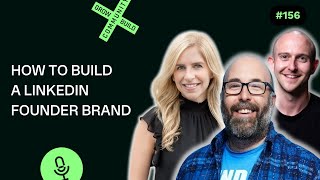
Dave Gerhardt, Kate Stevens (CEO of Bridge), and Brad Zomick discuss how to build a founder brand on LinkedIn that drives inbound leads and revenue. They cover content creation, scheduling, engagement tactics, and how to measure LinkedIn's impact on business growth.
I think that there's a couple of different measures as it relates to likes, comments, impressions, which LinkedIn will give you. But then there's kind of the, the business element. And I said those early indications were going to events and people knowing who I was and you know, telling me that they enjoyed my content. But then like we really started to, you know, have an inbound funnel and we never had an inbound funnel before. I would say we just, you know, in our Last quarter quarterly QBR, 40% of our leads are inbound now, and those are referrals.
All right, so I'm excited to do this podcast because it's a topic that comes up all the time and I actually don't think we've ever done a dedicated. Maybe we. I had Allison from parentally on maybe a year ago and, and we Talked about how LinkedIn and building her brand was such an important thing to help grow their company. But I'm excited to, to have this conversation today. So Kate and Brad's also here. So Kate, why don't you just kick us off and just give some background. If you could quickly introduce yourself and talk about Bridge and then we'll, we'll use that as a jumping off, a jumping off point to get into the LinkedIn and founder brand stuff.
Awesome. Dave, Happy to be here. I'm Kate Stevens. I'm the CEO and founder of Bridge. And Bridge is connecting the offline and the online for Omnichannel brands. So what that means we work with brands like Feastables, Health Aid, Flow Hydration, Canopy, Jolie, Black Diamond Equipment. Most, you know, all of those brands sell through channels like retail and Amazon where they lose that customer relationship. And so we help Bridge that. So we're helping them collect data, drive retail velocity so that they can bring those customers into their ecosystem and grow their revenue. So we're a seed stage, venture backed company, work with over, you know, 150 brands kind of across the ecosystem. And so that's kind of like a quick overview of what Bridge does.
Okay, cool. And prior to how long has the company been around and like what was the state of what were you doing from a marketing perspective or what have you been doing in the early stages of the company?
Yeah, prior to thinking about a founder brand and.
Sorry, can you confirm or deny the fact that you are the queen of Omnichannel?
I can confirm. So yeah. I mean a lot of what we're really kind of building and category creating in this omnichannel space and educating the market, which is actually part of our broader marketing strategy. So just backing up a little bit, I started my career as an investor. I was investing in the space, went to Harvard Business School where I met my co founder Zach and we launched bridge in 2020 out of the pandemic. Really accelerated by a lot of the trends that the pandemic kind of brought forth. One was the emergence of these omnichannel brands. So your digitally native brands moving into retail and Amazon faster than ever because of rising cost of acquisition and your retail first brands forced to set up an e commerce site because you know everyone was at home. And so that's where like we became that bridge for these omnichannel brands between the offline and the online state of the company. So we raised pre seed round in January of 21. That was kind of when we kicked things off and started building a team. And I met Brad in November of 22 and kind of state of what marketing we were doing at that point was pretty haphazard. It would be like okay, let's write a white paper. And we spent a couple months writing a white paper and that was kind of what we did. We had some co marketing kind of effort efforts with different tech and agency partners but we had nothing in house. And it was really kind of an afterthought actually. In many ways I under appreciated kind of the value of marketing. My perspective was I'm in B2B sales, I should be able to get in front of prospects, close those deals. And what I saw and what's happening is when I got in front of prospects I closed those deals and they liked our product. So state of the business at this point is we probably had like 40 customers and we would close deals that we got in front of. I just did not have enough funnel. We had no inbound pipeline whatsoever. Marketing was extremely haphazard if at all. And my co founder and I basically, you know, made a decision, we're like all right, we're either going to go at this hard, invest in marketing, kind of give it a, give it a chance or you know, the opportunity cost of us running this business is too high. Let's do something else. So that was kind of state of the business when I met Brad.
And Brad, who are you?
I'm Brad Zomick and I'm a in house SaaS marketer turned founder. Spent 12 years in house. I came up similar to you as a content marketer at the rise of inbound, doing a lot of SEO and blogging through the years. I got into product marketing, demand gen I operated from seed to drown, saw scale from 0 to 60 million, had a couple of exits, and during that time also advised probably a dozen or so companies. And after perfecting the LinkedIn model off of your playbook with Kate a month ago, decided to go out on my own and help other CEOs with LinkedIn. And Kate and I are still working together.
I was going to say she was like, she, she. Usually when you leave, you're not willing to come on the podcast a month later, hang out. So, so you, you must be doing good work on the, on the, on the LinkedIn side. So let's talk about what did you, what, what was the approach to, to LinkedIn? Let, let's, let's get specific and tactical for people. So why did you choose, like, why focus on LinkedIn and how did you wrangle Kate? Or maybe Kate, you, you drove this. But typically, if I just look at, like, Kate, I love having this conversation because Kate is just like, you have the perfect background for, like, you are the person who tells me all the time that they don't have time for LinkedIn. I'm too busy doing important stuff. You, you're a Harvard, a Harvard mba. You are an investor. Like, you're running a company. You're a CEO. Like, you got important stuff to do. You can't be playing on social media with the K. So how did you, what was the conversation? How did LinkedIn get into the picture? And I say that jokingly, obviously, I'm a huge advocate for being there. I think it is the number one marketing tool. If you're in B2B. At what point did that enter the discussion about, like, all right, let's, let's do something here. And what was that for? Bridge.
So, Brad, do you want to take this one? I mean, it was in. I'll kind of kick it off. It was Brad's idea. We asked him to put together a proposal when we were interviewing him as our head of marketing around what strategies he would employ first. And it was, you know, number one, LinkedIn founder, brand, and number two, launching a podcast as a soft sales strategy. That would be a content flywheel. So that's, you know, how I was introduced to the topic. But, you know, Brad would let you comment on, you know, why LinkedIn and, you know, why you pitched that. That was number one on your kind of proposal.
Yeah. So just for some context, I've been around the block a couple of times, and at other companies previously, I was using, I guess, the tired playbook, and things started changing. Probably around 2017, I noticed people are starting to post on LinkedIn and you got my attention around then probably too, I started following you. And back then I was doing kind of what everyone else was doing. SEO, ebooks, webinars. And I saw that playbook gradually decay. And during the pandemic, I had another CEO who kind of let me, you know, I was at another company. He let me also kind of into his profile and start tinkering and experimenting and we started experiencing growth there. So, you know, and hearing all other marketers kind of lamenting as well that, you know, cold or like the email newsletters don't get as much engagement or the salespeople, the cold email doesn't work anymore. SEO is crowded and takes too long. And like.
So you had experimented with other channels. I get it. I get that story. Let's. Let's focus on the practical LinkedIn stuff. I got you. I'm with you.
Yeah. So I started tinkering with it and saw it would generate results quickly. And I think how, you know, that was the number one thing I pitched Kate. I basically showed her, look at all the CEOs that are crushing it. Guys like Peter Caputa, Peplaya and Ben Jabawi from Attentive. That was one of the examples where you were. So that was the evidence. And then coming in, I sold it. We read your book together to get things kicked off, and a lot of the initial prompting to start that content engine came straight out of your playbook. And then we built a strategy around positioning and the narrative, the point of view, and just continue to, you know, build like that content strategy out. I would say there, there was a mix. So some of it was very personal. Right. I look at it, there's like the top of Funnel stuff that's personable and relatable to anyone. And then the middle of Funnel, which is like your on ramp, and then the bottom of Funnel, which is probably the conversations that Kate would have with a prospect, you know, just put that all on LinkedIn.
So jumping over to. I don't know how Brad convinced me and why I was intrigued by the strategy. I was seeing, you know, I sell to brands and I was seeing brand founders themselves employ similar strategies, but across different channels. So really Instagram, TikTok and then seeing a little bit of B2B, especially in kind of the DDC DTC space on Twitter, those I actually like, you know, did a little bit of experimentation on Instagram that didn't really work. You know, used Instagram personally, but wasn't seeming to really work for me. And Twitter, despite my desperate tries, just didn't feel particularly authentic for me. And it just wasn't the channel. So LinkedIn was also just a channel that I liked to spend time on. And I know that my buyer is there as well. So there was a desire to. The channel itself worked for me, but it really was reading your book that helped me understand, you know, why and how it could work. And then, you know, basically understanding this fundamental principle that in B2B, people buy from people, and by creating familiarity and awareness with, you know, you as a founder and your brand, your breeding, familiarity with the brand of the company. And that was something that kind of clicked when. When I read your book. And so that was kind of the first entry point of, okay, that makes sense for me. And then the second piece was.
How.
Do I have enough to say? And that I know, again, tactically, I was reading through your book again, and it's like, the little things people love Shark Tank people love starting businesses. The little things that we're doing every day are actually really interesting to others. And so basically, I was read the book on a plane, was on a flight back from California to the east coast, spent the flight literally brainstorming from what I didn't learn at Harvard Business School that translated into being a founder or not. And Basically, I had 50 topics that I felt like I could write about. So that was kind of like my initial brain dump. And then so I actually started posting before Brad even came on, because there's always that, you know, that transition period and, you know, just started sharing on LinkedIn. I think the initial inertia of writing is what I've found to be where people push back the most. And it's like, you know, I don't have time for this, but, like, you kind of just gotta start somewhere.
Yeah.
And I did. I remember posting on Thanksgiving and that being like, my first post.
Love that. I hate. I hate that excuse. I hate look, and I'm a human. Like, I have excuses, like, this is just a thing that I happen to be. You know, I have momentum around. And so there are definitely things like that I hate as a human, like, you know, that I have resistance against. And so I'm not trying to take anything away from that. But I think that one of the reasons that it drives me nuts is because people think, like, it's supposed to be easy. Like, any business, like, starting a business is hard. Right? Like, anything that you do. I think that if you do this, if you want to do this, is Going to take time and effort. And if you're willing to put in the time and effort, you might, it's not a guarantee. You might be able to build something and create a new channel that is meaningful for your business. But that's, that's true in everything. It's like, oh, you want to get in better shape. Like, you need to start going to the gym. You can't just go once and then be like, oh, this didn't work. You have to just kind of start committing to doing it and not really caring about the end result and just commit to the process. And it seems like you were fully bought in on the process of like, I just gotta start writing. And I think that's where a lot of people get stuck or they get stuck with like, I've written three posts and we didn't close a six figure deal yet. And so what's going on, Kate? Were there early signals? Like, did you, were you just like, I'm gonna commit to the process and do this? Or were there early signals that you're like, oh, interesting. Like I got three comments on a post. I've never had any comments like, I'm gonna keep writing. What was it that got you to keep posting beyond that first post on? Thanks.
So some of the early kind of initiate, yeah, indications were, you know, likes comments. But when I really started to feel it, it was we or, you know, myself for our business. I do a lot of in person events and when I went to the events, people like knew who I was when I didn't actually even know them. So that was like actually this very clear transition to people are consuming my content, they know who I am and they know what our business does. So that was like, I would say early indications were likes comments and kind of increasing my follower count. But the, the next stage was people, you know, coming up and telling, telling me that they really enjoyed my content, both you know, personal and professional and kind of like knew, knew who I was in my story.
I think this is why it's important to pick a specific focus. And like, I think where people make mistakes with LinkedIn or really any channel is like, if you tried to be Kate who I'm sure that your life. I'm sure you're much more interesting than just Omnichannel, Kate. Right. But for the sake of business and trying to grow on LinkedIn, it's better for you to go all in on that channel. And what happens is when you write about a particular topic online, like let's say you start writing about Bridging the gap between online and offline and omnichannel marketing. You're going, who's going to think that contest is interesting? My uncle, My friend who is an accountant and play, I play golf with. No, absolutely not. It's going to be other people in that industry. And I actually was writing something about this this morning where like, people obsess over targeting. Like, who am I going to, how do I target the right people? Well, you target the right people by shrinking, by, by writing about this particular topic. And so now you're writing about this particular topic, people are liking and commenting. That's showing up in other people's feeds. Who's going to see that? People in your industry. Now you're at an event, this stuff starts to build. You speak on stage or you meet someone in a dinner and they're going to do what they used to do years ago, which is go find you on LinkedIn and connect. The difference is now, 10 years ago, LinkedIn would be like, Kate and I had a handshake at a dinner, I go and connect with her. That's part of my rolodex now. And LinkedIn is my professional network today. No, LinkedIn is a content platform. And so now people are going to meet me and, you know, meet me in person and be able to connect the dots there. Right? It's, it's just an entirely different game. Did you think about targeting at all or did you focus on like, if I write about this topic, like, basically what I want you to say, what I want you to say is like, I didn't have a list. Like I think people think you have to have this list of like, I'm writing for these target accounts, but I want to show people, like when you start writing about a topic, this works like a magnet to attract like minded people to what you're writing about. And Brad, feel free to chime in with like other businesses you've seen this, you know, work for too.
We had, I was going to say we had content pillars. So, you know, I think first we really thought about writing for brands, so not super like, which is who we sell to, but then realized that it was really kind of a broader base of people who cared about what I had to write about in Omnichannel, which included kind of the whole ecosystem. So partners, investors, agencies, all of whom are, you know, referrers of brands. And so, you know, I think that we had in mind that we're writing for brands, but it wasn't, you know, particularly prescriptive and Found that, you know, when we created that content that that was beneficial and helpful to that entire ecosystem.
One thing I'll add on the targeting strategy, so the way I see it with LinkedIn, it used to be you could just write and people would gravitate towards you. It acts a little bit more like Twitter now. So there's kind of a targeting strategy that goes with the writing. So we would also be essentially trying to max out Kate's connection requests against a list of people we'd want to sell it to. And we would also kind of try to be actively engaging with them as well. And we, you know, would have, you know, invest time in the platform to, to engage with those people.
I love that. And, and so, so now that you're doing this for other businesses, do you think that's kind of like a part of. Because I often forget about this detail. But we, we did that when I was at Drift in the early days, actually we did this specifically where we were selling to B2B. We wanted to sell to B2B CMOs and we got a list of, we basically took our target account list of top 200, 300 B2B CMOs and David the CEO and I, literally from both of us, we had a spreadsheet. We went and we, and we connected, we tried to connect with every one of. And I wish I counted it, I wish I knew the math, but I would bet you that it was 70% of those people accepted the connection request. Usually when you see a connection request from somebody in a similar industry that looks pretty legit, you're like, except. And I think what people don't understand is that those people now are all basically opted in to see your content. Doesn't mean that they're guaranteed going to see it. But now when you start writing about things, oh, that's interesting topic. Like, okay. And I don't think people, given the way that LinkedIn works now it's a content platform, I don't think people are like, Brad Somic, who the heck is this? No, you're like, if, if you write something and it lands with me, I'm gonna like, like and comment or, or ignore it. So is that a step that you do now upfront, like, you know, build a list of people that they should connect with to get the ball rolling a little bit?
Yeah, exactly. So any sort of mid market Enterprise, you know, SaaS, they have a named account list and that's the first place we start with.
That makes a ton of sense.
We basically, you know, go down that List, try to connect with those people, you know, have some messaging, you know, introducing, you know, hi, hi, I'm Kate, the queen of omnichannel. And you know, I'm excited to learn from you and your network and you know, that's how it goes from there. There's a couple of other connection strategies that you know, were really successful. I think event lists were really popular. Hey, are you going to shop talk? I'd love to meet in person, you know, and chat similarly viral posts that were relevant to the industry, you know. Oh, I saw you commented on this too. I'm really interested in this topic. Let's be friends. And those are like really successful ways to expand the contact network. The surface area for what the posts could be seen by Kate.
Let's talk about your process a little bit. How did you once. Now you're writing, you're doing this. Did you write, did you post something? I'm curious in a couple things, how often did you post of the content pillars? Like did you have a system for that? Did you keep a backlog of content? Did you schedule content? People want to know the nitty gritty talking to other people who want to do what you're doing. So like get as nerdy and I want to know the process.
Yeah. So Brad alluded to this, but you know, different content pillars. So kind of we talked about like top of funnel, middle of funnel, bottom of funnel. But then the topics that I would write about were generally omnichannel and kind of the problem that we're solving. Being a founder and what that looks like and then being kind of a mom and a founder, I would say like that's kind of like my personal content that I would write about. We have a Slack channel called Founder Brand where on a day to day basis, whenever something is interesting to me, I share kind of like a blurb on that in the channel. And it's kind of just a backlog of ideas that I want to write about. And then on a weekly basis Brad and I would do a recorded kind of video session, not too dissimilar to this, where I would talk through the story that I wanted to tell in that, in that LinkedIn post Brad would write and then, you know, I would bulk edit. So to make sure that it really felt like my voice and kind of the idea that I was looking to reflect so that from a nitty gritty perspective was, you know, how we executed on the content creation. There would also be posts, especially on the personal side, where I felt particularly passionately about And I would just write.
Those, like this one. The ridiculous things people say to pregnant women. At eight months pregnant, I have been the recipient of all the silly and awkward things people say to pregnant women. Wow, you look like you're going to pop. Can I touch your belly? Your face doesn't look pregnant. My wife is three times the size. You. You're pregnant again. Wow, these are great.
Yeah. And there's several kind of personal ones I've written about ivf. I've written about like ridiculous things people have said to me as a female founder, like investors have said to me as a female founder, which like typically go viral. Honestly, those type of posts, because they really do resonate with people. And so I will write those. I, you know, wrote one about kind of what was going on in about Alabama with like the different abortion rules and that one went totally viral. Also those, those I write like, that's like I have very strong personal opinions on.
Yeah, question, question. When you have, when you have something like that, like you have this existing back log of content, right? You have a hot topic like that, do you like jump the queue and like, okay, let's post this one tomorrow. And you say that you share that in the Slack channel. And then are those posts scheduled? Is it with the LinkedIn native schedule? I want to know that.
So we have a content calendar where we're, you know, scheduling content out, you know, on average and posting one time per day always, but often two times per day. Usually the second time a day. Time per day is more of like a share like I have a couple of thoughts from an event or someone else has tagged me. As opposed to creating content or creating net new content twice a day. We will use the LinkedIn native scheduler. We've played around with a couple of other platforms, but that's primarily how we're posting. We've also done a lot of different experimentation around the so the hook and what works for hooks. That's something that I've been very strongly focused on in the last couple of months as well as the content. So is it video? Is it a picture? What is that corresponding content with the writing? Is there any other tactical thing, Brad, that I'm missing?
Yeah, well, I'd say it was an evolution. I think in the beginning we were kind of started fairly small. There were things we learned along the way. Like we like. We had to like carve out very specific time in the beginning for brainstorming and kind of like where to find ideas. Because ideas do come from everywhere. They're in Sales calls, customer calls, product meetings, events. Like news articles.
Yeah. Once you get going, like, there's almost too many. And that's. Imagine what the process. Because, like, you need to wrangle this beast. Like, I feel this with my own thing. I have 60 posts scheduled for the next however many weeks, But I might go for a run and be like, oh, I got something. And I write it down, and I want that to jump the queue. And so, like, is that in the scheduler? Do you post it? Does Kate post it? Like, who actually hits send?
Great question. So, number one, we have a number of documents. Now we have four different documents that total probably over 100,000 words. Some are like personal. It's a personal doc. Bridge doc. Customer stories, and then the podcasts. And then we have a planner, a queue, like a spreadsheet that has everything that's being worked on. So there's just ideas. There's just, like, ideas with text, ideas that need an image. And we have this cue that we work off week to week. And sometimes we'll get into the jam. We'll talk about those ideas, we'll talk about the status. So the actual posting happens. We have a member of the team that I hired when I was there. She's the one that's in the platform posting. But there's a lot of audibles. For instance, just the other day, Kate sent me a voice note about one of her favorite retailers shut down, and she had a heartfelt kind of response to that. And we pushed that out. And that preempted everything within 48 hours.
Yeah, I mean, often we're jumping the queue, and I think that that ends up being some of the most relevant content. It's like when we have an exciting idea or it's particularly relevant to the time, so we'll jump the queue all the time. Which is why I don't feel too strongly about the scheduler, because it, you know, it's not a perfect system if you have a better tool.
Let me tell you something. This is a high. Let me get on a soapbox for a second. This is ridiculous. LinkedIn. If anybody works at LinkedIn that listens to Stan podcast, the scheduler is great. And it's the worst. It's the worst because you can't change the date. You have to. And. And I just did this yesterday. I wrote a post, and it was like 2,000 words or whatever the max is, and I lost it. Lost. I post. I went to schedule a video, and the video failed. And then, like, if you've ever had that happen. Like it's gone. And so I'm sure you all have a system and like that copy is somewhere. But so I spent. This is a joke. This here's your SaaS investment opportunity. I spend $500 a year and use this comp, this tool called Taplio. And the only reason I use it is because I can move things around. However, even that is not perfect because however the LinkedIn API works, they Taplio, you can't post videos.
Yeah.
And clips are a big part of that. So I double cross myself all the time because I use the LinkedIn native scheduler to post video clips and then I might forget that in Taplio I already had a video clip going out and then that kills your reach. It's, it's chaos. So if anybody can figure out, LinkedIn should just really give us the ability to drag and drop the scheduler and that would save folks like us a lot, a lot of time. But this is great. This is what I want to get into. So now somebody else is posting for Kate. Okay, that's okay, that's cool. Great. I get it. How do you manage the comments and replies? I, you know, with, with founder, brand. Actually a lot of people have gone and started businesses like Brad and there's a lot more like LinkedIn ghostwriter types. I think why Kate is crushing it on LinkedIn is because I can tell in the short time we've spent together, like I can see your voice in here. Right. You have help creating the stuff. But this is coming from, it's coming from you. It's, it's. Some of it's ghostwritten, but it's not, it's not the same in the same way. I've seen founders who like hire somebody, they fully write for them. I know that's not them. I can tell this is you. Yes.
Yeah, I agree with you. I like see that too. It's very obvious and I can even pinpoint who is writing it for them because it is the same format, the same, but like a slightly different piece of content. So I do think part of what is working is that it is my real voice and I am like dedicated to it. That is an important, I think, takeaway.
I, I agree and I think that just like anything else, you have to be involved for this to be successful. And so if you, if you just want to hire a ghostwriter and write a bunch of stuff, you're. It's just going to be average stuff. Right. But if you want to commit like Kate has committed, you're going to actually reap some of the rewards here. It's like, I can't think of the perfect analogy, but having someone else go to the gym is not going to get you in shape. You got to do it.
Dave.
Yeah, go ahead, Brett.
I was going to say, you're making a great point, and I think I like to compare. I tell this tale of two CEOs. So I worked with another CEO before Kate, and he was way less active, almost to the point where he's like, here, marketing, take over my profile. He didn't want to say anything controversial. He wasn't engaged. There were new people joining the organization where someone was like, hey, I added so and so on LinkedIn. He didn't accept my connection request. So, I mean, personally, the way I operate with my new business, I'm looking for partners. I want to be a copilot. Like, I'm not going to write anything from, like, you know, without speaking to somebody, you know, I'm just here to make their voice sing, you know, and tell the best story they can.
Yeah. So, I mean, that. That makes sense. Right? So, like, if you have a funnel of potential CEOs and founders you're going to work with, you want to work with the. The Kate types who, like, want to be involved. Right. And how do you manage? What about, like, comments and replies, though? Because there's a couple things I've noticed that with the LinkedIn algorithm, and I'm not an algorithm geek, but I just have some hypotheses. I feel like when I'm more active commenting on other people's posts, around the time that my post is out, it seems to do better. I don't have any data to back that up. Just what I feel. And then also commenting and replying to your own stuff is really important. And I also get a ton of content ideas from something that I might write on somebody else's post. Because a post in the feed, like, I'm on Kate's profile now, something that she wrote might actually be a prompt for me. It's like a trick you can play. It's a game you can play. This is a prompt for me. I'm gonna write a couple lines. And this. I have a bigger following, so I think this helps. But, like, I might get a hundred likes on a comment that I wrote on somebody else's post. And now that's a signal for me that, oh, this is another topic. So that's not really a question, it's a statement. But I'm curious to hear, like, how do you, how do you all. You're both nodding along. So how have you integrated that process, Kate?
So we have a list of what we call influencers in the space that we kind of make our way through that we're actively commenting on, if not daily, then at least, you know, a couple times a week. And then I also, like, LinkedIn is my, like, thing that I just like to be browsing, scrolling, commenting. So I'm on there responding to comments all time. So tactically, you know, we have a member of the team that will actively comment and go through kind of proactively this list, you know, on my behalf. But I'm also commenting as much, I would say, just naturally and replying. We're replying to every single comment that, that I get on posts because we also have seen more engagement when we're commenting. We're also looking to build community, you know, in doing so, especially with. With relevant stakeholders. So kind of building these online relationships, which I absolutely have LinkedIn friends who have now become real friends, who have become investors in Bridge, who have become customers. So being like, engaged and building that rapport through comments and direct messages has been an important part of our strategy.
And one thing I'll add, you mentioned that when you're commenting around the time of posts, that it performs well. We do the same thing. So essentially what we mentioned, we have that member of the team who does the commenting. We have a very, I would guess, a routine or a process where we comment on, let's say, 10 ICPs. And by the way, we have a few different. We look for topics that we could talk about and we have response that we can articulate or things that are repeatable. Like in our market, somebody opens a new channel and we want to congratulate them or a new retailer, a new product. And then, so we'll do those 10 comments, we'll do the post, we'll comment on 10 more, and then we'll respond to the comments. And we try to respond within the first hour because technically it's supposed to, you know, a lot of people say it's supposed to help the post get a little more juice from the algorithm. Yeah, kind of. That's the daily process.
Makes it tough to have a vacation, but it does work very well. I like the idea of once you commit to LinkedIn, like, just having it open, like, you know, founders, come on, give me a break. You're waiting for a call for five minutes instead of going through your inbox. Save that for later. Go to LinkedIn, go reply to a Bunch of comments. I bet that's what you do, Kate, right? Like, doesn't take that much. All right, let's talk about measurement. How did you know this was working? How do you know this is working? What would you. What would you say? How should skeptical people measure this? When should you start thinking about measurement? And I'm curious to hear all that stuff.
So I think that there's a couple of different measures as it relates to likes, comments, impressions, which LinkedIn will give you. But then there's kind of the business element. And I said those early indications were going to events and people knowing who I was and telling me that they enjoyed my content. But then we really started to have an inbound funnel, and we never had an inbound funnel before. So now over a third of our, I would say we just, you know, in our Last quarter quarterly QBR, 40% of our leads are inbound now. And those are referrals. Like, many of them directly reference LinkedIn. The ones that aren't directly referencing LinkedIn, I 100% know, are influenced by LinkedIn because we have no other, you know, direct marketing means that we are getting in front of them. So then, you know, there's leads and closed deals that, you know, directly have resulted from LinkedIn. So that, that to me, is the clear form of measurement and kind of value. You know, our business 7X last year in terms of revenue, we like, absolutely hit this kind of early product market fit growth stage of our company. And I attribute that to our LinkedIn, like 100%.
It's one of those things, like, once you just get go, like, if you. I like likes, comments, impressions matter. But once you get going, you need some of those qualitative signals, like a message from an investor that you had a hard time getting in for, like all of a sudden in an inbound, right? And like, I, for me, I felt this personally, like, all of a sudden I'm writing on LinkedIn and out of nowhere I get a message from someone. It's like, hey, do you ever do consulting? Would you be open to give us like one hour of your time? And I was like, that's never happened before, you know, or. Or somebody messaged me. You know, it happens all the time. I think those are such important. I've used those screenshots in like, board level present to mix. Like, look, it's not just about likes, but look at this. A CMO at a Fortune 500 company like, messaged me to say that she loves our marketing. Like, those signals matter. I saw you nodding Along Seems like that's something you believe.
Oh, yeah, I get, I get that all the time. Texts, LinkedIn messages where people are telling me that they love learning from me, they love our content, and I screenshot it and I'll include it in our investor updates. It's, it's just like very clear even, you know, we've gotten investors from content. You know, to me, it was. We had a. We had a very clear marketing problem creating kind of that awareness. And now, like, we have that awareness. So it's something that we just continue to double down on. And it's like, how do we make this even better? How do we continue to kind of grow this flywheel that we've created?
I'll also add too, if I'm not mistaken, when we started doing this, the outbound that you were already doing started converting a lot better. So it's like almost an insurance policy on some of the other things you're doing. And you think about a lot of brands that are spending a ton of money on paid brands are doing that. You'll get more out of the paid with a stronger brand. And I think it also started to affect the deal metrics as well. The brands that came in from LinkedIn, they got it. They didn't need two months of coaxing or multiple meetings. They were like the one call closes, increased conversion rates and shorter deal cycle.
I think something I've actually written about, it's like 3% of the market is ready to buy, and that's who you're actively selling to. But the 97% of the market that isn't ready to buy, that you're nurturing, that comes to you when they're ready to buy. So huge portion. We have not yet set up kind of like an email nurture strategy. And that's, you know, next on my, on my to do list. But we are nurturing prospects. You know, all of these, all of these people in our network that, you know, when they're ready to buy and they're thinking about Omnichannel, you know, they're thinking about bridge.
Well, and it can just come in so many forms. It can come in a super relatable post about you being eight months pregnant. And that is the light bulb that goes off to be like, oh, yeah, I meant to go, I need to follow up with hate about or bridge about something. Like, it's, you know, marketers and CEOs, like, we don't, they don't always love this because it's a little bit. It's not Perfectly linear. It's not like direct response, but it's. Once you're, once you're in there, you, you build that little bit of a flywheel. And you know, I think what's also awesome about LinkedIn, and especially in this B2B space specifically, you don't need to have a million followers on TikTok for this to be meaningful. Right. Like you have 13,000. You'll soon cross 14,000 followers on LinkedIn. I think that a number that's very attainable for, for most people. Right. You don't have to have hundreds of thousands of followers to have this thing be a meaningful impact. And I bet you it's had a meaningful impact not just on customers and closing great brands like, you know, Sapporo, Feastables, Canopy, whatever. But I bet you it's helped with recruiting employment brand like that stuff that you share that that's also a competitive advantage. And so I often share with founders like, okay, you don't want, I don't want to be out there promoting myself. Well, that's fine. But, but Kate, your competitor is. And more people are going to be attracted to, want to her because of what she's doing on LinkedIn. So do you have to play the game? No. Does it give you an advantage? Absolutely.
So I want to actually comment on that because one thing that I hear, resistance from founders is like the ick factor of putting yourself out there. Does it? And I get it. And you know, how I've gotten myself comfortable with it is, is that it is for my business. This is a marketing strategy. You know, I sometimes, especially my family will, you know, if they think something was a corny will, you know, roast me in our family chat. And I'm just like, I'm doing this for the business. I actually get so much positive feedback too, on other content that like, you just get past it and then you're right. Yeah. You, you mentioned kind of hiring. My last hire. She, you know, an investor recommended, recommended our company to her. She's been following us for six months. And when I posted a job, she DMed me on LinkedIn and that came inbound. That is like undoubtedly from this effort, otherwise she wouldn't have been following me on LinkedIn.
Yeah. One thing I'll add too, I talk to a lot of founders too, who are reluctantly kind of moving towards this because they see it works. But I tell those people, if you got invited to go on stage at a conference or to a webinar, you wouldn't bat an eyelash. Right. You would show up. And I like to tell them that it's essentially doing that, but it's one slide, one story at a time, right? And that's kind of how most of these posts are structured. We tell a story and we usually have some sort of backup imagery to kind of stop the scroll and, you know, and people buy it.
There's also a lot you can do with repurposing content, too. I've found that I'm digging up stuff I wrote two or three years ago and changing the headline, making it more relevant. Some of it. I'm like, man, that was cringy. I was like, well, I wrote that before I had had my first kid, so that's a different person. Let me. Let me change that, let me edit that, and then I'll have like a viral post. And I'm like, oh, man, I wrote that post three years ago. Like, I think it's important to replay the hits. And I've actually noticed LinkedIn start is starting to show this. If you go to your page and you click on impressions, you can search. It'll show you the most. You can now search the most popular post from the past 7, 30, 90, 365 days. And, you know, we. We smash our heads against the wall trying to come up with new content ideas. I think it's very important to have kind of an evergreen bucket of, like, if you have 5 to 10 of your top performing posts, you can kind of always have those in circulation. And, like, you know, we're humans, right? We're going to have days where we're moody or we're not up for it, and I don't have anything creative to write. I think having that backlog always going is a. Gives you a huge advantage.
Yeah, great point. We actually, with Kate going on maternity leave soon, we have. We're planned out, you know, almost a month in advance. And a lot of that is bringing back some of the greatest hits with, you know, maybe different titles or ones that we thought should perform better, you know, and giving them a new title and the hook.
Cool. All right, well, we got a wrap. I got to go get my daughter. But the CTA is go to LinkedIn. See, follow Kate. I just. I wasn't. I was slipping. I'm sorry I wasn't following you before. I'm following you now. Follow Kate Stevens to see what a great. So many people are going to use this now as an example, right? Your profile is. Views are going to go up. Go see what Kate posts on LinkedIn. Use that as an example. For your founder, CEO, key executive to see. Go and connect with kate there on LinkedIn and then go over and check out Brad as well. We'll link to both of them in the in the show notes here, people ask for specific tips on LinkedIn founder brand, how to do this. So we got that. I took notes. I like to write the headlines for these while we do them. And the headline that I wrote for this one is how this CEO built her founder brand on LinkedIn. So this is a great tactical episode for you. Kate, Brad, nice to meet you both. I will talk to you soon. Thanks for hanging out on the Exit 5 podcast. Exit.
More from Dave



Asynchronous work isn’t a trend. It’s how teams actually get things done without burning out.

AI is changing product marketing. Here's how top B2B teams are scaling without cutting corners.

How Product Marketing Is Evolving in 2025: Lessons on AI and Leadership with Jennifer Cannizzaro

Why referral programs look different outside of SaaS (and why that’s a good thing)

The secret to scaling dual GTM? Give every marketer ownership and get out of their way.

From content to CMO: how Jess Cook made the leap (and built her first budget from scratch)

Leading B2B Marketing for the First Time: Strategy, Budget, Content & Team with Jess Cook

Most B2B advice is built for SaaS. But what if you don’t have demos, PLG, or lead goals?
