How to Grow Your B2B Brand on LinkedIn
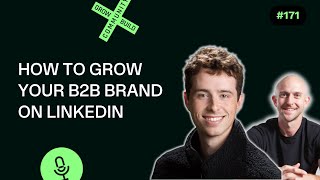
Dave Gerhardt and Tommy Clark break down B2B LinkedIn growth through content creation, posting frequency, and audience targeting. They stress authenticity and consistency as the core tactics that actually move the needle for SaaS companies.
A lot of people get super scared that their connections are going to get annoyed or like hate them for some reason. And part of me understands it, but also no one cares that much. And if they do, that's just kind of weird. I wouldn't really be concerned about that fear.
You also just don't see it. I think years ago I maxed out my connections because we found it as a killer play to basically build a target list of people that you want to sell to. If you look like a legitimate person and you connect, it's like a 90% connect rate. Most people are going to connect and then everybody that connected now just essentially opted in to see my content. I've been following you for a little bit and I'm excited to talk about social B2B social with you. But first, let's give me your introduction. Tommy, you started an agency. How did you start? Where did, where did you come from? Who are you? Tell me, tell me who you are and what you do.
I guess I'll go ahead and go for it if you go back far enough. My life plan was to be an orthopedic surgeon and be the LA Lakers team doctor. And now I write LinkedIn content for SaaS founders. So some, somewhere along that path, something I think didn't go wrong, but went very differently than, than planned. So if I fast forward a little.
Bit, you might, you know, it's you, it sounds cool, but you might actually, you might be living a more balanced and happier life. Oh yeah, it's possible.
I would be. I would be in medical school right now. And I am very glad that I'm not doing that and doing what I'm doing now. Um, but fast forwarding a little bit there. I got into content marketing as like a side hustle when I was a college student. And then through a few connections I made, landed a freelance gig with a B2B media company called D2C Newsletter. And then from there landed a full time job as head of social at Triple Whale. And that's where things really started to pick up a bit. And then during my year and a half there started to kind of accidentally build this freelance roster of clients on the side. And it got to a point where I had the freelance roster, I had the job, and I had no time left. So then it just got to a point where it made more sense to give this agency thing a go. And we're about 15, 16 months into that and it's been, it's been going well. So that's the Cliff Notes version Was.
Triple Whale, like, pissed about that?
I don't think so. No, no.
I was always asking because I. I'm not asking because I'm criticizing. I believe that. I love the idea of somebody having something on the side, but it's this weird balance between, like, you're kind of a subject matter expert at this company, you're helping build their social. I'm just curious because there's a lot of marketers who listen to this that might get stuff similar. Like, did you just start getting inbound? Was it like, people saw what you were doing for Triple Whale and they were like, hey, could, like, could I pick your brain? And you're like, actually, no, I charge for this. Like, how did you get clients while you had a job?
Yeah, I mean, through this whole time I've been posting on social, whether it be Twitter or LinkedIn, and through the success we saw at Triple. Well, and just like, what I was sharing on Twitter of my own thoughts and, like my newsletter and did some video stuff, just started getting inbound and took some conversations that ultimately turned into clients and yeah, that was sort of the way it went.
What did you, what did you learn at Triple Whale? What's the role of social media? Can you talk about what the company did, who they sold to, and then like, what, what your role was and how you carved that out?
Yeah. So Triple Whale, we were a E Comm Analytics SAS company and our ICP was like DTC founders and marketers. So the two platforms we really used the most were Twitter because there's like this bubble, you would refer to it as DTC Twitter, this like really niche corner of the Internet over there where there's a lot of, like, brand founders and marketers that hang out. So that was a big channel for us. And then LinkedIn, being that we were a B2B company, also another obvious option as far as platforms. So my role in the day to day was running the brand account on Twitter and on LinkedIn and then sort of advising our team and the founders on what to post around product launches. I wasn't necessarily ghost writing for the founders at the time, but more just kind of guiding them when we dragged like a feature launch or an update, how to go about distributing that on social. But a lot of my day to day was running the. The brand account, doing community engagement, finding the right people to comment on and reply to and. And all that sort of stuff was.
And was it primarily LinkedIn, LinkedIn and Twitter, what were the main channels?
For us, it was actually Twitter as the main channel. And I would say LinkedIn was the secondary one. And given our specific ICP, there's a lot of like e commerce folks that are really active on Twitter versus LinkedIn. They're active over there, but not really as much. So for us, Twitter was the choice at the time. Now if you would ask me this.
Today, I'd probably lean toward funny TikTok videos. Like we would never, we would never move forward with that. And so I think it's like it lowers the bar to be success to like make some progress at least. Right?
For sure. I mean there's like the low friction to actually post. It's the fact that your ICP is hanging out on there. It is text based. It's kind of like the trifecta of things that make it an ideal platform. And also when people are on LinkedIn, like your ICP is probably on TikTok too, but they're not scrolling TikTok to learn about SaaS and B2B marketing. They might be sometimes, but most of the time If I'm scrolling TikTok or Instagram Reels, it's like over dinner when I probably shouldn't be. But I'm just trying to distract myself after a long day of work. I don't really want to hear this like pitch or even like a founder story about some B2B SaaS solution. It's like LinkedIn is the channel that I would use for that.
I feel like people are very, some of, some people are very invested in their jobs. And so maybe they might not be in the moment, but they might find something really interesting. And so if you can deliver educational content, I think that especially works in B2B where it's like, it doesn't always have to be something silly or funny. You can, you can win with education. Anyway, let's talk about LinkedIn. Let's, let's do like a really tactical episode on what works on LinkedIn. Maybe we'll call this, like, why LinkedIn is still the goat for B2B. We get a ton of questions about how to use LinkedIn, what to do, how do I grow fast? Somebody wrote the other day, like, hey, I just started posting on LinkedIn a couple weeks ago. Like, nothing's really working yet. Like, I'm frustrated. I'm gonna give up. Let's, let's talk to those people. Let's talk to everyone Listening is working at a B2B company, mostly B2B SaaS. Where should they. Let's help them build a LinkedIn strategy. Maybe pretend like we're one of your clients and we can talk through this a little bit.
Yeah, I think the first place I would start is if you're truly starting from zero, literally just start posting, like, gather data on what's going to work, what's not. A lot of what you're going to do at first isn't going to work, and that's fine. I just want you to start posting. And a lot of the founders I talk to, especially on sales calls, they'll say like, hey, I want to test LinkedIn twice per month. And you just got to like, stop yourself right there and really reconsider the amount of volume that you're going to need to test. Because when you first start, you don't really know what's going to work and what's not going to work. So if you're only giving yourself two opportunities per month to test, you're going to gather data at a much slower rate versus if you're going to post five times per week. That's literally a 10x difference in output and the amount of data that you're going to have to go off of on, like, what hooks are working, what topics are working. So I think the first thing that I would recommend is just like a mindset shift around the frequency and a lot of people get super scared that their connections are going to get annoyed or like, hate them for some reason. And part of me understands it, but also no one cares that much. And if they do, that's just kind of weird. So I wouldn't really be concerned about that, that fear.
I think the first, like, I. I have ma. I think years ago, I maxed out my connections. Maybe I have a little buffer now, but it was when, when we were building Drift, we. I maxed out our connections because we found it as like a killer. It was like a killer play to basically build a target list of people that you want to sell to. If you look like a legitimate person and you connect, it's like a 90% connect rate. Most people are going to connect and then everybody that connected now just essentially opted in to see my content. So anyway. But I. So I probably follow 30, 50,000, 50,000 people on LinkedIn. I have no idea who's in the feed. Like, I. You. You only see people that, like, I started liking your stuff and commenting on your stuff recently, so I see you all the time now. Like, I think that's a myth. Exactly. Like you're only going to see the people that you like and comment on. And I actually hate all the objections about LinkedIn because usually founders and people are like, they want to use this channel because they believe it's going to be some like magic sales channel for their business. But then they're not willing to put in any of the work. And so I'm like, wait, so hold on, do you want to just take this magic pill? Like it doesn't work like that. You're going to have to put in, you have to put in some work here. You have to be uncomfortable. It's like, yeah, when you wanted to pitch investors or hire teammates for the first time and you are nobody. Like that is also uncomfortable. So there's a lot of like just mental stuff. Just, just get over that hurdle. And I love your advice. Nobody care but you. You got, you went right into, you just got a post. But what should you even write about? Let's talk about first. What should you even write about? And then I want to talk about this balance between twice a month, verse five times a week and we can get it a little bit more in there. So what the heck do you write about?
Yeah, figuring out what to write about I think comes down to one very simple question. It's like, why should someone in my target audience follow me? If you can't answer that, you're going to have a really difficult time figuring out what to write about. It's going to be super scattered and you might actually end up posting stuff that gets traction, but it's with the wrong people. So you just want to get very clear on that from the beginning. So for me, someone's going to follow me to get better at B2B Social. It's very like niche and it's very straightforward. I can say that in one sentence, like why someone is going to follow me. That's where I'd start. So for example, if you're running a SaaS company that's selling to like salespeople at B2B company is like someone might follow you to get better at B2B sales. If you're a VP of sales at a startup previously before going off and doing your own thing or if you're running an E commerce like email service provider, you might be posting tips on E commerce email marketing and someone might follow you to get better at email marketing. It doesn't have to be super complex, but you do need to get clear on what that one thing is. And I would recommend starting more niche if you can. Don't go super broad just posting about quote unquote business or entrepreneurship. It's just a lot More difficult to build a super relevant audience that way. Just get as specific as you can. Like for me, again, it's B2B social, it might be email marketing, it might be B2B sales, just something that you can center your content around.
It's weird because you could build a. And I have, there are some people who do this. You could build a big following by posting like inspirational, you know, one, one or two liners. Like every entrepreneur needs to work hard, like nonsense like that. And like you could build a meme or you could build a meme page and you could build, you know, you could post like plat a lot of platitudes and quotes and stuff. And I do that sometimes. But I think if you want to use your, if you want to like actually sell products and like grow your business, that's not gonna, that's not gonna help you in any way. And so you could have a large audience that doesn't actually relate. And so I think the approach that Tommy is sharing here is like, this is going to set you up to a point where you don't need hundreds of thousands of followers on LinkedIn to have it be really meaningful for your business. If you write about B2B sales and you have 6,000 followers on LinkedIn, that can be very meaningful for you. If you build a movie quote page, you know, if you're, if your LinkedIn just becomes movie quotes and like you build this, a million dollar, million person following there. But then you want to sell some like B2B service them. It's, it's not going to match. It's, it's never going to work. So I think that's good advice. What about. I have a personal one. So Anna, Anna is a new member of our team and she just graduated University of Texas, fresh out of school. This is her first job. I've been helping her with some of her LinkedIn posts. What would her, what would you say? Like, her identity should be? As someone who's kind of like, this is like, I, I'm not really like comfortable being like the marketing expert. That's not authentic to me. I'm kind of just like starting to learn and navigate my career while I work at this company in B2B marketing. Like, what would someone like that write about?
Yeah, to share what you're learning. I actually saw Matt from your team make a post about this. I forget if it was this morning or yesterday, but the idea of showing your work essentially of you don't have to position yourself as an expert in whatever field you're in and like it's okay that you just graduated college. This was me probably two years ago, three years ago. What I actually did, like super tactical here was I would do case studies on brands or companies that I thought were doing amazing marketing. So I wasn't positioning myself as an expert saying, hey, here's how you should do this. But I would say, like, say I saw Exit 5 back then and I was like, oh, love what they're doing on LinkedIn. I'm just gonna write a piece about what I think they're doing well and how like I'm interpreting it, not positioning it as some like playbook to steal, but just sharing my opinions. So one, you could build an audience that way and that's cool and that probably will happen as a byproduct. But more importantly, what I found was when I would take that approach, I'd get in touch with people at these companies and I'd start to build relationships on a one to one level with folks, which was honestly a lot higher ROI than trying to just like build an audience and kind of fake it till I make it. So that's one thing. And then I would also like share what you're learning at your current job. So if a man, I'd probably share what I'm learning and working on at exit 5. You don't have to be an expert. I think the problem happens when you try to fake it. Like when you try to position yourself as something that you're not. Say like for example, if I was even in my content, if I'm talking about B2B social content, it's very different than taking the angle of, hey, here's how you scale a SaaS company from 1 to 10 million in arrangement. I haven't done that before. I couldn't tell you like what that actually takes. So if I was talking as if I was an expert in that thing, that wouldn't be authentic. But I have posted quite a bit of social content for these companies and seen some success in that field. So posting about that content makes sense. So not to go on too much of a tangent here, but I think the biggest thing you want to avoid is trying to be something that you're not. Like just be honest about where you're at. And one, you'll have people who are kind of behind you. So maybe for Anna, that's college students who are in marketing programs and are going to want to get into marketing at some point, that could be her target audience. And then also people that are ahead of like CMOs or heads of marketing or other founders are going to start seeing her stuff now and she'll start building that professional network. So just don't overthink it. But also it's like, don't try to fake it till you make it, because there's really no reason to.
And then on the founder and exec side, I think this is why it's such a good opportunity for them. Because, like, if you're Anna and you're just starting out, it is a little bit harder. I think you just laid out a playbook, but it's a little bit harder. But if you're. This is exactly why you started a company in this space. It's why I wrote a book about this topic. But if you are the founder of some company, you most likely didn't just like wake up one day and decide to start that company because you love hard work and you want to get rich, right? It's like, oh, no. Like, you know, Jill was the VP of Sales for 20 years in SaaS, and now she started her own, you know, sales consulting practice where she helps SaaS sales leaders go from, you know, 0 to 10 million. Bingo. Then like, you must have a ton of stuff to share on LinkedIn and, and like that. That's your whole content playbook. And so I do think it's very easy to jump into LinkedIn and just start writing about like, like any social media channel. Like, like how I used to use Twitter, which is like, here's my workout today. Here's what I had for lunch. Here's this random, funny thing that I thought about. And it's like, actually the way to really grow strategically is to, like, even though you are more than your profession on LinkedIn, it's better just zero in on that one topic. And then if you're that person, you're in meetings all day, you have lots of thoughts all day. Like, you just need to put in the exercise of like, I, I have a. I've long had it started on Apple Notes, then I moved it to Google Docs. Now it's in notion. I have just endless LinkedIn posts, ideas. And I think that this is a, this is a playbook that anybody that wants to start writing on LinkedIn can take. Because one thing that is different about LinkedIn than say, Twitter, for example, is there's kind of a max. About 1 to 2. 2 posts per day definitely is the max. I haven't been able to post more than that. If you're like me and you have lots of followers I think you can post twice a day. I think if you're not, I would probably just stick to posting one time a day in the morning. And so you're only writing one post a day, but you're going to have lots of ideas. And so I love this. I love having like a swipe file or a notebook. And every time you're in a meeting, you have a conversation with someone, just go and write some bullets or write out the full post idea and then like block time on your calendar for writing. Or you could do. Which I just. Yesterday I recorded a podcast with Jen Allen Knuth. She told me that it's a hard K and she's. She has like 60,000 followers on LinkedIn for sale. She's become an awesome sales influencer. And I was like, oh, you must be like a LinkedIn wizard. What's your process? She's like, honestly, I don't schedule anything. I just try to write one post a day. I do it first thing in the morning when I'm like sitting there having coffee, going through my emails. I kind of have some topics and I fire away. And so I think like, that also helps with the blank slate problem. It's like instead of opening LinkedIn and be like, oh my God, what am I going to write about today? I got a notion. You know, either I have a fresh idea that just came to me. If I don't and I'm feeling a little foggy, I go to my notion and I'm like, oh, I actually have never written about this topic about like PR before. I'm going to take that. I'm going to write my post for today.
Yeah, I do the same thing. For me, it's still Apple Notes, a little bit of notion here or there, it's kind of fragmented. But your point stands of just have somewhere where you can dump your ideas. And really, if you've Posted for say 3 months on LinkedIn consistently, especially when things start to pick up a little bit and you have some posts that have done well, you're never going to run out of material again. So either you're going to have that document or the Apple notes of all that, those lists of ideas that you haven't written about yet, or you can, that you're not. Say, like, for example, if I was even in my content, if I'm talking about B2B social content, it's very different than taking the angle of, hey, here's how you scale a SaaS company from 1 to 10 million in ARR. I haven't done that before, I couldn't tell you, like, what that actually takes. So if I was talking as if I was an expert in that thing, that wouldn't be authentic. But I have posted quite a bit of social content for these companies and seen some success in that field, so posting about that content makes sense. So not to go on too much of a tangent here, but I think the biggest thing you want to avoid is trying to be something that you're not. Like, just be honest about where you're at. And one, you'll have people who are kind of behind you. So maybe for Anna, that's called students who are in marketing programs and are going to want to get into marketing at some point. That could be her target audience. And then also people that are ahead of, like, CMOs or heads of marketing or other founders are going to start seeing her stuff now and she'll start building that professional network. So just don't overthink it. But also it's like, don't try to fake it till you make it, because there's really no reason to.
And then on the founder and exec side, I think this is why it's such a good opportunity for them. Because, like, if you're Anna and you're just starting out, it is a little bit harder. I think you just laid out a playbook, but it's a little bit harder. But if you're. This is exactly why you started a company in this space. It's why I wrote a book about this topic. But if you are the founder of some company, you most likely didn't just, like, wake up one day and decide to start that company because you love hard work and you want to get rich, right? It's like, oh, no. Like, you know, Jill was the VP of Sales for 20 years in SaaS, and now she started her own, you know, sales consulting practice where she helps SaaS sales leaders go from, you know, 0 to 10 million. Bingo. Then, like, you must have a ton of stuff to share on LinkedIn and like, that. That's your whole content playbook. And so I do think it's very easy to jump into LinkedIn and just start writing about, like, like any social media channel. Like, like how I used to use Twitter, which is like, here's my workout today. Here's what I had for lunch. Here's this random, funny thing that I thought about. And it's like, actually the way to really grow strategically is to, like, even though you are more than your profession on LinkedIn, it's better just zero in on that one topic. And then if you're that person, you're in meetings all day, you have lots of thoughts all day. Like you just need to put in the exercise of like, I, I have a. I've long had it started on Apple Notes. Then I moved it to Google Docs. Now it's in notion. I have just endless LinkedIn posts, ideas. And I think that this is a, this is a playbook that anybody that wants to start writing on LinkedIn can take. Because one thing that is different about LinkedIn than say Twitter, for example, is there's kind of a max. About 1 to 2. 2 posts per day definitely is the max. I haven't been able to post more than that. If you're like me and you have lots of followers, I think you can post twice a day. I think if you're not, I would probably just stick to posting one time a day in the morning. And so you're only writing one post a day, but you're going to have lots of ideas. And so I love this. I love having like a swipe file or a notebook. And every time you're in a meeting, you have a conversation with someone just. And write some bullets or write out the full post idea and then like block time on your calendar for writing or you could do. Which I just. Yesterday I recorded a podcast with Jen Allen Knuth. Knuth. She told me the. It's a hard K and she's. She has like 60,000 followers on LinkedIn for sale. She's become an awesome sales influencer. And I was like, oh, you must be like a LinkedIn wizard. What's your process? She's like, honestly, I don't schedule anything. I just try to write one post a day. I do it first thing in the morning when I'm like sitting there having coffee, going through, through my emails. I kind of have topics and I, and I fire away. And so I think like, that also helps with the blank slate problem. It's like instead of opening LinkedIn and be like, oh my God, what am I going to write about today? I got a notion. You know, either I have a fresh idea that just came to me. If I don't and I'm feeling a little foggy, I go to my notion and I'm like, oh, I actually have never written about this topic about like PR before. I'm going to take that. I'm going to write my post for today.
Yeah, I do the same thing. For me, it's still Apple notes, a little bit of notion here or there. It's kind of fragmented. But your point stands of just have somewhere where you can dive, dump your ideas. And really, if you've posted for, say, three months on LinkedIn consistently, especially when things start to pick up a little bit and you have some posts that have done well, you're never gonna run out of material again. So either you're gonna have that document or that Apple notes of all that, those lists of ideas you haven't written about yet. Or you could also repurpose previous content. Or maybe there was. If you're doing like a listicle of seven tips to X, Y or Z, one of those tips could expand into its own post. There's literally a million different ways to spin stuff for LinkedIn content. And then one exercise I like doing with myself and with my clients is at the end of the week, looking back over your calendar and looking at your meetings and seeing if there's any takeaways or any, like, highlights or even things that pissed you off or annoyed you that came up during the. Usually those turn into the best posts, but anything that came up during those meetings, that can then turn into LinkedIn content. So once you start to build a.
Muscle for it, I totally agree. It's like, once you know where to look, like, everything can be. And I even just had this conversation with Anna the other day. It's like you go from like, what am I going to write about? To then, like, everything is. Everything can become LinkedIn content. And I think especially in B2B, a lot of the roles are like, you know, we're knowledge workers, right? We are writing a lot of emails. We're in Slack a lot. I get so many post ideas from LinkedIn. Like, I got off a podcast yesterday and I. We have a podcast, Slack Channel, and I wrote our podcast is an unbelievable way to build affinity with people in our industry. Everyone from this person to this person leaves the podcast feeling like, hey, that guy Dave is much nicer than I thought and kind of made me laugh. And I enjoyed that. That turns us. That turns into support for Exit 5 on LinkedIn. They help us fight the trolls, they help engage with our stuff that becomes fans of Exit 5. I wrote that post. I took a screenshot of that post because now that's a nugget that I can write. I'm going to use. I'm going to write that next week on LinkedIn and that's going to be a post about, like, why, you know, how to. How I think about the ROI of a podcast and why it's not Just about direct sales and downloads. And it's like looking into your day to day work. There's so much gold in there. And this works exactly with the playbook that you talked about, Tommy, which is like, what do you want to be known for? Which area? Like, who are you trying to be an expert for? I'm trying to do this for marketers and so this is going to be relevant for marketers. It fits perfectly to look into your work. And I like the idea of like reflecting back on your week. I think Jason Lemkin in SAS is a good example of somebody who does this. I talked to him on this podcast about his LinkedIn process and he's like, I kind of have two tracks. I have Evergreen stuff and then I have like, I have Evergreen stuff. I have one post scheduled every day forever. And then in the morning I like to write about something that's happening in my week right now. That got me fired up.
Yeah, no, I love that. There definitely is a balance between the evergreen and the timely stuff because the timely stuff can be a great way to capitalize and say there's some relevant news that just went down in your industry in your category. That can be a great way to sort of trend jack that and get some more momentum off the back of it. But you can't rely on only that or else you're going to be waking up every day with that blank slate problem that we talked about. So having that balance between just evergreen topics that stand the test of time and then occasionally if there is a relevant like trend or something that is more timely to jump in on, that can be a good like supplement to that.
Okay, so we helped a little bit on what to write about, um, posting. Let's give people a rough benchmark. How often a week should you post and when?
Yeah, the ideal I would say is seven times per week. So just one time per day. I think that's very reasonable. And if you're really taking LinkedIn seriously, that's the standard. Now realistically, five times per week, so one time per weekday. If you don't want to go on on weekends, that's fine. I'm not expecting you to.
We can sneaky kind of crush though. Like there's no one Sundays. It's crazy. I, I'm like I'm not gonna schedule. I'm gon save sometimes. Like I'm going to save that one for Monday, but like I just scheduled one for Sunday afternoon and I guarantee I know it's going to be a Sunday topic that nailed that Crushes.
Yeah, weekends can be sneaky. Saturdays I don't find perform as well. This is purely anecdotally, but just from what I've seen, Saturdays don't really perform as well. Sundays, I think are kind of hit or miss. Sometimes I'll have like a sneaky one that pops off. But point being, you can post once a day. That's, I would say, the gold standard. If you don't want to go on, on weekends and you're like, hey, the weekends are my time to just, like, chill out, fine, just do Monday through Friday. If you're truly starting from scratch and you're like, oh, my God, the thought of posting five times per week terrifies me. What if that one person from high school sees my post and thinks I'm a loser? It's not gonna happen. But if that's, like, truly how you're feeling, or if that one, like, professional connection I made five years ago, like, sees this and is a troll, again, not gonna happen. But three times per week is, like, the bare minimum of if I'm just starting. Because what you want to do as well is you want to build the muscle of posting. Like, we were just talking about coming up with ideas, sitting down, writing the stuff. And a helpful analogy for this is fitness. It's like, you're not going to build a habit of going to the gym one time per week in most cases. Is one time per week better than nothing? Sure. But if you're really serious about getting in shape, you're going to go like three to five times per week. It's the same thing with your content, especially if you want to get to the point where you're writing your own stuff and just really comfortable and it becomes easy for you. So minimum. So the extra week.
Yeah, the whole game is like, you need to understand the feedback. You're just not getting enough feedback. And I feel like I get more ideas for what to write about when I'm posting more frequently. And like, let's be honest, what, what we're at, you're going to be able to reap, like, tremendous business rewards from this. You can't. You can't muster the energy to write seven text posts per week on LinkedIn. I think you can do that.
Oh, for sure, for sure.
Like, all of our time of day matter.
Yes and no. I would say I agree with your take of, like, morning is when I would recommend posting. Typically if we're doing. If I'm doing it for myself or for clients, like from 9 to 11am Eastern is typically when we post. That said, if you post later in the afternoon, I think that's fine. It's not going to make or break it. I just wouldn't post at some super random time. Like I wouldn't post like one amount, although you might hit an international audience and that's cool too. But if I, if I could, I would post like mid morning and just set that as my cadence. But really like during work hours is.
What I would recommend to schedule to you use a scheduling tool or not use a scheduling tool?
I don't, I don't. For my personal stuff, we have a member on our team who goes in and posts all of our client stuff manually. Like I subscribe to the conspiracy theory that schedulers like are not great for post performance. They tell you they're fine, but, but from what I've seen, just going in manually and posting it tends to be.
Better get your tinfoil hats out. What do you think happened with Trump? No, I'm just kidding. We're not going to touch that.
Turn.
That, that would, that, that would be, that should be the hook. That should be the hook. This is interesting. So the scheduling thing is I, there was a tool that I used for a while and, and I did notice that it was a third party tool and I do feel like it did get a little bit throttled. I have found that I probably also think that posting not. So then I use the switch to the LinkedIn native scheduler. Right. Which is like the fact that that that's the worst feature of all time. Like you can't, you can't move posts around. And so if I have something scheduled for tomorrow and I want to move it to the next day, I have to copy all of the text, delete the post, write the post again, upload the video again and schedule it. And so there's a lot that's broken with that. And I have tested just putting, putting like tasks on my calendar with the LinkedIn copy. And I do feel like posting natively, not scheduled. The engagement goes up a little bit. However, I think there's some benefit of just having my content scheduled and I'm willing to trade off. Like it's not massively different. It's not like, oh my gosh, this post got shadow banned and I got no reach. Like it's not dramatically different. So for me just being busy doing other things, I like using the LinkedIn scheduler to just have stuff going out and then you know, it is what it is.
Yeah, I hear you on that. I agree. I don't think it's like a make or break thing. I also think there maybe is something to be said for, like, if you're posting manually, you're online to engage with comments when they first come in, and that helps you.
Have you seen that guy, Ruben? The heck is his name?
I know he posts like, the LinkedIn algorithm reports.
Yes, Ruben Haseed. He's. He has 400,000 followers. He posts these crazy videos of, like, how he, like, uses AI to, like, make images and write these posts. And he seems like he's tested this, and he seems to feel that the way to max the engagement on your post is like 30 minutes prior to your. You posting. You should be on LinkedIn, like, liking and commenting and engaging on other people's stuff, which is. It would make sense. And that's super interesting. It's just like, you know, who's. Who always has the time to do that. So I try to do it if I can, but there's definitely something to that. And then even without that, even if that wasn't true, I do just think generally, and I've talked to a lot of founders about this, they just want to have somebody, like, write their content and schedule it and, like, be gone where. Like, a humongous part of the value of being on LinkedIn and growing your following is you got to comment on other people's stuff and you got to reply to your. To your stuff. So how do you, how do you do that? What do you coach people on? I feel like coaching people on, like, what to write about and posting on their own is, like, pretty straightforward. We can help you be really good there. What's harder is to, like, identify lists of interesting people to, like, follow their stuff. Like, why am I commenting on Tommy Clark's post? And then, like, how do I respond to people on mine and getting ideas for comments. Sometimes I'll write a post, sometimes I'll write a comment on someone's post, and that post gets 100. Like, that comment gets 100 likes. I'm like, boom, there's my idea for the next post. I've never been able to, like, explain this process to somebody and help train them on it. Maybe you can.
Yeah, it's a good question. I think a lot of it just has to do with reps. And honestly, our clients who are best at this are usually clients who have tried their hand at posting themselves and doing their own thing before even working with us. So we can help people get started from scratch and, like, that's fine. But a lot of, like, Our strongest clients, both, both from the content performance standpoint, but also just like the engagement and they just kind of get it are those who have like done this before but they're just so swamped with fundraising or just other business things that a founder has to do that they work with us. As far as like how to coach people on this, I think it's just repetition and just helping them understand why it helps them like as far as like building a list of interesting people in your category, I think one thing that's helped me is keeping my focus and also our client roster pretty focused in a small handful of categories. We start to understand who's who. It can be a lot more challenging if you're in a bunch of different categories starting totally from scratch, like over and over again. Same thing goes for like content ideas and the subject matter there. So like if I'm working with an email service provider in the E commerce category on this, I think it's just repetition and just helping them understand why it helps them. And I'm also working with a subscription software tool in the E commerce category. It's pretty straightforward to like, like as far as like building a list of industry like interesting people in your category, I think one thing that's helped me is keeping my focus and also our client roster pretty focused in a small handful of categories. We start to understand who's who and it can be a lot more challenging if you're in a big kind of advise whoever like the newer one is on like who to comment on and who the key players are because like we already know the industry. But if I was getting started in for a client in cybersecurity, I don't know what I'm looking at there. The playbook is still the same. It would just take longer to find out who the influencers are, who people are like engaging with. That's typically how I think a bunch of different categories starting totally from scratch, like over and over again. Same thing goes for like content ideas and the subject matter there. So like if I'm working with an email service provider in the E commerce category and I'm also working with a subscription software tool in the E commerce category, it's pretty straightforward to about it.
Well it's not always obvious. There's not, it's not always going to and oftentimes like the people who've gotten.
Super like kind of advised the what whoever like the newer one is on like who to comment on big are.
Probably actually not even going to be beneficial to you. It's about like finding the micro influencers. But I also feel like there is an algorithm and the feed has a way of like surfacing relevant stuff as you write about it. And I feel like oftentimes on the right sidebar you can find like kind.
Of relevant profile and who the key players are because like we already know the industry. But if I was getting started in for a client in else and so.
You could just start connecting with people and something that I try to do is cyber security.
I don't know what I'm looking at there. The playbook is still the same. It would just take longer to find out who the influencers are, who people are like engaging with. That's typically how I think of just.
Like and comment a lot. Like if I'm waiting for a meeting to start or if I'm in about it.
Right.
Well, it's not always obvious. There's not. It's not always going to. And oftentimes like the people who've gotten soup in between things. I honestly treat LinkedIn like my inbox and I'll go there and I'll like and comment on stuff and you just got to spend five or ten minutes doing that. It's not like my first job out of school was working at a PR agency and like this was back in the day when like blogs were huge and we used to like for big are probably actually not even going to be beneficial to you. It's about like finding the micro influencers. But I also feel like there is an algorithm and the feed has a way of like surfacing relevant stuff as you write about it. And I feel like oftentimes on the right sidebar you can find like kind of relevant profile. Half of my job was like drafting comments from the execs on these like blog posts, like from like a tech chronos. And so you could just start connecting with people. And something that I try to do is comment. It doesn't have to be this like 300 word like insanely thought out comment. Just like, just like and comment a lot. Like if I'm waiting for a meeting to start or if I'm in between things. I honestly treat LinkedIn like my inbox. And I'll go there and I'll like and comment on going to someone's post and just writing like, oh, this is interesting, like goes a long way and like building that little stuff and you just got to spend five or ten minutes doing that. It's not like my first job out.
Engagement loop 100 I think people overthink the comments because they think that just saying great posts or oh, this is interesting.
The school was working at a PR agency and like this was back in the day when like blogs were huge and we used to like, it's going.
To be seen as spammy. But honestly a lot of the times that comes across as a lot more normal than like typing.
Half of my job was like drafting comments from the execs on these like, like blog posts, like from like a techcrunch comment. It doesn't have to be this like 300 word, like insanely thought out comment. Just like going to someone's post and just writing like, oh, this is interesting, like goes a long way in like.
Building that little, some massive paragraph for the sake of having a massive paragraph. Now if you have a genuine comment that does require a bit more length for sure, like fire away. But I don't think people should be afraid of like if they actually find a post interesting. Just saying, oh, good stuff, like really like this one. Yeah, I like your approach of kind of engagement, Lou. 100%. I think people overthink the comments because they think that just saying great posts or oh, this is interesting is using LinkedIn between meetings and just going on liking some stuff, commenting, responding to DMs, a little bit of activity to be seen as spammy. But honestly a lot of the times that comes across as a lot more normal than like typing out some massive paragraph for the sake of having a massive paragraph. Now if you have a genuine comment that wd there every day really adds up, especially if you can like, if you can add one to two new people to your network that you now communicate with and engage with fairly frequently, like per week. That's a pretty significant amount and will add up to a lot over time.
How do you know if this is what, what, what type of early signals do you, do you look for? Oftentimes people now ask, okay, I got it. I'm going to start writing. How do I know if this is working? How do you answer that question?
Yeah, so there's two buckets I'll look at for this. One is your social metrics. The other are your business metrics. So social metrics, pretty straightforward. This is all the stuff that you'd find in the LinkedIn analytics tab. So like follower growth impressions, all that sort of stuff, you should start to see those go in the right direction. You don't want to chase vanity metrics. So that's not the only thing you're optimizing for. And it's more of a leading indicator. But if you're doing this right and your hooks are compelling and the topics are compelling, you should start to see those go in the right direction. So your baseline impressions week over week should go up. Your rate of follower growth should go up. I would also recommend taking a look at who is following you and just seeing if the titles match with what you're looking for, the companies match with what you're looking for, if they're actually relevant people, especially early on. It's easy enough to just take a look at this on a weekly basis or even daily basis just to keep a pulse on who's coming into your network. And then the flip side will be like your business metrics, this can sometimes hit pretty early. We've had clients where we roll it out and a weekend they start booking demos and this is my favorite situation ever because it makes it look like LinkedIn is just amazing. And it's like yes, they get it. But sometimes, especially if you're starting from scratch, it might take a month, two months, three months for you to start getting enough traction to start actually booking inbound demos or sales calls from the channel. So you'll probably see the social metrics trend up into the right pretty early on, especially if you're following the stuff we talked about in this podcast or other resources there are on how to grow on LinkedIn. It's pretty straightforward to get that going in the right direction. The best getting enough traction to start actually booking inbound demos or sales calls from the channel. So you'll probably see the social metrics trend up into the right pretty early on, especially if you're following the stuff we talked about in this podcast or other resources there are on how to grow on LinkedIn. It's pretty straightforward to get that going in the right direction. The business metrics will be more of a lagging indicator and might take a little bit longer. But typically what you'll see here is you'll just start to see or hear more people on your sales calls mention that they saw your LinkedIn content or they found you from your founder's LinkedIn. And don't overlook the measurement here.
Hey you at home. Listen to what Tommy just said. They're just going to start talking about it and I think a couple things you need to do. Number one, don't get into this game and look for short term results, right?
Business metrics will be more of a lagging indicator and might take a little bit longer. But typically what you'll see here is you'll just Start to see or hear more people on your sales calls mention that they saw your LinkedIn content or they found you from your founder's LinkedIn. And don't listen to that measurement here.
Hey, you at home. Listen to what Tommy. Be like, I'm gonna bet on this channel and I'm just gonna shut up and I'm gonna post five to seven times a week for the next six to 12 months. If you do that, you're gonna be successful. If you do this for three weeks and you're like, we haven't had one sales meeting from this channel. This channel sucks. It's not gonna work. But if you can just commit to the process, along the way, you're gonna start to feel. Feel just said, they're just going to start talking about it. And I think a couple things you need to do. Number the signal, you're going to see the signals. And so out of nowhere, four weeks in, someone at a key partner is going to message you and be like, hey, Tommy, been following your stuff. Appreciate that. Want to come on my podcast? And you're like, whoa, cool. Inbound. But now, if we told you to only measure this from sales out of the gate, you would, you would never have like tracked that. And so I talk to founders all the time. I've been doing this for years now. This is how over time they measure the roi. It's not just about direct sales. It's like, I got asked to speak at this event. This key person actually came to work at our company because they saw how I write 1. Don't get into this game and look for short term results, right? Be like, I'm gonna bet on this channel and I'm just gonna shut up and I'm gonna post five to seven times a week for the next six to 12 months. If you do that. They saw the things I write on LinkedIn and they want to be part of our culture now, right? And then on the sales piece of thing, the sales piece of this, I needed to call this out. It's not going to be direct. You're not going to write like, hello, today I'd like you to go buy our product, go visit our website. It's going to happen by like osmosis. It's like, because you're in people's feeds more, sharing interesting perspectives, you're going to be successful. If you do this for three weeks and you're like, we haven't had one sales meeting from this channel, this channel, they're going to then see your stuff and recognize your name, then they're going to happen to see you on another platform, then they're going to get on your email, then they're going to happen to go to your website and check out your stuff. So like, you can't treat this as direct sales. And I think, I still think Gary Vee has like the best playbook for this of all time, which is like, give, give, give. I think he called it jab, jab, right hook or whatever. But it's like give, give, give, give, and then ask. And so as an example, if every single post I wrote on LinkedIn was promoting people to start an Exit 5 membership, it would never work. But if I write interesting things in like 1 out of 5 or 1 out of every 10 posts is like to go sign up for exit 5, I can actually drive a ton of signups from my profile. So that is one. That's how you do the direct response. It's not going to work, but if you can just commit to the process along the way, you're going to start to feel on thing. It has to be like 1 out of 5 or 1 out of 10. But then also, even if I didn't do that, we just get the natural, the signal. You're going to see the signals. And so out of nowhere, four weeks in, someone at a key partner is going to message you and be like, hey, Tommy, been following your stuff. Appreciate that. Want to come on my podcast Rule flow? Like, we have a, we have a form that asks people how they heard about us. And number One source is LinkedIn. And it's never, it's not direct response but just they see us on LinkedIn over and over and over. And then when they eventually sign up, they heard about us through LinkedIn. That's how this happens. You have to just know what you're signing up for to play. You're like, whoa, cool inbound. But now if we told you to only measure this from say first, it's not going to be a direct response game.
No, I totally agree. And one helpful way I found to organize this in terms of just distributing your content topics is sort of. I call it a content funnel. It doesn't map perfectly to like a marketing funnel, but, but top, middle, bottom funnel content. So like top of funnel would be more like broad, kind of like that business entrepreneurship stuff that if you want to post that sort of stuff occasionally, fine. It can be helpful for getting the LinkedIn algorithm on your side a bit. Don't want to over index in that direction. But if you're posting like one out of five or six posts in that direction. Fine. Middle of funnel content would be more of your industry specific thought leadership. This is where the bulk of your content should be. So like we were talking about earlier, if I want to be known for B2B social, a lot of what I'm going to be talking about is going to be how to grow on how to grow with B2B or how to grow a B2B company with social. And then your bottom of funnel content is going to be that more direct response. Dao of hey, we have this feature that just rolled out of the gate.
You would, you would never have like tracked that. And so I talk to founders all the time. I've been doing this for years now.
Here's where you can book a demo request if you really want to get those in your feed. I agree with your cadence of say 1 in 5 or 1 in 6 posts being that more bottom of funnel type of content. But if you can kind of think.
Of it in this way, this is how over time they measure the roi. It's not just about direct sales. It's like I got asked to speak at this event. This key person actually came to work at our company because they saw how I write.
You can grow an audience and get that top of funnel going and also make sure that you're doing what you can to move them more in the direction of booking a demo or booking a sales call. But like you said, if every single post is super direct response, you're going to have a hard time.
What else? What, what, what, what have we not? What should we on? They, they saw the things I write on LinkedIn and they want to like be part of our culture now. Right. And then on we cover that we haven't covered.
I think video is interesting on LinkedIn right now. I know we talked about early on that LinkedIn is great because it's, it's text based and I think that's still very true. But I am seeing that video clips, whether they're clips from my YouTube videos or like a post I just made this morning was more like a proper short form video clip. They are performing quite well. So if you are good on camera and you like speaking and you have a super basic camera setup, I think you can make a lot of progress with video. And what I find is that it sort of accelerates that trust building because people get to see you and hear you. So if you're starting from scratch, I would probably do text only first just to get the reps in but if you're good on camera, consider trying video. I've seen it work well and I think it's definitely, definitely worth.
And the sales piece of thing, the sales piece of this, I needed to call this out. It's not going to be direct. You're not going to write like, hello, today I'd like you to go buy our product, go visit our website.
Testing out.
Interesting. Yeah. I feel like my videos, I can't get the same metric. I can't. It's gonna happen by, like, osmosis. It's like, because you're in people's feeds more, sharing interesting perspectives. Get the same numbers from, like, likes and comments and reach for some reason. Maybe it's because, like, most of my videos are podcast clips and I wonder if LinkedIn algorithm knows it's a podcast clip and they're like, whatever, versus if I just did like a raw video for my phone. But there's something in there that you said that. It's if they're gonna then see your stuff and recognize your name, then they're gonna happen to see you on another platform, then they're gonna get the channel. Is social media truly, like, if you just look at the definition, social media? And so if you're using this, I don't know if you read Gary Vee's latest book, the Day Trading Attention.
I haven't. I need to.
Okay, it's. I'll get. If you've followed his stuff over the years, it's. You'll. You'll know what it. You'll know what it's about. But he just talks about how every post that you make on Organic Social is essentially an advertisement for your brand. And I love that thinking. And I think that there's also a lot of people who will misconstrue that thinking, though. It doesn't mean advertising means, like, here's Tommy walking his dog down the street being fun and interesting and authentic and engaging. That's. We throw some points in the, like, the brand bucket. Like, oh, I kind of. I like this guy. And so if you're trying to win clients for your agency and somebody sees that you're smart and thoughtful and approachable, like, those things show up on your email, then they're going to happen to go to your website and check out your stuff. So, like, you can't treat this as direct sales. And I think, I still think Gary Vee has like, the best playbook for this of all time, which is like, give, give, give. He. I think he called it jab Jab. Right hook or whatever. But it's like give, give, give, give, and then ask. And so as an example, if every single post I wrote on LinkedIn was promoting people to start an Exit 5 membership, it would never work. But if I. In ways that it's definitely harder to track. And so maybe that video that I post gets, you know, a third of the reach as a text post. But I use video as an opportunity for exactly what you said, for people to hear my voice, to hear my sense of humor, to like break past that, you know, text wall a little bit. And so I do love video and then some. I just want to give people a practical idea, something that, that you made me think of. But especially if you work at a company, one thing you can do is just film, like block off like an hour or two and have somebody sit on the other side of the camera and just ask you questions. Because I feel like it's hard to just like turn the camera on and then like come up with hot takes. But if you like, came up with right interesting things and like 1 out of 5 or 1 out of every 10 posts is like to go sign up for Exit 5. I have 20 topics for your industry and someone was just sitting across me on the couch and like, all right, Tommy, tell me about, like some of the biggest mistakes you see companies make with B2B social. And then you can just ramble and get that out. And like, you might ramble for three minutes, but in there is like a really good 30 second clip. I think that's a very good way to get video content out for people. And that could be, that could be something as opposed to you just like turning on the camera and like expecting to like, have a hot take. It can actually drive a ton of signups from my profile. So that is one. That's how you do the direct response thing. It has to be like 1 out of 5 or 1 out of 10. But then also, even if I didn't do that, we just get the natural. Have you. Are you guys doing that, by the way? I think that'd be a smart, smart future service for you.
That's literally what we do. So a lot of it. Yeah. So the core of our content comes from content. We call them content interviews, but it's pretty much just that rule flow.
Like we have a, we have a form that asks people how they heard about us. And number One source is LinkedIn.
We get on a call like this with a client and we run them through a list of prompts and just have Them ramble because a lot of times like founders and CEOs, they're good at talking. Either they talk to their team, they give like they present at team meetings, they might go on podcasts. They just haven't done that like social media talking head style of video. So it freaks them out for some reason. But if you can just get them talking in a super casual setting, a lot of that material that comes from it, like you said, is super valuable. So we do it over like just virtually. But if you work at a company and you're in office and say you're a marketing manager, you're tasked with helping the founder with their LinkedIn do exactly what Dave just said.
And it's never, it's not direct response but just they see us on LinkedIn over and over and over. And then when they eventually sign up, they heard about it.
Sit your CEO, Dan, or whoever you're writing for or creating content for, prepare a list of say 15 prompts that's through LinkedIn.
That's how this happens. You have to just know what you're signing up for to play.
I would make these prompts things that you think that the founder could just answer off the cuff so they don't have to do a bunch of prep that and then run them through the prompts. Super conversational.
And first it's not going to be a direct response game.
No, I totally agree. And one helpful way I found to organize this in terms you'll either get video clips that you could use or you could turn that transcript into text based posts that are still in. Just distributing your content topics is sort of. I call it a content funnel. It doesn't map perfectly to like a marketing funnel. Their tone of voice and authentic to them because it came from what they said. Um, now even if you don't use.
It, even if you don't use it for video, just like the text that you get from that is going to be truly in there. I used to ghostwrite for David, the founder of Drift this way which is like I'd interview him with like a microphone and then I'd go back and.
But top, middle, bottom funnel content. So like top of funnel would be more like broad kind of like that.
Bris like sit at my desk because then I'm writing but I'm like actually using his tone of voice because I'm listening his actual words.
Yeah, business entrepreneurship stuff that if you want to post that sort of stuff occasionally, fine. It can be helpful for getting the LinkedIn. Thank God that Fireflies AI exists today. So it makes that process of like taking the transcript algorithm on your side a bit. Don't want to over index in that direction. But if you're posting like one out of five or six posts and just like actually having it in front of you a lot easier. But yeah, I think that's a great. In that direction, fine. Middle of funnel content would be more of your industry specific thought leaderships. This is where the bulk a great way to sort of ghostwrite for CEOs and founders in a way that's called Fireflies AI.
It's just a transcript. It's just one of those note takers. Oh cool.
Yeah, exactly. I mean you can use Otter. There's a bunch of different ones. We just happened, I just think happened to find Fireflies first and it worked pretty well. So we run with that.
So video, any. Anything else?
No, I think that's it. I think the only other thing I'll add and we we discussed this a little bit earlier but once you get your founder or the founder, once you start posting actively on LinkedIn, really start to think about how you can empower your team to post more. I know Dave, you've done this really well with your team. When I was at Triple Whale, like this was, I think a big reason why we did so well on social is because like I was active, my CMO was active, my head above your content should be. So like we were talking about earlier, if I want to be known for B2B social, a lot of what I'm going to be talking brand was active. Our founders actually weren't as active on a consistent basis. They were active enough, but there were just a lot of people on our team who were active on the timeline and it creates this sense of you're just everybody is going to be how to grow on how to grow with B2B. How to grow a B2B company with like now I can't go on LinkedIn without seeing something from Exit 5 because I'm liking your stuff, commenting on it. I'm seeing Matt's stuff, I'm seeing Anna's stuff now. Like whatever you're doing, I know what you're doing. It's working. So once you layer in that founder presence, consider how you can add in other team members and just get them excited about posting as well. I think that's like the sort of if this is 100:1, I think that's like the 200:1 step to nailing LinkedIn social and then your bottom of funnel content is going to Be that more direct response dial of hey, we have this feature that just rolled out. Here's where you can book a demo request if you really want to get those in your feed. I agree with your cadence of say one.
Well it also it helps diversify the voices. Like I think multiple people have multiple perspect and so like I see companies where it's like somebody in marketing, somebody in sales, somebody in customer success. Everybody has a different view on the world but you could draw a line back to that core topic. And so if you're like exists to talk about B2B sales the salesperson is going to have a different talk track than the marketer, than the CEO, than the customer success person. I think, I think it's a great way to expand the voice and then it also just expands that feedback loop like something that we didn't Talk about.
In 5 or 1 in 6 posts being that more bottom of funnel type of content. But if you can kind of think of it in this way you can grow an audience and get that top of funnel going and also make sure that you're doing what you can to move them more in the direction of booking a demo or booking a sales call. But like you said yet on this.
Podcast, but LinkedIn is like the tip of our, our content strategy not just for growing on LinkedIn but like a LinkedIn post that Danielle or Anna Wright.
If every single post is super direct response you're going to have a hard time.
What else? What, what, what, what have we not. What's your dates about a particular topic or me or Matt? If we see that post kind of like pop off a little bit, we will share it in our Slack channel and be like hey, this post that I wrote about, you know, presenting to the board we cover that we haven't covered.
I think video is interesting on LinkedIn right now. I know we talked about early on that LinkedIn is great because it's, it's text based and I think that's still very true. But I am seeing that was really popular.
Let's turn it into a newsletter for next week and then we write it, then we do some research and we write it deeper. And so like this is another way of like here's how you also measure the ROI on linked video clips.
Whether they're clips from my YouTube videos or or like a post I just made this morning was more like a proper short form video clip. They are performing quite well. So if you are good on camera.
Then even if we didn't get a single Exit 5 member from it. We would be posting there because it's a huge part of our feedback loop or how do you know we got connected. I started following your stuff. This guy's interesting perspective. Now let's go do a podcast about it. This podcast is now an hour long content we're going to turn into multiple other content pieces. And so I think like once you understand how social media is not just about driving sales but it's about like getting this real time feedback on these core topics and can power the rest of your business. Like we even before we decided we were going to do our event, I was writing about it on LinkedIn. I was like I think I want to do an event. I'm not sure. I'm kind of nervous about it. And the response was like gangbusters. And it made me feel better about like going to book an event. The feedback loop is huge for sure.
And I haven't played around as much with this but. And you like speaking and you have a super basic camera setup. I think you can make a lot of progress with video and what I find is that it sort of accelerates that trust building because something I've heard to perform quite well is if you take organic posts that have done well and amplify them with paid. Especially now with Thought leader ads on LinkedIn. Again, I haven't touched this as much so I can't really speak to it from like a hey, this is what works. Perspective will get to see you and hear you. So if you're starting from scratch, I would probably do text only first just to get the reps in. But I've seen enough people talking about it and it makes sense given what we see on other platforms with whitelisting.
So Thought Leader ads is great. We're doing that to grow our newsletter and grow trials. We're taking like posts of mine and.
We'Re but if you're good on camera, consider trying video. I've seen it work well and I think it's definitely, definitely worth we're boosting.
Thought Leader ads ads but also just organic makes paid better and so instead of spending money right out of the gate with paid to try to figure out which message works. If you have a strong organic presence and you've been creating a lot of content organically, when you then go to spend you're going to have a better sense of like which things does our audience care about and which should we talk talk about. I think those two just pair really nicely together. So all right. His name is Tommy Clark. He's on LinkedIn testing out. Interesting. Yeah, I feel like my videos, I can't get the same. I can't. You should go check them out. He's building a new agency that is going to help you get better at LinkedIn. But the best way you can get better at LinkedIn is just. Just following us. Follow me, follow Tommy, follow Danielle. The same numbers from like, likes and comments and reach for some reason, maybe it's because like most Anna, Matt, Dan, the Exit 5 team. Follow the people Tommy that Tommy works with. Just be curious. Right? Like, most of my videos are podcast clips and I wonder if LinkedIn algorithm knows it's a podcast clip. And they're like, whatever. Once you start to see that everything is. Can be content for. For LinkedIn, once you flip your brain onto that, it'll be great. So do me a favor. The best, the best call to action for these episodes is I want you to go find Tommy on LinkedIn. Tommy, if I just did like a raw video for my phone, but there's something in there that you said that I. It's if the channel is social media, truly, like, if you just look at the definition, social media. And so if you're using this Clark on LinkedIn, connect with him, send him a message, tell him that you heard about him on the Exit 5 podcast and you like him and start giving him, start following him. And then he'll send me a screenshot in a couple weeks and be like, wow, you actually, I don't know if you read Gary Vee's latest book, the Day Trading Attention.
I haven't. I need to.
Okay. It's. I'll get. If you've followed his stuff over the years, it's. You'll. You'll know what it. You'll know what it's about, but you do have people that listen to your podcast and that will make me happy.
So I love it. Thanks, Dave. And yeah, when y. When y' all make your first LinkedIn post, go ahead and tag me in as well if you want and I can give you some feedback and help you out.
Cool. All right, Tommy, good to see you. I'll talk to you later. Thanks for coming. On the Exit 5 podcast US, he just talks about how every post that you make or on organic social is essentially an advertisement for your brand. And I love that thinking. And I think that there's also a lot of people who will misconstrue that thinking, though it doesn't mean advertise. It means like, here's Tommy walking his dog down the street being fun and interesting and authentic and engaging. That's. We throw some points in the, like, the brand bucket. Like, oh, I kind of. I like this guy. And so if you're trying to win clients for your agency and somebody sees that you're smart and thoughtful and approachable, like, those things show up in ways that it's definitely harder to track. And so maybe that video that I post gets, you know, a third of the reach as a text post, but I use video as an opportunity for exactly what you said said, for people to hear my voice, to hear my sense of humor, to, like, break past that, you know, text wall a little bit. And so I do love video and then some. I just want to give people a practical idea, something that you made me think of. But especially if you work at a company, one thing you can do is just film, like block off like an hour or two and have somebody sit on the other side of the camera and just ask you questions. Because I feel like it's hard to just like turn the camera on and then like come up with hot takes. But if you, like came up with 20 topics for your industry and someone was just sitting across from me on the couch and I got, Tommy, tell me about, like, some of the biggest mistakes you see companies make with B2B social. And then you can just ramble and get that out. And like, you might ramble for three minutes, but in there is like a really good 30 second clip. I think that's a very good way to get video content out for people. And that could be. That could be something. As opposed to you just like turning on the camera and like expecting to like, have a hot take. Have you. Is are you guys doing that, by the way? I think that'd be a smart, smart future service for you.
That's literally what we do.
So a lot of it.
Yeah. So the core of our content comes from content. We call them content interviews, but it's pretty much just that. We get on a call like this with a client and we run them through a list of prompts and just have them ramble. Because a lot of times, like founders and CEOs, they're good at talking. Either they talk to their team, they get if, like they present at team meetings, they might go on podcasts. They just haven't done that, like social media talking head style of video. So it freaks them out for some reason. But if you can just get them talking in a super casual setting, a lot of that material that comes from it, like you said, is super valuable. So we do it over like just virtually. But if you work at a company and you're in office and say you're a marketing manager, you're tasked with helping the founder with their LinkedIn. Do exactly what Dave just said. Sit your CEO down, or whoever you're writing for or creating content for. Prepare a list of say 15 prompts. I would make these prompts things that you think that the founder could just answer off the cuff so they don't have to do a bunch of prep and then run them through the prompts. Super conversational. And you'll either get video clips that you could use or you could turn that transcript into text based posts that are still in their tone of voice and authentic to them because it came from what they said.
Now even if you don't use it, even if you don't use it for video, just like the text that you get from that is going to be truly in there. I used to ghostwrite for David, the founder of Drift this way, which is like I'd interview him with like a microphone and then I go back and sit at my desk because then I'm writing but I'm like actually using his tone of voice because I'm listening his actual words.
Yeah. Thank God that Fireflies AI exists today. So it makes that process of like taking the transcription and just like actually having it in front of you a lot easier. But yeah, I think that's a great, a great way to sort of ghostwrite for CEOs and founders in a way.
It's called Fireflies AI. It's just a transcript. Oh, cool.
Yeah, exactly. I mean you can use Otter. There's a bunch of different ones. We just happen, I just, just think happened to find Fireflies first and it worked pretty well. So we, we run with that.
So video. Any, Anything else?
No, I think that's it. I think the only other thing I'll add, and we, we discussed this a little bit earlier, but once you get your founder, or if you are the founder, once you start posting actively on LinkedIn, really start to think about how you can empower your team to post more. Uh, I know Dave, you've done this really well with your team. When I was at Triple Whale, like this was, I think a big reason why we did so well on social is because like I was active, my CMO was active, my head of brand was active. Our founders actually weren't as active on a consistent basis. They were active enough, but there were just a lot of people on our team who were active on the timeline, and it creates this sense of you're just everywhere. And, like, now, I can't go on LinkedIn without seeing something from Exit 5 because I'm liking your stuff, commenting on it. I'm seeing Matt's stuff, I'm seeing Anna's stuff. Now, like, whatever you're doing, I know what you're doing. It's working. So once you layer in that founder presence, consider how you can add in other team members and just get them excited about posting as well. I think that's like the sort of, if this is 101, I think that's like the 201 step to nailing LinkedIn.
Well, it also, it helps diversify the voices. Like, I think multiple people have multiple perspectives. And so, like, I see companies where it's like somebody in marketing, somebody in sales, somebody in customer success. Everybody has a different.
More from Dave



Asynchronous work isn’t a trend. It’s how teams actually get things done without burning out.

AI is changing product marketing. Here's how top B2B teams are scaling without cutting corners.

How Product Marketing Is Evolving in 2025: Lessons on AI and Leadership with Jennifer Cannizzaro

Why referral programs look different outside of SaaS (and why that’s a good thing)

The secret to scaling dual GTM? Give every marketer ownership and get out of their way.

From content to CMO: how Jess Cook made the leap (and built her first budget from scratch)

Leading B2B Marketing for the First Time: Strategy, Budget, Content & Team with Jess Cook

Most B2B advice is built for SaaS. But what if you don’t have demos, PLG, or lead goals?
