LinkedIn Growth Tips Every B2B CEO and Founder Needs to Know
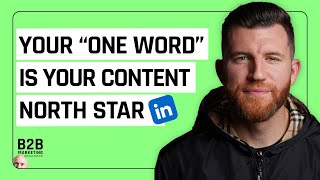
Devin Reed, a content marketing expert from Gong and Clarity, walks through LinkedIn strategies for B2B CEOs to build presence and drive pipeline growth. He covers what content works, who to target, and how to measure results for SaaS companies.
Step one is you got to pick your one word. So really what it means is, like, this is probably the most overlooked but critical part of my LinkedIn strategy. And I say overlooked because when I made the post pick one word to own, there was a theme in the comments, just like, what's that? What is this one word? How do you pick it? How do I choose? And so I went, great. I should probably focus on that a little bit. So the one word is what you want to be known for. And here's why it matters. The right content strategy is going to spark word of mouth marketing, which is the most powerful form of marketing. But whenever I heard word of mouth, I'm like, that kind of just means, like, people talk about you, they say nice things about you. And that's great. I've experienced that. But, like, what triggers someone to talk about you? What is that trigger word or phrase or thing? And so I wanted to explore that a lot more. And if you have your one word and you execute the right content strategy, then you start to earn mind share. And if you earn mind share, then you can win market share.
My T shirt will stay white for about 45 minutes until I. Until I eat something. But anyway. All right, so we got. Devin Reed is here. Devin is a. Is a legend in the content game. Every, every speaker referenced Gong's content and social media strategy, and he's behind all that. But number one of the number one things that comes up in exit 5 is people wanting to know how to use LinkedIn. I'm a big believer that I don't see it as a social media channel. It's not a fun little toy that people play with. I would be if, if I was running marketing at a B2B company today, LinkedIn. LinkedIn. I wouldn't be spending 20 grand a month on a. On a retainer for PR. I would be investing it all in organic LinkedIn. And that's exactly what Devin's going to talk about here today. So give it up for my guy, Devin Reed.
So when I. I was gonna drink out of that. So when I looked at the agenda once, once Dave confirmed I'm gonna speak, I was like, all right, cool. What slot did I get? And I was super grateful I didn't have to follow Ross. And then after yesterday, I was really grateful I didn't have to follow Dan. And then I was like, everyone's gonna be pretty tired this morning, but it's still better than following those two. So I'm going to make a deal with you. I'm not going to do that super annoying thing where I asked everyone to, like, stand up and stretch and shake it out. Instead, if you could just take out your phone and stare at that for the next 30 minutes, that'll make my job a lot easier. So I, as it was referenced, started at Gong in 2019 as the head of content, and we built what I call a content powerhouse. We, we found content market fit, we scaled it across multiple channels, and it had a massive impact on Gong's brand and pipeline. And then I quit and I joined our competitor. And that could cause some problems and also caused a temptation which I was reminded of time and time again because during my listening tour at Clary, you know, I'm going around talking to marketers and salespeople and executives, and after the niceties and the weather and all that, they go, so you're going to run the Gong playbook here? I said, it's tempting, isn't it? And I said, no, I'm not here to build Gong 2.0. I'm here to build clarity 2.0. And the reason why is because you can't just take a strategy in a playbook, copy and paste it, and take it from company to company. Seeing some nods over there. Reason being that is created in a certain time, in a certain market, for a certain audience. And so when you try to copy and paste it, it doesn't work. Plus, it's pretty freaking lazy. So what I did instead was think about, hey, how am I going to look at our strengths and see what we have today? And what I realize is there are principles that I can take with me from Gong, and I've taken them to Clarity and I've taken them to the reader today, where I help B2B SaaS companies design top of funnel content strategies. And they're pretty timeless. And so if I take everything that I've learned, everything that I believe, and I put it into one principle, it would be this. Oh, hell yeah. I got a. Mmm. Early. I look over, he's just eating the breakfast sandwich.
I was gonna say that was like a. That was real.
That was like a Campbell's soup. So I want people who influence and make purchasing decisions to know, like, and trust us. That's kind of it. Hell yeah. Phones are coming out early. Let's go. That's when you know you're doing well when that first phone comes out. And if it's vertical, you know they're lying. I would appreciate that too. And so I'm a content guy, so of course I believe Content is the best way to do it. And every mission statement I go to starts with these three words. Or excuse me, whoop. Jumped ahead. I want them to know who we are, like what we're about, and trust we can help them. I'm making too many jokes. I'm not looking at the conference monitor. So this is what it comes down to. That last one is really important because the four words that I always talk about are build trust at scale. That's really what it is. And so I was thinking, how am I going to build trust at scale at Clary? And the fun part is my cmo, Clary, is in the room right now. And I actually never told him this. Sorry, Kyle. I knew that when it came to the corporate LinkedIn page, Clary was never going to be gong. I told you, I had never told him this before. And when I joined, it was 12,000 followers. When I left, it was over 200,000 followers. Thank you. It was a great team. I had a great team of eight who helped, obviously, scale this. It's not all me, but I was like, there's no way if the. The king of Revtech Sales Tech is going to be crowned in the next two years, there's no way we're going to catch them up in this way. But I knew that we could play to our strengths. And so I thought, hey, what do I have that Gong doesn't have or at least isn't using yet? And that's a charismatic CEO. And it's okay if yours isn't charismatic. We sell sales tech, so you kind of have to be in that space. But I realized, hey, we've got a guy who believes in marketing because he hired a tattooed guy like me and.
Wait, sorry, what does that have to do with marketing? You told me to interrupt. Sorry.
Strike one, Dave. I'll see you after class. You believe if you hire a head of content. Sorry. Then you believe in marketing. And so totally fucking threw me off. By the way, right before this at breakfast, I'm like, dude, we all love that you're on the mic, interrupting people. I hate it.
He's like. He's like. He's like, make sure you do it a lot during my session. And you're already.
Yeah, it's pretty Good. I have 48 minutes, right, to give this presentation. No, it's all good. So what we decided to do, I'm really glad it's an informal conference, was to build Andy. Andy Burns, our CEO. We decided to build his LinkedIn strategy. So we built a LinkedIn strategy. We committed to it for 12 months. And then I wrote about it on LinkedIn. CEO just started posting. You got 6.1 million views in the first 12 months. If you click See More, you'd say you would see that I shared a five step framework of how we got there. Now, what's really annoying is anyone, like, everyone I'm guessing is on LinkedIn, right? Like, do a quick show of hands, give me one hand raise. Okay, now keep it raised. If you post on LinkedIn even like once a month, like you just do sometimes post. Dave's lying. Okay, cool. Now keep your hand up or just raise it up if you're like, I'm on it, but I'm not, like, really on it. You know what I'm saying? Oh, fuck. Yeah, we're all in it. Okay, cool. This is great. You'll be on it by the end of the day. Okay, fantastic. So what I realized was what I wanted to do is lean into this more. And so I shared the five process. Where I was going was it's super annoying for the folks who write on LinkedIn. Like, the posts you write in like four minutes or five minutes always outperform the ones that you write. Edit, write, edit. So I'm on the. I'm on a plane with my wife Shali. She's here. Say hi a little louder next time, but all good. She's my partner at the Reader. And so we're on a plane and I'm like, buckled up. We're literally on the tarmac about to take off. I'm like punching this thing in. I click publish as we're in the air, turn on airplane mode. And then I put on a podcast, fall asleep when I land, I turn off airplane mode, open LinkedIn, and this thing had half a million views in like five hours. And I'm not bragging that I'm like some God at LinkedIn. If I could write this type of post every day, I would. And I'd teach you. And I'd probably be a billionaire. But what it showed me was that I was onto something. People weren't just interested in those 6 million views. There's something interesting where a CEO has kind of entered this creator mode. They're taking it seriously and it's working. And I got a lot of DMs, a surprising amount from marketers, executives, and founders who are like, hey, can I learn a little bit more? But I wasn't the first one. Some other dude kind of made it up first. Go ahead, you can talk on the mic now.
Sorry, my Favorite review of that book was it's what somebody wrote one star on Amazon. And all it said was, this should have been a blog post.
Yeah. So basically what I'm going to talk about is founder brand meets LinkedIn. Raise your hand if you've read Founder Brand. Okay. If you raise your hand slowly, you're lying because Dave's in the room. That's okay. And so that's what we're going to cover today. So a little bit the obligatory about me slide. I spent 10 years in SaaS sales and marketing. Some folks don't know. I got my start in sales. I was the head of content at Gong. I was actually a rep at gong. From 2 to 20 million head of content from 20 to 200 million. ARR. Then when I went over to Clary, we crossed 100 and I think we got to about 150 million. Now I found the reader. Three months ago, I quit my job on a Friday, Quick Clary. Two days later, packed up my family in my house, moved from the Bay Area to San Diego, and then two days after that, opened my laptop as an entrepreneur. So I'm three whole months into it. And this is my first presentation from the reader. So I'm pretty excited about that. I'm pretty excited about that. Now, if you know me past my career, you know I own way too many sneakers, I cheer way too loudly at warriors games, and I'm a proud dad of two girls. Hell yeah, girl dad. Okay, so here's my thing. You can pull your phone out if you want. I said if you want. I didn't ask you. And what I like to do is like, I hate homework. So if you have notepad, if you want to follow along, you can literally follow this step by step framework with me today. And by the time we're done, you'll have V1 in your pocket for when you go home. The other disclaimer is, I wrote this presentation as a marketer for marketers who might want to build this on behalf of your B2B leader. That could be your CEO, your CXO could just be a thought leader or someone fairly smart at your company. And so keep that in mind as we go through it. Even if you're not on LinkedIn or maybe, I don't know, you're obsessed with Reddit for some reason. Had to bros right on the. I had. It's a layup. This will still be helpful. You'll find a lot of valuable insights that you can use no matter where you publish content. Okay. I absolutely love Natalie's presentation yesterday. Because when you bring this idea to your executive, they're going to ask why? Why should we do this? Why should we do it now? There's so many other priorities. I'm spiraling. So step number one is really step zero, which is you got to sell this thing. And so I want to give you a quick tip list that you can use to make your case. So your 10 undeniable reasons for B2B leaders to get active on LinkedIn right now. I know. Hell yeah, more phones. Honestly, when I wrote this slide, I was like, if I don't get a phone by now, I'm fucked. The biggest one is number two. Number two is how I always get funding, resources, whatever I need is because every CEO has what I call the CEO slide. It's three to five company wide initiatives at the beginning of the year. And if you can tie your initiative to that initiative, you're almost guaranteed to get funding. All this other stuff is nice to have. And for the personal stuff, that really works really well for like, I don't know if you have like a CRO, cmo, vp and they're like, I like the company, but like, do I really want to get my LinkedIn to it? I don't know, do you like bigger paychecks, dog? All right. And if all else fails real quick.
This is not a bit a serious thing. Maybe you answer this later, but yeah, go for it. I think one of the biggest objections that I've heard from founders or even people here personally is they believe all this. And I know you're going to answer this, which is why I'm giving it to you, but they believe all this. But the founder, they don't want to be that person. They don't want to be the LinkedIn. You know, like that part makes them uncomfortable. And yet there's all of these undeniable benefits to doing it. How do you help people get over that? Objection.
What was your line yesterday? The, the pain of change has to be. What was it? The pain of staying the same has to be greater than the pain of change. So all those woes of Pipeline and we're not different in our competitors and yada, yada, yada, this is it. And I get to a little bit more on that later. But I also have a backup answer which is like, if all else fails, Adam Robinson is doing it. It seems to be working. I honestly thought he was going to be here today and I really wanted to do this in person. And it's funny because as I was making this in my Google Doc, this was the first comment I wrote to myself. And I can assure you there were a few more. I had to cut them out. I went early. All right, cool. So step one, we'll get real tactical today. Step one is you got to pick your one word. Pick your one word. So really what it means is like, this is probably the most overlooked but critical part of my LinkedIn strategy. And I say overlooked because when I made the post pick one word to own, there was a theme in the comments, just like, what's that? What is this one word? How do you pick it? How do I choose? And so I'm going, great. I should probably focus on that a little bit. So the one word is what you want to be known for. And here's why it matters. The right content strategy is going to spark word of mouth marketing, which is the most powerful form of marketing. But whenever I heard word of mouth, I'm like, that kind of just means, like, people talk about you, they say nice things about you. And that's great. I've experienced that. But like, what triggers someone to talk about you? What is that trigger word or phrase or thing? And so I wanted to explore that a lot more. And if you have your one word and you execute the right content strategy, then you start to earn Mindshare. And if you earn Mindshare, then you can win market share. It goes in that order. And if you try to go without it, two pretty bad things are going to happen. And you can tell they're bad because there's a red X you. It's pretty cool. So not being known for anything. You'll publish a ton of content, but you won't earn mind share. People will not talk about you when you're not around in a good way, or you'll pump out a bunch of content, but you'll be known for the wrong thing, something that you don't actually sell. I got a second. Was that the same guy? Different. Let's go. I love it. This is a new. This is a new thing. There's phones and. Mm. All right, so I talked about these conversations when you're not around. There's two styles of word of mouth conversations. There's casual conversations and there's what I call closed door conversations. Let's go through the first one. Casual conversations. Not this event, but kind of looks like it. Right? Right after this, we're all going to go hang out. We're going to talk, we're going to. We're going to see each other. And certain people Remind us of certain things. Anyone know Erica? Yeah, hell yeah. Erica's awesome. When I think of Erica, I think of editing. Yeah, yeah, I do too. When I think of anyone know this guy? Eddie Schlanger? Fantastic. We think copywriting. And when I think this guy, I think great hair. Wait, no, I think growth. You want to go back? Okay. You know how hard it was to see you all day yesterday and not let this out? Like, I was really. And you told me you cut your hair. I was like, God damn it. This was the second slide I made of this whole presentation. Don't make fun of Adam Robinson and make fun of Brendan's hair, because I love your hair. It's awesome hair. It's awesome hair, right? So these people have mind share. They have worked hard. They have a certain content strategy to talk about the same things over and over. And so when you see them, you think of a certain thing. And when you see that word, growth, editing, copywriting, you think of this person. Okay, growth. Is that the right word? Growth. Growth. Prints. All right, cool. Done. All right, so the next one's closed door conversations. And this one was actually introduced to me while I was at gong, because as I was in sales, I would often ask people, so like, how did you hear about it? It's like, why are you on a call with me, VP of sales? And it was really interesting what they would say. They say, hey, I'm in a forecasting meeting, sales strategy meeting, you know, me, my VPs, directors. And we realized we had a demo problem. Our reps can't demo for shit. Their words, not mine. And so we real. We're around the. We're. We're going around the table thinking about, like, how do we solve this problem? We need some sales coaching. Someone thinks gong. Hey, have you heard of gong? Yeah, Yeah, I like their content. We read a lot. Hey, cool. Don't they like, do something with sales coaching? Yeah, I think so. Hey, let's go see a demo. It's really that simple. Your prospects right now, whoever you sell to, are talking to each other in these closed door meetings. And you need to have your trigger word be mentioned in those meetings. Because what happens is they go, all right, sounds good. They go to your website, they ask for a demo. And that's how you can use this concept to get more inbound. So your one word is your North Star. And it serves two main purposes. Internally, it helps you keep focusing. It's much easier to create content when you have some sort of guardrails. And externally. Go ahead. I was trying to get out of the way for you externally. It helps you carve out that mind share. Right. So I'm going to use Andy because I talked about Andy at the beginning of the. Of the LinkedIn post. So we're going to use him as a bit of a proof point as we walk through here. For Andy, it was revenue. We had started a strategic initiative to go from a forecasting tool to a revenue platform. We launched a new category called Revenue Collaboration and Governance. Terrible freaking name. Fun fact. When I was signing my Clarity letter, like, right before I signed, I made like, a good and bad list, and the only thing on the bad list was that fucking terrible category name. But I signed up anyway. So anyway, he wanted to be known for revenue. When CROs and certain people are talking, he wants that name to be synonymous. So I ask you to take out your notebook. You can think for a second. What's your word? What's your leader's word? If you're already thinking about your CEO now, chances are it's the word that popped into the front of your mind by the time I finished that question. But if not, you need to think about it. That's all good. Take the weekend to think about it. But don't take too long, because the sooner you pick your word, the sooner people will start talking about you in those conversations, and that's going to help grow your brand and your business. Dave, if you're going to interrupt, now's the time. Excellent. Oh, he thought about it, too. You didn't have anything me a minute.
My nose was itchy. It turned the mic on. So you're good.
It's a whole thing. All right, cool. So step two, now we know we're going to win Mindshare. Step two is who are we going to win Mindshare with? I'm going to go a little bit faster now because that main concept was like, the big one. We're going to kind of rip through the rest of this. So that was not a joke. Should it have been? Okay, Narrow your audience. All right, so real quick, we got to figure out who the hell are we going to get that mind share with? We've got a niche. If you say niche, that's all good. You're wrong. Okay, I don't care if I don't care.
Nobody says the. The Riches are in the niches.
Yeah, I do. And you just did.
Well, because I'm trying to make a point.
Got him at his own conference. Not as funny as Dan, but I'll try. All right, so here's the focus segment of the broader market you want to be. The go to expert audience is the group of people who resonate with your message. Now, here's the deal. This is how I think about it when I want to win. In the attention economy, you are either playing winning or dominating. And I know it's like 9:15 and ask you to dominate. This early in the morning is pretty aggressive, but this is my mindset. I don't want to play. I don't play to win. I play to dominate. Because there's first place and then there's everybody else. Ricky Bobby. Okay? So that's what I want to do. But I know sometimes it can be really challenging to figure out, like, who is that exact narrow audience, that niche, that who is it exactly? Because we've got like this business leader and they're the one that we really want to buy from us. But then there's like the end user and then there's ancillary departments, and then, oh, shit, the cfo. They're the one who's actually going to sign off on this thing. So I want to take you through. Oh, shit. You're okay. Sorry. We won't point attention to the fact that Mark just spilled coffee everywhere. So I want. I want you to think of this. If you're struggling, here's an exercise I do with my clients. I want you to imagine this. There's two parts. One, think of it through the lens of your brand. Okay? Imagine you're an event like this, Maybe bigger. Whatever. You got a booth outside and a swarm of people come up to your booth and like, oh, my God, I love you. Love your brand. It's so great. Who is that one person? If you had to pick like one title, think of, like, who would that be to love your brand from a marketing standpoint. Write it down. Now, next to heat, check yourself is you got to think from the sales lens too. So think of if a wave of people hit your website. So punch the demo button like an overhand right from Mike Tyson. Who would your sales team want that to be? Who would your sales rep be? Like, oh, hell yeah. Today was a good day. Ice cube reference. Couple millennials in the fan. Okay, right. So I did this at Gong. While we were scaling and while we're going up market, I would constantly go up to my VP of sales and say, hey, if you had one person that could hit the demo button, who would it be? Because we sold to VPs of sales. But also there's like, sales enablement. They influence It. And again, the CFO signs it off, but he said, no, no, no. I want VPs of sales to hit the dem. We'll do in pipeline marketing to the cfo, we'll do in pipeline marketing to the sales enablement. But I don't want to start conversations with them because we have data, they don't close.
I think this step is so important, and I've been in the internal conversations. Like, we can't overstate how important this is. I think it's inside of every company. I've heard many conversations like this this week. It's like, well, sales, but also this Persona. But also, then you have like the four VPs inside of the company with competing opinions. Or the company tells you they sell to one core Persona, but actually they kind of also care about this one and one and this one. It's like, I understand that, but if you want to be good at content marketing and do this, you have to focus and you have to pick one. And so, like, that is the exercise. Like, you have to disagree and commit and say, yeah, maybe we do serve all multiple Personas, but for our content strategy, we're going to pick one. We're going to own that one word and that one Persona. And because like anything else, if you try to write for everything, everyone you miss and you're for no one. You have to figure this part out. And this is the hard part, because you have to push back. You have to tell people, nope, sorry, we're not writing that way. This is the part you have to figure out.
I totally agree. And here's the thing, too. And you talked about riches and initiatives. I get it. Is like, other people still read the content and other people still hit the demo button and they still know. And like, you think of the VP of sales is like the bullseye, but there's still like the green ring around the bullseye. I don't know what that's called, but those are, like, great buyers, too. And then there's like all the rings around. It's all good. It's still going to work. Okay, now, quick nuance alert. If you're working with the CEO, founder of the company, they're basically going to be like, here are the keys to the car. Like, bring it back by midnight. Right? The marketing strategy is like my strategy. My LinkedIn profile is now like a marketing channel. Treat it and go. Not a hundred percent of the time, but pretty, pretty frequently. But if you're working with like a VP or it's like a director and they don't own the company. They're not going to give you the keys because it's their reputation on the line as well. So just know there might be some variance between these audiences that you choose. And there's a little bit of variance. When we were working with Andy, so one, CROs and SVPS was actually our second buyer Persona. We wanted RevOps VPS, but. And he wanted CROs in his network. Two, he wanted CEOs or his. His peers. Again, people around the Rev Ops person, people that can still say, hey, go. Like, group one and two can still go. Tell the Rev Ops leader to go look at Clary. Hell yeah. Kyle's nodding. I was kind of like, making sure he's not like, what the fuck? I also told Kyle that he has this really cool ability that right after my presentation, because he goes next, he could be like, so none of that is true. Yeah, I took it from you. Yeah, I was not going to let you do that to me. And then you wanted VCs, because, you know, you want it to be cool VCs. Who doesn't? They're rich. So I guess. All right, step three. Pick content, pillars and topics. I'm going to give you a cheat code. Fun fact. I hate when people say cheat code, but I wrote one so nice. I'm getting a lot of laughs. Way more than I thought. So what everything comes down to when I'm creating content. I think about what your audience wants to know, what their peers are seeing, thinking and doing. And here's how I came up with this. I had a VP of Rev Ops. I was hosting and in charge of running a webinar program for other VPs of RevOps. And I basically don't know a goddamn thing about RevOps. And so I've asked leaders. I. So, hey, when you're like, with your executive, when you're with your CEO, and your CEO tasks you with something and you don't know how to do it, but you're not going to say that in the meeting. And then after the meeting, what do you go? Do anyone want to guess? No. Who said that? $100 for the Reddit comment. Run it back. No, that's not what they do. But that would be funny. They pick up the phone and they call their peers because they want to know what other peers are seeing, thinking and doing. So this is like the cheat code is like, I don't know a damn thing, but I can go find the answer with this framework. And so when you're picking your pillars, you need to know what your audience cares about. You need to know your niche, knowledge and experience. And when you put those two things together, you have relevant and valuable content, or what I often call content that converts. That's the sweet spot. Okay, if you need a quick exercise for how do I come up with the topics below that. Here it is really quickly. I like skill statements. I know how to radical prospecting email, run an event. Next one is outcome statements. What has the outcome of those things? I know how to generate sales pipeline. You're going to go through and list all these things out that this person knows they're not going to fit into the middle of the diagram right away. Right. You have your Venn diagram. You're kind of putting stuff everywhere. You'll go through this list and then you're going to look at what's the most expensive problem? This is what I asked the VP of Rev Ops. He had all these ideas because he's like, intelligent. He was actually really smart. It was. It was intimidating. So what's the most expensive problem and what's the most urgent problem? And that's what we picked for that webinar and other programs because that's what's going to matter most. That's what's going to stop people on the scroll, stop them in their email and go, that's something I need to show up to. Here's what we came up for. Andy, I thoroughly do not expect you to read all this, but I wanted to show you the content pillars we came up with. So one was how does Andy run revenue at Clarity? Run revenue was like our phrase is something we're going to market with. People want to see CEOs build in public. As proven by the LinkedIn post earlier today. Number two category evangelist. We were doing the category play. So we said, hey, people kind of need to like, know what that category is. We shortened it to RevCG. Again, the name is terrible. We change it to Revenue platform so I can shit on it now realize value from customers. This is saying, hey, we're going to make a lot of claims. We're going to show you the new way. But are people actually doing it? So let's tell some compelling stories. This is really important for the deck because these example topics, you don't have to use them actually, but when you're making your strategy, it's helpful just to have this, like, general direction. Like, cool. We're going to take exit for four and go that way. So dumb. All right, now.
So dumb.
So dumb. I know, I'm a dad. Okay. I Led earlier with dad so I could make like two dad jokes, one for each kid. Okay, so now you're thinking, all right, get cool, that we made like all these exercises, all these decisions. But I read this book called Create Once, Distribute Forever, and we haven't created a goddamn thing. See, I made fun of you, but then I brought you back up. Yeah, yeah, I tried to do that. So here's the main problem you're gonna hear. Excuse me first, objection. You're gonna hear. Anyone want to guess? Time is money. $100. Fuck it, a thousand. I'm not paying. I don't have enough time. How am I gonna do all this stuff? Devin, this sounds great. We're gonna differentiate, build a bunch of pipeline. I'm gonna be famous in the VC community. But like, I'm busy though. So another thing to consider is, did you know the average exec replies to about 4,200 Slack messages every day? I made that up when I made this slide. But it's kind of true, right? How many times are you in a meeting, like even a one on one, and you're like, you're there doing this, the blank stare, and you're like, no one listens like this. You're doing other shit. So they context switch a lot and they're busy. So you need to make it as easy as possible. I learned this earlier in my career. A confused exec is an angry exec, and that'll make life easy for any marketer. Great results come from great prompt processes, not promises. We've all had some empty promises in our lives. Hashtag personal stuff. But execs are scarred too, right? They kind of don't believe in marketing. A lot of times that's just the truth. Internally, we have to fight for ourselves, so we have to have great processes. And so I'm going to walk you through the production process that I came up with with Andy and other execs. Now, I wish I'd made the word commitment larger and maybe a little brighter, but I lead with this word. If you're going to have. If I'm going to make the strategy and I'm going to be running the program, I need a commitment that I will do what I say. And you exactly are going to do what you say. It's like, well, what am I going to do? Here's the week, here's the day by day process that we follow. And I color coded it because it makes it easier to follow Tuesday, never Monday, by the way, if you even think they'll be like, no, Monday, 8am or 4pm Just don't do it. It's going to push and it screws the whole week up. Don't do Mondays. Stupid thing to say. Okay, Tuesday, idea, brain dub. Excuse me? Let's go back. Idea and brain dub. 20 minutes. Me, you, zoom. Gonna ask you some questions, you're gonna give me some answers. You don't have to prep, you don't have to think, you don't have to write. Just give me some content. All right. Alternatively, if you want to send a voicemail and video, I'm cool with that, too. I'll take 20 minutes back in my calendar. I don't care. All right, Wednesday, I'm going to write the first draft. I'm going to take all your ideas and put it into all, like, the formatting that I know because I know LinkedIn better than you. Exact. All good. Your ideas, my writing, put in this Google Doc. I'm going to tell you what day and time to post it and then I'm going to share it to you via Slack. You're going to revise the draft? You got to look at it, dude. I don't know. Rev ops. I told you that earlier. I don't know. I don't know what's good. You're going to review it by Thursday, end of day. It's pretty, like, demanding, right? Timelines. And then Friday, I'm going to take a final pat. There it is. Get it. Get it, girl. And then I'm either going to stage it for you or, like, you're going to give me the keys or some people like, nah, nah, I got it. I don't care. Like, that's fine. You get the idea. But the point is, idea dump. First draft, revise, finalize, anything more than this level of revision. Again, going back to earlier, you're like, overworking the content. Let it fly. Okay, any questions on this? Thoughts on this? Wasn't just thinking of Dave. Other people can talk to. All right, cool. All right, last part. Is this five? Yeah. All right, last one is measure and iterate. Number one question you're going to hear. Anyone want to guess? Holy shit. Yeah. Except no, not at all. Because really, what are they going to ask? When the fuck are the leads going to get here, dude? Yeah. So I've posted twice and like, what the hell? I've gotten this after week one. Literally, I submitted, you know, the Friday where I'm like, the posts are ready. Literally, the question's like, so when do we see the leads? And I was like, tomorrow for sure. Obviously, I can definitely promise how the algorithm will treat you. So here's a shit ton of metrics that I made before I met Pranav. Kind of insecure about it at this point in time, but here's the truth. These are. You could look at these. Like, those are pretty standard. Yeah, dude, for sure. Because the last thing I want to do is like. Yeah, and also like, enterprise account penetration, because. No, dude, take the simple route. These are metrics that your CEO knows for the most part, right? So you want to meet them where they're at now, really quick post publish. I said three a week. I think if I did math, that's 36. This is my benchmark. This is like me putting my line, like kind of like going like the gauntlet or whatever. Like, if I can't get you 20% lift from like, basically nothing, then, like, probably let me go. Right? Honestly, this is a little bit of a reach. 10, 15. We all know the algorithm kind of sucks these days. Whatever content downloads, I turn on creator mode. This is a little hack. Turn on creator mode. You can take a gated piece of content. It is every single time. You put on like their featured thing or they're like, link, dude, we've gotten some seriously good leads from that really cool enterprise stuff. It's all good. Set the benchmark. I don't know how many downloads you're going to get. I don't know how many people like you yet. Website from traffic. Excuse me? Website traffic from organic MQLs. The MQLs has an asterisk. This is specifically from that gated piece of content on their LinkedIn profile. So it's specifically like publishing content. Hit the profile, download the content, you know, become an MQL and then like, buy in a week.
Hey, on the, on the creator mode thing, are you talking about the, like, you turn on creator mode and that gives you the ability to. Are you talking about like the pin post in the featured section?
Yeah, so I put stuff in the featured section because it's a big visual. And then also there's like, you can. There's a couple of ways you can do it. There's like, view my. Like, website. Like, I think, mean, you have like, that's a pay.
You have to pay for premium to get that.
Just a CEO of a company. No, no, no.
I mean, I'm just saying.
No, I know. Yeah, yeah.
Like we, we did. Everybody asks about, oh, how do I do it? I'm not saying because it costs money. It should cost money.
It just means no, yeah.
I know they don't know how to do it, but you're talking about you, you, you. So you upgrade to premium and then you can use the website link in your profile and drive that to a resource. Yeah.
And the reason why, real quick, the reason why is when you're on the profile, you'll see the featured stuff, Right. But when you post on the feed, you get the link under your name, that site, whatever. You can put your like clary.com. i think we actually did clarity.com sometimes, sometimes we put in like other stuff. It's all.
Yeah, like we do it for our newsletter and it's a number one. Yeah, it's the number one growth lever for our newsletter.
Super. I don't know, correlation causation. I'm not a scientist, but like the more impressions you get, the more people see your face and that link and the more people click the link and then like you get to host an event in Burlington. What's up? Okay, and then the last one and I, again, this is probably the most insecure one at this point in time is the self attribution. But at the time this is the best that we have. So I just like to see like when we launched it for Andy and we started to see people saying Andy, Andy's LinkedIn more and more in the self reported attribution. I'm like, look, it ain't the whole pie, but it's a piece and it's working a little bit. Pranav isn't here or at least not throwing tomatoes at me. So we're going to keep moving. All right, cool last bit. I said confused. Exec is an angry exec. So let's just put a quick operating cadence together, like setting expectations, all that good stuff. So every week we're going to sync on topics, produce and publish content, engage with our audience. Uh, Dan talked about this. This is a big one. You gotta do this. Super annoying to be like, hey, you have all these fans and like VPs and presidents and like commenting and you're just leaving them out to dry. Super chill. Every two weeks, share wins and learnings, they want to know really quickly what's happening and what's working. Review content performance, refocus on those content pillars, keep revisiting them, keep looking at them. And then every month, metrics, deep dive. There's the phones. Killing it with the phones right now. I'm stoked. I'm super stoked. All right, review top and low performing posts, Tell them why they're top and low performing. Like, hey, it's all good. No one really cares about you mountain biking. Just saying. But people really like when you talk about that board meeting last week, though. So, like, let's do more of that. Right? And the last one, Tweak the strategy as needed. You shouldn't be taking, like, hard rides, but again, you can take exit. Stupid joke. Okay, all right, the best part. Ready, set, ship it. You're ready to go. You. You made all the posts. You've done the strategy. You go in a hit post, and then you get to do the money dance or the happy dance. If I dance right now, it would be the nervous dance. So, quick recap. I'm a little bit over. Pick your one word, narrow your audience, pick your content pillars and topics, build your assembly line, measure, communicate, and iterate. And I think now is Q and A, if we got any. Okay, I have a question. Can you do this with a company page, or does it have to be a person? If your CEO is really not interested in, you know, being active on social, it's a fair question. You definitely can. And I've done it. Like I said previously, and I have. Even at clary, we did have a company page strategy, too. The algorithm gives Personal profiles 5 times more views than company pages. That's the last, like, stat that I heard. So you can definitely do it on a company page. But I have five clients right now. I'm not advising any of them to do it for their company page. Three out of five have come to me and said, we want to do it for the executives. And that's just going to get you the most bang for your buck. No doubt. Hey, awesome presentation. Thank you. Thank you. Can you talk a little bit about your Tuesday brain dump?
I could see that going really well or, like, really bad, potentially.
Oh, you too? Yeah. So you'll know real quickly what kind of mood your CEOs in in the first two minutes of that. So here's how it usually goes. One of two things. So one is like, something had just happened, and he's like. And he was, like, super excited. Like, one time, he was like. So I went to an AI conference yesterday, and it was just like, firehose central. Like, all this cool AI stuff, right? So I'm like, cool. Recording the conversation. I've got a whole bunch of stuff on AI. I guess we're going to focus on AI. Fits into the pillars. All good. Or halfway through, I'm like, hey, that's all cool. But, like, AI isn't like the main pillar. So, like, what else happened this week? And I have just a little list of, like, what happened this week, what was surprising, what was interesting, what was something someone said you'd didn't like? I try to get emotional responses. What did you hate this week? What did you love this week? What annoyed you? He's like, you. And I'm like, fine. And so I try to get those type of responses, and then I just kind of like, do interview discovery and just try to pull out as much as I can. Was that helpful? All right. Also, sorry, option two is I just leave. He's like, I don't want to be here. And I'm like, me either. Now and then I just ask a bunch of questions.
It was awesome, man.
Thanks, man.
Great job.
Thanks for not hating me after the. It's all good. Let's say you're working with, like, multiple.
Executives within an org where they want to, like, have the entire leadership team, active and social. Would you run the same playbook, just like control C, control V, with different story tracks type of thing, different words?
Or would it be the same word, same process? Yeah, you're probably going to have different words, though. You should have different. It would be. I don't. I mean, there's always an exception. Maybe the whole team's like, all in on, like, selling on behalf of the company. And so, like, revenue, for example, might work. I've never seen that. I've done this at a work ramp where we ran through their executive team through this. No one had the same word, and only the CEO had the word of, like, whatever their thing was, like learning or something. But the process is the exact same for sure. Yeah.
Hey, Devin, so when you're picking your one word, let's say there's people in your space that already own that word. How do you think about it? Is it just like, niching down in your audience? Do you niche down with the.
That's it. No, that's. Well, one. I was hoping that question would come up because it is a popular one and you know the answer. Yeah. You niche down. So you might be known in editing in one pocket of the Internet, but you could be known for editing in another pocket, another niche. Right. And the other thing is, like, kind of aggressive again, like, just dominate. Like, just. You have to, like, be consistent, have differentiated content, have a point of view, and you can beat other people. Gong was not the first to a lot of races that we won. We were not the first conversation intelligence program. We're not the first to talk about sales coaching by any means. But if you have a Different approach and a consistent approach. You can beat out people who might already be in your niche or again, realize actually that person's over there. They don't even sell to quite the same people. And it's okay if you're like, adjacent.
To each other also, just to build on that. I believe in the. I say niche, so I'm going to.
Say niche, but that's fine. You can be right.
I believe that the. The niche can also be you. And so just because someone else talks about that topic, the way you say it is different, your way of doing it is different. Maybe you're more informational or educational or funnier or wittier. Whatever. I think you can have your own flavor on it. Doesn't mean you have to necessarily. The way you be different is by being yourself. I think a lot of us, the power of doing this from the founder, not the company page, is that the founder is typically someone. They didn't start this company just for fun because they want to get super rich. It was like, oh, they had a deep background in this engineering thing and they have 20 years of history. Like, those things are the perfect ingredients to tell this story. Dude, great job.
That was awesome. So my question is around the engagement.
Stuff and it's something I still struggle.
With even when I'm managing programs to get CEOs.
How do you reply to the comments.
As the CEO tell who's important, like what to deep. A deeper dig deeper on.
Are you doing that yourself?
Like, how does that even work? It's a good question. And it's. There's no one answer, to be honest, because the busy objection comes back a lot and. But I really try to put. And I pushed Andy into like, I was like, looking. I never replied to any comments for Andy because candidly, I don't feel comfortable doing that. Like, I'm posting, helping him write his contents. One thing, like, he's putting his fingerprints on it. Me logging in as Andy and then commenting to like, I just. I'm already like, uncomfortable. So what I was like, can you just go look at the engagement? Like, you know those people, like three weeks ago we said we wanted to get in front of. They're on your page commenting right now. I want him to see that. And hopefully that lights him up a little bit and he can punch out a quick comment. I can't force him to do it. Of all the things in the world of marketing and that I'm running, I'm not going to like, fucking like, you know, beat him up for that. But I Do. I'll do like this a lot. Like, hey, did you. I'll send him comments like, hey, did you see, like, the CEO at Cisco commented or whatever, you know, whatever. And he'll be like, oh, that's awesome. So it's kind of a way, I guess, like, to tether him back into the program and to get on LinkedIn is like, hey, it's working. Yeah, no problem.
Hey, question about if this can apply to other platforms beyond LinkedIn, because for my company, our audience is not as heavily on LinkedIn. So B2B. Yeah, but much heavier on, like, Instagram, Facebook, social media.
So, like, does it apply, is the question.
Yeah. Can you do the same framework?
Yeah, I don't see what wouldn't, but I'm happy to chat after because, like, do you still need Mindshare with one word? Yes. You still should have content pillar, you still should have a production process and you should still be measuring things. So, like, obviously the, the metrics are going to be probably a little different for Instagram, but overall, the framework, I would. I would stay the same. Hey, Devin. Yeah, thank you, dude. Yeah, Great talk. I wanted to ask, when you sort of write for the CEO, right? Like, obviously there's information coming from them, but you don't. You sort of lose their voice because, you know, you're the one that's writing, right? And it's like, you know, you're not going to be there at the company forever and there's going to be somebody else. It's just like that voice question always sort of comes to me, like, the best sort of. I don't know, what are your thoughts on that? It was the second objection or not objection, but question from the group. I was hoping and expecting. Give me one sec. Because you're right. And you know what? Like, it comes up all the time with everyone. They're like, this doesn't really sound like me. And I'm like, yeah, no shit, it's me. A little. The good part of a transcript is I actually start with copy and paste because, you know, sometimes they go on a little story or random, like, I do this, then I do this and I do this. I'm like, cool. Copy paste, hit enter a lot of times, get that formatting looking good. Hit the Grammarly a little bit, right? Clean it up. And then I just go through and I'm like, I'm really, like, revising. Writing is almost like actually like a little too strong of a word. It's like revising probably. But when we get to give me one Sec. I promise I can click. Oh, man, it's a little deeper than I thought. I want to get to Thursday. If I can get there in a second, then I'll show it to you. Yeah, cool. So this day is the tone day. Maybe I should have mentioned that faster. Great call out. This is that heat check of like, yeah, no, duh. I don't sound like you. I'm not you. So when you revise your post before I revise it, finally put your tone on and make sure it sounds a lot like you. And honestly, you might hear it for like, the whole year. And we kind of do. It's like, this doesn't quite sound like me. I'm like, you also don't know what you sound like. You don't have your writing voice yet. So, like, we're finding this together. And unfortunately, you're getting a little bit of the Devin Reid action in there to maybe muddy it up. Devin, yo, real quick. Talking about the one word of that part you mentioned, like, don't wait too long type of deal on that. So my question is more around, like, is there a way to pick a bad word? And do you have any guardrails for us to not pick bad words? I wouldn't pick fuck. Yeah, right. Can you pick the wrong word? Yeah. I mean, here's the thing. I line it with, does your audience care about this thing? Do you have expertise in this thing and are you selling that thing? There has to be a through line. That should be the word. The place I see people mess up is actually pretty. Usually it's more on the audience side. Usually people are like, I know what I'm good at, I know what I sell, and that's what I'm going to talk about. And I'm like, no one cares that much about your origin story. They care a little bit, but not every day. So make sure it hits on all three of those points. And workshopping. You can talk to people and be like, hey, you know me. You know me enough. What do you think my one word would be? There's probably a bunch of people here that now know about it. We could all talk to each other and help figure it out. Yeah. So I've read FounderBrand and also, like, what do you do if your CEO doesn't have a compelling story?
Like, if they did just get into.
Oh, I can't click fast enough. You have to just get the book. Like, straight up. You have to get the book.
No, I've read it as well.
But, like, our CEOs that I've worked for, frankly, haven't had like, compelling interest, interesting stories about why they founded the company. They just sort of wanted to get rich. Can I be honest? I don't know. Yeah, I'll be honest. Struggling, actually.
I think there's like a different path. I don't think. I think you. If you have a great story, then you can be an original creator.
If not, you can be a curator industry.
And so like, maybe they're. They don't have all the basic stories, but you make them like the go to account to follow for news and insights as it relates to that industry. Maybe over time that is the thing that helps them find their voice. So if it's, you know, finance or whatever, hr, maybe they'll have an amazing founding story. But like, there's got to be. They got to have some strong point of view about the industry and where HR is going. If they don't have that, then you can be like, you start doing it for them. You're reading articles, you're serving up stats. You notice that this trend with Starbucks hiring has happened. You can like be the curator and then become like a source of leadings for the industry.
So.
Sorry. I know you can go hunt, Devin. After.
I'm leaving right after this. I'm sprinting to the car. Yeah, I am. I am around. I would love to. I was actually. That is my. My only call to action. I didn't, I didn't do a QR code, but it's like, come holler at me after. I'm happy to talk about it. So you had, I think last week's.
Newsletter or the week before you talked.
About reach versus teach. Oh, yeah. You read my newsletter. Thanks. But you just made some cheeky joke about like, no one wants to see you mountain biking.
So you cute talk a little bit.
About the balance of those, like, engagement pushing posts versus, like teaching and being relevant to your one word. So the reach is about reaching them and what they care about. So if you post the mountain bike and you see the mountain bike doesn't work, then they don't care about that. That's a miss. So I love that you brought up that framework. Cause I still believe in it and I would try. Like, we posted the mountain biking thing. Like, we did it. We did the reach. You still should always look at the numbers and be like, what do people care about? Like, oftentimes we had one with another go to market leader. It was just him like in like BAMF or something. He's like off site. Like literally 10 words it was like we're at an off site and it got like the most views of all the stuff. So like cool people love off sites. And apparently you in shorts. Great. So you just got to. You have to test it out but still follow the reach first teach. I still believe that for sure. Is there like a best practice of ratio or just like it's up to like style? Right. Like if you're. Some people were like my CEO really doesn't want to do it then like probably little to none. Candidly.
Are you guys. You can take this offline later. Your time is up.
Give me the right hand dab, dude. Come on. All right.
No, but serious, we have a break and breakout lesson. Wait, I need that clicker. Give it up for Devin. That was awesome. But, but seriously, I think something that we're learning as we're doing this event, I think one of the cool things is like accessibility. Like I love that all the people who spoke are sitting in the front row and hanging out here today. So there's something to that. And obviously everybody's very approachable. So if, if I couldn't get to your question, it's not personal.
Go.
So go find Devin in the break or go find him in the hallway after this and he'll help you out.
Earlier in my career, a confused exec is an angry exec. And that'll make life easy for any marketer. Great results come from great prom processes, not promises. We've all had some empty promises in our lives. Hashtag personal stuff. But execs are scarred too, right? They kind of don't believe in marketing. A lot of times that's just the truth. Internally we have to fight for ourselves, so we have to have great processes. And so I'm going to walk you through the production process that I came up with with Andy and other execs. Now I wish I had made the word commitment larger and maybe a little brighter, but I lead with this word. If you're going to have. If I'm going to make the strategy and I'm going to be running the program, I need a commitment that I will do what I say. And you exactly are going to do what you say. So I woof. What am I going to do? Here's the week, here's the day by day process that we follow. And I color coded it because it makes it easier to follow Tuesday, never Monday. By the way, if you even think they'll be like no Monday, 8am or 4pm, just don't do it. It's going to Push and it screws the whole week up. Don't do Mondays. Stupid thing to say. Okay, Tuesday, idea, brain dump. Excuse me? Let's go back. Idea and brain dump. 20 minutes. Me, you zoom in. Going to ask you some questions, you're going to give me some answers. You don't have to prep, you don't have to think, you don't have to write. Just give me some content. All right. Alternatively, if you want to send a voicemail and video, I'm cool with that, too. I'll take 20 minutes back to my calendar. I don't care. All right, Wednesday, I'm going to write the first draft. I'm going to take all your ideas and put it into all, like, the formatting that I know because I know LinkedIn better than you, exec. All good. Your idea is my writing. Put in this Google Doc. I'm going to tell you what day and time to post it, and then I'm going to share it to you via Slack. You're going to revise the draft? You got to look at it, dude. I don't know. Rev ops. I told you that earlier. I don't know. I don't know what's good. You're going to review it by Thursday, end of day. It's pretty, like, demanding, right? Timelines. And then Friday, I'm going to take a final pat. There it is. Get it. Get a girl. And then I'm either going to stage it for you or, like, you're going to give me the keys. Or some people are like, no, no, I got it. I don't care. Like, that's fine. You get the idea. But the point is, idea dump, first draft, revise, finalize, anything more than this level of revision. Again, going back to earlier, you're, like, overworking the content. Let it fly. Okay, Any questions on this? Thoughts on this? Wasn't just thinking of Dave. Other people can talk to. All right, cool. All right, last part. Is this five? Yeah. All right. Last one is measure and iterate. Number one question you're going to hear. Anyone want to guess? Holy shit. Yeah. Except no, not at all. Because really, what are they gonna ask? When the fuck are the leads gonna get here, dude? Yeah. So I've posted twice and, like, what the hell? I've gotten this after week one. Literally, I submitted, you know, the Friday where I'm like, the posts are ready. Literally, the question's like, so when do we see the leads? And I was like, tomorrow for sure. Obviously, I can definitely promise how the algorithm will treat you. So here's a shit ton of metrics that I made before I met Pranav. Kind of insecure about it at this point in time, but here's the truth. These are, you could look at these and be like, those are pretty standard. Yeah, dude, for sure. Because the last thing I want to do is like. Yeah, and also like enterprise account penetration. No, dude, take the simple route. These are metrics that your CEO knows for the most part, right? So you want to meet them where they're at now. Really quick post publish. I said three a week. I think if I did math, that's 36. This is my benchmark. This is like me putting my line like kind of like going to the gauntlet or whatever. Like if I can't get you 20% lift from like basically nothing, then like probably let me go, right? Honestly, this is a bit little.
More from Dave



Asynchronous work isn’t a trend. It’s how teams actually get things done without burning out.

AI is changing product marketing. Here's how top B2B teams are scaling without cutting corners.

How Product Marketing Is Evolving in 2025: Lessons on AI and Leadership with Jennifer Cannizzaro

Why referral programs look different outside of SaaS (and why that’s a good thing)

The secret to scaling dual GTM? Give every marketer ownership and get out of their way.

From content to CMO: how Jess Cook made the leap (and built her first budget from scratch)

Leading B2B Marketing for the First Time: Strategy, Budget, Content & Team with Jess Cook

Most B2B advice is built for SaaS. But what if you don’t have demos, PLG, or lead goals?
