Mastering Short Form Video and Social Media (with Alex Minor)
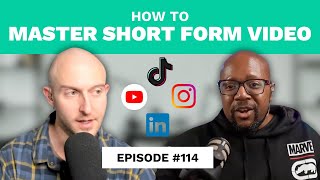
Dave Gerhardt talks with Alex Minor about making short-form video work. Minor explains why you should start with video first, how to pick platforms, and why repurposing content across TikTok, Instagram, and YouTube actually works.
You've got to, right up front, let people know what is the potential value of this video. I start with trying to figure out what I can say in that first 2, 3 seconds to grab somebody's attention. And usually it's a qualifying question or some type of polarizing statement, because those are the types of things that I found. Stop the scroll. It's got to be in that first sentence or two that you're making this point or asking this question, because if you do the. Hey, I just wanted to make this quick video. Hi, my name is Such and Such. And I run like nobody cares about that stuff.
All right, here we go. We're live. Alex Miner's here. Alex, nice to finally connect with you. We've. We've kicked this back and forth a bit. I'm excited to have you, as I mentioned to you, in the. In the fancy green room before. We've yet to do a dedicated podcast for the Exit 5 podcast on. On video. And I have so many questions myself. I know so many people that listen this, work at companies or want to do their own thing and have a lot of questions. And so I'm excited to dive in with you just really quickly before I start grilling you and getting into the interview, in your words, who are you? What do you do?
That's an interesting question, because I've done many things and I have a particular set of skills.
I can tell.
But at the end of the day, I'm just an artist who's kind of adapted to changing times and changing interests because I started out in music a long time ago, wound up working in television, local news, and from there, made my way into, like, the corporate events industry, which is where I actually picked up a camera for the first time, because my background is actually in audio engineering. And then after I picked up that camera, it was off to the races, and we wound up here. And basically, what I do, my company, IM Media, we work with businesses of all types, a lot of thought leaders, consultants, coaches, small businesses, nonprofits, and we help them create content that hopefully will help them reach their goals, make more money, get more clients, all of the business things that we all want.
When you went to Hampton and got a degree in music engineering, did you ever. Did you. Did you see a path 20 years from now where you're running a business, helping other people make and embrace video content?
Well, I didn't graduate from Hampton. I left after two years.
Okay.
Because I figured out that what they were, what they were trying to teach me, it just wasn't enough. For what I wanted, you know, decent program, decent facilities, all that. But what I was looking to learn was I wasn't going to get it there. So I left and I went to full sail, which some of your clients might or some of your listeners might have heard of, which is a school for all sorts of different media training, audio recording, which is what I took, video game design, movies, marketing, music business, all sorts of stuff. But no, I did not think that I would end up here. This was not the plan. I was supposed to be a famous producer or artist in the music industry and that didn't work out.
That's the story for most of us. You know, like I, I was a 10 year old kid who wanted to be in the NBA and here I am. So it's like every, everybody has their path, but we find our way. Most of us didn't come out of the womb expecting to run a business in the marketing content creation space, but here we are. I'm down to pivot this and I see the NPC behind you. If you want to just switch this up, that'd be very welcome. But maybe that's for a part two at another time. So you get into video, I think almost every company. So for Exit 5 at least, most of the people that listen to this are going to be people that work in marketing and most of them are working at B2B companies. And out of the thousands of people that listen to the show, I think a very small slice of them have found success with video. But 99.9% of them think I got to be doing something with video. How, where do you think, where do you think most people should start? And what are the, what are the mistakes that most people make? Because one thing that I, and I'll kind of lead you a little bit here, but I see a lot of people like recording a lot of stuff. Like let's say we record this podcast, we just throw it up on YouTube and then we're like, well, video doesn't work for my business. Right, right. Let's kind of just start giving advice from that standpoint.
Okay, well, one of the reasons why. One of the most common reasons why people think that video doesn't work for their business is they just haven't made enough video. That's number one. They do the thing that you said, they record something once or maybe even a couple of times, four or five, they throw it up once and then they say, okay, I didn't get any more calls, I didn't get any more emails, I didn't get any more money. Video doesn't work. It's one, you didn't approach it strategically. Like, you didn't approach it with a goal in mind and then you didn't do enough. Video is a long term strategy. A lot of folks expect to be able to do one video, which might work. If you have, you know, if it's just for a certain advertisement of trying to sell a certain thing at a certain time or a certain event or, you know, you're promoting a singular thing and you make the one piece of content and you use that one piece of content to promote the singular thing that might work.
You're like, we, we have a, we have a product launch next month and we're making a video for that product launch.
Like, exactly. But when it comes to building brand, when it comes to, you know, growing your company or being more visible, it's a long term strategy. You're going to need multiple pieces of content over time. And that's what it is. It's a lot of work.
Isn't that amazing? Like, oh, it's a surprise. There's no shortcut. It's a lot of work and it's hard to figure that out. So when you say it doesn't work because people don't approach it strategically, where do you, where do you start? It's, it's, it's a daunting task. Right? Like, okay, I'm willing to sign up for this, but I know we got to do a lot of it. How do you, how do, how do you get me on that path? Like you're asking me. I've never even run one mile and you're asking me to go run a marathon. Like, you got to run one mile every day. One mile, then one mile, then two miles.
So where, where, where should I prepare for a marathon? They don't just go out there and start running the full length. Cause what is a marathon? Like 26 miles or something? That's crazy. Like, I do like three to six miles a day and I'm done.
Yes.
Like, don't. No marathons in my future.
Yes.
But when it comes to preparing for a marathon, people don't start running 26 miles the first day. What they do is they say, I want to run 26 miles eventually. And then they reverse engineer it. How am I going to get there? They come up with a training plan. So when it comes to starting to develop a video strategy, you got to do the same thing. You got to say, okay, this is where I want to be. This is the Goal for whatever it is that we're trying to do. Like if it's going to be having a YouTube channel or if it's going to be, you're going to go all in on short form video. It's like, okay, we want to do that, but we want to do that to get to this place. So how do we got to reverse engineer it? How do we use that to get to this place? Oh, and then you can start asking questions about the audience you're targeting. Like, okay, the audience that I'm targeting is these sorts of people. What do they care about? What questions do they have about this? How can I answer those questions in such a way as to start moving them down the buyer's journey towards my eventual goal of them becoming a customer?
I like that. I like that framework start, you know, work, work, work backwards, start with the end in mind. So I'm with you. But here's the thing. There's YouTube, there's TikTok, there's Reels, there's my website, there's blog. Like, which one? How do I know which one to start? Oh, and by the way, each one of these different platforms is going to require different dimensions. Different creative is going to work. Now I'm paralyzed by how many channels and platforms I got to do this on. What, what should I do?
I tell people to start with one to two platforms. What platforms there are. Those are dependent on what you know and what questions you ask. And when I say what you know, like some people might right off the bat know that the audience that they're trying to cultivate is mostly on LinkedIn. Okay, so LinkedIn is a place that you want to be. But there's a. But people who do business are also human so that they can show up on other platforms. So maybe Instagram might work. Maybe there's a large community that is involved in the type of business that you do that's on Instagram. So maybe you want to go in on Instagram or maybe you want to try your hand at TikTok. Just because TikTok, it might be easier to grow than it might be on Instagram. But I usually say pick one to two platforms to get really good at. One can be a priority over the other one. If you're going to do two and create, just worry about creating for those platforms and getting really good at them. Because what we've seen and what has been proven time and time again is that you can win with one platform. You can win, but you don't know how for how Long, which is why I say that you should have a second platform because LinkedIn might shut down tomorrow. TikTok might get hit with the, you know, with an emp, I don't know.
But also there's like, there's something there which is like if you, let's say you pick LinkedIn, you start posting on LinkedIn. Finding success in one pocket is also usually the way to then go, oh, wow, we figured this out on one thing. Like we're probably going to be able to figure this out on another. It's, it's a little bit easier to like get a little bit of momentum, you know, hey, to use the running example, like we've started running, we started, it might be a little bit easier for me to go work out, do some pull ups, do some push ups. Now we kind of have ideas about what content is working on LinkedIn. We might have to tweak it a little bit. But I like your chances of being successful on TikTok better if you've already had success on one platform. Is that kind of the right way to interpret that?
Sort of. There are basic principles to growth and branding and social media that can apply across the different platforms, but you also have to, to experiment enough with them to kind of learn the rules of the road and the best practices. I really hate that phrase, best practices. I hate catchphrases, I hate things like that. Like, this is one of my quirks, but they're like, you got to learn the rules of the road, you got to learn about the sandbox you're playing in because things that work in one won't work on another or they won't work as well. Like I've got content that has done, you know, 20,000 views on LinkedIn, can't get a thousand on YouTube. And now LinkedIn is my biggest platform. I've got like six and a half thousand followers on there. I think on YouTube I've only got like 3,500. But I've also had videos on, I mean, granted they weren't about business in any respect, but I've had videos that are still getting views and have done like 30,000 views on YouTube that would get crickets on LinkedIn because nobody cares. So you kind of do have to know your audience and if you're making multiple types of content or your expertise covers multiple areas, you kind of got to pick and choose what you're going to put where based on the audience that you're serving there.
Speaking of LinkedIn, I think the majority of people that are Listening to this, like, LinkedIn is the sweet spot from a social media standpoint. What if, what's, what have you been doing on LinkedIn that you found that's working? Or how would you coach somebody or give advice about, like, what types of content is going to work on LinkedIn?
LinkedIn is an interesting one because lots of different things can work and most people are going to give you different answers about what works and what doesn't work. Like, there are going to be some people that tell you video doesn't work on LinkedIn, but those people are lying or they're ignorant. Because I could tell you that the only content that really works for me on LinkedIn is video content. With the exception of a few, you know, picture post. You know, over the years I've had a few picture posts that have been really successful or like, you know, picture with long copy. And some folks will tell you that, oh, text is the way to go, text is the way to win on LinkedIn. But it, it really, it's really based on what you cultivate. I kind of advocate a mixed strategy on LinkedIn. I think for most people a combination of things will work. One, because it doesn't pigeonhole you, and, and two, there's less chance of you getting tired of it if you're doing a mix of things. So you're not just doing text, you're not just doing text with pictures, you're not just doing short form video. If you kind of mix it up, it makes it good for you and your audience makes it more interesting. Because a lot of times people are inconsistent with creating their content because they're getting bored of their content. But the content isn't for you, it's for all the people who are on the platform.
That's such a good, that's the hardest part of like the creator's journey is like just when you've done enough to get something to start working and you're getting the response from the audience, you're like, man, I'm so bored of talking about this.
Right? But you need to be a broken record. That's another thing a lot of people think they got to have something new to talk about every time they open their mouth. It's like, no, you are supposed to be a broken record. You are supposed to be like one of those annoying ass politicians who you can't get off of their talking points when they're in an interview. Like they somehow maneuver every question back into their list of platform talking points. That needs to be you. Like, you can deviate every now and then and, you know, put some personal stuff out there or do something that's unexpected just to kind of like stir the pot, add a little spice price to it. But for the most part, you need to be finding different ways to say the same thing over and over and over again.
I noticed, I felt something like that where, like, I used to use LinkedIn and I used to just kind of talk about every. Everything in my life. My family, my kids, my workout, my work, whatever, this funny joke, whatever. And the growth was kind of like, Matt, when I, when I focus, when I said, okay, if I just. It's strategic for me. Like, to go back to your point from the beginning, which is like, you didn't say it in this word, but this is kind of like how I've articulated in the past. I think it's a similar type, which is like, what's it going to be valuable for you to be known about? And it was like, oh, well, I'm building a business in B2B marketing and so on LinkedIn, I'm going to talk about B2B marketing 90% of the time. And that is when my content engagement and following went right up. I notice all the time if I just post random stuff about what's going on in my life, there's little to no engagement, I think.
Right.
Because maybe they know there's no consistency there. To your point about the broken record of a politician, when, when, when, you know, my face or Alex's face shows up in, in the podcast, you know, in the LinkedIn feed, you're, we want to know what, what to expect. And like, if I'm looking at your page right now and if I just go to the, you know, you have beautiful videos and thumbnails and everything. Like, it's very clear to me when I look at your page that your content is going to be about video and podcasting. And so when you show up in my feed, I'm going to be more likely to engage when it's about that topic. I think a lot of companies and people make the mistake of trying to talk about 20 topics on social media. Same way they try to pick five different channels to talk about it on.
Yeah, pick two or three things that. And really, it all needs to tie back to, like, one main thing. But there can be like two or three subtopics within that that you, you know, talk about. So that, like I said, you, you don't get bored all the time, but it really needs to, it really all needs to lead back to that One area of expertise that you're trying to get known for for. Like, once you are known, once you are liked, once people have embraced you and they like you for you beyond just the expertise that you offer, then you can, you know, you can dabble a little bit. Like once you're stomping with the big dogs, you can break some rules, you know what I'm saying? But when you're trying to build, when you're trying to get to the promised land, pick one lane, stay in it, be all about that. So that every time you come up in conversation, people know this is what he's about, this is what she's about, this is what her company does.
So with your video content on LinkedIn, have you found a specific format that works or a specific editing style that works? Are you kind of just always doing something different?
This year I've been concentrating on getting better at short form content. Most typical, you know, talking head, kind of what people call the hormozy style, although he has several styles. So that's.
Yeah, there's videos of doing calf. Him doing calf raises. There's the calf race video. There's lots of different hermosi styles.
Yeah, right. But when people say hermosi style, they're mostly talking about like the captioning style, using the emojis and sound effects and, and all that stuff. But yeah, mostly informational educational content that's talking about, you know, things people might not know about video things, you know, teaching techniques or, or thought processes, you know, giving updates about what's going on in the podcasting world, challenging thoughts about podcasting. And yeah, because for me, I'm really not a short form guy at heart. I like long content. I like long videos. Like if when I go on YouTube, I'm looking for stuff that's 10, 20, 30 minutes long for me to watch, you know, video podcasts that are an hour, two hours. So I like long content. So it's been a challenge to kind of learn and master short form content, that writing style. Because I do script most of those videos, I'm good at chopping those videos down from longer form content as well. But just to get more done, I tend to rely on scripting the content. But then I also source stuff from podcasts like this that I'm on.
And can you, do you think you can, can you be successful with short form content if you're not making dedicated short form content? And what I mean by that, like, let's say my only strategy was to do this podcast. Could we could we be successful just editing short form clips out of this and using that as a strategy.
Depending on your goal, depending on your goal. So like, for you, if the goal is to promote the podcast or to establish yourself as a thought leader in your space, which is marketing, then definitely the content from the podcast could do all of that for you. It could possibly help do that. Attract speaking opportunities, get people to invite you onto other podcasts. Could even lead to clients just from people hearing interesting thoughts or viewpoints that you articulate in a certain manner that resonates with them.
So I've done this podcast for a hundred. This is, this is like a hundred episode 110. Until now, I've just been doing it myself. I just hired a team and we're building out this company. And I keep thinking, man, we have 110amazing podcasts like this one. I have no, there's no presence on YouTube for Exit 5. There's no strong presence on any of the short form content platforms. Like, is there enough, Could I, could I just start with these? You know, we have 110 hours of video content. There's got to be, there's got to be something in there to get started. But I also feel like you've got.
Enough content in that podcast to put out a short clip every day for like the next two, three years.
So the only, the only roadblock is me making silly excuses for not doing it.
No, the only roadblock is you hiring somebody to cut up that content for, for you so that you can use your time to do other things.
Fair. That's fair. Okay. Okay. All right. I'm, I, and that's a, that's a New year's resolution to get this thing up. And is it interesting enough? Like, what, what's your point of view on, on, on video podcasting? You know, just as a, as another distribution channel.
Like, I, I, I believe it's the way things are going. Most of, I won't say most, but many of the top podcasts in the world have a video component. And there are multiple reasons for that. One is just, it allows them to be on another channel like YouTube with that long form content. Number two, they're doing like you just asked about, mining that content for clips for social media, and that has become one of the biggest sources of discoverability. But for podcasts, because traditionally, and it's weird to say traditionally for a format that really has only existed for the past 15, maybe 20 years, but traditionally podcasts have grown through word of mouth, through recommendations, somebody saying, hey, I'm looking for a new podcast to listen to somebody saying, oh well, I listened to this great podcast about whatever, you should try it. And that's mainly been how podcasts have grown in the past. But now with social media in video becoming such a prominent thing in social media, a lot of podcasts are taking advantage of, you know, the transformation that we've seen in podcasting over the last three to four years, where more people are doing video or doing or facilitating their podcast via video. Even if they don't publish video content for the podcast, they're doing like we're doing, using a web based platform or Zoom or something like that to talk to people in different places. So that has a built in video component. All they got to do is push record and then, you know, they post, produce clips and they use that on social media as their promotion, as their advertisement. There are podcasts that run ads to get new listeners, you know, on Facebook, on Twitter, on TikTok, on all these platforms. So video has just, we've known for years that video is a powerful marketing and advertising tool. And now podcasts are turning that to their advantage and figuring out all the different ways that they can repurpose that video content to increase the presence and the reach of their podcast. And the platforms are adapting as well. YouTube added a podcast playlist feature within like the last year to year and a half I think is when that went live. And a side effect of that is if you do put your episodes on that podcast playlist now they show up on the YouTube Music app. And something that people might not, also might not know is that Google podcasts is going away. They're folding that into YouTube music.
Interesting.
So now if you want to distribute podcast through Google, you're not doing it directly through Google, you're going to be doing it through YouTube.
Interesting. So, so it's, it's free, it's basically free. Free distribution. Right. It's just, you're just being smarter about like you're already to your point. We're already recording this anyway. There's, there's distribution built in that we're not taking advantage of.
Right. And, and more of these distribution tools are being made available like I just found out within the last month so. Now TikTok has added a feature where you can hook your podcast rss feed to TikTok. So when you publish your podcast episodes, it can publish it to TikTok too.
Like the full podcast.
Yep.
Interesting. So you, so do you have the full video of your podcast on the.
I haven't looked into it that deep because I'm not working with anybody right now that's wanting to publish their podcast that way. But it was just interesting to see, like I was just on TikTok trying to upload one of my clips and I clicked over onto a button and it was like, enter your RSS feed for your podcast. And I'm like, what?
And I mean that's where you find those little pockets of creating advantages too, if you can be early doing, doing something like that, creating and tick.
And I think they're doing it because in the last couple of years TikTok has been encouraging longer form content. They want longer content now. They even had a program, a creator's program where they were, you know, finding and funding creators on TikTok who were known for doing long form content and saying, hey, we want more of this. We, we want you to keep creating long form content. Because people used to think, and I mean predominantly TikTok, other than the live streams are still short form content.
Right.
But they want, they want the long form attention.
Now what other perspectives do you have about the state of podcasting? I, I, I have some video questions that I want to come back to that I've been typing up while we're talking. But since we kind of riffing on podcasting right now, just curious to hear your, your point of view on podcasting as a strategy for businesses today.
I think it's a wonderful strategy for business. One, because it gives you an excuse to talk to people. Two, it's a never ending source of content repurposing if you want it to be never ending as long as you feed the beast like you'll always have stuff that you can do. Three, it's content that is out there and can be, you know, even just as is can be used to enhance your SEO and many different parts of your content and marketing strategy. It's, I mean there's, there's really no downside other than the time that you have to put into it. And if you have the means, you can be very efficient with that time.
Totally.
Whether you're doing the audio podcast or you're going to do a video podcast, and I encourage people to go to the video side, yes, it's more work. But if you, if you're running a successful company already and this is just something that you're trying to, you know, use to add to your brand building and your marketing efforts, the expense is, I mean, and it depends on, you know, what the price point or market is for your services but it can pay such big dividends.
Well, and I think, I think it's, you know, you come from this as a guy who came up with an audio engineering background and you obviously know what you're doing when it talks about with audio and video. But I think people get overwhelmed by this false perception of what it takes to start a podcast. And like, you don't need to be.
Like, I don't think the people who get overwhelmed, I actually think are probably being a little more realistic than, than the people who think that it's easy to start a podcast.
That's fair.
But in the thing that I would say to both of those is to make life easiest on yourself is get some help. Because otherwise it's just a lot of work. Even if you're just doing audio podcasts, it's still a lot of work.
Yeah, obviously if you need to, if you're thinking about who's going to edit it, who's going to distribute it, that, that's a, that's a lot of work. And, and you have to find somebody. But there, my point is like, there's a lot, there's a lot more freelance or contract type services that you can find to edit your podcast in a reasonable way than, than, than you might think. And I think if you're already in the business where, if you're already doing something in your niche or your industry, you're already having lots of conversations like this already, you probably have more connections than you than you might think. Can you start just basically filming some of the, you know, or recording even just audio? Right. Can you start recording some of those conversations you're already having that way?
Yeah, you could definitely do that because, and that's the thing, a lot of people think that a podcast has to be formal, sit down, interview, conversation, yada, yada, yada. It doesn't like, you know, we could all take a page from Gary V's book, which if you listen to his podcast, a lot of times it's just recordings of things that he's done. It wasn't actually, you know, created as a podcast. It'll be the recording of a talk that he does. It'll be the recording of a conversation that he has. It'll be, you know, you know, things like that because he's always got somebody with him collecting media, which not everybody can afford to have a drock or, you know, a team. Gary, we get it, but a lot of us could, you know, if you're planning on having a meeting and you know that's going to be in your office and somebody's okay with it. You know, set up a camera that just captures both of you, a microphone that sits between the two of you, and just capture that conversation. Or it could be, you know, you're having a zoom call with somebody and you're just like, hey, you know, I record most of my calls. Is it okay? You know, I can just use my portion of it. Not anything that you say is. Is that cool with you? Yeah. All right, cool. Hit the record button. I did that for a long time with zoom calls. I still. I don't even use them anymore, but I still have all my zoom calls recorded.
Yeah. Or even just you saying, like, I don't know if you have a podcast currently, but even you just saying at the beginning, it's like, hey, can I. Can you send me this video recording? After I, for a While would. Would 1 out of every 5 podcast episodes for my own podcast would be the recording of me going on someone else's podcast. Because I would kind of treat it like a two for one. Like, Alex reaches out and he says, like, hey, will you come on my podcast and talk about blonde? I'm like, yeah, sure. Would it be cool if I also run the audio on my podcast? Because the audience overlap of their. Is going to be very small now. I just spent an hour, I went on somebody else's show, but I also got content for mine. And by the way, what we talked, what you talked about earlier, I also now have that video that I can use for social. It's a good hour investment. And I've gotten so much smarter personally just because I. I get to host this podcast. And once a week, at least once a week, I'm doing an hour with somebody like, you know, talking to you about video, talking to somebody else about AI, talking to somebody else about SEO. I'm adding hundreds of hours to my, like, knowledge bank just by doing this podcast. And we get to. We get to use it all as content, but I'm getting a ton of value even if we didn't publish one of these damn episodes.
Exactly. And that's one of the things that I enjoy the most about my job and getting to work with some of these coaches and entrepreneurs and knowledge experts that I've worked with in the past, you know, three, four years as I've been doing this, I've learned a lot, and I get paid to do it. So it's. It's.
That's good.
That's been one of the biggest. Like, I've recorded an entire course on investing by a financial aid advisor. I got a free financial. I got a free investing course.
Right.
I got. Well, it wasn't free. I got paid to take the course.
Yeah. Yeah. What do you think about alt? What do you think about, like, alternative? I don't know if that's the right word, to your point, about weird words like that. But what. Are there any other podcast formats that you've seen or, you know, thought about that are interesting? I talk about the interview style format. I've just done it for a while, and that's how I like to do it. I think there's lots of ways somebody could innovate. I'm curious to hear if there's other formats that you. That you like.
Well, there's a format that's getting really popular, especially within the YouTube space and especially within the last, I want to say two, three years, is the commentary podcast, which is where the host, if you even want to call them a host, some people would argue about that, but whoever the podcast creator is, the majority of what they're doing is reacting to content that other people have created. It could be content that's in a particular vein. It could be content that crosses a variety of genres. And then, you know, whatever their angle is or whatever it is they're trying to talk about or their podcast is supposed to be about, they react to the content from that angle. One really popular youtuber slash podcaster who's doing this is Rebecca Cooper. Or is it just Becca Cooper? I want to say it's Becca Cooper, but there's a bunch of these podcasts out there. And some people, it's not all they do, but it's part of what they do in their podcast. So that. So they might have a few different format types that they do. They might have interviews sometimes. They might have episodes where they're just talking and giving their opinions, but then they also have these episodes where they are reacting to content. And that's been getting really, really popular the last few years. You'll see a lot of YouTube reactions because it started out as kind of like reaction channels on YouTube.
Yeah.
And now it's kind of grown into more. It's not just a reaction, it's more like social commentary via the vehicle of looking at other people's content.
Yeah, there's. It's interesting. And this is what, to me is fun about thinking of ideas for like, the B2B space and the business space is looking at what content is happening more on the personal side. And so I love this as an Idea. There's a, A couple that I can think of, but one of them is. It's this. It's a father and son. And the YouTube channel is called Turning the Tables. And basically they, the, the. It started out where the kid played like a Kendrick Lamar album for his dad, who had never heard that for the first time. And they listened to the album, like front to back, and it was amazing content. And they're both musicians, and so he was like super into like explaining how the music worked. And it was, it was unbelievable. But that's a perfect example of like, you don't have to be an original content creator. Hey, we're going to put this on for an hour and we're going to react to that. And that could be. You can apply that to the business or the marketing space. Let's. Exactly, let's find articles and, and once a week we're going to pull. We're going to find three articles or. You see Gary. Actually, Gary Vee does this a lot on like, Tick Tock and Instagram where he'll have like a green screen of some like, CNBC article that says, you know, something is happening and he'll just rant on it. I think that's a great suggestion that a lot of people listening could take for the, for the business world and.
That type of thing. Like just one of those Gary Vee TikTok videos. Those aren't particularly long pieces of content, but even that by itself could be a podcast. You know, if you took the audio from that and was talking about whatever the thing is that that could be a podcast. I mean, it could also be the video podcast too. Obviously he's doing the video component. Most people might not think of it as a podcast, but it really is. And that could be your whole thing.
What about topics? This could be for podcasting or video. Maybe. Maybe I'm asking this more specifically for short form video. You said earlier that you kind of just gotta show up and commit to creating lots of videos. How do you do this? Do you. There's, there's, there's people who just like, all right, every Monday I'm gonna make a video and I'm gonna figure out the topic. But then there's also people who are like, I've generated a list of 200 keywords, and we're going to make one video for each keyword. What's, what's your school of thought on how to, how to go and tackle this?
Why only make one video for each keyword? Why not make 5? Why not make 10, why not make 20?
But would you start with the list first or is there a little bit more freedom?
Like, freedom, it depends on how you create best. So for me, I'm kind of a mixed bag. So like, I like repurposing stuff, for instance, like from podcasts and things like that, or recordings of presentations or talks or being on stage, things like, or, you know, workshops. I like repurposing that stuff because it feels more natural, it feels more off the cuff a lot of times, which I think makes it easier for people to engage with it because, you know, it's more like the fly on the wall viewpoint rather than, hey, listen to my piece of content or look at my piece of content. But I also work well or I can come up with the most ideas the fastest when I actually sit down and make a list. Or I kind of start, like I said, reverse engineering some of this stuff. Like, okay, what do I want to be known for? Okay, I want to be known for these four things. Okay, Inside of this first bucket, how many different things can I talk about? And I'll make a list of, you know, four or five things within that one bucket or pillar or whatever you want to call it that, you know, like subtopics that, that I know that I can speak about ad nauseum. And I'll go around, you know, I'll go to each one of those main topics on the list and come up with those subtopics. And then that makes it easy for me to say, okay, well, three times a month I'm going to talk about this one. Four times a month I'm going to talk about this one. Five times a month I'm going to talk about this one. And what things have I been thinking about? Have customers been thinking about? Have I, have I been seeing on social media? Okay, let's, let's figure, you know, and from that I'll generate like ideas or titles or things like that. And, and then I can start coming up with scripts or doing research or whatever it is that I need to do to, to be able to create the script for that video.
Do you have any. I want to, I want to go to the scripting question in a second. But do you have any tools that, that are helpful to use for the topic generation process? Or is your go to method like just kind of based on what you're seeing and feeling?
I have two different ways of coming up with topics and, and they don't really come from tools now. I mean, you can even just if you go to chat GPT. Try not to be super basic with your prompts. Like, be as specific as you can, as detailed as you can, because that's the way you're going to get the best results. A lot of people think ChatGPT is trash because they're super generic with their prompts. So you could go to ChatGPT and have ChatGPT generate you a list of topics, but you really gotta, like, set the stage for ChatGPT by giving it lots of details to your circumstance, like, you know, what you know. Tell ChatGPT to imagine itself as this sort of person, like, and then describe yourself basically. What are you, what do you do? Who are you trying to talk to? What, what kind of stuff do they respond to? What areas are you trying to cover in this list of topics? And if you can break all that down for CHAT GPT, it might give you a. A pretty decent list of stuff. But if you just say, hey, make me 10 topics on this, you're going to get the most generic stuff in the world.
Yeah, it's like, it's like life. Ask better questions and you'll get better answers. But also, the 90% of the people who are going to use CHAT GPT are, are post are getting the same generic questions. You're going to get the same generic output.
Exactly. But that's not what I do. I mean, I experiment with ChatGPT, sure. And I've gotten some, I've gotten some results with ChatGPT that surprised me.
Not going to lie, I believe it.
But what I typically do is as I'm going through life or the Internets, I just kind of try to keep like an eye out, I guess, for things that are interesting. So if I'm going through articles and maybe a point hops out about podcasting that I didn't know, I may do a quick Google search and say, oh, okay, that's really interesting. I don't think a lot of people know that. I'll make a note in a list of topics. Another thing I'll do is I'll look back at old stuff that I've done and say, okay, should I redo this? Is there something new that I've learned about this? And I'll redo, you know, redo topics that I've covered before because like I said, you should be a broken record. There's always a new way to approach things. Another thing that I do is, as I'm posting my videos, I got to come up with copy to go with the videos. A lot of times, what's happened is that whatever copy that I write to go along with the video sounds enough like a video script that I just end up taking that and making it into another video down the line.
Interesting.
And maybe that's because I've gotten so used to writing the video scripts in a certain way that now when I'm writing copy for the post, stuff just comes out that way.
Oh, you mean not, not the video script, but like when you're going to like let's use.
When I'm going to post it on LinkedIn or Instagram, I come up with copy to go with the video. That's not what's in the video.
Right.
But just like another way to hit the topic. And what's been happening a lot this year is I'll sit back and look after I posted it and be like, this copy sounds like a video and I'll just copy that, put it in my, put it in my stack of notes and video ideas and that becomes a video later.
Well, and this speaks to what you said earlier, which is like, it seems like you need to make more videos. And I said to you a couple minutes ago, like, make one video. And you're like, no, no, no, why, why make one? You need to be making, you need to come up with two or three. And so your brain is kind of wired to always be thinking about, no, this is three videos. And I just kind of did the hard work for my. I already got the topics generated.
Right. And sometimes it's the thing of, especially if you're looking to get into short form content, breaking things down more. Because what might at first glance to you seem like one video might actually be three.
Do you ever feel like it's easy to overthink the topic of the video? I'm finding.
Oh yeah, I'm finding that all the time.
Like with Exit 5, we're talking about what topic we need to create next year. And I'm trying to push the team that we're working with be like, no, the things that we think are obvious. That's the content that's going to be working best. Like we're, we're like trying to go too much at like the 301, 401, 500 what we need 101 and 201 content.
Yep, yep. Yeah. A lot of people have what I call expert blindness. And what that is is thinking that the stuff that is commonplace and every day to you as a knowledge based expert in whatever your area is, you think that's boring. You think that everybody knows it and you think that there's really no value in it. But the people who aren't you, who aren't in your area of expertise and are looking for folks like you, would be amazed by some of that stuff. Yeah, I just had. I went to a networking event yesterday night before and was speaking with a guy who's starting a software company, and he was asking me questions about video and social media. And I'm talking to him, and he's like, floored by stuff that is just like everyday crap to me. And he's like, you've really given me some amazing insight. And I'm just like, this is nothing, dude. I wouldn't even charge you for this.
You got to plug the camera in. He's like, that's amazing. Yeah, I think that's the way you frame that. I wrote it down. Expert blindness is like the perfect way to frame what we all feel during that. And when you can step outside of that, that's. That's what is going to create great content. I love that.
Yeah. And one of the. And one reason why I love coming on podcasts and talking and having conversations like this is because I suffer from that expert blindness, too. Like, when I walk back to my car that night, I got in and I just kind of like, sat there for a second, and I was just like, sometimes I don't even know what I know until somebody asks me a question.
Yeah, it's a great lesson. Your audience. The best content ideas are from your audience spitting those things back to you. Okay, I have a couple more questions related to these. So you mentioned. Okay, we talked about topics. I got that note. Scripting. Yes, Scripting videos. So tell me, how do you. What's the process for how you write a script? Not just creatively, but I'm interested in, like, technically, is it an Apple Note on your phone? Is it a Google Doc? And then when you're. And then any tips and tricks you've learned about script writing? And I have more questions on that.
Yeah, I tend to. Well, I'm not a great user of it, but I tend to use asana for. For managing the workflow of creating my videos. And so it's. You know, you can type notes in there. And so that's where. That's where I list my initial ideas. And when I'm ready to move into the scripting phase, that's also where I write the scripts. But it's. It is kind of formulaic up to a point. And really it's about. I start with trying to figure out what I Can say in that first, you know, two, three seconds to grab somebody's attention. And usually it's a qualifying question or some type of polarizing statement, you know, something that's gonna challenge people's ideas, tell them that they're flat out wrong about something, or point out a mistake that I think people are making, because those are the types of things that I found. Stop the scroll or make people say, oh, I might be interested in this. And you gotta get it out quick. It's gotta be in that first sentence or two that you're making this point or asking this question. Because if you. If you do the. Hey, I just wanted to make this quick video. Hi, my name is Such and Such. And I run like, nobody cares about that stuff. Like, you've got to write up front, let people know what is the. What is the potential value of this video? And so that's the first thing. Let people know what the value and this is for scripted stuff.
So it's the hook. This is the hook.
This doesn't necessarily apply to repurposed content. There are ways that you can look for things that you say in that long form. Content that could. You could, you know, edit it into a hook. But it's much easier to formulate a hook when you're actually writing something from scratch. Hi, kitty.
Oh, my goodness. She won't leave me alone. Funny story is, before my kids, I hated cats my whole life. And then both of my little kids wanted kittens, and we got them. And now I'm the one home with them every day. It's unbelievable. They're the coolest animal ever. They're so. They're so great. They're the greatest companions, and I love it.
I gotta get. I gotta get another cat. I had. I had a cat. Well, let's not go there, okay?
We won't go there. We won't go there. But, yeah, now she. She just. She. She gets in my face. They're very. She literally was yelling at me to pet her. Basically.
When they want it, they want it.
It's amazing. And then when they don't, they don't, right? So. So. So you got to nail. You got to nail the hook in that. In that very first line. And it's so easy. I do it all the time. Like, hey, I'm. What you said is perfect, right? It's so easy to get on there. You got it.
Your name is. Nobody cares what the name of your business is. Stop introducing yourself, please, folks. Like, if they're on your social media, they're going to see your, they're going to see whatever your channel name is or your tag name is. Like, if they're interested in finding out who you are, they will find out who you are.
Well, and you're going to be writing copy like you do. You're going to be, you have the other. You have the context that you're going to be setting with it.
Yeah. And on LinkedIn, your name is right there, like with your content. So it's like, stop introducing yourself in your videos, please.
Okay, that's a good one. I could, I could do better at that. And then you. Are you thinking of a, like you're making short form videos, Are you, Do you have a time, like you're writing this script? Are you going to.
I want it to be a minute or less.
Okay.
Preferably. And this is specifically for short form scripts. Right? I want it to be a minute. Minute or less. Like minute at the longest. I'm really aiming for 30 seconds or less.
Nice.
Now, there's a caveat to that. Like there are limits to what you can do in 30 seconds. Now with video, you can do a lot, you can do a whole lot in 30 seconds with video, but you have to be super thoughtful about it. In my most recent waves of content, I once again not thinking about the audience getting too wrapped up in what I want. I've wanted to go deeper on topics because I was getting bored or I was feeling like the stuff that I was making was a little too surface level. I wanted to give people more value and to do that for me, I had to dive a little deeper. I had to tell a little bit more. So in my recent wave of content, there was a lot more 45 second scripts. 40, 55 second scripts. Which is pushing the envelope for me because like, because a lot of times the 30 second joints like you're in, if. When I do a script and I feel like it was impactful and it was like less than 20 seconds, I'm like, ooh, I get excited because it's hard. It's hard, but it can be done. But also sometimes you just got to take the time to go a little bit deeper.
Yeah. This is the fun stuff though, isn't. That's the creative problem. Like when you get a, when you get a 20 to 30 second, like something super clear, tight with a good hook. That's, that's the, that's the exciting piece. Why did you say you can do more with video? Is that because 30 seconds can seem longer because you're going to edit you can have graphics, you can do different.
Cuts, you can, you can pack more into that 30 seconds than you could in 30 seconds of reading.
Yeah.
And now I'm a fast reader, but five minutes of reading, I feel like I read nothing.
Yeah.
And I'm a fast reader. So for people who reading isn't their strength or they only do it when they have to, you know, five minutes worth of text is a lot and they're not even gonna retain most of it.
You'll appreciate this. So we have like advertisers and sponsors on this podcast and I tell people, okay, so new sponsor comes in, I'm like, great, send me the ad copy. It's about a min. Nobody has any idea what a minute worth of copy looks like. They'll send three pages and I'm like, this is gonna take six minutes to read. Exactly. You know, I bet if you, if you took one of your, you know, great 30 second videos that the copy is like, how many lines is that? It's like, you know, five to ten lines of copy. It's very, it's, it's always surprising how we over. I don't. We underrate or overrate. It's just like we. This is three minutes in your head. I've even tried, I'm trying to make a, a reel like with my kids or something and I'm like, who that was 2 minutes and 15 seconds, very quickly.
It's a hard, yeah, like, you know, there's that famous saying, you know, some dude wrote a letter and he was like, I wrote you a long letter because I didn't have time to write a short one, you know, and. But it's true. It's easy to make something long, to dump whatever's in your head out there with no regard to how meandering or long winded it is. Like, it's easy to do that. That's why you get people making boring 5, 10 minute YouTube videos that are just painful to watch because it's hard to like really cut the fluff, get down to the stuff that really matters and make sure that it's just end to end value.
We gotta, we gotta get you outta here soon. But I have to finish this. When you have a script written, are you looking at a teleprompter? What are you doing to make. So you can read this fire script that you just wrote? But it doesn't sound, it doesn't seem like you're trying hard to read it. How are you pulling that off?
Well, there's two things I am an unusual. I'm not the typical example because I've just been doing this a long time.
Okay.
I have my background in music. I was a rapper, I was a singer.
You can give them perform, you can give them the Shawn Carter one take. I got this.
No, it's not one take. It's actually a bunch of takes. But the thing is, I don't try to do it all at once. When I read these scripts, I'm not even reading the script while I'm looking at the camera. I look at the first line or two, record that, and I look at it, see it well enough that I can muddle through it and say that line or two to the camera. Stop. Camera's still rolling. But then I'm looking at the next couple of lines. All right, do the next couple of lines until I get it. And then we just chop it down. We just chop out all the bad parts and the blank spaces. And because, because I have the experience that I have and because I'm also editing some of this stuff, so I know what you know, I know how to make it better for the edit. I can perform it in such a way that once it's edited together, it looks like it was done all in one take.
Sure. Okay.
Probably 15 or 20.
That makes me feel so much better. So, but, but you, you go in and you're thinking, I'm going to make this script line by. I'm going to write the script and I'm going to record it line by line and we're going to edit it later.
Yeah.
It's not like I got 30 seconds and the clock is ticking and I gotta try to get started.
The thing is, when you. To have some, even, even a 20 second script, to have somebody get all the way through that with no mistakes and have to have delivered it in just the right way, the right tone of voice and all that stuff that is. That takes a massive amount of practice.
Yeah.
You gotta remember the amount of skill built over time. Now, am I good enough with a teleprompter that I can do that sometimes? Yeah. But like I said, I've been a performer for over half my life, so I. There are things that now are easy to me which are super difficult for somebody just getting started. Which is why with our clients and with people who we consult with and are trying to teach these methods, we do not try to get you to get on a teleprompter and run through a whole script. It's unrealistic. But I can get you to remember a line or two lines and do that three or four times until we've got a good enough take and then move on. And when you do that, even though you're shooting for a 30 second video, it's not gonna take you 30 seconds to record it, but it might only take you four minutes to record it. Whereas if you're insistent on getting through the whole script perfectly, you might be there for 20 minutes.
That's. I mean, yeah, that's crazy to think about. A great 30 second video might take 20 minutes of. Of filming for you to get there.
And an hour of editing.
Yeah, right. And you've been doing this for years and know what you're talking about. All right, Alex Minor, this was awesome. I took a bunch of notes. I am already ready to send this around to my team and get us thinking about how to do a better job with video. I know that all the people that listen to this Exit 5 podcast are going to get value with this. Do me a favor. If you listen to this and you got something of value from Alex, go to his LinkedIn, Alex Miner on LinkedIn. We'll link him in the show notes. You'll find him there, send him a message, connect with him there. You'll see all of his stuff. I hope that a couple weeks after this, this podcast comes out, Alex will send me a message and be like, dude, I didn't realize how many people listen. I got a bunch of messages because this is great.
This is.
This is a topic. It's gonna. It's gonna happen. I know it's happened before. This is a topic that a lot of people feel, you know, need some education about and you break things down in a really tactical and specific way. Thank you for joining us on this episode, Alex. I appreciate it. Maybe we'll have you back on in.
A. I would love to come back and answer more questions.
We can chop it up and maybe I'll bring you some, like, listener questions that we can get rid of.
That would be awesome. I love listening questions.
Yeah. Cool. All right, Alex, thank you, man. I appreciate you taking the time to do this. This is really great. I learned a lot. I really do have a page full of notes over here. I've been already writing some headlines and stuff as we were talking. This was really great. I really appreciate you, man. Thank you.
Awesome. Glad to be of help.
Ra.
More from Dave



Asynchronous work isn’t a trend. It’s how teams actually get things done without burning out.

AI is changing product marketing. Here's how top B2B teams are scaling without cutting corners.

How Product Marketing Is Evolving in 2025: Lessons on AI and Leadership with Jennifer Cannizzaro

Why referral programs look different outside of SaaS (and why that’s a good thing)

The secret to scaling dual GTM? Give every marketer ownership and get out of their way.

From content to CMO: how Jess Cook made the leap (and built her first budget from scratch)

Leading B2B Marketing for the First Time: Strategy, Budget, Content & Team with Jess Cook

Most B2B advice is built for SaaS. But what if you don’t have demos, PLG, or lead goals?
