The Future of GTM and Sustainable Growth with Chris Walker
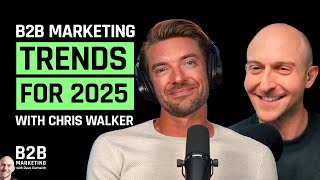
This is a YouTube video titled "The Future of GTM and Sustainable Growth with Chris Walker" containing a detailed English podcast-style conversation recorded in January 2025. The discussion features David Cancel interviewing Chris Walker, focusing on topics such as the evolution of go-to-market strategies, sustainable growth in B2B marketing, the impact of AI on marketing, marketing ROI measurement challenges, and the role of creativity in marketing leadership. The content is an in-depth talk rather than a casual conversation, with only two speakers involved.
The big macro shift is the shift from growth at all costs into, you know, whatever you want to call it. Sustainable, sustainable growth.
My guest on this episode is Chris Walker. You know Chris from LinkedIn, where he's been pushing the boundaries of B2B marketing for years now.
Because I work with so many companies at once, I'm able to see the patterns and the problems and what people are trying and whether it's working or not.
Today he's CEO at Passetto and he's my guest on the podcast. Finally, after a few years of being away, I finally got Chris back on the pod. We talk about the future of go to market, his thoughts on the role of CMO and what's changed versus five years ago, why sustainable growth is the only way forward, what role AI will play in B2B marketing. And I even got to ask him some personal questions about his own workflow and how he finds time to write, think and create. Here's my conversation with Chris Walker.
One, two, three.
All this stuff is. I don't know if it's LinkedIn. I've been listening to your podcast. I'm trying to stay sharp. You push me to stay sharp. You said. Tell me what you mean by this. You said. Some people think I'm wrong, but I'm really just early.
Great way to start. It feels like I've been that way my, like almost my whole career, especially as I've gotten more from, from the outside. I was just telling you before we got on, because I work with so many companies at once, I'm able to see the patterns and the problems and what people are trying and whether it's working or not and what technology they're buying and all these different patterns across 50 companies or 30 companies at a time. I can, I now have access to all their data and their finance and their CRM. And so I'm. And seeing perspectives across the executive team. And so I'm able to pinpoint those things years, maybe three, five years before someone inside might actually see it, I think. And a lot of people, yeah, sort of come at me for these ideas. It's been, I don't know, people call me a contrarian. I really don't see it that way. I feel like I'm just reflecting the truth that people don't want to hear. But yeah, I've been early around my, sort of my whole career on some of the things and I'm just communicating the things that I'm seeing. You know, some smart people like you see the same things, hear the same Things in communities see those patterns and there's a small percentage of people that are like, yeah, this guy's right. Like, I, I, I, maybe I don't see it right now, but I, I believe him. So that's how I think about being.
A. I want to ask you something more about like the feedback loop. I think you and I are uniquely exposed to this feedback loop, which does create an advantage and allows you to be early, but saving that for later. Just this is more of a, of a personal thing. And I think what's interesting to the is obviously people will know you from our, you know, there's a lot of overlap. This will be a very popular podcast episode. It's like a, it's like, it's like a, he's like feeding raw meat to, you know, this, just throw this by a cage, right. Like, it's going to be nuts. But, you know, with that, I think part of having a strong point of view comes with a lot of people who don't know you, don't like you and you get comments on, on social media. And I'm just curious because there's few other folks that are in this situation. I want to ask you this personally. Like, how do you, how do you not let that stuff get in your head? I see people trying to dunk on you all the time. The, Even when you're not trying to dunk on someone, someone sees. Thinks that you're trying to dunk on them. What's your evolution with social media been? You know, I see you in the, every now and then you, you can't help yourself. You do have to say something in the, in the comments. But, but I'm just curious like, what, what your perspective has been like as someone. Like, hey, I have a strong point of view. I'm going to share my way with that. With that comes a bunch of people who either interpret the thing, don't like you, don't like what you say, interpret things the wrong way. Like how. Where does that sit in your mental space? As I'm an entrepreneur, I'm going to build a business. I'm trying to take care of my personal health at the same, my mental health at the same time, there's a lot of dunking that happens. Where does that sit in your headspace?
To me, it's, it's become more of an understanding and an acceptance. Like I, I understand why people think that way. They don't have the perspective that I don't have. They haven't seen the data that I have. They haven't had the, the 50 CMOs tell them the truth. Under NDA, they haven't seen the finance data of what's happening at the company and how CAC is going up or whatever is happening in the finance data. They don't have the same perspective that I have. And so it's more of just an understanding at this point that other people, you know, don't have it. And then like for me it's, I've come to the, where I'm not making the stuff up. This is not my opinion. It's literally just like there, there's enough data to support this as a fact. You could write a clinical trial around some of the things that I say with all the data that's available. And then people have their own invested interests in the world being in a different way. Right. Maybe they sell, maybe they sell, you know, something that I've, you know, have enough data to say doesn't work anymore. Right. And so I, I can understand that perspective as well.
I have noticed there, there is a common theme that is that the, the people that are often the most antag. That don't like the things you say the most, they're often solo consultants for some reason. Have you noticed that trend?
Yeah, and it's like, it's like, why? Like, like. But because on the conversely, five years ago, refund labs, like there are many people that come up to me on the street. It happened to me in Tulum last week. Some guy was like, five years ago I was a solopreneur. Now I have a 35 person agency and all I did was just follow the same stuff that you were doing. And I'm like, that makes me happy, dude. Like, and so why are these people pushing back? I'm like giving you a clear opportunity to make your business more successful. And then yeah, some people will do it directly, some people will do it in post and it'll show up in my algorithm and have a very, I've developed a very clear policy. I've only done it five times. But there's a difference between having a debate, having a, you know, intellectual respectful debate versus being disrespectful. And when people get disrespectful, it's just a, it's an immediate block at this point. I just don't have time for that bullshit anymore.
I agree. It's not, it's not healthy. There's also this weird thing. I was listening to this podcast today, but with this, with this doctor, this woman, she's amazing and she was, she's talking about parenting. I'm, I'm dealing with something with my, with one of my kids right now and I'm trying to get better. Like anything, I'm trying to get better. I'm trying to be a better parent. Like, how do I deal, help my daughter through this, you know, drive. We're driving each other nuts right now. And, and she was like, you know, there's no room for nuance in the world that we live in today. And I think that is what's funny about marketing is like there's marketing as a craft, as a business discipline. There is so much nuance in marketing. And then like you throw marketing point of view and takes and advice on social media and there's no room for nuance in on social media. And so everyone, it just becomes this like this, this crazy thing. And I, I think it's also another example of like if you listen to what you say long form. Like I got back into listening to your podcast recently because I knew you were going. I, I kind of just cleanse myself other than doing this podcast. I'm like, I gotta just like listen and not marketing stuff sometimes.
Yep.
And so I, I learned through you know who I interview. And so I listen to your boss. I'm like, man, this is really good. And I think if a lot of people listen, if you listen to the hour long thing that Chris said about X, that would change your opinion versus if you just read the headline and the sound bite, you gotta hear the tone of voice, you gotta hear the nuance, you gotta hear the backup. And so it's like sometimes I think the, the short firm stuff actually does a disservice to the actual. Like if you took the time to listen to the whole thing, you would have a different perspective.
Yeah. And then to back what you were saying, like I'm starting to feel like it's time to like rethink the, the, the box that of marketing. Like I think that there's a bunch of stuff thrown in one category that is poorly defined and there's too many responsibilities. Long term, short term, tactical, strategic product pipeline, all under one thing. I just creating a lot of confusion.
That's later in my notes. Producer, Producer. Dave, Save it all. So, so we got through that. Another thing I want to ask you about is the roi. Talk about the ROI of having a podcast and being active on social media right off the bat. And I want to lead you in a little bit because I heard you talk about this recently and you talked about how it's given you such an advantage, whether it's a podcast or a live event, not. Not to create pipeline or sales. Obviously that is a nice benefit if you can generate sales from your podcast or social media or content. But it's. And this is so key. It is. It's given you the ability to figure out a business's strategy and shorten the feedback loop. Instead of having to, like, spend six weeks coming up with a survey, trying to send out a survey, getting 500 responses. Can you just talk about that from a. As a marketing strategy for people listening to this? The just the value of the feedback loop and how you talk so passionately about, like, the strategic insights you get from this feedback loop.
In 2014, I worked with a consultant named Andy Midwin. I was a, like, product manager at a $10 million industrial company. And he came in, he taught me a lot more about marketing than just running ads. There's this whole other thing which is like, what product are we going to build, how are we going to price it, how are we going to competitive position? And how are we going to understand what people need? How are we going to test that? How are we going to beta alpha, launch, revise new features, roadmap? And there's like all this other underlying stuff. And so I remember going to trade shows and building like a survey and like spending more time not trying to sell the product, but to understand what do people want, what are we missing, how do we change the messaging, what on the brochure needs to be different. At that point, the only time you had to do it was the five times that you went to a trade show. And so much has evolved in the way that you're able to access your customer and that you don't need to build a booth and for people to show up now. You can host your own event, you can have your own community, you can have your own zoom calls with. With prospects and things like that. And so, and I didn't think about this initially, but the way that I've seen it now is that, like, the value of the podcast is, as you mentioned, just not about the pipeline that's created. Like, the benefits that I'm seeing most right now is like, all the objections that come up when people ask questions, like the roadblocks that people say, like, hey, I want to implement this, but is the roadblock I'm running into the feedback and the insights you get from your customers help you shape your message, your product, how you help customers implement, how you structure your organization, how you price it? And so there's just so many benefits around, around those aspects that I, I find super valuable.
This is like, I often think about, I use this example a lot. I'm like, I, I used to be obsessed with like old school advertising, direct response, like Bill Burnham, you know, that type of stuff. Like the creative that was, it made them, you know, like there's like ridiculous ads, like your, your doctor's favorite cigarette was like the Lucky Strike ridiculous. But, but I like understanding some of those principles. And I, I would often, when I talk about this topic, I often think about, man, do you know what? That generation of marketers, they would kill to have the insights that we can get from like writing a post on social media and getting instant feedback. And I think this is something that can be true at any scale. Obviously for both of us. We have lots of followers on LinkedIn. You, you know, have an email list. I have a community. There's, there's, there's a, there's a substantial audience.
There's.
But I think you can do this in smaller doses. And what you have. I used to think social media used to be like an afterthought as a marketing channel on a team.
Now it's kind of, it still is, which is crazy.
Look at anything in the world. Social media is how the world communicates. And that is true whether you sell hoodies or, you know, enterprise software politics.
Like, they're like the most powerful things in the world have like happen through social media. Yeah.
And I think it's not, it's not always a direct response thing. It's not like, hey, I posted a link to my thing and you know, people sign up for my product demo. It's like the ability to test messaging. And so we did this in the early days of when I was at Drift. We used the CEOs, like LinkedIn. We used social media from the founders. We got a lot of that way. But now I'm doing this in a different way with Exit 5. It's like the same thing we were doing seven, eight years ago. I'll give you an example to build on something you said there. We did our first event this year. I wanted to not pay a lot for speakers. I wanted to not hire famous people to speak at the event. I wanted to put on an awesome event. And so literally I went to our podcast analytics and I sorted by most downloads over the last year and I went through, I picked the top 10 episodes and I reached out to each of those speakers and I said, hey, Chris, you were one of the most popular speakers on our podcast last year, we're doing an event in Vermont. It's in September. Would you Want to speak? 9 out of 10 said yes because they already know us. They already have the relationship. And the content of the event was amazing because I already felt like I test. I tested it, right? And it's like, if you can have these. These little feedback loops in all of the parts of your business, so that's more context for you maybe to get. Get your idea back there. But I wanted to ask you, like, how would you. Okay, so. So give me that.
And then I just side benefit that I've noticed most recently that I think people really underappreciate is that I've actually found, like, my podcast content to be Most effective for GR&NRR retention and expansion. And that, like, when your customers are listening to your message and then, like, you know, you got the CMO and they're like, sharing it now with the CRO, and then all of a sudden you have an expansion potential and more people in the organization are bought into the. The theory and the message, and all of a sudden they're staying for longer and buying more stuff and happier and telling more of their pe, more of their customers and their friends about it. Like, that benefit is just not tra. It's not very trackable. Like, people just tell. My customers are like, hey, I was listening to that episode of the podcast. I shared it with my, you know, my counterpart. It's been, like, amazing. They feel so much more aligned now. It overcame that roadblock. I think that people underappreciate all of these side benefits aside from pipeline creation.
Well, there's just something about the. The format of, like, un. You know, structured but casual audio. You know, like, I been listening to Tim Ferriss for 10 years. I feel like I know the guy. Right? I'm sure you have people in your audience the same way. They've been listening to Chris Walker for seven years on his podcast. They feel like they know you, and that creates a connection at the same time.
And.
And you can become a source of information for them. So how can we help other people? Like, I think it's easy for somebody to be like, oh, yeah, well, you know, you guys have huge followings. Like, you can post something on LinkedIn and get a million comments, or you can send your email list, like, how do we make this possible for. For other people? Maybe you don't have a huge audience, or you're at, like, an unknown enterprise software company. Is that a false belief that you can tap into the benefits. In, in the same way. How would you help somebody do that?
Everybody starts at zero. We both did.
What was your, what was your zero? When was that?
I mean like I had 900, 900 followers that I had collected from 2008. Whenever LinkedIn started to 2019, I had 900 followers. When I started like actively posting on LinkedIn and giving it a real shot. Our first live event that I did at 17 people there, I did my first in person event. 10 people came. I had like a whole thing set up in Miami. We rented a space, 10 people showed up. Hopefully that's like encouraging to people to. And the, the benefits that I felt are relative to the scale that you're at. Like at that point I said nobody knew me. I had like whatever, three or four customers. I had two people on my team. I, we had no money in the bank. And just going there and getting one more customer, that's 25% growth. You know what I mean? Like it's all relative to your size and scale.
Yeah. Or having to test your. Okay, only 17 people showed up to that live event. But like they stuck around, they stayed. Having to test your pitch and test what you're talking about with those. That's 17 more people than you got feed feedback and data from before.
And how do you, how do you expect hundreds or thousands of people to follow you and listen to you if 17 people won't? If one person won't. Right.
So also I just, I've seen, I've seen you do this, but for me, something that's like awesome about. We've tried to like consciously evolve the Exit 5. You know, once we started building Exit 5 as a real company, they're not like Dave's hot marketing takes anymore. It's like we're trying to. I'm basically like, I think I'm, I'm a good host. I love interviewing. I'm a good like party. I'm a good party host. So I have CMOs and other people on my, you know, at my party. And then we, we're like a curation business instead of a creation business. Like we, we share their takes. Right. However, when I'm hosting, I notice if I say something, I, I told, I made an analogy. Like I use an analogy. I'm sure you do this the same time you use analogy. Even if it's only 17 people, the chat lights up because of a joke that you said or something that landed. It's like truly like the, a stand up comedian going to some like rinky dink venue to test out their things and you're like, like now I'm doing it right now. I make a note and I follow up that with that later and then that becomes like a fleshed out perspective. And so I think there's also some value in you having to stand up and turn the mic on and just go for an hour.
It's a creative outlet to me. Like it, it forces you to be there and be creative and try new things. Like that happened on my event like four years ago. The MQL hamster wheel came out there and it was like our leading message. People would say it all the time. It was the number one thing they started sales conversations with with. It came from just like a random joke on a live event.
Love it.
Love it. Okay.
If I were to start an agency, it would be a social, it would be a B2B Social media agency because I think people don't know how to do it and don't have, don't know how to think about it the right way. And it's still very, this is the value of it. You also get pipeline from it. That is like a nice also benefit is that people are going to buy when they show up in your self reported attribution. But we could talk for hours about this. All right, next, next topic. All right, so speaking of, you know, some people think I'm wrong, but I'm really just early. Five years is a lot of time, especially in, in this industry. You've said, you know, five years changes a lot. I give different advice now than I did five years ago and that's a good thing. Let's talk about what, what's different? 20, 25, what, what has changed? How do you summarize the things you're talking about right now as it relates to what's, what's different. And our audience is B2B marketers. They want to be, you know, their current marketing leaders or future marketing leaders. So that's your, that's your lens.
The big macro shift is the shift from growth at all costs into you know, whatever you want to call it. Sustainable, sustainable growth. I don't really call like calling it profitable, efficient growth because many also burn and be efficient. But that shift. Right. And so the first three years that I was talking about it like you could have silos of marketing and SDRs and sales and partner and divide the credit and in a simplistic four funnel model and not have any finance data coming in and just dump a couple more million and raise 18 months later. And didn't really matter if we got 30 customers or 20 or if our CAC payback was three years or two years, we just keep going. And then there was a big shift that happened in 2022, 2023, where the revenue multiples of so software companies have fundamentally shifted, which requires us to be able to be a lot more efficient in how we think about our overall go to market strategy and how we integrate and combine the functions of marketing and SDRs and sales together to make one machine that delivers customers in a very efficient and sustainable and scalable way. So I think that's one big thing that the market still hasn't adjusted to. Finance is demanding that we cut costs, right? So they're cost cutting, but they're not getting more efficient. More efficient means making every dollar work a lot harder. When you spend a dollar instead of getting, you know, $1 back, we need to get $4 back, right? And then if we do that, then we spend the same amount of money and we get four times as many customers. And like, that's great for everybody, including shareholders, even the people that have 10,000 stock options.
So is, is this related to like post? I'm a brand man, I like to tweet and write on LinkedIn. I'm not a, I'm not a CAC metric. You know, this is your, this is your hair, this is your hair. But is this like a 20? This is post. So like the bubble, you know, there was kind of 2020, 2021. Is it post, the, is it 2021 to, to now when this happened, like the, the, the, you know, flooding VC market growth at all costs. Like, is that what changed?
What fundamentally changed is how investors public, public investors value software companies. That used to be a lot higher and now it's a lot lower. And that compresses down into the private market and it changes how much you can spend to acquire a customer because that means it forces how much you're burning cash and how frequently you need to raise. And then at some point, like people get to the end and the founders don't even make any money, right? That happens at a lot of VC funded companies. So I think that's, that's one major.
Could you imagine, by the way, as someone who started multiple businesses now could you, could you imagine going through all that blood, sweat and tears and not making a dollar on.
And you don't take any distributions either. You know what I mean? That VCs don't allow you to take. You mean, maybe you take secondary, but you don't Get a distribution every quarter like you do in a company like ours. And then all of a sudden you sell your company for 50 million bucks and you have 100 million in preferred returns and you literally make nothing. So that's, that's one big thing. Another thing that I've been obsessed with recently is just like the evolution and this, the speed of AI. I think that people are right. It's almost like the, the, the first version like almost when like the Internet happened. People take the, take the phys. Physical world and they just try and copy it into this new world with the Internet. So people are doing that with AI right now. Like how do we be in it? Take our SDR human and make it an AI sdr. And I think that's the first fundamental layer. But over time I think people will appreciate all of the, the additional capabilities that get created through this technology. So I got up excited about that.
I'm gonna, we're gonna come back to it. I'm updating my, I'm literally, I'm literally live noting. I also sent a screenshot of us to Eric at Hatch and he just had exploded. So, okay, let's, let's, let's, let's talk about, we're gonna talk about AI, but on this growth, like so the shift in growth at all costs, okay, so it changed how, you know, investors value companies, yada yada. I heard you talking about how marketing measures the effective effectiveness of marketing. And so maybe I'm translating, I don't know if I'm translating this right or wrong, but you've talked about basically like how it impacts how we calculate things. Like CAC as an example. So like you spend a hundred thousand dollars on a campaign, you make 300 grand back and everyone's like woo. But you're like kind of raising this flag. You're like, hold on, hold on, hold on. If you actually go and unpack the actual costs inside of the company, what is the marketing headcount? What is the sales headcount? What are all of the expenses? Is there something in there where you're, it's almost like you're, you're saying like we want to measure, we need to get back to measuring these things. Like a lemonade stand. Like truly, like I bought the lemons, I got the table, I got the jar. Like is that, is there a thing, a topic here that you've been getting at 100?
Like if you, if you're at the lemonade stand and your lemonade is a dollar and the sugar costs 50 cents, and the cup is 30 cents and you stand the stand that cost this much money. And all of a sudden you get the dollar for the lemonade but it costs you $4 to make it like you're sitting at the lemonade stand losing money and, and for your time. And that's what happens in, in B2B SaaS companies right now. And so the, there's one best practice and it's an easy example because a lot of people do it where they take their, the Google Ads manager and the Google Ads manager says, wow, we got an, we have a 3x roas on our Google Ads. So we spend you know, a million dollars on ads and we have $3 million from some attribution model to say that we got $3 million in revenue from that. And they're like yay. And then, but you didn't include all the other advertising. So now it's down to a one and a half row as and then the head count and then the agencies and then the consultants and the SDRs and the sales team and then all the technology and then the leadership and the sales enablement team and rev ops and it's like what now all of a sudden we have a five year CAC payback and marketing celebrating in the corner. And so yeah, and so I, and.
How does that get, how does it get fixed? Like it just, it's like the wrong way of, it's like everything is, is measured. It's just not a true statement of like where the money is going across the company. How do, how do we fix that?
The guardrails placed on the investments that happen through marketing, like marketing is the one who's responsible right now for saying whether their investments are working or not and for creating what the benchmarks are. Finance should be delivering a lot more strict and stringent guardrails around. We spend this money, this is how we measure it. This is how, this is the allowable range that we're in. Which would flag most of the investments as unacceptable at the moment. But because finance doesn't have a true understanding of go to market, they're not able to properly scrutinize them. Another big shift that happened, it's been going on for years and a lot of people are pumped about like marketing mix modeling and multi touch attribution and things like that. That back in the day when it was single touch attribution, every dollar in revenue or every dollar that you spent could only get credited to $1 in revenue. And now with multi touch attribution you can take $7 that you spend and can give all $7 credit for the same dollar in revenue. And so it's very unclear about what is actually working or not. Maybe I can see you a little bit confused. Maybe you didn't, maybe I didn't explain that properly.
I, I, I, I'm like a, I'm like a brand marketer. I make the T shirts and the pens. So let's, let's explain, explain the $1.
And the $7 single touch attribution. You get a do you, and you would have to say that was the Google Ad or that was the LinkedIn or that was this thing. Right? Okay. Or the SDR. You had to make a choice, right. So you had no double counting. And now all of a sudden with multitouch you get the $1 in revenue and then each individual person, oh, the event did it. Oh, the Google Ad did it, the LinkedIn ad did it, the SDR did it, this person did it, this technology did it. And all of a sudden you have all these tools with their individual reports all taking credit for the same dollar and all of a sudden it costs seven times as much to get a customer.
The classic example of like someone you know in B2B has an amazing time at your event, then go to Google, search for your company, end up, you know, getting the ad or the organic search query gets credit for that when it's actually a way to, you know, there's, there's some percentage of all those things.
Yeah, yeah, I feel the need to clarify always. Like I'm not against multi touch attribution. Just the way that it's used in companies is totally flawed.
Yeah, it's all right, dude, no one's going to listen to that nuance in detail. They're just going to throw, they're just going to roast you for, yeah, they'll.
Probably just buy it.
And so, and so we got to this point because it was like kind of growth all costs and it didn't really matter like what the true CAC was or like what the, you know, cogs inside of a company are like how did we get here specifically?
All that mattered, all that mattered was the blended cac, right? So like finance is up there saying, okay, we have a three year CAC payback or whatever, it's all good. And then they just start dividing. And then we raised another round and it was easy and we did it at 100x revenue and we'll just divide more and we'll to spend more. And so the revenue leadership has never been Forced to get take a hard look at each dollar and say what are the things that work hard and what are the things that suck? It was just put more on each thing. And so it's no fault to a CMO or a CRO, they, A CRO is easier because they have PRP targets and things like that. But for marketing, they've never been challenged to look at this in this way.
What is prp? Is that like trp?
It's like TRT per, per rep productivity, like how, how much revenue a rep brings in. And so people haven't been challenged around how do we decide? Like if we can't just spend a million on everything and we have to be very strategic around we only have this much money and this many things, we can't do everything. How do we decide which things to do? I think most people struggle with that concept because they've never been forced to. At least CMOs that have been in, in SAS for the past 10 years haven't been asked to by the board or the executive team. Yeah, for the most part.
And so, so ideally this would be fine. Like finance has strong guard. Like finance gives the marketing team strong guardrails and the marketing executes within those guardrails.
I think it would be really beneficial to and director level people to, to say this is my target. Right. Like, and usually they're like four or five times above the target and it's going to force them to be creative and innovative and try new things and do things. And I think that a lot of people would appreciate that. And maybe they do have targets. They're just not measured or, or, or thought through in the right way. So that's sort of what we're, what we're trying to do at, at Pasetto, which I, some people think over here trying to, on marketing. I'm actually trying to empower marketing because when you do this and you deliver the right ROI and all of your investments, it becomes super easy to do the podcast, to do organic social media. Right. Because it costs not a lot of money and it drives a ton of results.
I was going to ask you about that actually, but you said something now like, so you can do things that are creative and innovative. And I'm over here on my own podcasts and I've gotten reviews of this podcast before. So I was like, this is, I can't believe this guy was a CMO somewhere. He doesn't know anything. Well, you know what I'm good at, Chris? I'm good at brand, I'm good At product marketing, I'm good at positioning, I'm really good at creativity and innovation and, and you know, getting people's attention. Isn't that what you want out of marketing? Like, we've gone so far in the other way. It's like, wait, no, the best situ. Do you want me being the finance? Like, do you want me spending all. Do you want the cmo, do you want the head of your marketing organization to spend all their time figuring out like the blend of spend across, you know, what is the headcount of this and what is this? No, you want me coming up with good ideas to help grow the business and move us forward. And so real. And the reality, what the reality. Reality is if I could have a partner like this in my company or externally, that's going to allow me to fly. You want me to be in that position. It's like you want your engineers to actually write code, not spend all days in meetings talking about justifying the expense. And so I, I think it's actually like a one plus one equals three type of scenario. Like, let me be creative, let me be this. Let me, let me be the M in the cmo. Instead of like half of my job is spent in finance, which that's not where you want me. You want to put me in a position where I can win.
Yeah. And just like the way that it's structured right now, what like, prevents creativity, prevents doing new things like it. It actually forces you to just do these small little things, Google Ads, performance marketing events that you're able to measure that people can't actually justify the roi, but they've accepted in their mind that we should, we're a cyber security company, we should go to 15 events, we should spend 250k on the. That's just what cyber security companies do in marketing. And so it's like.
Right. And all this stuff is even more important now than ever because of what you talked about, because of AI commoditizing. Like AI is basically commoditized shitty marketing.
Right.
And so I actually think of it as an advantage. It's like all the things that are just like table stakes, that's just going to get done by AI. And so that allows like the actual creative and strategic marketers to be able to think of.
More from Dave



Asynchronous work isn’t a trend. It’s how teams actually get things done without burning out.

AI is changing product marketing. Here's how top B2B teams are scaling without cutting corners.

How Product Marketing Is Evolving in 2025: Lessons on AI and Leadership with Jennifer Cannizzaro

Why referral programs look different outside of SaaS (and why that’s a good thing)

The secret to scaling dual GTM? Give every marketer ownership and get out of their way.

From content to CMO: how Jess Cook made the leap (and built her first budget from scratch)

Leading B2B Marketing for the First Time: Strategy, Budget, Content & Team with Jess Cook

Most B2B advice is built for SaaS. But what if you don’t have demos, PLG, or lead goals?
