The Lead Nurture Email Playbook: What Works and What Doesn’t
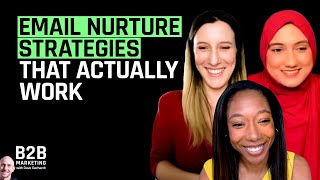
Danielle hosts Sophia Silva, Summer Owaith, and Sherry Otto to break down real lead nurture emails. They show what works, what fails, and why personalization and human connection matter more than most marketers think.
I think even more than us thinking about it, lead Nurturing, it's really people nurturing.
Right?
We're trying to get more people into our brand, more people interested in our product, and help more people solve those problems that they have. I think a lot of the times when we're thinking about lead nurturing, we forget that there's a human on the other side of the screen. We make it very robotic, very high level, very impersonal. I got a lot of weird lead nurturing emails so far, but I think it's all about making them personal and kind of telling the person on the other side, hey, we're here. We can help. If you want us to help you, we're here. And here is something in the meantime for you to think about this topic and how you can solve this problem that you have. So, to me, it's all about delivering the right content at the right time to the right people and making that in a very human way.
Hello and welcome back to the roast. Are you guys still here? Let me know in the chat. I think we still got a lot of people live ready for our next session on lead Nurturing. Hey, Vince. Hey, Emily. Hey, Julia. Hey, Amanda. Okay, that's as many as I can do at once.
This is awesome.
All right, so this is actually our first session where we are roasting actual emails. So I'm super excited about the experts we have today. I've known a couple of them for a while and have just, like, admired their opinions on email. So we really did get a bunch of the best people in b2b email together today, and some came highly recommended from some of our other experts. And then this panel is brought to you by reachdesk, who hopefully a bunch of you just got a nice little coffee from them. So I'm very excited. A couple of housekeeping things. If you're just joining us, if you want to throw your Q and A, any questions you have in that little tab right above at the top of the chat says Q and A. We will able to get to those probably towards the end of the session if we don't get caught up roasting, because that's obviously the best part of the session, right? So now I'm gonna do a little intro on our experts today. So excited. All right, cool. We have Summer Owaith. I don't know if I pronounced your last name right, Summer. I'm sorry if I didn't. And then she's the founder of Emails Done right, which is just an awesome resource that is. I've learned A ton from when I was first starting. Happy to be like, she is the person that I learned email from, and her newsletter is just freaking awesome. She has strong opinions. She's going to be spicy today. I gave her permission, so I'm very excited. And then we have Sherry Otto, who's the founder and CEO of Growth Reins. I'm all tongue tied today. I'm a little nervous, you know, growth lane Strategies, another email queen that we have with us today. She also has strong opinions, especially lead nurturing. So I'm very excited about that. And then to round out our little group of experts, we have Sophia Silva. She's a marketing, marketing manager at Reach Desk. So I am so excited. I'm going to bring bring them on stage now. We're going to kick off with a little panel, little discussion on lead nurturing. Like, what the hell is it? What do we define it as? As marketers. And then we'll get into the roast. All right, I'm bringing you guys out now. Hello, my experts. So excited. Ooh. Summer, you just got a new subscriber to email. Done right. I see it in the chat.
I love it.
Awesome. Also, does anyone have a better setup than Sherry right now? Like the cameras, the mic is crisp. The chair looks great. I love it.
Awesome.
Thank you guys or ladies so much for joining today. I gave you, like, a little intro, but do you want to just, you know, say a little bit more about yourself in the chat? Summer, you want to go first?
Yeah, absolutely. Thank you, Danielle, for inviting me to this roast. I have a thing about picking email fights, which is the entire purpose of the emails Done right newsletter. I have not met an email that I cannot improve. And my something that I joke about is that you could wake me up at 3am and put me in front of a computer screen and tell me like, hey, this is an email. Improve it, and I will do it with my eyes half open. That is how much I love about love emails. And if my husband is to be believed, I talk about them in my sleep. But he hasn't given me proof yet. So that's, you know, actually isn't awake.
She's sleepwalking through the crisp.
It's all a dream.
Absolutely.
Sherry, you want to tell us?
Hi, everyone. Danielle, thanks for having me. And I'm so excited to get into this with you ladies today. Sherry Otto. I came from a background where I worked exclusively, exclusively in the email channel at HubSpot, actually. And then now leading a company that works with B2B, companies that really take content and figure out how to, like, turn that into revenue. So full funnel and email is at the core. And so how do we use messaging, behavioral science triggers and understand what it looks like to move contacts from top of funnel to bottom and actually close them? So that's what my company is about. I'm so excited to dig into these emails today.
Great. Sophia, you want to top us off?
Yeah, of course. Yeah, I really, really want us to help you. We're here. And here is something in the meantime for you to think about this topic and how we, you know, how you can solve this problem that you have. So to me, it's all about delivering the right content at the right time to the right people and making that in a very human way.
I would say.
Yeah, I would agree with that. And I think, like, you know, we're all marketers. I'm sure we have like a little bit of a judgmental eye when we get ourselves into lead nurturing sequences. I know I do. Like, we listen and we judge. And I think it's something that as marketers, we may be getting our heads a little bit about. Like, oh, we have to send emails. We need to do like a lead nurture. And I've definitely made a ton of mistakes. So I'm curious, like, what mistakes do you see most often? Like, what are the kind of, like, common little pitfalls and traps that we fall into when we're thinking, like, oh, I have to go do a lead nurture session.
Yeah, maybe I can. Oh, tomorrow. Do you want to go?
Yeah, go ahead.
No, no, no, Sophia, go ahead.
I think the biggest mistake is thinking about us as a brand first and not the person that's going to receive that email first. I see a lot of emails where it's like, we can do this. We have this content, we just built this resource. We're going to be here. What about the other person? A lot of the times you're going to read those emails and be like, yes, but why should I care about this? So I think it's the fact that you need to put the person first and then, okay, you have someone in this role, in this type of company, in this type of team might have problems like this and this and that. And that's something that we can help by doing this and that, but always leading with the person first. And I think another pitfall, and I think this is a very hot topic as well, is to do with AI. I know we're all about scaling AI and using AI to the best advantage, but sometimes we're being a lot robotic and forgetting about the human part. So I would say have AI is almost like your assistant, but not as the person. Person doing the talking. You know, leave that to the actual human, I would say. But yeah, just to two of the big mistakes I see, you know, people doing.
Yeah. So to build on what Sophia said, one of the biggest pitfalls I see B2B SaaS companies make is treating email like a marketing tool rather than a communications tool. I mean, at the heart of it, email is a mode of communication, and it is a privilege to be given permission to email people, which in this crazy hyper connected world is still. Still somebody's very private corner of the Internet. And so we got to treat it with respect and we have to treat it like a conversation. But a lot of B2B SaaS companies do not do that.
No.
I love the piece about respect. That's so true. Because we're so focused on, like, our own goals. I feel like, where it's like, oh, I gotta get clicks through to this email. And it's like, like, why should someone click on it? Sorry, Sherry. Go ahead. You have an answer.
I'll be ready to go.
Now.
I'm going to underscore what Sophia and Summer said. And I think one of my biggest pet peeves is the. The language of I want to announce this or my company just did this or we are.
Yes.
Like, why do we need to know your announcements? I have a pain point. Do you want to talk about me and my feelings and my needs? Then I'll listen to you. So we can start switching those pronouns from me and my to you and your. We can do a little bit better. Even that simple switch to you and your will do a world of difference when it comes to your email engagement rate. So I love what you said, what you both said about that as well.
Yeah, there's a great little, like, I don't even know what it's called, like, tool strategy. Something that I read in Anne Hanley's book. I'm just like, shouting her out a million times today. Everybody writes, but it's like the so what? Test. And it's like, we're thrilled to announce our new email tool. And it's like, so what? And it's like, because it helps you write better emails. And it's like, so what? And you basically keep going until she. Her line is so funny. It's like, until you get to questions, like, best answered by philosophers, but it really helps you get out of that. Like, we're thrilled to announce to like, why should they be thrilled that you're announcing this?
Absolutely love that.
I love it. I literally have it like screenshotted. Yes. Okay. I love this. I love all of the notes in the chat. The so what test. And Quinn has a sticky note, the only one on their computer that says no R because all about the customer.
I love that.
I love a good sticky note. Amazing. Awesome. All right, cool. So should we get into some roast? What do you guys think in the chat?
Roasting?
Yeah. All right, cool. We're going to start. So I'm going to bring up my little deck. All right, cool. So how this is going to work? I'm very excited. Hang on, I got a little something for you. We are going to get a little bit of info about the company, the email that's been sent, the subject line. Then we're going to throw up a screen shot and we're going to go through and talk about what works, what doesn't, what our initial reactions are ready. All right. Daniel says the Kohl's are ready to bbq. So we are ready to roast. Very excited about this. And then what we're going to do and you guys in the chat are going to do as well, we're going to rate it on a scale of 1 to 10. One is like never send another email again. 10 is like no notes. This is perfect. Samara's going to. Summer is going to dream about it in her sleep tonight as the perfect email. And then each of you are just going to give like, okay, what's the one thing you would change about this email? So it could be a little small to read on the screen. So I'm just going to pop in the chat for everyone following along. If you want to follow along, maybe be able to see a little bit bigger. Just pop the link to this deck in here. So awesome. If you want to follow along that way, if it's too small for you to see on the screen. So first up, we have an email from Anatech Solutions. This is an email that targeted CQOs, which is. What did I say it was. Customer Chief Quality Officer, Chief Quality Officer and healthcare quality leaders at a director level and above. These recipients had already downloaded a white paper syndicated through a major healthcare publication. And this was the third, third in a string of six follow up nurture emails. And we got some of the stats, which is kind of crazy. This email had zero opens, which we think is wild. And it may be because of the subject line which is optimized patient and member care, um, solutions At a glance. So without further ado, let's bring up the actual email and over to my experts, let's give me your. Your gut reactions.
Okay? Oh my God. All right, can we go a slide up? Because I start right from the very top. Like before I even open the email, there are certain things that I notice. And the subject line, I mean, I'm not even going to get into what the subject line is, but for the love of God, stop using capitalization, right? And use sentence case. Make your email subject lines an entire sentence if you have to. Because this subject line is screaming a corporate gimmick content. It is not telling them what it is and what's in it for them. It is not telling them why they should care. And this subject line is a classic case of, hey, this is something we put together and you know, we think you would love it, but they will obviously not. So, yeah, let's start from the subject line, guys.
What do you guys think of the subject line?
Yeah, the subject line is really vague. And as we scroll back to the email and go back, you can see that it's not specific to what the goal of this email is. But I want to take a step back further going backwards. The fact that this email guys does only has like has zero opens before we even get to the subject line. Hey, did this email even land in people's inboxes? Is this a deliverability issue? Is this a tech issue? Did it get into spam? That is my first. That's the first thing that's going up. Is this a tech issue? Because zero opens is a major problem in any B2B business. And all hands on deck needs to figure out what happened, why no one is getting opening this email. So that's what I would say. But I love like the casing and then we can get into some of like the specifics here.
Sophia, what do you think?
No, I mean, as soon as I saw zero open rates, alarm bell start ringing, right? Either if it's not a tech stack issue, if it's not a deliverability issue, please fix that subject line. Because if you didn't get any opens, it's on a subject line. It's like the first part you need to fix. So again, even before going into the actual body of the email and everything that else that is wrong with this email, it's the subject line. That's.
I just saw something that could explain the zero open rate they are sending. They said it is a series of six emails sent across three months, which means you're Sending one email every two weeks, that is not a nurture sequence. That is a we're popping up to annoy you sequence. You are not staying on top of mind. You are that little annoying B2B SaaS company that only wants something from them and pops up every now and then to clutter their inbox. So at the very least, if it's a specific nurture sequence and it's an automation, you need to be sending two emails a week and be. And wrapping it up in three weeks. If you are not engaging them in three weeks, move on. Do something else.
Yeah, yeah, yeah, for sure.
Yeah.
What's. There's some gold in this one that I'm feeling like they're not tapping into.
So the folks.
The folks actually just downloaded a document, a white paper, right? But that white paper, that's the action they took. They took a really important action because white papers are not just like a quick read, right? So there might be more in the middle of that funnel. So, like, if they're doing some important action, maybe the subject line can be that tagging on and referencing that specific step that they took. And then this infographic, it looks like, is like the next step. So it's your perfect companion in that second part of the first sentence. The perfect companion. So I like that it's kind of tagging their action on downloading, but we don't get that in the subject line and then we see where. Which is what we just talked about. Maybe it's like instead of saying we're excited to introduce. That's great that you guys are excited, excited. But this is about the customer, so stop and change to you. Hey, you get access to this infographic and here's what you can do with it based on your previous action of downloading the white paper. So that's kind of how I would rephrase that.
What do you guys think? Yeah, they need the context added here because that, like, think of like the person getting this. Like, I always think, like, you're probably context switching a million times a day. Like, I don't. I probably don't remember that I downloaded this a month and a half ago. Yeah, right.
Yeah, exactly. That's it. I think leading with that is also a mistake because people will read this and be like, what white paper are they talking about? You know, So I think it should. It should be flipped. It should be, you know, kind of either remembering that they've done that and why they've done that, like, what is the pain point that they're trying to Solve remove that little image infographic, weird thing on the right because it doesn't make sense to be there. No one can read that. No one will care. If they're wanting people to action and to see that, then remove that. People will see any way if they're interested and then just like lead with the problem and not with the hey, you downloaded this. People don't care. They don't remember that they did. So.
Yeah, all right.
I mean I feel like I keep, I feel like I keep focusing on everything that happened before this email was sent out. Point being you've, they've already done, like Sherry said, a big ask. They have downloaded a white paper and now you're asking them to download something again. If you are kicking off and a nurture sequence based off of a big download like a white paper, your entire nurture sequence needs to be about that white paper. Nobody reads a white paper in full. So like a nurture sequence is your opportunity to get that information that was in the white paper out to those subscribers all over again so that they pay attention and make your email copy relevant to them. Like, hey, here's why you should care about this bit of information that was in the white paper, right? And so from a copy perspective, we've already covered that. It's using where the dreaded R. But also it's a well organized email. If you just look at the email, right, there's plenty of 5 space. They're using bullet points. Although like my pet leave at bullet points, it needs to be three or five unless you are listing stuff. Right? So like that's a minor gripe in the grand scheme of things. But enhanced patient member safety and quality, like why should they care? What does it do for them as medical professionals, right? What how does it improve their day to day life? So like just change the lens a little bit and then again like this infographic, download the infographic if you're interested in this information to like why should they, where can they use this information? Give them a printable version that they can then give to their juniors or pass it around in a meeting. Make it visual for them in ways that they can use this infographic apart from just downloading. And so all of this goes to beyond like why are we sending this email and what do we hope to achieve with this email? So I always say email marketing, like copywriting and email is just the last piece of the puzzle. You have to figure out so much more before you can write copy.
That's a really good point. All right, scale of 1 to 10, where are each of you? And then in the chat, where are you? On a scale of 1 to 10, one is. Nor an email. Again, 10 is amazing. No notes. I don't think we'll see that. But we have a lot we can improve here. So give me your rating. And then one key thing you guys would improve.
Yeah, Mine would be a 3 out of 10. I don't think it's the worst email I've ever seen, but it's definitely not the best one as well. And then I think obviously besides the subject line that we already know, it's not really that great. I would just change the script on how the email is structured based on just the white paper thing. So instead of leading with that, leading with the problem, remember you downloaded this. Here's some more, you know, content that can help you figure out the answer to X, Y and Z and why you should care about it. So just flipping that a little bit. I would say I'm going to give it a four.
I'm going to be a little bit more generous, but just because I like the clear button that we want them to click. And I actually do like having a graphic or a visual in an email. I don't know if it would be like the entire thing, but I like things to feel tangible, so. But I agree with what Summer said about like the bullets. And like, okay, what's the point of that? And what you said Danielle, about, okay, so then why like, well, then what's the point? I think helping what would help that in the fix would be with some of those bullets. Because a lot of us are going to put bullets in our emails, but make sure you're asking yourself, yeah, like maybe. And maybe like the 3 to 5 instead of 4, but ask yourself the question or try to fill in the blank so you can. So that it feels more like they can do something that's more usable and practical for them when they're reading this. So instead of saying enhance patient some enhance patient member and safety and quality, so you can do what? So it can help me accomplish whatever goal. And that's kind of going along the lines with partnering their pursuit to complete something or do something. So making it more tangible in that aspect is something that I would work on to improve this email.
I feel bad about saying this, but I'm going to give it a zero simply because it breaks every single one of my unbreakable email rules. And that's not to say that it's not easy to flip this email around and turn it into a decent email. But as it stands right now, now it is a solid zero. I give it a minus five. You gave me permission.
I did, I did, I gave.
You were honest.
I. No, I love it. And that's why we're here. Like, marketing is really hard, right? And I definitely sent some emails that looked like this when I was first starting out because that's like you what you think, you know, you're like, oh, I like used to put on this like hat where I was like, this is my email hat. And I would, you know, write in a certain way because I thought that's how people wanted to. To be known or wanted to be emailed. Because that's what you see. You see so many of these examples not in emails. Done right, obviously.
But.
All right, cool. Let us move on to the next ones. I think we got some really tactical takeaways there. I think. Samara, your summer. I'm sorry, I don't know what I'm reading it and Summer, I respond to.
Every single pronunciation of my name.
Don't worry what you said about like having it in the context of like, there's so much before we even get to this email and like stepping back, seeing the forest or the trees of like, where are they in their world after they've downloaded this white paper. I think that's great advice. Awesome. All right, here's our next one. It is from Paddle they are sending the audience is SaaS companies executive Personas goal of their email is to nurture to MQLs. This nurture utilizes content from our previous webinar series. Trying to reuse content in different formats to see how it performs. It was sent to people who didn't register for the original series. They're trying to provide more educational and valuable content. Email strategy. So we got a 57% open rate, 2% click through rate, 4 replies and 88% red. Subject line is fast, is evolving. Are you keeping up? And then again, sorry, it's small but this is what we got. So start from the left and then imagine you're scrolling down.
And then I'm going to throw that.
Link in the chat again if you are wanting to follow along and see it a little bit bigger.
All right, did anyone catch that subject line? That open rate? Holy cow, that's pretty good. So I'm like, my eyes fixed on that. Right? Like, what are you keeping. Does this mean that the folks who are reading this email are really like worried about being left behind? If that's the case, then let's just keep that running in the email because that's pretty impressive open rate there, guys.
Yeah, that is a good one. And like, you know, got a couple of replies, got 88% actually read. So I think you can see like how long they scrolled through it, which is also awesome. All right, what do you think, Summer? Sophia?
For a 57% open rate, 82% click.
Through rate is low.
And when you look at the email, it is pretty obvious why in the very first paragraph you're giving them two links to click through. And that right there diluted your call to actions. People have clicked through, they've gone away from the email and it's context switching. Right. It's also unclear what the email's end goal is. Like, what do you want them to do? If this is an information content refurbishing email, you still need to send them to one place, not two places. Right. So in the very first paragraph, I'm sorry, I'm going to look at my other screen so that I can read what the thing is. We recently broke down the high alpha SaaS benchmark report 2024 in one of our panel happy hour sessions. We obviously don't get to click through and see if both of those links are leading to the same place. But. And I noticed in the chat that everybody was asking one of my unbreakable, what are my unbreakable email rules? One of them is that every single email you send out should only have one type of call to action. That doesn't mean you shouldn't have multiple call to actions, but one main call to action that leads to the same place. Right. So if you have five hyperlinks in an email, they all need to lead to the same place. Unless of course, the purpose of your email is to highlight like five events and you have like these monthly webinars going out and you send out a single email that says, hey, here are the five webinars that we'll be holding. Sign up for whatever is interested you. This obviously is not that email. So that's one. I am not gonna stop now and like ask Sophia if she thinks I'm on the right track.
Let's go, let's go. Go on. Yeah, all good. Do you, do you have more comments or do you want me to go? I also have some thoughts on this one.
I'm done for the top half part of the email.
Okay.
Yeah, I mean the 88% kind of scroll rate or read rate was kind of wow for me because I do think this email is really long. I think on One side, when I was reading this email, it almost felt like it was a little bit repetitive because it's almost like those three bullet points are then repeated in a little bit more length after. So I would just choose to do one thing or the other and not just repeat kind of things in more depth. And then I think the information can have been better visually organized so it's not text, giant image, Text, giant image again. And then I obviously agree with the two CDAs. I think if, you know, if the. The team at PADDLE wanted to send people to the two resources, they could, for example, have created a hub type landing page where the two resources live and then send people to that landing page and to consume the content if they prefer in writing or actual, you know, reading the webinar on that same landing page with that unique cda. Because I think having two kind of dilutes what they're trying to achieve here. Yeah, those are my thoughts on this one.
Someone else had a great note in the chat that this is Paddle and they have an awesome brand that's built a lot of trust and like people know them for their content. So that's probably why the open rate was so high because they built up that trust. I don't have a problem with the length here. I like a longer email because I'm a scanner and I like to look and find if there's something in there for me and then I'll probably like read a little bit more. I think it's more. I would want more like context around what I was missing and how it applies to like. Yeah, we recently broke down high alpha SaaS benchmarks report in 2024. Trends are eye opening. Like I get trying to break it down, but to me, like, if I'm reading the headlines, which is what I'm going to first look at, I want them to tell a story to get me interested in. So that's more my problem than the length. And then I think we also have Rebecca in the chat too, which is awesome. And she said it was sent to a couple thousand people, which is great. Thank you, Rebecca. Thank you for sending this. You're so brave.
Yeah, I hope this is helpful. There is more. This is a pretty easy to read email. Look the white space, look at the sentence structure. Right. The only thing, if you're. I would remove those screens because I don't think they're adding to the email. Sorry, the images. The other thing is the subheads building a high ARR for employee business. They need to be more angled towards why should the reader care? Right, so more like how to build a high ARR employee business, especially because it will remind them of the subject line, which is are you keeping up? And so the email angle should all be around, like, well, here's how you keep up.
Yeah, agreed.
Yeah, I had a note for this one. I love what it's doing. I do feel like it lacks a little bit of the focus because we have this report and then it's also this session that we're talking about. So if we can just kind of drill down on what the real purpose here is. And yes, double underscore to like the cognitive overload of two CTAs right in the beginning. But what I will say is that these are working well if we can kind of restructure it a little bit. Everyone loves a transformation story. Old versus new is awesome. Let's have old versus new, but maybe put them side by side and have them in a way that's visually appealing, where this is kind of what happens before and this is what we're doing and this is what makes us different for what we're doing in the new era, the new playbook of the new way. So I would say maybe the formatting, because we did have a low click through right here, we can try a more visually appealing layout. Keep some of the things that are working here, but maybe just restructure in a little bit of a different way.
Yeah, I've seen this work for SaaS companies where if the email is a lot longer and is repurposing already very dense content, then they have a section at the top that says, hey, here's what we're going to talk about. Here's what you're going to take away from this. And if you want to dive deeper, here's a recording to the webinar that broke down and they do it. They say it at the end of the email. But if you are giving the what, why? Answers that they need at the start of the email, it's just going to go feel a lot more smoothly.
All right, let's get into scoring here. One out, one out of ten. I'm at like. I'm at like a six. I think six or seven. I think this was. It just needs like a little cleanup and it's going to be great. What do you guys think? We got the chat in here. They're sharing their scores. All right, Sophia, you go first.
Yeah, for me it was a 5 out of 10. Just because again, for me personally, I think it's really long and it could be condensed a little bit better with the same type of info, but very much easier to read than what it is now.
Yeah, it's a 5 for me as well. It would have been a 6.5 if the font size would have been bigger, to be fair.
It looks small in here.
Yeah, true.
Yeah, I say a five as well. I think it's some good elements, but just reworking it with more specificity, more visual appeal. Stop telling us, like, all these links kind of like. Or my mind is kind of going all over the place. I just want clarity. So, yeah, five.
I also think, like, this is a lead nurture sequence too. And there's so much good info in here from the report. So even, like breaking this up into three different emails.
Good, good idea.
Yeah.
All right, awesome. Thank you, Rebecca. You're very brave. I hope we helped here. Okay, our next one. This is from a company called Ben. They are trying to reach out to leads who went cold on us, but we're in the sales process, so they've had contact with them already. These are HR and benefit professionals, including a mix of end users and decision makers. 11% open rate, half a percent click through rate. It was sent to about 800 people. And we got the subject line, the world's first intelligent benefits platform. And then the pre header is the smarter way to do benefits. There we go. That's the email.
Okay, I'm totally. This is this one. I feel really passionate about this one.
And I know we're gonna get into it.
Oh, let's just start with context and the mismatch between the context and just the subject line. Like, we'll get into the details of the email, but like the context, it says that these are cold leads. These are leads that are not engaged with your communication. So to just start talking about benefits or features or something. We're missing the boat because to me, that's a whole nother group. That's a framework that you can then employ. A re engagement sequence is now an option for us to. Actually, it's the only option, I think, in my opinion, to use before we talk about features, benefits, and other stuff. Like, let's just get you in a connection with us again. Let's reestablish our connections before we even go into features and benefits. So instead of the subject line, if you go back, Danielle, instead of that subject line which says the world's first intelligent benefits platform, we should talk about, like, the re engagement situation. Like, since you've been gone, here's what you missed. Or I Haven't heard from you. But here are some new things and here's a reason why now is a good time. Something like that is for the re engagement and something like that is for is what the playbook that we all should have in our B2B companies because we all know that our lead list decays over time and leads go cold. We need to use our playbook for re engagement. And that's something I feel really strongly about when it comes to like connecting again and just being friends again.
Yeah, I agree. I think it's not just the subject line, it's the copy of the email that is a complete mismatch between the goal which is to engage people that were already in the sales process. So they've probably already seen the platform. They probably already know what this is about. They don't care about seeing it for the first time. They know it. So you just need to find a way to re engage them. So either like if we really, if they really wanted to showcase a platform here, I think they could have done it from a lens of, you know, since we've last talked, here's our latest updates for example, and then include a little like snippet, gif, video, whatever to showcase that. Or if they don't want to necessarily showcase the platform, just go via like hey, we talked, I don't know, three months ago. You know, here's. You're still struggling with this, I don't know, making it more about them. I feel like for the type of audience and the type of stage where these people are, this is a perfect example of an email that is all about me in the case of the company and not about the person that they're trying to re engage. So it doesn't tell, it doesn't tell me as a lead different cold that I've already seen the platform that has already been engaged. Why should I care again? Now it's just like, okay, they're reintroducing themselves for some reason.
Yeah, okay. Oh my God, so many.
Okay.
But I'm going to focus on two. The first reaction I had when I saw this email was this is a B2B SaaS company that's using an email template meant for an E commerce brand. So from that perspective also, you are trying to nurture people who have gone cold. This is not the time to send them a branded, well designed email and it is well designed. This is the time to send them a text only email which should not be more than like 80 to 100 words and it should be from Somebody big at your company. And that's just asking like, hey, you know, like we talked about. And then, you know, nothing happened and like, what's going on? We'd love to know more. What were your hesitations and if you could hop on a call, we would be grateful. Right. Because we're constantly trying to learn how we can help our customers more. And your insights would be invaluable. So you. When you ask for help, people automatically want to help. When you ask for a sale, there's something inside all of us that just recoil.
Yeah, I agree with that. I think. Yeah, it's. And it's also one of the things I would change. The key thing I think I would change about this is yes, at make it plain text and make it come from a person. Like if they're in the sales process, they've talked to someone. They've probably talked to two or three people from the company. Have it be someone that they've interacted with before. Not just like kind of that faceless reply at kind of thing.
Yeah, we actually do some sort of reengagements like this on our side at reachdesk. So we recently ran a campaign, like a nurture campaign with conversational emails. So we used AI for this, even though we really personalized it coming from our sales leader. Two people that had interacted with us and claimed the gift in the past. So it wasn't about features, it wasn't about product, it wasn't about anything like that because they'd already seen it, they'd already been engaged. It was about, hey, I'm here. We know that you've engaged in the past. You know that you've done this action with us. How can we help you now? Is there any way that we can do anything to help you solve x amount of problems that you have? And then one thing that I think is really important at this stage as well is to use social proof. They already know you. Why should they care about re engaging with you? So using a customer from the same industry, from the same type of company and showcasing like, hey, we've helped, you know, similar company achieve XY results. Instead of leading with product, you're leading with benefits. And how you know that fits their strategy and goals as well. I totally agree.
Sorry, Sharia, I'm cutting you off, but this is a great place to highlight a case study.
Yeah, absolutely. And another thing is like we're trying to re engage them. So whether it's the case study, social proof, new things that are happening, that they might be Interested in. The biggest thing we want to do, in my opinion, is to give them a reason why it matters now and give them, maybe it's an incentive. Hey, we really value you and we want to give you this thing that's exclusive to you because we really value the relationship here. Come on back and let's reconnect. And you can kind of do any and be creative with these things, but give them a reason why they should act now. HubSpot has some cool examples on some of their re engagement blogs that talks about how Netflix does this really well in Venmo. They say things like, since you've been gone, here's what you missed. And then give them, like, more tailored content that's specific for them and their journey so far. So if you can pull data from the CRM based on kind of what they've been doing, you can tailor that re engagement email to really grab their attention and give them a strong reason why they should reconnect again.
Yep, absolutely. One final thing. When it comes to re engaging, engaging customers always give them a way out. I would much rather people opt out of our newsletter or receiving our emails than just mess up my stats. And so if I'm trying to reengage them, if it's a cold segment, I always, always tell them, like, hey, if this is no longer of interest to you, like, feel free to click here to let us know and you won't hear from us again. Like, please, your acquisition engines are working fine. Let them siphon through more people, but just let the ones go that are just not engaging with you.
Yeah, I agree. All right, let's get to scoring. All right, Summer, are you up first?
Zero.
Yeah, I gave you a one.
Just.
Just for sympathy, because I think zero is more accurate. Accurate score.
Yeah, I'm with. I'm with them. I'm gonna give a one because I like. I think it's pretty. But again, it's. It's out of context for sure. Like, it's just. It's pretty in the wrong tense. It's not. It's not the right time. So it's a one for me for sure.
What do you guys think? In the chat, we're seeing ones and twos. I'm probably. I'm a 2 because I think it could be repurposed in another context. So it's not like a trash. It just, hey, maybe this is someone who doesn't know about. The platform is, like, brand new. Yeah, Trying to. Trying to add a little. Little sugar to the spice here. But yeah, I Think someone said in the chat, like, whoever submitted this email, don't feel bad. I get re engagement emails like this all the time. Me too. My inbox is like full of them. So this happens. I get it. But we're here to be better and learn, which is great. All right, cool. Next one up is from a company called Lessonspace. They're looking for tutors. So it's kind of a B2C and tutoring company, B2B Hybrid. This is the first email users received after signing up for the 14 day free trial. No credit card required. The platform is a virtual class form with the with CV feeds and a whiteboard and collaborative documents. So I wanted to get this one in because it's a welcome email, which I think is a super part, super important part of like lead nurturing, especially if it's a free trial. And yeah, I'm not surprised this one got a 50% open rate. Usually if you sign up for something like you know what it is, you have the context. The clicks were 8.3% and then they said the conversions were 1.2%. I'm assuming that means they became a paying customer but didn't get more context. And then the subject line is welcome. You're almost ready for your first lush lesson. Can you tell I've been talking a lot today and this is one you might want to look at. I'm just going to post that in the chat again because it's a little tough to tell with.
It's small.
Yeah, this one is too long for me. That's my first reaction. All right, what do you think, Sophia?
You lead us off here? Yeah, I mean, I think I don't have a big issue with the subject line. I think it's a pretty simple, straight to the point subject line for an email like this. I have an issue with the metric, so I feel like it doesn't really make sense to track conversions on a welcome email after the person just signed up for the free trial. I think that would make a lot more sense to track on the seventh email. And then there's also something else. There's no CTA E here that leads to conversion. There's just CTA getting started. And that's a whole other thing. There's like three or four CTAs in this email. I think there should be just one. Get started in two minutes. And then you have all the steps before you have the get started cta. And then a couple of days after the person is actively using their free trial, you start to have More language, you know, around conversion. And you start measuring that because I don't think it makes sense to do that on the first email right after the person signed up for the free trial. So that's one of the things that I think is wrong. I agree with it being long. I think if you remove the CTAs, made it a little bit simpler in terms of the copy, it will look better. I liked the way that the copy is written. I think it's good. I think it just needs a little bit of tweaks around reducing the number of CTAs. So condensing in just one get started and then just visually simplifying it a little bit more to give that up on the click rate. And don't measure conversion on the first email right after someone sign up for a free trial, I think.
Okay, so when it comes to SaaS onboarding emails, there's a concept of micro and macro conversions, right. So in a free trial, every single email asks the user to take a micro action, which then is tagged as a micro conversion. Right. And all of it is designed to lead to that macro conversion which is then then becoming paid users. Right. So the first email and my three rules of emails are write to one person reader, have one core message, and then one type of call to action. Right. And so there's a mismatch between who the reader is in the subject line and the content of the email. The subject line is, you're almost ready for your first lesson. That feels like they're speaking to a student who's about to attend their first class. But this email is geared towards people who will be teaching classes, Right. And so maybe more like while you're, you know, get ready to host your first class or something like that. The second thing is I feel like we're beyond the demo space, so I just slash that they've already signed up. The demo should absolutely be part of your in app onboarding, but it has no space in your email. So the first one third of the email gets cut off immediately. Right. And then you have to Decide as a SaaS company, what is that first micro conversion that we want that will get our user to. I hate saying this word, but the aha moment, Right? Yeah. So like what is it? Look into your research, do your customer research and then figure it out. Is it setting up a space? And I think that's what they call their classrooms. And if it is, then just focus on all of that. Highlight how easy it is. Figure out like mention how fast they could be Set up and things like that and then just like keep it hyper focused, remove the tips, and then take it from there. So create your first space should be. It should be the email.
I love that. I want to underscore what you just said Summer about because you're going into the topic of activation and time to value, and that is huge. Coming from a space where I worked with free users at Big Tech, that was a metric that we used to measure a qualified lead. So someone who had the ability to talk to sales and the desired type of sales if they activated or recognized value. So with this particular email, if we can focus in a little bit more on what that metric is or what that action in app is and then tailor that to maybe being the headline or featured here in this particular email and then kind of focus in on maybe secondary and tertiary links underneath that, I think we can have a more strategic piece of content here that really leans to like growing the business. So time to value and understanding what value looks like. And what's that first action you want those trial users to do, really separate that out and maybe put that prominent in this particular email and then kind of cut down on a lot of the copy that's here. That might not be really thrusting towards your primary goals.
Yeah, I think someone said in the chat, this is really four emails. And I think that sums it up for me. I'm at like a, like a six. I think it's a lot. I think you could get a lot done by just like deleting 3/4 of it and just having the first step be like, create your first space. That's where I'm at. What do you got, you guys? Everyone in the chat, give us your scores.
All right, this email is an entire onboarding sequence smooshed into one email now. Yeah, feels that way. Right? But to somebody who is like hyper engaged with this, I mean they could make use of it and be set up in like maybe an hour, but like mention it in the email somewhere. Right. And I always like, these are very small things to do. But when I work with SaaS companies and they tell me like, hey, sometimes our, you know, customers or users just want to get done everything in one go. A, enough onboarding, B, have a P.S. that says, you know what, here's a link that walks you through from A to B and you can be set up in 30 minutes or less. And so for the hyper engaged who just wants to be done in one sitting, that will jump out for everybody else. You have this hyper focused email and Then like a de optimized CTA that tells them like, if you are like us and you want to get done everything in one go, here's a walkthrough.
Yeah, I think the structure would even look better on like a checklist type visual. Like instead of having all those little details, you'd have a little checklist visual with the three steps and then get started. You would send them to like a product tour or something like that on the actual platform. And then you just follow up like, how's it going? Here's something more instead of condensing everything into an email. But I think I prefer it to some of the others that we've seen today. So I would say that 6.57 would be, would be good for this email. I think we just need to slow it down a little bit.
Yeah, I'm gonna give it a seven. It does everything.
Oh my God.
Chop it off in different emails. And these kind of emails are winners.
Yeah. Actually I like the design a lot. Like, I like the little lesson space tip. Like I love that kind of like breakup and like the branding looks really cool. But yeah, you've basically just written your whole nurture sequence in here. All right, I think we have time to speed do like one more roast and then I have some prizes to give away from our friends at reach desk. And the prizes are obviously super important. So let's get into one more. I didn't get a subject line for this one. I emailed them, I asked for it. I checked my inbox this morning but wanted to put it in there. Hold on and. All right, cool. So here's what we got. Ross Video. It is a 51 year old broadcast and live production company. This is a trust email nurture that goes into nearly every contact in our CRM in an effort to cement our brand as the most trusted in the industry. And this is one out of six and growing emails that support that. There's a lot of numbers here. 31%. I think that's open rate, 1.5% click through rate. Yeah, 0.1 spam reports or 0.01. And then there was no subject. There was a subject line. I just don't know what it was. He didn't submit it. When he submitted it, I followed up to ask and I didn't get it. But I did want to share this one because I thought it was interesting. You guys go ahead.
I'm having a hard time. Is that a button at the bottom or what? Because if that is number one, why are we Burying the button below the fold number two. It doesn't look like a button, it actually looks like it's blending in with the footer. So if you want people to click in your email, I would say try to make it clickable and easy to find. So that's the first thing that like jumps out at me is like, is there a place to click?
Where is it?
Oh, I have to scroll and work for it. So I'm looking at the click through rates. That's, that's pretty hard to do.
Yeah, I'm just having a blast with these comments on the chat. I know that I'm not the audience, like the target audience for this email, but I read this email and I was like, okay.
And.
So the goal on the slide before was like to keep, you know, stay top of mind and help people remind themselves that this company is the leader. But there's nothing in this email that tells me that. It's just a very, almost like a journalistic type of email where it's like, hey, it's a new article here and here's everything that's in that article. And then there's a very small bullet point that says the steps we take to guarantee whatever is in the article. But I know again that I'm not the target audience. But I couldn't care less for this email. It doesn't tell me why are you a leader? What are you trying to help me with? What can you actually do for me? Because if they're sending this to, I think they said they're sending this to everyone in their database, right?
Everyone in their CRM. Yeah.
A lot of people might not know what they're doing and there might be in the CRM for a long time. So if I would get this email or similar email from a company that I'm a target audience member of, I'd be like, okay, what do you guys want me to do with this information? And I'll probably send it right to the trash.
So, okay, so I don't hate it as much as Sophia simply because I've written a ton of content based emails and it is doing all the classic things, right? The only thing is I would remove that image of that hand on the keyboard. Like, no. And then I would increase the font size and this is such a big pet peeve of mine, but please increase the font size and then instead of saying read the full article, like change the wording around why it is relevant to them, right? So if this is a company that's a 51 year old broadcast and live production company in that industry. They are a big name. So they get to get away with sending emails like this simply because they are one of the industry leaders. They probably have a lot of goodwill. And if they're sending this to everybody and are still getting like a 31% open rate and what was the unsubscribe rate? Yes, that's extremely healthy, which is a. An indication of how much they are recognized as industry leaders. Right. These are small levers that tell you a lot about a company. And so I want to say just change the angle, make it more conversational and make the angle of the copy a little bit more about how it affects that. Right. Make it more actionable. And if you can do that and not mention that when they click through, they'll be reading a full article, I think you'll get more clicks.
Yeah.
I want to talk a little bit about the messaging here in that first sentence, and I just want to see if even folks in the chat are really seeing this because it sounds really generic. So let's just do a quick exercise. If you take away the word broadcast in that first paragraph, you're seeing things like advanced workflow, emerging technologies delivering consistent quality. This sounds like it can be placed across any industry or many industries, other companies. This is not specific to the broadcast industry that maybe has some niche language or really tailors the content to. To something that is more specific. It just feels really flat for me. And literally, if you look at it, it can be across anything. I kind of am getting AI vibes, no offense. And I just think that we could do better because the intention, if we remember it's sending out to everyone in the database and that he wants it to be an email that makes them feel like they're the trusted brand in the industry. But if they're the trusted brand in the industry and you want to cut through the noise, why does that first paragraph sound so generic? Besides the word broadcast? I want us to. I want to call us to be more specific, be more bold, and then speak to the needs, pain points and goals of your specific industry. It will also make them feel like they're part of a community that's not generic and more specialized.
Yeah. All right, Rapid fire roast, give me your scores. And then I got some prizes to give out.
I gave it a two.
Yeah.
I'm sorry, guys, but I'm giving it a one.
For that. I think you could do way better. I'm giving it a one.
I'm going to give it a four. And simply because Everybody in the chat thinks. And when I looked at it and I was like, you know what? This is lazy marketing. They probably got AI to summarize this email. And when Sherry pointed out like the generic wording, I was like, oh crap, how did I miss that? But you guys will be surprised at how many fast emails sound exactly like this. So chatgpt or not, this is very common. And also I don't hate ChatGPT. If ChatGPT, you can train it to produce emails that are well written, then actually absolutely use them and save yourself time by training. It takes time. Yeah.
Awesome. This was such a great session. We're so lucky to have you guys as experts. I feel like, Summer, we need to do a follow up series on your unbreakable email rules and list of pet peeves. We got lots of requests for that in the chat, so I am super excited. And we have some fun prizes today to give away from Reach Desk desk. We've got two 150 gift certificates for custom Nike sneakers. And our first winner is Ali Klaskin, the manager of lifecycle marketing at GitLab. And then Alex Dix who is at the ABM manager at Blue Yonder. So we will follow up with you guys after that. And then now we are moving into our next session on newsletters. So thank you Summer, Sophia and Sherry for joining us. This was an awesome session. So much fun. All right, stick around. I'm shifting over to our next session and I'll be right there.
All right.
More from Dave



Asynchronous work isn’t a trend. It’s how teams actually get things done without burning out.

AI is changing product marketing. Here's how top B2B teams are scaling without cutting corners.

How Product Marketing Is Evolving in 2025: Lessons on AI and Leadership with Jennifer Cannizzaro

Why referral programs look different outside of SaaS (and why that’s a good thing)

The secret to scaling dual GTM? Give every marketer ownership and get out of their way.

From content to CMO: how Jess Cook made the leap (and built her first budget from scratch)

Leading B2B Marketing for the First Time: Strategy, Budget, Content & Team with Jess Cook

Most B2B advice is built for SaaS. But what if you don’t have demos, PLG, or lead goals?
