The Role of CMO, Taking a New Job, Making Changes in the Marketing Org with Peter Mahoney, CMO, GoTo
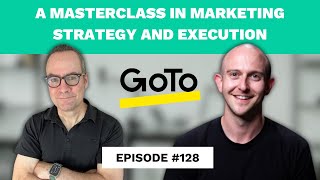
Peter Mahoney, CMO at GoTo, talks about restructuring a large marketing organization, hiring decisions, and navigating layoffs. He shares how he approaches leadership changes when taking a new role and the challenges of managing teams in a private equity-owned tech company.
How do you hire people who know more than you do?
It it starts with mistakes that I've made in the past. I had a team of people that I was hiring and scaling this thing up and I had a really smart HR leader come to me and say, you know, you should really make sure that as you're hiring people, you don't hire people in your own image. And I said I would never do that. And I look back at the people I hired, any role like me, it was shocking how similar they were to me. And I realized early on that I was making a huge mistake because I was not bringing in different perspectives.
One of my favorite all time guests is back on the podcast. You said a nice thing about me offline. I'm not going to ask you to repeat it, it just for us, but I'm going to say a nice thing about you is get so much value and so much energy every time we talk. Peter Mahoney, good to see you. Thanks for coming back on. How are you?
I'm doing great, thanks and sames. I really appreciate our conversations. They're a lot of fun and I'm looking forward to another one.
We'll see what happens. So anybody that's been around the Exit 5 ecosystem for a while, it was called DGMG. It was called DGMG University, it's called Exit 5. Now we have a real company. Peter, you were kind enough to give me time like back in the day and we, we do webinar type stuff together, live sessions. But like I got a company now. We got, we got three employees, we got a real business and this is a real thing. And I get to now just spend my time doing podcasts, which is really fun.
You said you weren't going to do that. You said it was just going to be you. And then all of a sudden something happened. Well, wait a minute, you're the one who asked the questions.
No, no, no. It's more fun when you ask so. Well, what's fun? You can, you'll probably be able to appreciate some of this because, you know, you're CMO now, but you were CEO entrepreneur. You've always kind of dabbled in stuff. And about a year and a half ago, maybe two years ago, I kind of realized that what I have is a great business, but it's also like the golden handcuffs, right? And the, the business that I had before was like a dance, you know, dance monkey business, right? And so like if I wanted to generate revenue, I would need to do consulting and be in the game. A little bit and you know, sell content and courses and that requires thought leadership from me. And personally, you know, I've been doing this B2B marketing stuff for, for 10 years. Ish. And I'm, you know, it's, it's not my life's purpose. And I was kind of struggling with my like, identity in that world. I'm like, man, am I going to do this forever? But I have this great business and everybody that I talked to and I told about the business, they're like, you'd be craz to just like walk away from that. And I'm like, you're no. And they're like, you know, you should do.
You should hire.
You should hire people and build a team because if you can make this not the. You know. So I mentioned DGMG before, but one of the reasons for rebranding initially was to plan to flag and try to like get my name out of it. Now I. It's important for me to be involved, but I wanted to like build a brand around this and I saw an opportunity where like, hm, you know what? There's something here. We have product market fit.
There's a lot of momentum went from running a big team, having a big budget, doing all this stuff to literally nothing.
And you're, you were, you were printing like shipping label. You know, you're mailing out individual books from, from your office, right?
Absolutely. I still do that. So I mean the. And it's funny because. Anyway, let me, let me go a little bit further. So I'm boring preamble here. No, it's not boring.
It's not boring at all. No.
So I spent about five years building this company, scaling the company, raised some venture money for it and scaled it up and then eventually sold it. And I sold it in the fall of 2022 and to a company called Planful. It's a great company. And in fact, Rowan Tonkin, who's who I met through you, by the way, is the CMO of Planful. And he's actually the guy who ended up championing the acquisition. So dav, I hope you're not waiting for your piece. No. You deserve some credit.
It's okay. We got a little bit Planful did some sponsorship stuff with us. I feel like I got a little bit of a dough from that. Were you ever hung up on the acquisition just because the explaining the name? So there's this one. My company's called Plana. This company's called Planful. I have told this story and even the tongue twister don't you wish the company name was, like, something different?
Exactly. I know it was a little strange, but we navigated it anyway. I sold the company, and it was great. Had a really solid exit. Felt really good about that. And I kind of was. Well, I spent a few months stabilizing the patient. You spent some time. I worked with a team at Planful who are awesome and kind of got things in place and settled a team and made sure that we sort of grafted things in the right way so that it was going to be successful as an ongoing thing. And then I said, I'm done, and I left. And I, for a while, did kind of nothing. Well, nothing for me is like, literally 60, 70 hours a week. I can't really do nothing. And so I started ideating. I spun up a little consulting thing and a platform and a community and played around with that. And I did a bunch of advisory, and I was working like Matt. It was crazy. And my wife finally said to me, why don't you get a real job? Because clearly you have a lot of energy for this thing. And I said, oh, maybe. So I decided that I'd think about doing another real gig. And it was interesting because one of the motivations to do a CMO gig was that I'd been telling people for years how to be a cmo. And I decided, well, maybe I should see if it actually works, that crap that I'm telling people. Right. So I decided that I'd put it to practice. I take another CMO gig, and that's what I did. And what I did is I went. I developed a set of criteria and said, what do I want in a CMO job? And there were a few things that were really important for me. So first of all, it had to be in Boston. So I'm based just outside of Boston, and I spent my whole life here, and my family and friends are here, and I. I just don't want another. For a CMO job, you spend a ton of time doing headquarter y things. I didn't want to spend another dozen trips a year going to California that were just kind of useless internal meetings.
Peter Mahoney needs to be in Boston. That name needs to be a pillar in the Boston community.
Maybe Chicago, maybe. But, yeah, something. Something like that. Completely agree. So it just kind of fits. And so Boston was 1 2. I wanted scale. So scale for me was at least a billion dollars. So what happens when you get around that scale is that the CMO job changes because you have the ability to Actually bring in marketing functional leaders who know a lot more than you do, by the way, which is key. They're deep experts in their field. They can do that stuff. And so that was two. It had to be that. It had to be a product that I liked or set of products that I liked. And then the last thing is I mentioned this idea of nuance, of being a portfolio of products. I wanted a portfolio because I find it just intellectually stimulating and interesting to think about all the puzzles, like these interlocking puzzles. It's like you're playing 15 games of chess at the same time. And I just find that fascinating. So that's what I wanted. And there are like a dozen companies that fit that criteria in Boston. And so I did an interesting thing. So I decided that I was playing the long game. I didn't care. I could keep doing nothing or whatever, and it didn't really matter. So I decided that, hey, I'm going to look at some of these companies that are interesting. And I went out and I reached out to the chief HR officers at a bunch of these companies and said, hey, as you're doing your succession planning for your cmo, keep me in mind because I actually check all the boxes for you, right? I've done this at this scale before. I'm local. This is why it would be interesting. And I'm sure you got a great person there already. But if you're responsible in what you're doing, you're doing succession planning. And surprisingly, it worked really well. So I actually didn't end up taking one of those jobs, but. But there was a lot of like, wow. Oh, thanks. You know, because most when you get to a company of that scale, they need to do a succession plan, right? That's part of what you should be doing. But then what ended up happening is I get a call from the CEO of GoTo, who's a friend of mine I've known for a long time, and he reached out to me and said, hey, can you catch up and spend some time, have lunch with me and help me figure out what kind of CMO I should hire? Because I needed to hire a new cmo. And I said, sure, you know, whatever. And I'm. I have lunch with him. He's a great guy. And we're going through it, and I'm like, doing this mental checklist in my head. I'm like, oh, my God, he's checking, like, all the boxes. And at the end of lunch, I said, well, what about me? And he looks at me, says, really? Do you think you'd do it? I'm like, what do you mean? This is like, perfect. So that's how it happened. That's how I got the job at the end of the day. And I. I went back to the saddle again and now I'm sitting in the CMO hot seat. It's been fun.
So take, take us into the marketing organization today. And for anybody that might not be familiar, familiar with Goto f k a log me in, which I'm sure as the CMO now, I don't dare mention the old brand.
No, no, all good.
Take us in. I have some. I have some things that I want to come back to, but I want to just kind of paint the picture of the, the market and your team and what you're responsible for.
Yeah. So an interesting thing happened. So first of all, let me give you a little context before I tell you so. Billion dollar company private equity owned formerly a public company called LogMeIn. It went private about three years ago now via Francisco Partners and Elliot. And when a company goes from public to private, they usually go through some things, if you know what I mean. There's. There's a lot of change that happens because usually private equity buys something that they view to be a diamond in the rough. They think it needs some buffing, some polishing, and some refactoring to get to the point where they can create significant incremental value. So there's a lot of change. That often happens. So I came on board and the CEO said, you need to change a lot. Right? So just so you know, there's going to be a lot of change. And he said, but I don't know what it is, so I need you to help. So I got on board and I spent some time in the first couple of months just talking to people and listening and seeing what was going on. And it was a little surprising. You know, I found some interesting things and it was a really complex organization. We had a little more than 200 people in the team and we're spending a lot of money. And the team was organized in what I viewed to be kind of a confusing way. And what they said was kind of confusing. It includes a lot of the stuff that you have in marketing from a brand team, a comms team, an operations team, had a product marketing team, multiple of those growth teams, campaign teams, international teams, a bunch of stuff. And there are 200 people, big web team. We had a team of about, if I can remember the numbers correctly, probably on the website, about 40 people. Dedicated to web stuff because we'd done a bunch of acquisitions and there was a lot of integration work going on. So what I ended up doing actually about we're recording this in early March. In middle of January, I cut 40% of the team and we were doing some changes in the company and it was time to take a fundamental new look at the way that we did marketing. So it was a kind of a painful transition. But I mean literally I've been, I'm now a couple months into the transition and have been talking to the team and people are, we're still going through some bumps because you don't make that much of a change and not have some significant impact. But sure, it, it's been transformative the way that marketing works because it's just. We really simplified and clarified the organization really focused on clear accountability. Who owned the outcomes. We had about five different teams that were responsible for different parts of the pipeline and revenue generation parts of the business. We combined it into one. So there's one, literally one person who owns all revenue sources for the company, which was critical for us. We had product marketing teams who were also doing campaigning and as a result they were just split in their focus and they were product marketers by their DNA, but they were doing integrated marketing campaign stuff sort of on the side, which took them way too much of their effort. So the product marketing starts to suffer. So we really clarified that. So a lot of it was simplification, clarification of the plan and it's pretty surprising how, how much we could actually speed things up by restructuring and pretty significantly reducing the team.
This is not the follow up question I should ask right now, but you. Just because I have lots of notes, but just because you mentioned that. So you're saying in the product marketing specific example your preference is to have a campaigns team. Is that what people would call demand gen digital marketing? Like what's the comparison for that?
Yeah, it was. We had a funny structure where. Well, the structure was there because it was trying to solve a problem that existed before. And what happens with organizations, it's in the name. They're organic, they move slowly over time and they just get a little wonky. And what they had done is that they were doing very disconnected marketing tactics. So they built teams that were associated with the different product lines that were responsible for what they called integrated marketing. And they were responsible for sort of building a demand engine, but very focused on purely the marketing source pipeline and not focused on sales enablement or indirect partner kind of marketing stuff. Got It. So we, we put all that together into a combined growth organization. So they actually drive the agenda. And what happens is product marketing is responsible for collaborating with the product team to develop the strategies to bring to market the things that they need to bring to market per the business plan. So the product team owns the business plan, this team owns, translating that into an overall set of marketing strategies that achieve those plans. And then the revenue team, revenue marketing, we call it, not growth, is responsible for achieving that particular outcome as a service for the different product teams.
When you came in, when you came back in and you talked to the CEO, CEO says, hey, we got to make a bunch of changes. Companies owned by a PE firm, like, were there broader. Were there broader rough directional business outcomes that you needed to drive to and then you kind of evaluated marketing from that lens?
Yeah, there are a number of factors that go into something like this. So we had overall operating expense targets. So how do we go from where we were to a lower operating point to drive higher profit? So that got it fundamentally.
So that was that the big. Was the big one. Like, we need to drive costs down.
That was probably the biggest one. But close second was. And it may even be tied for first was fundamentally changing the way marketing worked because it wasn't working. And so really those two things were almost at parity. So coming on board before we ended up with sort of the next round of sort of the cost reduction targets that we had, the feedback in from the board, who I had to interview with, all of them was fun. Yeah, always fun. Great people. And the feedback from them was that it's not working, you need to fundamentally fix it. And they were excited about me coming on board in changing things. And we can talk about how I got here. Right. I mean, there was a great CMO before. Right. But things happen. Right. And. And we got to this place.
Yeah.
And we just needed. We needed a reset. Yeah.
Well, I mean, it just happens like, it's like you buy a new house, you can't believe that the other people who own the house, like, had this happen and you owned the house and you're like, I don't know how it happened either.
It's.
It's much. Oftentimes it's much easier to be the new person because you get to come in with a clean slate and the initiative.
It's.
It's much harder for the existing CM to make all those changes. It's oftentimes much easier to bring somebody new in and say, like, we gotta just restart here.
Absolutely. You have license for change and more than license, there's an expectation that you're gonna come in and change. And as a new cmo, one of the most important things is you've got this window of opportunity that's relatively short to say they're all expecting it. Right. Everyone expects you to come on board and make dramatic change. And then when I announced the change, like, holy cow, I wasn't expecting that. Right. Because it was really, really, really dramatic. But I mean the interesting thing is that they. I'm, I'm literally open source, right. I got a book that says what I was going to do and I mean I had all a bunch of people on my team who came in with like dog eared copies of my book and saying, well, what do you mean by this and are you going to do that? And I said, I don't know, read the book. And, and I've done that. I mean I'm operating the way that I tell other people they should operate.
Well, it's so nice to have, it's nice to have operating system then, right? I mean you've put your years in this industry to, you've packaged them in a way that's a operating system. If that's not a plug for the book, I don't know what is. Right.
By the way, I'm a domain buyer. I don't know if you do this too, but I.
So yeah, I have some bad ones.
I owned, I bought the domain CMO os.
Nice. So I've, I've Samuz. Samuz.
Samuz. The CMO operating system.
But is it one word? See, it is.
It is. It is. This is probably bad. I've got a lot of bad ones too.
Well, hey, one of the, one of the criteria for figuring out the name for Exit 5 was like a regular word that I could afford the domain name for and it was available.
Exactly, exactly.
I think in most other contexts I probably wouldn't ask this, but I think it's important because there's a lot of people listening to this that want to be CMOs or are a CMO or, you know, there's a whole future CMO crowd that listens to this podcast. And so I'm asking this not out of the insensitivity. I don't want to be insensitive to people who lost their jobs and got laid off and that whole process sucks. I want to talk about this. We talk about the role of, of being a B2B marketing leader. That's what we're talking about here. As a human, it still sucks to have to do this, right? You can put on your hat and be like, I quit my job where I was living the life, doing whatever I wanted, and now I'm here and like, oh my gosh, I got to let 40% of the the team go. Can you just talk about how you have those conversations with yourself? Because we are all human and those conversations with people do affect us, and it is hard to have hard conversations. And, you know, I try to have this balance with myself of like, hey, man, you want to be a leader, this is what you got to do. But then on the same brain, you're like, oh, man, this sucks. I really don't want to do this. I don't want people to hate me. A lot of people have to go through that, you know, in order to become a marketing leader or business leader of any kind, you got to have hard conversations, you got to make hard decisions, talk through the mental side of this and how you kind of how you have that, how you get yourself ready to do those things.
First of all, thank you for asking the question because I think this is a super important discussion to have. And you would be a subhuman monster if you didn't feel terribly for having to take away someone's job because it sucks. It is awful. It is just a terrible thing to do. It also happens to be really necessary in some cases. And we, we were in a position where. Here's what happened. One major problem we had is we had made dramatic strategy changes in the company. So Goto owns GoToMeeting as an example and GoToWebinar those things during the pandemic. I mean, you've seen the story before. Super high flying things, super high growth. And we had a really big business in that particular area. That business is in decline because Microsoft Teams is okay and it's free or it's bundled in with other stuff. And Zoom is really good. And so that's not really a thing as much. We had in 2021, done a major rebrand. We went from LogMeIn to GoTo on the backs of this idea that we'd be focused on this thing. So we built an organization to do. Do that stuff in a strategy change. The strategy change. And we're now focused on two primary product lines. One is around unified communications and contact center stuff. And the other side of the business is focused on sort of IT, endpoint management, IT remote support, things like that, where the. The original Logmian products came from. And they're, they're great businesses, but they're different business businesses, they have a very different marketing profile. We have much less of a, of a broad strategy and much more of a targeted product marketing kind of strategy. And as a result we need it remote support things like that, where the original Widemen products came from. And they're great businesses, but they're different businesses. They have a very different marketing profile. We have much less of a, of a broad brand strategy and much more of a targeted product marketing kind of strategy. And as a result we needed to change. So that was a very fundamental thing. And we had made dramatic reductions as a result of the strategy change in program spending and we had not materially made changes in our people related spending. So we're out of whack. It was completely out of alignment and we had to make a change. So that being said, I think there should be a very high bar when it comes to reducing jobs. The same side, on the other side, there should be a very high bar in adding a job. And that's what I tell people all the time. When someone says I want to expand my team, I want to add another person. Like, okay, you do that, you are responsible for literally that person's career. A third of their life, half of their waking hours, you're responsible for. So you better be sure that you really need that. Because if you tell me 9, 12, 18 months from now that the job is there, that person literally changed their life to take that job. It's an incredibly significant commitment that a company makes to a person and you have to treat it that way and the person makes to the company. So that relationship is critical and there should be a high bar. And then you gotta get fundamentally. Unfortunately I have a lot of experience with this, so I've had to lay off hundreds and hundreds of people over my career. Tech is a cyclical business and some people who are relatively new maybe have not seen all the cycles, they think it's all up or all down. But the reality is it goes up and down and up and down like many other industries. Which means that there's expansion and contraction and if you're around long enough, you will go through a period where there has to be contraction and it's no fun. And there are some things that are important, like you got to tell people right away, quickly get it in front of them and say, I'm sorry to tell you but your job's been eliminated. And then take a beat. And you know, unfortunately you get good at it if you do it enough. And you just have to be human and direct and Clear and then answer all their questions and move on. But it's terrible. I hate doing it. But it's necessary.
Well, today they film it and they put it on TikTok. So you got to be careful.
They do. And it's funny we talk about that where, where it's. Especially newer managers who are not so experienced with having to do that awful thing.
Yeah.
Are sometimes get themselves in trouble and sometimes they, they don't. Take. You have to also take personal responsibility. If you're a manager, that's your job. You have to do that. And a lot of people will say well let, let the HR person do it or something. It's, it's your job.
Yeah, but I, yeah, I think you, you kind of hinted at something there which is also important. Again, it sucks to be, it sucks to be on the other end of the layoff but like to think that the manager or the team leader, whoever is going to handle every one of these situations perfectly is also impossible because we are all human. And for all you know, this is going to be the first time you did this. And then 20 years from, I'd be like, man, I first had to do layoffs at my company and I totally botched it. And so you, you need to do it as the marketing person. But I think if you have resources around the company, business partners, you know, HR like to find resources and be able to lean on people is also so important. You know, you've worked at big companies and you've, you've had to do stuff like this before. I think you mentioned something that's really important here though also, which is not that it takes the emotion out of it, but it's almost like you, you looked at the math and the math of the business and everything was so out of whack that it's like, wait, we're not making up a reason for why we're these people. Go, we're, we're not one of the like you know, fast growing venture backed SaaS companies that just like over hired 50 sales reps and now have to like wind that back six, six months later you're saying like the business was out of whack. We cut all this spend, all the people who are managing those things and those channels and doing those. Well, we're not doing those things anymore. And so we're not just going to like, you know, keep, keep a big part of the team on just because we're nice people here. Like we got to make some hard decisions. And so it's interesting to hear you approach it from that perspective.
So here's the thing that what you're talking about, Dave, is critical. It's the idea of reacting to what's going on in the market. Change in strategy, change in opportunity to be up, it can be down, it can be a new market you're going into. And it's the difference between running marketing and leading marketing. Running marketing is keeping the engines going, going through and going through the plan, doing what you said you were going to do, generating demand, doing all that great stuff that's hard and important stuff to leading marketing is fundamentally different. It's about, where is it going, how do I change it, how do I improve it over time? Guess what? If you just do the same thing every year in and every year out, even if it's, hey, my company's growing by 10%, my budget's going to grow by 10%, it isn't because there's an expectation that you're trying to increase earnings as a percentage of revenue over a period of time. You have to get more efficient. So how do you drive a increase in performance? Go to a new strategic opportunity, launch a new product, whatever your job is. Bringing people toward the future versus just keeping the trains running. It's critical to keep the trains running. That's the baseline. On top of it. You have to take the function to where it needs to be.
Earlier you mentioned hiring, hiring people, team leaders that know more than you do now. At some point in Peter Mahoney's career, you must have been the star marketer. You don't grow into this position if you're not. And so you're really good at the doing. Eventually you decide you want to lead a team or maybe you get thrown into their not on purpose as a cat in front of the camera. And you have to make that shift. And I think I've made this mistake. As somebody coming up, I advise and mentor and talk to other folks who have a similar thing where it becomes hard to let that go. And. And how do you hire people who know more than you do? It's one of those things that's very easy to say, hire people who are smarter than you. Right. But when you actually get into it, to actually do that, and this is where a lot of people, myself included, make a mistake and to let them do their jobs becomes hard. Talk to me about your evolution there and how you've gone about doing this at GOTO and in previous roles.
Yeah, there's a lot there. And it starts with mistakes that I've made in the past. So one thing I remember very clearly early in my career, I was running channel sales for a public tech company. And I had a team of people that I was hiring and scaling this thing up. And I had a really smart HR leader come to me and say, you should really make sure that as you're hiring people, you don't hire people in your own image. And I said, I would never do that. You know, I'm a, you know, intelligent, forward thinking kind of person. And I look back at the people I hired and they were all like me. It was shocking how similar they were to me. And I realized early on that I was making a huge mistake because I was not bringing in different perspectives. And I'm actually a huge believer in the power of diversity. And diversity is lots of things, but it's diversity of thought. Diversity of thought, actually, and diversity of skill, diversity of background. All those things are critical to solving a problem. So I've made the mistake before. And of course what happens is when you all think the same way and come from the same place, you start to make the same kinds of decisions and mistakes, and it's a huge issue. And then early in my career, when you're given that first big shot. I might have told you this before, literally my first job in marketing was running marketing for a division of a public company, which is nuts, right? So it was one of those things where I had no right to do it. But I was given a shot by the GM of a division who I'd worked with closely, and he said, I need someone to do the job, do it. And that really showed me, by definition, everybody knew more than me about what was going on and you just see the value. And at the beginning it was really hard because you're so focused on trying to prove that you're good enough and smart enough to do the job and you have to be a little vulnerable. Everyone has imposter syndrome. We all do. And you feel like, I can't admit that I don't know this stuff. And as you get older and more experienced, you become much more comfortable saying, I don't know what you're talking about. What is that? You know, can you explain that tick tock thing to me or whatever?
It's so true. Like, the, the older you get, the more experience you have, you're. You don't care. Early in your career you're like, I can't let them know I don't know. Now I'm like, I don't know anything. I really don't know.
Anything. Yeah. So it's interesting. The other thing that's critical is that as I started sort of rebuilding the team I brought in a few key leaders into the marketing function at GoTo. And it's transformative when you bring in someone who is just a deep world class expert. So I hired Chris Thompson who was my head of marketing operations and he was the head of marketing ops and sales ops actually I think both revenue ops for Conga. Really great guy, super smart and he came on board huge unlock for performance getting assistance to work. I hired Glenn Kaladis who was the head of digital for bottom line and good sized public company and he runs all my revenue marketing. And again huge thing, huge unlock along the way. Here's the thing, you can't do that for everything. Because the Dave Gerhardt of the world or the Peter Mahoney out there that is early in their career that you want to give some people a chance. What you can't do is give everybody a chance. So you don't want the. If you've got a team of six people, you don't want five of them to be in the biggest job they've ever had but you do want one or two of them. And oh by the way those one or two people you have to smother with support, give them a mentor. Make sure they're signed up for exit 5. See what I did there? Thank you. And, and make sure that they're going to be successful.
Oh, this is really good. I don't know if it's a huge investment. I don't know if I ever heard anybody talk about it this way. It's like, it's almost like when you know that like you're not going to be and this isn't in a disrespectful way but like you have four or five key areas of the business you're not going to be able to whether it's talent wise, pipeline wise, budget wise. You're not going to be able to hire like the A plus pluck the cream of the crop leaders from each company. It's like it's almost like you have like it's like a fantasy sports in some way. It's like you have a budget of a hundred dollars and you get to hire five people. One of those people might cost 60 DOL and then you're going to have a $20 and then there's a $5 and a $5. You got to do work your way to get to 100. I think this is a really, really good topic. For future marketing leaders and people who are managing teams today is like, okay, I'm not going to be able to get A plus proven leaders across the board. What are the one or two areas that I really need that person? Because that's either not my strength or that's just a crucial area for the business. Then how do we grow and groom them? Like, as you're going through that, I'm thinking about my career story and I'm like, yeah, but I didn't set out to become a vp. I happened to join the right company at the right time as like a hungry junior ish marketing manager who was like decent at content. And lo and behold, drift got a great early VP of marketing out of that. That was a win for me as an employee. That was a win for the company. I knew I was making way less money than other people in a similar role, but I was like, I don't have the experience. This is good for both of us. And so it's cool to hear you think of it from like a portfolio standpoint. And also it just, it's very hard to, to sit around and think about, I'm going to hire these four or five perfect people in, in each role.
Right.
Like, it's just, it would be impossible. You'd never get anything done.
Yeah, it's funny, my, my son plays this game, Settlers of Catan. You know that game?
Sure.
It's a, it's a, it's, it's a thing. Right? It's, it's, it's like a slightly, just very slightly less nerdy version of Dungeons and Dragons kind of thing. And he was into that too. Right. And I think of what we do as marketing leaders is basically playing a very, very complex board game like that. You're given a set of resources, those resources you have to invest in certain areas. And your job is to take the resources that you have and use those resources in a way that is going to deliver the best business outcome. And it's kind of as simple as that, but it's a very, very complex game. And one of the things I mentioned earlier, like the 15 chess games at the same time, when you're dealing with a portfolio, it's like a bunch of different games at the same time. And maybe there's an overriding one and a little sub games that are going on, but that's your job, is you have to figure out, how do I use these resources, Pick the right people. I've got to operate within some parameters that are going to restrict me. You don't have infinite budget. You don't have infinite time. So what you need to do is find the ways to intelligently make those decisions on the areas that are most important for the business going forward. And you brought up exactly the right stuff. Daniel. Do you have a weakness? Do you have an area where you have a blind spot? Does the company have a strategic need that isn't filled yet? Is there something that's just so hypercritical? Or maybe you've got that superstar who doesn't have experience in a domain, but you know that you can almost give them anything and they're going to drive through brick walls and make it happen. So it's the combination of those things that gets you the outcome.
So you went from, you know, big company CMO to entrepreneur building, very much doing the doing. Now you're back, you have a team of, you know, I'm not a math guy, but 40%, 200, 100, 120 people on the. On the marketing team.
Well done. That's good.
Thank you, sir. I read the next cmo. Do you ever get in a position now where you, like, get too deep in something and you're like, whoa, wait a second, I should not be doing this. I'm either doing someone else's job or this isn't good for the team. And I'm asking, even just like, I have a company of three people and I'll catch myself doing something, and I gotta always have that conversation with myself. It's like, what's your role? Why are other people here? What are you doing? Have you had to do any of that every day?
So, so.
And sorry. And follow up to that. Is. Is that because you just were entrepreneur or is that. Was that even true? Like, when you were a CMO at Newhouse?
Yeah, it was like, it was kind of always me. And I'm sure it's worse now in some ways because, I mean, literally, I mean, when I started Planet, it was me, you know, it was literally just me. It was like you with Exit 5, right. And. Or DGMG back then, it was literally just you. So you're doing everything and you find some outsourced resources and get stuff done, but you're setting up and configuring a HubSpot. You're doing all that stuff.
Sure.
And I look now and it's like, oh, my God, I've got this army of people to do things, but I have that desire to dig deep into something. And it's funny because I'm going through this phase now where, for the first six months, I'm about six months into the assignment here and I've had very little opportunity to actually do marketing. I've spent so much time on figuring out, diagnosing what the problems are, looking at the organization, dealing with this transformation, planning a transformation, implementing a transformation, getting feedback from people of what, what's going on. And I make little time slices just to go to my happy place from time to time to actually get in the work. And because that's, that's, that's, that's what I like. I, at the same time, I know that I like playing the chess game. I like doing the strategic thing and I have to watch myself because I'll bungee jump too, too far down into something. And my secret unlock code is I have an amazing chief of staff who have been incredible for me, one to actually get stuff done. But one of the things that she does is she tells me, don't do that. You know, and she's, we've got just this great relationship. She'll stay say, nope, don't do that. That doesn't make sense. Or they're getting annoyed over there, you know, back off. And, and that's, that's been helpful for me.
Let's wrap up and talk about how do you steer this ship? People love hearing about marketing campaign. Just the way that a team runs, right. And with a team of 100 plus marketers. You said there's 15 business lines or something like that. Product lines, yeah, there's 15 product lines. Marketing and business is easy when it's like, hey, we have one goal, like generate new leads in this segment. How do you do it all? What's a simple, like if you just give me like the 5 minute elevator version of how the, how do you, how do you, how does that run? I'd love to hear that before we wrap.
Yeah, so there's a book about that. And the, the key is to start with the goals. And there, there always are. And we spend a lot of time working through and making sure we really understand where we're going.
Right.
And at a high level, that means we need to understand what, what are the key strategic initiatives we're trying to drive for the business. You know, for us, we've got, we've got our IT remote support products which we sort of refocused on about the last 18 months or so. We're trying to accelerate their growth. That's the big function. We're trying to enable new channels. So what are the things we need to do, the big initiatives to do that. We've got brand confusion going on because we have a bunch of different products that overlap a little bit in that space. And we acquired a thing that we haven't really fully integrated. So how do we start to get that all aligned in a way that we're telling a coherent story to the marketplace? Our salespeople know what to sell, our channel knows what to sell, our customers know what to buy and drive growth at the same time. That starts to build an agenda for that business. And it's almost as simple as that. At the high level, that's the conversation we have with our board, right? What are the things we're trying to do? We're trying to increase our growth in these areas by increasing deal size, by going to these markets, et cetera. So getting that agenda of the vital few things that, as a business level, not especially the marketing level, we're trying to achieve. So that's job one is doing that, making sure you're aligned around that. And then it is for, you know, my job is empowering the organization to get it done. So it's. It's all about, okay, this is what we're trying to achieve. Help them go through the process of building a plan to achieve those things. Not the thousand things, but the three things. What are the three things you're trying to achieve? And then build a plan that's going to get that to happen. Because there are a thousand things that happen anyway. But you have to make sure, you know, if number 997 doesn't happen, no one's going to notice. If one of the big vital three doesn't happen, everybody's going to notice. So get people focused on that. That's super critical. The other thing that we've just been going through that's been fascinating is I've been trying to get the team and the whole company, not just the team, and I've got a great relationship with the CEO and we work closely together on this. But it's what are we trying to do over the next two, three years so we can get really focused on what am I going to do in 2024. The reality is that marketers have a time horizon that's longer than salespeople. So salespeople are very much focused on what am I going to get done this quarter. Sales leadership should be thinking about how the sales function is going to transform over time. But at the marketing level and at the business level overall, you have to think about, where are we going? What are the tectonic shifts that are going on in the marketplace that we need to either be wary of or ride on top of because it's a significant opportunity. So blending those things together that what am I going to do this year to build a plan with keeping the strategic in mind? Right. Where are we going and connecting those things together? That's where the magic happens, Dave. It's being able to, it's about at the end of the day what happens with a lot of work and a lot of analysis is you get a few priorities and it's about setting those priorities, getting a clear direction of where you're going and then empowering the organization to go there and they get it done. And again, my job is not running marketing, it's leading marketing.
That's an important distinction. I hope people catch that. I would also say just a plug for next CMO book because a lot of people as a follow up, which we don't have time to get into today, would ask about okay, but how do I balance the short term and the long term? And you have some good stuff for thinking about those things in the book. I think it's. This is where marketing drives me nuts sometimes is everybody wants such a literal and specific answer for like well do this thing. And it's like well things have, they compound over time. It's. So anyway, go go check out the book. My, here's my last, my follow up, my last question for you is if you could just snap your fingers and solve one marketing problem right now at goto, what would it be?
Clarifying the brand strategy. So we'll figure out the growth stuff, we'll figure out the, those other things. The, the biggest friction that you get in your, in the way of achieving your plans is when you start to get lack of strategic clarity on what the brands and the products and how they all add up to something that. So as we tell the story to the marketplace, it's more, it's more coherent. That's, that's the big overriding thing.
And do you see, do you drive, do you all drive that for the organization is in a partnership with the CEO and product and who ultimately owns that. Because you just do it alone. It can't just be marketing, right?
Absolutely. So I and my team are the lightning rods for that. So we, we own the responsibility of driving the process to achieve alignment around the brand strategy. Absolutely. It's a deep collaboration with, with the product team, with the sales team, with the CEO to make sure that we're all really aligned on the right thing. But it is a One of the things I also like about this scale is that you're working as a cmo. If you can get the machine running the right way and you can focus on leadership, you can solve those big strategic problems. And those are the ones that are fundamentally, to me anyway, the most fun. Trying to get those things fixed makes the biggest difference.
All right, Peter, thank you for hanging out with us. I had a blast. I gotta be. I gotta. I gotta hang up. You gotta hang up. We got things to go and do. We'll have you back in six months or so as this whole thing develops. But go and connect and follow Peter on LinkedIn if you haven't already through Exit 5 or otherware. Gotten the book, the next CMO. A lot of people ask for the operating. They're like, what's the resource? What's the PDF? What's the play? Well, it's not a PDF, it's a book. Go get the. It's an actual book. The Next cmo. If I were to go take a CMO job somewhere, this is the book that I would have like next to me, dog eared, highlighted. And I do. I have used it in a past role and that's. It's still just as relevant today and people need it more than ever. So, Peter, great to see you. Thanks for hanging out. Appreciate you giving us time with it.
A ton of fun. Thanks everyone for listening.
Thank you, sir. All right.
Sam.
More from Dave



Asynchronous work isn’t a trend. It’s how teams actually get things done without burning out.

AI is changing product marketing. Here's how top B2B teams are scaling without cutting corners.

How Product Marketing Is Evolving in 2025: Lessons on AI and Leadership with Jennifer Cannizzaro

Why referral programs look different outside of SaaS (and why that’s a good thing)

The secret to scaling dual GTM? Give every marketer ownership and get out of their way.

From content to CMO: how Jess Cook made the leap (and built her first budget from scratch)

Leading B2B Marketing for the First Time: Strategy, Budget, Content & Team with Jess Cook

Most B2B advice is built for SaaS. But what if you don’t have demos, PLG, or lead goals?
