Video in B2B: What Works, What Doesn’t, and Where to Start
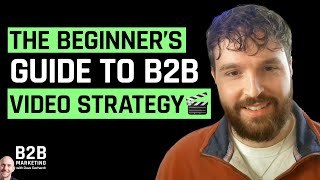
Danielle from Exit 5 and Connor Lewis, founder of Studio Lewis, discuss what actually works in B2B video marketing. They cover production quality, how to repurpose content, effective hooks, and how to start making videos without dedicated resources.
Being in front of camera is a skill that I think marketers need today.
Hey, it's Danielle from Exit 5 here. And in today's episode, I'm talking with Connor Lewis, the founder of Studio Lewis and a total expert when it comes to B2B video. We talked about a ton from why high production value doesn't actually matter that much to how marketers can get started with video without hiring a team or spending a fortune.
I'm a high production agency and I'm here to tell you that it really doesn't matter that much, especially on LinkedIn.
Shared super tactical advice for B2B marketers. Whether you're trying to repurpose blog content, promote your next live event, or figure out how to make videos that don't just look good, but people actually watch. If video is on your plate this year or you just want to make better use of the content you're already creating, you're going to get a ton out of this one. One, two, three, four. Exit. All right. And we're live. Very exciting. I'm so, so excited to have you here today, Connor. So Connor Lewis is the founder of Studio Lewis?
Yeah.
That's yours? Yeah, that's me. I mean, it has your name in it, right? An absolute expert in video for B2B, which is a really cool niche. I thought we would have him on today to talk like all things B2B video because that is such a hot topic. We see it in the community all the time at exit 5. We get questions about it. We see people like looking to hire, especially as I think an important trend now is everyone's going to events and smaller events and how do you even address that and getting content and so, yeah, I wanted to have you on today to chat about all things video. So, yeah, Connor, tell us about yourself. Give us the lore as I like the lore.
Well, thanks for having me. This is already so fun. My name's Connor. I am the founder of Studio Lewis by. But I didn't start as an agency owner. I started in house and I worked at an HR software place that had about 70 employees. Worked there for 5 years up until we had like 250 ish employees scaled from 10 million ARR to 100 million ARR. That was not all me. I'm not taking credit for that. That was just like the trajectory that I was on.
Quite a ride, I imagine.
Oh, yeah, we hosted huge events. We built a category, we built a small video team in house. That was crazy. And this was all like, in the span of like, 2019-2022. 2023.
Oh, nice. You had like the COVID era disruption too. So, like, yeah, pre Covid, a little bit post Covid.
It was wild. And the strategy changed a lot to, to fit where people were at that point. So I saw a lot of different iterations of video. We tried so much different video too. We tried ads, we tried social, we tried YouTube, we tried events, like everything. So it taught me a lot about my point of view on video.
Yeah. So you had extensive experience in house and you kind of. We chatted a little bit before we started hitting record. And how did you approach even learning? Like, were you hired for video? Did you find yourself like, in this niche?
I was hired for video, but it was like a risky hire at the time. It was 2018 and video wasn't hot then. We just had a pretty forward thinking director of marketing who hired me as like a video intern. This was Baby Connor. And my main role was making sure that our videos looked good. And like, they were all talking head Danielle. Like they were all just straight to camera, educational, super straightforward. And then when it got more creative, like I was out of my comfort zone, then I had to learn animation. I had to learn how to put together a compelling script, which were all skills I didn't realize I was lacking. Until you get thrown into the job.
Yeah. And you're like, wait, I'm kind of a producer instead of a marketer.
But also both you become like, you go from this videographer role to, you're right, a producer role. And then eventually you have to level up to like some kind of strategist, like, what videos should we make, Connor? With, like, the questions I started getting asked and then I was like, oh, shoot, I don't know, I should probably read up on this or test some stuff or come up with some theories. So, yeah, I started out in that world and, and learned so much from it.
Yeah. And now you specialize in helping B2B companies specifically with video ads, or do you do other types of video?
I did other types of videos for two years, but I'm in the, the Fletch school of marketing now where sticking with one niche and one use case is best. I ended up doubling down on ads just because that feels like the medium I know best at this point. Um, I don't think that's always the best starting point for companies when it comes to video, but yeah, I have done it all and now it's. I'm in the middle of a transition when it.
No, that makes sense. And that like, good to niche down. And I think we see that across a lot of the people in our network that have started out more broad and they're like, I do B2B video. Or like Tas Wilber was like, I do all these things. Nope, I do landing pages. No, that's cool. So I want to talk about. Well, obviously if you've been on LinkedIn or pretty much any platform, you know that like video is here. It's not going away. We did the pivot to video. Probably a little PTSD from that phrase, but I feel like it's getting put on a lot of marketers plates that's like, hey, we should do a video or we should do a podcast and then use that video in some way. So what are you seeing across B2B video with your clients? And just like in, in our, in our little world, I'd love to know what you're seeing in 2025 and what you saw last year and what you think we're going to see going forward.
Yeah. So I'll Talk specifically about LinkedIn video because you brought that up and it's a hot space right now. It was because in 2024, we had those explosion of impressions that people kept boasting about that I'm sure you saw. And there were real impressions, even though the engagement looked low, like they were trying to push video really hard. And so it brought a lot of video creators to the platform. And I think now what we're seeing in 2025 is like this. We're settling into what kinds of videos we like as a community, as a. As a larger platform, because I think that's still to be determined. But the three things, at least that I've seen with clients that work the best on social video, specifically worked for me for my own business, is number one. Number one is building in public. I think there are a lot of creators you could point to who you probably know how their business is doing and what they're doing. Vin Matano comes to mind from creator buzz as an example. Building in public's really hot right now. It's not always the easiest thing to do if. Especially for businesses, but it does work really well. The second one is, I call it edutainment. It's basically a mix of education. But how do we make it fun? How do we bring us. We're on zoom screens all day, or a lot of us are in SAS at least. And so how do we bring it out of, you know, the virtual kind of. We're at Our desks with microphones world and make it a little more interesting. That's what I've, I've tried to be. I've been going outside, for instance, and just the change of setting alone has been like a pattern breaker and good hook will kind of bring people in. So that's edutainment. And then the third thing that I think is working really well is collaborations. I'm looking at like Devin Reed's between the Lines. I'm looking at Event Shark is doing a lot of different collaborations. ClickUp is collaborating with even creators who are from Instagram. You just, you're sharing other audiences when you do that, so you naturally get more reach and you get access to people you otherwise wouldn't have had access to. So those are the three things that I think are working on social video. That said, you don't have to do video to blow up on LinkedIn. Like there are text creators and carousel creators who are doing just as well.
Yeah, I did like one video and it did really well. But I, I don't know, I'm still, I think I'm more of a text creator than a video creator, but maybe the podcast will change it.
Yeah, this is your, this is your coming into your moment.
No, something you said really interesting a little earlier in the conversation was around video ads. And like you, you don't think that companies should always start there. Tell me, tell me more about that. If not ads, where should they start and when is the point where you start actually bringing video into your ads mix?
Yeah, good question. I think a lot of people are premature with video ads because you have to have a good understanding of what kind of messaging works before you invest in that kind of creative. In my opinion, there's a really good way to get started, which is just doing virtual production ads. And by that I mean like animation ads or, or text on screen ads. Stuff that doesn't include like, you know, someone sitting in a studio with really nice professional lighting or you know, actors and locations and stuff like that. I feel like you, you should move into that realm once you've figured out messaging, once you have a bigger budget. But like the, the virtual production is kind of a good place to start. But even before ads, like we didn't really have a huge ad budget when I first started out. And so what we did, we had an SEO based strategy. And so a lot of our videos, like a lot of my first videos in house that were actually really successful were just taking our best performing blog posts and turning them into ads or Sorry, not ads. Turning them into how to videos specifically.
Interesting.
And the process for that I can share if that's interesting.
Definitely share that. So how, how do you do that? So say I have this like awesome blog post. How do I then get it into a video that people actually want to watch?
Yeah, good question. For us, my process was we knew that we wanted to repurpose them for YouTube too. So I would use, I would use this tool called TubeBuddy and TubeBuddy would tell me which. It's basically an SEO ranking tool for YouTube. And so I'd try a bunch of different iterations of the title of the blog post and the content of the blog post, making it into a video title and then work towards the video from there. So for instance, we had, we were an HR tech company, so we had how you know, the top 10 ways to engage your employees was a huge blog post for us. Um, and at the time that we were making the videos, we were having a huge disengagement crisis called quiet quitting. And so, yeah, yeah, one thing that was like really trending on YouTube at the time that people, that there was a huge gap in this space for is like, why are people quiet quitting? Here are the top 10 ways. And so when I had that title and I saw that it ranked well, we backed into that title for the YouTube video and got around 6,000 views in about six months, which is pretty good for B2B.
No, that's great for B2B.
And, and when we just stapled that to the blog post, it gave it a huge refresh. You know, we, we were able to say, you know, last written the current date that we posted the video, which brought our ranking up. It also allowed it to show up in more search queries. So when people were looking this on Google, they could go over to the video tab and find us that way. We were even getting in the top ribbon of Google before a Google AI was there. And so yeah, that was, that was just a huge way to like double down on something that was already working for us. And for most companies, to answer like your original question, which is how should people even think about getting started with video? I would just say double down on what's working. Video fits into blog posts, it fits into event marketing, it fits into ad campaigns. Just like I was talking about, like if you are doing paid, then good use video and paid. If you're not doing paid, don't change strategies just to do the hot new video, you know.
Yeah, I like what you said about Video for events. I think one of the things that it's like kind of a low hanging video fruit that I've done is like, so say we have a virtual event coming up in a couple of weeks and one of the things I want to do pin in that if I find the time is you get like your key speakers just to record like 10 to 15 seconds of them. Like being excited about their session and what they're going to talk about and like releasing that. Getting people engaged, I feel like is a really good way to incorporate it for events.
Totally agree. We did that in house too. We, we ran an event called Optima, which was like our big conference and we were nervous about getting people to actually show up for it. And we did one virtually too. And we were extra nervous about that one because virtual events, we always, at least we in house had this stigma that like no one wants to go to them. So how do we get people hyped? And. But we did have big speakers. So yeah, I, I would say that like getting your speakers just to do a quick little promo for you, 15, 20 seconds. And the more humid it is, the better. Like if they're stiff and being like, in my session, we're going to talk about. No, like put the producer who's asking the question in there, get a little laughter, like a quick summary of what they're going to talk about. And mostly they're going to be there to be with that person and ask them questions. So bring that up too. Yeah, I really like using speaker promos. Another thing that we did was for webinars, which is similar to a virtual event. We would actually to drive people to the webinar recording, which was a lead magnet for us at the time. We would take the Q and A section, not the actual content of the webinar, but the Q and A section. We'd repurpose the top questions into shorts, basically for social and for our newsletter. And so people would just click in, they'd see the number one question asked at the newsletter and what people seem to be responding to the most in chat. And that was a huge, that was a bigger lead magnet than when we just recapped the newsletter or like pulled a clip from, or sorry, recapped the webinar or pulled a clip from the webinar because it was what our users were curious about. It's not what our predetermined agenda was. And so that was a huge unlock for us where it's like, oh, people really care about the Q and A for virtual Events. Let's just keep boosting the Q and A. And that created a really nice cycle for us.
Yeah, that's, that's super smart. I'm even thinking of like our own webinars. Don't call them webinar, they're live sessions. That's like our little, little in thing. Even though we call them internally webinars. But I digress. We always do a Q and A. I do too. It's. And it's like a webinar makes me think of, I'm just going to like an online training that I have to check off a box. It brings me back to my corporate days where I'm just like when I was in finance and it was like, here's basically how to insider trade but don't do it. And it's like all these like actors in horrible suits.
Yeah, no kidding. Yeah, Live session sounds like, oh, you're just hanging out with a bunch of musicians. Like we're jamming. There's art happening here.
Yeah, we kind of describe it as like a live like podcast recording almost where we like bring in experts. Maybe it's on a teaching subject, maybe it's more panel style. But we always like love doing the Q and A section and we always kind of like rush through whatever the other stuff is to get to the Q and A because I mean we have built a really engaged audience. And it's a like self feeding cycle too. Right. It's like people show up, they know they're going to get their questions answered. It's really fun. People are adding their own stuff in there. But I think we can really even lean into that at exit 5 with our recordings because we do put them on the podcast and then we have the video. But I like that like narrowing in on that like specifically the Q and A section as a short of like, hey, here's the top three questions. Let's like use that for video.
Yes. And you know, it makes such a good title too. I think what's underrated in social video especially is the actual text on screen that is in the first five seconds. Like is so important because it just contextualizes what they're about to watch. And for the Q and A, you just put the question on screen like, and if people have that question, they'll watch. If they don't, then the content's probably not for them anyway. So yeah, it makes itself and it creates this little feedback loop that's just beautiful.
I love it. So that's actually a good question. So you have the Text on the, like the actual video. Right. It's like you start what are I think like maybe like three to five elements of B2B video. You should like really focus on getting right. Like you said, like the YouTube title. Having those first like five seconds question on screen. I think we over index a lot of on like, oh, the production has to be perfect and I have to get this like awesome camera and like the fancy microphone and make sure like the setup's perfect. But does that actually matter or. Yeah.
I'm a high production agency and I'm here to tell you that it really doesn't matter that much. Especially on LinkedIn. The things that I obsess over are the first five seconds more than I spend as much time in the first five seconds as I do in the next five minutes, if you will. Because attention is just so scarce these days that like, if you're not hooking them immediately, then it's tough. And I can give you several tips on hooks. I'm sure everyone on LinkedIn can give you several tips on hooks. My, my. Just like do if you're doing a gut check on your hook, just like, does this succinctly tell people what the video is about and do I probe on some kind of pain in the first few seconds? If you can do both of those, then you're usually pretty good. How I posts work better than how to posts. So always speak from your own experience.
Ooh, that's interesting. I think I over index towards how to instead of how I not in my video. Just like in writing anyways.
Yeah, well, it's tempting because you want to seem like an expert, but honestly, the posts that I've done where I'm speaking from my own experience, like, do three times better than the one where I'm trying to grandstand. Even though it doesn't feel like I'm trying to grandstand. Whenever I say how to I look back on, I'm like, oh, wow, I really look like a know it all there, don't I?
Yeah.
So the, the hook is fine.
Any more tips on hooks? Cause I feel like that's, I mean that's like kind of applicable across formats too. But like video is really important.
Yeah, yeah, yeah. For hooks. One of the things I'm trying to remember it right now, I follow this person, his name, he's. He's been blowing up on LinkedIn a little bit. His name is Lew Butterfield. Really cool dude. He has this hook format called the Reverse Rambo, which is really funny. And I, I couldn't forget it. And it's worked for me, so I feel like I'll share it here. Now, you basically say like a very common belief in your first line. You're like, for instance, everyone says that cold emailing is dead. I'm so sorry I used that example. But, you know, I just saw it today before this.
Yeah, yeah, it's all over LinkedIn.
That's a classic. Like, you know, just say a common belief and then say the word but and say your point of view on that belief and then back it up with some kind of stat or back it up with some kind of personal experience. And then their third line is, and here's how you do it. It's so simple, like common belief destroying that common belief. And then here's how you do it works really well. That's one of many hook formats. Another one is just like saying a bold statement. Like, one of. One of my posts that did really well was a building in public post. I just like declared that I almost went bankrupt at the beginning of 2024. And like, just sharing something so stark about yourself can catch people off guard and want to read more. So, like, what are you feeling bold enough to share about your business, about how you're thinking about marketing? If you're ahead of marketing, you can share about, like, some of the struggles you're running into with marketing and how you overcame them. So it's a story about empowerment that also boosts your personal brand that also showcases like, your. Your software. So yeah, I mean, I could, I could wax philosophical about hooks forever. There is no perfect hook format. There's just a lot of ones that, that do work pretty well.
Yeah. And I think like you said, it's. You kind of have to experiment and like, play with it a bit and figure out what works for you and feels good and you want to, like, keep owning it on. That's funny. You said the. The like or like, the struggles you're having. I posted maybe like two weeks ago. Last week on, I just had a subject line that just like, totally flopped and I thought it was good do really what the post did awesome. Because everyone was like, oh, like, I love this. Like, and like, everyone was like, trying to like, help me in the comments and like, they're like, what was the subject line? And like, how can we fix it? And it was really funny. I mean, not funny. It was really cool because I also think, like, marketers are just inherently like, helpful people.
Yeah. They want to help. And you know what I love about that little anecdote that you shared is like, LinkedIn is full of bravado. It's full of people saying, I did it right all the time. I always do it right. And so for someone to be like, I actually struggled with this thing and here's how it made me reflect on my own thinking. Like, that's, that's stands out just on its own by. By its ethos, you know, like, that is something that's interesting. Like, you're. You're being honest with us.
Well, it goes back to something you said earlier too, which I think is interesting. Around, like, pattern interrupt, like just filming videos outside instead of like, talking head at your desk with, like, perfectly styled background and like, having someone who works and. Yeah, exactly. I put on makeup today, so never do that. But like, even like going outside, like, Dave posts videos from outside all the time. Because normally when you think like B2B video, you're like, okay, like, I'm at a perfect office or I'm like, sitting at my desk, but it's like, oh, hey, this person's outside. Like, hmm, maybe I should watch it because my brain is activated because it's different. I'm not conditioned to just, like, ignore it because I've seen it 10,000 times on LinkedIn.
You're so right. I. When. When it comes to Pattern Interrupt, the first person that comes to mind is Liam Moroney from Storybook Marketing. For me, he literally just has three to four minute videos where he's sitting outside, there's no editing, and he's talking about a concept, and sometimes it's even like snowing on its head and you're like, how are you cold, man? But also, you're making really good points right now. Yeah, I think it's very tempting to copy what seems to be working for other people, but by doing that, you're automatically blending in. So how can you make something that's unique in your own. There's another person. I'm sorry, I'm just like, name dropping and referencing.
No, go for it.
Renee Shah from Too Long didn't view tldv. It's like a recording software. She's awesome in that she has this quirky personality and she brings you around her town as she's talking about something that she's doing. It's just like, if it feels like you're having fun with it, if it feels authentic to you, then it's going to. It's going to. It's going to do better. Because people can inherently feel that in the video, if you're stiff and in front of the camera and you're doing something that doesn't feel like you, they feel that too. And they. And they tune off, you know.
Yeah. And even thinking about the video that I ended up doing, and I was like, excited about it because what I did was I just like recorded a bunch of little clips from like prepping for drive last year of like us, like unboxing all the T shirts and making all the boxes and like, you know, what I was doing in like our hotel room, like, trying to get the newsletter off. And that did really well because it felt also, like, authentic to me. More so than me, like sitting down and being like, this is how you do content marketing. I am the expert.
Yeah, yeah. Because people get to see the process. There's an obsession with process lately and I think it's really good because it leads to a lot more transparency in business.
Yeah, go ahead. Sorry.
Oh, no, I was just going to share. From my in house days, we had a video of our CEO in a suit talking to the camera and basically declaring the different types of updates that we did to the software this month. And then we had like a really laid back version of that too that we tested where he wasn't in a suit, he was just like in a normal sweater. He was kind of sitting down with one of the engineers and talking through it. And we referenced a whiteboard and people liked the conversational one, like three or four times. More views and engagement. It's so tempting in B2B to just be on a high horse all the time, but really that's what's killing the videos, is being on a high horse.
Yeah. And okay, so that actually leads into something else I want to talk about. And we touched on this a little bit before we hit record. But so, like, because video is so hot right now, a lot of marketing teams are probably getting it either put on their plates or they want to try experimenting with it. And like, we were talking about, like, you, like, you had a super visionary head of marketing who was like, okay, we're going to go hire like a like, specific video person. And I've been lucky to have that on my teams too. Like, I worked at ProfitWell, which, like, we had a whole, like, studios team, which was awesome and fun because, like, our CEO was super bought in. He was like, no, this is the future. This is what we're doing. We did like, we did full shows and it was super fun, unlike pricing pages and retention sequences. And it was fun. But that being said, how do you go ahead with Video. Like you said, if you're say I'm a marketing manager that now needs to do video or wants to try video without having that dedicated video person we talked about like the best performing blog posts. I think that's an awesome entry point. But what else would you say?
Yeah, my, my rule of thumb is especially in like early. So I'm gonna, I'm gonna say this answer assuming that it's basically a solo head of marketing without too many team resources or money or the ability to hire an agency, stuff like that. So you're probably pretty early stage in those kinds of companies. I really think doubling down on whatever strategy you have, however you're going to market and seeing what's working, just try video in that area. You do not have to be a LinkedIn influencer to start on video. Like honestly it's one of the hardest videos to do because it's like nerve wracking and it's your public image and all those things and all of those are going to be blockers to you actually just getting started with video. And so like if SEO is your strategy, the blog thing that we talked about, perfect. Like if you, if you have a product led growth company, a lot of your marketing efforts are probably going to be focused on upgrades and so product updates. Teaching people like educational videos do so well in PLG companies with freemium trials, putting those in the products, actually putting those in nurture sequences and literally it can be as simple as like putting a camera like a phone on a tripod and having like PowerPoint slides of the, you know, product updates and just being really casual with it can go a really long way. There's this, there's this YouTube company that's trying to be the next search engine called I think I'm going to mess up their name. But it's something like the browser company and, and all they, all their videos are entirely just the founder hopping in front of a computer and being like here's what we worked on this week. I'm really stressed about this and also I think like here's, here's how we can do it a little differently in the features that I have in mind and here's my dream and here's how you could get started today. And it's very product led. It's very like focused on their user base. Like no one really watches it unless they have a free account. So for a PLG company, educational videos are a great way to start. If you do have a more social led strategy, then tiptoe around finding Your voice on camera, you know, how are you going to tell an agency or even a video hire how you want your videos to look if you haven't experimented with yourself as a head of marketing even a little bit? Um, I'm also of the opinion that, like, being in front of camera is a skill that I think marketers need today. And so you should get on that if it's something that, like, feels. If you tense up when you think about getting in front of the camera, like, you should probably flex that muscle. You can. You can record videos and never show them, but, like, just putting yourself in front of the camera is the first step.
Yeah, no, that's a really good point. And, like, just getting, like. It's like, with anything you need, like, practice, right? And podcast appearances. Great place to start. Like, you don't even have to start your own. Just go on someone else's.
I didn't even bring up podcasts. So smart. I think the people saying podcasts are dead, I think are missing the point of podcasts. They build a deep audience, not like a wide one, which is amazing from, like, a benefit standpoint. But most importantly, they build the skill of just being able to talk in front of the camera and network. Like, I know so many heads of marketing who have a podcast that doesn't have a ton of viewers, but is an amazing channel for them to connect with the people that they want to connect to. Just inviting them to a podcast and starting that connection. And then also their speaking skills get better. I'm still working on my speaking skills, and I'm showing up to podcasts like this same.
This is officially the third episode I'm.
Hosting, so you're killing it.
No, and I think I was talking to someone a while ago, and I'm gonna forget who it was, but we were even talking about if, like, even a podcast seems like too much, because there is this. This feeling of, like, permanence with that. It's like, oh, we have a podcast now. It's like, do, like, a four video series on something and just interview someone. Like, if I wanted to do a series on, like, B2B video and get, like, you and, like, dang from event Shark or something like that. And it's like, okay, we're just doing, like, a miniseries. I love a limited series. They do well.
They do well on Netflix. They probably do well in BBC World, you know, I agree. That's a great idea, 100%.
I think it's like, an easy. And it's also like, an easy, like, not easy. But a good contained experiment that's not like, hey, we have a podcast now. It's so permanent, blah, blah, blah. It's like this onerous thing that you have to, you know, constantly keep doing. But it's like, hey, like we did that and it really worked. So like. Or like, hey, like maybe we missed the mark on that. Let's try something different.
I love that because it's, it's so experimental. And I think that's how you need to be in the beginning. Like, you can't go all in on something before you know what actually works for video for your brand. And a lot of videos, just product messaging. Like you're figuring out your product messaging and your positioning and stuff like that. And also what personality works well with your audience. So like, yeah, I love limited series because it sounds like you're testing a concept and you're, you know, we'll do four episodes, we'll see which episode did best, we'll see overall how it compared to our other marketing materials, if this is worth the investment. And then we'll pivot and try something new. And like, I think in the first year of doing video, that's, that's all I would do is like experiment one, experiment two. Oh, okay, this works. Let's double down and experiment to that kind of thing.
Yeah, I also, like, earlier you said something around and I don't remember the phrase you use, but basically like non production video. Is that what it is? Where it's basically like text on screen or something like that? Like, that's animation, virtual production.
It's all cheaper to make.
Yeah. And like animation, I feel like I'm like, oh, that sounds so scary. I need to go like learn after effects or something. But like, and please forgive me if this is offensive, but like, you can do that in canva.
You can. Yeah, it's not. It's true.
Yeah, it's true.
It's like those kinds of videos too. The animation style videos are closer to copywriting than closer to like actual production. And that is like, I saw a poster that was like, the number one hire should be a product marketer. And I couldn't agree more because like, video is very much related to copywriting. And if you don't know what copy works on like a landing page or a web page for your icp, it's going to be really hard to build scripts that resonate too because the amount of time you have is very similar. The length of sentences should be very similar to copywriting. It should be snappy, it should Be punchy and so. Yeah, to your point.
Yeah. No, I love that. Well, this was super fun. Any kind of closing thoughts on video? Anything you want to touch on?
Oh, man. Don't be scared. Just get started. There's your inspirational call.
But, like, so much of that is true in marketing is.
Yeah, that's not video specific. You're right.
No, it's like, follow the perfection bubble that everything has to be, like, polished and perfect and just like, try the. The minimum viable version.
Yeah. Also, my first videos were terrible. And like, my first. And then I did video for six years, and then my first social videos were terrible. Like, you're. It's just going to. You're only going to get better, and so you got to work that muscle. And like, we're all. We're all frumping around trying to figure out what works with video. No one has a golden bullet. You just have to test and learn each time and get better each time. It's just like any other marketing.
Exactly. Well, this was super fun. I'm so glad we finally got you on the podcast today. And also, you made really cool videos from Drive, so we'll have to share those, too. I loved those. And I might even get that little camera that you had. I loved it, but can find you on LinkedIn. And also check out Studio Lewis.
Yeah, hit me up for any questions. You don't have to be into ads to ask me a video question. I'll give you my unbiased opinion, even if I'm not in that realm.
And I can verify that because Connor is genuinely one of the most helpful people in B2B. So take him up on that offer. He's in the Exit 5 community too, but also on LinkedIn.
Oh, yeah, 100%. I check Exit 5 every day, so if I see a video question, I'll try to hop in.
I'm telling Dave that right now in Slack. He's going to be so excited.
Really?
Oh, cool.
I love that community Sa.
More from Dave



Asynchronous work isn’t a trend. It’s how teams actually get things done without burning out.

AI is changing product marketing. Here's how top B2B teams are scaling without cutting corners.

How Product Marketing Is Evolving in 2025: Lessons on AI and Leadership with Jennifer Cannizzaro

Why referral programs look different outside of SaaS (and why that’s a good thing)

The secret to scaling dual GTM? Give every marketer ownership and get out of their way.

From content to CMO: how Jess Cook made the leap (and built her first budget from scratch)

Leading B2B Marketing for the First Time: Strategy, Budget, Content & Team with Jess Cook

Most B2B advice is built for SaaS. But what if you don’t have demos, PLG, or lead goals?
