What Makes a Great CMO/VP in B2B Marketing
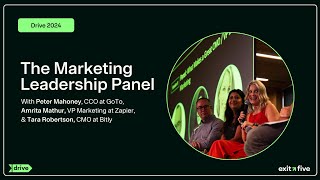
This is a YouTube video titled "What Makes a Great CMO/VP in B2B Marketing" recorded in late 2024. It features a panel discussion with multiple marketing leaders including Amrita, Peter, Tara, and a host referred to as Dave. The conversation covers topics such as leadership challenges, goal setting, strategy, communication, risk-taking, and managing teams in marketing roles. The discussion is informal and interactive, with audience participation and candid insights about marketing leadership and career experiences.
You should not become a marketing leader. If Amrita.
If you are not willing to throw spaghetti at the wall, you gotta like, have like a muscle to experiment and just try stuff.
Peter, if you want to do a lot of marketing.
I have said, like, I think before, whether it's CMO or not, I think before you become a manager, like, if you go from individual contributor to your manager, you should have to take a test. And it's like, are you sure you know what being a manager is? It's like having kids. And I'm starting to realize, like, all the things that I thought my parents were nuts about, I'm now doing. I'm like, oh, I understand why you did that that way. Tara, what's your answer?
If you don't want to communicate, it's like the number one part of this job. You have to communicate.
I've had a great time. Anybody else have a great time? I've had a great. Two things in life can be true at the same time. I've had a great time. I'm also ready for you to get the hell out of here. I'm just kidding. I've stayed up past 9 o' clock for two nights in a row and I don't even really drink. So that's just. That's saying something. Okay, so we wanted to do. I wanted to do a session where, you know, I think a lot of events you go to, panels can be hit or miss. Candidly, the host of the panel is not always me. I think I'm decent at having a discussion, keeping a discussion going. But also I wanted to bring on three people who would not give you the canned kind of bullshit, nonsense answers you get on a panel. And we have three of them. And so we're going to spend the next 40 minutes or so. We'll wrap here. I have some stuff that I want to go through at the end after that, but we're going to have this conversation and we'll also. The Q and A has been really, really good. We actually talking about what we want to do if we do this event again. And I think having the speakers here in the audience is really cool. Having the audience participation is really cool. So let's also use this to your advantage and get some really thoughtful answers from these three. So one of the last big rounds of applause of today. I'm going to tell you about each, actually. Let's get them up here and then I'll do quick intros. Come on, my panelists. Come on and join. All right. Look at it. Oh, it doesn't matter where you sit. Holy smokes. How about that song choice, by the way? Not, you know, my guy over there, Dan. Like, he, he might look a little buttoned up, but that was his choice. That was his choice. Run this town, baby.
Hi, I'm Tara.
All right, looks just like me.
This is mine. You're all the talent. I'm the host here, so let me please quiet down. All right, so real quick, three intros. I'm going to ask you to introduce yourself because you can do better than I am. Peter, we know you already because you spoke yesterday. That was great.
Hey guys, thanks for sticking around. This is the last session of the day. You guys look bright, which is great. I'm Amrita. It's one word. It's like saying I'm Rita, but it's literally Amrita. I am currently unemployed, but I start a new gig on Monday, which I'll tell you more. Where, where, where, where some of you know, I'm start. Like, I'll be leading the marketing team at Zapier. Zapier. And I'm so pumped because this is the biggest job I've ever had. And I can't believe I got this job and I edged out these like hardcore Silicon Valley type guys. And I got it because you're a badass.
She's a badass.
Tara and I. She's like one of the few B2B marketing leaders that also lives in Vermont that I know, which they've all come out of the woodwork now. And Tara's had an awesome career running marketing at a bunch of different companies. Right now she's CMO at Bit Ly.
Hi everyone. I'm Tara. I live here. Who here is from Vermont? Met a few of you. Oh my God. More than I've had the chance to meet. Let's connect afterwards. It's been so cool to connect with our people in this area. I work here in this space. So just a true honor being here.
Not to put Tara on blast or anything, but like, she burned both ends of the can. She was out late last night and unlike most of you, she was at the workout at 6:15 this morning.
I was out late but drinking a lot of water and a super fun time. So yes, CMO at Bit Ly. Prior to Bit Ly, I've worked at brands like Sprout, Social, hotjar, Teamwork. So I've been really lucky to work on some incredible, incredible businesses and feel honored to be on stage with these two incredible leaders.
All right, here's where I Want to start?
And Dave and Dave and Dave and this guy.
And scene. Yeah. Where's Matt? Where's Matt? Matt said some nice things about me at dinner last night. I wish I recorded him and was like, yeah, take that. But that's all right. We'll save that for another time. Okay. I got a bunch of questions. Usually I don't prep for these things, but I was nervous about this one, so I did prep. Granted, I wrote these a week ago and I'm a very impulsive person and I change a lot. So these could be shit. But I think they're going to be good. But I have a place that I want to start is I want to ask each one of you, knowing what you know now, what is something that you could go back and tell yourself as a first time marketing leader? Now I think of marketing leader doesn't necessarily mean job title like vp, cmo. I mean like, hey, you could be, you're a marketing manager and this is the first time that you're, you're being asked to run a team of three or lessons from, from being a mark, you know, VP of marketing or cmo. Peter, let's start with you and we'll, we'll work back.
Yeah. There are a couple of things that come to mind immediately, Dave. One is know the business and to the point where I always, in any role that I have the first person.
To experiment and just try stuff.
If you want to do a lot of marketing.
That'S a real. I have said like, I think before, whether it's CMO or not, I think before you come a manager, like if you go from individual contributor to manager, you should have to take, take a test and it's like, do. Are you sure you know what being a manager is? It's like having kids. And I'm starting to realize like all the things that drove, like I thought my parents were nuts about, I'm now doing. I'm like, oh, I understand why you, why you did that that way. Yeah. Tara, what's your answer?
If you don't want to communicate, it's like the number one part of this job. You have to communicate. You have to communicate out, you have to communicate in, you have to communicate sideways. You have to communicate in every possible direction. That is the skill that so many people don't talk about, especially within your business. That is critical.
Right?
Like how many people get all flustered because the VP of sales wants to dig deep on what's going on with marketing?
So.
Well, that's the job.
Literally everyone.
There'S no other way. Okay, I want to talk about goals. How do you and I've pulled these are basically based on a lot of the common things that we see come up with marketing leaders or people that want to be a marketing leader. Talk about goal setting. How do you set goals for the team? I'm curious to know if you have a system. Do you do annual goals versus quarterly goals versus monthly? And how important is goal setting in the planning process to drive the team?
Critical. I mean goal setting is everything. Everybody needs a goal. And I would say as a whole, you've got your business goals that we work on with our executive team and with our leadership team. What's our revenue goal? What's our net dollar retention goal? How does that drive across? But then we have our sub KPIs that we bring down into our teams. Some goals are obvious. If you have an acquisition goal, you know what you're trying to drive. Some goals might be new. And so as Amrita talked about, if you're testing or if you're trying, we will always actually put a learning goal to that as well. And sometimes we might hit it nail on and be super proud that we figured it out. Sometimes it might swing in either direction. And that's also fine because we're learning. But everything always has a goal. We look at them annually, we then break them down quarterly and we review them monthly and weekly with all of our teams.
And part of it depends on the stage of the company too. Right? So if you're super early stage, maybe you don't need an OKR system. Like that's too complicated for you guys. You probably don't even have a team yet. One thing that I've seen companies do is just kind of have like, like a P0 and P1. It's like a priority like stack ranked. Here are the five things we're trying to accomplish this quarter. And like try to make it as tangible as possible. Try to put a number behind it. But it's okay if it's a learning goal. It's okay if it's like a hiring goal or something to that effect. But just have like a P0P1 system and make sure that there's a driver of the bus. The goals are nothing if it doesn't belong to somebody. So a team or a person needs to be driving towards that goal.
So as you know, Dave, I kind of wrote a book on this and.
You don't get paid for it anymore, so it doesn't matter.
I know, I know. Was that complaining I'm sorry.
No, it's great. Ten people said something about that. I love, like, little insights like that. I think it makes everything so much better. He's like, I sold the company. I sold the rights to the book. I was like, oh, that's interesting. You had to sell the rights to the book when you sold it. Like, that stuff is interesting to me.
So maybe the book was more valuable than the company. They actually didn't line I out. I'm not sure.
We could use this to start a fire.
Exactly.
Always going to be at a company where things are going great, but you might be able to flip that into something like, can I learn right now? Right. I was running marketing at a company I just got there three months in cmo new team. We laid everybody off. We started over two months in Covid happens and they said, you got to give all your budget back. And I'm like, well, what am I going to do for the next two years? But then I took it on as a creative learning challenge, which is like, okay, well, what can I do with no budget? And how can those be turned into constraints that now I can use as a way to build skills in your next job? What about you, Ms. Tara?
So I kind of want to build on what everybody's saying. But look at it from another angle. If I were to go back and say, what are the things that I wish that I knew? You don't know what you don't know. That has been the number one learning for me. When I first started out in my career, when I jumped into leadership for the first time, I lived in the stress spiral that Natalie talked about yesterday, and man, did it suck. And I think I had this expectation on myself that when I was in that learning mode and when I was trying to figure out, my budget's been cut, I need to figure out how to do this. I thought I had to do that and I thought I had to become an expert in the things that I wasn't a marketing expert in because we all have skills. You know, whether you're a t shaped marketer, whether you're a specialist, whether you're a generalist, you've got a skill that you're great at and a trade that you're great at, and it's not all of them. That's just impossible. And the more that I learned that, I don't have to be the one that knows that. Kind of like Peter was saying yesterday, like, Even as a CMO, 5% marketing is actually hilarious because it's so true. The more that I've learned that there's people out there in this room that I guarantee you 90% of you are better marketers than me in a lot of different areas. 100% of you. Actually, 110%. And you really don't know what you don't know, but there is somebody out there that does. And so networking, learning, connecting, and really just putting yourself out there and being a part of a community like this has been what has been such a huge catalyst to my own growth, both as a leader, but also as a marketer and coupling. What Peter said, spend the time not just learning about your marketing trade, but your business. Spend the time connecting with your colleagues. That's critical.
All right, I'm going to jump all over the place. I wrote these myself. This is a fun one. It's a little fill in the blank. Finish this sentence. You should not become a marketing leader if.
If you are not willing to throw spaghetti at the wall. You got to, like, have, like a muscle to experiment and just try stuff.
If you want to do a lot of marketing.
That's a real. I have said, like, I think before, whether. Whether it's CMO or not, I think before you come a manager. Like, if you go from individual contributor manager, you just have to take a test and it's like, do. Are you sure you know what being a manager is? It's like having kids. And I'm starting to realize, like, all the things that drove, like, I thought my parents were nuts about, I'm now doing. I'm like, oh, I understand why you. Why you did that that way. Yeah. Tara, what's your answer?
If you don't want to communicate, it's like the number one part of this job. You have to communicate. You have to communicate out, you have to communicate in. You have to communicate sideways. You have to communicate in every possible direction. That is the skill that so many people don't talk about, especially within your business. That is critical.
Right?
Like, how many people get all flustered because the VP of sales wants to dig deep on what's going on with marketing the job.
Literally everyone there.
There's no. There's no other way. Okay, I want to talk about goals. How do you. And I've pulled. These are basically based on a lot of the common things that we see come up with marketing leaders or people that want to be a marketing leader. Talk about goal setting. How do you set goals for the team? I'm curious to know if you have a system. Do you do annual goals versus quarterly goals? Versus monthly. And how important is goal setting in the planning process to drive the team?
Critical. I mean, goal setting is everything. Everybody needs a goal. And I would say as a whole, you've got your business goals that we work on with our executive team and with our leadership team. What's our revenue goal? What's our net dollar retention goal? How does that drive across? But then we have our sub KPIs that we bring down into our teams. Some goals are obvious. If you have an acquisition goal, you know what you're trying to drive. Some goals might be new. And so as Amrita talked about, if you're testing or if you're trying, we will always actually put a learning goal to that as well. And, and sometimes we might hit it nail on and be super proud that we figured it out. Sometimes it might swing in either direction. And that's also fine because we're learning. But everything always has a goal. We look at them annually, we then break them down quarterly and we review them monthly and weekly with all of our teams.
And part of it depends on the stage of the company too. Right? So if you're super early stage, maybe you don't need an OKR system. Like that's too complicated for you guys. You probably don't even have a team yet. One thing that I've seen companies do is just kind of have a P0 and P1. It's like a priority, like stack ranked. Here are the five things we're trying to accomplish this quarter. And try to make it as tangible as possible. Try to put a number behind it. But it's okay if it's a learning goal, it's okay if it's a hiring goal or something to that effect. But just have a P0, P1 system and make sure that there's a driver of the bus. The goals are nothing if it doesn't belong to somebody. So a team or a person needs to be driving towards that goal.
So as you know, Dave, I, I kind of wrote a book on this.
And you don't get paid for it anymore, so it doesn't matter.
I know, I know. Was that complaining? I'm sorry.
No, it's great because like 10 people said something I, I love, like little insights like that. I think it makes everything so much better. He's like, I sold the company, I sold the rights to the book. I was like, oh, that's interesting. You had to sell the rights to the book when you sold it. Like that stuff is interesting to me.
So maybe the book was more valuable than the company, maybe that was the they actually didn't line. I. I'm not sure we could use.
This to start a fire.
Exactly. Well said. But I'm going to answer a little bit differently because I've spent a lot of time and some of you may have seen some of my content I've done in the past. I've talked a lot about goals and a framework and setting and things like that. There's one thing that I have talked about a fair amount, but I think it's an important addition to this, is that it's not just the goal, it's the strategy. And that's where a lot of alignment gets broken inside companies. And so what's the difference? Right? So I just used this metaphor, I think in the last 24 hours. So apologies to whoever I was talking to, but your goal is getting to the top of a hill. What's your strategy? Maybe I can climb up the front, the steep part, or maybe I go the long path around the back. Why does it matter what your strategy is? Right? Your strategy is you need different tools, right? So if I'm climbing up this deep thing, I need ropes and those clippy things, and if I'm going around the back, I need comfy shoes and water. And it's just your strategy is really critical to understand what your goals and Dave, you just brought up talking to the CEO, CEO that you were talking to probably said, I want you to grow, right? That was the goal. And they said, great, my strategy is going to produce this, you know, high volume, inbound kind of thing. And they said, well, no, it's actually not going to work. So not only getting alignment around what your goals are, but really understanding and connecting on what those strategies are to get there is just so critical. I love that it's missing it a lot.
I saw Dan, he was like looking down and he started using this hill strategy goals thing. But it's great. That opened up a door for me because I feel like another layer of the strategy thing that people don't often talk about is like the constraints. And so to build on your example, like, okay, well, you need to get to the top of this mountain. But like, we don't have any budget for shoes, but you still need to get to the top of the mountain. Okay, so then the tactics are gonna, are gonna change and your company may have gone through layoffs and you don't have the budget or yeah, everyone says go hire great people, but actually like, our company kind of sucks and we don't pay that people well, and so we can't get top talent. And so maybe we should just try to spend the money on an agency. Like, those are all the layers that I'm like, man, I wish I knew a lot of this. So how the game works now, just by show of hands for your business, how many of you feel right now you have the right goals set based on the strategy of the company?
For a minute, I thought it would be none.
I was gonna say this should be a good business for us. Nobody raised their hand. We got a lot to education. We can help do that. That's crazy to that. Is that crazy or does that seem right?
How are you guys operating? Like, what are you doing? Like, what's happening?
No, but I empathize with why, like, having been there, like, there's. I think marketing often gets trapped with a lot of bullshit from the CEO. And if the. If there's no clear company. If there's no clear company strategy, then it's going to be tough to set a marketing.
But one third of this room is CEOs. At least my group was all CEOs. Where are you all at? Are you setting the strategy for your marketing team?
They saw this was going to be a CMO panel and they left.
Can I. Can I build for a second on what Peter was saying too? Because I think that this is a. There's a connection here in talking about the importance of communication as it aligns to your goals and as it aligns to your strategy. Because a goal is one thing, but a goal is a goal is a goal is a goal. The initiatives and the tactics and the work that you do that helps you achieve those goals is what you actually need to be communicating. And so for us, when I talk about these monthly rituals that we have, it's not about just, how are we doing. Sometimes we're doing it, sometimes we're not. It's, are we doing the things that we said we were going to do and are those things doing the thing that we thought they would do? And a lot of time it's not. And so while your goals sometimes don't move, your initiatives, your objectives, your tactics absolutely should be fluid when it comes to the big bets that you're running. So make sure you communicate that. Bring your teams in, bring your company in it. When your CEO is coming to you and pushing back on doing this new thing, that's how you push it back on them, on where you're prioritizing your time to that top level.
That is such a good point. And I will Admit that. Effed up on that many, many times. Partially why I'm on.
I've also. He'll never understand this, so I can say it, but I work with this guy once and this guy was obsessed with the framework, the OKR framework. I'm like, bro, it doesn't matter. What's in the framework is what is going to actually happen. And I have seen so many people rise to like high level management positions because they, they read Measure what Matters by John Doerr and they love OKRs. And it's like, no, I don't know that framework, but I can help develop a better strategy to get up the hill. And so I also think, like, don't get so married to the framework, like whether you call it okrs or whether you call it goals, like, can you write it on a napkin and write three to five bullets and can you get everybody in the company on board? Like how many people work at companies where you go through this like 3 month goal setting exercise? Like, that's, that's crazy.
What the process, for the sake of process sucks.
And so many people like. And I also think this is one of the things that helped me with imposter syndrome. I saw so many people rise to the top and they're actually not very good at what they do. They just fake it. They do this fake work which is like OKR planning and think that that's the actual job. And a lot of people in this room did that. Mm, noise again.
So, Dave, I love what you said there because it's often about clarity and simplicity and not about having a fancy framework. A framework, it can be a tool to help you think, but. But it's ultimately about doing that in a lot of people. I felt a shudder in the audience when I said the word strategy because people think that, wow, that's something that's weird and scary and sophisticated. It's just not. And it's replace it with how are we going to do it? And it is really, really simple. And I think people think of. And a lot of companies really get stuck on this idea of strategy because they feel like, oh my God, it's such a big complicated thing and I need an EVP of corporate strategy to figure it out. No, let's just decide how we're going to get there together. And it's kind of as simple as that. And if you can boil it down to that and the handful of goals that you need to do in a couple of bullets, you're much more likely to get the team behind you versus having a complicated framework with 100 different.
Things and that, that's the game, is not just setting the goals, but when the whole company is rallied around the goals, then your life becomes easy.
As a marketer, I was just gonna say there's something hidden, there's an insight in what you just said, which is like, can you get all of the goals in point form or whatever on a napkin? Like, if it can fit on a postcard or a napkin, you're doing something right.
Totally. All right, where do I want to go next? We're going to take your questions too. I want to. Let's make this a little bit interactive in the. In a second. Another thing that comes up is this the delicate balance between short term and long term. We need to hit the pipeline goal, we need to hit the revenue goal this quarter, but also next year we need to grow 100%. And so we better start laying some foundation. You know, we want to do brand, we want to do whatever. How do you do. Does any of you have a helpful framework for thinking about those. How can we help the humans in this room walk and chew gum at the same time? How do you do those things?
Yeah, it's one of the first things I tend to do, Dave, is try to anchor the long term with the short term. And the way I like to do it is I like to sketch a picture of what our future should be. So there's one of the things that I know I talked about strategy. That's just how you get there. One of the most important things in your strategy is to figure out, all right, well, what do we want the thing to look like, the thing we're working on in some unspecified period of time? Two years, three years, five years, whatever it is, what's that future state that we're trying to work to? Then as you start building your near term plans, you can start to think about the connection between the short term and the long term. Is that short term objective going to bridge me in the area of getting to the long term, or is the long term so different from what I'm doing today that I need to build in some change to get toward the long term? So we're dealing with this right now because I'm doing this big go to market transformation across this complicated business, and we have a current view of the way we go to market, and we have a future view of how we go to market that's very different. So to get there while delivering our objectives in the short term, we need to make a bunch of decisions about building up and testing and making sure that there's actually some infrastructure so that in 25 and 26 we'll get to that view. But the only way you get there is by painting that picture of what the future is. And you're an idiot if you try to do it too, specifically because you're gonna be so wrong. It doesn't matter. Literally, it's your Amrita was saying, sketch it on a napkin. If you can design on the napkin what you want your future state to be, whether it's your marketing team, whether it's digital marketing, if you're running that, if it's your company, whatever it is. And then you will see the connections really quickly around how your work today is adding to that or subtracting from that. And that's the key in my mind.
Tara, if you look at your current company budget, programs, people, whatever, how much of that do you have? Split between stuff that's going to help us hit our number this year and stuff that's going to be more future based.
Budget wise, I would say predominantly is stuff that happens with acquisition and demand gen. But there's always a pretty good percentage set aside for long term and big bets. And I guess the way that we think about this in what Peter's kind of talking about is we actually, we sketch it out in the forecast. So and I would say if you're working for a bigger org, it applies if you work for a smaller org and you're a solo marketer and you don't have someone in house, get in an analyst to do this with you. But we'll work with the finance team and essentially look at our overall trends and based on those trends and the growth rate we're expecting, what do we have just with the foundation? Because you have essentially your foundational things that you just have to do. And we call that our recurring work. And that takes capacity. That is where you start. You have to have the foundation built. And then we look at that curve and say, okay, well what's our gap to where the business needs to be and what we need to create for demand? Whether that's we're both product LED and sales led. So we've got a product LED funnel that marketing owns with product. We have a sales LED funnel where it's focused on pipeline. And we look at that bridge between the what does our natural growth essentially look like? If we do nothing else, where is that going to land us? And then what's the difference? And then that's where we start to apply the Big bets. And so budget isn't necessarily a specific calculation of an 8020 split. It's really based off of getting into the strategy. What are the things that we think that we can do that will help us bridge that gap and then consistently look at that quarter over quarter.
So the lens you use is budget. Like, is that sort of like you have, like, percentages.
We use demand to start, so we'll start with the demand, and then we apply into that. What are the things that we want to do and then what is the budget? And sometimes you got to get creative, you don't have budget. And sometimes when you've got a little bit more flexibility, we can take the bigger swings. But I also really, I've just got an incredible team at Bit ly that are just so much smarter than me and creative. And so it just makes a lot of fun jamming on, figuring out what are the things that we want to try. And Dave, you had asked this. There is no space to not focus on the long term. You have to focus on the long term and you have to think about the innovation, the creativity. And that creativity sometimes has budget. That creativity could be also budget of time, like writing a book a few people on the stage have done, because it does really make a difference.
All right, a couple random ones and we're going to get your questions. Have any of you ever had success? Like, have you had a worked at a company where you've been successful but your counterpart was a huge pain in the ass and you didn't get along?
Yes.
Almost always. Like, I literally can't remember a time where that hasn't been the case. Well, one company that wasn't the case.
People are hard. I think, just in general, people are hard. And that's the part when we get back to communication being so critical. At the end of the day, we are all humans. And I think that's what we have to remember when we're working with people alongside us. And if our counterparts are difficult, ask them why. You just got to face that head on. That's probably the biggest learning I've ever heard.
I'm asking because, like, there's some narrative and like, I kind of feel this way about, like, team building in general, but it's like, oh, you should, you know, like, you're the, you're the VP of marketing. Like, the VP of sales should be your best friend. You should have coffee together. And like, I've been in situations where, like, we absolutely didn't like each other. And, and I'm. I wasn't going to leave the company over that, and neither were they. So we got to figure out how to. How to productively work together. And what I'm hearing is you're kind of just like that. That's just life. Sometimes you need to be a professional and figure out how to work together.
You got to figure it out. If you don't like each other, who cares? You got it. You're running the same business. You've got the same goals. Figure it out. Like. And I think the important thing is, is a lot of people say, like, oh, sales, product, they have to be your best friends. Depending on your goal. Best friend doesn't mean that you're sitting down and you're kumbaya ing and have the best time together. It means you debate and that you've got challenges and that you're having those shared goals. But at the end of the day, your CEO doesn't care if you don't get along. What they care about is how you're working together and how you're growing the business. And that's up to you. And if you aren't getting along, then sit down and say, like, look, we're not getting along. We got to figure this out, because it's our job.
All right, let me resist the temptation to run to the CEO as referee, which I have done so many times, learned the hard way.
Did you hear that? Resist the urge to go to the CEO to referee. That's like, the ultimate lesson in managing up. In a nutshell, like, it's not their job to settle your tie. You were hired there because you're a grownup, and you need to figure that out together. That's a good one.
I'll remind myself of that on Monday. Post it notes everywhere.
We got this. It'll be recorded. We'll make a clip for you.
Dave. I just have to say I think I'm the difficult counterpart.
Me, too. I've only. Although, like, there's like, a curve of, like, when I was younger, I thought it was. I thought they were the problem. And the older I get, I'm like, oh, it's me. Oh, yeah, it's Taylor Swift. Maybe you heard of her. Okay, quick one from each of you. Biggest risk you've taken in your career that has worked. Tara.
Oh, I'm first. Biggest risk I've taken in my career that has worked. Networking. When I first started out in my career, I was so nervous, so nervous to walk up to people and say, like, hey, can we connect? I'd love to learn from you of these people that I've just admired and still admire and still feel immense amounts of imposter syndrome sitting next to on stage, even. But the biggest risk I ever took was walking up to that first person. His name is Kyle. He's still a good friend of mine, and saying, hey, buddy, will you mentor me?
Love that. That's actually one. I've been saying this. One of my favorite things about this event so far is just noticing, like, even in the. Like, the lunchroom was like, an underratedly cool thing. Like, because we all kind of roughly work in the same world. Like, I just saw complete strangers just pop up and sit next to each other and have a lot of stuff to talk about. I see everybody nodding along, and that was like. That's why we. We want to do more of this. That was really cool. What about you, Amrita?
I was going to say something similar, and I actually find that doing it with total strangers is actually, like, extremely therapeutic. This. This guy Brendan right there was like, my therapist. Random. Like, we had a random call a couple years ago, and then it turned into an hour call, and you were just, like, letting me cry. And that was awesome. And it was good. Like, there's something about that. Just leaning on strangers who are smart, but you just don't know them and they don't know your business. And so they can actually give you actionable advice that's unbiased, do not coddle you.
What about you?
Probably walking away from a big job, making a ton of money, and going to start a company where I made no money for three years. That was a big risk.
You wrote a good book, though.
I got a book out of it.
It's more specific risk.
And looking back at that experience now, was that a good thing?
It was a great thing, cosmically, yeah. It was a really great thing. I mean, I grew a ton. Incredible stress. I mean, you know, Right? I mean, it's amazing stress when you build something. There are a lot of people who are builders out here. It's. You got to put yourself out there in this crazy way and sometimes way outside your comfort zone. And it's stress more than you probably ever experience in your life. But, you know, how do you build muscle? You stress muscle, right? And you grow incredibly when you put yourself under some kind of controlled stress and not too much, or it'll break.
The opposite side of that question. Let's send it back down. What's the biggest risk you've taken in your career and swung and missed starting a company? Amrita?
I Left a very, like a great job, great people. Everything was awesome. I left and joined a very PLG company, big company. You guys would know this name. And I took a risk because I was like, yeah, you know, I'm gonna grow. I'm gonna learn something new. I want to learn the PLG business, how that whole scale thing works. And yeah, that crashed and burned a lot of it was my fault.
So does it rhyme with schmickup?
Sorry? Does it rhyme with rhymes? It does.
We're trying to get Monday.com as a sponsor anyway, so I don't really care.
They're great. I love them. I have their stock.
What about you, Tara?
I mean, I had the same story. It rhymed. The schmat jar. Schmad jar. So I'm going to go with a different one because we won't have the same answers for everything. Honestly, instead of the big risk, let's talk about the little ones because we talked about short term and long term and how do you balance them? That's good. I feel good about that. Probably one of the biggest risks is, or the biggest failures that I've seen in just marketing leadership and marketing in general is when I get stuck in the, oh, no, we're not hitting our numbers. What can we do right now? And you start to pivot from the strategy and it's like if we run an email and we give this discount, maybe we can get those win backs and it'll make an impact. And what does that do? Stress spirals the team. It stress spirals yourself. It's the worst possible thing you can do. And I fucked that one up a few times, so.
Sorry, can you, can you say that again? The what? Like the impression that you did at the beginning. Can you say that part again? No, no, no. That was great. That was great. That was really good. No, the other part though, right now. Like that. Then how do we grow with that.
Thing if the numbers are falling down? That again, I don't remember what I said. I was just blocking.
That's like the only mode that I know. So I'm trying to like, figure out.
Why I blacked out. Yeah, it's the numbers are down. What can I do do right now? Let's just start going, let's fucking go. And then you're like, that was a bad decision. That didn't get us any impact. And everybody's all pissed off because I did bad leadership. Don't get stuck in the short term gains if your numbers start to go in an opposite direction. Stick through the things that you believe in and stick through the things that your team is bringing to the table.
Our last question, then we're. Then we're turning to our audience, which has really just been great all week with questions. How do you lead your team? I think this is applicable to anybody, CMO or not. How do you lead your team when you're not feeling inspired yourself? What's your strategy for getting out of a leadership rut? You know, we're humans. We're not always in great moods. Everything's not always good. And we just ride the. Ride the wave. And it can be hard to come into work sometimes and be like, let's fucking go. You know, it's just. I'm just not in that mood today, folks. How do you rally and do that? Do you just suck it up and put on that face or.
It's so hard. But the one thing is to just have some of your mentors on speed dial. I call this lady all the time. Like, I'm just like, you know, like, it's helpful to hear from people that are not in your shoes, not doing that exact same job at that exact same company, and then just genuinely just be like, I need a pep talk and here's how I'm feeling. And most people, especially if you have them on speed dial, will help you get there. That's just like, it's a tactic that's not gonna last through all of the ups and downs. So you definitely have to kind of have your own coping mechanisms. Whether that's post it notes, whether that's writing your own. If you journal or something, you can write in there, like, here are the things that are my fundamentals that I'm not gonna compromise on, whatever those strategies are. But you kind of have to help yourself. And then you can have some friends and mentors and connections that can kind of give you some pep talks along the way.
This isn't an issue for me. And I'll tell you.
Motivation is not an issue whatsoever.
So here's the thing.
Tell me more.
He grows his own weed. It's fine.
You're in the right place.
So I'm a big believer that your superpower is related to your kryptonite. And for me, a superpower is I am calm and I'm unflappable. But the kryptonite part of that is that I'm regularly told that I'm unreadable. And it's difficult for some of my employees, especially who need to connect with me. They'll say the greatest thing in the world just happened. And I'll say, okay, that's nice. And at the same time they'll say, a terrible thing just happened. I'll say, okay, what are we gonna do about it? Right? And I think that sense of calm, it emanates from being, you know, one of six kids in five years and a middle child, I guess. But that, that, that's kind of me. But, but it is. I'm not the kind of person who can really. It's not as natural for me to rally the troops, but at the same time, the world can be burning around me and I'll keep going.
It's interesting because, like, you could, you could say in a really happy situation, you're like, oh, that would be a negative thing. But I think we've also all worked with like the rah rah types and that can also, like, no, I would much rather have the. If I know what I'm always going to get from you versus like the fiery, you know, leader on that point. Do you do either? Maybe this question, Peter, and then you two can jump on, off on this. But do you?
Well said. But I'm going to answer a little bit differently because I've spent a lot of time and some of you may have seen some of my content I've done in the past. I've talked a lot about goals and a framework and setting and things like that. There's one thing that I have talked about a fair amount, but I think is an important addition to this, is that it's not just the goal, it's the strategy. And that's where a lot of alignment gets broken inside companies. And so what's the difference? Right? So I just used this metaphor, I think in the last 24 hours, so apologies to whoever I was talking to, but your goal is getting to the top of a hill. What's your strategy? Maybe I can climb up the front, the steep part, or maybe I go the long path around the back. Why does it matter what your strategy is? Right? Your strategy is you need different tools. So if I'm climbing up this deep thing, I need ropes and those clippy things. And if I'm going around the back, I need comfy shoes and water. And it's just your strategy is really critical to understand where your goals. And Dave, you just brought up talking to the CEO, CEO that you were talking to probably said, I want you to grow. Right? That was the goal. And they said, great, my strategy is going to produce this high volume inbound kind of thing. And they said, well, no it's actually not going to work. So not only getting alignment around what your goals are, but really understanding and connecting on what those strategies are to get there is just so critical. I love that it's missing in a lot.
I saw Dan, he was like looking down and he started using this hill strategy goals thing. But it's great. That opened up a door for me because I feel like another layer of the strategy thing that people don't often talk about is like the constraints. And so to build on your example, like, okay, well, you need to get to the top of this mountain, but like, we don't have any budget for shoes, but you still need to get to the top of the mountain. Okay, so then the tactics are gonna, are gonna change. And your company may have gone through layoffs and you don't have the budget or yeah, everyone says go hire great people, but actually like, our company kind of sucks and we don't pay that people well. And so we can't get top talent. And so maybe we should just try to spend the money on an agency. Like those are all the layers that I'm like, man, I wish I knew a lot of this. How the game works now, just by show of hands for your business, how many of you feel right now you have the right goals set based on the strategy of the company?
For a minute I thought it would be none.
I was gonna say this should be a good business for us. Nobody raised their hand. Where we got a lot education, we can help do that. That's crazy to that Is that crazy or does that seem right?
How are you guys operating? Like, what are you doing? Like, what's happening?
No, but I, I empathize with why, like, having been there, like there's. I think marketing often gets trapped with a lot of bullshit from the CEO. And if the, if there's no clear company. If there's no clear company strategy, then it's going to be tough to set a marketing strategy.
But one third of this room is CEOs. At least my group was all CEOs. Where are you all at? Are you setting the strategy for your marketing team?
They saw this was going to be a CMO panel and they left.
Can I build for a second on what Peter was saying too? Because I think that this is a. There's a connection here in talking about the importance of communication as it aligns to your goals and as it aligns to your strategy. Because a goal is one thing, but a goal is a goal is a goal is a goal. The initiatives and the Tactics and the work that you do that helps you achieve those goals is what you actually need to be communicating. And so for us, when I talk about these monthly rituals that we have, it's not about just how are we doing. Sometimes we're doing it, sometimes we're not. It's, are we doing the things that we said we were going to do and are those things doing the thing that we thought they would do? And a lot of time it's not. And so while your goals sometimes don't move, your initiatives, your objectives, your tactics absolutely should be fluid when it comes to the big bets that you're running. So make sure you communicate that. Bring your teams in, bring your company in it. When your CEO is coming to you and pushing back on doing this new thing, that's how you push it back on them, on where you're prioritizing your time to that top level.
That is such a good point. And I will admit that effed up on that many, many times. Partially why I'm on.
I've also. He'll never understand this, so I can say it, but I work with this guy once and this guy was obsessed with the framework, the OKR framework. I'm like, bro, it doesn't matter. What's in the framework is what is going to actually happen. And I have seen so many people rise to like high level management positions because they, they read Measure what Matters by John Doerr and they love OKRs and it's like, no, I don't know that framework, but I can help develop a better strategy to get up the hill. And so I also think, like, don't get so married to the framework. Like whether you call it okrs or whether you call it goals, like, can you write it on a napkin and write three to five bullets and can you get everybody in the company on board? Like, how many people work at companies where you go through this like 3 month goal setting exercise? Like, that's, that's crazy.
What the process for the sake of process sucks.
And so many people like. And I also think this is one of the things that helped me with imposter syndrome. I saw so many people rise to the top and they're actually not very good at what they do. They just fake it. They do this fake work, which is like OKR planning and think that that's the actual job. And a lot of people in this room did that. Mm noise again.
So, Dave, I love what you said there because it's often about clarity and simplicity and not about having a fancy framework. A frame rate. It can be a tool to help you think, but. But it's ultimately about doing that in a lot of people. I felt a shudder in the audience when I said the word strategy because people think that, wow, that's something that's weird and scary and sophisticated. It's just not. And it's. Replace it with, how are we going to do it? And it is really, really simple. And I think people think of. And a lot of companies really get stuck on this idea of strategy because they feel like, oh, my God, it's such a big, complicated thing, and I need an EVP of corporate strategy to figure it out. No, let's just decide how we're going to get there together. And it's kind of as simple as that. And if you can boil it down to that and the handful of goals that you need to do in a couple of bullets, you're much more likely to get the team behind you versus having a complicated framework with 100 different things.
And that. That's the game, is not just setting the goals, but when the whole company is rallied around the goals, then your life becomes easy.
As a marketer, I was just gonna say there's something hidden. There's an insight in what you just said, which is like, can you get all of the goals in point form or whatever on a napkin? Like, if it can fit on a postcard or a napkin, you're doing something right.
Totally. All right, where do I want to go next? We're going to take your questions, too. I want to. Let's make this a little bit interactive in the. In a second. Another thing that comes up is this the delicate balance between short term and long term. We need to hit the pipeline goal. We need to hit the revenue goal this quarter, but also next year, we need to grow 100%. And so we better start laying some foundation. You know, we want to do brand, we want to do whatever. How do you do. Does any of you have a helpful framework for thinking about those? How can we help the humans in this room walk and chew gum at the same time? How do you do those things?
Yeah, it's one of the first things I tend to do, Dave, is try to anchor the long term with the short term. And the way I like to do it is I like to sketch a picture of what our future should be. So there's one of the things that I know I talked about strategy. That's just how you get there. One of the most important things in your strategy is to figure out. All right, well, what do we want the thing to look like, the thing we're working on in some unspecified period of time? Two years, three years, five years, whatever it is, what's that future state that we're trying to work to then as you start building your near term plans, you can start to think about the connection between the short term and the long term. Is that short term objective going to bridge me in the area of getting to the long term, or is the long term so different from what I'm doing today that I need to build in some change to get toward the long term? So we're dealing with this right now because I'm doing this big go to market transformation across this complicated business. And we have a current view of the way we go to market and we have a future view of how we go to market that's very different. So to get there while delivering our objectives in the short term, we need to make a bunch of decisions about building up and testing and making sure that there's actually some infrastructure so that in 25 and 26 we'll get to that view. But the only way you get there is by painting that picture of what the future is. And you're an idiot if you try to do it too, specifically because you're going to be so wrong. It doesn't matter. Literally, it's Yourita was saying, sketch it on a napkin if you can. Design on the napkin what you want your future state to be, whether it's your marketing team, whether it's digital marketing, if you're running that, if it's your company, whatever it is. And then you will see the connections really quickly around how your work today is adding to that or subtracting from that. And that's the key in my mind.
Tara, if you look at your current company budget, programs, people, whatever, how much of that do you have split between stuff that's going to help us hit our number this year and stuff that's going to be more future based.
Budget wise, I would say predominantly is stuff that happens with acquisition and demand gen. But there's always a pretty good percentage set aside for long term and big bets. And I guess the way that we think about this in what Peter's kind of talking about is we actually, we sketch it out in the forecast. So and I would say if you're working for a bigger org, it applies if you work for a smaller org and you're a solo marketer and you don't have someone in house, get in an analyst to do this with you. But we'll work with the finance team and essentially look at our overall trends. And based on those trends and the growth rate we're expecting, what do we have just with the foundation? Because you have essentially your foundational things that you just have to do. And we, we call that our recurring work. And that, that takes capacity. That is where you start. You have to have the foundation built. And then we look at that curve and say, okay, well, what's our gap to where the business needs to be and what we need to create for demand? Whether that's. We're both product led and sales led. So we've got a product led funnel that marketing owns with product. We have a sales LED funnel where it's focused on pipeline. And we look at that bridge between the what does our natural growth essentially look like? If we do nothing else, where is that going to land us? And then what's the difference? And then that's where we start to apply the big bets. And so budget isn't necessarily a specific calculation of an 8020 split. It's really based off of getting into the strategy. What are the things that we think that we can do that will help us bridge that gap and then consistently look at that quarter over quarter.
So the lens you use is budget. Like, is that sort of like you have like percentages.
We use demand to start, so we'll start with the demand and then we apply into that. What are the things that we want to do and then what is the budget? And sometimes you got to get creative, you don't have budget. And sometimes when you've got a little bit more flexibility, we can take the bigger swings. But I also really, I've just got an incredible team at bit ly that are just so much smarter than me and creative. And so it just makes a lot of fun jamming on, figuring out what are the things that we want to try. And Dave, you had asked this, like, there is no space to not focus on the long term. You have to focus on the long term and you have to think about the innovation, the creativity. And that creativity sometimes has budget. That creativity could be also budget of time, like writing a book a few people on the stage have done, because it does really make a difference.
All right, a couple random ones and we're going to get your questions. Have any of you ever had success? Like, have you had worked at a company where you've been successful but your counterpart was a huge pain in the ass and you didn't get along?
Yes.
Almost always. Like, I literally can't Remember a time where that hasn't been the case. Well, one company that wasn't the case.
People are hard. I think, just in general, people are hard. And that's the part when we get back to communication being so critical. At the end of the day, we are all humans, and I think that's what we have to remember when we're working with people alongside us.
And.
And if our counterparts are difficult, ask them why. You just got to face that head on. That's probably the biggest learning I've heard.
I'm asking because, like, there's some narrative and, like, I kind of feel this way about, like, team building in general, but it's like, oh, you should, you know, like, you're the. You're the VP of marketing. Like, the VP of sales should be your best friend. You should have coffee together. And like, I've been in situations where, like, we absolutely didn't like each other. And. And I'm. I wasn't going to leave the company over that, and neither were they. So we got to figure out how to. How to productively work together. And what I'm hearing is you're kind of just like, that's just life. Sometimes you need to be a professional and figure out how to work together.
You got to figure it out. If you don't like each other, who cares? You're running the same business. You've got the same goals. Figure it out. And I think the important thing is a lot of people say, like, oh, sales, product, they have to be your best friends depending on your goal. Best friend doesn't mean that you're sitting down and you're kumbaya ing and have the best time together. It means you debate and that you've got challenges and that you're having those shared goals. But at the end of the day, your CEO doesn't care if you don't get along. What they care about is how you're working together and how you're growing the business. And that's up to you. And if you aren't getting along, then sit down and say, like, look, we're not getting along. We got to figure this out because it's our job.
All right, I'm going to read this.
Temptation to run to the CEO as referee, which I have done so many times, learned the hard way.
Did you hear that? Resist the urge to go to the CEO to referee. That's like the ultimate lesson in managing up in a nutshell. Like, it's not their job to settle your tie. You are hired there because you're a grown up and you need to figure that out together. That's a good one.
I'll remind myself of that on Monday. Post it notes everywhere.
We got this. It'll be recorded. We'll make a clip for you.
Dave. I just have to say I think I'm the difficult counterpart.
Me too. I've only. Although, like, there's like a curve of like when I was younger, I thought it was. I thought they were the problem. And the older I get, I'm like, oh, it's me. Oh yeah, it's Taylor Swift. Maybe you heard of her. Okay, quick one from each of you. Biggest risk you've taken in your career that has worked. Tara.
Oh, I'm first. Biggest risk I've taken in my career that has worked. Networking. When I first started out in my career, I was so nervous, so nervous to walk up to people and say like, hey, can we connect? I'd love to learn from you of these people that I've just admired and still admire and still feel immense amounts of imposter syndrome sitting next to on stage even. But the biggest risk I ever took was walking up to that first person. His name is Kyle. He's still a good friend of mine and saying, hey, buddy, will you mentor me?
Love that. That's actually one. I've been saying this. One of my favorite things about this event so far is just noticing, like, even in the, like the lunchroom was like an under cool thing. Like, because we all kind of roughly work in the same world. Like, I just saw complete strangers just pop up and sit next to each other and have a lot of stuff to talk about. I see everybody nodding along and that was like, that's why we, we want to do more of this. That was really cool. What about you, Amrita?
I was gonna say something similar and I actually find that doing it with total strangers is actually like, extremely therapeutic. This. This guy Brendan right there was like my therapist random. Like we had a random call a couple years ago and then it turned into an hour call and you were just like letting me cry. And that was awesome. And it was good. Like, there's something about that. Just leaning on strangers who are smart, but you just don't know them and they don't know your business and so they can actually give you actionable advice that's unbiased and not coddle you.
What about you?
Probably walking away from a big job, making a ton of money and going to start a company where I made no money for three years, that was a big risk.
You wrote a good book, though.
I got a book out of it.
More specific risk.
And looking back at that experience now, was that a good thing?
It was a great thing, cosmically, yeah. It was a really great thing. I mean, I grew a ton. Incredible stress. I mean, you know, right. I mean, it's amazing stress when you build something. There are a lot of people who are builders out here. It's. You got to put yourself out there in this crazy way and sometimes way outside your comfort zone and it's stress more than you probably ever experience in your life. But, you know, how do you build muscle? You stress muscle, right? And you grow incredibly when you put yourself under some kind of controlled stress and not too much or it'll break.
The opposite side of that question. Let's send it back down. What's the biggest risk you've taken in your career and swung and missed starting a company? Amrita.
I left a very, like a great job, great people. Everything was awesome. I left and joined a very PLG company, big company. You guys would know this name. And I took a risk because I was like, yeah, you know, I'm going to grow. I'm going to learn something new. I want to learn the PLG business, how that whole scale thing works. And yeah, that crashed and burned a lot of it was my fault.
So does it rhyme with schmickup?
Sorry? Does it rhyme with rhyme? It does.
We're trying to get Monday.com as a sponsor anyway, so I don't really care.
Yeah, they're great. I love them. I have their stock.
What about you, Tara?
I mean, I had the same story. It rhymes with schmat jar. Smart jar. So I'm gonna go with a different one because we won't have the same answers for everything. Honestly. Instead of the big risk, let's talk about the little ones because we talked about short term and long term and how do you balance them? That's good. I feel good about that. Probably one of the biggest risks is, or the biggest failures that I've seen in just marketing leadership and marketing in general is when I get stuck in the, oh, no, we're not hitting our numbers. What can we do right now? And you start to pivot from the strategy. And it's like if we run an email and. And we give this discount, maybe we can get those win backs and it'll make an impact. And what does that do? Stress spirals the team. It stress spirals yourself. It's the worst possible thing you can do. And I fucked that one up a Few times.
So sorry, can you, can you say that again? The what? Like the impression that you did at the beginning. Could you say that part again?
Schmall jar.
No, no, no. That was great. That was great. That was really good. No, the other part though, right now. Like that. Then how do we grow with that thing?
The numbers are falling down.
That again.
I don't remember what I said. I was just blocking.
That's like the only mode that I know. So I'm trying to like, figure out.
Why I blacked out. Yeah, it's. The numbers are down. What can I do right now? Let's just start going, let's fucking go. And then you're like, that was a bad decision. That didn't get us any impact. And everybody's all pissed off because I did bad leadership. Don't get stuck in the short term gains if your numbers start to go in an opposite direction. So stick through the things that you believe in and stick through the things that your team is bringing to the table.
Our last question, then we're. Then we're turning to our audience, which has really just been great all week with questions. How do you lead your team? I think this is applicable to anybody, CMO or not. How do you lead your team when you're not feeling inspired yourself? What's your strategy for getting out of a leadership rut? You know, we're humans. We're not always in great moods. Everything's not always good. And we just ride the web, ride the wave. And it can be hard to come into work sometimes and be like, let's fucking go. You know, it's just, I'm just not in that mood today, folks. How do you rally and do that? Do you just suck it up and put on that face or.
It's so hard. But the one thing is to just have some of your mentors on speed dial. I call this lady all the time. Like, I'm just like, you know, like, it's helpful to hear from people that are not in your shoes, not doing that exact same job at that exact same company. And then just genuinely just be like, I need a pep talk and here's how I'm feeling. And most people, especially if you have them on speed dial, will help you get there. That's just like, it's a tactic that's not gonna last through all of the ups and downs. So you definitely have to kind of have your own coping mechanisms. Whether that's post it notes, whether that's writing your own. If you journal or something, you can write in there. Here are the things that are my fundamentals that I'm not gonna compromise on, whatever those strategies are. But you kind of have to help yourself. And then you can have some friends and mentors and connections that can kind of give you some pep talks along the way.
This.
This isn't an issue for me. And I'll tell you, I'm a bit.
Motivation is not an issue whatsoever.
So here's the thing.
Tell me more.
He grows his own weed. It's fine.
You're in the right place.
So I'm a big believer that your superpower is related to your kryptonite. And for me, a superpower is I am calm and I'm unflappable. But the kryptonite part of that is that I'm regularly told that I'm unreadable. And it's difficult for some of my employees, especially, who need to connect with me to. You know, they'll say, the greatest thing in the world just happened. And I'll say, okay, that's nice. And at the same time, they'll say, a terrible thing just happened. I'll say, okay, what are we gonna do about it? Right? And I think that sense of calm, it emanates from being, you know, one of six kids in five years and a middle child, I guess. But that's kind of me. But. But it is. I'm not the kind of person who can really. It's not as natural for me to rally the troops, but at the same time, the world can be burning around me, and I'll keep going.
It's interesting because you could say in a really happy situation, you're like, oh, that would be a negative thing. But I think we've also all worked with the rah rah types, and that can also. No. I would much rather have the. If I know what I'm always going to get from you versus the fiery, you know, leader on that point. Do you do either? Maybe this question, Peter, and then you two can jump on, off on this. But do you. Do you tell your team, like, what your personality is? Like? There's this great. I forget what it's called. I don't know. Stripe put out this book, and the COO wrote this, like, it was like, Claire Hughes Johnson, like, guide to working with me. And I thought it was a good exercise, and I haven't done it in a while, and I've changed a lot. But I've always wondered, like, do you tell the team that, like, hey, I'm new. Here's how I Am here's my personality. So you can expect that.
Absolutely. And in fact, we use a tool called Insights Discovery. It's, I think, a well known kind of tool. You do too. And I forget what color I am. It doesn't really matter to me. But there's a color thing that goes along with that and we use it at go to. But I did the same thing for people for a long time, is that I just communicate. This is how I work. This is what's going to work together for us. I try to adapt a little bit if I can, but I try to be really clear around sort of expectations and what works best for me. And that document is a great shortcut. In fact, I made my wife read it and she looked at it and she goes, yeah, that's about right.
I'll jump in on that and answer the first question and then the second one too. And so for me, I'm the opposite. I definitely am impacted by burnout all the time. And the advice I'll give is probably one of the best pieces of advice that has ever been given to me by one of my friends in the space is you are not your job. Our careers do not define all of us. They are a part of us, and it's part of what makes us successful in various ways across the board. But for me, when I'm at that place where I'm just exhausted or I'm overwhelmed, or I just have that moment, I find where I get energy from and I get energy. I live in Vermont. I go out into the mountains. I stare out into the space of the amazing world that we're a part of. I go out on my paddle board and just breathe nature. But that's me. Some people go for a walk in the city. Some people will go hang out with a friend at dinner, find what brings you energy, and find what brings you you. And that connects to the second part that Dave asked for is do I bring my team in? Absolutely. I have vulnerable moments every day. Like I will tell my team when I'm stressed. I try to lead by example so that they can hopefully do the same. Because at the end of the day, growth is hard. It doesn't matter what stage you're in, it is hard. And you know, you get all the time like, oh, we're not curing cancer. Some of you might be. In which case, like, you're amazing and I want to meet you and shake your hand and say thank you. We're working on, you know, the Kamala campaign, which is absolutely incredible. But at the end of the day, it doesn't matter what you're doing. It's hard. And that is a really important thing to remember. And so find what it is that brings you energy. And for me, I know I have a two month expiration, so every two months I need a day where I just go get my energy and then bring it back to refuel the batteries. Awesome.
Really enjoyed the talk so far, but I am curious. I'm trying to figure out how to phrase this, but basically, how do you know when it's time to move on from a company?
Maybe you're in a marketing leadership role.
It'S the most senior role of your career, but there's just a point where.
It'S time to go. If you develop insomnia or any health condition, if it shows up in your body.
That's not what she wants to hear.
That feels kind of late.
That is kind of lame.
For what it's worth, this was a hypothetical question.
I can look into her eyes. No, but any kind, honestly, any kind of. If it shows up in your body in any way, that's a telltale sign, in my opinion. And having been there a few times, that's, that's like, that's like the first thing. And then the second thing is depending on what your specific issue is. If it's like company strategy, that's going to be hard to change. But if it's a person, maybe you can do something about it. So try that first. And if this person is very senior, very powerful, has all these allies, and that's going to be hard, then pick your battles, but choose you first.
I would also say it also depends on the situation which Javrita was just mentioning. And I've been through all of them in my career. The situation of where you crash and burn and it's like, oh, I'm in over my skis and I just don't know if I can do this job. And that one still haunts me to this day. Many, many, many years later, there's the opportunity, something new comes on. That's just the thing you can't pass up. And that's also okay because that's where you're growing in your career and it's that next stage that you want to take. And sometimes for me, at least when I knew it was time to move on is when I realized that my values didn't match the company's values. And that's something where you do want to make sure, you know, that's all things considered. Like we're growing, we're doing things. It's working. It's not working. Like those are the things you can work through. But for me, what I've learned is if there isn't a shared value, then that's just not worth it.
There's also a lot of like, it's like tech. It's like a sunk cost. I feel like you're worried about the pain of having to quit is like, keeps you from staying there when actually you're letting go meet someone. It's like being in a new relationship. You go and meet somebody new and they're excited to have you and everything is good and you're like, oh. I just, it's the uncomfortableness of like, oh my gosh, I gotta tell this psycho that I'm gonna quit. We've all so hypothetically, a bunch of people quit and they get their next job and they're leaders. They're going into these orgs for the first time. How do you navigate that well, what would be the blueprint that you think they should apply coming into a new org? Fresh face from your experience. Like what would. You're about to go through it. What's your first, let's say 12 weeks look like. Change the website.
Don't change the website. Yeah, no, just like learn, learn, learn. Yeah, learn as much as you can. Soak it up. Just sort of like. I guess sometimes it's possible that you're joining a company where things are quite clear and black and white. But sometimes there's unknown unknowns and you want to discover those unknown unknowns as quickly as you can. Tara did this thing, she just walked me through it yesterday in preparation for Monday that she interviewed every single person on her marketing team at Bitly, no matter what level they are, everybody. And she actually took all of their verbatim comments and put it in a spreadsheet and found the patterns in it and put them in these buckets of problem areas, like good shiny areas. And just like, ah, there's some murkiness here that we'll fix at some point. And I love that because that's like super insightful. Like you kind of go in knowing like, hey, here's the known issues and here's some stuff that's like bubbling here, but I'm not quite sure what that is. And I'm going to watch for that. And so that's helpful as a leader. But if you're, you don't have to be a leader. Like you can still be on a listening tour. You can still kind of Ask the same questions to everybody, whether it's your media team or your peers or your cross functional people. Personally, I like to keep rev ops, data teams and of course like sales and product really close, but especially data and rev ops. And so those are my go to people because they have their ears on the ground and they can always prove or disprove something that I'm looking for. So yeah, that's a really good one.
And now you can just put that all in the chatgpt and get the trend.
I know the whole time. The whole time.
You should see her sprite sheet. That should be an asset on Exit 5's community.
Going to build just one quick thing on that one. So one buy the first 90 days for anybody starting a new that is a great book and it's got a lot of really great frameworks in it to follow through on how to think through your first 30 days as your learning plan. Then you get into your strategy, then you get into kind of the execution piece. And the one thing I would add to what I was showing Amrita is not just the marketing team, but also making sure that you're interviewing your executive team, you're interviewing your partnerships across the org and parsing both of them. I treat my first 30 learning plan days in the same way I would customer research. Going through understanding qualitatively what's happening and then comparing your team from the rest of the org and finding the patterns together to talk about what's happening internally while also doing your external research, competitive research, market intelligence, just what's going on and make sure you're curious, not judgmental. Everybody that you're working with has been doing it for quite some time and you want to make sure that you're also taking that into consideration as you're coming in and trying to present change. Because where you could really fail is coming in and saying here's all the things we're going to do and people aren't going to feel heard. So that's really important that you do in the beginning of any job.
The nuance that really gets curious, not judgmental.
I'm oftentimes I'm always judgmental first and then in my head I'm like, no, Tara, be curious. Always curious.
Criticizing everybody's work who's been there.
Yeah, I guess like there's always conflict when it comes to leadership, but everyone's different. And do you have any like tips or something that you do when you kind of have to go against your like natural personality and like what's comfortable for you? Or is it more about being comfortable in what's uncomfortable?
I don't think people would agree with this, but I'm just very much about authenticity and my own identity and I wouldn't give that up for anything. So that's me and it's landed me in hot water. So don't follow this advice. But I'm just saying that's me personally and that just works for me. And I think it sets the tone for what you see is what you get. And everybody that cares about that will, will know that it's truth seeking and honest, but it's not for everybody. And it doesn't work in every environment. So you kind of have to choose your environment very, very carefully.
Can you say more about what specifically you're trying to deal with? Because that might help.
No, I guess just like, I guess like for myself, I'm more of a people pleaser. So in a professional setting, like, I really try to kind of go against that in situations where you need to, like, because that's just kind of what you have to do and that's how you get to the best end result. But I wasn't sure if there's, I don't know, like a trick you do or something that kind of helps you break out of that innate nature.
I think the first thing you said, I mean, you identified a thing about you as a people pleaser, which, like I just said, it's a superpower in kryptonite. Right. So there are amazing things about being a people pleaser because you can build bridges, you can create relationships, et cetera. You have to know that. And that's not especially changing your values or your personality. But you need to know about you, where your natural instincts will bring you. But just like with Tara, who apparently is very judgmental, you need to keep that in your frontal lobes somewhere. And then to the extent that you can just bring that and know that about yourself and know that sometimes you need to be a little bit more critical as an answer. But you've already got the first step, which is a lot of people who are, who are people pleasers don't especially know that about themselves. So you know that, you know, lean into the area where it's a strength for you, but then just be conscious of the fact that sometimes that attribute of you is not going to be helpful in a specific situation and you have to make a hard or uncomfortable decision. And that's always the case. I mean, we all have to do things that are outside what is happy and comfortable for us, you know, we have to do things like give people harsh feedback sometimes if they're not doing what you need to do. There's a great way to do that. You can do that and frame it appropriately and have a good discussion. Sometimes you have to, you know, business conditions and you lay people off. Horrible thing to do, but we have to do it right. There are lots of things that. That you need to do, but just understand about you. What's the thing about you? When is that okay? And then make sure there's a little bell, like Tara's judgmental bell that goes off apparently very frequently. And in no to how to react.
Everything.
All right, Sorry. This is the voice of. This is the voice of God. We got to do. We got. I want to get these last two questions, and we have to wrap in the next two minutes, so, boom, boom.
Hey, guys, I've heard on the podcast.
That the CEO is the cmo. Do you agree with that? Do you not agree with that and why? It's not a direct quote. He missed a lot of nuance in there, but feel free to answer that how you will.
The CEO is not the cmo, but the CEO is the CEO. And I mean, I don't know how else to say that. I've never worked for a CEO that doesn't think he's. Or she is an incredible marketer and have a lot of really great marketing ideas. And sometimes they're great ideas, and sometimes I'm like, come on. I think at the end of the day, what it really comes down to is your CEO is your number one ally, along with your cfo, along with your cpo, and everybody on your executive team that is your team, your department, or the team that you work with is the team you lead. And so at the end of the day, you have to have a good relationship with your CEO. And I know Dave talks about this a lot on all of his content, but it's hard to work for a CEO that doesn't believe in marketing. If your CEO believes that they're also the cmo, that's actually a really good thing for you because it means that they believe in marketing, and it's about making sure that they understand your strategy, your priorities. But I will tell you, I have so many rituals with my CEO right now, from learning with other CEOs that I've worked with in the past. If I don't hear from him in a week, I send him an update. Here's all the things we're working on. Here's how we're trending with the numbers. This is what the forecast is. If you have questions, let me know. And it helps keep us on the same page. I own the one on ones the agenda to make sure that I can kind of keep him updated on the things that I know are important to him and also the things that I need is a point of view on.
Question for anyone who wants to take it. At what point do you start seeing like that short term drop in leads, things that are making you maybe start to reconsider your strategy and actually reconsider your strategy. What would you look for? Is there any framework you say, okay, like short term volatility is no longer short term volatility. Like we put on flat shoes to hike the hill, but we really needed crampons.
Yeah, you have to look for trends over time.
The panic button.
Yeah, yeah. So you have to look for trends over time. And that's a very hard thing to figure out sometimes because it's, hey, it's down for a week. Well, that's okay. It's down for two weeks, it's down for a month. And it really depends on the normal volatility of your business and how those metrics are trending. But it doesn't take a lot of time to spot a trend. And if you see that for a number of weeks as an example, things are going in another direction, then you need to evaluate whether things are working. That could be very tactical. There are lots of things that can make a metric trend in the wrong direction, but the art of leadership is figuring out as those things are as the sting. But. But it doesn't take a lot of time to spot a trend. And if you see that for a number of weeks as an example, things are going in another direction, then you need to evaluate whether things are working. That can be very tactical. There are lots of things that can make a metric trend in the wrong direction, but the art of leadership is figuring out as those things are, as the signals of the business are indicating that something is off track at some point. Obviously you have to make the call that you need to start to try something different, but you have to resist it because think of executing your strategy like sailing. And I always use metaphors I know nothing about, so don't ask me sailing questions.
When you were talking about hiking, you.
Said signals of the business are indicating that something is off track at some point. Obviously you have to make the call that you need to start to try something different, but you have to resist it because think of executing your strategy like Sailing, do those clippy things. Exactly.
Grandpons flipping them on.
If you are headed to Bermuda, then that's your destination along the way because of weather or conditions, you tack. Right. I think that's what they call it, tacking emerita. And it's the same thing, right? So you'll adjust your things. At some point, you decide, I'm not going to make it to Bermuda, you know, I need to go somewhere else. But you got to watch. Watch the trends and be careful about jumping too quickly, because otherwise you're never going to get anywhere.
The resist is the key. Like that is the part every day to your first question, something is a little wonky and you don't know if it's because the data broke, if it's because the channel's off. And so it's really important to know your numbers and to know what the trends are looking like and what you're projecting them to be. But to resist the temptation to jump in, that's where it's, you know, be curious, don't judge and jump to conclusions and say, like, ooh, this is off. Let's jump on that right away. But over time, if you do see that that trend stays consistent, then that's when it's really about how do you pull together the right conversations to figure out what is your strategy going forward? And that's where the strategy becomes fluid. You have to be able to be fluid with the numbers.
I'll just add one quick thing, which is if you're trying something for the first time, you might want to just look at the leading indicators rather than the end point, because let's jump on that right away.
But over time, if you do see that that trend stays consistent, then that's when it's really about how do you pull together the right conversations to figure out what is your strategy going forward? And that's where the strategy becomes fluid. You have to be able to be fluid with the numbers.
I'll just add one quick thing, which is if you're trying something for the first, that milestone might be too far down the rabbit hole. And like, lots of things are breaking along the way. But if you know what the leading indicator is, like let you said leads. So I'm just going to jump on that. Right? You found a channel to generate leads. Hopefully they're the right leads, but they're too few. What's a leading indicator that you would look at? You know, it could be, oh, is our landing page converting, oh, is this ad or is this, like, content, like, actually pulling in the right people. Look for those. Correct those first. Before you say, oh, this whole thing is not working, because that's just, like, way too down the rabbit hole.
Give it up for that panel. That was fantastic. Tara, Amrita, Peter. Okay, we're almost there. This is the home stretch. Look, while we move off stage. Is that what we're doing? Yeah. While we move off stage. This is our feedback survey, because this is it. This is the end. You're going to get this in the email later, but show us your technology wizardry and fill this out now. Dan has promised me it's only 47 questions, so, no, it's very short. Obviously, we're gathering all the data and deciding what we want to do with maybe events and stuff in the future. So.
More from Dave



Asynchronous work isn’t a trend. It’s how teams actually get things done without burning out.

AI is changing product marketing. Here's how top B2B teams are scaling without cutting corners.

How Product Marketing Is Evolving in 2025: Lessons on AI and Leadership with Jennifer Cannizzaro

Why referral programs look different outside of SaaS (and why that’s a good thing)

The secret to scaling dual GTM? Give every marketer ownership and get out of their way.

From content to CMO: how Jess Cook made the leap (and built her first budget from scratch)

Leading B2B Marketing for the First Time: Strategy, Budget, Content & Team with Jess Cook

Most B2B advice is built for SaaS. But what if you don’t have demos, PLG, or lead goals?
