Why Brand Drives Demand (w/ Dave Gerhardt & Kyle Lacy)
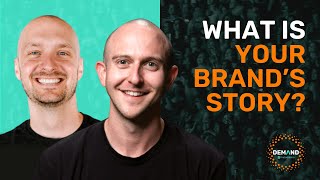
Dave Gerhardt and Kyle Lacy discuss how brand shapes demand generation. They explore why storytelling matters more than tactics, and how companies build customer loyalty through consistent messaging rather than chasing trends.
Just ask them where they heard about you like they do at your local ice cream shop, and make that a required field because I think, like, marketing attribution will tell you one thing, but a customer story might tell you another.
So I'm going to. I'm going to start this off with a. With a little story. The first time that. I don't know if it's the first time we met. It's the first time that I heard Dave speak.
Oh, boy.
And it was at Open View.
Okay.
Open View venture capital firm in Boston, where I was working at the time. And Dave came out and spoke to this, the small group of marketers that had gotten together. And it was the first time I had heard the Drift pitch. And I don't even know if I think Drift was. I think, I think it had started, but it's the first time I'd heard the no forms. And you know, you can go into detail if you want on that, but it, it was a. It was the first time I had experienced like a masterclass of what I would. Would say is branding, which is a component of branding, which is the category you were setting the story. So it's funny that we're now here and we've both had, you know, this. That was. How long ago was that? That was 2016, 2015, probably.
Yeah. Yeah.
A lot has happened in between then. So we go back to Dave with no forms, and we go back to Dave now. Like, has your definition of brand changed? And, and what is the definition? Has it shifted?
Yeah, I think, I think, like, when it's a great. I like that you started with the story, because what was cool about that is that that was actually like basically product marketing. And I think a lot of people hear that and they think of brand and they think of like the logo and the website, and that's an important piece of the brand. But, but, but like that. What, what you resonated with was just like ultimately like a great sales pitch for the company. And like, what is a great sales pitch? A great sales pitch is. Is compelling. You know, you're speaking to a specific pain point for a certain niche. And like that. That was a. And you can, by the way, if you Google this, if you Google Andy Raskin, greatest sales deck ever. He thinks that Zor. The Zora sales deck is his favorite. But the second one he wrote, the sec, the second greatest sales deck I've ever seen was that presentation. And you can, you can. It's all up there. If you Google that. And I think that was Just great. You know, I think that David and Elias, the founders, had just such a clear vision and an inspiring vision from a, from a marketing standpoint that, you know, that the brand was that story. And the, the way that we became a brand was by fulfilling that story. And so like, I think that one of the best things you can think about is like story is strategy. And as a company we had such a clear story about what we wanted to go do and that made it really easy for then marketing so on to then define like, what are the things that we're going to execute there? And so like no forums was awesome internally also because it gave us kind of this like guiding light, like, you know, what are the things we should go do? And you can argue whether that was right or wrong, but like it gave us this kind of manifesto of like, these are the things we're going to go and execute on. And that dictated our content strategy, our event strategy, product marketing. And it even drove like the product roadmap, which is really powerful, which is like, look, if this is a story that we're telling to the world, how do we actually deliver on that? And so in some ways we were pushing product where we're getting feedback from people like, wow, this story's really resonating. Okay, can we go and deliver on this to people? And ultimately, when I think about brand, the one word that I keep coming back to is it's not about colors or website, it's about reputation. And so I think that like your brand is your reputation and the way you achieve a reputation today as a business, business is through content, is through community, is through events. And so it's like the combination of all those things, not that we, you know, just had a pretty cool logo or something.
Yeah, Lessonly was a little bit opposite. We grew into the mission and vision and values of the company. The product grew into it. Right. Our mission statement is we help people do better work so they can live better lives and do better. Because we were category agnostic for a long time, we used do better work as our positioning and our messaging in the market. And it worked out for us because it provided a human element to the story that is sometimes hard to get if you're so product oriented. Right. And, and that sometimes is the issue with some, some of the product marketing scopes. Right.
Well, and like the way you guys, you know, the way, the way you all executed on the brand is not like you had a great visual identity for the company, but you had other things from, from the Llama to Board games as direct mail to the way you did your events. Like th. Those are all things that come from having that clear story. And so I think that's the most important piece. And, you know, there's nothing more. Well, I guess there's two things. There's story and pipeline is kind of what the marketing leader needs to own and what the CEO cares about. But I just think we still under invest in story and we treat it as secondary. Like, oh, it's just words, you know, we got to go do the important stuff and the engineering and the product work. And that is important, no doubt. But if you don't have a story, you don't have, you don't have anything.
Right. And that applies like we're going to talk software all day long. That's just Dave and I, that's what we're familiar with. I think it applies to anything, any business, anything you're trying to sell. If it's just about the product and you, you're not involved in the story, you're not trying to build it out, it's gonna fail miserably. The one thing I wanted to ask about the Drift story, how did you enable? So I'm a firm believer that if your employee base does not believe in the mission, vision, values, positioning, it's not gonna work. Cause it needs to start from the top, then it goes to the employee base, and then it goes to customers, and then it goes to the market. How did you do that at Drift when it came, not necessarily the no forms, but as nor no forms grew into what Drift became. How did you do that internally, other than you making videos like every freaking 10 minutes on LinkedIn?
How do we like get people to believe in the story?
Yeah, yeah. Well, your employees. Because that's where it started, in my opinion. Yeah, from looking out, from the outside looking in.
So we had, we had this like amazing culture where I would say what I would say probably the company was like sub 100 employees. Yeah, probably 50 employees. And every Friday we would have company show and tell where each team would kind of present what they were working on. And it became really cool because it, it wasn't just like slap up a slide and show people, you know, like three bullets of what you did that week. It was treated like this like fundamentally important moment. And I got more nervous speaking in public in front of 50 people at Drift than like hundreds of people at an event because these are the people who will like, be the hardest on you. And so it started by. At show and tell for the first Time we would deliver a story like that, and literally you would. You would hear people applaud and go nuts. And it's like that moment, it was not like, get everybody in a room, tell them why the story. And you do have to do that, right? As you grow, you can 500 people, you're gonna. It's different. But at that time in the company, when the company was coming together, they believed that that story was powerful. Nobody else was telling it in the market. They felt the pull of what customers were coming to our website and asking for. And so I think they believed in this. They did believe in the story. And so that's what made it easy. And so a lot of the things that you saw from early drift were like, the number one of the questions that I get a lot is like, from other marketing leaders, how did you empower? How did you get all the drift team sharing so much on social? You know, we try to do that. We've used this social sharing tool. I'm like, we asked people to do it. It's not like they just woke up and did on their own. But we didn't have to push people. They were so into the company and into the culture and bought into the mission that it was like asking somebody to just kind of like go breathe and. And that's how it was executed that way. I think that it's worse when you're like, what I don't want is. I don't want. I don't want a hundred employees linked into some social scheduling tool and everyone posting the same freaking P.S. we're hiring link. Like, you want unique voices and way to do that is to get people that are like, truly passionate. And so I can't take credit for that because that's a. That was a company thing. And I think the company vision and story was not just a marketing thing. It was a. Everyone in the company, every team had a responsibility in that. I think that's where it works. A lot of companies that kind of just only lives in marketing. Marketing is the storytelling department.
Yeah. Well, I would argue that it also has to come from the top down there. You know, their people produce content because you were producing an ungodly amount of content, right?
Well, yeah. Like, it makes it, makes it. It makes it okay. Like, I think. I think what I learned is, like, a lot of people. Now look, there's, there's. There's also people in your. In your company. Not everyone should have to do this on social or wants to do it. There are plenty of people over 70% of the people in your company who. Who do not want to post about their work on social media, totally fine. You don't have to have. They don't have to do it. It's the. There's always that passionate 20, 30%. And what me being an advocate for drift on LinkedIn saw was like, I have a sales rep come up to me and be like, I kind of want to start posting some stuff. What do you think about this? I'm like, dude, post it. Go do it. Do it. You know, a person in customer success, she comes up to me, she's like, hey, I want to start, like, kind of sharing what I, you know, what I'm doing great. And so by me doing that, I was like, oh, this is cool. This is like, you know, I'm passionate about this too. I want to use this platform to share what's going on here. And that kind of, like, enabled everybody else. And you could almost look across the company and there's. There's one or two people in each department, even in, like, finance, that were advocates for the. For the. The brand on social. And that's really powerful. But that wasn't just because marketing was able to, like, throw together a good story. It was because people fundamentally joined the company and believed in it.
Well, and then your customers then will believe in it. Like, I experienced that exact target where we had the orange culture, where they still have a Facebook page that's used daily by employees and customers around Orange. And the thing was bought in 2015. Right. Like, it's just unbelievable to think that you can build a community and I dare say a movement, because that's a little bit overplayed, but you can using a good story. But it always starts with the story. How did the story change as the company grew? And what advice do you have? And then there's some questions that I'm gonna ask you, I think are coming in through Q A. I think I screwed up and screwed up one of them.
Luckily, it's blurred out, but I can still read it because I've. Okay, good vision.
Good. I. Yeah, I also have good vision. We are two.
I have terrible vision. I have content well.
I have great vision, but that's okay.
Just back to the. The, like, the drift, the storytelling thing. I think the other thing that's really powerful was the story that we told was the solution was our product. But the story that we told was a very, like you said the word movement, and you might not necessarily like that, but what it did was it's just A perfect example of what's powerful about putting out content in a niche. Because when we started talking about these things, other B2B marketers, whether they were going to buy Drift one day or not, were raising their hands and saying, like, yep, I believe in this story. I fundamentally believe in the story. And so, like, you, you need to tell the story in a way where you can get everyone to nod in agreement that this is a problem. Right. And it can't be made up. It has to be real. It has to be big enough that your bot, that your target audience cares about it. And ideally, you get them all to like, nod along in agreement and then you earn the right to then go tell them how you solve that.
That problem and the next. And the next stage of that is customer advocacy. You never had a problem getting customers to tell stories. We don't necessarily have. Like, we have a very vibrant customer community called lamination, because people freaking love to hang out with Wesley people.
If anything, if anything, you have too much of it. It's like you have no, and this is no disrespect, you have like the, you know, some, some tiny customer in Iowa, you know, wants to send you a 5,000 word case study and you're like, man, I love you. What am I supposed to do with that? That's not our icp.
Like, but I think that the way that you can gauge whether or not some of this is working is if your CS team or your customer marketing team or whatever, whoever's dealing with it, customer advocacy is reaching out to customers and they're engaged. They're like, hell yeah. I love this idea. I love this story. I love what we're all about. You help me every day. Let's do it. And the people that have problems doing that, I think need to go back and look at their story. So how as.
Yeah, the evolution of it. So I think the evolution becomes. It depends on the state, it depends on the stage and the goals of the company. But I can talk specifically about, like, one thing that was really powerful was we used this story to create a wedge. And the very first, like, segment of customers that we went after was not actually all of marketing. Even though we can make, you could make the case that Drift could be bought by any marketing, we focused specifically on product marketing, like one use case, and that was our wedge. And we figured that if we get product marketers to adopt Drift, they'd be successful because they're the ones that actually have keys to the website. They could get it installed, blah, blah, blah. Blah. And so we use that wedge. That's where we talked about no forms. That was a story. But that led to us create. Like we needed to. You need to name it at some point. And so I think that. And there's lots of arguments about, like, what is a category, what's not a movement, what's up? But, like, regardless of your feelings on category creation, one of the single best things you can do in marketing is name something. And it sounds so basic and obvious, but, like, we named what we were doing at Drift and we called it conversational marketing. This is not a revolutionary approach. Many other companies have taken this. But it's so powerful because when we named what we're doing conversational marketing, it gives those customer advocates, whoever the market, they were saying, they weren't saying I use Drift. They were saying, I do conversational marketing. And so the progression of the Drift story goes from one use case with product marketing to sales to many different functions. But it's still under this umbrella of like, I call it one word positioning. In the Drift case, it's two, but it's conversational marketing. Anything that we launched and created in the future, it just had to be a connection of that conversational marketing story. Right? And so when we launched Drift video years ago, we were like, what's the. What's the hook? Like, what is. How does this fit in? Right. We've kind of only talked about chat and bots, and it's like, oh, no, we have the hook. We believe that video is the best conversation starter today. And so, like, the positioning for those products was, I guess, somewhat easy because we had this agreement on, like, what our strategy is, which is conversational marketing.
Absolutely. And the one word thing is very important. If you look at, if you look at sales readiness, training, coaching, sales enablement, Seismic's looking at it for enablement, right? Like, what fits in enablement? It could be training, it could be coaching, could be content development, like all that stuff. Right. And I love. I actually, that's the first time I've heard you say that one word positioning. I think it's okay if you have two. In Leslie's case, we had three. But it wasn't positioning.
Right.
It was a mission statement. And we finally, the one thing I would note on category, because it does it is very important when it comes to brand and it comes to the story. We. We actually fell into a category instead of creating one because we felt we fell into sales readiness as the category was being created by analysts and all that stuff. So I think that it's important that you watch the market, but it's also important to say here, we're going to put a, we're going to put a stake in the ground and say, this is what we think it should be called.
Yeah.
On Leslie's side of it, we adapted to where the market was going from, from the, from, from a category standpoint.
But in, in, in either case, I think, like, that's why it's so that's why I think that one of the cheat codes for B2B marketing is content and audience and community building. Because when you have that direct relationship with those people, they can help shape those things for you. And like, in your case, you. You did it that way. In the drift case, we actually did not call it conversational marketing at first. We heard people started to say that. Our own customers started to say that back to us, and we were like, wow, this is catchy. Let's, let's, let's. Let's run with that. So I think that's, that's really powerful. Let's. Can we do this? Let's do this question. I'm gonna, I'm gonna flip it on you.
Okay. Yeah.
Riley wants to know what are the best campaigns that we've created that, that we're proud of. Go. You go first.
I have two. We, We. We give a golden Llama out to the employ, to employees that live all the values of lessonly. And Ben Battaglia, who's director of marketing at the time, suggested that we send golden llamas to customers and prospects too. And the whole point was, take this golden llama, give it to an employee that you think lives the values of your company. And I have spray painted probably 3,000 little golden llamas. Little llamas that would then turn gold. But what happened was it created more of a story around our product instead of us sending them freaking shirt that said, Leslie, you need training. Like I don't need. We don't need any more shirts unless they're really comfy. Right. I don't need any more shirts. Like, I'm like, pretty much my entire. Everything I wear now has. Has some brand name on it. The other one was our Max. Our CEO wrote a book called Do Better Work, which was all of our values in a book that you could read in an hour and a half. We have mailed out tens of thousands of those books to people, and number one, it helped us set the stage for the relational component of lessonly, how you're coaching and training people and the empathetic side of that. And it also helped us spread our culture and our values with new employees as we were hiring 80 people, quarter to people that had been here for a while. So those are my two favorite. Dave, yours.
I got seven. Ready everybody. It's great. So you mentioned the book. I think a book is a great. I think a book can be a great play. You just can't write any other book. And there's a whole separate rant on books. And there's a question from Jamie that we'll get to. We'll talk more about books in a minute. But the conversational marketing book was very important for Drift. But then also we created another book called this Won't Scale which we self published which was. We basically, we talked about how we did marketing at Drift. And granted we're selling to marketers and so that was interesting. But we wrote it in house. We interviewed multiple people on the team. It was like the whole team published this book. That book was free. More people were telling us about that book. It was like a viral marketing hit. And I just think I love stuff like that. I mean you were like one of the OGs of doing this with like when you were at Open View you would like interview. You know, I remember like I did an interview with you guys. But then you'd send like this like amazing pro level magazine. Like people love, people love that type of stuff. I'll give you a kind of a different one, a random one. I think ultimately the campaign that I'm most proud of is creating the event at Drift. Hypergrowth in the first year. No clue how to do any of that with. With almost no budget and we got a thousand people there. That was like. I learned more in that year than probably five years combined. One of my most favorite campaigns. I'm going to give you two more. Number one is getting a text. Getting a text from the CEO who's gonna be at the super bowl with a last minute ad spot outside, like a, A physical real estate outside of the super bowl. And like in three hours having to come up with ad copy and working directly with the, with the agency to like get that done. That was a good one. Yeah, it was like. It was digital. It was digital. And so we just needed, we just need to write a headline. But like we. It was like your, your team could be, your team could be closing deals. But there was a catch because I guess in any super bowl advertising you can't use the term Super Bowl. Like they own that in some weird way. And so we had to Say, like close deals, you know, generate leads and book meetings even while your team is watching the big game. And it said, like Drift. And we came up with that, like on a Saturday morning. It was awesome. Another one is one time I reached out to someone who. One of our customers, she tweeted, like drift, book me a meeting while I was sleeping. And I DM'd her on Twitter and I said, can I put that tweet on a billboard? And she said, yes. And it was maybe like 4 grand to get the billboard. It was. It was so worth it. And two weeks later, the billboard is up in the same neighborhood where. Where this off this company's office is. And this same girl goes out there and she takes a picture of herself in front of the Drift billboard. And that was just like. I love that type of marketing stuff.
Absolutely, man. Traditional. But. But I think that. I think marketers, a lot of marketers miss this. And it's. And it's very much a part of a brand identity is experience. Right. You can. The only thing that makes you or me or any marketer on this call relevant is the experience we're providing with either the employee, the customer, or the prospect. And if it's terrible, it's. You're going to lose in the end. And traditional marketing, in my opinion, is a great way to build experience. If you do direct mail the right way, if you do billboards the right way, if you do, you know, traditional advertising in airports, like, a lot of times we. I think this idea that you have to be completely digital is crazy because you. There's so many different unique ways to tell a story with traditional that you can't do with like whatever the hell we're doing on digital now.
Yeah, I think I. So dilemma says, how do you influence more budget for brand experiences? I think at the later stages, that just becomes more of your marketing mix and so you're measuring it a little bit differently. And so more. You're going to have more of that budget. I think in the earlier days, you know, I didn't get the free pass to go spend four grand on the billboard while we're missing the number. And so I think, like, the more you can focus on the revenue plan and it's hard because you. They do. It's kind of chicken and the egg thing, but at least in my experience, Kyle, it's been like, deliver on the goals and you have more leeway to do. To do fun stuff. Like, I'm sure you're not sending out like board games, but missing your Your you know, pipeline number.
Revenue, revenue. Revenue gets you a seat at the table. Now the caveat is it really depends on your business model whether you're enterprise, product led, high velocity, SMB, that type of stuff. But for us one, one, one thing that helped us free up budget for brand and it was Brilliant on Leslie CFO's part is that we reported one number to the board CAC LTV across sales and marketing. One number one, one efficiency number. And it did not matter what we did underneath it as long as we hit revenue and we were efficient on that one number. So what I was able to do is say out of the budget we have, let's take 30 to 40% of that spend and put it towards I don't brand. So that allowed us to do blow events out of the water. It allowed us to do. You mentioned, I mentioned the book the Golden Llama, the, the board game because it allowed my team to not worry about whether there's going to be an roi. When your team is, when your creative team is not worrying about roi, they are way more creative and the experience is better. But for a lessonly standpoint we had the ability to like flex a little bit there. It really depends on how you're approaching it. But you're number one. You cannot really invest in brand unless you're driving revenue.
But also you have to know that they don't give you a, they don't give you the budget. Like you shouldn't be taking 100% of your people and programs and budget and spending it on direct response, demand gen, whatever you want to call it campaigns. Like you need to have some mix and I think you need to have a story about that mix. And so hey, we're going to spend 70% of our budget on you know, pipeline generating activities and we're going to spend 30% of that on brand. Like I think you just have to have a story around that. And, and your, your, your people and programs and budget are, are split that way. First would be like are we. You know, you need to, you need to bake that in otherwise you're just going to always be trying to like rob from the budget to, to do those things.
Yep. And revenue first. Like you're not, you're not in the business unless you're growing. So it doesn't matter how many billboards you buy now like you said the chicken and the egg thing, it does have to go hand in hand. But as a marketer if you, if you just go whole hog on brand and forget the revenue Side, you're going to be a brand marketer and I love brand marketers, but you're not going to get the budget you need to really do what you need to do. Okay, let's, let's. We got. Wow. We had quite a few questions. I'm not even going to touch this because I don't know what happened last time I did in this orange screen came up just after.
After we answer you just can hit mark is answered.
Thanks Dave. Is that what I pushed the mark answered.
This guy's just pressing buttons like there's no rules.
How did you know when to shift your messaging as you went from conversational marketing to the power of now and now revenue acceleration. Good question.
It's a. Yeah, it's a good question. It's a, it's. It was not necessarily a strategy change that I agreed with. So I can't, I don't think I'm the right person to comment on that.
We can move on.
Yeah, we can move on.
I, I mean I'll, I'll relate it to. Lessonly we had to shift our messaging as we moved up market as, as we started getting into bigger deals and enterprise deals. The holistic do better work approach did not work as well. We had to shift pretty quickly into more value selling and telling a story around the value. We brought the ROI rebroad as a tool.
Yeah. I think the evolution of the drift story is rooted in a similar. That's where it is at most companies, which is like if your company's selling the same buyer that you were four years ago, you probably haven't grown as a company. Right. And so that could be through multiple products, through new markets. And so I think I would say Brandon, typically that's dictated by, you know, have somebody at the company, the CEO. The fact that there's got to be some. The team is very much focused on hitting, hitting the goals this year. The founders should be focused on next year and the year beyond. And so like there has to be some thought of like hey, we're moving up market, so what does that mean we need to change or all of a sudden like I think gong, like the gong evolution of their story is a good example. Right. Which is like if you, if you go to their site, they just kind of did a whole rebrand where gong used to be just focused on sales but clearly people were using their product to gain insight in other areas. And so through that somewhere at the management level they were like we're going to make a strategy shift. We're going to go from just serving sales to serving all of these Personas. Therefore, do we need to change our story? Okay, we do. And I think, like, that that's how most. Most of those decisions would. Would you. You'd get there.
Perfect. All right, we're going to hit these questions. This. Since we've got 14 minutes and 35 seconds, let's get it. What's a memorable campaign you've seen another brand do?
That's a good question.
It should be telling to everybody that we just remember the stuff that we did and that's. I mean, I remember stuff that Dave did, but I. I was trying to think as, as, As I was thinking through this question. We had a direct mail campaign, and this should tell you something that I have no idea the company that sent this, but this is what the direct mail was. And I really liked it, even though it didn't actually work for what they wanted it to do, but they actually mailed me a cell phone that worked, and the only number it could call was the AES number.
Ridiculous.
But it was awesome.
I would be so bad.
This is interesting. I mean, it's not a damn water bottle. Like, it's like, it's a cell phone. I can't use it for anything else. But that. That's. It was memorable. I wouldn't say it worked.
I. I have the thing, like, I just suck at these, like, on the spot, like, example of this questions. You know, I. I would say, like, something. I'm just. I just went to look at my site because I have a bunch of examples up there, but, like, I'm gonna put this in the chat. I like, can this go to everybody? Let's go to session. Here we go.
Let's zoom. Cool.
Like, I just. I kind of like when brands are just, like, plugged into what's happening in the world. In, like, a. In the world, yes. But also just like, in pop culture, in life. And I like, like when brands show little personality. So, like, this is, I think, Shopify their Twitter account. They do a great job. But yeah, when Drake released his last album, Certified Lover Boy, which is basically like a bunch of emojis, this kind of meme hop popped up where, like, people were hopping on it and making their own version of it. And I just think, like, little. This. This took maybe 20 minutes of. Of a designer's time, and someone had the idea, like, little touches like, that I love. Not necessarily always like, this big bang. Like, this is our brand campaign. Like, little things like this are very hard to identify. And Hire for. But like when people get that. Another example is like if you go to YouTube and you type in like web webflow ads. Webflow had done like, did these kind of like sketch type of videos that were, that were great. I, I love things like, I love things like that. But I don't know, you put me.
On the Matt Mailchimp. Well, mailchimp also had a cool docu series that they did. I do like the, I don't know how applicable it is honestly as I, as I watch them grow it. But I do like the idea that you know, brands, companies are media. Like we're all media companies eventually. Right. And, and the, I really enjoyed the docu series that they put together. Daniel's question has been up here for 25 minutes. I'm sorry Daniel. Who should be involved in the story production? And I think that's different from who should be involved in the, the sharing of it.
So Andy Raskin is someone in our world who does a lot of like strategic narrative storytelling stuff and he, he talks about how he only works directly with the CEO and I think that's a, that's a, that's a great benchmark. I think it's the marketing lead. If the, if, if it's not the CEO and the marketing leader working on this together, I would be very concerned. It's, it's.
Yeah.
And now there's a, there's a, there might also be a, a CTO or product founder. Like it depends on, it depends on the founder product situation really. But those are the two. And then the rollout as Kyle mentioned, is much different. That's where everyone is involved. And the hardest part about this is, and this is why you need the CEO involved is there's going to be lots of opinions. And I often think with messaging what's hard is that like there's multiple ways to win. You could pick one of five messages and probably still work. You have to commit and pick one and go. And so I think it's really important that you have alignment from the company that like look, we're going to get input from everybody but, but this decision is going to be driven by myself and the CEO and we're going to have to disagree and commit and that's how this has to go.
Yep. Yeah, that is very important. The other thing I would note is that you should include mid level managers and individual contributors in the brainstorming process at some point so that they feel bought in and they can help spread the word. True. Depends on the size of the company. Right. You're dealing with. That's a good 100 people. It's a little bit different.
Yeah. Because like, ultimately, and I make this mistake a lot as a manager, which is why I'm not one anymore is, you know, it's one thing to like pass down a message and have the team execute it on it, but the, the real way to get them excited about it is to like, actually have it be something that they were involved in. And so if this is, you know, another like early drift thing is like the, the feedback from the customer success team and from the sales team and from whoever were, were like getting heavy weight in the story and in that evolution. And so people are like, they believe it because it's actually their words that now the company is spinning back out. Right.
Well, and that's. And let's, let's just put an underline on one thing you just said. It's actually their words, right?
Yeah. I mean everybody.
It's their words.
It's their words. Yeah.
Okay. Jason, are there any good brand agencies you've worked with and would recommend to help with positioning messaging?
Yes, but I, I don't want to give anybody free pipe, free pipeline. I would say UTM underscore source equals Dave. Honestly, I, I would hit up Andy Raskin if you can.
Yeah.
But I, I think that this is such a valuable skill to, to learn how to do it on your own. Not to give you the cop up, but like, I think, I don't know if you went to April Dunford session, but like you can, you could pay 30 grand and have a consultant come in and do your positioning and messaging, but Damn if the 1299 on April's book is not like I've done it. Dan Murphy and I at Privy, we have that book earmarked, highlighted, ripped out. You can literally copy the playbook. And so I would say first I would get something like obviously awesome from April Dunford or story brand from Donald Miller or whatever and try to do the first swag of it on your own and see where that gets you and then go look for somebody else to, to help you with it.
I think I. So we at lessonly, we did everything in house, absolutely everything. As companies get bigger, I think it depends on whether or not you need to leverage a third party to help with either the positioning of. With exec team or helping you through a bunch of interviews and making sure you're collecting data appropriately. I think that it's a production standpoint on whether you use an agency, but really the creative Process needs to be owned by the eternal team. Jamie. Hey, Jamie. How much, how much do you credit more physical representations of a brand for your successes? Like a published book or a mascot? When would you recommend them as part of your strategy? How much do you, how much do you credit more physical representations of a brand for your success?
Just put, I put one, one person in, in chat for branding and positioning. Yeah. Praying for you, Ursula. I, I don't, I don't know. I. There's not like a certain moment when it says like, do physical, physical things. But I just think, like Kyle mentioned this earlier, so much of what we do is technology online. It's not physical. And I think people always react to physical products and experiences and whatever. And so like I just think it's a smart strategy to build a deeper connection with people and that you just have to choose what the, what the form of that. Is it a book? Is it a in person event? Is it a VIP cooking session with 20 of your top customers? I think I would just think about first have an inkling for like, do we think getting people together, whether our customers or our industry, would there be meaning something meaningful from that? Then let's go do it. What do you think? How do you answer that, Kyle?
I'd answer it the same way. I would. I wouldn't say that I would. I think the success comes from, from the. What happens after you produce it. Like if we were to have done, do better work and nobody cared about.
It, it wouldn't have.
Who, who cares? Like, there are. We can name plenty of category books that nobody ever read. Right? Like, there's plenty of category creation books. So I think it's just dependent on whether, whether it resonates and that is where the brand success comes from. Can you create something that's meaningful enough that resonates with a group of people and that. I don't care what it is, it could be a book, could be a.
Yeah, also like llama. I just, I think one, one, one, one good way to make decisions in marketing is like, I always will try to find like where there might be pockets that you could go and take advantage of that people are not. And so for example, if no one in your industry has written a book, could you be able to get people's attention by like, because people don't like to hear this, but like marketing is a game of attention, right? You do have to try to earn people's attention. I think creative ways like that.
Or if somebody doesn't have a llama.
If you don't have a llama. Send them a llama, Kyle. They actually, once they. They sent physical, actual llamas, there was a whole situation.
We have a llama. Ali llama is a real llama in upstate New York. A real llama. Actually, Ali llama just had a kid. I don't know what a baby.
I would hope so that you. That would be a. That would be a false brand promise if you had a fake llama.
All right, what skills are you both invested in learning right now? Where do you go to learn them when you're not teaching them? So I just signed up for a book that's coming out soon. I don't know about you all, but I think you might coming out right.
Oh, it's you. You're on my list. I haven't logged in to convert kit in a couple days. Let's go. Let's go get on that list, baby.
So what.
Where are you learning you so hard? In the next on my drip series. You're toast. I don't know. For me, I don't want to say I'm like, tapped out with marketing, but I think what I've learned now is like, I've really learned like the. I feel like I know the principles and fundamentals of like, the psychology and kind of marketing. Timeless principles. So I studied less marketing. Now I'm really trying to work on myself. Like, I'm really in. I'm. I'm reading like, you know, man's Search for Meaning and Walton and like, I'm. I'm trying to like Bill Bryson myself. Bill Bryson. Kyle and I have talked about Bill Bryson. So I'm, I'm really interested in like, health and fitness and yoga and reading and like, hippie type stuff right now. And I think just means you're getting older. No, but, yeah, but I, but I. I am. I am, but, but I. But it's cool because I think it's. It's forced me to see. You have to see the macro. Like, when you see the bigger picture, like, you realize how much of. How much, how many things can just be connected. And I think, um, it gives me a different perspective.
So, so I, so I, I actually, my learning from marketing, I don't read a lot of books on marketing. I do. I spend more time in communities like Pavilion, like Revgenius, like Dave's Community, on learning from my peers. That's how I learn at least what we're talking about here. I spend more of my time out of work reading Bill Bryson history reading. Just things that I Enjoy learning about outside of what I do on a daily basis. So mine's more peer development than it is, by the way.
Like, not that the world needs more marketing podcasts, but you can go and create a great one. One like, secret hack that I haven't realized until now is like just having a. I've interviewed hundreds of people like Kyle and like, just by osmosis and like, suck that stuff in. I don't know.
And like, and it's easy and it's easy to do. Yeah, I mean, it's. It's 100. Okay, we got two minutes. We're gonna rock through these. Lisa, Dave, how has your responsibilities and focus changed from being CMO to now a cbo?
Yeah, complete. Completely different. And this is like, I, I have no, I don't have any team. I have no direct reports, I have no budget. I kind of work directly with, with the founders. I think we had to come up with a title for me, but ultimately this is like, I came back as someone who had a long history and early DNA with the company and like, am helping in a storytelling and you know, kind of strategic type positioning. And so I think the title is very misleading from, from the outside. And. And so I'm, I'm really like a. A one person resource helping the Drift team right now.
Awesome. All right, last question. And this is gonna. This is not gonna be answered in a minute and a half, but how do you measure brand marketing efforts? Metrics or KPIs, or do you not measure brand marketing efforts?
I mean, you do. It just depends on what. It depends on what your. When you say brand marketing efforts, I would just try to isolate that even more. Is it like a set of five billboards? Then like, go and look at organic traffic in that area? I think your website is still your store. And so I typically think that like organic and direct search are two very easy proxies for increase in brand that a lot of people just don't. Don't think about another thing. And I haven't implemented this, so take it with a grain of salt. But like, there should just be like, you just ask every customer that comes in, just ask them where they heard about you like they do at your local ice cream shop and make that a required field because I think like, marketing attribution will tell you one thing, but a customer story might tell you another, which is like, they like marketing attribution might tell you that they converted on an ad, but the where'd you hear about us? Might say like, oh, my friend Kyle's a CMO at this other company. And that's how I heard about it.
Absolutely. I mean, for us at Lessonly, we didn't measure it a whole lot, but because it was more about the experience. But you can also measure experience. So that's just a much longer answer to that question, but that is it.
More from Dave



Asynchronous work isn’t a trend. It’s how teams actually get things done without burning out.

AI is changing product marketing. Here's how top B2B teams are scaling without cutting corners.

How Product Marketing Is Evolving in 2025: Lessons on AI and Leadership with Jennifer Cannizzaro

Why referral programs look different outside of SaaS (and why that’s a good thing)

The secret to scaling dual GTM? Give every marketer ownership and get out of their way.

From content to CMO: how Jess Cook made the leap (and built her first budget from scratch)

Leading B2B Marketing for the First Time: Strategy, Budget, Content & Team with Jess Cook

Most B2B advice is built for SaaS. But what if you don’t have demos, PLG, or lead goals?
