A CEO Coach Reflects On His Performance As A Dad: Dave Kashen
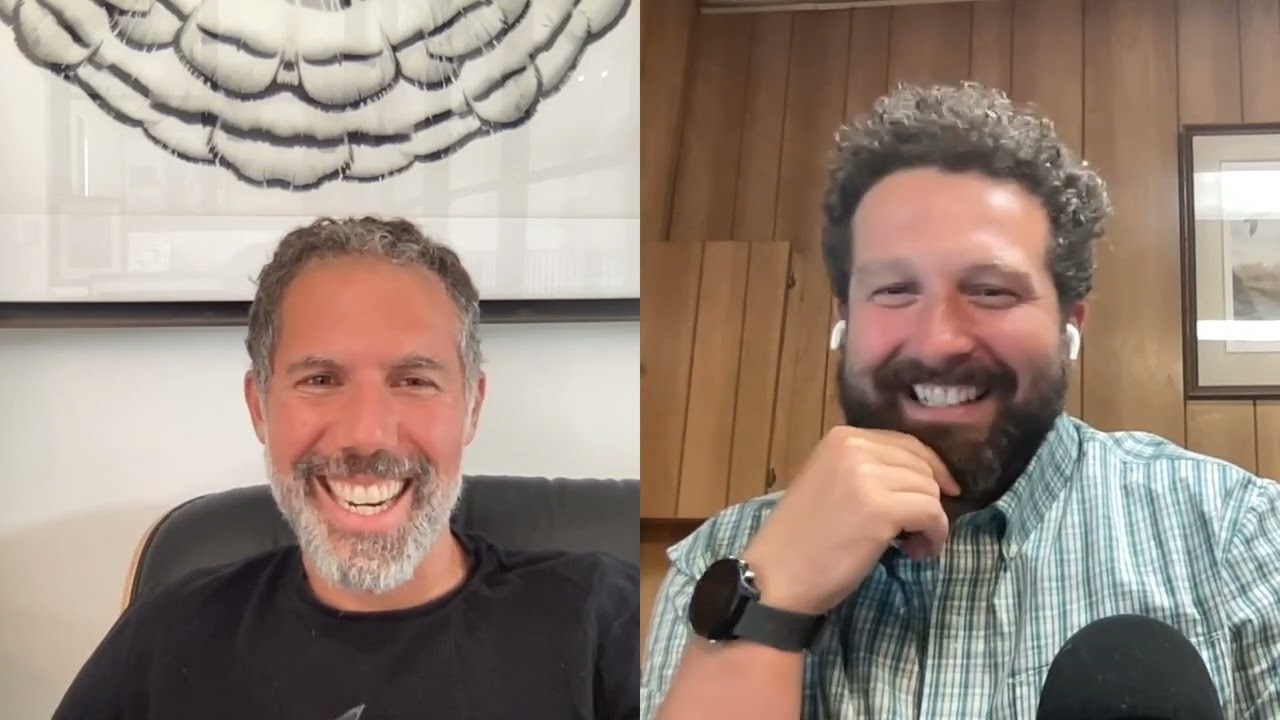
This content was created by Dave Kashen. This content was uploaded by Dave Kashen. This is a YouTube podcast episode titled "A CEO Coach Reflects On His Performance As A Dad: Dave Kashen" (created 2024-12-02T09:00:33Z). The excerpt is a multi-speaker interview on the DadPod hosted by Mike and Luke with guest Dave Kashen. The discussion covers Dave's childhood and its impact on his parenting, his use of conscious leadership concepts (above/below the line, presence vs. reactivity), concrete parenting practices and tradeoffs (unconditional love, setting limits, deputizing kids to call him out), anecdotes about his sons (ages 15 and 12), and reflections on balancing purpose/work with family. The tone is conversational and interview-style, mixing personal story, coaching frameworks, and practical examples.
Chapters
Mostly by contrast. I want to give my kids the exact opposite experience, which has its own perils.
Do you talk about these concepts with your kids?
I'm about to, like, you know, get reactive. He's like, Daddy, are you under the line? And with it, he was like, oh my God.
It's kind of an interesting way to approach it.
You can see how over time, if you keep making that choice, You win the battle, lose the war, right? You win the thing that matters— is actually the most important to you, and you lose the thing that's more important to you.
One of those questions is, well, look back on life at the end and man, that's schnapp.
I love that.
Welcome to DadPod. I'm Mike.
And I'm Luke. We're friends here in Madison, and we both have kids. And at least for us, becoming a dad has been transformational. We talk to all sorts of dads in all sorts of situations to learn from their unique challenges, lessons, and evolutions. The goal is simple: learn from each other to become better dads.
If you dig it, please find us on Apple or Spotify and click follow. That single click helps put us in front of more dads, which Luke would really appreciate.
I'm so excited for today's podcast with Dave, where we're going to go deep on how he approaches being a dad. Dave, welcome. Thank you so much. So let's, let's jump in. Um, we often like to start by looking back a little bit. So I think the first question for you is, is how were you fathered? What was your dad like, and how has that impacted the way you father your kids?
So my— I noticed sadness as I begin to answer that question. Uh, my parents were divorced when I was 5, and my dad, who I, I think is an Enneagram 5, for those who are familiar with the Enneagram, for those who aren't, you know, 5, Enneagram 5 types tend to be, um, pretty inward, not very emotionally expressive. Sort of stingy with their energy, you know, uh, you know, given their own sort of worldview of like there's a finite amount. And I didn't know any of that growing up, of course, this is my, you know, uh, post-analysis. Um, but, and I was and am a very sensitive, emotional, uh, you know, boy and man. And So that was, you know, I don't fully remember, you know, before 5, how challenging that was or wasn't. But after they were divorced and I had relatively small, you know, my mom got custody, so I saw my dad kind of on, I think, Wednesday nights and, you know, every other weekend. And he remarried about 2 years after. Um, so the main thing I remember is longing and distance, just always wanting more connection, wanting more, um, love, what I perceived as love, uh, wanting more acceptance, you know, my main I've done a lot of work on this, so this is all with the benefit of Hoffman Process and Landmark and lots and lots of exploring and facing. I totally believe that my dad did the absolute best that he could and loved me and loves me dearly. And my experience as a child was that, um, one, he's not there. He's not connecting with me emotionally the way that I perceived, um, love would look. I had a mentor who once said like, you know, children love their— sorry, parents love their children unconditionally, but children put conditions on the love, right? Like, he didn't love me the way I perceived love. So I, I thought like, didn't fully love me and I made up stories about myself being unworthy because I think that's the best available story for a, a young child. It's a lot safer to believe there's something wrong with you because it creates the hope of fixing it versus, oh, you know, there's something limited in him. Um, and then the other, so one big piece was just lack of playfulness, emotional expression, and connection. The other was a real, um, at least my memory is a real focus on, you know, societal success, getting good grades. Um, you know, my dad was a successful doctor and reasonably wealthy. My mom was a teacher and remarried a man who was, you know, ran the printing press for the New York Times. You know, so it's sort of like this, I lived between this what felt like blue collar and white collar world. And so I remember feeling most, like I got most positive attention when I got good grades and, you know, did the things that I was supposed to do that, you know, were, you know, societally kind of normal and well regarded. And, you know, the story that I— when I think about my own life, this story, the way I typically tell the story is I spent 25 years trying to prove I was worthy of my dad's love by getting good grades and going to the best schools and getting good grades there and getting the best jobs and just doing all the things that I believed would prove that I was worthy. And, um, so that's some of how I think that relationship influenced me. Again, at this point, I have nothing but love and compassion for him. Like, I can, you know, I've done the work to kind of get his world and see how loving that was. Like, you know, if you believe that the thing that is You know, the best possible path for your son or your, you know, in this case, your son is to get good grades and get good jobs and make lots of money because then he'll feel safe. And, you know, like I can see how loving that is. And as a kid, the message I got was essentially conditional love. Like I'm right.
Yeah.
I'm worthy to the extent you do these things. Well, just to answer the second part of your question, I think you asked how did that shape my parenting? Mostly by contrast. So, wow, shit, I know I didn't like how that felt. So I want to give my kids like the exact opposite experience, which has its own perils, but fully engaged. I never wanted to get divorced. You know, playful. I tell my kids I love them unconditionally, like, you know, 12 times a day. I, you know, I'd be like, oh, and what do you have to do to, you know, for me to love you? And then they say nothing. And I say, exactly right. And what could you ever do that I wouldn't love you? And they say nothing. And it's like, you know, like I'm just like beating the drum of I want you to know that I love you unconditionally. You know, my older— interesting, because my older son is in some ways more like my dad, more introverted, not that emotionally expressive. I think it annoys the heck out of him. I'm like, I hug him when he doesn't want to be hugged. I tell him I love him and he's kind of like all sheepish. But yeah, I've kind of in some way, I think, done the— let me do the opposite thing. You know, I didn't like the way that felt, so let me give my kids the opposite experience. Now, the— what I've been noticing recently is some of the downside, like because I didn't feel connected with my dad the way I wanted to, I'm so focused on making sure I feel connected with my boys and they feel connected with me. And I think that has costs too, right? You go too far where I'm not as good about setting limits and enforcing consequences and discipline, which I believe is important for them because I fear disconnection or I fear them experiencing it as harsh. And I'm working on that. I'm getting better. That's been, that's kind of the double-edged sword of my, like, I'm going to be connected with them and just be so loving. You know, with them, well, you know, sometimes love is fierce and firm and that doesn't feel like connection. So that's been one of my growth edges.
How old are your kids?
Uh, they are 15 and 12, uh, rising 7th and 9th graders.
How much of your, the post-processing of your childhood experience happened after you became a father and compare that to, to how you thought about that experience prior to becoming a father?
Great question. Thank you. So I did. Let's see, I sold my first startup kind of end of 2008, early 2009. Hired a life coach for the first time in early 2009. Um, went through the Landmark Forum in, I think, April or May of 2009. And then my first son was born June 7th, 2009. So I, and in some way, consciously or not, I think it might have been part of the impetus, like, I better get my shit handled before I become a father. And so I at least started that work. And, you know, in the Landmark Forum, which for those who don't know is Landmark Education, is one of the biggest personal transformation programs. It was kind of born out of EST from the '70s. It has a very mixed reputation. I think most people would say it's a very powerful and effective set of, you know, experiences, and their marketing can be very aggressive and some people would say cult-like. But, and I got a ton out of it. And like what I shared earlier, like the main thing I got was, oh, You know, I made up a story that I was unworthy and have been living my life trying to prove my worth. And because I made up the story, you know, it's not what happened to me that affected me. It's the story I made up about it. And because I made that up, I could let go of the story and that created the possibility of living an authentic life, which then had me soon after my son was born, um, quit from the company that had acquired us and start basically enrolling coaches, coaches training program. And, you know, I was like, oh my God, you know, these are my people. This is what I'm here to do. So I made a huge transition in my own life just as my son was born. My first son was born, which in some way was crazy because, you know, I left a lot of money on the table and, you know, hung up a shingle as a, as a, you know, life coach, you know, executive coach. A lot of people thought I was crazy to make that leap at that moment. And I, as I reflect on it now, I think some of it was like, I want to be, I want to model for my son living an authentic life. And I think it actually helped give me the courage and conviction to, to, you know, follow my truth.
Man, listening, listening to you speak is giving me goosebumps. You know, I, I don't know how much You and I have gone into my story, but, uh, some similarities there, some striking similarities. Uh, you know, having stepped aside only 8 or 9 months ago, um, but some of your, some of your core reasoning as to why just is like, it's like bullseye on how I've thought about my own life. Um, and why I'm, I'm, I'm focused in the new ways I'm focused. Mm.
I love that, Luke. I know I'm curious to hear more. Maybe we'll go into that later. I was just thinking that I think one of the gifts in having children is the thought of what do I want to model for them? Yeah. Is in some way an even more powerful motivator than who do I want to be for myself? Just practically, I just noticed like when I think about who I'm being, I can kind of tolerate, you know, not being my best self maybe for me. But when I think about like, what am I modeling for them and who do I want them to be? I notice I feel even more inspired, motivated to, Yeah, to be my best self.
Yeah, that's something I've been thinking about very recently, actually, of how am I modeling dealing with my most challenging problems, interacting with my most challenging relationships. And when I, when I, when it finally occurred to me that I'm going to be under a microscope with how I do this, that flipped a switch in the motivation of really wanting to figure it out. You know, it moved it from an almost like an intellectual hobby of, I should get better at that, to, wow, there's strong implications to how I deal with these situations, these, you know, these people and what I look like.
I fully believe that who you're being and how you're being has a much greater impact than anything that you say to your kids. So, you know, if you, if you care about, you know, which most dads do, being a great dad, you know, influencing how your kids turn out, like, I love what you're pointing to, Mike. I think how you conduct yourself and who you're being has as big or way bigger an impact than telling them the right things that they should do.
Totally.
You know, I have a couple thoughts coming up around this. Um, one is, you know, because of what I do, right, I obviously coach startup CEOs. Um, I largely coach them in conscious leadership, which you know, simply stated, is the practice of noticing what state of being you're operating from. And yeah, just, just to present it, um, the language of conscious leadership is above the line and below the line. So if we imagine a horizontal line as a demarcation line between two states of being that humans operate from most of the time, below the line is a state threat, in which we're, uh, it's sort of victim consciousness. We view something as happening to us. We get defensive, we get righteous. Most importantly, we get reactive, right? All of our defense mechanisms from our child, you know, that we developed in our childhood around our parents get activated, right? This is how I think these generational, uh, patterns get created because we have our reactive patterns from our childhood. Which are a reaction to our parents being in their reactivity from their childhood. And then when we're scared, which by the way, kids are amongst the biggest triggers, I think, for us because we love them so much. We care so much about them and their future that it's really easy to get triggered and get scared and want to control. And then our reactive patterns kick in. And so, you know, I, it's been such a gift. Well, let me just contrast that, right? Above the line is a state of presence where you're just here now, creatively responding to the actual situation. And one of the biggest, maybe call it a hack, um, or distinctions I've noticed as a, as a dad is this, is in this question, am I responding to what's happening right now? Like, okay, you know, my son doesn't want to go to practice, right? Am I really responding to like him not wanting to go to soccer practice today? Or am I like, oh my God, he's not going to be disciplined. He's just going to quit everything in life and he's just going to become a total failure and a slob, right? And then I'm reacting to my fear of who I don't want him to become. And then I yell at him, you know, or I force him to go or I, bargain with him or something. And because I'm not really just responding to this particular thing, you know, instance with curiosity. Oh, what's having you not want to go? Oh, you're tired. You got a good night's sleep. You know, you're not feeling well. Oh, you're in a fight with your buddy. Let's talk about that. I'm not curious. I'm not present. I'm just reactive and I'll yell at him and, you know, just create drama. So all that is to say, for me, like the gift in my own conscious leadership practice and then being a coach who every day gets to think about this distinction of am I operating from presence or from threat, I see it as the number one tool and practice that allows me to be the kind of dad that I want to be. Like very simply, when I show up from presence, I 100% of the time like the way I— sorry, let me be clear. Uh, I like the way I respond to them better than when I show up from reactivity. Not that I always like the way I respond, right? I'm still figuring this all out. Um, but better than, right? Like, when I show up in threat, in reactivity, uh, I often don't love the way that I'm parenting them. And so my practice, you know, if they like this biggest cliché, our kids are our greatest teachers. I think it's true because, uh, if the game of life is learning to be present in a wider and wider variety of circumstances, my kids present lots and lots and lots of opportunities for me to play that game and failing, falling down, learning how not to.
Do you talk about these concepts with your kids?
Yes. So I sat them down, God, how old were they? Like 5 years ago. Uh, maybe they were like 7 and 9 with a flip chart in my living room. Picture it. I drew the line. All right guys, I'm excited about this experience of being human. You know, there's this thing called above the line or below the line. And you know, I did it sort of age appropriate. Um, And actually what's been amazing, my younger son in particular has been really good at at least using it on me. So like I have these distinct memories, like I'm, we, we moved to Sun Valley 4 years ago. We bought this condo and for whatever reason, one of my patterns is I get really reactive when Like somebody, but a particular kid spills something on the couch, right? It's like these small mistakes with big costs are real. They have been a trigger for me, you know, oh, the white couch spilled the red wine, you know, but in the kid's case, not grape juice or whatever. So I'm upstairs, we're in the loft, he just spilled something. I'm about to like, you know, get reactive. And he is like, Daddy, are you under the line? And he was like, oh my God, I just started like cracking up and immediate stage shift and was able to like come back to like, okay, you know, don't cry over spilled milk. I love this boy. I don't need to make him feel bad about making a mistake. And you know, do I want to have different rules around whether they can eat upstairs or not?
Maybe.
But like in this moment, I don't need to get all reactive. So, um, they've been real allies for me, both because they, you know, present many of the situations that I'm not yet able to be present with, you know, when they say certain things to me or act certain ways. But also very literally, I'm increasingly trying to deputize them to say, to tell me when you see me below the line. And that's, yeah, I want to let like a like public service announcement, like disclaimer. I've been practicing this work for a decade, like day in and day out. I'm not, I'm not prescribing this necessarily. Like, I'm guessing for most dads, like when you're in that reactive mode, if your kid just said, oh, dad, you're below the line, like that would cause you to be more triggered and reactive, not less. So I'm just telling you about my experience.
It could, could be the straw. Yeah.
How do you balance over-repetition with consistently teaching them about these concepts?
Poorly. Um, I'm joking, but, uh, they get annoyed that my wife too, we could talk to her about this, but like, you know, something like, oh God, Dad, don't, you know, don't go into coaching mode. Like, just talk to me, you know. So yeah, it can be really annoying when I get all righteous on my like, I am a coach and I know how to solve this thing. And you know, you should, you should listen to me because I have all this wisdom for you. And you know, that shockingly, that they don't, that doesn't go well. Um, the thing that I would say I don't think there's a thing I could do too much of, at least conscious listening. So, and then that's probably overstated, but like there's probably a point where it'd be too much. But in general, the thing that I find that when I do, almost always things improve, is when I really just go into listening mode. So instead of like, I'm the coach and I have all these brilliant techniques and ideas to, you know, to solve your problem. Um, which again, often comes because I'm below the line wanting to control their experience, right? Instead of just letting them, oh, you're really upset about this thing that happened. You know, like I don't need to solve that. I don't need to hero, be the hero and give you, you know, that, can I just be with you in your experience? Which, you know, I, I know that as a coach. Um, but I forget that often as a dad, cause I love him. And I just want to, you know, take all the pain away and have them only feel joy and happiness and never feel sadness or frustration or fear. Um, which of course is absurd and not healthy. So, uh, yes, I sometimes overdo it. I'm getting better at just listening, but if I really can earnestly come back, oh buddy, yeah, you're really, you're really frustrated, disappointed that that happened. I would say. You know, 9 times out of 10, that helps, that helps him shift and, um, or just feel heard and loved and seen.
There is, I met him, uh, a guy at a, at a business seminar and he had high schoolers, something in that age range. And he actually talked about how when his kids screwed up, sort of the way that they were quote unquote punished is he would sit them down for an excruciatingly detailed dissection of the situation, what they were thinking, what the implications ended up being, how this happened. And that was, it was sort of a joke, but, but he, he, it was also true. He would, he would just, hey, what were you thinking there? And they just knew that they were going to they had to sit through this and answer it and think through it. And I, you know, it was funny at the time, but it's kind of an interesting way to approach it, you know, to, in, in, in some situations where you just force them to, to really dissect the situation.
It's like the, the Daddy Postmortem, you know? Yeah.
Yeah.
Yeah.
That's a fact. The thought I'm having is that I imagine if you, as a dad, like, if you're genuinely curious and sort of coming to them with like genuine, like, huh, how did, what, um, it would have a different impact than if you were righteous and trying to like Socratically get them to see the thing that you already know is they should see. Um, but I can see how. That could be useful.
Mm-hmm.
Um, what came up for me, again, I keep drawing from Conscious Leadership, you know, the, the, this core shift from below the line to above the line is involved taking responsibility. And, um, so unsurprisingly that's sometimes a trigger for me when they aren't taking responsibility and they're blaming. And, um, and I will say that the times where I have been able to, um, and sometimes it's required more firmness. Like I'm thinking of situations where they're really, um, let me give you an example. It's Easter. My older son is big on, um, predictability, traditions, holiday. Like he really gets an idea in his mind of exactly how it's gonna be. And if it's not exactly that, it's really triggering for him. So you can see the setup. So it's Easter and, you know, we have all the— we do a lot. Like, my wife's amazing. She loves holidays. So we have all these— we do a scavenger hunt for them and then Easter egg hunt and like make up clues. And we went to stores to get the Easter eggs that they would normally hunt and we can't find one of the boxes. So we have approximately half of the amount of Easter eggs that we normally have. And, you know, but we made up all these clues, we're doing that, you know, we do it a lot. And again, my wife does the lot. So you can start to see the two cars, right, coming toward each other. So basically my son kind of flips out, is like, oh my God, like we don't have all the eggs we normally do. And he's got, you know, his younger brother, getting more than I have and it's terrible. And, and now my wife feeling like totally underappreciated cuz she did so much to make Easter amazing and he's just focusing on this one thing. Um, and I really, you know, in that case I really challenged him to, oh, and he is like, you ruined Easter, mom, you ruined Easter. And then, you know, she gets triggered and so like, go to your room. No, you know, we're taking away all your you know, video game technology, right? So he is like, you ruined Easter, you ruined Easter, you know? And it's such a big thing for him 'cause he loves it. It's normally this like amazing happy experience, but now he's just gotten punished and lost all his technology and video games. And so I ended up going up, you know, talk to him and I did challenge him. I was like, but I was like, I hear you're blaming mom. Like, I want you to take your part in it. Like, can you see how you, you know, I don't know if I use the word co-created, but like contributed to this situation. And to his credit, he was like, well, yeah, like I, you know, I didn't really, you know, I just focused on the one thing that didn't. So, um, that may be my version of the postmortem is like similar I do with clients, like really challenging them to take their share of responsibility for this situation and Um, and I challenged him to communicate that to my wife and it really did shift the situation. And, um, so that's probably, yeah, that's probably my version of it.
Reflecting back on one of the other things that you, you mentioned, uh, about conscious listening and one of the consistent things that I think I hear across, across all the different people that we've talked to frequently when they talk about their fathers or, and really any, any time someone's talking about their, you know, their dad or their parents, regardless of anything else, the, the, the situation they describe where they felt the relationship was best was when their, their dad or their parents were just there paying attention. And present. You can put aside a lot of other, you know, negative traits that, that a, the dad or parent may have had. And, and it's something that I've started to think about more of how can I be present in the way that my child wants me to be, combined with the principles or the, the way that I want to be present as well, you know. It's interesting to me that, that when you pare down all the different stories and everything that we hear, that is one of the really consistent things that, that I'm, I'm picking up from people.
I have many thoughts about presence. Yes, I believe that is the greatest gift that anyone can give anyone else is their full presence. I think it's particularly important for children to feel like their parents are fully present, you know, like their dad's fully present with them, just being with them in their experience. And annoyingly, it's like one of the hardest things in the world. So, um, isn't that interesting that like The thing that makes the biggest difference is also the thing that's like one of the most challenging things to experience as a human being. Like it's a, yeah, I say annoyingly, like half-jokingly, but like it's an interesting setup. And if I may, there's a story coming up that more relates to my wife, but I'll kind of parlay it to being a dad as well. You know, well, it's also related. When the kids were little, you know, I just started coaching. I was really seeking. I was like, you know, had just come from this 25 years of very egoic, you know, chasing and trying to be, you know, prove my worth and be good enough and do all these things that were totally not aligned with my soul, with my calling, with my truth, but just, you know, societal standards, all that. So I was so excited to do all these personal transformation experiences and workshops because I'm like, I'm onto something now. Like something's cracked open and I'm going to find truth. Then I, you know, seeking personal transformation, all that. And our kids are little and my wife is home with them and I'm off seeking, you know, and interestingly, you know, for a while I was off entrepreneuring, right? I was like, that was fully, uh, well, let's just say very simply, I was not present, you know, with my wife because I was being a startup founder doing all that. And then I was not present because I was being a seeker and trying to become an amazing coach and, you know, become an enlightened human so I could be an amazing coach and all that. And she would just kept being like, just, where are you going? Like, just, just be here with us. Just be here with us. And for years I was like, oh, she's like this nag. Like, just, you know, I mean, my wife's amazing. I love her dearly, but you know, those moments like she's just nagging me. She doesn't get it that I'm off, you know, finding what really matters in this like awakening. And then I went to ironically one of these many workshops and I had this epiphany that Mike, that you just said that, oh, like the thing that I'm actually most wanting is the experience of presence. And for years, all my wife's been doing is trying to call me to presence, right? So I went from seeing her as like this nag to like, oh, she's like my angel calling me home. She's like, Dave, it's here. It's already here. Just be here with us. And I'm like, no, no, you don't get it. I'm enlightened and I know I need to go do these enlightening things. And I was like, oh, damn it. As usual, she was right. All along. That's a lesson I have to keep learning. So I mention that in part because there's moments where I can feel like, oh God, these kids need so much of me, my attention, like, oh, it's for them. I need to give them my presence. What's really made a difference for me is seeing like the alignment of that, that actually I think the greatest gift we can give ourselves is cultivating the capacity to be present. So again, like they're not like these needy, you know, souls kind of trying to take away from my purpose and ability to be out there in the world doing my thing, which is often how it occurs. Like they're little angels calling me home to presence. And that shift for me has been really, well, even as I'm saying it, it's like, oh, that's a good, good to remind myself. And really powerful. There's so much coming out. I want to say one thing that just popped to mind as I'm saying that, which is because I think a lot of dads wrestle with this, like purpose versus family, right? Or startup or career, right? And I, I remember saying once to my coach at the time, like, yeah, well, I told my kids, you know, that I have to work now. And she's like, well, that's not true. I was like, what? She's like, you don't have to work. You're choosing to work. And what message are you saying then when you tell them I have to work?
Right.
And that really pierced me. And ever since then, you know, in part because I realized I was living with this almost like counter-narrative from the '50s. In the '50s, it was like, of course, you know, again, patriarchal. Yeah. There was that. Like, oh, the man has to go do the work. And, you know, um, and we've almost like have this counter-narrative now that like to be a good, you know, man is to prioritize family and kids, right? And it's bad and wrong to want to go pursue purpose. So like if you're prioritizing your job over your kids, you're doing it bad and wrong. And I think that's a It's just like the, you know, it's too far the other way. It's too binary, right? So it really helped me to realize, yeah, there's times where I actually am really energized to go focus on my work, my purpose, my, you know, and so I'll say, hey, I'm choosing to focus on work right now and I'll play with you later. And owning that as a choice for me has been really powerful as opposed to like 'Cause when I say it, I almost believe it myself. Oh, I have to go work. As if like, you know, I'm a slave to it or something. And I don't, you know, I don't want to give them that message. So I think there's two distinctions there. One is just owning that it's a choice. And two, that it's okay choice to make. Now I think our egos, you know, trap us into making that choice more of the time than we, our souls or, you know, true self really want. So that's, you know, that's the trap of it. And, you know, there's times where I just like, I'm just so excited with what I'm working on. I want to focus on this. And, you know, I'll, I'll, I'll ask him like, is this where, you know, do you really need me? Like, how, you know, no, it's fine. We can do it later.
Have you made any observations putting, putting your coach hat on and thinking about all the people that you've worked with and looking at their situations, can you extrapolate any observations, particularly on this idea of presence?
Well, yeah, most humans are not present most of the time. Therefore, uh, you know, men are a subset of humans and dads are a subset of men. Most dads are not present most of the time. And that's the real issue. And when I say real issue, I mean most of the drama and frustration, you know, that we experience in being a dad is the root cause is, you know, our either not being conscious of the distinction, like we don't know that there's another way of being that we could be. Or we're conscious of it and just in that moment, not able or willing to shift into presence. So that's one. It's just, uh, I'm a big fan of going directly to the deepest root cause in the matter. And I, that's why I've loved this work of conscious leadership in particular, because it occurs to me at least as the root cause of most of the drama in parenting is the just lack of presence, which is a nice, in a way, it's like a nice simplification because when you're not present, all of your reactive patterns kick in. And so it feels so complex, right? It's like, ah, but you know, there's this, it's like, and then when you start to get like, oh, the real issue is just that I'm not present. I mean, it's useful to look at the nuanced ways in which you trigger yourself and the patterns that show up so you can identify them more and more quickly. But at the heart of the matter is just, I'm just in my ego. I'm just in a state of threat reacting. Like, I love the simplicity of that. Um, let me think if there's other kind of patterns that I've noticed universally.
And, and just to clarify, you, you see this popping up in your your clients or the people you're working with, like in their careers. And I'm just, you're in a unique position to observe fathers in high-impact careers.
And yes, of course.
Yeah.
I mean, rare do I talk, most of my clients are entrepreneurs, startup CEOs, some executives, some venture capitalists, investors. Rare do I talk with clients like, gosh, I have too much work-life balance. I just feel like it's just all perfectly— so certainly this feels like a common issue. And the nuance of it is I think it's less actually about time and again, more about presence. And part of the challenge is it's like You know, the car's going 90 miles per hour, and then especially in a Zoom world, right? Like here on Zoom, you know, using my intellect, thinking, you know, full, and then boom, you're supposed to go right into like dad mode. And it's like, it takes time for the car to, you know, squeeze to a halt, um, or to, you know, to shift from being present to this. Work stuff to being present, uh, you know, the dad role, um, that's challenging for most humans and most dads to shift context that quickly. Um, and even if not quickly, like most clients I talk to, because work is such a, you know, looms so large in their life and frankly in their identity, most people have their identity and their self-worth wrapped up in their career and startup, which is a lot of the work that I do with clients, because that's, that's again, back to the root cause of why do you spend so much of your mental focus and energy? Because you believe your worthiness depends on it. Um, so when you can start to sever that, it frees you up. Um, and the common pattern is that they're just thinking about work. So even when they're not working, And by the way, this was, I know this issue firsthand because, you know, for a long time in my marriage, you know, the biggest, um, I'd say complaints or frustration my wife had is you're not physically here. You're working, you know, 18 hours a day. You're at, you know, you're in your startup. You're, um, by the way, I did it. I did, I did a startup. I then coached founders for 5 years and then did another startup and thinking like, oh, I'm 5 years into being a coach, it's gonna be all different this time. It's, first of all, it's all just gonna work. And so we're not gonna need to work, you know, those hours. I'm not gonna be stressed 'cause I'm gonna be able to manage and stay present and conscious. And, you know, I, uh, turns out I wasn't as enlightened as I thought I was. And, you know, the beginning started out pretty good, but when we weren't immediately finding product market fit and growing revenue, it was like, oh, you know, I don't know if we're gonna be able to raise our next round. All my old patterns kicked in, not all, but many of them. And I, you know, then I was stressed and then I would like break my agreements and work longer, you know, renegotiate agreements, you know, that I had made. And so I have deep empathy for how challenging it is to stay present, much less stay tight with tight, clear boundaries, especially when you're doing a startup and there's, you You know, you fuse your identity with it and there's so much pressure to, you know, to make it successful. So most people, most dads I know have a difficulty staying present and part of it is that their mind is focusing on work-related problems and they're ruminating and spinning. And one thing that I think most clients find helpful around that is to really distinguish between like scenario planning and rumination, because the lie that we tell ourselves is, well, I need to be spinning around these problems because this is how I see around corners and this is how I avoid failure and this is how I get ahead of it. I think it's bullshit. Most of the time your mind's just ruminating. Like, okay, sit down for an hour with a whiteboard, in your computer, imagine all the things that could go wrong. Make a plan, put that in the drawer, go focus on all the things that could go right, and then, you know, go be present. So the ruminating is such a common, you know, symptom that I see for most men, clients, entrepreneurs, where like they want to be present with their wife, with their kids, and their mind is just looping. The other thing that comes to mind, there was a book that I really liked called How Will You Measure Your Life by Clayton Christensen. So yeah, he wrote The Innovator's Dilemma. He's like the Harvard— I think he's passed now, but brilliant guy, the kind of Harvard strategy expert. And he went to Harvard Business School with all these really bright, ambitious men who had the goal of build, you know, having amazing careers and amazing families and amazing relationships with their kids. And some of them are like Jeff Skilling and Kenneth Lay, and they ended up in jail, divorced, estranged from their kids. So he's like, well, interesting as a strategist, like they had a goal and they failed to achieve it. Right? So, you know, he looks at it through that lens, which I thought was really clever. And One of his conclusions, right? I'll butcher this, but you know, he used the metaphor of one of his big case studies. I think it was Nucor Steel where like the big steel company managers basically kept seeding the bottom of the market to Nucor Steel because the marginal decision made sense, right? Oh, actually, if we seed the bottom of the market, we become more profitable, et cetera, because it's our lowest margin business. And then they did it again and did it again and did it again. And then Nucor Steel kind of took over the industry, something like that. And so I use that metaphor to say, in every moment, the marginal decision to focus on work feels like the better choice. It was like, if I've spent an hour working, I can see all the things that could get done, all the impact. I spend an ex— another— that hour with my family, with my kids, like, not really clear what the marginal benefit of that will be. Right. But you can see how over time, if you keep making that choice, you know, you, you know, you win the battle, lose the war, right? You win the thing that matters. It's actually the most important to you and you lose the thing that's more important to you. So I thought that was really insightful that like it does, it literally in that moment occurs to you as more important to focus on work and that marginal choice might be right, but the long, you know, short-term versus long-term thing. And his solution, by the way, one of his solutions other than the awareness of that was to make rules for yourself and stick to them like gravity, right? Like, you know, he has this whole story where he was at, I think, Bain Consulting, you know, brilliant. So that helped. But like, you know, his manager's like, okay, team, like, need you here Saturday. We got this big client. He was like, oh, um, yeah, I'm sorry, but I actually don't work on Saturdays. Saturdays are for my family. And manager's like apoplectic, like, what are you talking about? You know, but like he just stands firm and then it's like, okay, fine, fine. Come in on Sunday. He's like, oh, he's, I think he was a religious Mormon. He's like, oh, sorry. I actually, I don't do, I don't work on Sundays either. Sunday's, you know, my day for God. And now the manager's like flipping out and finally he's like, okay, Monday morning work for you. Right. And Yeah, I can do Monday morning. So that is in some way an extreme example. I haven't, you know, most people, I don't, I haven't seen most people set as clear boundaries, but it speaks to the power of boundaries and kind of sticking to them like gravity. The other thing he says in the book that I loved, and I share this with a lot of clients, is life is a series of extenuating circumstances.
Right.
I'm gonna say it again for effect. Life is a series of extenuating circumstances. 'Cause we think in our mind, oh, but you know, this is my Series A, like just this, this, just for this, I, you know, I need to break my agreement. I need to work. Well, okay. Okay. Well, okay. But this is our biggest client and they're gonna churn and just for this, you know, right? Like it just, and you know, Luke, I see you nodding. I imagine that's a familiar Uh, experience, you know, we really, I think when you really face the truth of that, it's a bit sobering. Like, okay, like none of these things is actually so important that, you know, it's, it's worth risking my relationship with my children.
Well, I, I think the, I love the, the, the case study you talk about, cuz I, it's, that's so easy to rationalize, especially to your point when our, when our egos and our identities are tied to these to these enterprises. And the one thing it made me think about, which is, you know, for me making a decision that sounds like a similar decision that you had to make, which is to, I was, my life was headed in this direction and then I needed it to head in another direction, was the kind of thought experiment of like looking back at your life on your deathbed and that that the decision to step down as CEO and to completely reorient my life was really the first time I had ever taken that question and used it. And the way I always describe it is the second I put myself in that viewpoint, literally looking back on my life, the decision was immediately clear. It was then, now what the fuck do I do?
Right.
How do I take action on this decision? But I feel like if, if, you know, I love your, your point earlier, like, how do you make this simple? Be present. It's like the counterbalance to that. Every, every decision is easy to rationalize. For me, at least one of those questions is, well, look back on life at the end. Yeah. And man, that snap, that was so helpful to me to snap things into perspective.
I love that, Luke. I have had clients at times write their obituary or write two obituaries. First, write the one that you're headed towards, right? Like truly, like if you just keep going on the path you're on at your funeral or obituary or funeral speech, what are people saying at your funeral? Now imagine what you'd like them to be saying. Your kids, you know, your, your wife or husband, your friends, right? That is a very eye-opening exercise. And yeah, I mean, you know, we were talking just before the, you know, we got started here. Um, I was with, you know, two just extraordinary, uh, humans for the last couple days and We were designing and conceiving of a program, the aim of which and promise of which is to have you die with no regrets. And it started, you know, we got in that thought. One of the folks who was there said she's often on a plane and people ask like, what do you do? And she says, before I answer that, let me ask you a question. If this plane, you know, were going down, what would you regret? What would flash through your mind, right? What would you wish, you know, you had done, or how do you wish you would've been? And it's the same, you know, when we really face, there's, you know, there's this saying, death is our greatest teacher. I think that's true in many ways. When we really face that, it is clarifying around who we really want to be, what matters most, right? And yeah, most people say that relationships are the goal, you know, the true goal. Like what they, you know, when they're faced, you know, in interviews of people who are in hospice or almost all of them say, yeah, I now see like it was really the relationships and the love. And And so, you know, you raise an interesting question, but like, okay, but that, you know, and I mean, I'm in my real life and I need to make money and I, you know, it's like, um, and I think the, the real confounding issue is fear.
Yeah. Right.
So it's sort of like, well, if I see that, why wouldn't I just prioritize relationship? Why wouldn't I tell everyone I know? Everyone I love, how much I love them, right? Why wouldn't I show up just loving and deeply connecting with people all the time, right? And I, you know, well, I'm proud of myself. I am more and more of the time. Like, I'll claim that ground. Like, I've been working on myself and this for a decade, for 15 years. And I acknowledge, like, it's is typically fear that's in the way, right? Fear. Our mind tells us, you know, some flavor of limiting belief. I think one of the core features of the egoic mind is to think in trade-offs, either/or. So, you know, one of my favorite questions I ask clients is, how could you have it all?
Right?
Because most of us think Either I can be like, really, if I'm honest, I, I, either I can be a great dad or wildly successful, fulfill my purpose, you know, be a force of nature, make my mark on the world. And it's either as a bullshit trade-off. And interestingly, I think the being that you cultivate that allows you to be a great, you know, husband and father can also be the, you know, the same being that allows you to be extraordinarily effective. And I don't think— I don't think we're enculturated to motor— I'll go here for a second. I don't think— I think most of us are enculturated to motivate ourselves based on lack and fear. Hmm. I think that's kind of the water we swim in as in our careers as entrepreneurs, as men, but I don't think exclusive to men. Something's wrong with me. Something's wrong with my business. Something's wrong with the way things are. That's lack. And therefore I got to go do something. Or if we don't, if I don't get better, if this doesn't improve, this bad will fail. This bad thing will happen.
Fear.
And Yeah, I wrote, I wrote a post called, uh, Founders, It Doesn't Have to Be This Hard. Um, you know, sort of expounding on this idea. I think most people motivate themselves from lack and fear. Um, that's all they know, you know, that's all they've been shown and taught most of the time. And I, I describe it as like, like, as like dirty fuel. And the problem with dirty fuel, it has this toxic residue, and where that toxic residue often is felt is at home. Right? It's like, okay, now I'm home, but I, I like, I feel dirty. I feel like I'm running all this fear and lack, and then I project that onto my kids and then I motivate them from fear and lack. Hey, like, you're not good enough. You know, if we're really honest, the message we often give our kids is you're not good enough. You're not doing it well enough. And again, we mean well, we're trying to motivate them to do better. Hey, a C? What's the matter with you? You didn't try hard, right? That's the either explicit or implicit message is you're not enough because we, that's what we do to ourselves. I'm not enough. And hey, it works. It motivates me. And it's this, it's this like self-referential loop our ego has us in. I'm not enough, but if I motivate myself enough by telling myself I'm not enough, maybe someday I could become enough, which is bullshit because it's the core story. I'm not enough. That's in the way, right? One cannot fill an imaginary void. You know, like the whole thing's an illusion, so you can never get out of it. So, you know, I teach clients this, this notion of creative tension, which is this, you know, I, I describe it as clean fuel instead of dirty fuel, right? It's like the clean fuel of, can you accept reality as it is, accept yourself as you are? I'm enough. I'm whole, perfect, and complete. Nothing wrong, nothing missing. And imagine your desired future state. Either for yourself or your business, right? It's either I'm enough and I want to be even more loving. I want to be even more courageous. I want to be even more whatever in the future where that's possible, as opposed to, oh, I should already be different. And that just creates tension, you know, lack-based tension. So I think the more that we learn to motivate ourselves through this creative tension, right? Everything's okay as it is. I'm okay as I am. And we're creative beings. So I imagine a future that I want to create and I feel the pull, right? It's like a pull rather than a push, right? Um, when I feel that pull, it's much more inspiring. It's like clean fuel. So what I find is the more that I motivate myself that way, the more that I approach my kids that way. And so that's also, I think, where the two really can overlap.
Totally.
Uh, and so that's, yeah, really interesting.
Have, have you ever clients. Have you ever taken that technique and literally applied it to your family? So not just applying that technique at work, but, but taking that technique and say, and if you have, I would, I would love to hear like the, the actual how you did that. You know, how do you paint this picture and then, and then, you know, this, this, this picture of possible for, for you and your family and your kids and your wife. How did you do that? And then how's that translated?
Yeah. To be clear, I do it in every aspect of life. I, uh, I'm a big fan of visualization. I believe we're powerful beings and we can create what we want, or the universe will have, will create something better for us that our ego won't immediately like, but we'll come to see is, is like, I'll often end my visualizations with like, Or something better for the highest good of all concerned. Like, I don't have the humility of like, my, this is the best my ego mind can come up with right now. So like, that's what I'm going to visualize, but maybe there's something even better. And by the way, something even better might be, you know, losing millions of dollars instead of making millions of dollars because, you know, it allows me to transcend my attachment to money. Right? So it's, there's this dance around. Attachment. This is one of the— I'll get to your question, but this is one of the traps, by the way, even in the creative tension model. If I visualize my desired future state, but then I get attached to it, like, you hold tight, be that way.
Yeah.
Then now I'm back in dirty fuel. So this is an important feature of that. So I'm particularly remembering not distant past where our family felt very tense, mostly around technology and screen time. I imagine this is not a wildly new topic for you if you're focusing on being a dad. Um, like constant battle around getting them off, them not getting off, creating rules, and then maybe me mostly not enforcing the rules and my wife getting mad at me for not enforcing the rules of things we agreed on because I don't want to lose connection from them and I'm too soft. And then, gosh, I'm going to go on a tangent for a second because we've been working with a parenting coach and which, by the way, like I'm a believer in coaching, you know, like I don't know how to be a dad. Like, yeah, some of the tools, but we got a parenting coach. It's been really useful. One of the things he helped us see is if you think about two of the primary roles or skills of a parent as validating and empathizing with their feelings and setting limits, that my wife and I were polarizing around those two. So she would set limits and I would empathize and validate their feelings.
Right.
Right. Which kind of worked well for me because I'm the good guy and she's the bad guy. Right. And like, Mommy, slow Oh, mommy's so mean. Daddy, you're so nice. Right. And it honestly, like, I like, you know, like my ego likes it. It feels good. Oh, I'm, I'm being the dad I never had that just, you know, just loving it. But that's not like, I'm clear now and probably was that too. That's not actually being a great dad. That's being a permissive indulgent, you know, really, it's really for me rather than for them. I think that's a good distinction to make around. Being a good dad human, right? Is this for me or is this for them or both? Um, and that's really for me. Like, I don't like the way it feels when they're mad at me, so I'll give them stuff that I probably shouldn't give them that's not actually good for them, you know? Um, so I just want to name that distinction that we were really polarizing around those two. And so my work has been— and by the way, the polarity is a really important feature. It's part of being a dad. If you're married, it's also like, how do you co-parent?
Totally.
Polarity is a real thing, right? Like in most couples, in most couples, as an example, you know, there's one partner who's like, let's just spend the money. Let's get the new house. Let's rent a place. Let's buy the car. Let's go on the vacation. And there's another part who's like, no, no, let's save for retirement. Let's be conservative. But it feels personal. It's not personal. What you'll find, and I have found. I remember this conversation I was having with my wife for, you know, around like renovating the house for retirement. I'm like, we should save. God, we're going to spend all our money on this. And so she then came around. I was like, okay, I thought about it. You're right. We don't need to do this now. And so what happens? I'm like, well, no, no, I'm not saying we can't do any of it because we just polarize, right? And that's really useful to know. And you could kind of play with it. Um, so I would get really soft with them. And so she'd get harder because she would recognize consciously or not, they need firmness. I'm not bringing it. So she'd get more firm and I'd feel bad for that. God, she's so strict with them. I'll admit I'd be more indulgent.
Right.
And that was really clarifying to see that. And so my work has been to set limits and, you know, I know it's working because they're like, Oh, Daddy, Mommy's corrupted you. Mommy's corrupted you. Now you're mean too. Like, I'm— and part of me is like, no, I don't like it. Oh, you know, I know this connection, but like, that's growth, right? It's not comfortable. Um, so I just think that's really important to just message to dads, like, to balance the— most of us are out of balance one way or the other, like, setting limits, letting kids experience the futility of not getting what they want. By the way, there's another thing that he taught us that is— there's two other things actually. Let me just gift you these two, these two other things that this parenting coach taught me, and I'll come back to your question about visualizing family success. Um, so one was this polarity thing around setting limits and empathy. Um, one was this idea of connect before you direct. So he used the metaphor of like the old Apple Mac, what are they called? You know, laptops, MacBooks, where you plug it in and the little green light goes on. He's like, you want to make sure the light's on before you direct, right? Most of the time we'll come into the room, hey, clean up your thing, come down for dinner, blah, blah, blah, right? We just go right into like directing. And we have, and like imagine going to a business meeting and be like, hey guys, You need to do this.
All right.
We would obviously like, hey, what's up? How's your weekend? How you feeling? How's that project going? Hey, I need us to do this and that.
Right.
But that's what we do to our kids. So that was a big unlock for me. So I really practiced that pretty reliably for the last few years. Like, let me, and by the way, don't assume because you connected an hour ago or this morning that you're still connected. Like the light goes out pretty fast. So I'll walk into the room. Hey buddy, hey, what are you watching? Or, hey, what's, you know, how's your day? Like even for like a minute. Hey, I really need you to come down for dinner. Hey, I need you to do your homework. And it's amazing. Like that to me was one of these unlocks of like when you see reality more clearly because you get a distinction. That's a lot of what I do is like give you distinctions to help you see reality more clearly. All the pushback, all the reaction. Like it's not even really about the homework or the thing. It's, I don't feel connected to you, so I'm going to exert counterwill. It's just like a human thing. Like when we don't feel connected, we just resist whatever. Go eat that cookie. No, you can't tell me to eat a cookie. So they're just in counterwill mode because, but when you feel connected, you actually want to cooperate. And so that's been game changing and that affects rigorously. The other, and this was maybe more important, it relates back to the setting limits, was the septic tank. So I said, look, it's frustrating being a kid. They don't have power. You know, so much of their lives are dictated. They have to go to school. They have to do their homework. Right? And so the frustration just naturally builds up all throughout the day. Their septic tank is filling. They need to empty it. And sometimes They'll even make absurd requests because they want a limit to bump up against so they can empty their septic tank. Hey daddy, can I have dessert for dinner? Uh, hey, can I go play? Can I stay out? You know, like they make outlandish requests because they're looking for you to set that limit. They don't know it consciously so that they can empty, empty their septic tank. Does that resonate, Luke?
Completely.
Yeah. So the reason that was so powerful for me being the empath, right? The one who's like, I just want them to be, is it helped make it easier for me to set the limit, have them freak out. I hate you. Ah, you know, have their tantrum, but I could see, oh, they're emptying their septic tank. And when I could see, oh, this is of service to them. Instead of, oh God, I've upset them, they're so mad, you know, and I'd scare myself, they're never gonna love me or be, you know, I'm gonna lose connection from them. Um, that really helped me set limits. So if you're someone who has trouble with that, set limits, let them bump against them, let them feel their futility, their frustration, empty their septic tank. I mean, we've had long septic tank emptying sessions, right? Hour or even days, you know, in extreme of like, I hate you, frustration. And God, they finish it and they're like warm little puddles. I love you, Dad. I'm so— I don't know what was going on. I'm sorry. I love you so much. I'm like, oh my God, that worked. Like, I did not expect it to work. Like, oh wow. So that's been cool for me to see. We had something like that recently where we actually took our kids' phones away because we're just So done fighting with them over phones. And by the way, this is a comeback to the vision. Um, and so we're like, that's it. Like we're doing, we're going Apple Watches, just only you and my younger son. And it was like an addict going through withdrawal. And that was another way I saw it. Like, yeah, I gave him heroin metaphorically. I was saying that, um, you know, I think these things are addictive like that. And now I take it, I took it away. Of course he hates me. Of course he. Like it was like begging, pleading, you know, at one point he's like, it's the only thing that makes me happy is playing video games. Well, then you definitely can't play. And you're like, oh my God, you hate me. I just told you this is the only thing that makes me happy and you're taking it away from me. But like, I have to know, you know, you know, I have to trust my knowing as a dad of what's best for him. And maybe, and that's a, that's a pretty good, I think important thing to put focus on is there's so much noise out there about the right way to do it. And like, it's you and it's your child. And I think the more you can own— again, it helps if you're present, right? Because a lot of the, it's, it's, it's the noise. It's hard to see through, but when you're, when you have a quiet moment of presence, like really just trust your knowing, your intuition of like, this is what's best for my child. I think that is the highest guide that we can, you know, follow, higher than any book, anything anyone else is like, what's my knowing about what's actually best for him or her? And, you know, partnership, if you're in partnership. Okay, so your vision question. First, I will notice if I'm wishing I was already there, but I'll notice, you know, like The two ways we take ourselves out of presence are resistance and attachment. So first I'll notice resistance. Oh God, I don't want it to be this way. And I'll let go of resistance. Right now it's like this. Our kids, you know, are constantly begging to use technology. It's constantly causing strife. It's causing tension between me and my wife. That's how it is right now. Me wishing it wasn't that way doesn't make it not that way. It just causes suffering. So I'll see. And let go of wishing it was different. Because I don't believe you can create the future until you're in the present, right? Like you can't get, you can't get there unless you're here. So, and then I will literally just imagine, and this is important, without needing to know how, without needing to know how, without needing to know all this, I just imagine what would I like it to be instead? Because if you really look, most of the time you're focusing on the future you don't want. Which is an absurd way to use your imagination, right? If you've seen Inside Out 2, I think they do a beautiful job of depicting this where they've taken over Riley's imagination to imagine all the things they don't want to have happen, right? It's absurd. And it's true. It's absurd that we do it. It's true that it's what we do. So I'll literally, I'll just let myself dream. Like, oh, I imagine like feeling deeply connected. I imagine them present. I imagine them playing outside, connecting with friends, being creative, right? Like, like finding those quiet— in those quiet moments, like a spark of creativity. You know, I come down and they're drawing or they're playing a game that they invented, like, rather than, you know, on their device, right? Like, I imagine they're being courageous and making new friends. I imagine we're having a family dinner and they're not like trying to get out of it, but actually like enjoying being with that. Yeah. I'll just imagine exactly what I want and sit in that tension of it's not like that now, but I can imagine it being like that. And I will tell you, most of the time I feel super blessed and grateful, like through usually totally nonlinear, unexpected, you know, journey, that vision often, or many facets of it, often is realized. And it's not, you know, life's not static. It's not like, oh, we did it, we got it, you know, family's perfect, you know, flatline at perfection. No, but we'll have these moments like, oh yeah, check, we're done. We'll have these moments where like, you know, I'll just look at my son and he'll look at me like I'll just feel that connection or I'll see them, you know, reading a book or they'll be out playing with their friends and, you know, but did I, did we do some things that led to it? Yeah. We took their phones away in a moment of knowing and like, I mean, it's sort of funny. We said like, God, I just wish we could just take their phones away. I was like, wait, we are their parents. Like, we can do this. And we're like, we did it. And, um, and but they freaked out, of course, right? You know, and now I don't think they'll ever admit that they like it, but I think they kind of like it. Like, we're more, you know, and part of it's because a lot of these things are cheap substitutes for the things they really want. So they don't know that, but we know that, right? So like the cheap substitute of the dopamine rush of, of being in and winning a video game, you know, versus the aliveness of learning something new and challenging yourself or connecting with another human being. They are cheap substitutes. And I have faith and trust that when they experience the real thing, they'll actually see the value of it. And it, it alleviates the desire for the cheap substitutes. But God, is it easier as a parent to just give them the digital babysitter and not have to deal with all the emotional intensity of getting from here to there. And I honor the spiritual journey that it is to be a parent and be a dad.
The way we love to wrap up these episodes is to give you an opportunity. Imagine you're talking to somebody who's about to become a father. Or just became a father, what would be the one piece of advice that you'd give them?
Does it have to be just one? I'm gonna—
not at all.
I like—
not at all.
I like, uh, I, I like the poignancy of the, of the, what's the one thing? Okay. Here's how I'll do it. If it had to be just one, I'd say focus on your own presence. Because that's the win for everybody. You will feel more peace, more aliveness. Frankly, you'll be more successful anyway, uh, in all the aspects that, you know, work, et cetera. You'll be a better husband. You'll be a, uh, better father. So that would be one. Focus, focus, focus. Like, just to be clear, I know we're coming close to time. It's prime directive for me. Right? It is my North Star is presence. Like even before being a dad, being a husband, being a coach, it's am I present or not? Like, oh, that's the game I play and I love it. I think it's working really well. So focus on presence. Two, get your shit handled. Do your work, right? You got issues with your dad, with your mom, with your parents. Get it handled. Now, does it have to be before the kid's born? No. You know, there's a lot, you got plenty of time before they're really conscious and all that. But like, I think it matters, right? I think like the stuff you take, you know, the residual from your own reactivity, your own relationship with your parents. If it's on, you know, one of my favorite quotes is Carl Jung quote. Um, what is it? Uh, it, Until you make the unconscious conscious, it will direct your life and you will call it fate, right? Like, go into all that stuff that you haven't wanted to face about your relationship with your parents and face it and heal from it.
Great. Well, Dave, this has been really, really interesting, and I have a lot of notes here that, uh, of, of some takeaways. I hope that sometime in the future you will agree to come back, because I think listening and hearing you talk about this has been just kind of— it's thrown a bunch of perspectives and ideas at me that are stimulating me in a really positive way. So thank you for reflecting and sharing, sharing the stories and the insights that you've had. Really appreciate your time.
I have to say one more thing.
Please.
Self-compassion. I'm not doing this perfectly. I've been practicing conscious leadership, being present, you know, communications technology for 15 years straight. And I, I fuck this up all the time. I get triggered all the time. I say things I wish I hadn't said. I've hit my kids. I've hit both. I've spanked one of my kids and, um, smacked one of my kids. I'm not advocating for it. I just want— I just want to leave this message that, like, you're not going to do it perfectly, and just— I just— be compassionate with yourself.
Yeah. Thank you.
You're welcome.
Thank you very much. Before you bounce, I have a quick favor. Please subscribe to the pod. Not only does Luke love juicing those numbers, but it really does help put this thing in front of more dads.
And Mike, on the other hand, just loves juicing. We also now run a listener community on WhatsApp. To join, visit dadpod.fm and you'll see the delicious link at the top of the homepage.
Come on in, baby, we'd love to have you.









