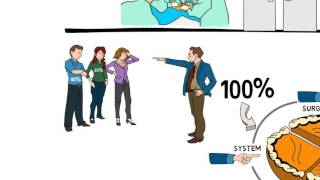
The Conscious Leadership Group explains radical responsibility: instead of dividing blame, each person takes 100% ownership of their role. A hospital operating room example shows how surgeons, nurses, and staff who each claim full responsibility for timeliness create better teamwork and fewer mistakes.
Chapters
Are you taking your 100% responsibility brought to you by the Conscious Leadership Group? Find them on the web@www.conscious.is. most people, teams and organizations think of responsibility as a pie. Like all pies, this pie gets cut into pieces. To see pie cutting in action, just think of an issue facing your team. For example, in the world of healthcare, one typical drama is timeliness in the operating room. The health and well being of patients, the stress of the clinical staff and the financial success of the department are all affected by the ability to make and keep a schedule. However, many ors have been known to run behind schedule. When this happens and teams go below the line, everyone starts blaming everyone else for being tardy. Typically, the responsibility pie gets divided up. Surgeons blame the anesthesiologist for pushing cases later in the day. Anesthesiologists blame surgeons because they never have their patients ready on time. Administrators blame physicians for expecting special treatment and making demands. There's also a slice of the blame pie for nurses who are perceived as slow to turn the rooms, the cleaning team for not working fast enough, and the system, for example, the man for creating all kinds of meaningless rules for the or. This is dividing the pie of responsibility from below the line. There is 100% responsibility represented by the whole pie, and then there are portions of responsibility that get assigned to everyone who participated in the issue. In drama, responsibility is something that is assigned and is assigned to those who are to blame for what went wrong. In some cases, people assign themselves or others a small piece of the pie which is less than 100% responsibility, and in other cases I more than the whole pie, and that is more than 100% responsibility. From above the line. A new radical approach to responsibility emerges in presence. Responsibility is not something that gets assigned. Rather it is something that is taken from above the line. Everybody involved in the issue can take responsibility for what is occurring. And from above the line there isn't just one pie, but rather there are as many pies as there are people touching the issue. Instead of one pie of 100% responsibility being divided amongst many people, every person takes their own 100% responsibility. In other words, if there are 20 people who touch the issue of timeliness in the surgical suite, there are 20 pies of 100% responsibility, so that everyone who is willing can take 100% responsibility for what is occurring. One key to creating a culture where people take radical responsibility is to commit to seeing everything as a learning and growth opportunity. From this consciousness, there are no problems or mistakes for which blame must be assigned. There are only learning opportunities perfectly suited to each individual and team's greatest growth edge. Here is what radical responsibility looks like for a surgical team committed to learning and growing. The surgeon says, I want to take responsibility for this case. Starting 15 minutes late, I overbooked my schedule and didn't allow enough time to really talk to and prep the patient. I see this as a pattern in my work and I commit to creating enough time to get each patient ready for surgery. The anesthesiologist might say, I too want to take my 100% responsibility and get my learnings. I can see that I've created a story that our culture just runs behind schedule and so I make decisions about scheduling cases for later in the day. I see that adapting my decisions to this story about the culture is actually an excuse and doesn't allow me to take my 100% responsibility for assuring that the OR runs efficiently. And I commit to scheduling cases with that goal in mind. The nurses and cleaning team Our piece of the pie is that we are not really working together to create the most efficient means for turning the OR between patients. We're going to have a meeting turn identify processes that can create greater time efficiencies. Administrators could say, our piece in creating the drama is that we have created and enforced more rules rather than really listen to all of you who are working in the OR every day, we commit to listen more and legislate less. Whenever teams claim 100% responsibility and end blame and criticism, real breakthroughs occur, issues get resolved, teams function more skillfully together, and stress decreases dramatically. So are you taking your 100% responsibility.