Being Present With Your Wife and Kids
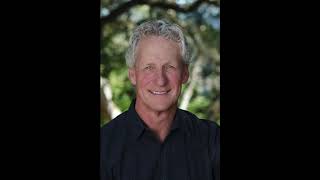
Jim Dethmer explains how to stay present with your family by recognizing when you're "above the line" (open) versus "below the line" (reactive). He teaches box breathing (4 seconds in, 4 out) and a simple check-in: "Where am I?" to reset when you get triggered.
Questions this video answers
Box breathing: four-second inhale and four-second exhale (4s in / 4s out).
Randomly Remind Me and Mind Jogger.
Conscious.is.
Approximately 0 to 4 seconds (as cited by Gay Hendricks).
Chapters
What we know is the antidote to fear isn't courage. The antidote to fear is acceptance. So if I can learn to accept myself when I'm scared, reactive, out of presence and below the mind, then I become a space of transformation so that when my kids are scared, I can be a space of loving acceptance for them.
All right, front row dads, welcome to the show. If you're back for more, thanks for being part of the brotherhood. And if you're here for the first time, I'm your host, Jon Vromen. This is the show for family men with businesses, not businessmen with families. My guest today is my new friend Jim Dethmer, and he is the Author of the 15 Commitments of Conscious Leadership. And if you're watching me, I'm holding up the book right now. It is a stellar Reid, and we're going to get into it. But the most important thing about Jim's bio to me, aside from his incredible business accomplishments over the years, is that, well, he has known his wife since he has been 15, together for 25 years and about to celebrate their 20th anniversary, when you put all their kids and grandkids in a room, there are 20 of them. So we are talking to a man who's got great experience. And, Jim, I've only known you literally for minutes, but I'm just a huge fan energetically. I trust my heart when I meet somebody and I think, man, I really love this guy. That's what I thought when I started talking to you. It didn't take long. Welcome to the show, man. I'm so glad you're here.
Thanks, John. I notice I have a huge smile on my face and, yeah. Joy running through my body. I'm so excited about what you're standing for in the world and what you and your community of brothers are about. What a fabulous, fabulous container to speak into. So, yeah, let's play.
I'm so glad that you said that. That is exactly what we're trying to do is create this environment for those conversations to take place. Conversations that for me weren't happening when I would go hang out with a friend on a weekend. And partially it's because it didn't feel like the right time to bring up deep stuff. You know, we got the families there. We're all hanging out on the weekend. And it's tough to say, like, how's your marriage, really? And I just didn't have the container. I didn't have that space. I had great friends. We had great connections, great conversations. And of course, they'd Ask how my family was doing. But this has been a different journey for me and your book's been a big part of this. Now, I told you earlier that we brought this up at our last retreat. Several of our guys are huge fans of your work. I have to give a shout out and thanks to my buddy Tim who went to one of your events. He came back and literally he just keeps saying to me, conscious leadership, that's your answer. You gotta do it. It's been at least 10 recommendations at this point. So here we are. And thanks for making time. This is gonna be fun. Jim, let's start with something light and easy here, which is right now in your world, presently speaking. What can we celebrate with you? What's good on any level, in any category? Just something good in your life.
Oh, I love that question. Okay, so right here, right now, in this present now moment, I live in Chicago. I'm looking out my window. It is a crystal clear blue sky. The sun is illuminating the city and there's a sense of joy coursing through my body. So in this moment, I'm celebrating life, life force, love, creation, creativity and being with you. So that would be the here and now, right now, if I open the aperture just a titch more I want to celebrate tomorrow. I'm flying out to California along with Diana Chapman, who is a co author and co founder of our business. We're leading a coaches intensive. So when we started our work it was largely to support business leaders, business. But what's emerged over the years is that coaches are drawn to us to learn how to use our particular model. So we're going to be gathering with several dozen coaches to talk about what it means to hold transformational space, to be a space of presence such that your very being becomes transformational. And I love to do that. It's like my favorite thing on the planet to do. And I actually think it's incredibly germane. And to what it means to be a father. What does it mean to have our being, our presence be a space for our children such that just by our being they feel seen, held, known, embraced. To me, that's the big game of life. That's the big game of love, and that's the big game of parenting.
What does it look like for you to be fully present? How do you know that you're in that space of being a force, that you are truly there? What does that look like exactly? How do you gauge success in that department?
Yeah, great question. So first it starts with intentionality. So in each moment I have the opportunity to actually set the intention to be present. In other words, in my experience, conscious leaders or conscious fathers don't do it accidentally. They live life intentionally. And one of the core intentions is, am I willing to be here now, fully present? And at least my experience for much of my life and my experience in walking through this life with other people is we don't set that intention. So, like, to your point, you can show up to the dinner table, you know, you've been at work and maybe you've been at the gym working out, you've transitioned, you're back home, and there's no pause with a clear intention that I'm going to be fully present in this sacred circle of my family. So I'll talk about what it means to be fully present in my direct experience. But the first thing is I set an intention so as a life purpose. My 50,000 foot driving purpose in life is to be fully present. But then as I got prepared to be with you, I took a few minutes, I did just a little quiet meditation, and then I set the intention. I just want to everything else to recede and to be present here in my body, mind, in my heart, and with you. So it starts with intentionality. And we could talk more about that. Then once the intention is set, I know I'm present when a few of the following are there. So let's talk about what it's to not be present. So to not be present is to be not just distracted, but unavailable or reactive. So I say that to be conscious is to be here now in a non triggered, non reactive way, totally available to this now moment. Be here now in a non triggered, non reactive way, totally available to this now moment. Now, in my experience, I don't think most of us are here now and we're not here now enough to even know we're not here now, right?
Yes.
Or we're here now, but we're distracted because we're triggered. You know, like we're here with our family at the dinner table, but we're not present because we're triggered because a child spilled milk or somebody is looking at their device, or somebody is yelling at somebody. So we get reactive and there's particular ways we get reactive. So if I'm not present, then I'm triggered or reactive and not totally available. So to be present is to be here now, not triggered or reactive, with an open mind, an open heart, and an open body fully available to this creative moment. So that's what presence is. So now how do I Know I'm present. The first thing is I feel it in my body. So what that looks like is. It looks like my breath. It looks like my muscle tension. It looks like, literally I can feel the flow of life force vibrating in my body. So my body is here and I'm in my body, I'm embodied. And then next, I can feel it in the quality of attention that I'm paying, both attention from my head. I'm literally hearing people in my world, hearing them, getting them. I can feel it in the quality of my heart. Like, my heart is open. So many people, so many dads, I think, have closed their hearts off. And quite frankly, for what appear to be good reasons, injury, wound, resentment, self protection. So I'm here and my mind is open. So I'm totally present. My heart is open. So affectively I'm tuned in to my partner and to my children or grandchildren. And my body is open. So I'm available. I'm available to the creative dance of this now moment. So that would be a little bit of what presence is for me and what it feels like. Clear intentionality, a somatic experience which is something learned. Open heart, open mind, open body, totally available to this moment.
What percentage of your day do you think you spend being fully present?
I love that question. Two things I want to say. When I first started to learn this dance, my early mentors were Drs. Gay and Katie Hendricks. And I'll never forget once when gay and, you know, they're, in my judgment, leading experts in the world on relationships and play and living in your zone of genius and things like that, and parenting, I just love what they do. But I'll never forget once when I heard Gay say the average person can stay present for someplace between 0 and 4 seconds. Now, if you think about it, John, if you just look at your direct experience, especially if anybody's tried mindfulness or meditation, let's say you're just gonna follow your breath. So you're just gonna follow the inhale, follow the exhale. When people start that journey, they can stay with their breath for about zero to four seconds before they're hijacked out of yes. All right. So I think most of us can sustain presence for just a few seconds. So part of the journey, and I just want to stay with fathering, part of the journey of being a great dad is to do the practices and their practices that allow me to stay present longer and longer and longer. And I'll answer your specific question in just a minute. But here's the bigger thing. So let's imagine that I'm present. So, like, right now, right here with you, I want to take a breath and be present. I'm here, you're here. We're here. Now, after a few minutes, I'll drift out of presence. Something very benign can happen, and my attention gets hijacked. So the key, I think, to being a great dad is to know when I'm in presence, to know when I've drifted out of presence, and to know how to shift back into presence. So all day long, I'm just present, drifting, shifting, present, drift, shift, present, drift, shift. Whether I'm talking to my wife, whether I'm being with my kids or my grandkids, I'm present. Like, I'm fully present, reading to my grandson. And I get to a place in the book and I go out of presence. Conscious grandparenting is to know that I've drifted out of presence and then to have a reliable technology to come back into presence. So what we're doing is we're expanding that zero to four seconds. But equally, if not more important, we are getting reliably good at knowing when we've drifted out of presence and shifting back so then. And they're little spurts of presence connected together throughout the day. So now in my life, I live much of my life present, much of my life present. And, you know, 40, 50 times today, I've drifted out of presence. But a huge difference is that 25 years ago, I would drift out of presence, but say I would get in some sort of drama with one of my kids, and I would go out of presence, and I would stay out of presence for days or hours, or I drift out of presence with Debbie, and I'd stay out of presence. So now I go out of presence 20, 30 times a day, a fear of thought arises, or I get hijacked into something, or I get defensive or contracted, or I get some sort of egoic fixation. It's okay. It's just normal. I notice it quicker, and I stay out of presence. Less time before I shift back into presence. I think that's the real key. Does that make sense?
100%, yeah. I have so many thoughts about all this. And when you say the technology, right, the awareness and the tools to be able to not only catch yourself when you've drifted, but then what brings us back into the moment? What are a couple of those examples that are true for you or that you've seen be true for other fathers and leaders that you've worked with? And by the way, I'D love to be able to kind of interrupt my own question by sharing. I'm looking here, studies. You can see this. It's a right. It's one of these. I'm going to just play it for those listening. And I bought this because I wanted a tool that would help me to get centered in moments throughout the day. So when before I record shows, I click this bell and I listen to this, and I just wait until I can't hear it anymore. And it's amazing how that helps me to dial in. We have one of these on the kitchen table, and it's how we start each dinner as a family. And so those have been a couple of our triggers. But I guess I'm wondering, is that what you mean, those types of cues or, you know.
Yes, yes, yes. By the way, I have the identical chime right over here in my briefcase. So it must be. There must be something about that chime.
That's cool.
Okay, so let me start with this. The first hack is to reliably ask yourself, where am I? Okay, so begin by coming up with a way to reliably ask myself, where am I? And the answer to that question, once I pause and ask, where am I? Is either going to be present or not. In our simple little paradigm, we call it above the line or below the line. Above the line is present, open, curious, committed to learning, available. Below the line is in a threatened state where most of us spend most of the time in a reactive threatened state, where I'm closed and defensive. So the first hack is to simply develop a routine where I ask myself, where am I? And pause, take a conscious breath and check. So when I'm first working with people, I might say, just take like some post it. Stick one on your computer, stick one on your medicine cabinet, stick one on the rear view mirror of your car, put one on your gym bag, whatever. And just when you see the post it for, you know, like a month or three weeks, just say, I'm going to pause and ask, where am I? So, and you could do this, you know, with your family. You could have part of your ritual. It's like you just do, like, you could ring your bell. So now I get still. And then everybody asks themselves, where am I? Am I? We call it a line check. Am I above the line or below the line?
Real quick.
Just thumbs up, thumb down, where am I? So we call that the location question. Location, location, location. And a lot of times when I work with people, I'll use technology. I have them download an app like Randomly remind me. Or if you have an iPhone, mind jogger. And it's a great app because you can program it to ask you any question you want as frequently as you want randomly throughout the day. So I might give a dab and say just take your iPhone and program it to ask you where am I? And set it to ask you that three, five times a day. And make an agreement with yourself that whenever it goes off, you will take a breath and you'll check and you'll answer honestly. Wow, Right now I'm below the line. I can feel my jaw is tight, my breath is high and fast. I'm in kind of an internal anxiety space or I'm futurizing or I start to map the territory. So I become more and more self aware of what it feels like to be present and not present. So when I ask myself where am I? I can reliably answer the question with some amount of self aware insight. So that'd be the first thing I'd say. Begin a discipline of asking yourself, where are you? By the way, I do think this is a fabulous little tool in families. Cause little kids get this. You just draw a line and say, are you above the line? If you're above the line, you're alive, free. You know, when you're below the line, you're contracted and kids get it in their bodies. And so you can just start playing. Let's do a line check. Where are we now? If you're going to do this, John, one of the keys is you can't make being below the line bad and wrong. This is what real, like your dads, the kind of people you're running with, high achievers, all of a sudden they make the goal to always be present or always be above the line. And I'm failing if I'm contracted or below the line. And that's a formula for disaster. Because the reality is we're hardwired to be below the line. We're hardwired to scan our environment and look for threat. And when we experience threat, we go into that reptilian brain, we contract, we go into our fight, flight, freeze, reactivity. It's just survival. And it's so wild because you can be hanging out with your kids in the family room just totally present and all of a sudden something happens with your kids. Like just the normal stuff of being a parent. You know, one of them hits the other one and we contract, we go below the line and that's just normal. So the goal is not to make being below the line Bad or wrong, it's to just notice that it's part of our survival mechanism. So the first thing you ask is, where am I? And we regularly say, in our world, I'm below the line. It's no big deal. It's just part of being human. Then the next key, the next hack is, if I'm below the line, can I accept myself for being below the line? It's real simple. Whenever I'm below the line, I'm just scared. I'm just at some core level, I'm frightened. Now, you might be a big, powerful person who doesn't own that they're scared. I'll bet that's not true of the men you're working with. I imagine you're working with emotional intelligence and helping people own their fears. It's such a healthy thing to do. But whenever I'm below the line, I'm just scared. And so from that place, first question, where am I? I'm below the line. The second question is, can I give myself a breath of acceptance for being scared? So that's the second step, and then I'll get to some more practical hacks. By the way, when a father can begin to do this with his children, because whenever your kids are below the line, you can know that all that's going on is underneath. They're scared. They're experiencing some threat to what they perceive their identity to be. And of course, what we know is the antidote to fear isn't courage. The antidote to fear is acceptance. So if I can learn to accept myself when I'm scared, reactive, out of presence, and below the line, then I become a space of transformation so that when my kids are scared, I can be a space of loving acceptance for them. It's like, I think Dan Siegel says it so well. If my kid is in a reactive state, the first thing to do is breathe myself so that I get my nervous system, then affirm the reactive pattern in the child. Oh, sweetheart, I get that you're upset. Makes sense to me. You're upset. You wanted those kids to invite you to play baseball with them, and they didn't invite you. That hurts, Tony. And I get it. Acceptance meets fear, and then fear begins slowly to melt. And unless I can do that for myself and in myself, and I'll have a hard time doing that for my kids.
All right, guys, I want to take just a quick second to talk about something really important. Now, I know you're listening to the show because you want to level up your game at home, but if you want to take the next step within front row Dads? I want you to do something today which is text the words front row dads to 314-665-1767. Three separate words, front row dads. It's not case sensitive. I want to send you a few things right, right away. First, I want to send you a recording from a masterclass that I recorded with my good friend and author of the Miracle Morning, Hal Elrod. He's a father of two amazing human beings and we recorded a show called the five Habits of a Front Row Dad. I want to send that to you because I think it is well worth listening to. Second, I want to give you 45 minutes of a mind blowing conversation that I had with a woman named Kim Enami. And the show is titled have Better Sexual. Hugely popular. This will rock your world and likely your spouse's as well. But I want you to have access to this information. Number three, I want to give you access to 1300 other front row dads inside of our Facebook group where you can ask any question, share any win, and give any resource that you think would be valuable to the community. And lastly, I want to include you in one email I send out each week. It's short, it's to the point and I pull from my life experiences along with the insights from more than 135 members of our brotherhood. I want to give you the best of the best in each email. So all you have to do is just text the words front row dads to 314-665-1767 and we will get you started today.
So you're asking what are some of the hacks? First ask yourself, where am I? Second, learn to give yourself a breath of acceptance. And then third, when you're triggered and reactive, take four conscious breaths with a four second inhale and a four second exhale. You know, I think the Marines call box breathing. And the whole idea is you just need to change your blood and brain chemistry if your dinner table's a shit show before you can intervene from presence and love. Taking four breaths so that you get the adrenaline, the norepinephrine and the cortisol out of your blood so that you can be fully present to address what's there. You're just going to collude with the chaos. So a first shift move is four conscious breaths. That's a four second inhale and a four second exhale at 32 seconds that shifts. And then you know, the rest of our work is just like 32 different shift moves to come back into presence when you're out of presence. Wow, I feel like I'm talking. I want to hear your voice. I just want to pause and see what that's bringing up for you or what. What's happening over there with you.
Well, I appreciate that so much. I'm. I'm so captivated. Several times I wanted to think about what I wanted to ask you next, and then I brought myself back into the present moment. I said, no, just stay here. And now with Jim, there was so much there, Jim, that I resonate with that I appreciate. There were a couple of moments when you were sharing where I thought, oh, man, I have really messed this up so many times. I thought I had this, like I was watching this video in my head of like all these moments where I completely, completely got triggered. I have this, I have to tell you this thing that I shared with my core group in front Row Dads. We have small groups that we call bands, which is. Yeah, so groups of four and we. My band is Tim, a buddy Hal, and another guy named Justin. And we meet monthly for two hours. And the only rule is no business talk. We just have to talk about family. And one time I shared with them that I had this moment with my 10 year old where he said something to the effect of. I can't remember exactly what he said right now. It was something like, I wish I had a father who didn't get triggered so easily. And I was just, oh, I. And the truth is he, he deserves a father who doesn't get triggered so easily. This is actually something I've talked about very openly on the show. I've shared it with my friends. I'm, you know, and some people have a hard time imagining me triggered, you know, because I genuinely, at my core, I'm a very loving, nice person. But I get angry, I get triggered. I get, you know, something clicks and. And they feel it, my family feels it. And I know when I'm triggered, when I'm conscious and I'm like, oh, definitely I'm triggered right now. This has been several years of me learning tools to be conscious enough to catch it and then know how to get myself back into a good space. And all these, like, the bells and, you know, so many things. I quit drinking a year and a half ago. I focused on sleep. There's lots of these little things. I watched a TED Talk recently about a guy who was talking about transitions and he just talked about changing clothes from your business clothes to your family clothes. It's Symbolic, you know, so there's so many of those things that are coming up for me. And I just really appreciate this, Jim, I really do, because I believe that what you're sharing, this idea of being. I feel like the universe is sending me these messages because I have heard the word be versus do at least six times in the last 24 hours. Even. I was literally at lunch with how yesterday and the woman had said she was a teacher for years and she wanted to, you know, she was transitioning in her life. She wanted to move from doing to being. And I keep hearing this about being present, about the way that we show up, the energetic vibe. A woman who I learned a lot from had talked to me recently about what true empathy is. And then I wrote about it for this group and I talked about empathy being this energy. Empathy is energy. And I never saw it that way. So all this is ringing true. I guess my point is I'm just reflecting back that all this is so important. It's right on the money. It's exactly what I need to hear. I'm guessing it's what other guys need to hear. And my kids, I'm going to give them your address so they can send thank you cards.
Oh, that's so sweet. You said so much. Great. I just want to grab a couple of those threads, like, it's so beautiful. You know, I think you said your 10 year old said, I wish I had a dad who, you know, doesn't get triggered so much. Now just imagine that we could all be present enough that we could say to our children when they point that kind of thing out. We could say, first of all, thank you for seeing me. Thank you for seeing that I get triggered.
Thank you.
Second, thank you for giving me feedback. In fact, I would like to invite you whenever you see me triggered, if you could just say, hey, dad, you look triggered. I would so appreciate you giving me feedback. And I just want to tell you sometimes when you give me feedback that I'm triggered. I'm going to get more triggered. At least for a few moments I might. But I will come back to you and I will deal with my trigger. The next thing I want to say to you, my sweet little 10 year old, is it's okay for you to get triggered too. This is not a family of perfect people who don't get triggered. This is a family of humans who get scared. I get scared. And when I get scared, I get triggered. And I want you to know it's okay with me if you get scared and get triggered. Too. Now imagine if a world of fathers and grandfathers said that to their tried. Imagine a world where it's okay to have our kids say to us, you know, dad, you're below the line. Dad, you're triggered. Oh, thank you, honey. Let me just take a breath, okay? And then we could say to our kids, oh, sweetie, you look triggered. And again, I'm not telling you not to be triggered. You make sense. You're triggered. The world looks scary. Of course you're triggered. You know, it's like we have these. Our grandkids are all under the age of eight. And, you know, it'd be like they spend the night here with my wife and me. And imagine if at, you know, three in the morning, one of the little three year olds walked into our bedroom and, you know, they said, grandfather, Gammy, there's like a boogeyman under the bed. Well, you know, I wouldn't be a very conscious grandparent if I rolled over and said, oh, sweetheart, there's no such thing as boogeyman. Go back to bed. Get over. Go back to bed. In fact, I think when I respond to them that way, they would get even more scared because in their little reality, there's something to be scared of. And then somebody they trust doesn't see reality. Whereas if I'm in a good space, I would say to them, oh, sweetheart, you're scared. That's okay. Grandfather gets scared too. So why don't you crawl up here and let's cuddle for a minute and then we can take a flashlight after we have equilibrated our nervous systems. I wouldn't say that to him. And we can go look and, you know, that's all any of us want, John. We just want, like in your band of four brothers, that's part of what you're doing. You're revealing authentically and vulnerably and what you're getting. I know this just based on the vibration I get from you. What you're getting is a group of men who look at you and say, we see you, man. Yeah, it's okay. You don't have to be perfect. Periodically you fall off the horse. It's okay, just dust yourself off, we'll dust you off, and let's just get back on the horse. So I love it that your child feels free to give you feedback.
Yeah.
What a gift.
Jim, you know, how do you talk about this concept of above the line and below line? I know is so powerful. I know you in your book, talk about this book being like the model Right. This is the most important framework we could introduce. I believe that I felt it. It was significant for me. I don't think I presented it properly to my wife, and I don't. And I don't think she appreciated me mentioning like, 32 times over the next week that she was below the line and that I wouldn't talk to her until she was above the line. That didn't work for me. So let's take my failure as an opportunity to teach other men what might work.
Oh, thank you. So many of us have done that. You know, we come up with any new model, and then we decide that it's our job to teach, impose the model onto people we love. Let's just start with our wives. And then we think it's our job to be the referee of whether or not they're doing the model.
Yeah, yeah, that's it.
And most of our wives haven't really signed up for that program. So, you know, really, what I often say is, unless your wife is open to you being a teacher, a bringer of new models, which yours might be, in which case that's great. You could say, hey, sweetie, I came across this new model. I thought it was interesting. I want to tell you about, if you want to know about it. Or let's say she goes, yeah, I love you. You're always bringing great stuff back. You're like, you know, like, you go out into the wilderness and you find stuff and you bring it back. Great. What do you got? Well, then you would tell her what the model is. And, you know, again, the model is. Is so simple, it's so universal. Like, nothing in our book is original to me, and neither is that. I got the above and below the line from Gay and Katie Hendricks. It's real simple. It's above the line is trust, and below the line is threat or fear. Above the line is love. Below the line is fear. That's real simple. I'm just kind of, which energy am I moving from in life? And what does it look like when I move from those energies? And, you know, on our website, we have a video. I think it's like two and a half minutes, you know, about location, and it's just a two and a half minute video. On this whole above and below the line thing, you can show that to your partner, your wife, your kids, and say, hey, here's a new game I want to play. Now, the next step after you do that is this. And this is the key. Say, hey, honey, here's what I'd like I want to play with this. And for the next couple of weeks, I give you permission to point out to me anytime you think I'm below the line. And by the way, with your kids, if you've got a kid who's 10, how old are your kids?
10 and 5.
10 and 5 year old can get this too.
Yeah, totally.
Because again, I'm just, they, if they're listening, they won't do that. I'm just doing thumbs down or thumbs up. You just have your five year old go, dad. Okay, I can already see this. Yeah, it's a game. It becomes a fun game. By the way, I think the more that learning is playful, the more we learn. So you say to your wife, you say, sweetie, I'd really love your feedback because you know, there are ways I contract or go below the line with you and the kids. I don't anyplace else in life. So when you see me below the line, would you give me feedback now? And like I said when I was kind of role playing around your kid, if you say that to your wife, say, you know, when you give me that feedback, I might not shift right away. In fact, I might actually go further below the line. And again, John, people like you, leaders like you and men like you will often go further below the line. Because right after we're told we're below the line, the next inner critic voice is going to be, you suck as a father, you suck as a husband, you suck. And now we're going further below the line through our own inner critical voice. So you say, honey, I might just go for a little drift into below the lineness. But what I want is your feedback. And so you say, would you please give me feedback? So eat your own cooking before you ever offer it to anybody else in your life. And then you do that for a few weeks or a few months. In my experience, experience especially, I would believe this about you. Your wife's going to say, hey, I'm open to you giving me feedback too. And now we're starting to play a game. But the deal is it's not whack a mole. We're not trying to catch each other below the line and whack each other. It's more like, I see you, you're scared, and I am witnessing you. I get you now. At first there'll be judgment and criticism. That's okay, you just work that through. But that's the way I invite, you know, I'd invite men and fathers to play this game. That makes sense.
Such good counsel yes, yes. And yeah, and that's exactly it. And, you know, I'm so glad that you mentioned that you could go further below the line, because when you initially said that, I thought, yeah, that's exactly what's happened in the past. That sometimes, like. And in my heart I'm going, she's totally right. And then I'm like. But it's making me angry that she's right and that I'm wrong.
And it's.
Yeah, I'm right there. I believe that to be fully true. You know, I've never had a situation, Jim, where I've been enjoying a podcast so much, but actually wanted to leave the podcast because I want to go implement the things that you're telling me. This conflicting emotion right now. I'm like, all right, Jim, gotta go. I gotta go. I gotta go talk to my kids. We started this weekly family meeting. In fact, we're about to run a training call in our membership area about these family meetings. And we started doing them on Sundays. My friend Ryan Levesque does them and my buddy Mike McCarthy is doing them. And they're powerful. And I'm going to bring this up. I'm going to play this video and share it and create a game for them. And I'm going to think about also all the different ways I could gamify this. Hey, can you help dad to stay or catch dad above and below the line, like, this will just be an awareness. It'll be fun for them because, yeah.
They start to play and they're growing in their self awareness.
That's exactly right.
Yeah.
Yeah, that's good. That's. That's really great. This is cool, Jim. You know, there's so many places we could go with this conversation. And I. And I love where it's been and I'm. I'm conscious of the time also, so I want to be careful to not open up a totally new, you know, huge topic because there's so much that you cover. I mean, look, I'm holding. For those of you who are maybe watching on video, I'm holding the printout from the website of the 15 commitments. There's responsibility, curiosity, feelings, candor, gossip, integrity, appreciation, genius play. What is the opposite of my story? That's a big one. And Tim likes that, too. He likes to say, what's the opposite. That's really cool. Security, control and approval being enough allies win for all and being the resolution. So much here. And the good news is, guys can just get the book and they can listen. You did a great Job with the audio, they get the book, they check it out. Tim is a big advocate for your online. Virtual training is a great place to start. So that's really cool. There is a couple other questions I want to ask, but I want so many before guys leave in case they had to go. In case they're pulling into their driveway right now from their commute home or whatever it might be. Where can they get that virtual class and maybe just give us a little bit about it so they understand whether or not that would serve them to get into something online.
Okay, great. So our website is. Conscious is. Conscious is. Go there. We have tons of resources. All these two minute animations that you can watch, like a two minute animation on how to be with feelings. This is a huge one. Teaching fathers how to be with their emotions and the emotions of their children. How to set up an anger station in your home so your kids can learn how to move anger through their body in healthy ways. So go to our website, Conscious Is. There are all kinds of resources there, all free. Just take them, disseminate them. We open source all of our content and then there is also events there and we do virtual. It's called the Taste of Conscious Leadership. So it's like four hours of virtual thing and we do in person events and we do forums. You know, that's our primary tool. All throughout the country, eight to 10 people gather together once a month for four hours and do two retreats. I think very similar to what you're doing. You have your retreats and then you have bands. Because we're really transformed in deep, intimate relationships where we are safe and so we put those on. So all that's on our website. Go and take it and avail yourself of it and just let us know how we can serve you. We just want to. Again, none of this stuff was original to us. We tried to give credit wherever we got it. And we just feel like we're stewards wanting to support its vibration, its expansion into the world. And the thought of having fathers really live rooted in these kinds of things is so darn exciting to me. It's just. Yeah, one of my favorite. The next book that we're being invited to write that we hear about all the time is the 15 commitments of conscious Parenting. Because I think it just maps perfectly to what it looks like to be a conscious versus an unconscious father, Mother, caregiver.
Absolutely. Wow. Let's talk about that book when you put it out, 100%. Well, I'm certainly a fan of your work, Jim, and I Love what you're up to. And this has just been such a enjoyable and impactful conversation. I would go on the record. I'm gonna say this, don't say this. I've done. I don't know this. Be like our. We're at like somewhere around 150 shows. This has been my favorite interview to date. I really mean that. That is not difficult for me to say. It just hits on all the points. And I think there's also a. You've traveled this road, right? There is something where you've earned a little respect here for your 20 kids, grandkids all coming together, you know, and representing a lot of road that you've traveled in this space and the work that you've done. So I just really appreciate all that. I want to ask you this final question, and I'm hesitating because I realize it could be a big one. So feel free to defer this to another conversation that we have. But I have to ask because we spent so much time talking today about being present. Right? And the book is the 15 commitments of conscious Leadership. How do you see the difference of somebody being conscious and somebody being present? Is there a difference? Are they the same thing?
Yeah. Well, when we introduce the word conscious, we're introducing an entire field of literature. So in our tribe, we like to listen to the Waking up app by Sam Harrison. If you look at Sam and then you go to Sam's wife's book on conscious, I think it's a beautiful book, simple and short on what it means to be conscious. And it's technical, the definition millennia have. So in our world, we're making conscious and present the same thing. Now, it's not that way in a lot of worlds. So to be conscious is to be present. It is to be here now in a non triggered, non reactive way. But of course, we could define conscious versus unconscious. Like, are all sentient beings conscious? What is consciousness? We're not using it in that technical way in our world. They're rough equivalents.
Cool. Well, there's just so much that we can learn and that we can have conversations about. I want to thank you for. I wrote in my notes. I was just going to thank you for the radical responsibility piece. Jim has been big for me. I wanted to mention that to you specifically. The piece about gossip was really big for me because I've wrestled with how do we open up to our brothers and talk about like maybe our marriage or our kids without gossiping, right. Without throwing them under the bus. But how do we have candid conversations. How do we get that off our chest without gossiping about them? There's so much in this that was really powerful for me. I just realized we could have 15 hours of conversation on this. And I want to stay in your world, in your space. I want to be part of the container that you're creating for this conscious conversation. Because I do believe that this is going to be part of what helps the world to not only heal, but to thrive forward. And I think we need it. I think we're at a place right now where there are some big decisions humanity has to make and it could go a lot of different ways. And I think if we have a conversation about personal responsibility and how we show up and being aware enough of how our decisions and our businesses and our families impact and ripple out into our communities and across the world that we can really choose the direction that this thing is going to go. And I just. So I thank you for your work. I think you're creating a world my kids are growing up in. And thank you, Jim. Appreciate you.
Thank you, John. Thank you for being the stance that you are for parenting and for fathering and for excellence. For excellence in what it means to, I think, discharge one of the great callings in the world to father and grandfather these children. It's just I have goosebumps saying that and tears in my eyes. Like, what? You know, that's a pretty magnificent calling. And to do so excellently and gently and patiently. You know, if we talked about my family, it's at times been so careful, chaotic and so messy and yet there's forgiveness and grace and kindness and we get to come back together. It's not about doing it perfectly. It's about doing it with a little bit of grace and kindness. Yeah.
Well said. Well, I hope that all the men take a little grace and kindness and forgiveness and love home to your families after this show today. Thanks again, Jim. Appreciate you being here.
Thank you, John.
Hey, guys, if you haven't already done so, go right now to free frontrowdads.com Facebook and join the conversation that's happening right now online. We designed this group for guys who are entrepreneurial in their thinking. They're high performing guys with low egos. We're looking for the dads that believe in teaching their kids how to think, solve problems and be real leaders. We're looking for guys who believe in being family men with businesses, not businessmen with family families. We're looking for the fathers who have great knowledge but also believe that they have so much more to learn, and we're looking for men who want to add value by sharing their wisdom and those that are willing to ask the questions that we all need and want answers to. That's frontrowdads.com Facebook or simply go to Facebook, type in front rod ads and you'll get to our group and what we put in there. Links to all the podcasts and videos and other resources that you can't get access to anywhere else except for in this group. We want to give you the best ideas to help you with your marriage, balancing work and family life, communication strategies with your spouse and also your children, travel ideas and even suggestions on the latest gear that would save you time and help you be more effective. We've got updates on upcoming events and so much more. Go right now to frontrowdads.com Facebook and join the Conversation station. I look forward to connecting with you there.









