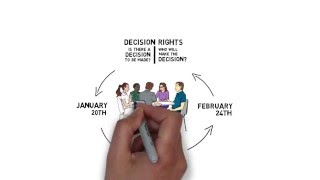
The Conscious Leadership group's framework for decision rights: first ask if a decision is needed and who makes it, then pick from seven models like leader decides, consensus, or majority vote based on urgency and buy-in. Clarifying who decides reduces team drama and increases effectiveness.
Chapters
What are the decision rights brought to you by the Conscious Leadership group? Find them on the web@www.conscious.is. conscious leaders clarify decision rights as a way to be in full integrity by being impeccable around their agreements. One of the sources of drama among teams and organizations is that people are not clear about how a decision will be made. Conscious leaders develop the practice, individually and in their teams of asking two questions. First, is there a decision to be made? And second, who will make the decision? Unconscious leaders and teams have meeting after meeting and conversation after conversation without anyone asking, are we going to make a decision about this subject? And if so, who's going to make the decision? Asking and answering these questions has the power to transform team effectiveness. Once the decision to be made is clarified, the next step is to determine the decision rights. The conscious leader picks one of seven choices for how the decision will be made. In order to determine which decision right will be used, the leader takes into consideration time and buy in. Time relates to the urgency of the decision. How much time do we have to decide? If the decision needs to be made quickly, certain decision rights are preferred. If there is time for consideration and deliberation, other decision rights can be used. Second, the the leader must consider how much buy in amongst stakeholders is needed. If buy in is important, other decision rights create greater buy in. The seven decision rights from which a leader chooses Leader Decides In Leader Decides the leader and the leader alone makes the decision without seeking any input. This method is fast but doesn't always create buy in. Leader decides with input Here the leader is still making the decision, but she is seeking input from others. The amount of input and the time allotted for input is decided by the leader. Subgroup Decides Some decisions are best made by a subgroup of the whole. The subgroup can be made up of subject matter experts or representatives of stakeholder constituencies. When this model is chosen, the subgroup makes the decision and no one else gives input. Subgroup decides with input like the one before. The subgroup decides, but in this case they seek input from others. Majority Vote Majority vote is the first decision right? Where everyone has both a voice and a vote and often buy in goes up significantly. Consensus Consensus is achieved when no one is opposed to the decision. People can have various levels of agreement with the decision, but no one can be opposed. Consensus demands that everyone is heard and that everyone seeks to find what is best for the whole. Also, when a leader chooses consensus as the decision right, they must also choose a fallback decision right. Sometimes consensus is not achieved and when it isn't, the group needs to know how the decision will be made. The leader can select any one of the previous five decision rights as the fallback method for making the decision. Alignment Alignment is a form of consensus where every individual is not only unopposed to the decision, but actually totally for the decision. Alignment usually takes the longest time but delivers the greatest buy in like consensus, alignment may require a fallback decision right. Conscious leaders get present and consider which decision right will most serve the situation, circumstance and team. Are you asking what are the decision rights.