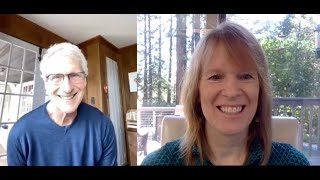
Diana and Jim from Conscious Leadership Group offer tools for pandemic stress: a breathing practice, a sorting exercise to distinguish what you control from what you don't, and a shift from 'this is happening to me' to 'this is happening for me.' They normalize fear, teach the difference between fact and story, and offer parenting guidance for keeping kids regulated.
Chapters
Okay, so I'm going to get started here as Jim finds his way over. One of the reasons why we wanted to host this event is just to offer all of you a place to connect and to recognize that all of us who have been practicing conscious leadership, we've been practicing exactly for moments like this. This is the time when all these years of learning how to shift in the moment, in the midst of threat, here's our chance to really see what that looks like when we have so many unknowns showing up in our own personal worlds and the world around us.
So.
I don't know about you, but I've used my practices many times in finding them extremely valuable, and we're going to take some time here. There's Jim. You just muted yourself. Jim, at least over here, can't hear you yet.
Saying, I can. There, you got me.
Gotcha.
Why did I have a sip of coffee?
We all get to practice right now with things not being the way we imagined they were going to be, which is what this is all about.
Yeah, absolutely. So. Hi, Diana. Hi, everybody.
Hey, Jim. I was just talking about. Here's our chance to practice. Through all these years, we've been learning how to drift and shift, and now we're really having to. To use those more than ever in this changing times. And so that's so thrilling to bring all of us together here to have this conversation.
Yeah. I was talking to one of our CLG team members the other day. I said, how are you doing in the midst of all this? And she said, you know, this is what I've been practicing for for years. I thought that was such a great, such a great response. If the big game, the biggest game that we're up to is what does it mean to be an awake human being or a fully present person or, you know, the most expanded version of yourself, then it's through times like this that we get opportunities to practice the very things that we and countless other teachers are bringing to the world as an opportunity to expand, to grow, to wake up, to become present people. So, yes, here's to practice. Here's to practice. So have you covered the logistics, Diana? That will be on for 90 minutes until the bottom of the next hour. It's a webinar, so no one can be heard except me and Diana. But we really do welcome your questions and your comments. We'd love it to be a dialogue and track back and forth with each other and really, really provide a community of support. That was our desire. We wanted to get together and offer support to each and every one of you for what's going on in your world. So the intention is to create a community of support for the next 75 minutes or so and to offer you some tools and do some practices and. And then respond to whatever your needs or questions might be. So I'd like to begin.
We've already got lots of questions, so we're thrilled about that. And for those of you who might have just joined, it's the Q and A button at the bottom where you ask your questions.
All right, so the first thing I want to do is just acknowledge the uniqueness of these times. Now, there's nothing special about that. We've all been doing that. But, you know, the word unique is so often misused. I think it really means one of a kind. And it's arguable that for many of us, this is a one of a kind experience in so many ways and at so many levels. And one of the things I want to stress is a human experience. So one of the things we're all being invited to experience is our humanity, that we have these bodies and these bodies experience the experience that human bodies have. And one of the things that these human bodies are made to experience is fear or anxiety or nervousness or apprehension. And, you know, if you've hung around clg, the conscious leadership group, which most of you have, that's why you were invited, you know that one of the things we've stressed over and over again is that it's natural and normal to be scared, to be human, to experience your deep vulnerability. So first thing I want to say is, here's to being human. And whatever your particular version of being vulnerable and scared is during these times, and it varies tremendously, we have people in the CLG world who are frontline caregivers. And the level of stress, the level of anxiety, the level of fear that they're under is unparalleled.
And.
And we have people in our community who are at home with their kids, homeschooling their kids, and they train to be all kinds of things in the world, but they never trained to be homeschoolers. And there's a whole other level of anxiety that goes with that of nervousness, of apprehension. And then we have people who are still working full time. You've just relocated to your computer, in your bedroom or in your basement, and you're still going at a million miles an hour, and you're under as much or more stress than you've ever been under. There's a level of being vulnerable and scared. That's there for you. And then there are some of us who. It's such a strange thing with all that's going on in the world, that for many of us, the number one thing we can do is do nothing, stay home. And there's a level of stress that comes from staying home. Some of you are staying home all by yourself, and you're beginning to experience isolation, anxiety. And some of you are staying home with people you don't necessarily enjoy that much or like that much or you're not that comfortable with. It's bringing up the nature of your relationship, and that brings up a whole level of stress and threat to who you are. And some of us are physically infirm, not just from the virus, but you've got all kinds of other stuff going on that gets heightened. And then some of us are literally sick with COVID 19, I just heard today that one of our kids, one of our six kids, talked to her caregiver, and she found out probably pretty good chance that she has the virus. No need to get tested at this point. But her caregiver said, I think you have the virus. You better stay in. So we're all. All over the place is what I'm saying. So, again, we just like to start with, it's okay to be scared. It's okay to be stressed. By the way, some of you are experiencing stress because you're not stressed, right? Some of you. We talk to people who go, I'm not only not stressed, I'm, like, having the time of my life, if you know what's true for me. I'm up here at our cottage in northern Michigan. We've been quarantined for about 14, 15 days. I'm here with Debbie. So I'm in my favorite place in the world. I'm here with my favorite person in the world, Living at my favorite pace of life. And so some of the stress that comes up in me is the stress of what would it be? Kind of like a survivor's guilt almost. How is it that I get to be having this experience while so many of you and so many others are having a different experience? It's just all part of being human. So before we go any farther, I just want to acknowledge that I'm human. When I couldn't get on the call, my heart rate went up, my breathing got shallow. I started thinking, oh, crap. And you're just the same way. Whatever's causing you to experience your humanity. Yeah, Yeah.
I love the idea, Jim, of doing some presencing around just accepting whatever threat we might be having.
Yeah, yeah. So let's do that. Let's do a little presencing practice. And you can do this with eyes open or eyes shut, whatever is most of service to you. Just begin by taking a couple of breaths. And I actually want you to do the breaths a particular way. We want to give you some tools, one of the tools of stress relieving breath technique. There are so many of these, but this is one that I particularly enjoy. We're going to do a handful of breaths where you're going to take a nice gentle breath in through your nose at whatever depth. You take at a 2 second, 3 second, 4 second inhale. And then when you breathe out, I want you to imagine that you're breathing out through a straw and I want you to make your exhale longer than your inhale. So I'll lead us. Or if you're not, do it, just do it on your own. Just everybody go ahead and exhale and then take a deep breath. Breathe in and now exhale as through a straw like this. Then inhale and exhale a little longer through the straw. Let's do two more of those. Nice gentle inhale and exhaling through a straw. And one more inhale and exhale. And now just as best you can, just let yourself be. Just be. If you're sitting, just let yourself feel the body seated in the chair on the couch or on your cushion on the floor. And as you're seated there, see if you could just let the body have the experience it's having. So there's a set of sensations, whether it's the pressure of the chair under your seat or your feet on the floor. Again, all we're doing is arriving here and letting the now moment be as it is. That's all we're doing. So could you just simply let the body be as it is? And then could you let whatever sounds are being heard just be as they are? So whether it's the sound of this voice or the sound of your body, or the sound in your home or your apartment, the sound in your office or outside, notice the sounds and see if you can just allow them. Just let them be. Just letting your body be, letting the sounds be. So all you're doing is relaxing into witnessing what's occurring and letting it be. You're noticing it and allowing it. And then notice as well any feelings that are here or emotions and the ones that are here right now. So as you tune in, maybe there's a little bit of agitation or Irritation, frustration, or maybe there's a little bit of apprehension or nervousness, anxiety, worry. There could be some sadness. Maybe you're just a little blue or melancholy or. I know some people in this community have had some meaningful losses and they're brokenhearted, actually. Maybe you're bored or you're apathetic. And some of you, in this moment might be peaceful, might even have some happiness or joy. Whatever feeling is here, could you just simply let it be here as best you can? The feeling is just a set of sensations in or on your body, just vibrations. That's all they ever are. Could you just soften a little bit and allow them to be? So we're just giving ourselves a moment when as best we can, we're just welcoming what is the pressure of our seat in a chair. We're welcoming the sounds, we're welcoming the feelings. We're just opening and allowing what is to be and be and be. And I want to invite you to just notice if you just stay here now and you allow what is to be, is everything okay? It doesn't mean necessarily that it's pleasant. But if you're not resisting, if you're not fighting with your experience, if you're just fighting allowing it, then you're just witnessing life unfolding just as it is, just being, just allowing, just welcoming.
I'd love to add, Jim, that I notice lots of sensations in the body and so I can I be with them. And what I notice is there's something else that wants to get congruent. So I feel a lot of experience on the inside and it wants a match of an expression on the outside. And some of you might be having that too, bigger emotions than you're used to. So I'm going to just find a way to match it. So I feel this swirl in my belly and I'm going to find I've already breathed with it, but it's still pretty swirly. So I want to find some sound and movement to match. And I'm going to actually ask the sensation if you could make a sound or movement to match the experience here. What is that? And as I try that on, it's something like that was a match. And I noticed though all those sensations having space now to move through rather than staying sort of stuck with me just managing them by noticing them but not letting them express themselves.
Yeah. So what we're doing here in just the opening couple of minutes is we're letting ourselves be with what is. We're just letting ourselves be. So what we discover Is that in order to suffer, in order to be in a really triggered state, we have to be resisting what is. And in this case, resisting, if you just take your hands and put them together like I'm putting mine together, resisting is pushing against life. And right now, there's so much to push against. And what we're practicing here in just the first few minutes is just opening our hands and letting what is be. And that's what Diana's doing. When she tunes into her body and her body is in a roiled up state, she's not trying to stop the body from feeling what it's feeling. She's not trying to stop the sensations. She's actually opening and allowing the sensations to move through and match them. So this is a core practice that we'd invite all of you to do. What you'll discover is, in these moments of life, when we feel so out of control, when we're feeling in such a state of overwhelm, the natural tendency for many of us as humans is to brace against life, to fight life. And when we start to fight life, then all kinds of things get activated. Whereas if we just simply can start to dance with life a little bit more and allow life and flow with life like Diana was doing, we find that there's a freedom, there's a peace that comes from being with life that way. This is nothing more than acceptance. So if you've been around us for a very long time, you know we only ask four simple questions. The first question is, where are you? Are you in a threatened state or are you in trust? Are you reactive or are you present? Are you in fear or are you surrendered, in love? And what we're saying is part of being human is we're going to be reactive and threatened and in fear, a bunch of the times we. So we just locate ourselves, where am I? I'm below the lines. Okay. But then the next piece is, can I just accept myself for being where I am? Can I just accept myself for being scared? So we're just inviting you right now to just accept yourself for being exactly where you are. Exactly where you are. Scared, rageful, bitter, frustrated, pissed.
Yeah. And part of acceptance, you know, what I noticed is after I felt my fear, I felt tears coming up into my eyes and I felt sad. And I was surprised, like, wow, I didn't know I was feeling sad. And one of the things that the mind likes to do is to go figure out, why am I sad? And that why? Question takes me away from, can I just be with sad so one of the other big practices, as these emotions are running through you, is to see if you can get less interested in the why and just be with. Be with the feeling state. And then once you've been with it, then you can ask the questions, oh, sadness is here. Is there anything that wants to be let go of? Is there anything. I'm grieving. But to ask that after you've let yourself fully be with the emotion all the way through to its completion.
Yeah, the mind, the identity, the ego mind we're talking about here, it's terrified to be out of control again. That's natural and normal. And one of the ways that it tries to get back in control is it tries to figure out why. If it can analyze something, if it can figure something out, if it can label stuff and compare it and categorize it, then it feels like it's back in control. But it's a fool's errand, because that control that you get that way is so ephemeral, it's so fleeting. It gives us temporary relief. Whereas the kind of practice that we're talking about, where you simply notice and allow, witness and welcome, there's a way that you start to feel in a dance with life that doesn't require you to dominate life and control. It's a little bit like being a piece of seagrass. You know, a piece of seagrass is so firmly rooted. If you've ever tried to pull up a piece of seagrass, it's deeply rooted and grounded, but it's incredibly flexible. And think about the difference between a piece of seagrass and a concrete pier when it comes to how they deal with the ocean. And if what we're all in right now is a fairly turbulent ocean in life, what we're advocating is a deep groundedness, which we'll talk about, and then a flexibility to be with what's coming without trying to get rigid and fight against or dominate life. That's the practice that we're exploring with you, even in these first few minutes together.
So that goes well with one of the questions that somebody posed, which is, what does it really mean to take 100% responsibility or to take radical responsibility in these times, in the. Both personally and for the collective.
Well, let's just start out at the personal level, and then we can just start to move out in circles. So I'll just illustrate it. So, you know, Diana and I met on zoom at about five or 10 minutes to the hour, getting ready to go. And at about two minutes, the hour, I noticed Lainey Wasn't here. Who's running this? The webinar? And so I said to Diana, where is she? At that point, my microphone glitched out and wasn't working. And Diana started searching for a different number. Then Lainey called me and said, we're on a different number. And okay. Now, at that point, I could feel like I'm a victim at the effect of any of the following technology. My microphone's glitchy now, at the effect of communication, or lack thereof between us as a team, at the effect I started to judge myself. How did I screw this up? So I'm at the effect of my own inner critic. So I could view myself as a victim at the effect of. And therefore, I'm creating anxiety. Just a little bit of anxiety compared to what is going on. Just a little bit of anxiety. And the cause of my anxiety is the circumstances out there. You get that? That's victim consciousness. That's to me mindset. Now, if I take responsibility, then what it looks like is this. First of all, take a breath. And then second, I can see that the computer or the scheduling or the zoom address isn't upsetting me. They aren't the cause of my upset. I am responsible for my upset. Literally, I am upsetting myself. I am frustrating myself. I am scaring myself. And then if you ask, how are you doing that, Jim? If we wanted to scare and upset ourselves, how would we do it? And then what I would discover is that I'm upsetting myself by what I'm believing and being attached to being right about what I'm believing. So I'm believing that I should be on the call when it starts, believing that my microphone on my computer should work. I'm believing that. And then my mind just takes off. It's irresponsible. We're these people who teach 100% responsibility in keeping our agreements. And I'm going to be late for the call. Now I'm extrapolating out into I'm a shitty leader. This is a complete, you know, blah, blah, blah. But notice the way that the anxiety is arriving in my body is through my attachment to my beliefs, especially being committed to being right, that it shouldn't be happening the way it's happening. So I can take 100% responsibility by simply saying, well, I'm scaring myself. I'm nervous myself. How am I doing it? I'm doing it by believing these thoughts. So now I'm not blaming anybody, including myself. Now, here's the key shift move there. The key shift move is that after I took a breath or two, I thought, how could this whole experience be for me or for Diana or for all of you? In other words, if I see it as a problem, technology is a problem, then I'm going to be reactive and look to blame, which is the opposite of 100% responsibility. I'm going to blame the computer, I'm going to blame communication, or I'm going to blame myself. But if I go to, wait a minute, what if this is for me? What if this is here for me to experience something, learn something, then I can get curious, I can start, stop resisting it, start allowing it, and I can get curious about how I'm going creating it and what I can learn from it. All right, so this is good because that's such a simple, unimportant example. But we could do the exact same thing. How are the circumstances of our lives, whatever yours are, how are they for you not happening to you? How are they for you? It's a legitimate question to ask. And then how am I responsible for what I'm creating through my response? And this is going on all day, every day. So 100% responsibility is living in the possibility that what's happening is for me, for my expansion, for my waking up. And I can be responsible for, for dancing with it in a way that allows me to take 100% responsibility for my experience. So that's at the micro level of our lives individually totally different from playing from to me like it's happening to me, to shifting to by me. I'm responsible for creating my experience and it's here for me, for me to wake up and expand in consciousness. So let's stay at the micro level first, then we can go out beyond that. Anything you want to add to that, Diana, or anything come up for you around that?
Yeah, I think that's great. And somebody had said, you know, I just got laid off. So conditions have definitely changed. What does it look like then to take radical responsibility for my experience in the midst of being laid off and wanting to take care of myself financially?
Well, again, thank you. And let's start with the very beginning. So I imagine if you just got laid off, you're scared. So we would begin by just saying, of course you're scared. And we wouldn't have you start trying to do anything with it yet until you just allowed yourself to be scared. Right. I just got the news that I'm laid off. I'm scared. And just like Diana did earlier, we'd ask you to find the sensations in your Body, can you welcome those? Can you just allow yourself to be as scared as you are for just a breath or two? Because what we say all the time is you can't really shift anything that you can't accept first. So for those of you, like the person who raised it, any of you who just lost your job, start by, wow, I'm scared. And can you accept yourself for being scared? That's always the first place. And then once you've given yourself a little bit of acceptance, then the next question we're going to ask is, are you willing to shift? Now that's a real question. Like, are you willing to be with the content of your life? So the content is you got laid off, you lost your job. That's the content, the context. Are you going to be with that from below the line, trapped in fear and threat, or are you going to be with it from above the line? That's the big game. Same content. The content isn't going to change. How are you going to be with it from below or from above? So first the content. I lost my job. Where are you? I imagine you're below the line at the effect of that content, trapped in fear or threat. Accept yourself and then ask, am I willing to be with the same content from above the line? That's a real question. If you've hung out with us very much, you know that about 80% of the time we find that people are unwilling to shift. They are going to stay with the content of their life from below the line. And by the way, that's natural. It's their natural pattern. It's familiar. They think if I stay contracted, if I stay in the grip of this, it's familiar, and I'll kind of fight my way through it. Again, that's just natural. It's the normal effect. We would ask, are you willing to be with it from a totally different place? So what that would look like, per the original question, are you willing to take responsibility from above the line for this experience and end blame and criticism? So when you lose your job, isn't it so easy to blame, blame the economy, blame the virus, blame your employer or your teammates. You could even blame yourself. Well, if I would have performed better, maybe I wouldn't have lost my job. That's below the line, Something is wrong and somebody's to blame. Natural. We're asking, would you be willing to let go of blame and instead get curious, let go of being right, that this shouldn't have happened, and open up to being curious about what you could Learn how this could be for you. Wow, are you willing to shift? So that's the big question for all of us day in and day out. When you feel yourself contracted in fear, are you willing to shift after you accept yourself?
I love looking at from above the line, looking at everything like, what do I get to learn specifically from this set of conditions, from these circumstances that I might never get to learn in any other way? Like there's gold in these hills, you know, like, wow, I lost my job. What gets to happen here? I'm trapped with my family. What do I get to learn here? I've been enjoying hearing all the learnings people are having when they're sit open and curious about these particular circumstances and what they're inviting us to wake up to.
It's really a decision, isn't it? It's a decision to get more interested in learning than in being right, that it shouldn't have happened. More interested in learning than in defending, defending a position. More interested in learning than being in that familiar place of being reactive. And if we get more interested in learning, then we get on the big ride. The big ride of wow, this is a big deal. What's this here to show me, to invite me, to be, to help me, to see Now, Diana, I'm aware that somebody asked for specific 100% responsibility and then going to the macro. So what does it look like in the midst of what is going on now to start to take 100% responsibility for the collective? What comes up for you around that and your dance with the collective or the thread that you are in the collective tapestry when you start playing with 100% responsibility, what comes up for you there?
I was just responding to somebody's question. I missed your question.
Yeah. My question is somebody had asked earlier, what does it look like to take 100% responsibility not for the micro, my experience of life, but as we start to move out to the collective?
Yes.
If we each take our hundred percent responsibility, what does that start to look like as you play that game?
Yeah. So one of the things that I've been doing is just starting to take a look at how did I co create all of the challenges that people are having? Like what are the systems that I've agreed to that I've, that I've in some way been naive to, that are, that are set up, that allow some of us to thrive more than others. Circumstances like this. How have I been complacent? I've also been thinking about the idea that, you know, yes, people are dying, but Thousands and, you know, thousands of people are dying all the time of all kinds of things. More than Covid. So how have I been, you know, paying attention this now, but not necessarily in the past. I'm just taking a look at what is all of this here to wake me up to and what's my part now in creating a win for all experience here. And I only have that which is in my control, and I have to pay attention to what's in my control and what's not in my control. And sorting those files is really key because otherwise I can overwhelm myself very quickly with thinking, you know, I've got to go save the world somehow and feel, you know, then get stuck there.
So, Diana, let's stay on that sorting the files piece because this is a big practice, an incredibly useful tool in the midst of times like this. So can you just say more about what you mean by what's under your control, what isn't under your control, and how you dance with that in the midst of life like this?
Right. So, for example, I'm not able to control much about specific details of people over in Atlanta, Georgia, for example, or any other place. But I can focus on what's going on in my own neighborhood. Where do people need help here, how can I reach out here while taking responsibility for being part of the social isolation? So I look for where do I have some control and how can I take actions from that place versus wishing I could help, but not really helping anywhere.
Yeah. Beautiful. So let's do a practice. So here's what I'd like you to do. Everybody think of something in their life where they're currently experiencing stress. Probably not going to have to go very far to find something, some situation, some circumstance, some relationship where you're currently experiencing stress or upset. And begin by just allowing that to come into your consciousness. What I mean by allow it to come to your conscious, imagine it's a movie and just allow the movie to play so you can see people or you can see images, you can hear sounds. So you're just allowing the movie to play. And then as the movie of this stressful situation or event starts to play, notice if feelings start to come up. Just allow those to come up and then see if the body starts to have some sensations. So we're just. We're actually calling up a stressful occurrence in our life. So now the movie's playing. Now either literally, if you have a piece of paper and a pen, or create a little T chart on one side, put what's under your control. And on the other side, we're going to put what isn't under your control, things under your control, things not under your control. So now you're going to allow yourself to think about, to imagine this situation of stress. And as things come up, you're just going to write down whether it's under your control or not under your control. So let's say you're at home with your kids and you're homeschooling. And what came to your mind was your kids hitting each other with things in the living room or the glitches that you're having in your technology if you use a software to homeschool. So you would just write down, are the glitches in technology under your control or not under your control? And for the sake of this conversation, we're going to force you. It's either yes or no under your control. Not under your control, not under your influence. If it's under your control, you can literally make it different now.
Yeah. Like I hear everybody talking about is not being able to control people, their elder parents or other loved ones taking, they call risks. Right. That's a popular one, I hear. I don't get to control that. My dad still chooses to go to the grocery store.
Right? Right. Yeah.
And I can upset myself with stories about that, you know, you shouldn't be. And I can express my wish that he had his groceries delivered or that he didn't go out, but I don't get to control that. So it's this recognition of that is not under my control.
So you're just making a list, thinking about a stressful situation and just sorting the files, going back and forth forth under my control. Not under my control. Under my control. Not under my control. And you might have two or three on each side, three or four. Get it? So now you've got your T chart under my control. Not under my control. Now what you're going to discover is that you're stressing yourself and upsetting yourself and triggering yourself when you are placing your attention on things that are not under your control and perseverating on them, ruminating on them, you're just getting going on. This is what happens a lot with our mind. Remember, the mind wants to get in control and it thinks it gets in control if it just keeps ruminating on the thing. So the tool here, and I first heard this from our mentor, Gay Hendricks, the tool here is to make the choice to move your attention from things that are not under your control to things that are under your control. So notice, sort the files, do the work and then move your attention from things not under your control to things under your control. And if those things that are under your control allow for a next action, act now what happens here? And by the way, that's a tremendous act of 100% responsibility. What happens is that when we are perseverating on things not under our control, our nervous system gets reactive because it feels out of control. It feels at the effect of it feels in overwhelm by what's going on. So it's just going to get into its fight flight, freeze reactivity. The very act of coming out of the reactivity. By the way, when you do the activity of sorting the files, making the T chart, you're accessing another part of your brain which is not so reactive that can label and turn things into language. That in and of itself is a shift. But then when you move your attention to what's under your control and choose to get into action, there's a sense of empowerment, there's a sense of authorship that comes into your experience. You no longer feel like you're at the effect of things that are out of your control. You feel like you're at cause for making choices and taking action. So remember we said there are these simple questions. Where are you above or below the line? Can you accept yourself? Couple of minutes of loving kindness and acceptance. Not easy. We get that. And then are you willing to shift? So now we're giving you a shift move, sort the files, move your attention, take action and just see what happens as you begin that process.
Right. So I can what's under my control If I use I can say what's under my control is to express a preference. What's under my control is to send some data. What's not under my control is whether they whatever they choose to do. And what is under my control is to feel my own feelings and live the choices I believe are best myself. I can control that. So putting my attention back on that brings me back to taking my radical responsibility. And then my practice is to not to make them wrong or blame them for not honoring my preferences. And to recognize that's all just coming from judgment of wanting to be right, that I know the right way. And then I go do my separating out fact and story. There is that I have a story. You going to the grocery store. The facts are you go to the grocery store. My story is that it might be more dangerous and can I unwind the story and recognize it's a story story. And I don't actually know for sure that it's true.
So this is great. So if we took that example, Diana, we would say, okay, here's a formula for upsetting and stressing yourself, right? So here's the formula. There you are in Northern California, and I imagine, are your parents in Florida? Someplace in Florida, right? So separated by geography, separated by time and space and age. So formula for stressing yourself. First of all, get all the way over there into your parents business. So get over there into their business. What they choose to do, what they don't do, whether they are healthy or unhealthy, whether they survive or don't survive. All of that is sitting over there in their business. So you are sitting over there in Northern California and you say, it'd be a good day to stress myself. So I think what I'll do is I'll start ruminating on my parents. And then of course, you could call your parents or email or text your parents and you could hear, they're going to the store. And then you could really start ruminating on something that's not under your control, whether they go to the store. And so now you're going, they shouldn't be going to the store. You could say to Matt, hey, Matt, they're going to the store. Again, you could text your kids, they're going to the store. You could text your siblings, you know, start gossiping about them going to the store, all the while getting going on something that is not under your control. Instead you could say, wait a minute, what my parents do in that regard is not under my control. If you wanted to, you could actually little shift move. Grant them the right to be who they are and do what they do. This is a big act. Visualize your parents and go, I grant you the right to be who you are and to do what you do. Instead of thinking, I know the better way, I grant you the right to be who you are. So now you release them to be who they are. And now instead of ruminating on what you can't control, now you go, okay, huh? I would like to send them this information if they're going to go to the store. Here's a great video on how to shop in the healthiest way. Or here's a great video on how to bring products into your home and clean them up, but not from a desire to control them. You've granted them the right to be who they are and to do what they do, but from a desire to simply be in relationship and let yourself be Known about how you're being with them and you. So now you're sending that not from below the line. Desire to control them, force them. You're sending it from above the line, from a place of just offering what is yours to offer to them. The reason you'll know this is how they respond will determine whether you send it from above the line or below the line. Because if you've granted them the right to be who they are and do what they do, and they write back and say, you know, we didn't watch your video. You know, we think we got it figured out, you know, you would go, ah, I granted them the right. They didn't watch it. Okay, great. So we're introducing a couple things here. Fact, control, not control. And then you brought up fact versus story. So this is another powerful shift mode, right? And this is what's a fact, what's unarguable, what would a video camera record? And what's a story, what's a belief, a judgment. Sorting those two out is tremendously important. And again, many of you, we've spent hours with. And you know that our experience is that facts never cause upset. Never. It's stories that cause upsets. Facts just occur in life stories. We make up our identities, our egos, our control. Fixated, righteous little beings in there make up stories about the way the world should be and the way the world shouldn't be. And then when the world shows up the way we don't think the world should show up, we get activated and try to control the world. All of that is story. So another shift move we want you to be reliably practicing during this season is sorting fact from story. Get the facts out and then notice the stories you're making up. Good.
I'm interrupted. Here's a great question. It says I'm in a position where I need to renegotiate many agreements around money in my life because my income has changed. Do you have any tips for doing that and avoiding entitlement and story? So I thought this might be a good one to use as an example.
Okay, great. Well, the first thing we do is we just ask you to take that circumstance of your life and write down the facts. The facts might be I made X, now I make Y. The facts might be I signed this lease agreement. The facts might be just whatever. The facts are so unarguable. This is the key. They've got to be totally unarguable. And then you write down whatever stories you're making up about that. Like, if I Just stay with what you tossed out in the question. You might be making up a story like, people will be upset if I renegotiate my agreements or people shouldn't be upset if I renegotiate my agreements. So you would just start to notice, what stories are you making up about your relationship to money, how much you have or don't have? And what stories are you making up about how you or people are going to be with your current circumstance around how much money you have? So again, we would sit down and invite you to do this. And then we would ask you, would you be willing to examine each of these stories and see that the opposite of the story could be as true or true as the story? Would you be willing to let go of being so right about your story? Now, the reason we do all that with you before we answer your question, your question is, how do we recommend that you say it or communicate it? And we say all the time. People ask us this all the time, how do you say so and so from above the line, or how do you say such and such from above the line? That's really not the important question. The important question is for you to notice your consciousness if you go renegotiate whatever agreements you have from below the line from being right about your story, from not feeling all your feelings from being attached to some outcome. If you go renegotiate your agreements from below the line, it will almost always lead to drama inside of yourself with the other parties. That's what happens when we renegotiate agreements from below the line. So first we'd ask you, where are you? Are you above or below the line around having a reduction in income? Are you above or below the line in your agreements and how they're being handled. Could you accept yourself for being below the line? If you are? And then we'd say start sorting fact from story. Ask you to see. Would you be willing to see that the opposite of your story could be asked or true come into presence and then go have a conversation. Now, the way renegotiation can look is this. Hey, I made an agreement to pay you X amount of dollars in return for this service or this product. The facts are that my income has been reduced by 30% or 70% or I don't have any money. And what I'd like to do is renegotiate my agreement with you. What that means is renegotiation is it's two people having a relationship conversation. I made an agreement, I'm no longer willing or able to Keep the agreement. I would like to talk with you so we can find a renegotiated agreement that's a win for all instead of a win, lose, or even a compromise. Could I have that conversation with you? But if you start that conversation from trust, trust yourself, trust the universe, trust yourself in the relationship. Not necessarily trust the other person, person to give you what you want. If you start from trust, the possibility of a learning conversation is much greater than if you start the conversation from fear. So that'd be a little bit of what I'd say about that specific question.
Yeah, great. Okay, here's a question I think that a lot of people could relate to because they're with their children. So the question is, you know, I get this sorting the files when it's about being with your parents or other people, but what about with your kids? Because how do you make sure that your kids are making decisions that most support them during this time when they're having to be sequestered without trying to control them and manage them?
Well, let's start with a couple of good ones here. Your kid's mood, Is that under your control or not under your control? Your kid. I'm bored. There you go. Is your kid's boredom under your control or not under your control? Now it's real. I can hear somebody saying, it's under my control. I can solve their boredom real quick. Sit them in front of the TV and put on this video, and they won't be bored. Well, are you absolutely positive? Can you know with absolute certainty that they won't be bored if you do that activity? I think if you're honest with yourself, the answer is no. Or boredom just might manifest itself a different way. Whether or not your kids are upset, frustrated, is that under your control? By the way, we could broaden this out. Whether or not your significant other or your roommate is happy, is that under your control? Whether or not your parents are peaceful, is that big idea here? Other people's internal experience, including their emotions, their thoughts, their stories, are not under your control? Well, a sure way to frustrate the hell out of yourself as a parent is to start to try to control what is uncontrollable in your children. So everybody just take a breath to that, because that's a big idea. Most of us as parents believe that our job is to control what is uncontrollable in our children. But what if that's not your job? See, let's just say this. Let's say your kid is sitting over there frustrated for whatever Reason in the old school of thought. One thing that's true is you believe that you can control their frustration. First of all, under that you believe they shouldn't be frustrated, they shouldn't be upset, they shouldn't be bored, they should be having a different experience than they're having. So you're automatically locked into believing that your story is true and right, they shouldn't be frustrated. Well, would you be open to the possibility that frustration or boredom could be exactly what they should be experiencing? Just try this on hypothetically. So there's nothing over there in their boredom or their frustration that is wrong, that needs to be fixed. Just try it out. What if it's the perfect experience for them to be having to learn what they most need to learn to grow and develop as a person? Well, if you look over at your child and they're frustrated or bored and you think they shouldn't be having that experience, and you think that you can fix, feel, heal, deal with that experience, then you're going to act a certain way. And if you do that from below the line, a lot of times you might get temporary relief. You can narcotize them with the right video or you can get temporary relief because they'll get short term happy and that'll feel good for a minute. It'll feel better to you, feel better to them. But you won't have dealt with the underlying issue, which first of all could be empowering your kids to take 100% responsibility for their own experience. If you're above the line and you look over there and your kid is bored and you don't get triggered and you go, wow, so boredom is here. That's cool. How could I be with myself? So you got to do your own work here because it's so easy to view boredom as a problem for them and a problem for you. So now you're trying to resolve it because you think it's a problem in you and you're trying to fix it because you think it's a problem in them. What if it's not a problem? So now from presence, having breathed yourself, you could say, oh sweetheart, you're bored. Tell dad what your boredom is like. What does it feel like? Is it in your chest? Is it in your face? Do you want to hit your little brother because you're bored? Do you want. What is it? Could you make a sound to let me feel what boredom feels like? Wow. Now it's not. You're not doing this to change your child. You're doing this so that Your child can feel genuinely seen, seen, and they can feel. I like Dan Siegel's four things that I just read in his latest book on parenting. Children need to be seen, safe, soothed, and secure. How good is that? I think that's just attachment theory. So first you say to your child, I see you the way you are. You don't need to be different. And I see me the way I am, and I don't need to be different. So first, I just want to see you, like, let me really see you. What's it like for you? Second, by breathing, getting present, you make it safe for your child to have their experience. They don't have to be something other than what they are in order to feel secure in your presence. You see them, validate them, witness them. They experience safety both because you're protecting the environment, the medisense. And they feel secure. And then they can experience being strong, soothed by your presence. And you're both in a learning relationship now from presence. At the end of that, you might still put on the video or give them the ice cream or whatever you do, but you'll do it from presence versus doing it from triggered reactivity, thinking that their internal experience is under your control, which it isn't, or thinking that they shouldn't be having the experience they're having. And this transcends. This isn't only about your children. This is about everybody in your life and how we're in relationship with each other. So there's some thoughts for you around that.
I think there's also a way that people can be in control from above the line, Meaning I do have the control to turn off the Internet for several hours today. As a parent, I choose to do that, and I can do that from above the line. That is not controlling, but is me taking my 100% responsibility and providing an environment that I think will support you in thriving and that that can be done from above the line. And the kids might say, you're trying to control us. And you could say, I'm not going to control your reaction to my choice, but I am going to. I do get to control the choice to turn the Internet off for a few hours.
Yeah, that's beautiful. Any action can be taken from above or below the line. So you can turn off the Internet from below the line because you're so pissed off at your kid you can't see straight. And now from this righteous, judgmental place, you're going say, okay, see how that goes? We've all done that a million times. And you can turn it off. From above the line. You can say, you know, when I just tune in for presence, it's time to stop the download of information. And so now the kids start wigging out and you say, God, you're perfectly entitled to have your by the way, from above the line, you can also say, if your kids are old enough, you can say, listen, it's perfectly okay for you to have your anchor, but I don't want to be here in the room room with you while you do it. So you can go into your own room and you can be angry as long as you want to be angry. But I'm choosing not to be here with you. Now. This is after you have seen made safe, secure and soothed. So you've witnessed them and then they're still in their agitated, fired up state. You can say, oh, sweetheart, it's perfectly okay for you to be angry. Sometimes dad gets angry and he stays angry for hours, no problem. But when I get angry for hours, I don't necessarily inflict that on you and your sister and your mother and stuff like that. I just go for a bike ride. So you're going to go for an equivalent kind of bike ride because I just don't want to hang out with you while you're upset. And you go work it out a little bit and I'll check in with you to make sure you're still safe and you haven't blown yourself up or your broom or your sibling or something like that. You can set incredibly clear boundaries from above the line that don't require you to be righteous or right. One of the places that kids get hooked in is, I mean, the parents get hooked in is they think they have to be right. Like the kid says, you know, why are you turning off the Internet? Let's just say, well, because I'm right, that you've had too much screen time and children shouldn't have that much screen time. And I've done all this analysis and I know that you've had six minutes too much screen time. So now you're arguing that you're behaving from a righteous place and you're right and they're wrong. That's below the line. From above the line, you can, you can just say it like this. You know, the real reason that I'm going to go ahead and turn off the TV or not let you have any more screen time is because I'm just kind of scared and I'm over here on my mind making up the story that this isn't good for. I don't actually know whether it is or isn't. I've done some research, I don't know. But I'm going to not let you have any more screen time just because I'm scared and I want to honor my fear and my action is going to be this. And I'm not here to get into a fight with you, son or daughter, based on whether I'm right. I'm just telling you that I am where I am. And one of the things that I have in my role as parent, like it or not like it, is I get to make these decisions. So let go of needing to convince your children that you're right in order to have a position to stand in, to assert yourself. You don't need that. We think if we can argue from rightness, then that'll work. Well, just check it out. How often do you argue from rightness with your teenager? And they go, thank you so much. I finally realized that you're right and I'm wrong. I've had my head up my ass for years about this. And just you explain to me once for all and forever why I, me and my friends shouldn't smoke weed. I finally got it. I mean, I just think it's, it's hardly ever does a child say, you win because you're right. Right. So why fight the ground on right wrong, by the way, why fight the ground on right wrong with your intimate partner or with your boss? You don't need to. That's fighting from below the line.
I have another question. And I think somebody says, how do I not be a hero parent when my adult college student lost their job and can't keep their financial obligations? And I think we could make this, maybe it's not a college student. Maybe it's your friend or somebody else out there that you're wondering, am I going to be heroing them or not? And so I think one of the key things that we would say is you can't really find a yes, a true yes from above the line unless it's okay to say no. You have to be able to argue the value of saying no. So somebody you know needs help, financial help, is it okay to say no? So you try on all of the arguments for why it could be okay to say no. You could learn something over there. You could learn how to ask for help from those you're not used to asking for help from. You could, you know, you could start to gather evidence for why that would be okay. And then you can Gather evidence for why it's valuable to say yes and then be able to see they're both. They both could be equally valuable. So now what do I choose? We're saying that if you can see both sides as equal, then you can choose from a place that's in a state of trust and not hero. But if most of us have this belief I'm a bad parent or a bad friend or a bad boss, if I don't provide financial support, then you're going to do whatever you do. It's going to be from the role of hero and it might create some temporary relief. But there's a cost over there because now you're living from threat.
It's so good. Just. Yeah, just look over there at your college, I think you said college age student or post college, and just look. Do they look like a victim? Do they look like life is happening to me, to them? Do they look disempowered? Do they look like they need your help? If they do, then whatever you do from there, you're going to be doing from hero. They look like a victim at the effect of the circumstances of their life. And because they look like a victim, they need your help. Now you're going to act from above the line. They look like a creator of their own experience. They look like a fully empowered learner who has invited life to teach them whatever life wants to teach them. Just think about that if you saw them that way. Just think if you saw that whatever is happening to them financially is perfect for them to learn whatever they most need to learn. I would just say if you're willing to just allow that to be a possibility, it will slow down your reactivity to fix. Doesn't mean that you won't step in and offer financial support. It doesn't mean that. But you'll be slower because you'll be going. The last thing in the world I want to do is interrupt what life is teaching my children. I like to say, who the hell am I to think I know better for my children than what life life knows for them? There's a really good chance if they're my children. I'm already so neurotically enmeshed with them. There's a good chance that I know less of what's good for them than just a casual observer on the corner because I'm so neurotically hooked into their business because I view them as an extension of me or I'm still trying to control the outcomes of their life. But what if life was for them and was evolving them or developing them, wouldn't you just hesitate a little bit longer till you saw how they got in the dance with life? I think that's a cool shift move.
I really like this idea of you can't find your yes until you can also find your no. And I was just thinking about even all of us who are social isolating. Is there any way we're doing that as a hero move for those victims, those older or those immune compromised people that we're all saving. Because if there's any part of us doing that, then there's got to be some residual result that's going to show up in the form of resentment or something that will arise over time. And so the question is, can it be okay to say no? I'm not going to socially isolate no. I'm not going to protect the healthcare workers from letting the curve go up. I don't have to like, is it okay to say no? Could you argue for why people should die? Could you argue for why people should struggle in the hospitals as equally so so that then I'm choosing from trust. I want to stay home. So you can take a look at any action you're doing right now. From where am I doing it above the line or below the line? And how. One of the keys I know is I'm letting both sides, both choices be equally valuable and so not from being right, but because it's just what. It's what love wants right now. It's what I want.
Yeah. So we've only got a couple minutes left. Let's just go ahead and jump into the deep, deep, deep end of the pool. Just go together into the deep end. One of our collective beliefs, not everybody, but in the collective consciousness is an unexamined belief that human beings shouldn't die. Think about it. So much of what is going on is going on to some degree because we don't believe people should die or.
Not die at a certain time. They could die when they're old and it's fair. It's the end. That's the only time they can die.
Or not die in a certain way. It's okay to die peacefully of a heart attack in the middle of the night in your sleep, but no one should die alone without their loved ones present with them in a isolation tent. By the way, just saying that I can feel sad, but I want to be. I want individually, I want to examine what are the stories I'm making up about death that I'm attached to being right about and I haven't examined them. My belief, people shouldn't die from this. Is that true? Can I know for certain it's true? Do the work of Byron. Katie. When I believe that thought, how do I react? Who would I be without that thought? This is an invitation. In my judgment, this, what's going on for all of us, is an incredible invitation for us individually and collectively, to unwind some of our core identities and beliefs that keep us contracted in fear. It's an invitation for us to lovingly, gently, in a friendly way with ourselves and with each other, start to unpack some of these things and explore what freedom looks like on the other side of it. That's one of the big invitations right now for all of us. And for many of us, at the end of that exploration is a facing feeling and dealing with death, which most of us haven't done. So it's bringing it up for all of us. Okay, so.
There'S one more question. I'm angry that people do not stay home. How do I deal with that anger?
Good. So it's great. Let's just do a quick commitment number three. So the feeling that's here is anger.
Great.
We would ask you, where is it in the body? Locate it, get out of your head and your belief people should stay home. Just get in your body. Maybe it's in your jaw, your shoulders, your fists. So what's the feeling? Anger. Where is it? Third question. What's it doing in the body? Is it hot? Is it pulsing? Is it twisting? And could you just simply allow the body to have its experience? Let the heat be there, let the pulsing be there. And as Diana did at the opening of our call, could you match it just like she's doing? Maybe there's a movement. Take a tennis racket and go beat the shit out of your cushions on your sofa. Or scream. Or take a towel and twist it up and bite on it. What you're doing is you're in inviting the body to do what the body does. The body will release it if you don't hold on to it. So you're angry. That's the feeling. Where is it in the body? Jaw and fists. What does the body want to do? Scream and hit? You do it for just a few moments, couple of breaths. Then you check and you say, is it out of the hands? Is it out of the jaw? Did I match it? You check and the body will tell you, yep, you got it. Or the body will say, nope, there's more. Do it again. By the way, this is a great thing to do. With your children, do this for your children. Then come back until you check. And you go, nope, there's no more there. No more there. So now you led with the body and you let the body release anger. Then you could come back to the thought which stimulated the anger in the first place. People won't stay home and people should stay home. So now you go back up into the thought and you go, hmm, can I absolutely know for certain? People should stay home. So now you deconstruct your egoic attachment to being right about the thought, having felt your feelings all the way through in the body, and you go back and forth, forth, deconstruct the thought, get free from your limiting belief, let the body flow. Then once you've done those two things, the last thing you do is you say that anger was here as an invitation for me to say no to something. What's that? That anger was here to show me that something isn't of service. By the way, it's not going to be for you to go control other people unless you do. From love. Maybe you could be walking down the street and see somebody out. You could say, from love, not from being a controlling, righteous, terrified person. From love. You could have a conversation with somebody, but you would only do that after you released it from your body, deconstructed your attachment to being right about the thought, and then got curious about what you could learn.
Beautiful. Okay, so we are about ready to end and we want to talk with you all about survey. We would love for you to take to help us know more about how we can support you in these next few months. We want to make some offerings that are unique to these times and make them accessible and affordable to all. So we are posting up a link to a survey and I'm not sure where that link is. Let's see, see here. Lainey or Erica, could you mention on the comments section where we can find the link to the survey? And we will. Ideally, we'd love to have you fill it out now because we'd like to get some feedback on how this went for you. Would you like more of these? And also some other offerings that we have. So let's see here.
Well, you figure that out. Our real desire is to be of support to you and we think these are unique times for us to love and support each other. So we just want to know how can we support you? What could we offer that would be really, really useful to you in the midst of all that's going on? And then we just want to create these things for you and get you radically supported in the midst of this incredible opportunity to learn and grow and wake up.
You know, I think the link is getting, it's getting moved up the ladder quickly as everybody's making comments. So if you don't get access to this link, we'll send it out to you right away and make sure our ask would be to take care of us by giving us information on how we we can best support you would be such a gift back to us. Also we have our Facebook page, our Twitter page, our LinkedIn page. If there are further questions that you have for us, you can pop onto our social media channels and reach out to us there. We check those regularly and feel free to share any of the content that you learned here broadly with others. We really appreciate if this was valuable to you and you think it'd be valuable to others. We'll be recording this and sending you all the recording that you can share with others. And there at the bottom of the comments right now is the link. It's a survey monkey link if you want to grab.
Good hanging out with you, Diana.
Yes. Good to be with you. And we want to just in these last few minutes, just say to you all that keep practicing. We sent out in our last newsletter talking about the value of upping your practice during this time. We think that's really important. If you haven't opened up that newsletter, you might want to go back and grab that. There's a real, wonderful, very directive set of practices that we've created for this time. And if you haven't gotten that, if you're not receiving our newsletters, you can join our newsletter list and we'll get that newsletter out to you. And we'll also be posting more and more practices on our social media channels. And then finally remember that we have this wonderful resources page on our website with all these guided visualizations. I think that would be particularly helpful right now. And there are handouts and there are blogs and videos and so those are all there open source for you to utilize. So we want to make sure that you're tapping those resources.
All right, you beautiful beings. Great being with you.
Yeah. So wonderful to be with you all and look forward to more connection here in these coming months.
Okay, bye, bye, bye all.









