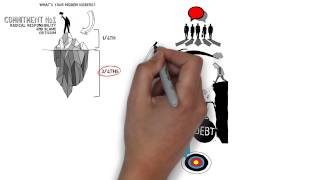
Dave Kashen explains radical responsibility: owning the results you actually produce, not just what you say you want. Most of your commitment lives below the surface, unconscious. Leaders who get curious about why they keep getting the same outcomes can shift the patterns that drive them.
Chapters
What's your hidden iceberg? Brought to you by the Conscious Leadership Group. Find us on the web at www.conscious.is commitment number one of the 15 commitments is the commitment to take radical responsibility and end blame and criticism. Radical responsibility is a willingness to pay attention to results, not words. To the results that are actually occurring in your life rather than what you say you want. Most people believe you can tell what you're committed to by what you say. For example, we hear leaders say they're committed, build a world class team, have a great culture, lead their industry in innovation, be a great parent, partner, friend or leader, get back in shape, have balance in their life. On and on the list goes, telling yourself and everyone else what it is that you want, what you say you're committed to. When we talk to these leaders, they tell us that what they say they want is not what they're actually creating. Their team is not aligned and engaged. Their culture still has toxic sludge. They haven't had the breakthrough innovation they want. They're not living up to their own expectations as a parent, partner, friend or Leader. They're 15 pounds overweight, they are overwhelmed and don't have life balance. Most leaders want to talk to us about how they can get what they say they want, what they say they're committed to. In our experience, having that conversation is not practicing radical responsibility. There is another, more important conversation. Let us explain. This is an iceberg. One fourth of the iceberg is above the water and 3/4 is below. What's below the water is most significant. The same is true about conscious leadership. What's above the water for a conscious leader is what you say. What's below the water are your results. What is actually occurring? What's above the water is your conscious desire and what's below the water is your unconscious commitment. Psychology has known for a long time that the unconscious is powerful, really powerful. They have debated how to discover what is in the unconscious. Conscious leaders are willing to take a shortcut to discover their unconscious commitments. They simply look at the results of their lives and own them. So if you hear yourself saying, I want balance in my life, you're above the water. Conscious desire and what is actually occurring is that you haven't taken time off for six months and you're frazzled and burning out. Your below the water, unconscious commitment, you stop believing your words and start owning your results. In practice, this is simply saying to yourself and those around you, I'm unconsciously committed to not taking time off, being frazzled and burning out while telling the world I want balance. This is radical responsibility, and it shifts the whole game. You stop complaining and start owning. Now that you have owned your unconscious commitment, you can examine it by asking wonder questions from genuine curiosity like how is this pattern familiar? How do you keep this pattern going? What do you get from keeping this pattern going? We've never met anyone who isn't getting some positive payoff from their unconscious commitments. Another question is the lifelong pattern you're noticing. What is the action step I could take to be 100% responsible for this issue? When you and others around you take radical responsibility for your unconscious commitments, you'll create breakthrough insights and solutions that will stop your issues from continuing to recycle. So what's your hidden iceberg.