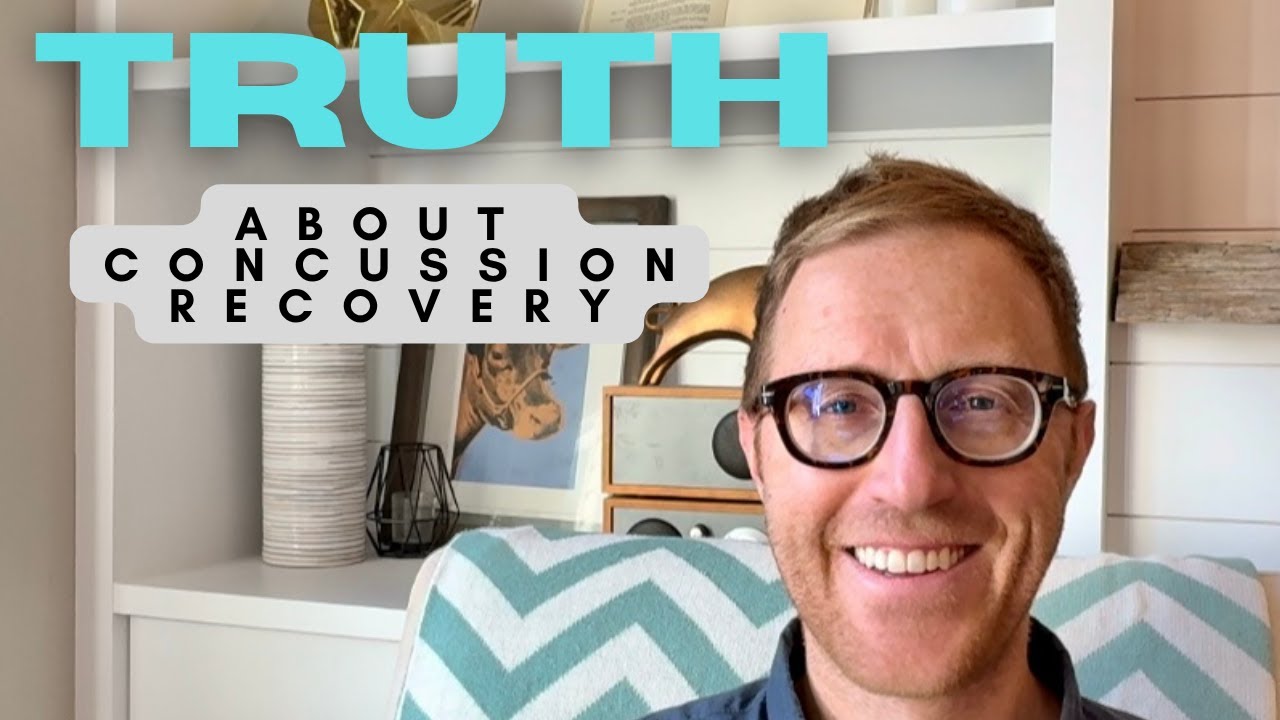
In this video, concussion survivor and coach David Brimacombe shares three practical strategies he wishes he had known at six months post‑concussion to overcome persistent post‑concussion syndrome (PCS). He first explains why traditional “rest” advice can backfire, describing how prolonged inactivity makes the nervous system treat all stimuli as threats. He introduces sub‑threshold exposure training – tiny, controlled doses of light, sound, movement, or social interaction that stay just below symptom‑triggering thresholds – to retrain the nervous system and rebuild tolerance. The second tip focuses on energy management: instead of pushing effort, he advocates graded, low‑dose exercise that respects the body’s reduced ATP production, gradually expanding the activity window week‑by‑week to restore stamina. The third tip emphasizes mindset: using visualization, hopeful future‑pacing, and repeatable morning rituals (his “PCS Morning Blueprint”) to create neural pathways, generate hope, and cement habits that sustain recovery. Throughout, Brimacombe interweaves personal anecdotes from his seven concussions, offers concrete examples (30‑second hallway walks, 5‑minute light workouts), and invites viewers to adopt these protocols to regain function, mood, and quality of life.
Chapters
If you're six months post-concussion or longer, you still feel irritable. You feel like someone you don't recognize. Then this video is for you. I remember that point clearly. I had trouble getting out of bed. I didn't want to be around the people who loved me and who I loved. I was just a fraction of who I wanted to become and a shadow of who I was. In this video, I want to talk about three things I wish I knew. 6 months post-concussion and how these things are going to help you rewire your brain and rebuild your life. Hey, I'm David Brimacombe, and after 7 concussions over 20 years, I've learned a lot about what it takes to solve the riddle of persistent post-concussion syndrome. I was told a lot by specialists and doctors, most specifically Rest, sit still, don't overexert yourself, and your body will heal on its own. Well, my body did heal on its own, but it did not use those protocols. Those protocols actually made it worse. So what I'm here to tell you today is to talk about the 3 things that I wish I knew 6 months post-concussion: how I could retrain my nervous system, how I could get my energy back, And lastly, and possibly most importantly, how I could create protocols with repeatable habits that would stick with me for the rest of my life. If you like this video and like the channel and what I'm providing for you, please like and subscribe. At 6 months post-concussion, I thought that rest meaning doing less. What I didn't know was that rest and regulation were not the same thing. Many physicians told me that rest meant sitting down, lying down, avoiding any stimulus. The problem being is my body didn't know when to re-engage. It thought every stimulus was a negative. It didn't feel safe in any capacity. I was stuck in a room with earmuffs and sunglasses on. It was a terrible time. Existence. When we stop doing everything, the nervous system doesn't know when to react. It starts to think that everything is evil, everything is causing symptoms. So when I would get out of bed, when I would go and turn on the lights, I would automatically become highly symptomatic. Now, this wasn't because stimuluses were causing these great problems in my brain. It's because my body was not used to engaging with these stimuluses. My body did not understand that it was safe to be in the light with some sound because it wasn't used to it. I had to learn to use controlled activation to start getting my body's tolerance back up. You might've heard something called exposure therapy. That's when you expose yourself to something that causes harm in small doses, which will slowly increase how much tolerance you have. To the stimulus. In this case, instead of just getting out of bed and walking around for 5, 10 minutes, it was me getting out of bed and walking for literally 30 seconds to a minute down the hall and back, back into the room. And that was all I could tolerate, but that was better than doing nothing. For you, it might be a 5-minute walk. It might be a gentle massage, or it might be a small conversation with a friend. But you need to start small and start below your threshold. Subthreshold exposure training helps your body understand that these things are safe and they are going to help, not hurt you. Energy, not effort, is the real currency post-concussion. For the longest time during my 6 months post-concussion, I tried to push myself. I didn't really listen to my symptoms because I thought I could just overcome it. I had done that for the entirety of my life. I was an athlete. I wanted to still be an athlete. And doing, in doing so, I was actually causing greater harm than help. This problem was exacerbated by the fact that any doctor I visited just told me that having low energy was a result of PCS and that like anything else, it would come back with time. Well, waiting wasn't something that I wanted to do. So I looked into something called exposure training. Exposure training was something common for cognitive behavioral therapy. When someone was scared of, let's say, spiders, they would slowly introduce spiders in small doses. Maybe it was a picture across the room. Maybe slowly they'd introduce a plush stuffed animal and eventually get to the real living animal. The same holds true for how your body responds To small doses of something that could be symptomatic in large doses, but in small doses it helps build resilience. In this case, it was all about exercise. Instead of trying to go to the gym for 35, 40 minutes, it was simply putting on my shoes, going downstairs, working out for 5 minutes at most, very light, very easy, and then coming back up. That is all I could tolerate for the first few weeks. But that was better than doing nothing. Again, you have to start small and you have to start below your threshold. That is what I need you to understand. This is an energy crisis. When your body no longer produces ATP at the same rate and it uses more than it normally would, then you are definitely lacking the energy you would require to do the things that you love. And with that said, when you start staying below your threshold And you're able to increase that threshold week by week, your body starts to understand and your nervous system starts to understand that this is safe. You can do this, and we can expand upon this as the time goes. It is an amazing feeling. It provides your body with the understanding and you with clarity of what you can do and how you can improve. The last thing I wish I knew 6 months post-concussion was that mindset was your greatest superpower. I didn't understand that mindset actually changes the physiology of your mind. You create neural pathways. Your brain thinks you've already walked down that path when in fact you've just envisioned it. So envisioning a future that you wish to have creates the neural pathways that you can then walk down later on in life. Without those neural pathways, your brain doesn't understand the possibility. that lies in front of it, especially someone who is struggling with PCS recovery. It might seem impossible to think of a day where you can actually get up and play with your friends, your family, go for a walk without being symptomatic, talk on the phone without having to worry about the light or sound sensitivity. Those are things that in your mind might seem impossible until you try to play those out in reality. The reality of your mind. So for the longest time, I would start to envision. I would lay down for 5, 10 minutes, whatever I could tolerate, close my eyes and think of what my very best day would look like. If I could wake up without PCS and I was living my very best life, what would that day feel like? I would start to envision getting out of bed without any pains, aches, or symptoms and go work out again without any symptoms. Without any limitations, walking my dogs, being outside, all those things that I love to do pre-concussion were possible again. And that envisioning of my future created hope. And that hope created a pathway which allowed my brain to see a future, a future that was contradictory to my current situation. I needed that opportunity Without it, I wouldn't have healed. I wouldn't have known that the possibility of healing was even— there's even a hope. If you want to learn more about how to recover from post-concussion syndrome, I put together what's called my PCS Morning Blueprint, and that's available in the show notes. Okay. And what that's going to provide you is it's going to provide you for how to set the framework and the foundation for your day. If we get up groggy, anxious, irritable, not ready for the day, we will no longer be present for the things that we should love to do. We will not carry the energy that we need to be successful. This morning blueprint is something that I've created, honed, altered over the last 10 years. It's something that I still use today, and it is responsible for making me the person that I am and helping me live my very best life. If this video resonated with you, please let me know in the comments what you wish you knew 6 months post-concussion. The goal of this channel is to help people like yourself and others struggling with PCS find solutions, find lifestyle modifications that they can implement today to give them power over the situation, and then sometimes give them the opportunity to look ahead to a future they could have never imagined prior. Thank you for listening. I hope to see you again soon.