In this instructional video, David Brimacombe draws on his experience of seven concussions to explain how post‑concussion syndrome (PCS) is driven by the brain’s predictive, threat‑detecting circuitry, which can become stuck in a protective loop after injury. He argues that the body follows the mind, so changing perception can alter symptoms. He presents three concrete, low‑effort strategies: (1) gratitude journaling to shift neural pathways away from frustration and toward positive reinforcement; (2) present‑focused, anti‑rumination activities (e.g., spotting distinct clouds or colors) that pull attention out of symptom‑focused loops; and (3) microstep or micro‑exposure training, where tiny, safe increments of activity are used to signal safety to the brain and gradually rebuild tolerance. He then introduces a 30‑second “SAFE” reset tool—Spot, Acknowledge, Flip, Embed—to reframe symptom flare‑ups in real time. Throughout, Brimacombe emphasizes the importance of celebrating small wins, building hope through evidence of progress, and invites viewers to explore his broader PCS routines.
Chapters
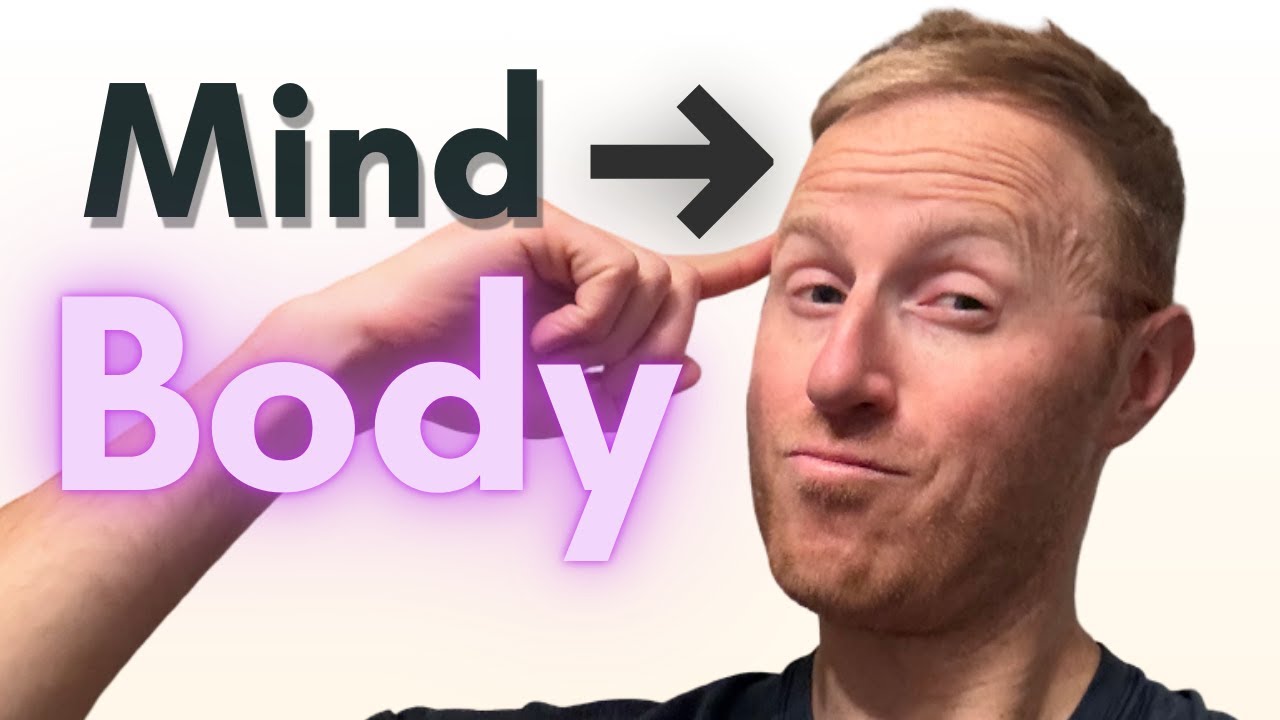
When you change the way you look at things, the things that you look at change. What if your symptoms weren't a sign that your brain was broken, but proof it was in a protective loop? In this video, I'll show you why the body follows the mind in PCS and give you 3 impactful ways to change the way you perceive your environment. Let's begin. Welcome to the PCS Resilience Collective. My name is David Brimacombe, and after 7 concussions over 20 years, I've learned a lot about the lifestyle modifications needed to change and, most importantly, how the mind determines your path of recovery. Your brain is a prediction machine. It scans the environment for threats and for dangers, and after a concussion, it becomes highly sensitized to anything that might be a threat. The brain wires what it repeats. How you interpret a situation helps determine how your brain sees this. Is this environment a threat? Is this person who's talking to you a threat? Is this sensation, this feeling, a threat to you? How you perceive that is up to you. Now, how are we going to change that perception? And that's what I want to talk about today. So here are 3 easy ways to change the perceptions we have. of our body, the symptoms that we're feeling during our recovery. Now, the first thing is through gratitude journaling. Now, I'm sure you've heard the power of gratitude. Now, one important thing to understand is that when your mind is in a state of gratitude, it cannot simultaneously be in a state of anger, of frustration. That, that is not possible. Those neural pathways are competing. They can't run simultaneously. So the more we can get into that state where we're thinking in terms of what are the small wins that I've seen, how have I progressed from week to week, it will alleviate your potential to have those thoughts of frustration, of anger, of resentment that seem to boil to the surface when you're in the ruts of recovery for PCS. Okay, how do I practice gratitude? The simplest way to do this is to take a sticky, write one thing you're grateful for in the morning, put it on your bathroom mirror. Every time you walk by that, I want you to acknowledge it. I want you to remind yourself that that small win, that small victory, whatever it is— you're grateful for life, you're grateful for your family, you're grateful for the chance to be better today than you were yesterday. Doesn't matter what it is. What it's doing Is it's changing the loop in your mind. It's changing that loop from one of destitute, of despair, of not being able to heal, to one that sees potential, that sees a future you that's better than the present you. Okay, so again, gratitude is not something that you have to practice throughout the day. Small intermittent bursts of gratitude are going to help you change that perception of your world, perception of yourself and your symptoms. The second thing I want to talk about is focusing on the present, living in the moment instead of living in rumination. Now, the easiest way I found to do this was to do something simple, something silly. Maybe I was going out for a walk and I was going to try to find 5 distinct shaped clouds. It doesn't really matter what you're doing, okay? But what you're doing is you're taking your mind out of rumination and bringing it into the present. You're taking that fixation, which Whatever you had prior. My symptoms, my lack of progress. And you're stopping it, you're halting it. It's like an assembly line sometimes when you think of those thoughts, those negative thoughts constantly going in and out of your mind, okay, on a loop. If we can stop it, okay, pull the plug for a bit, get outside, enjoy the nature, listen and look for signs of happiness, of enjoyment. Like what? Like I said, maybe it's heart-shaped leaves, or maybe it's signs of animals, or just looking at things that take your focus off your recovery. What that's going to do, it's going to allow your body to de-stress, to calm down. Okay? In that moment, your body can actually see a future. In that moment, you can actually feel what it's like not to be tense, not to be Strung out. Again, no one is blaming you for the situation you, you find yourself in. Okay, I was there, I walked this path, but you are the one who is able to make the changes. You are the change agent in your recovery. So it starts with stopping those ruminative thoughts, those things that circulate in your mind. Okay, we put a halt to that. We can go outside, even sitting indoors. Okay. We can look around our room, find 5 things that are blue. Okay, it's simple, but guess what? You're focusing on something beyond your recovery. The third thing I want to talk about is microsteps. So I want you to have microexposures in your recovery. These are small bursts of activities that you thought initially would cause symptoms to flare. But you're going to do so in a way that is so small that your body's going to understand this is safe, but it is not so extreme, so strenuous, that is going to cause harm to your systems. It's going to cause your symptoms to flare. So what does this look like? Now, for me, I had intense exercise intolerance. So going up a flight of stairs would cause me to get dizzy, nauseous, and have to sit down. So I wouldn't go up the stairs too much. What I could do is I could walk 2 or 3 steps and then I could sit and think. I could think that was possible. It's not that I can't walk up the steps, but at this moment I cannot walk up a full flight of steps. So I walked up those 3 steps, I'd sit down, I'd think, calm down. I'd get up, I'd walk up 3 more steps. Again, what I was doing is I was signaling safety in that moment. It wasn't the steps that were causing the danger. It was the exertion that I needed to do to walk up 14 steps. So I was having those micro wins, and those micro wins begin to layer it back to gratitude. I could think in a moment of being grateful that I was able to do something. I was able to do some kind of movement, even if it was so small. It didn't matter because movement was not the thing that I should be fearful of. It was the Intensity of the movement. It was the intensity of the exercise that I needed to be leery of. So I was creating a positive connection. I could move. I was capable of exercise, but I had to do it in a smart way and I had to build up every week. 3 steps this week, 5 steps the next, and you're building up your capacity. It's not only your, your capacity of body, but it's your capacity of mind. 5 steps no longer were something that triggered me. It was 8 steps the next week, and 10, and then eventually I could go up the whole flight of stairs multiple times. But it took small, small exposures, and this is what you need to start with. Okay, start small, build the safety, and then eventually layer up when your body can tolerate it. I'm going to provide you with a 30-second reset tool. This is part of the PCS Resilience Collective that I've created. I call it SAFE. It stands for spot, acknowledge, flip, and embed. Firstly, spot. If I'm climbing those stairs and I start to feel my symptoms flare, I'm spotting it. Secondly, I'm acknowledging. I'm acknowledging that in this moment I cannot climb a full set of stairs. I can climb 3 or 4 or 5 maybe, but that I'm acknowledging that fact. Thirdly, okay, now I'm going to flip it. So I'm going to go from a point of, ah, not this again, I'm never going to heal, this has been 3 months, it's been 3 years, and I cannot climb the stairs without feeling exhausted. I'm going to flip that, okay, to I've seen improvement. Last week I can only climb 1 stair, this week it's 5 stairs. Look at that, that's 5 times greater. Okay, I've now flipped the script. The third thing I'm going to do is I'm going to embed it. I'm going to sit down on those steps, and for 10 seconds, I'm going to remind myself with a deep breath that I am healing. I am healing in my own journey. The journey is taking maybe longer than I'd like, but it's still happening in those small wins. So again, SAFE stands for spot, acknowledge, flip, and embed. Hopefully this can help you as well. When you change what you think this sensation feels, what this symptom feels, Your brain can determine what to do next. It can determine that, guess what, I can move forward with this. I can scale up with this. Okay, you're giving it hope. But hope doesn't come from simply blind trust. Hope comes from creating belief based on small wins. Those small wins happen through time. Okay, acknowledge those small wins. Be proud of yourself. I used to say I'd celebrate those things. Strange to think, I never thought in a million years that I'd celebrate being able to climb 5 stairs, but it's all relative. It's all based on context, not being able to climb a single stair prior. Okay, so believe in yourself, trust yourself, and have those micro wins. Congratulate that you're, you're moving forward. If this video resonated and you want to learn about my entire morning And evening routine. Okay, you can look up and find my Ultimate Morning PCS Protocol. Okay, thank you very much for your time. I know as someone with PCS, the ability to watch a video can be tough. Okay, but I hope this helps. I hope this resonates. You can put in the comments how you felt after watching this and how you're going to apply it in your life. Okay, I appreciate you. Okay, thank you for your time.