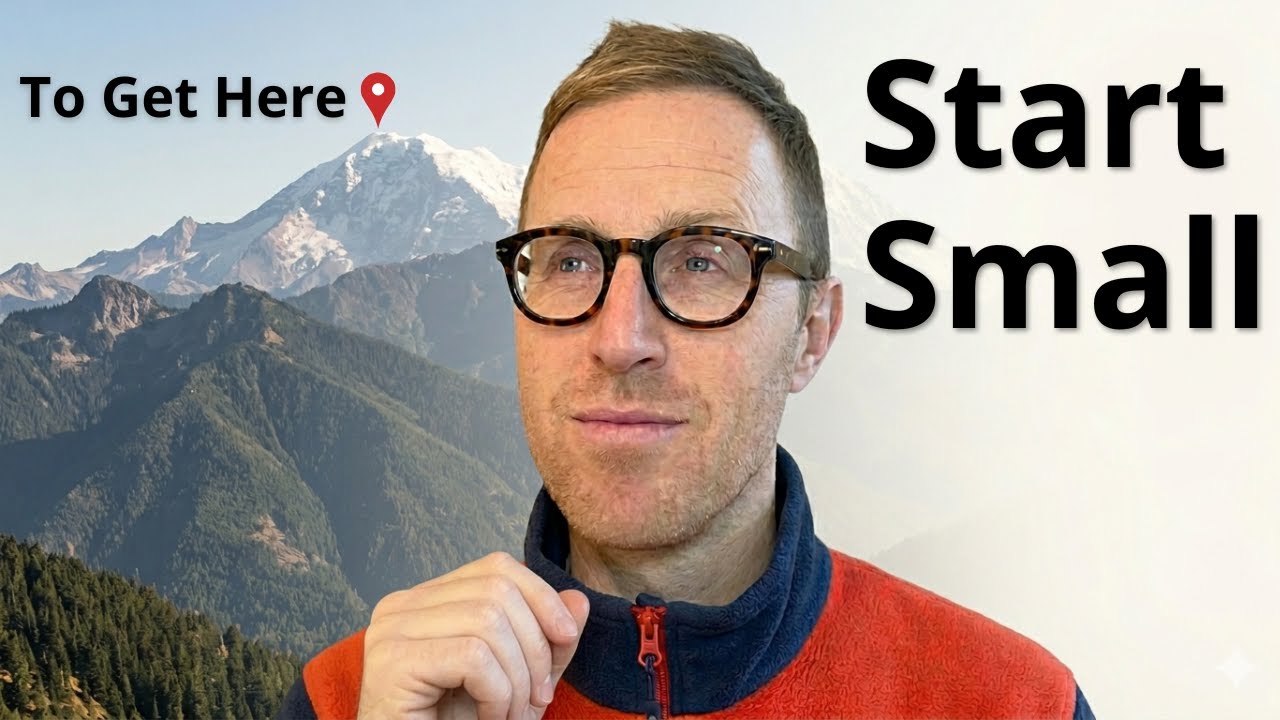
In this motivational talk, David Brimacombe, a PCS (post‑concussion syndrome) survivor of seven concussions over 20 years, shares his recovery philosophy. He argues that recovery does not come from a single “magic bullet” protocol or supplement, but from daily, controllable actions. He warns against setting massive short‑term expectations and instead advocates pairing a big, long‑term vision with tiny, consistent steps that compound over time. Brimacombe emphasizes the need for a roadmap and a trusted guide—coach, mentor, or someone who has already navigated the recovery path—to provide hope and direction. He explains that the brain’s hyper‑vigilant alarms during recovery are protective, not punitive, and that persisting through these signals with gradual exposure helps the nervous system accept a new identity. This identity shift, anchored in a clear “why,” fuels motivation, momentum, and confidence. He concludes by inviting listeners to join the PCS Resilience Collective waitlist, a program designed to provide guided, step‑by‑step support for sustainable PCS recovery.
Chapters
Your recovery might depend less on your goals, your structure, your protocols, and more on what you're doing today. Hi and welcome to the PCS Resilience Collective. My name is David Brimacombe, and after 7 concussions over 20 years, I learned to understand that I needed to think big but act small in order to start and scale my recovery. Let's begin. Most people with PCS believe that their recovery is going to come from that magic protocol, that one supplement, that one miraculous breakthrough. Let me tell you something. That magic bullet that's going to make your symptoms obsolete, make you the person you want to be, doesn't exist. But what does exist is within your control, and we're going to go through that today. Here's what a lot of people fail in their recovery. They have massive expectations, okay? They have sometimes unrealistic expectations of where they want to get to. I'd heard a statement, I don't know who I can accredit it to, but the concept that people overestimate what they can do in a year but underestimate what they can do in a decade. And again, it doesn't have to be a decade, but that long-term processing, that long-term thinking A lot of times you underestimate the power of small compounding actions. Now, a lot of people want to have this, they strive for this perfect person. I want to get back to where I was. I want to be able to do X, Y, and Z. And let me tell you, you will at some point be able to do that. But if I have this massive identity gap going from where I am to where I want to be, I want to summit that mountain of recovery, and I'm going to take a massive step I'm gonna jump, I'm gonna grab that recovery, I'm gonna do it in a week, in a month. That's where you're gonna fail. Because yes, it is good to have a large-scale vision. I want to get here. But your vision has to be accompanied by small steps. Big leap, small steps will make your recovery possible. So I don't know about you, but one of the things I wanted during the deepest parts of my recovery Is I wanted clear mind, a clear intention. I wanted to be able to think with clarity. I remember used to having to get up and the words would jumble in my mind. It was like I was trying to speak another language. I want to be able to have the energy to do what I used to do, to walk with my kids, to take my dogs out, to get up the stairs without feeling winded. I want to be able to have the patience. I don't want to be irritable. I don't want to be anxious, apprehensive the way that I am. I want to be able to work again at the same capacity that I did before my injuries. Now, many of you probably had similar thoughts. These are all things that I want, okay? From where I was to where I want to get, that's a pretty big gap. Now, along the way, I would have crashes, I would have instances of emotional outbursts because I was trying to take that long step. I was trying to jump the cavern. This chasm of where you are and where you get to— want to get to, you can't take one long stride and get across to the other side. What you need to do is you need to create a roadmap, a plan where you're going to actually take the small steps. Okay, understand that one of the key things for doing this is understanding what you need to do, when you need to do it, and to what extent. One of the best ways I found out how to do this in my recovery Was I needed to find someone who has walked that path before me. So finding a guide, finding a coach, finding a mentor, okay? And for a lot of people, that gives them hope. The person has already bushwhacked the trail, they've cleared the grass, and they can see where they need to go. They can take the steps. They don't have to run, to leap, to jump. They can just walk knowing what's ahead of them is open and available to them. Okay, if you are looking for a guide, for a mentor, for a coach, okay, down below, a waitlist to join the PCS Resilience Collective. That is my hope with this program. I've already had people go through it who have talked about how it's made substantial gains in their recovery. Okay, and what I want for you is to join that waitlist because when I open up, I want you to be a part of it. I want to be the person who guides you from where you are to where you want to be, to To help you make that, that's those small steps that are going to get you to the place that you want to go, to get you to the place you know you can get to. Okay? So bringing this all together, yes, I want you to have huge expectations, huge goals, huge understanding of where you want to get to. What is that identity of that ideal self? That is important. The belief that you can get there is also very important. That's step 1. How to do that is the most important part and where most people struggle. See, taking a big leap is going to cause you to fall off quickly. Small steps create belief. Belief increases your momentum, which increases your motivation, which allows you to do more later on when you have that confidence and that competence. Starting big, okay, is going to cause a big crash. Small steps now That you can scale later allows consistency in the system, allows your body to feel safe. See, one of the reasons why people stop in their recovery— because their brain is telling them, stop, this is wrong. Symptoms start flaring. But that is not your brain telling you that this is the wrong thing to do. It is your brain trying to keep you safe, and it thinks that this new identity that you're trying to form, this new person that you're trying to become, is something that is going to cause it harm. Now you have to over time, scale with consistency and small steps. Introduce it to a new person. Remind yourself through those visualizations, thinking about that person you're going to be, that you will be okay. And eventually that nervous system, that brain, will succumb to the fact that you are now this new person. That old person is gone and that new person is safe. Okay, that is key, because if you don't have that, you'll constantly stop What you're doing. Ah, I can't. I'm becoming symptomatic. I'm becoming anxious. But your brain is just trying to keep you safe. Those alarms are alarms of hypervigilance. Your brain is overactive. Don't trust what it's saying. Your brain isn't always telling you what to do that's going to optimize your recovery. It's trying to keep you safe in that moment. And in that moment is not what we're working on. We're working on moving to the future, future casting to that ideal. So understand that big vision, that identity shift that you have is your why. It is your reason for getting up. It is your reason for doing all the things, those small steps, that consistent actions that you're taking. Okay, your small actions are your how. How are you going to do this? How are you going to scale? How are you going to create those chain links that can get you from where you are to where you want to be? It's those small consistent actions. Start small, think big, and you'll scale incrementally and become the person you could only imagine weeks past, months past. There's no way I'm going to become that person. You can become, but you need to start today. I hope you have yourself a great day.