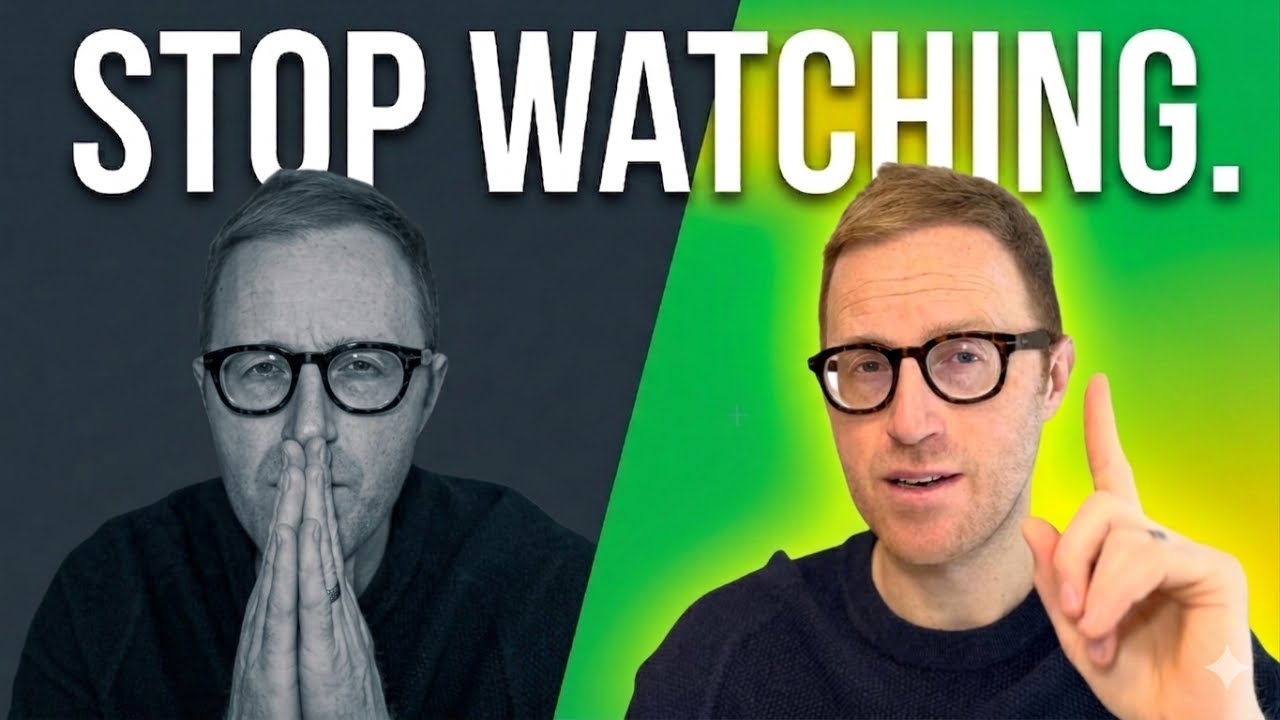
In this solo motivational video, David Brimacombe—who has survived seven concussions over two decades—explains why passive consumption of recovery information keeps people stuck and why active, intentional action is essential for post-concussion syndrome (PCS) healing. He argues that the brain rewires through repetition, so intention must be followed by concrete, repeatable behaviors. Brimacombe outlines a minimal daily routine that includes a positive mindset affirmation, a single gratitude note, and a brief breath‑work sequence (4‑count inhale, 8‑count exhale) performed each morning, plus an evening inversion of the same steps. He emphasizes that starting with one tiny habit today, rather than postponing, shifts a person’s identity from a “watcher” to an active participant in their own recovery story. The video repeatedly stresses that knowledge alone does not equal change, that symptoms are not proof of being broken, and that initiating action—even when feeling unwell—creates the catalyst for lasting improvement.
Chapters
If you're watching this video instead of actively doing your recovery, this might be why you're still stuck, because you can't be passive in an active recovery. Hi and welcome to the PCS Resilience Collective. My name is David Brimacombe, and after 7 concussions over 20 years, I learned about how intention only matters when it's followed by action. Let's begin. Let me know if this resonates. You get home from work and you sit down. The first thing you want to do is you want to sit down, you want to scroll, you want to watch, you want to be a passive participant in something. You want to just sit. You want to sit. Maybe you're watching recovery videos, maybe you're watching protocols, maybe you're learning about what you need to do to take the next step. But learning is only one portion of recovery. It is the smallest portion. Now, this might feel productive. I mean, you are watching videos, you are learning about what you need to do to recover, but you're missing the most important part. Now, understand, this is the thing that blew my mind and really was the, the turning point of my recovery. The brain wires through repetition. Now, intention is great. Intention sets the framework and the groundwork, it is like the spark that can light the fire. But if the fire just keeps going out every time and it doesn't ever ignite, the recovery doesn't truly begin. Understand this can be the first step of your recovery, and that is perfectly fine. Learning and reducing that ignorance about what to do, when to do it, is exactly what you need to do. But this can't be the last step. This has to be somewhere where you move from, not where you stay stuck in. Now, just because you know everything about recovery, every protocol, system, what the symptoms mean, it doesn't mean you're actually recovering. But because to recover means to start, to initiate, to go beyond knowing into doing. Hey. Get out of here. Now, I had to learn this the hard way too. I would sit and watch, sit and read, sit and think about where I want to go, how I'm going to do it, but I would never take that first step. Now, if intention is your first and your last step, you are not going to become the person you know you want to be, okay? Knowledge does not equal change. Repetition is the starting phase where it gets you that initial push, that initial catalyst that can get you moving. Now again, I will say this many times on this channel if you're watching— this is a simple but not easy concept. It is simple in theory but not easy in application. Now what are some ways that we can actually make this easier for you? First off, okay, think of one thing you want to do, one habit, one framework, anything Keep it small, keep it simple. Apply that today. Don't wait till tomorrow. Don't wait till next week because you're just procrastinating. You need to initiate right now. As soon as you're done watching this video, what is one thing you can change today to make you a better version of yourself, to start the process from intention to action? Okay, that's going to start and change that identity from someone who watches recovery stories to someone who's living in their own recovery story. Someone is becoming the person they know they can be. Now, if this was me starting from scratch, the first thing I would do is I'd book in my day with some simple routine. Now, for me, the 3 things that have the most profound effect on my day— again, if I did nothing else, this would change my life dramatically, okay— is that mindset, one piece of gratitude, and some kind of breathwork. Okay, so simply put, I get out of bed, I put my feet on the floor, I remind myself that today is going to be a great day. That's phase 1. Step 2, I get a sticky note, I write one thing I'm grateful for. I'm grateful for the fact that there's sun in the sky today. And number 3 is I'm going to go ahead and I'm going to do 5 down-regulating breaths. So a 4-count on the inhale and then an 8-count on the exhale. I'm elongating that breath, lowering that heart rate, and I'm setting the baseline for the day. I'm then going to invert that at night. Do the breathwork, do the gratitude, and finish by putting my feet on the floor and saying, today was a great day. I go to bed. That is all I'm going to change. That takes me all of maybe a minute total. But I will tell you, if that's all you do, that is your starting point, that will make a profound difference in where you are today versus where you will be in a few weeks. And guess what? You'll realize that that simple thing that you just did, that simple change that you made— what if I start focusing on what I eat, how I think, okay, how I behave throughout the day? Just think how drastic those changes could be. Start simple because you need to change that identity. You need to change and remind yourself that you are now a person, okay? You are a person who is in recovery, not just watching recovery. Again, this is something that many people struggle with. You can sit and watch and think, ah, I'm going to get to that next week. I'll, I'll get to that when I'm ready. I don't feel great today. You probably won't feel great next week. You might not feel great for another year. If you don't start today, that next week, next year is never going to come. Initiate the process today. You don't have to feel great to start. You You just need to start. And what you will understand by just starting is that I can be okay. I can live with symptoms because I know that those symptoms aren't a sign that I'm broken, that I can't be resolved, these issues can't go away. It's a sign that in this current state that I have some, some things I need to work through. And that is all you need to know. So just remember that recovery starts when you stop watching and start doing. I believe in you. You can do this. Have yourself a great day.