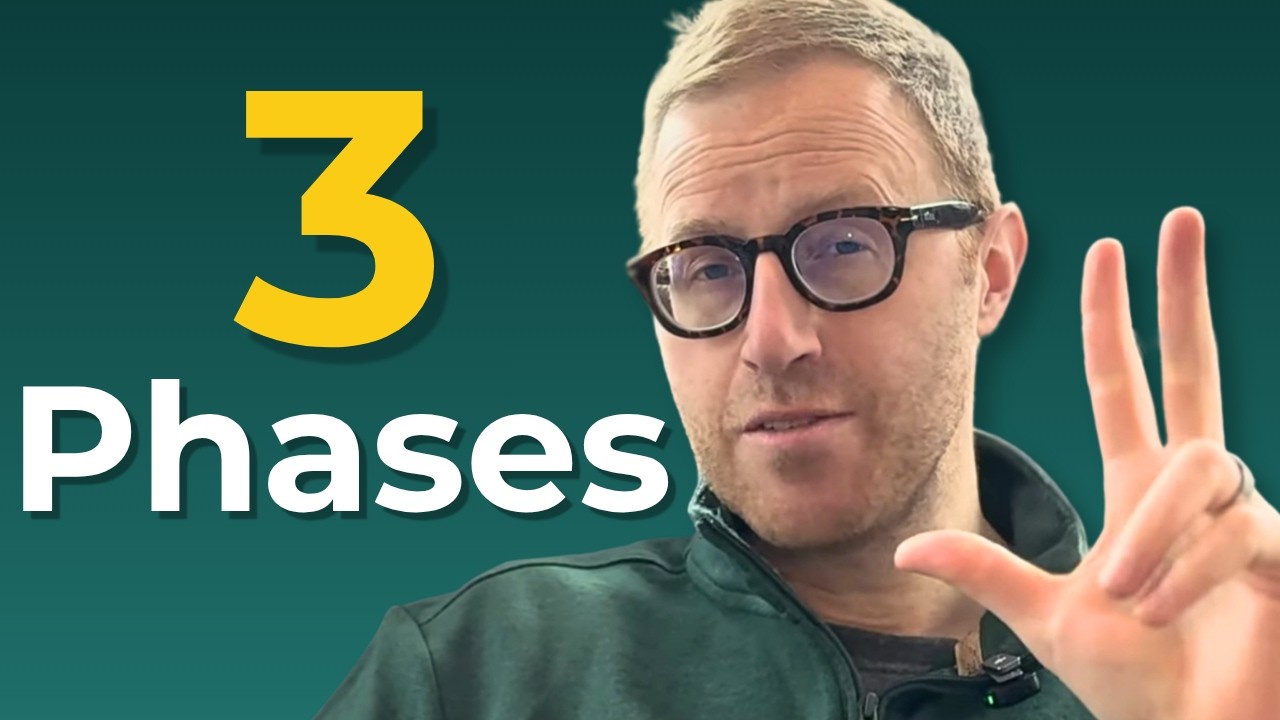
In this instructional YouTube talk, concussion survivor David Brimacombe shares the three-stage framework he uses to guide recovery from post‑concussion syndrome (PCS). Drawing on his personal experience of seven concussions over two decades, he explains (1) the Stabilization Phase, where the nervous system is hyper‑vigilant, symptoms feel overwhelming, and the key is adopting a hopeful mindset and beginning low‑level exposure training; (2) the Rebuilding Capacity Phase, the most common point of stagnation, characterized by a roller‑coaster of good and bad days, requiring precise exposure thresholds, balanced activity, and mental rehearsal of safe future actions; (3) the Reintegration Phase, where the nervous system becomes more adaptive through breathwork, acceptance of lingering symptoms, and continued small‑step momentum. Throughout, Brimacombe emphasizes practical tools—sub‑symptom exposure, threshold awareness, visualizing successful outcomes, gratitude, and breath control—while encouraging viewers that recovery is possible even without complete symptom resolution.
Chapters
Most people feel like PCS recovery is just about time. They rest, they wait, and they hope. But sometimes it can take months, if not years, for that recovery to happen. Now, this doesn't mean that recovery is not possible, but what it might mean is that you're stuck in a phase you didn't know exists. Hi and welcome to the PCS Resilience Collective. My name is David Brimacombe, and after 7 concussions over 20 years, I learned a lot about how the phase that you're in needs to determine the type of recovery tools and techniques you're applying. Let's begin. Let's talk about phase number 1. This is the stabilization phase. Your nervous system might be sensitized, hypervigilant. You might see threats in the most innocuous situations. Again, this is not a sign that you're broken. It's a sign that your nervous system is just aware. It's aware of everything around you. Now, this is the hardest phase to get through. Why is that? Because at this point, if you don't have any History of a concussion, you haven't done this before, you might think, is this me forever? Is this the state I'm going to have to live in? Getting up, becoming symptomatic, struggling through my day. And again, at the beginning portion of this phase, you start to wonder, if I don't see progression, is this it? Is this my life moving forward? Now, I found the hardest part about being in this phase, the first phase, where you're basically stuck in a room, you feel like everything you do— open the windows, open the door, someone comes talking to you— it's like they're yelling. It's like someone's shining a spotlight in your eyes. And that makes this phase really difficult. Okay? Now, again, if you have that mindset that recovery is possible, that there is hope out there, I can overcome this. Fantastic. But a lot of people in this phase lack that understanding. They lack these simple tools and techniques like exposure training that will allow them to progress. Now, once you do start to see some small upgrades in your system, you start to see maybe reductions in the flares of your symptoms, the number of symptoms that are present, this is when we move ahead to the second stage. So this is one where you are rebuilding your capacity, and this is the one where most people get stuck. And I want to go through that today. Why is phase 2, when you actually start to progress, you start to feel better, you have those days where, you know what, I can get up, I can be a quote-unquote human today, is the one that people get stuck in? In my experience, the reason why this one is so difficult, when you actually start to see some of those symptoms start to diminish, your good days start to improve, is that it is a paradoxical situation. You'll have a terrible day, you'll have a great day, and on that great day, maybe you push yourself, maybe you push yourself a little too hard, and guess what? The next day, you feel far worse than you ever felt. And, and that if you don't have that strong mindset, if you don't have that intuition, To understand that this is simply part of the recovery. This is the roller coaster, the extreme ups and the extreme downs of recovery. You might feel broken. You might feel deflated and defeated. And you might say, well, I guess this is it. This is who I'm meant to be. And you sink into a deeper hole. This is what happened to me on multiple occasions. Again, you'd read stuff online. You'd go talk to people. All you need to do is go Expose yourself. You need to go try the thing that's causing you harm. Now, in theory, that is the correct advice. That is what you actually need to do. But doing it properly and just doing it are 2 separate things. Now, to properly use exposure training, you have to understand your threshold. What is the maximum capacity for what I can do? I can stand outside for 10 minutes without the light causing sensitivity and therefore causing symptom Provocation in my body. So I know now that if I'm outside for 6 or 7 or 8 minutes, I should be okay. And what I'm doing when I'm outside is I'm reaffirming to my body, this is a safe situation. I'm reminding to myself that I can do this. I can be a better version of myself and I can eventually improve. But if you don't know how to do this properly, if all you ever do is go to the nth degree of, let's say I'm trying to increase my movement capacity. I'm going for a walk, or I do nothing, my body doesn't know that there's a middle ground. My body doesn't know that if I move too much, I become symptomatic. If I don't move at all, I'm still symptomatic. I'm stuck. Movement itself has become the boogeyman, has become the bad person, the thing that my body should fear, and I sense danger. Movement equals danger. Again, this is all done subconsciously. I know you understand that movement is not a dangerous mode of transportation. It's not actually dangerous, but your nervous system is still hypervigilant. It still hasn't learned that safety is needed, that safety comes from exposure, repeated exposures that convince your body that it is safe. Now, along with that repeated exposure, I think something that is left out or not talked about is the concept of rehearsing the future or living the future. This was from one of my favorite teachers or the people I like to go to. His name is Dr. Joe Dispenza, and he talks about remembering the future. And again, seems like a strange phrase to use, but understand that your brain doesn't understand the difference between a remembered event and an event that that is vividly rehearsed in your mind. If you can imagine something, maybe every morning you imagine the same situation— you getting up, you going for a walk, and coming home feeling great, not symptomatic. Okay, that is you remembering the future, because what you're doing is you're laying the neural pathways. You're creating that connection between movement and safety so that in your mind Okay, that is becoming a safer and safer event. Every time you do that, you inch closer to the point where you can actually do that in real life and feel that same level of safety. So you can either practice the event— so you can do 2 things here. You can use exposure training, okay, actually exposing yourself at a sub-symptom level. And you can also rehearse the future. Think about where you want to go. And again, what you're doing is twofold. You're not only creating that neural pathway where you're convincing your body that that is a safe event, okay? What you're also doing is you're showing gratitude. You're eliciting a moment of excitement because you're thinking of a positive event. You're getting out of the doldrums of recovery, getting to a future self, okay? And again, this might Seems something that is simple but not easy in application, but it takes small steps. Start small and scale up, and it's amazing the progress you'll make in a short amount of time. And the very last phase, your third phase here, is your reintegration phase. So this is where your nervous system becomes more adaptive. Okay, when you start breathing quickly, it accelerates. When you slow down your breath and do some breathwork, Guess what? Your nervous system adapts to a more parasympathetic, more calm state. It becomes responsive. You understand that you can find safety in those environments that you used to be fearful of. This is where we want to get to. Does it mean that you're perfectly healed? No. That's okay. I, I've learned many things along my recovery, and, and one of the most impactful things I learned was that you do not have to be recovered to feel like you can live your life. You can live your life with symptoms, and actually, that is one of the best things you can possibly do. So when I'm in my reintegration phase, I might still have small flares, I might still have some lingering symptoms, but if I live with it, what I'm doing is I'm telling my body I'm okay. These symptoms are not limiting what I can do. They're not gonna put a hold on my ability to go out, to socialize, to live my life. And over time, that becomes an insurance of safety, and they slowly start to diminish. With that reintegration, you become the person who you've imagined you're going to become, and that path that you've been walking in your mind becomes a path you literally walk on your own. Now, this is not something that happens quickly, but like everything else I talk on this channel, your small wins become large victories later on. Your small steps create momentum, which allow you to have some motivation to continue. Thank you very much for watching to the end. Remember, your brain is not broken. You're just on your healing path. Have a great day.