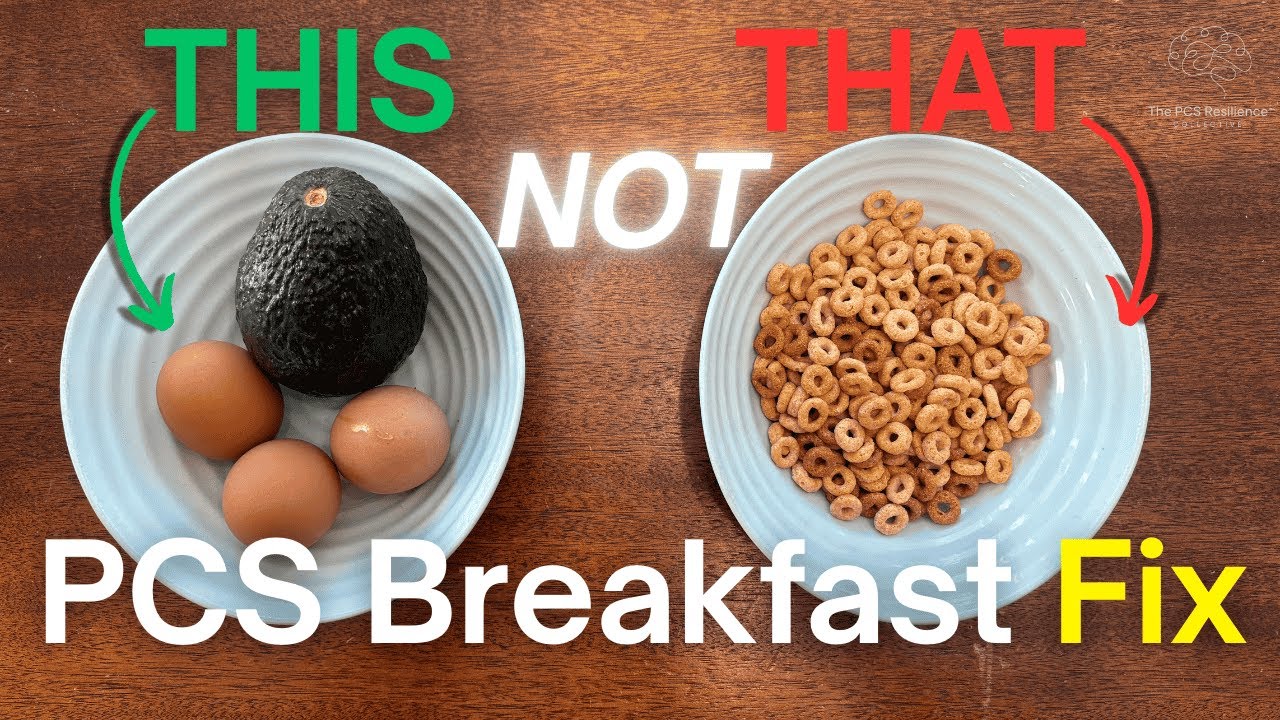
In this solo video for the PCOS Resilience Collective, David Brimacombe draws on his 20‑year experience and seven concussions to explain how breakfast choices can sabotage recovery for people with PCOS and persistent post‑concussion syndrome (PCS). He first debunks the myth that carbs automatically provide energy, describing how a post‑concussion body often reacts to a glucose surge with excessive insulin and reactive hypoglycemia, leading to dizziness and a mid‑morning crash. He then challenges the idea that meal timing is irrelevant, emphasizing that consistent eating windows (within ~30 minutes of each meal) help stabilize the autonomic nervous system and prevent energy swings during early recovery. The third myth concerns fasting: while multi‑day water fasts are discouraged, overnight fasts of 12‑14 hours are recommended to give the gut a break, improve insulin sensitivity, and reduce autonomic stress. Brimacombe stresses that “you are what you eat,” urging viewers to replace refined carbs with fiber‑rich fruits, protein, and healthy fats (e.g., apple with fiber, toast with peanut butter) to modulate glucose spikes. He concludes with a step‑by‑step implementation framework—start with one small change, layer gradually, and view diet as one pillar alongside exercise and breathwork in a holistic recovery plan. The video ends with a call to subscribe.
Chapters
Many people with PCOS think they're eating healthy when in fact the food that they're eating is actually making their symptoms worse. By the end of this video, I want you to understand what are the top myths about breakfast foods for people with PCOS and what you can eat today to have stable energy that will help you throughout the day. Welcome to the PCOS Resilience Collective. My name is David Brimacombe. And after 20 years and 7 concussions, I have learned a lot about the lifestyle modifications needed to take your recovery to the next level. Today, I want to talk about diet and how what you eat helps determine how much energy you're going to have for the rest of the day. One of the most common systems that gets dysregulated after a concussion is your autonomic nervous system. Now, your autonomic nervous system determines if you're in a stressed sympathetic state or a parasympathetic rest and digest state. Now, don't get me wrong, it is not inherently bad to be in a sympathetic state. There's some points in your life, whether you are studying for an exam, playing a sport, where that is necessary. But chronically elevated levels of stress cause great disturbances to the rest of your system, in this case, your diet. And more importantly, your ability to tolerate high levels of glucose. Myth number 1, carbs give you energy, so why not start the day with them? Now, in most people, this is not inherently untrue, but understand that your systems are different after a concussion. And in some cases, for people with PCS, they remain that way until you become regulated. Now, for me, What did this look like? For me, when I used to eat carbs, I used to eat big bowls of oats in the morning. I would then feel a drop in energy around 10 o'clock, 11 o'clock, to the point where I felt like I was narcoleptic. I was going to fall asleep wherever I was. Now, this wasn't because I was overly tired. It's because when you have a system or a body that is not used to taking in glucose, it doesn't use it properly. What happens is When you get a surge of glucose, in this case from eating oats, your body doesn't know how to respond. So it actually increases your insulin levels, which then causes a drop in your blood glucose, which is called reactive hypoglycemia. Now, what that feels like is you have dizziness, fatigue, you feel like you have zero energy. And again, this is inherently a problem with carbs for everyone, but for many people, coming back from a concussion or with persistent post-concussion syndrome, this is a reality you have to deal with. So, not always are carbs a great thing to have in the morning. That's the first myth I want to dispel. Myth number 2: Eat whenever you want, timing is irrelevant. This might be true for some people. For me, before my first concussion, I could eat, you know, 5 o'clock one morning, 10 o'clock the next, and It didn't really bother me, or so I thought. After my 7th concussion, I had to be consistent. I had to almost always eat within the 30-minute window— my breakfast, my lunch, and my supper. My body craved regularity. It craved timing. And so I had to provide that for it. So I would make sure that regardless of the day of the week, I was always eating at about the same time, trying to eat similar types of foods so that I was giving it predictability. Now, as my symptoms disappeared, I was able to kind of change and add some variance. But at first, when I was at the height of my recovery, I had to make sure that there was consistency in what I ate and when I ate it. The next myth is all about fasting. Is fasting good for people with PCOS? Well, it's tricky. For one, if you are thinking about fasting for more than a day, a 2, 3-day water fast, that is something I would not recommend. Again, all of this stuff you should be discussing with a doctor, but I would not recommend that, at least to start. Why is that? Because your body craves consistency. It needs that regular energy source at first. Okay? What kind of fasting actually does help people with PCOS? Overnight fasts, 12, 13, 14 hours, where you're giving your gut a break. You're giving your body a chance to recover. You're not constantly giving it those fluctuations in glucose spikes. You're giving it a chance to normalize and for your other systems to help heal. This helps improve your insulin sensitivity when you're not constantly giving it inputs It allows that insulin to start normalizing and stabilizing. Okay? It also helps with your autonomic nervous system, which again, if you're constantly feeding it food, it is a stressor to the system. And the more breaks that you give it, the better. The best thing you can do is finish your supper, do not eat until the next morning. It will be hard for the first few days. I know many people like to snack after supper or have a pre-sleep Snack. But do this for a few days, let it normalize, and I can tell you that you'll likely feel better in the morning thereafter. The last thing I want to talk about is that you are what you eat. The food that you consume creates the cells of your body. Crazy. So if I'm constantly consuming food that is not natural, that is laden with preservatives, and artificial ingredients. Those ingredients make up the cells of my body. When you are recovering from a concussion, you have to be pinpointing all the little nuances of your life because your body is sensitive, more sensitive than it has ever been. So think about what you're consuming. Be a conscious consumer. For me, it was getting rid of a lot of the carbs in the morning. And honestly, Getting rid of a lot of the carbs, period. If there wasn't a lot of fiber attached, I found my body had a hard time regulating that input of sugar, of glucose. So if I really wanted something sweet, I would take an apple because that fiber in the apple is going to help regulate that blood glucose so my insulin wouldn't shoot up and then my blood glucose would drop right away, giving me a lightheaded, dizziness feeling. So Think about that. Try to take away one carb that you think might be causing your body some kind of harm. So if maybe I typically have a bowl of cereal in the morning, tomorrow maybe have a piece of toast with peanut butter. Now you're still having the carb in the toast, but the peanut butter has the fat and the protein, which is going to help satiate you, provide you some protein, as well as it's going to help modulate that sugar, that glucose spike, as it— your body interprets that food. One simple act can create big changes in your day. Remember, what you eat now can help determine the next 3 or 4 hours and how you're going to feel. It is the hardest thing to do, to change your diet, because again, a lot of times it's been normalized for years, for decades, what you consume. But changing is hard, but what's even harder is living in recovery for the rest of your life. Those small, simple changes you make today can be huge in the future. Much like exercise, breathwork, diet is a pillar. It's a leg in the stool of your recovery. It is not going to be the panacea. It's not going to be the one thing that changes everything. But stacked with other lifestyle modifications, it can make insurmountable changes in the long run. It can change your mood, it can change your energy levels, which can then allow you to add more things in your recovery. But I need you to think about this. You need to start simple. Start with one action this week and layer up. If you do too much, you're going to fall off. And that's not going to benefit anyone. Start small and layer up. If you enjoyed this video, please subscribe and like below. Thank you for your support, and we'll see you next time. Bye.