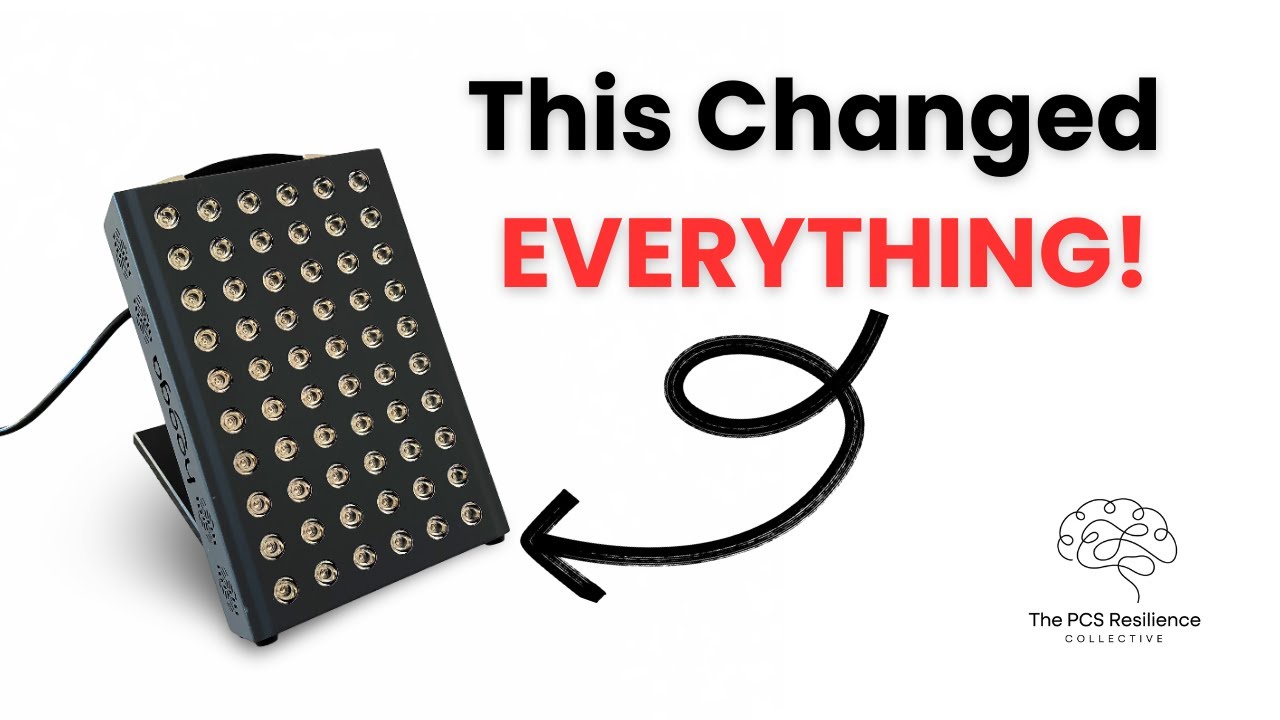
In this YouTube video, David Brimacombe explains why people with post‑concussion syndrome (PCS) often experience a dramatic loss of energy and offers a three‑pronged recovery routine. He first describes the physiological basis of the fatigue: an initial acute brain inflammation that can become chronic, whole‑body inflammation, impaired blood circulation, and autonomic nervous system dysregulation. He then presents practical interventions. The first is sub‑symptom‑threshold movement – gentle walking, stair climbing, or any light activity performed below the point where symptoms flare, which improves circulation and helps rebalance autonomic tone. The second is creatine supplementation (5‑10 g daily, with medical clearance), which can cross the blood‑brain barrier, boost ATP production, and support both cognitive clarity and physical stamina. The third is light therapy: exposure to morning sunlight to reset circadian rhythms, red‑light (≈600 nm) to stimulate ATP production, and near‑infrared (≈800 nm) to penetrate deeper tissue and further enhance blood flow and energy metabolism. Brimacombe emphasizes that movement should precede mood improvement, that creatine is a safe, widely available supplement, and that light exposure is an under‑utilized tool. He concludes with a concise recap of the three pillars and a call to subscribe.
Chapters
Today I want to talk about energy capacity, why you lack the energy you did prior to your concussion, and what you can do about it. Spoiler: there's a lot. Before we begin, I'd like to thank you for finding this channel. For those returning, thank you. For those coming for the first time, I appreciate your support. If you haven't already, please subscribe below. The first thing we need to know is why we are struggling to have the same energy we once did. For me, it was I could hardly get out of bed. I struggled to get up the stairs without having to stop halfway. This was nothing like my former self. As someone who was athletic his whole life, moving around without basically the desire or need to stop at any point, this came as a sudden and hard thing to So what you need to understand is that at the acute sign of an injury, the inflammation will flood to the area that is injured, in this case your brain. So you have acute inflammation. Now, as the injury persists, for people who've been having PCS for weeks, months, a lot of times this is now chronic inflammation. It's no longer acute at the stage, at the site that it originally was sustained. It is now whole body. It could also be because of poor blood circulation as well as autonomic dysregulation. So we're going to talk about how to attack these 3 things so that you can get the energy that you once had and regain the livelihood that you had prior to your concussion, or in some cases, concussions. The first tool I'm going to give you is easy in principle but can be difficult In implementation. That is movement. Now, movement doesn't have to be rigorous exercise or anything that we normally think of as a workout. Movement is simply moving your body, and that does 2 things. It addresses the blood flow circulation problem. It gets blood flow circulating throughout your whole body, specifically your brain, as well as it helps with your autonomic nervous system. So if you feel like you are constantly in a stress You feel like the gas pedal is pressed and there's no way to take your foot off of it. This movement will provide a great avenue to try to regulate those 2 things. Now, you might be saying, if I don't have the energy to get out of bed, how can I possibly move? I feel you. Okay, after 7 concussions in 20 years, my 7th concussion, I struggled to get up the stairs. I struggled to get out of bed. I just wanted to lay there. I wanted nothing more than just to lay peacefully in bed. But the key here is sub-symptom threshold training, meaning if your symptoms come about after 10 minutes of moderate walking, you should be walking sub-symptom. So that might look like 7 or 8 minutes of mild to moderate walking so that you're not gonna aggravate those symptoms. Now, the key here and reason why we do this is you're basically pushing your body to expand its possibilities, expand its threshold. Again, if I were to sit in bed for the rest of my existence, I would not be able to get up. I would not be able to move if I tried because my body has now normalized this sedentary behavior. Because for many of you who have been struggling with PCS for years, you have this dysregulation, like I said, in your circulation as well as your autonomic nervous system. So any kind of movement's going to help. Walk down the hall, go up and down the stairs, do what you can. As soon as symptoms start to flare, that is your sign to stop. That is your symptom threshold. We want to try to work below that. So next time you go for any kind of movement break, you know what your limits are. Now, the second point to that, I found that I needed to move even if I felt like it was not possible. Give yourself a carrot. Give yourself a reason to move. Keep it simple, keep it small. But mood happens after movement, not the opposite. Don't wait to feel great until you move, because in some cases, you'll never move. The second thing I want to talk about here, okay, is a supplement I would swear by. I think any and everybody, concussions or not, should be taking creatine. Okay, the evidence is clear. Creatine is more than a benefit to your muscles. It is a benefit to your brain. Okay? Now, lots of studies have come out recently showing in higher dosages, creatine can actually be absorbed through the blood-brain barrier and impacting your ATP levels. So, one of the main reasons why you don't have that same drive, that same energy that you once did, is your body isn't able to produce as much energy. So, we can use creatine like as a backup battery. As an additional power source. So creatine's gonna help increase your ATP, which is your body's energy source. So if I'm taking creatine, it's allowing my body a more sustainable way of creating energy when I'm struggling. I have found substantial benefits of taking 5 grams up to 10 grams of creatine, not only for my cognitive clarity, but also for my ability to move and move with the energy I once had. The third thing I want to talk about is light. Light is some of the most under-talked-about, underutilized, underappreciated part of any recovery. 3 kinds of light I want to talk about. The first one, if you can, morning light, any kind of sunlight. Let the light hit your eyes. Let it reset your circadian rhythm. Okay, so let it hit your eyeballs first thing in the morning. Okay, those light soft tones, those ambers and red colors of the sun spectrum will actually reset your circadian rhythm and allow your body to get into more of a set biological clock. Okay, the other 2 types of light I want to talk about. Okay, the first one is red light. The benefit of red light, it is seen by the eye. Usually in the 600 wavelengths. Now, what is this going to do? This is going to help with your ATP and your energy. So if someone is struggling to create enough energy through their own system, red light is going to help with this. The third type of light I want to talk about is the near-infrared. So most of your red light boxes are going to have 2 different wavelengths, one in the 600 and one in the 800s. The 800s one is not visible by the eye. But it does penetrate deeper, half an inch to an inch deeper than your red light. And what that's going to do is it's going to go a little bit deeper into the tissues. I like to have my red light panel just above my head so that it can actually penetrate through my scalp and create the blood flow and the energy production that's going to help me cognitively, but also physically for all the daily tasks that I require. So, 3 things that we can look for. To improve your energy, improve your mood. Okay, we're talking exercise. Movement must precede mood. Don't wait to feel great. Get in there, start moving. Number 2, creatine. Okay, please again, talk to a doctor about this first, but creatine is an amazing supplement. Your body naturally produces it. If you eat a ton of red meat, you'd naturally get it in your diet, but most people don't consume enough. So red meat is going to provide that additional support for your ATP. Additional energy if you're struggling. And the third thing I want to talk about is the light. The light from the sun, the light from a red light box, are all going to give you that extra jump in your step. I hope you found value in this video. If you did, please subscribe, and we'll see you next time.