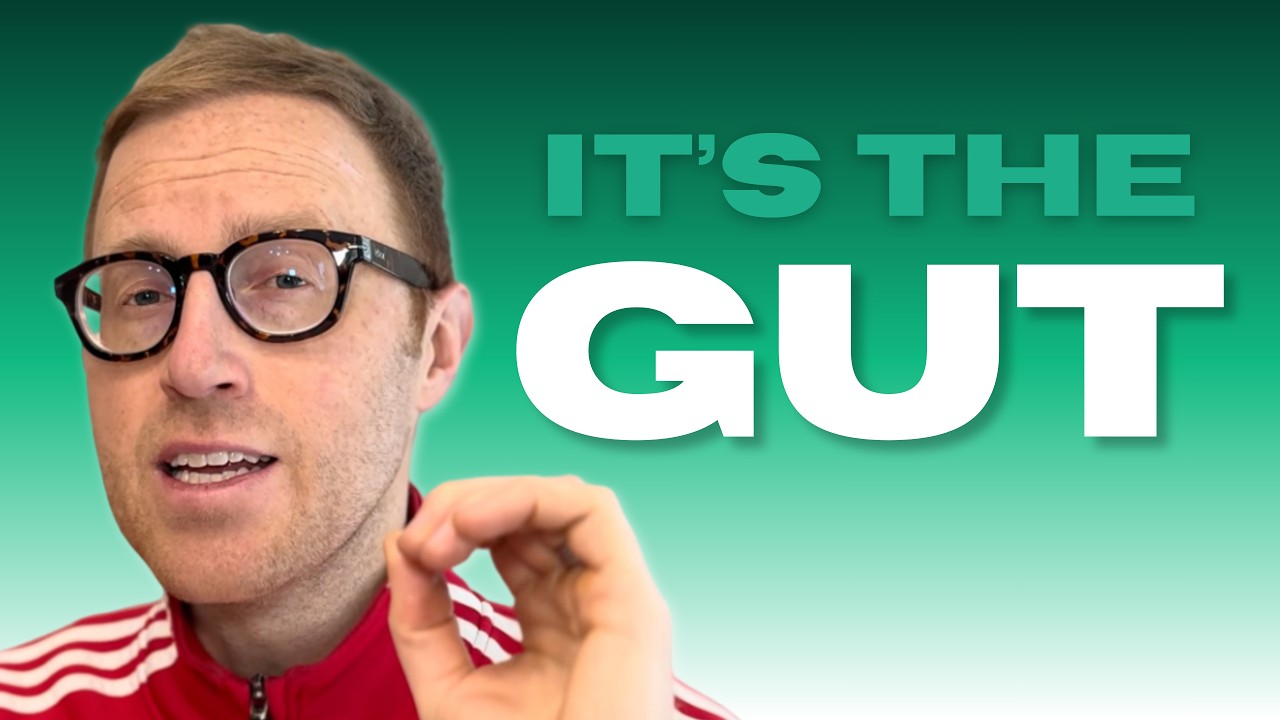
In this video, David Brimacombe explains how the gut‑brain connection can be a pivotal factor in recovering from post‑concussion syndrome (PCS). He outlines the physiological basis: the vagus nerve transmits ~70% of gut‑derived signals to the brain, and 70% of the body’s immune cells reside in the gut. Brimacombe focuses on short‑chain fatty acids, especially butyrate, which are produced by gut bacteria when they ferment fiber and prebiotics. Butyrate moderates systemic inflammation, supports autonomic nervous system balance, improves mood, and enhances stress tolerance. He shares his personal journey from a low‑fiber keto diet—resulting in bloating, fatigue, and irritability—to a gradual reintroduction of cooked vegetables, cooked fruit, prebiotic foods (oats, resistant starches, white rice), and polyphenol‑rich berries. This dietary shift led to noticeable improvements in energy, mood, and physical comfort. Brimacombe provides concrete, step‑by‑step recommendations: start with one cooked high‑fiber food per week, monitor how you feel the next day, then layer additional foods, always respecting personal tolerance and meal order (carbs at the end, paired with fats or protein to blunt glucose spikes). He emphasizes that feeding the gut microbiome is as essential as feeding human cells, given the roughly 1‑to‑1 ratio of gut to human cells, and that short‑chain fatty acids signal safety to the body, reducing irritability and pain. The video concludes with an invitation to explore a more detailed PCS recovery diet video.
Chapters
One of the biggest breakthroughs I made in my PCS recovery wasn't in the brain, it was in the gut. In this video, I want to talk about how your gut health might be that one missing link that you need for your PCS recovery. Hi and welcome to the PCS Resilience Collective. My name is David Brimacombe, and after 7 concussions over 20 years, I learned a lot about gut health. and how the gut-brain connection might be the missing piece in your PCS recovery. Today I want to talk about how short-chain fatty acids are produced by the gut based on the food that you eat. Let's begin. Your gut is a major communication hub. It's where the vagus nerve that innervates from your brainstem all the way through to your stomach helps send a message. 70% of the signals coming from the vagus nerves comes from the gut to the brain. Okay? So those signals are coming as a result of the food, the bacteria that are found in your gut. Now, 70% of your immune cells are found in the gut. It is a massively important part of your recovery and one that people often forget or don't think too much about. Now, food is important. We understand that we need calories as a human. But the type of food that we consume is very important when you're recovering from PCOS. Your gut is constantly sending signals about safety or danger that your brain is going to interpret. Now, the healthier food that you consume, the safer those signals are going to be. Now let's talk about one specific kind of byproduct of food. So when you consume food, the bacteria in your gut consume it. Now, there's one type of food, specifically fiber and prebiotics, that actually are food for the bacteria more than they're food for the person, the host, for me in this case. That food that you consume, okay, then feeds that host, this bacteria, that creates short-chain fatty acids. I want to focus on butyrate. It's one of the 3 major ones, but it's the one that's going to have the greatest impact on your recovery. Now, what does butyrate do? Okay, butyrate helps moderate inflammatory signals in your body. So if you're someone who has chronic inflammation, the more butyrate your body can produce, the lower that signal is going to drop. Butyrate also helps with your ANS signaling, so your autonomic nervous system, which is typically dysregulated after a concussion and for those with PCS. Now, this butyrate is going to help moderate that signal. It's going to bring that safety signal to the body. It also improves mood and your stress tolerance. Now, I wanna give you a personal story about my recovery and how food made a huge difference. Now, when I started my recovery, I really wanted to take out all those inflammatory foods, or what I thought was inflammatory. So I basically went on a keto diet, no fiber, no vegetables, just a lot of fats, which has its benefit. Now, the problem was that I was incredibly bloated. I felt sick. I felt tired. I felt Like I didn't have the energy I thought I would because I was eating healthy. I was eating eggs and avocado and a lot of healthy fats, but I had no fiber. I had no prebiotics, nothing to feed that healthy gut microbiota. So what I decided to do is I changed that. I added some fiber to my diet. So I started with cooked vegetables, which is easily— more easily tolerated than raw vegetables. I then added some cooked fruit and eventually some raw fruit, and I started to notice a huge difference. And what was that difference? That difference is because that fiber was actually helping support that, that colony of microbacteria in my stomach that was then helping the rest of my body. So some of the signs of feeling better was that I wasn't as irritable, I wasn't as tired. I didn't feel like when I ate I had that food baby sitting in my stomach. Okay, I started to feel like I had more energy, but it wasn't because I was feeding my human cells. I was actually feeding the microbiome. I was feeding those cells. Now, there's a 1-to-1 correlation. There's about 40 trillion human cells in your body and about 40 trillion cells in your gut. So it is just as important to feed the human as it is to feed the cells in your gut. So in this case, I needed to load up on those fibers. Again, cook the vegetables, cook the fruit to start because that's easier to absorb. I then added prebiotics. Now, prebiotics again are going to support the cells that create the butyrate, this short-chain fatty acid. So things that you can tolerate like oats, like resistant starches, white rice, and those things, that's going to help actually increase that butyrate level and the short-chain fatty acids. The last thing I started to add were polyphenols. Now, polyphenols come in a lot of colored fruits. What I ended up doing is I'd make smoothies that would have avocado and had leafy greens along with a bunch of different kinds of berries. And at that point, after a few weeks of doing that, I could notice a difference. I could notice a difference in my mood, in my irritability, in the way that my body felt. I didn't have those aches and pains. I woke up feeling like I could get up and do what I wanted to do. I wasn't beholden to a sore body or a tired mind. I could do whatever I wanted. Again, this is one of the many steps that I took, but food played a huge role, okay, in this recovery. Here's the biggest thing I learned, okay, was that the food that I eat today Not only impacts my mood in the moment, impacts my mood in the upcoming hours, but it impacts my mood tonight, tomorrow, and sometimes even the following evening. It is insidious, okay, how rampant the symptoms are when you have PCS. And one of the biggest things you have is your body becomes sensitive to certain types of foods. For me, it was high glucose foods. I couldn't eat a ton of fruits and vegetables, okay? But But what I did is I tried to moderate them. I'd eat them with fats, which helped the absorption and lowered my glucose spikes. I ate them with proteins, which did the same thing. And one of the most important things I found is that I ate my carbs at the end of my meal. So, it's about eating things in a specific order. But the biggest thing I want you to get away from this video, okay, is the need to change the way we look at food. Food is not simply a way to feed the The human. It is also a way to feed the cells in your gut. And remember, those cells are one-to-one with human cells. There's as many of them as there are human cells. And those short-chain fatty acids help produce that signal, okay, to the rest of the body that we are safe, increase our mood, lower our irritability, make ourselves feel whole again. Okay? So what we can do is let's start simple. Let's introduce one food this week. Okay, keep it simple. Like I said, if you can cook the vegetable, if you can cook your oats— okay, raw is harder to absorb, okay, especially if you're new to this— than cooked. So cook something. Cook a prebiotic, a polyphenol food, or something with high fiber. Okay, how do you feel after you eat? How do you feel the next day? Try that for a week. If you're tolerating that food, add another. Again, how do you feel? Start slow and layer up. Again, this will— it takes time to be able to absorb more fiber. If you've been off a fiber diet for whatever reason, can't go back and give yourself 30, 40, 50 grams of fiber in a day. Okay, your body will get bloated. It will feel worse than it did before. But feeding those gut bugs should be our priority because those gut bugs work in symbiosis with the rest of our body. Okay, they are part of the system, and to feed them is to make them happy, and to make them happy can make you happy as well. Okay, if you want to learn more about my PCS recovery diet, specifically what to eat at breakfast and whatnot, okay, you can check the video up above. I appreciate you watching to the end. I hope you have yourself a great day. Thank you.