In this solo talk, concussion‑recovery expert David Brimacombe debunks the common myth that motivation alone drives post‑concussion syndrome (PCS) healing. He argues that momentum—generated by taking concrete, safe actions—is the true catalyst. Brimacombe explains that motivation only appears once the brain feels safe and believes recovery is possible, which requires education about neuroplasticity and a belief in the process. He then outlines a practical, habit‑based framework drawn from James Clear’s Atomic Habits: start with tiny, identity‑shifting actions, build consistent morning and evening routines (affirmation, five elongated breaths, a gratitude cue), and progressively layer protocols week by week. Celebrating small wins reinforces the new identity, creates safety, and converts momentum into intrinsic motivation. The video concludes with a call to adopt these scalable steps, emphasizing that small daily actions compound into significant long‑term recovery.
Chapters
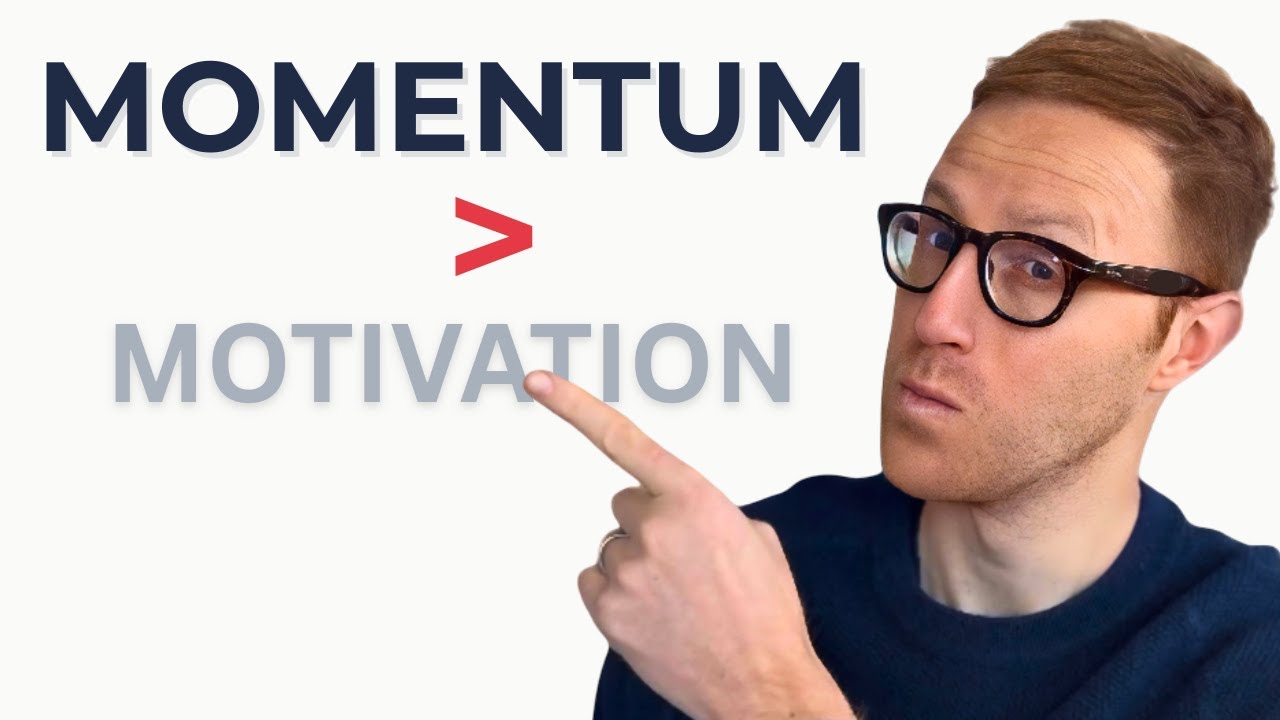
One of the biggest myths in the concussion recovery space is that all you need to recover is more motivation. Now, what people don't understand is that motivation only comes after movement, after you start implementing the systems and the protocols that will help you recover. In this video, I want to talk about how momentum is the main driver of your recovery. Let's begin. Hi and welcome to the PCS Resilience Collective. My name is David Brimacombe, and after 7 concussions over 20 years, I learned a lot about how momentum is the main driver of your recovery. Without it, you won't create the systems that will last, that will create the structure in your life that will change where you're going. Now, here's the biggest problem with relying on motivation. A lot of people think that you're either motivated or you're not. I'm not a motivated personality. Now, truth be told, motivation comes when your body feels safe. It feels belief that where you're going to is possible. Now, if you would simply just rely on more motivation, where, where do you think that's coming from? Unless you're someone who is highly motivated, whether you have a why of your recovery or you're just someone who has a high internal drive. Now, for most people who are struggling to get out of bed, struggling to do the daily things of life that they used to be able to do quite easily, to say just add more motivation is not the solution. It's going to create more of a sense of danger in their body, of stress in their body, Which is going to only exacerbate the problem. Now understand that you can only be motivated if your body feels safe, if your body feels belief in where you're going. Okay, and today I want to talk about how momentum is going to be our main driver, and that motivation only comes after you start layering in protocols. So if momentum is our main driver of recovery, how do I start? What do I do when I can't even get out of bed. I can't even fathom adding a system to my day, a protocol to my day that's going to help me with my recovery. Now, the first thing you have to understand is there has to be belief in the process. You have to believe that what you're about to undertake will help resolve your symptoms. Now, if you don't have that self-belief or that belief in the steps that you're going to take, you won't succeed because you'll take a step, you'll have a rough day, and you'll, you'll quit because that will reaffirm that belief that you have that this is not possible. My brain is broken. There is no way for me to get back to the place that I was or where I want to be. Okay, so it starts with belief, and belief comes with education. So understanding the malleability of the brain, the neuroplasticity— they've now found that Any and everyone, okay, has the power to reshape their brain, to change the neural pathways. This is not simply for kids, for healthy individuals. Any and everyone, okay, given the right inputs, can change your neural pathways. Okay, that's number one. If you believe that, if you've been watching my channel or channels like mine talking about how just because you're symptomatic doesn't mean that there's a break in your system, that your brain is broken, okay? It simply means we need to rewire. We need to change what we're doing, okay, to get back to where we need to be, okay? So belief is where we start. Once you have that belief, you have a reason to try, to step out and start with those small scalable steps. Now, I'm a huge proponent of the Atomic Habits principles written by James Clear. So in these principles, the biggest thing we need to understand is that To be scalable, our habits have to start small. We have to be able to change our identity by slowly switching, okay, from someone who is maybe sedentary to someone who is now interested in movement to someone who is moving more than they were. But it's, it's a slow progression. You're not going to go from someone who is not doing anything to a marathon runner within a week. We need to layer. We don't jump from the bottom step to the top step. Okay, we are taking a step. Every step reaffirms to your body that this is safe, this is possible, this is changing who I am as a person. Okay, if I go from, like I said, not doing anything to getting up out of bed and walking around the block, I've now changed that identity. I'm no longer the person that sits around and does nothing and waits for my symptoms to come. I'm being proactive. I'm getting up. I'm moving within my tolerance, but that is changing who I am. And now I believe that I can take the next step when I feel comfortable. Maybe it's a longer walk, maybe it's twice a day. Whatever it is, I'm now creating a new identity by taking those small steps that will reaffirm who I want to become. The next thing you need to do is you need to create consistency in your life. Now understand that One of the reasons why your body feels so off is that it doesn't feel safety in its current environment. So if I create a morning routine, a night routine, a routine for when I start to feel dysregulated or off, okay, what I'm doing is I'm telling my body that those aren't inherently dangerous situations. When I get up, I shouldn't automatically feel terrible or ruminate on all those negative thoughts that Oh, here we go, another day the brain fog's kicking in, the cognitive delay, the fatigue. Okay, I can switch that. I can look at the small wins. I can look at how much progress I've made, and I can remind myself that although I'm not where I want to be, I am moving in the right direction. So starting with a simple morning protocol, I always say 3 things to keep it really simple. The first thing you do when you get up is you remind yourself Today is going to be a great day. You're setting the baseline. Those feet hit the floor, those words come out of your mouth, or you say them in your head, and you're reminding yourself that today I am safe, I am supported, and I'm going to be okay. The second thing you're going to do is you're going to breathe into your day. So you're going to provide some kind of parasympathetic baseline. So again, 5 sets of elongated breaths. Simple. Okay? And then you're gonna have one point of gratitude. I always say put a sticky on the mirror. You'll walk by that multiple times in the day, but something that's gonna remind you to look for the small wins. Look for the things in life that you can actually say, I have control over. I can control the thoughts in my mind. I can control the fact that even though I don't feel great today, I can still make a step in the right direction. I can still eat the right food. I can still Talk to the people who are going to help my healing progress. Okay? So making those small steps in the morning. Now, invert that process in the afternoon or at night. Okay? So again, I'm going to remind myself of that point of gratitude. I'm going to do my 5 sets of breath. And then before I go to bed, I'm going to remind myself, okay, how great of a day. Think of a win of the day. And then I'm going to close my eyes and go to bed and repeat. Okay? It is not a one-off. This is not a week or even a month. But once you create that scalable system, you get momentum. Maybe your morning and your evening routines start to expand as you become more confident and competent in those different types of strategies. Okay, but you're starting small and you're creating consistency in your day. Your body feels safe, it feels supported in what you're doing. Okay, and then from there we can move on. So as I mentioned, okay, how we're going to do this is going to start with some small wins. So again, think one week by one week. So this week, what do I want to focus on? I want to hone in on a morning routine. Okay. And by the end of that week, how do I feel? Do I feel more present in the morning? Do I feel more alive? Do my symptoms take longer to actually kick in in the morning, or do they come at all? Okay, but again, I'm now going to celebrate that I've made progress. It is super important that to gain momentum in your recovery, you have to celebrate those small wins. You have to appreciate where you have come from. So if you were doing nothing, just getting up and living your life last week, this week you have a bit of a routine. Guess what? That is motivation for you. Motivation that you didn't have before, because that motivation derives from your momentum, that you see progress, that you see a new identity that's being formed that's going to take further steps later on. Okay, so just remember, small steps today equals big recovery later on. Okay, we're scaling this. We're starting small and building up, and that momentum that you're creating is going to carry you forward. Okay, you're going to look back in a month, 2 months, 3 months, and look back and say, Look how far I've come. I'm halfway up the mountain, whereas 3 months prior I didn't even want to get out of bed. Now look at me. But it starts small and it will scale big later on. Thank you very much for taking the time to listen and watch this video. I hope you have yourself a great day.