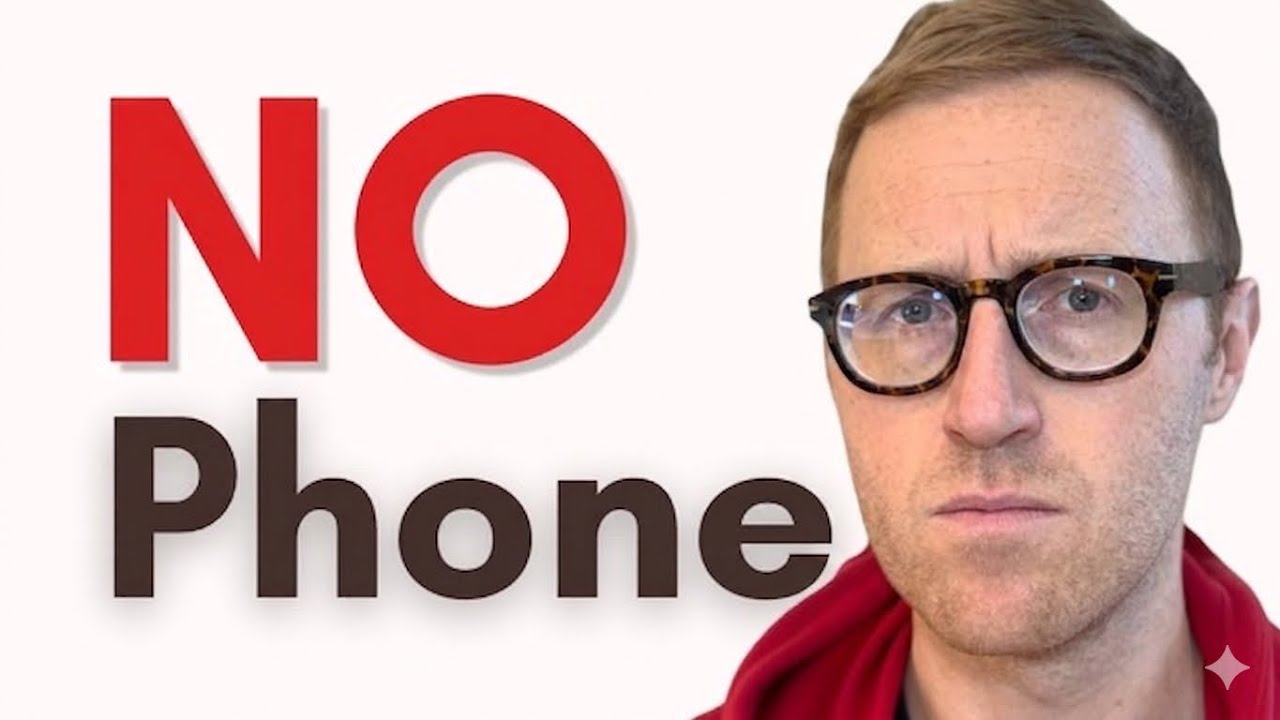
In this advisory video, concussion survivor David Brimacombe explains how reaching for a smartphone first thing in the morning can sabotage recovery from post‑concussion syndrome (PCS). He clarifies that dopamine is not merely a "feel‑good" chemical but an anticipatory neurotransmitter that drives focus, motivation, and resilience—qualities that are often depleted during PCS. By scrolling through news, emails, or social media upon waking, the brain receives an uncontrolled dopamine spike followed by a rapid dip, establishing a low‑resilience baseline for the day. This habit also introduces stress through negative social comparison and reinforces defeatist thoughts, further impairing mood, energy, and cognitive function. Brimacombe proposes a simple, evidence‑informed protocol: start the day with regulation (breathwork and a positive thought), keep the phone away for the first and last 60 minutes of the day, and never use the phone while eating. He suggests practical tools such as grayscale mode, timers, or physically hiding the device to enforce these windows. The video emphasizes purposeful phone placement rather than demonizing the device, arguing that disciplined use can preserve the limited mental and energetic resources needed for PCS recovery and improve overall resilience.
Chapters
If the first thing you do when you get up in the morning is you reach for your phone and you scroll, you're actually making your recovery harder. Hi and welcome to the PCS Resilience Collective. My name is David Brimacombe, and after 7 concussions over 20 years, I learned that the little simple decisions that we make, especially when we get up, can have a huge impact in our ability to make decisions later on. Now, I think one of the things we need to clarify first is dopamine isn't just about feeling good. I think people understand that dopamine is that feel-good hormone. Okay? It elicits that joy, that excitement, that happiness when you are watching a show or eating a good food. Okay? But what it is more of, it's an anticipatory neurotransmitter that works on focus, drive, motivation— 3 things that if you're in the depths of your recovery, you might be struggling with. So understand this: I pick up the phone in the morning, I start scrolling. Typically, if I'm scrolling, I'm not looking at inspirational videos, cute little cat photos. I'm looking at things that are causing my body stress. Okay, maybe I'm reading a post Maybe I'm looking at the news, I'm checking the weather. Okay, I'm setting myself up for a volatile state. I'm putting the the state of my being, my potential of the day in the hands of the universe. What could be on that phone? I have no idea. Okay, I am opening up Pandora's box, and Pandora's box can't be closed. So as soon as I get up, I scroll. I look. Oh. That news, that doesn't look good. Okay? That email, ah, that's not a great email. Okay? Then I get up. Now what I've done, one of the most malleable parts of your day where your brain is most receptive, okay, is I've now inputted things from other people, things I do not have control over. And that is how I'm gonna start my day. I have not had a single second to think, to Motivate myself for the day, to provide any breathwork, to regulate. I simply went to the phone, looked at the screen, and there I am. So here's what's happening in that moment. As soon as you reach for the phone, what you're doing is you're telling your body, I don't need to wait. I can listen to those urges. I can do whatever I want whenever I want. Now, and again, you are an adult You can do whatever you want, whenever you want, but the body doesn't work like that. Okay? The body sets baselines. You've now set the baseline that whenever you feel an urge or a desire that you don't like, you can now just stop or give in depending on the urge. This is dangerous because in recovery, your body is going to go through certain stages, stages where you don't feel great, stages where you don't have the motivation and the energy to do what you know you need to do. So in those cases, you're just used to saying, ah, you know what, I don't feel good. I know that's not going to make me feel good if I go for a little bit of a walk or do my breathwork. I'm just going to sit back. I'm going to get my phone out. That's what I'm going to do. Because you've now set a baseline. You've now set the tolerance for what you can expect for the rest of the day. And you're setting a routine that could continue for as long as you let it. So dopamine, It's more than just a feel-good chemical. It determines how motivated we are to do something maybe we don't want to do. Okay, we're not going to give in as easy. It's that drive. Okay, it's going to give us that focus. So when we need those the most, if we're constantly at the whim of our desires to go do whatever we want— click on the phone, scroll on the phone— guess what? We've given our body a lack of resilience. The other problem that comes with this is that you get this huge dopamine spike. Okay, what do you think happens shortly thereafter? A big dip. I check my emails, gotta check what's going on. You check it. Hey, I'm done. Put the phone away. A huge drop-off. You're starting your day in a rut, in a valley, in a state where you're already potentially struggling. How is that going to help? How is that going to impact the rest of your day, your mood, your energy, your ability to be the best version of yourself? I'm going to just put it out there, it's probably going to make it more difficult. The other way this is impacting your recovery is it's potentially reinforcing those thoughts, those beliefs. Again, pick up the phone. I look through things, I'm scrolling, okay? I'm looking at how other people are living their lives. I'm seeing my friends out, you know, on vacation, riding their bikes, being active, living their life. I put the phone away, I get up, I start to feel symptomatic. I don't feel like myself. I don't feel great today because I'm now providing a contrast before— from what I want to be, the pictures on the screen, okay, to who I am. That's increasing my stress, my frustration. I'm getting a greater separation of where I want to go and where I am. That is not helping me at any point. It might also be reinforcing those negative thoughts that are going on in my mind. Those thoughts of, ah, I'm never going to get back to where I was. This— I'm stuck with this for the rest of my life. I'm a victim of my circumstance. And though some of those might have some partial truth to them, they are not serving you. They are one of the worst things you can be thinking about when you first get up. So all this is really well and good, but what are we going to do about it? I'm going to propose something that is super simple, but I'm going to— one of the most effective things that I do in my day. Okay, so the first thing you're going to do, I always start with regulation. I get up, I regulate, I have one positive thought that's going to start the day. It's like the seedling of the day that everything's going to grow and blossom from. Okay, and then I go about my day. That's all you do. First 60 minutes and last 60 minutes of your day, you do not touch your phone. Whether you need to put it on grayscale, you need to hide it from yourself, you need to put a timer on it, doesn't matter. First and last 60 minutes of the day, those are the times your brain is most malleable. That's where your dopamine can go in those high surges, either before bed or as soon as you get up. Those are the times you need to be off your phone. Okay, one more thing. Anytime you're eating, your phone is away. Okay, there's been a lot of groundbreaking research on the power of social interactions while eating. I always say that the best thing you can do while eating isn't so much the food that you eat, isn't so much the macronutrients, the micronutrients, it's who you surround yourself with. If you're surrounding yourself with a phone, okay, your interaction is with a screen. If you surround yourself with people, okay, that interaction is with others around you that you love, that you're actually going to lower your stress It's going to extend your eating window. As you extend your eating window, you're actually going to produce more digestive enzymes, which helps assimilate your food, which makes you feel better and all those things. But again, that phone can't be present because that phone is increasing the dopamine, it's increasing that stress level, and that's not what you need in your recovery. So first 60 minutes, last 60 minutes, and anytime you eat. The phone's got to be away. Okay, simple but highly effective. So this video isn't so much about phones are terrible. I'm using one right now to record this video. It is about the placement and the purpose of them. You are in a state where you need to be the best version of yourself. You actually need to be better than anyone else, okay, because you have deficits of energy, of mental cognition. If you use these and misuse these devices like your phone, You're actually going to take away those abilities and you're going to hurt yourself for the rest of the day. So I hope this landed. I hope you understand that you are able to recover and you have the power to make those changes. Start small, but they will be able to change your recovery trajectory. I hope you have yourself a great day. We'll see you soon.