"A" Real Estate Dictionary - A-Z Definitions of Important Real Estate Terms -How to Buy a Home EP 94
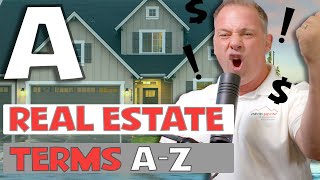
David Sidoni defines essential real estate terms for first-time buyers. FHA loan codes 203B covers standard purchases while 203K finances fixer-uppers. Learn the difference between an agent, a realtor, and a broker, plus what an adjustable-rate mortgage actually means.
Chapters
Welcome to the Real Estate Terms Definitions from A to Z. This will be our first installment. It's going to be a multi part series to help you walk, talk and think like a pro. I know the colleges are getting ready to throw out your SAT and ACT scores when you're buying a home, understanding the vocabulary is essential. So we're going to do a big vocab for you even though you're not doing sats and acts. Because I have to tell you, when you're buying a home, your extracurriculars don't count for. So grab your number two pencils, get ready for vocab. It's time for first time home Buying from A to Z. So if you want to figure out how to do this thing that you thought was impossible buying a home, get more definitions like this. I'm not going to do all A to Z today, so click all the notifications, subscribe to this podcast and ring the bell and you'll find out when the next parts of the Alphabet come out. Hello, my how to buy homies. Today I'm doing vocabulary. So Professor David Sidoni with you with some classroom lessons to help you act like you know what you're doing when you're trying to buy a house. Look, I understand there's a lot and you don't need to know it all, but you do need to have a resource. You can listen to it today and then you can keep it for a reference when someone asks you something or they say something to you that you don't understand and you know, you're just sitting there nodding knowingly like you comprehend what they're saying or if you actually, you know, want to ask what's going on and you say, hey, it's my first time that word. What does that mean? You know, before I make a decision worth hundreds of thousands of dollars that you know can seriously count on one hand how times I've seen a check with even more than four digits. So this is kind of a big deal and I need to figure it out. What does that word mean? Well, now you don't have to do that. Thanks to all these definitions. A lot of these definitions you might know. Some of them you could Google to get the definition, but what's the fun in that? Besides, you know, I'm gonna go way deeper than the generic Webster's definition that you're gonna find online today. You're gonna get the real real and figure out the what what Zidoni. These are the insider definitions. Plus it's gonna be a warning to you guys about the Internet research for the home buying education. What you find online is not only not the entire story, remember I've said that to you guys over and over again in previous episodes. But I also wanna tell you that most of the things that you find online is from lenders trying to sell you, doing my favorite thing, trying to capture you so they can get paid. They know that realtors suck and they've done a putrid job in educating first time homebuyers. So they see a huge opening and they go after it. They see that void. So they give you just a couple definitions and preparation tips to advise you to become a pre qualified first time homebuyer because they know you're searching for it and there are no realtors out there giving you the information. This is their hope that they can entrap you because you're looking for that information and then eventually you'll become their customer. That's the real deal. And I don't care if it sounds harsh enough, I'm ragging on these people who are putting out educational information. They are. But I want you to understand who's really marketing to you and why. What's their real mission? Is it really to educate you for the best possible purchase for you or just to lure you in since no realtors are stepping up and giving you this information? And so then they get you approved or they deny you because they just get your information and they give you no long term goals or strategies or planning to figure out what to do with that information to find out what's best for you. If you don't know my story, you can go back to the early episodes and hear that. But my how to Buy a Homies know realtors miss the boat and they royally suck at educating or caring about you the first time. Home buyer. I'm here to fill in the gaps, give you pure straight education with no sales pitch. And I'm going to do it alphabetically. One of my big hacks that I have for all my how to Buy a Homies is to ignore the Internet. Now I know I probably just broke some of your brains right now because you've been relying on the Internet your entire life and you would think that I'm selling something to you or lying or trying to cover something up. Go back and listen to the Lister testimonial episodes of how to Buy a Home podcast and you'll find out how this really works. This entire podcast is one big secret tip and it's a proven technique. Find your realtor first and then getting a Realtor recommendation to help you find a mortgage pro and then you go through the application process and then you buy it house. This gives you a huge upper hand. You get a full team to work as your advocates. That's the secret sauce, friends. That's my special insider hack. So know the motivation behind the source. And the other thing is I did this all for you. I went out and I looked at everybody's A to Z list of definitions online on the Internet. When I googled it, I saw lots of top sites and their goal wasn't to educate you to give you the definitions. Their goal was to pre qualify you so they could turn you into a paycheck. Their little way of getting their thing by giving you just a little bit. So here it is. The how to buy a home from A to Z from me. Defined and interpreted, but interpreted with you you in mind. This has been painstakingly translated into layman's terms because the boring definitions online I couldn't even handle. So I stuck it into regular people talk interpreted for you and your specific needs. What do all these terms mean to you? The first time home buyer we're going to start with the letter psych. Numbers come before letters alphabetically. We're actually going to start with numbers. The first definition is the 203B. What the hell is that? It sounds like something from a tax code. 203B is the number designation given for an FHA loan. So it's a number you might hear if you are using an FHA loan. They're government regulated loans used to finance and purchase new or existing one to four. You hear that you can buy a duplex, a triplex or a fourplex, also known as a quadplex, also known as a fantastic four. I made that last one up. No one calls them that. And a lot of times these 203B loans are characterized by low down payments, flexible qualifying guidelines, a limit on the maximum loan amounts. A lot of times an FHA loan, which is technically these 203 loans, most people are just going to call them an FHA loan. And a lot of times they get confused with a first time buyer loan. So let's start the definitions off with the real estate scoop on first first time buyer loans. In reality, most lenders are not offering a special deal just for first time home buyers who have I crushed. Everybody calls me and says I need. I'm a first time buyer, I get that special loan, right? Nope, you just get an FHA loan that anybody else can use. Too. Now there are some very specific loans that are for first time home buyers and specific loan programs. But don't expect some crazy discount. This is just a loan option. It's a loan program to help you. And everybody uses different loan programs. First time buyer, second time buyer, 12th time buyer. A lot of these first time loan programs that first time buyers end up using, a lot of times they're helpful if your credit challenge, you had a bankruptcy, a short sale or foreclosure in your past or you just want to explore a non 20% down payment. That's the reason why so many people are talking about these loans and they call them first time buyer loans. Now depending on you and your numbers and the current market conditions, you might qualify for what is just a regular conventional loan. Conventional? Oh, I'm jumping ahead. That's from the Cs. But conventional loan is just a standard loan. Regular old loan with a down payment. But it's not just a 20% down payment. You can get a conventional loan with the same rate as the FHA loans. So then why all the hype that you hear about FHA loans, why are you hearing about that all the time? Well, it's because it does help people with imperfect credit who are having trouble saving up the full 20%. Now here's the thing about it though. If you're going to be getting, if you're credit challenged and you don't have to put down 20%, of course there's going to be a trade off. You're going to have higher rates, higher fees. But the boots on the ground, real information, the real real on FHA loans, they're here to help you. If you can't save 20%, they're going to cost you a little more money. But in the long run, I've seen that it's going to cost you way less rent than you would pay. Not to mention the potential appreciation that you could miss out on than trying to save up for a conventional loan. So don't be afraid of an FHA loan. It's like buying a car. You can wait to save up for a 20%, 30%, 40% down payment on a car or, or you can buy it today with a low down payment and FHA loans only 3 1/2% down. But in that metaphor that I did about the car, think of it this way. You have to pay a car payment anyway. So are you going to pay a little bit extra for the privilege of being able to use a low down payment, not having to save up for a Fatty, huge down payment. Because in this metaphor right now you have to pay anyway. Plus that car is going to appreciate in value every day that you don't buy it. Sometimes looking at these options that do cost a little bit more are better for you in the long run because it means you can get in own that thing and start making appreciation on it. That was good. Do you like that? It was good talking, David. Own that thing. Make a T shirt, everybody. For some of you and in fact for many, many of the hundreds of first time home buyers that I've worked with in the hottest markets and also in the best buyers markets and when that happens because real estate sucks and all they care about is the sellers, they're going to call that the coldest market, which is really funny. In the hottest markets or the coldest markets. I had a ton of buyers that an FHA loan was the best fit for them. Some of them used 3.5% down. Some of them used an FHA loan to put 5, 10, 20 or even 50% down. It is simply a loan product. A 203B loan is an FHA loan. It's a loan product. You can determine if it's right for you when you get your unicorn team and you start working your plan. Woo. What are we, 1012 minutes in and I'm not even really to the age yet? Well, we're still not going. I got one more number for you. This is one a lot of first time buyers ask me about. It's called a 203k loan. I have a ton of homies that ask me about this one. In fact, fact, I just got a DM about this the other day. This is a form of a down payment assistance program which I get asked about quite often. All kinds of down payment assistance. This is a 2 or 3k loan and this down payment assistance, it's often called a fixer upper loan. This combines the mortgage loan with more of a loan on top of that to help pay for structural repairs or updates. Thus fixer upper. You can't use it to put in luxury cosmetics or a swimming pool or anything, but you can look at a shabby home and maybe use this kind of loan to fix it up. Sounds great, huh? Cool. Let me crush your dreams. Truth bomb. Yes, these exist and you're going to hear a lot of people marketing to you about them. And that's because a lot of those people who are marketing to you are new to the game, new to real estate, or new to lending and they want you to get excited about it here's why it sometimes can be very difficult for you as a buyer to use these 2 or 3k loans. I've done it before. I've seen people do what they were, but here's why they're difficult. And many experienced Realtors think buyers who ask about this are too much work. So you're not going to hear it from them. Currently, in 2022, there are a ton of brand new agents, newbies just getting into the game, and they're flooding social media with all the information about programs for down payment assistance. They're looking to get people excited because the market's hard. So you might have heard about these 203k loans and thought this would be a great way to afford a fixer upper without having to have the cash on hand for all the rehab and the reconstruction. So it sounds awesome, right? Yeah. Again, right off the bat, going to crush your dreams one more time. The real story behind all the down payment assistance program grants, the government assistance, and any purchase that requires somebody else to pay for your down payment or a part of your down payment or an extra loan. These are a million to one shot in the 2022 market. Wish I had better news, but that's the truth. That doesn't mean, if you need one of these, that you should shut the podcast off. Things change all the time. In fact, if you do need one of these down payment assistance programs, and that's what you need to buy a home, you should be digging into the podcast even more than the other people because you need to get started on a financial plan for yourself. In fact, you should be sick of my voice by now. The plan that you're doing right now is way more important than the final execution. Let me say that again. The plan is more crucial than the final execution. The right plan gives you options. A 403k loan is an option. It's just not a viable option in 2022. It means you don't have enough extra money to show the seller that you can compete. But there are even bigger sticking points than that. So you have to get three contractors to bid on the repairs for the home, and then you have to get the FHA lenders to agree on the bids. And then you have to get an appraisal that valuates the home at the new cost. That's the purchase price plus the bid repair that they've accepted. And that takes a lot of time. At the very minimum, this is going to take 45 days, but it's likely going to be 60 days. Or longer for you to close on the home. Now you're going to be competing against 30 day closes, or if it's me or a bitching unicorn out there who's working with a bitchy unicorn lender, maybe 15 or 20 days. Because giving the seller what they want is the only way to get a home in 2022. And the seller wants the money and they get the money when the home closes. So short contracts are far more enticing. When the market changes, we'll discuss two or three Bs again. But for now, know that this type of loan puts you at the bottom of the pile in a hyper competitive market. Told you. Real, real, nothing but love for you. There's a billion more numbers, but I'm not gonna deal with any of them right now. Those are the big ones for first time buyers. Let's go to the A's. My first A, an absentee owner. Now I'm going alphabetical order, but this is a perfect one to start for all you guys. Because you know what an absentee owner is? It's your landlord. Horrible. News flash. You may not be buying your dream home, your lovely little place with the picket fence from a family who wants to sell the home to you. You could be buying a home that is currently a rental. And you could be buying from a landlord the person that you're trying to flee. The definition of an absentee owner is anybody who owns a home but is absent from living there. Anybody who legally owns a particular property without actually occupying it. That's an absentee owner. Now why do you care about that? Because if you're buying a home with an absentee owner, the seller disclosures where the seller tells you everything they know about the house, they're going to be blank. And if you buy from an absentee, you can't ask all those little questions about the funky light switch that doesn't do anything or you. You can't ask them about, hey, how cool is this neighborhood? Or how festive are they during the holiday time. Do they get into it? You've got no one to ask because you don't talk to the renters and the owner is absentee. The next A is called an adjustable rate mortgage. This is also known as an arm. And if you're not careful, it might cost you an arm and a leg down the line. O dad joke. Yeah. An ARM is a type of loan with an interest rate that varies depending on how the market rates move. When you sign up for an arm, an adjustable rate mortgage, you first get A short period of fixed interest, but it's going to be lower than the traditional 30 year fixed loan. Eventually it's going to end because that's an introductory period of the loan that can last for up to 10 years. But when that introductory period expires, your interest rate is going to follow market interest rates based on the rate index that the ARM is tied to. So you're going to have a base and then it's going to be tied to these things called the libor, the cofi, blah blah, fancy financial terms. And here's what it means. This is not fixed. Now they do have caps in place so it can't go nuts, but it can still jump in the thousands of dollars per month for your payment. And are they evil? Well, only if you don't know what you're doing. Now some people, most people actually currently, especially since the market crash in 2008, 9 and 10, they're all going fixed. It can be a good option for you if you understand and know everything about it before you are going to even think about using this. And the reason for that is some people figure out that they want to use the lower rate before the monthly adjustment. And that's assuming that you're well aware of the value of the home and the, and, and where the home values are going to go and is it going to go up or down. But for most of you, an adjustable rate mortgage, unless you really understand it, something to avoid the next day, is an agent. Now. Weird. Why would I explain what an agent is? It's a real estate agent. Right? Well, this is the big one because I'm going to do some simple definition breakdowns for you because the entire real estate agent thing and a broker and all that, it's confusing and it's just yet another reason why I want to start the revolution and change this whole damn industry. Here's what we got. You've got licensees, you have real estate agents, then you have realtors, and then you have brokers, and then you have real estate brokerages, which is the company. So the licensees, those are the people that have a real estate license that are not affiliated with the national association of Realtors. Believe it or not, this the licensees, they're considered to be an agent, but there are like a million and a half of those and then there are a million and a half that are agents that are realtors because they pay their dues and are part of the Realtor national association of Realtors union. So the licensees, they're either Part timers or lawyers or investors who got a license or they're too cheap to pay their union dues and they don't want to deal with having to be held to the higher standards that the Realtor designation denotes. Some of them call themselves the agents, you know, and technically they are. And they can act as an agent for you to buy or sell a home. Now most full time agents are going to be introduce themselves as a real estate agent or some of them might say they're a realtor. And that's the one and a half million people who are agents. And they work with a broker. So the broker, that's the company name that they work for that you're probably all aware of, like ReMax, Keller Williams, exp, Compass, Caldwell Banker, Century 21. The majority of good full time agents are going to work for one of those companies. Now you're not hiring the company, you're hiring the agent. There are some really great agents that are brokers themselves, but even some of them who are brokers themselves, they might still work under another brokerage or one of those big companies. See, are you confused yet? Who am I working with? An agent, a broker, a licensee. In my humble opinion, when it comes to buyers, the agent or the realtor, they matter like a billion times more than the company that they work for. We're all independent contractors. And now with the Internet ruling the buying process, there ain't nothing that a brokerage or a real estate company that they're going to do anything extra that a bitch, an agent won't do no matter who they work for. So the real estate agent, the realtor is an independent contractor and simply hangs their license to work for one of those big broker companies. That's what I'm talking about, like ReMax or Coldwell Banker or Exp. So don't stress about the name of the company. You just want to find a good realtor or real estate agent that has a great reputation. I've been doing the 16 years I've been with three different brokers to change for the needs for what I wanted to do. And the only thing.
More from David

How Tariffs are Impacting Home Prices and Mortgage Rates- May 2025 Housing Market Update

Urgent housing market info for first-time home buyers. #firsttimehomebuyingtips #howtobuyahouse

House flipping data, and a technique to use to take advantage. #homeflipping #howtobuyahomeguy
Housing stats and data, and how they affect first-time home buyers. #howtobuyahomepodcast

Mortgage rate relief for first-time home buyers. #firsttimehomebuyer #howtobuyahomeguy