David Sidoni shows how mortgage rates jumped from 3% to 5.7%, pushing a $400,000 house payment from $1,686 to $2,786 monthly. The market is slowing, not crashing, because inventory stays tight. Rents are spiking 20-25% in many areas, with some places hitting 60% increases.
Questions this video answers
David Sidoni
August 27, 2022
$1,686
$2,786
65% increase
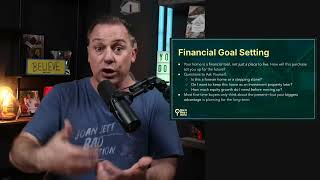
Chapters
Interest rates. This is a big one that is scaring a lot of people. And I think what I'm seeing and what the forecasters and the economists are saying is it's causing a lot of panic that really is unnecessary. See, when rates rose from around 3% to, you know, almost as high as 6% recently, monthly payments went nuts. They rose close to 50%. So look, I understand with inflation that your gas and your groceries cost more, but a raise in your monthly housing payment of 50%, that's a lot more dollars inflation, didn't it? That is a lot more money than the increase you have filling up your fridge or your tank. Look at this chart right here. Okay, so a $400,000 home at 3% back in the good old days, 2019 and 2020, and believe it or not, the beginning of 2021, you could get a mortgage for 3%. That was going to cost you $1,686. Now you go today's average rate, 5.7%. That same home, 2,786 bucks, that's $1,100 more. That is a 65% increase in the cost of owning a home. So the people who could barely afford to qualify that 3% rate and they were out shopping trying to buy a house, they either had to drastically reduce the price of home that they bought or just get out of the home shopping game. So what that leaves left are the people who had a little buffer room in there. At the same time all this is happening, their rents are going up like crazy and it's freaking people out. And we've got this radical increase in interest rates which are making home buying not affordable for people. But at the same time, we've got this radical increase in rents which is making, oh, I don't know, just existing seem impossible. So the interest rates doubling in what, like a little more than two months? That's nuts. But let me explain to you what's happening. Since the rates took off a lot faster than than anyone expected, how is that affecting the housing market? It's not affecting it that much. I. Look, I can hear your gears turning in your head. Wait, what? So everything got more expensive. That should mean that nobody can buy anymore and the market's going to tank, right? Think again. Now, this doesn't mean that the competition for housing is over. It's still happening. People are still out there trying to buy houses. It's just less than it was. As I mentioned before, this is a slowdown. It's not a crash and a Slowdown of market activity doesn't mean that price prices go down. You still could be in bidding wars. It's just that you're only going to be with 10 people instead of 20. I've said it before, 20 people bid on a home in March. That means there was one winner and 19 people still shopping for a home. So then let's say in April And May, those 19 people out there were shopping, saw the interest rates freak out and go high. Well, now let's say maybe nine of those people can't afford it because the interest rates went up. Well, you've still got 10 people that still can afford it and are still going to be competing to buy the next home. If you haven't been studying this stuff long, let me give you a little long term reality on the mortgage interest rates. Back when we had rates at about 3.75, that was a real interest rate at the time. And then we ended up hitting that crazy artificial rate of 2.9%. That was a crazy super low because of the way the government was doing things with money and a whole bunch of other factors. And you can't compare that rate to anything else because that was a random once in a century, post pandemic government manipulated rate. So Today's rate at 5.7, that means we're actually not that far off of the real rate, which is about 3.7. And I know what you're thinking. You feel like it's Monday or Tuesday after Black Friday and you missed the sale. Well, let me make you feel better about that. Okay? In February 2020, the average for a 30 year fixed was three and a half to 3.75. So then in June of 2021, we hit that crazy drop and we were down to 2.9. And then in June of 2022, we bumped up to 5.7. So it feels like you went up way higher than it ever was. That's not true. That way, way low rate was a blip in history. You can't use the recency bias to shape your opinion. You've only been looking at this recently and you don't know the average numbers. People still bought homes at 6% all the time. And back then when they were doing it, there were four times as many homes for sale. Last time it was at 6%, four times as many homes and people were still buying. But dude, mortgage rates have doubled and I can't get in. What do I do? Okay, I understand where you're coming from. Okay, what we'll do is we'll look at the big picture and you can see that, you know, 6% or 5.75%, it's not that far off the, the normal interest rate for the last 15 years. And you have the option with a short term fixed to get in at the fours if that's what you really need to do. And then you can wait it out and look to refi when the inflation settles down. I know I've told you all before, if you're going to do an adjustable loan to make sure you know what you're doing, cool. I'm saying that maybe this is a time that if you want to take advantage of what's going on with the forecast that we see that you start figuring out and knowing what you're doing with an arm, an adjustable rate mortgage, there are opportunities out there right now to get into a five, a seven or a ten year fixed. That's a long time to be fixed at four or four and a quarter percent. That's if you want to seek a lower payment. So you can get in. Now that means that you're betting that over the next five, seven or 10 years they're going to get a handle on this inflation, which historically they really need to do. And it's probably a pretty good bet that they're going to do that because look at this. Inflation goes on for more than five years. That means every politician that's in office is going to get voted out. And the new ones who come in, they're going to do stuff to, to kill this inflation. Don't believe me? Let me give you two names. Jimmy Carter, Ronald Reagan. Don't understand that? Google it. Yeah, it's an adjustable rate loan, but it's fixed for five, seven or 10 years. This is a serious option for a lot of people out there who are considering getting in the market because they don't see a crash coming and they want to ride that slow price appreciation without paying their rent. So if you know it's not going to be a crash and you think it's going to be a slow rise. Something to think about. I know, I know, you're totally bummed out. You missed the Black Friday bargain basement. 2.9%. Not too worry. You could still buy at the regular rate today. And in the worst, worst, worst case scenario, if rates plunge and you're mad that you bought at that high rate, you do what the rest of the world does at that time, you refinance. That means you adjust down to the new low rate when the market hits there, it happens People do it all the time. So the market's not going to crash because rates are at 5 or even at 6%. Hasn't happened. We still got tons of buyers and not enough homes. You know, over the past few years, we've had a plethora, an exorbitant amount, a gluttony of buyers all chomping at the bit. And now we're seeing a shrinkage of those buyers. But losing some of them does not mean that we lost most of them. And the equation still works out because the inventory is low. There's still plenty of buyers left, and the inventory has only slightly increased. Those that are left still in the market, still playing the game, that means they had a buffer and they could handle the potential increase in the payment or they've begged, borrowed, or stolen from someone to help them adjust to the new monthly increase. Bottom line is the number of buyers still outnumber the amount of homes for sale. So the market's going to remain afloat, in fact, still rising slowly. But that will mean we won't see those prices spiking like we did over the last 18 months. Now, before I get into the recession and inflation and how that affects you, let me throw you a bonus. Fact bonus fact. Rent sucks. Landlords suck, and they are raising rents at levels I have never seen in my life as a renter and as an advocate for renter since I stopped renting. And that period that goes back 30 years. I'm talking all the way back to 1991, when Full House Rugrats, Doug and the Fresh Prince were ruling tv. Yeah, I am old. Drink? Take a look at this chart of what rents have been doing since 1988. I had a recent podcast where I interviewed a listener who moved into a complex that right before he moved in, the rents had just been jacked up 60% before they moved in. In his first year there, he figured out he wanted to plan to buy a home. So he got ready, and thank God he did, because he'd only been there nine months and he was ready to move out. And when, at the end of his lease at 12 months, they were going to jack it up another 30%, that's a total of a 90% increase in just 12. No, that's not the way it is everywhere, but I can tell you, everywhere, rents on average are going up 20 or 25%. 90%. Insane. I don't know what was going on there. 20, 25, 30, 35%. That sure as heck is a lot more than inflation going up 9%. So, yeah, your dollar's worth less. But your landlord's going to be asking for more of those dollars at the end of your lease. So a fixed monthly housing payment is your best bet against economic uncertainty.