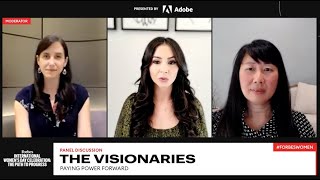
In this interview, Deena Shakir, partner at Lux Capital and early investor in Maven Clinic, discusses the stark funding gap for female‑founders, noting Crunchbase data that only 2.2% of venture capital went to women‑led startups in the first eight months of the year and just 0.34% to Black women founders in the first half. She argues that women‑ and diverse‑led companies outperform peers, making a strong business case for greater investment. Shakir emphasizes the need for more women in decision‑making roles at VC firms, citing organizations such as AllRaise, Moms in VC, and Women in VC that are building supportive networks. She highlights research showing that pitch judges ask women founders “prevention” questions focused on risk, while men receive “promotion” questions about scale, revealing subtle bias. Finally, she calls for systemic change beyond diversifying cap tables, including addressing micro‑aggressions, changing evaluation frameworks, and fostering an inclusive culture to unlock economic recovery, jobs, and innovation.
Chapters
Newly released data by Crunchbase shows not much funding is going to a growing number of female-led startups. Only 2.2% of venture funding went to female-founded startups in the first 8 months of this year. And for Black women, it was even a smaller fraction. At 0.34% in the first half of this year. To help us break this all down, I want to bring in Deena Shakir, a partner at the venture capital firm Lux Capital. She was an early investor of the women's health platform Maven Clinic, which recently achieved unicorn status, meaning the privately held startup is valued at more than $1 billion. Good morning, Deena. Thanks for being with us. Speaking of the 2.2% of funding for female founders, the lack of funding seems like missed opportunities. So tell us what's behind the disparity in funding and why is it so important to level this playing field?
Good morning and thank you for having me. You know, it is a very, very good question and it's a good question, not just because funding more women entrepreneurs will be good for the world or good for a DEI checkbox, but fundamentally because there is a proliferation of data that shows that women and diverse-led companies perform better. And that is ultimately what I think is going to move the needle from the limited partners and the general partners and the investors around the table. The more that we can see how women entrepreneurs can unlock economic recovery and jobs and new markets and innovations, the more I hope to see future Kate Ryders and mavens making unicorn and decacorn strides in the years to come.
Let's talk about the people who are writing the checks for these startups. Can you talk about why it's important to have women who are funding these businesses and in leadership roles.
Absolutely. Unfortunately, you know, although we've made a lot of progress here, there is still so much work to be done. The vast majority of venture capital firms still do not have a single woman checkwriter at the table. Now, that being said, there has been significant progress. There are incredible organizations like AllRaise, which didn't even exist a few years ago. For those of us that were in the industry, there are organic groups like Moms in VC and Women in VC and really incredible peer communities to enable women to support each other in this field and also to support women entrepreneurs. At the end of the day, it's clear, and there's data from Kauffman Fellows as well as other organizations that can attest to this, that the more women and people of color that you have around the cap table or around the pitch table, the more diversity you will see in your portfolio, full stop. There is no doubting that. And so that is one of the key drivers But choosing to have one person to represent the diversity index around the table is not going to move the needle. It's more than that.
So in addition to getting more women in the room where it happens, what else do you think needs to change in the industry so that there's really more equity for women who are starting their own businesses?
Absolutely. So it starts with diversity around the cap table, but it certainly does not end there. There is an interesting study that was published a few years ago in HBR that actually goes through longitudinally a number of TechCrunch Disrupt sessions and examines the type of questions that were asked towards women entrepreneurs versus those asked towards male entrepreneurs. And categorically, it was clear that the women entrepreneurs were asked questions that are called prevention questions. In other words, questions that were asked about the risks of the business. How might this fail? What if so-and-so does something to compete with your business? Whereas the types of questions asked towards male entrepreneurs were asked about the potential for scale and the potential for promotion. And this was consistent even across gender within the startup judges. So there are a number of subtle sexist types of evaluating companies as well as microaggressions within the industry and from the industry towards entrepreneurs that will take a long time to be addressed. It's not going to be a simple solution.
Well, let's hope that all of these business people can begin to reframe their perspectives and we can get more funding to females. Deena Shakir, thank you.