Bringing Diversity and Equity to VC Capital Funding: Why Deena Shakir is Betting On The Underdog
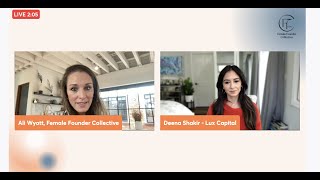
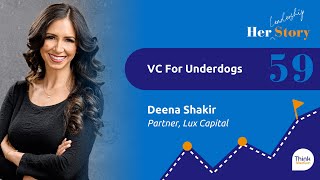
Deena Shakir, partner at Lux Capital, discusses why diverse founding teams outperform financially and shares her path from anthropology to the Obama administration to Google Health. She explains what VCs actually look for: founder quality, team resilience, defensible technology, and aligned values.
Chapters
Hello everyone, welcome. Happy Friday, Happy New Year, although we already had one of these yesterday. Super excited to be here today with Deena Shakir, and I'm gonna get more into her background because she has an extraordinary career that has dipped in and out of various industries and taken her to many places. But quickly wanted to introduce myself again. I'm Allie Wyatt, the co-founder and CEO of Female Founder Collective. And Female Founder Collective is a platform for empowering, educating, and connecting founders from around the globe. And we have our private community, which is called the 10th House. And that's a place where you're able to find founders by stage, by industry, by geography. We have private conversations with extraordinary individuals like Deena, which we'll be doing after this. We have the opportunity to get really amazing discounts to incredible platforms that you absolutely need to grow your business, from Squarespace to Justworks to HubSpot, the like. And we have the opportunity to do these extraordinary meetups with founders in, in your market. So definitely check it out and see if you're eligible. But without further ado, I want to introduce Deena for those of you who don't know her and give you a little bit of background. Um, Deena is a VC daughter of immigrants, and she's deliberately investing in diverse and intersectional entrepreneurs. And we'll get more into the why, um, but she believes that they truly embody unique and winning qualities. So we're definitely aligned on that front. She is a partner at Lux Capital, a multistage venture capital firm with $4 billion under assets under management. She invests in transformative technologies, improving lives and livelihoods. She's particularly interested in contrarian and underdog founders building ambitious companies in digital health and sits on the boards of companies including Maven Clinic, SteadyMD, Alive Health, H1, Aiden, All Stripes, and Shiru. I think I pronounced those correctly. Correct me if I—
perfect.
I did not. Um, but we are doing this also as part of a series, and that is for Your Profit Playbook, um, which is a financial education program run by Marguerite Presley Davis, who is formerly of Goldman Sachs and is helping to get your financial plan in order. So definitely check that out. It's a 6-week course and there's nothing better to sort of start off your year. But without further ado, I'm going to jump into my first set of questions for you, Deena. And I really wanted to double-click on something that I'd recently read. You've done a lot of articles for Forbes, for Fast Company, and in one of the recent pieces that you did, you talked about how the pandemic has impacted female founders specifically, especially mothers. At the same time, you also talk about the fact that mothers have these skills that have been honed, soft skills, I will say, by virtue of being a mother. And I wanted to talk a little bit about why you think women and underdogs and mothers in particular are especially equipped to succeed as a founder.
Thanks, Ali. It's great to be here. I'm delighted to kick off this conversation and 2022 together. I love that question. It's definitely a topic that I've been very vocal about, one that's deeply personal, but also very much baked into the way I think about investing in companies and founders and sectors. I think it's at this point almost 2 years in, it's certainly no longer a novel observation to talk about the impact the pandemic has had on parents in general, and especially on women, especially on mothers. And, you know, communities of color in particular have unfortunately been disproportionately impacted. There's been a plethora of data out there, including McKinsey's report on women in the workplace, AllRaise has produced some great research specifically digging into the impact on founders and funders. PitchBook has had some recent reports on this as well. And it's clear that, you know, in particular in 2020, it was a tough year. And despite seeing a massive increase in venture dollars in companies founded and funded in general, 2020, there was a dip in terms of dollars going toward women founders. Now, we did see a modest increase in 2021, which is good news as we closed out that year. Not good enough, but certainly at least some room for, for optimism in terms of not only the percentage of dollars going toward women founders, but also the, the dollars coming from women checkwriters. And we know that there is a direct correlation between investors and, and the founders that they're investing in. We know that diverse cap tables are reflected in diverse founding teams. We know that diverse founding teams hire more diverse employee bases. And we also know that all of these, these, these indications also result in better companies. And that's really what I focus on for me. You know, it's not about the fact that, you know, that I want to just invest in women because I'm a woman or that I prefer, you know, to hang out with women or anything like that. It's that there is documented evidence that women found successful companies, that diverse cap tables result in better outcomes. And that is reflected in faster time to exit, which the PitchBook report highlighted. It's reflected in stronger ROI for investors and in generally more successful companies. And so as a VC, it's my responsibility to produce good outcomes for my LPs. And that's, that's why I'm investing there.
I love that. And I love that it's not a charity case. Jesse Draper's talked quite a bit about this, but this is, this is actually a business opportunity, right? This isn't just about the societal impact, which is a wonderful result, but that there's actual statistics that are out there proving the fact that women are excellent leaders of high-growth businesses.
Absolutely.
Now, I want to talk about you for a moment because you have a really illustrious career, as I talked shortly about, but you've made a lot of career transitions, and some would say pivots, and have worked in the public sector, the private sector, in big tech, the list goes on. Are there any through lines that you were able to take away from each transition that sort of helped you become a better investor or a better operator, um, that you would sort of share with this community as a helpful tip as they're navigating their own career?
Yeah, um, absolutely. I mean, uh, certainly retrospect or hindsight is 20/20, but I can tell you with with certainty that when I was graduating college or, you know, in college or growing up, I didn't have a sort of broad vision to become an investor or to, you know, or even to be in tech. For me, it was always about this North Star of the idea of impact. How can I have an impact? And a lot of that goes back to my childhood. You mentioned being a daughter of immigrants. My parents are both from Iraq. You know, I came of age during a time where there were, you know, there was a war in my country of origin. And being, you know, an Iraqi American who's also Muslim, you know, that really had a profound impact on the way that I sort of see the world. I felt like I was always building bridges between these parts of my identity that were quite fluid but were seemingly at odds with one another. And so that's what led me to looking back to this thread that you mentioned. The thread has always been about partnerships, about building bridges, and I have done that in different capacities. Always in pursuit of the idea of impact. And so at one point I thought I was going to be a professor of anthropology. At one point I was a journalist. I was actually briefly on air. I recently uncovered that footage actually from 2008 when I was doing a bilingual Arabic-English news show. And I worked in the Obama administration. But for me, it was again those two pieces, the idea of building bridges and partnerships and specifically impact that led me from one to the other. And so in terms In terms of how that resulted in investing, it was my experience at Google that, that led to my thesis specifically around healthcare investing as I helped to build out what became and has recently been sunsetted as Google Health, that I was meeting incredible entrepreneurs who were doing more with so much less than my team at Google. And I recognized that the real innovation, particularly in these very intractable sectors like healthcare, was going to come from, from early-stage companies.
Super interesting. And then you navigated into venture, and, and you started, like you said, seeing all these companies. You recently wrote an article too about talking about what it takes to be a great VC and negotiation skills. Um, can you speak a little bit to the VC industry? I think oftentimes it appears extraordinarily glamorous And for founders coming out there, it's always mysterious. And there's also a lot of founders or ex-operators that potentially want to take that career path. Can you share some of the things you think VCs need to do to thrive in the investment world versus, say, operating a business or founding a business?
Yes, I did recently write an article after a conversation with a fellow woman in venture who has made the transition from operating to investing and for that over at NEA. And it came out of a conversation that the two of us were having around some of these really market sort of shifts in operating between building a company or working in big tech and being on the investing side. And, you know, I'll preface the lessons by saying that, you know, this is a long game in venture. And so, you know, it takes many, many years to know if you're any good at this. Like, I still don't know. And, you know, And it's a learning journey. And so I think having that insatiable curiosity and appetite and humility to know that you're learning along the way and that there's only so much in your control is really important. But there are a couple of lessons that I can highlight without going through all of them that I think are particularly salient. The first is that you are As I mentioned, building a portfolio that really kind of evolves over time. And when you're working on building a company or even building a product within a larger company, you have these really quick feedback cycles, right? You can launch and sort of immediately see metrics. You can feel the sense of ownership. And that is not really the case in venture. Not only are you, by definition, not owning anything, you're investing in companies and then, hopefully the companies are, you know, are being run by executives who are, you know, handling the building themselves, but you also, you need to have a much longer view. And so it's interesting when you look at sort of a public market versus private market perspective, like you can see this volatility on the public side, but it really takes a long time to, you know, to see that evolution on the private side. And that's the nature of early-stage ventures. So you have to be patient. But you also have to move quickly. It's very competitive, which is something that a lot of people also, you know, don't necessarily see from the outside. You know, it's—
can you give more, shed more light onto that? Because, you know, I recently was speaking to a VC friend of mine who said the same thing. And I think that's very surprising, particularly for founders to sort of understand the dynamic. And I think founders understanding that dynamic of what's happening on the VC side it's going to make them a lot more adept at securing capital if they understand sort of the benchmarks that they're— the people on the other side of the table are up against.
Absolutely. And that's advice I often give to a lot of founders I talk to and founders in my portfolio as they pursue subsequent rounds is to really put, you know, try to understand the perspective of a VC just as it's important for us as VCs to understand the founder perspective. You know, there is a lot of capital out there. The VC industry has grown quite a bit. And it is a competition for the, for the best deals. And so just as, you know, founders are, you know, out there raising, there are many, many VC firms that want to get in, and especially those that want to lead, you know, they're generally, sometimes there might be a co-lead, but, you know, usually there's one lead. And so this notion of, you know, sales within venture capital is absolutely the reality now. There's a lot that needs to go into that. And, you know, you might, there's all sorts of stories that founders can tell you about what, you know, the ways that different VCs have tried to compete for it, but we have to work very hard to get into those deals. And, you know, the work of a VC doesn't end when you win the deal, if you will, or when you get into the deal, it's your responsibility, especially if you're leading and joining the board to be there with the company, with the founder through the growth and, That's not always sexy and it's not always glamorous and it's not always fun. I mean, I tend to think it's fun. I enjoy it, but it definitely has its ups and downs.
Well, you bring up a good point, Deena, because you talk about the competition that VCs have to get into certain rounds and get behind certain companies. And yet on the flip side for founders, you know, what can they expect expect or ask for from their, from their partners? And how do they find those right venture partners to bring into their journey and into their mix? Because I, it's, I think a lot of times people don't feel like they have that choice.
Yes. Um, you know, I think it's, it's, there are a lot of lessons that apply to both sides of it, to be honest. You know, doing your homework in advance and being really intentional about who you're pitching to, who you're reaching out to, is something that, um, you know, Seems very obvious, but you'd be surprised how seldom it happens. So, you know, if you believe that there's value to be gained from, you know, beyond actual monetary value in working with a VC, then do some research on what that value is, right? VCs love to say like, let me know how I can be helpful or talk about value add, but do your homework, ask founders, other founders in your network. VCs love to talk. I'm here talking on a LinkedIn Live. I'm pretty vocal on Twitter. You mentioned some articles that I've written. Many of us are very prolific and it doesn't take, you know, more than 5 or 10 minutes to do a little Googling and get a sense for what we have said publicly, what we stand for, the companies we're already in, where there might be an existing portfolio conflict, what stage, you know, and check size. Those things are usually all publicly available. And having, you know, doing that research in advance will save you so much time, not only in terms of narrowing down who to talk to, but also in getting a sense for what what type of partner you wanna work with. And so literally like, you know, a little bit of background research goes a really long way.
And further to that point, you also wrote about negotiating, right? And you actually, very funny enough, had compared it to toddlers. It was a perfect metaphor because I was actually just talking the other day about how my non-toddler, my child, is like better at negotiating than I am. But what are some sort of, if you're looking to, if you're on the flip side of the table, because you were talking about it from the perspective of VC and you're a founder and you're looking to land that perfect investor who you think would be an incredible partner, what are some negotiation tactics that you would use or even characteristics that are particularly appealing to you and some of your, um, some of the people that are your peers within the venture world?
Yeah, I think when it comes to term sheet discussions or partnership building between a founder and an investor, that there are definitely lessons to be learned in the way that we communicate with our children and the way that they communicate with us. And this idea of finding common ground, of being able to empathize, put yourself in the shoes. When I think about lessons that I'm constantly seeking and how I parent this idea of putting myself in the perspective of my child in this case and understanding how they're feeling. It works. And when it comes to this dynamic, I think what we just talked about in terms of like understanding the perspective, not just in terms of, you know, a VC might be meeting with many founders a day. How do you distinguish yourself? How do you do that research in advance? How do you understand their calculus, right? Like, we are inevitably meeting many more companies than we can or have the bandwidth to invest in. And there are other considerations that go into it. So that kind of empathy on both ends really does go a long way.
I love that. It's amazing how empathy has become one of the most important characteristics in modern day. And it sort of was something that felt in, in years of old, like it was something that was a weakness. So I love that you speak to that. And in terms of how you think about decisions as an investor, can you walk a little bit through how you, how you make decisions, what kind of diligence process that you have? So as people that are watching and sort of understanding how you make decisions, can think about, oh, she could be a great partner for me in my own journey. And the flip side, of course, too.
Yeah, definitely. You know, I think one of the things which also goes back to a question you asked earlier around lessons learned is, you know, even taking that initial meeting and that time. And this has been a big learning experience for me in this role. It's not discrete in the sense that, you know, 5 minutes here and 5 minutes there, it doesn't add up sort of, it compounds. Drowns over time. And so it's not just about time, but it's about energy and attention. And so with that in mind, I try to be very thoughtful in terms of meeting with founders, not just for my time, but for their time. And so I won't take a meeting if it's not a company that is a thesis fit for me where I'm currently spending time or for my fund, if it's not a stage where I would necessarily, get involved, et cetera. And I think that's really important again, on both sides. So that's sort of one of the key lessons is like the initial meeting, because again, it's not just a 5-minute or a 10-minute or a 30-minute, there's always more to it than that. And, you know, beyond that, I think it's, you know, there's infinite number of companies and opportunities that are out there, but not infinite amount of time where you can spend. And for me, it's very important as an active investor and board member to be there for my existing responsibilities in companies. I know that there are certainly some VCs out there on 20 or 30 boards. I don't literally have no idea how that's possible, just in terms of hours in the day. And so as such, you, you know, you need to be able to be thoughtful about how and where you're spending your time. And, and I do want to invest in companies where I can add value. So if it's not an area I know well, or a sector where I have relationships, then it's not necessarily the right fit for me.
And then for the companies that you've chosen, because you've talked about the fact that as well you can maybe invest in— I don't know how many you invest in a year, but, you know, say it's 6 companies in a year, you might see 2,000 companies, you know. And, and so sort of, can you speak to some of the characteristics of the businesses that you have backed, um, whether it's the founders, um, whether it was sort of how they presented their traction that really drew you in to determine like this was the right fit to back?
Absolutely. You know, I do invest across stages. And so obviously the calculus will be a little bit different if it's a new co, you know, early stage, or even, you know, just a founder that may not have an idea all the way through kind of a growth round where there certainly is traction to evaluate. But one thing that's consistent consistent across all stages is that it is about the founder. It is about the team. And, you know, the more time I spend doing this, the more clear to me how important that is. And, you know, if you, if I look back at the, some of the companies we've invested in, it's, you know, the founder needs to be able to outlast the idea. And so, you know, of course, you, the idea and the market and the macro, that's all very important. But, you know, the best founders are flexible, they pivot just like we have pivoted and we talked about that. And there are certain characteristics about the leadership style and so on that are really important, especially if you're gonna be joining a board, you need to have that kind of chemistry. So founder is super important. And Lux is really a unique firm in so many ways, but we love to invest in companies that are uniquely differentiated, that are either doing so through breakthrough technology and science or through novel business models, through a different approach. And so that's really important to me as well as, you know, what is really differentiated, what is defensible is another factor. There are many, but those are two big ones. You know, and if you're gonna be spending time, this is advice in venture and professional world and life in general, you know, you wanna be spending time with people that are, that are good humans and that are aligned with you in terms of your values and your goals.
And then can you talk a little bit about, you know, you invest in a lot of breakthrough technologies, as we've, as you've mentioned, that are very transformational, but also you invest in a lot of healthcare. Can you speak to a little of what do you think the future looks like? How do you, what are some of the problems that you think still need to be solved and perhaps you haven't seen a great solution for? What are some of the companies that are in your portfolio solving for that you're really excited about and you think there's only more opportunities sort of to come within that area?
Yeah, healthcare, you know, is complicated. That much we know. We've certainly come to see that in, in a very profound way with this pandemic. But in particular, when it comes to technology, you know, I often use the example of of the COVID vaccines, which was an incredible scientific breakthrough and absolutely unprecedented, you know, pace and innovation that has been able to, that was achieved to get to the development of the vaccine. But at the end of the day, getting shots in arms is more than just about technology. And we learned that it is absolutely critical to think about healthcare in the context of community. We learned how important, and we're learning still today with, with Omicron and what's going on, how important communications is and the idea of sort of patient and human-centered care. And so that's something that really is critical to think about in the context of deep tech when it comes to healthcare. There's the added factor, of course, that there are so many different stakeholders when it comes to healthcare delivery, especially in this country, but really, you know, anywhere. And when you think about, you know, payers or insurance companies, you've got the providers as users and you've got the patients and then there's pharma. The complexity that goes into that that really can't be underestimated. And so I think, you know, I've been working in and around healthcare for over a decade now, and that has given me some perspective on what it takes to build in that space. And it's not just one thing. You know, there are excellent solutions out there building for the consumer first. I'm looking at a lot of companies now that are specifically in Medicaid. We just announced our investment in Waymark, which I'm very excited about, which is focused on this population. 1 in 4 Americans is under Medicaid. Half the babies in this country are born under Medicaid, but it's not easy. It's a very difficult area to invest in. And then, of course, these sort of underserved markets that, that I've spent a lot of time in include women's health, whether it's Maven or A-Life or Aidan, a massive market that has not seen the, you know, the proportional amount of dollars put into it. So I'm very excited about the innovations we're seeing there.
What are some of the problems you see within women's health specifically that you think have not been solved yet that maybe somebody is watching and they're working on this as we speak, or maybe there's been a nugget of an idea in someone's mind and they want to go out and create it?
Yeah, I mean, I'm happy to say that I've been seeing incredible companies at the early stages now that are taking on a lot of these challenges. And I think it's a matter of scaling. But, you know, the social determinants piece of health is really critical. I talked a bit about Medicaid, but, you know, we have a Black maternal health crisis in this country. And this is something that the White House, you know, has given attention to in particular this past year. You know, Vice President Kamala Harris even called for a national day to focus on this. And so that, that is a challenge that is not just about care delivery, it spans all the way, you know, even before care can be delivered at the R&D side. The exclusion of women and especially women of color and in general people of color from clinical trials is, you know, is a big challenge in terms of developing therapeutics, especially in the areas where there are outsized impacts on communities of color, whether that's ovarian cancer or pancreatic cancer and other applications. And so I'm looking at a lot of companies that are taking on everything from diversity in clinical trials all the way through care delivery for, you know, for, for mothers going through their maternal journey. Pediatrics is a big one. Fertility as well. So there, there, and menopause, you know, that's, that's an area at the intersection of women's health, you know, or sexism and ageism. And there's, you know, it's something that inevitably biologically you know, everybody, every woman will go through. And I've seen some very interesting companies taking on different aspects of care around menopause.
Love it. Menopause, the Black maternal health crisis, the R&D side of things. It is so interesting. I didn't realize myself that women had not been included in clinical trials until— what year was it? Do you remember?
Yeah, I mean, it wasn't required until recently, and it's still not, you know, at par in terms in terms of the percentage with the population. And so it's still, it's still, it's still a big challenge. And it's shocking to me, just, you know, there are some examples of drugs that were developed. You know, one of the canonical examples is, you know, Zolpidem, Ambien, where because there weren't enough women in those trials, the dosage was miscalculated for women. And there were a number of losses of life where, you know, women were still sleepy after taking a higher dose. In the morning and got in car accidents. And so, you know, these are, you know, not just about, you know, again, what's good for the world, but we're talking about when it comes to healthcare, we're talking about human life. And it's critical that we, that we find better solutions here.
Well, we're all very lucky that you're doing this work, and anybody who has had the privilege of being in your portfolio or even just being in your orbit, I think, is, is also very lucky. Any sort of parting words and in terms of advice for founders that you've, as an operator or in your VC work or in your government work, you found to be particularly transformative and helpful that you might share with everyone. And then we need to know where everybody can find you.
Well, thank you, Ali. I mean, I will say, you know, thank you as well for what you're building. And this is related to the advice I would give, which is to find your, you know, find your your tribe. That's certainly what helps me, not just in the portfolio that, you know, that we're building, but also, you know, with co-investors. And so these kinds of communities are absolutely essential. And I'm really heartened by, you know, what I've seen here. And you can find me on Twitter @DeenaShakir, and my DMs are open, and I'd love to hear from folks.
Amazing. Thank you, Deena. Seriously appreciate it. And everyone, thank you so much for joining us. You for being here, and, uh, we'll see you inside of the 10th House shortly.
Sounds good. Thank you.
All right, bye.
More from Deena
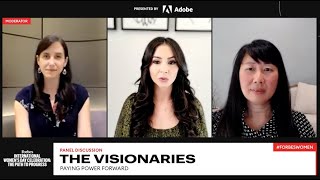
The Visionaries: How Venture Capitalist Deena Shakir and Adobe Exec Hannah Elsakr Are Driving Change


Iraqi-American Deena Shakir "From Baghdad to Boston: Dropping the Global H-Bomb"