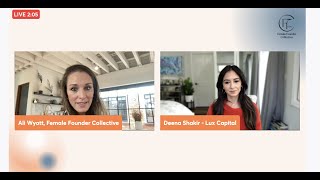
VC For Underdogs | Deena Shakir, Partner, Lux Capital
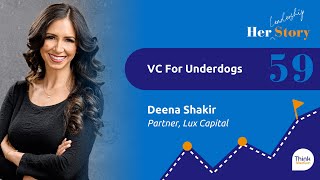
In this episode of the Her Story series, host Sanjala interviews Deena Shakir, a partner at Lux Capital, about her unconventional journey from an immigrant family of physicians to a venture capitalist focused on health‑tech. Deena recounts growing up in the Bay Area, her early interest in medicine, a pivot to anthropology and journalism, and a stint in the Obama administration’s Global Engagement Initiative. She then describes the challenging transition to Google.org, where she worked on socially‑impactful products such as Google Fiber, Loon, Waymo, and Verily, and how that experience sparked her move into early‑stage health‑tech investing. Deena explains that there is no formal training for venture capital; instead, she leverages partnership‑building skills, personal experience, and a willingness to learn. She discusses her commitment to women’s health, the importance of bringing personal narratives into investing, and the systemic racism and gender gaps in healthcare and VC. Deena reflects on being one of the few women in senior VC roles, the cultural adjustments she made at Google, and her advocacy for programs like Girls Who Code. She shares candid advice on negotiation, the need for supportive networks, and the challenges of balancing a demanding career with motherhood. Finally, she talks about her legacy aspirations—accelerating innovation in women’s health and continuing to invest in under‑represented founders—while acknowledging she is still early in her VC journey.
Chapters
Women make up 70% of the healthcare workforce, but only 20% of its leadership. On Her Story, we'll explore the careers of bold and influential women from Silicon Valley to Capitol Hill and learn how they've overcome the odds. This is Her Story, a program where we explore what's beyond the glass ceiling. Well, it's my pleasure to welcome Deena Shakir, a partner at Lux Capital, to Her Story today. Deena, thanks so much for spending some time with us.
Thanks for having me, Sangela.
So you have built a reputation as an accomplished venture capitalist, and we're really excited to dig into your career. But curious as to, as you think about your foray into healthcare leadership, do you consider it to be accidental or intentional?
Well, it definitely depends how you look at it. As a daughter of immigrants who comes from a family of physicians, there was a period in my life where I thought that I would go down that path. I think a lot of us, can relate to that. In fact, I remember in writing my applications for college, I think I actually did put pre-med on there. My internship before I matriculated at Harvard was actually in medicine. My father immigrated in the '70s to the US to finish his residency in psychiatry at Stanford, which is how I ended up growing up in the Bay and not Baghdad, where my parents are from. And my grandfather was a pediatrician who did a lot of work with the World Health Organization, even based out of Iraq. So there was definitely some history of medicine, but as soon as I realized that was going to require taking organic chemistry, I, you know, I decided that I wanted to pursue a different path. And there was a period where I thought I was going to be an anthropologist. There was a period of time where I thought I was going to be a journalist. I've, you know, somehow years later ended up back in healthcare and I couldn't imagine myself anywhere else, but it definitely was a winding path.
We have that in common. I guess the only difference is that I actually struggled through organic chemistry and then realized after the fact. But at that time, I mean, did you even know what venture capitalists kind of do in healthcare? Like, that really wasn't on your radar, was it?
Not at all. I mean, I mentioned I grew up in the Bay Area. So to some extent, I was in the heart of Silicon Valley as it was emerging and being born. But at the same time, I didn't come from a family that was involved in tech. My father was a physician. My mother is a dentist. I wasn't really surrounded by any of that. And I thought my ambitions were global. For me, coming of age during 9/11, being an Iraqi American who's also Muslim, that was really a formative experience for me at that period in my life. And so when I went off to college, I thought what I wanted to do was have an impact globally and to build bridges between these different parts of my identity in my life. And I didn't necessarily see a path for doing that within tech or private capital or venture capital. I don't think I even really knew what that was at the time. And so that's what led me to study Near Eastern languages and civilizations and social studies and do my graduate work in Arab studies. I really thought that was the path I was going to take. And it was one professional experience that led to another that ultimately landed me where I am today. But it was definitely not a 10-year plan that I had. Absolutely.
So after Harvard, then, what was your first job? What did you decide to do?
So I graduated from Harvard in 2008, which was a very interesting summer, as we all remember, or at least those of us that are old enough to remember do. In fact, it was June 2008, and I actually gave the graduation speech that year for my class. And the speaker right after me was none other than Ben Bernanke, former chairman of the Fed. Very interesting time to be graduating and entering the work world, especially from an institution like Harvard where 47% of the prior year's graduates went into Wall Street or consulting. It was just sort of what you did. I had this myopic view in my head that I could do that, I could pursue that path, which most of my classmates were doing, and I could be financially independent, which was very important to me. I paid for college by myself. I was always working a number of jobs on the side. Or I could go and make the world a better place, and I could pursue nonprofit or academia or, a variety of other kind of more impact-oriented jobs. It's taken me all these years to realize that there is an area in that Venn diagram between doing well and doing good that I feel comfortable in, but I didn't quite see it at that time. So I went to grad school, again, thought I was gonna do a PhD in anthropology, went to Georgetown, but happened to be in DC during another fascinating moment in American history, a moment where President Obama was elected. And when he was inaugurated. And while I was in grad school, I was sort of pursuing one of many side hustles I've had over the years, which was actually as a journalist. In fact, I was on air very briefly. I recently rediscovered some of that decade-plus-old footage. But I thought that that was sort of vocational anthropology. What you do, Sanjala, is storytelling, speaking truth to power, highlighting underrepresented voices. And I happened to be interning with the BBC as these events were happening. And that's kind of what led actually to my government service. I was covering a speech that President Obama gave in 2009, which has since become known as the New Beginning speech or the Cairo speech. And it was really a watershed moment for me, a moment when I realized I actually didn't want to just be writing this story. I wanted to be a part of it. And I did. I made that my job. And I ended up working for the administration, specifically for the Global Engagement Initiative and the Global Entrepreneurship Summit, all of the policy that came out of that speech.
Wow, that is incredible. We would have to have a separate interview just to unpack those stories because I'm sure they're great. And I'm biased being in the DC area. So I find that very fascinating.
I still love DC. I miss it.
Oh, you'll have to let me know next time you're in town. But so fast forward a bit then. So you spent some time kind of in the DC world, but then went over to Google kind of a couple steps after that. What was that jump like?
Yeah, so, you know, a couple years in DC, I again wanted to work on something very specific. And what was actually— for those who don't remember the speech, what came out of that was this notion of a different way of doing development and diplomacy with the Muslim world that was grounded in technology and entrepreneurship. And for me, again, having grown up in Silicon Valley, having been a part of that, also having founded, co-founded an e-commerce startup in college— wasn't exactly an eBay success story, but it was still a formative experience for me— I did feel like the idea of enabling better lives and livelihoods and really sustainable economic development through entrepreneurship and tech was compelling. It was also 2009, 2010, the beginning of software eating the world, of what some now call the Fourth Industrial Revolution. Revolution, this renaissance of the internet. And I was coming back home to Silicon Valley for work because I was specifically working on public-private partnerships. So, you know, spending time with the Googles of the world and also with the VC firms. And so I was getting, getting that perspective and I felt this magnetism, I felt this energy, I felt that the center of gravity was really shifting, you know, both literally and figuratively out west to Silicon Valley. And I felt like this was the new Mecca for impact. I could see that across different spheres. I could see that tech was not just a separate sector, but a way of doing a lot of different things better, of achieving equity and impact. And I really wanted to be a part of that. But Sanjala, that was a tall order for somebody who had not only studied the least technical thing you could study at Harvard, like literally social studies and Near Eastern languages and civilizations. You can't even fit it on a line on a form, let alone— I was studying ancient Akkadian literature in my seminars, not coding or computer science. So that was not easy. And also, I had not worked in the private sector, really. So to make that shift was a tough one, because I knew I wanted to work specifically at the heart of tech in product, in product partnerships. So whole nother conversation for another time, lots of rejections, lots of hustling, lots of, you know, everything, but eventually got a really cool opportunity to join what was formerly google.org, which is a different entity than the google.org of today. But at that time in 2012, it was a really unique place in Silicon Valley that was focused on building product for social impact. It was a team of over 100 mostly engineers and product managers who built out things like Google's elections platform, what they called their civic innovation portfolio, flu trends, internet connectivity around the world, Google's energy programs, et cetera. So it was a really fun place to be. And eventually, spent the next 5 years, started off there, but moved more into the business side. Still focused on products that were socially impactful as Google.org shifted towards more of a philanthropic kind of corporate philanthropy approach, which it is today. And I got to work on things like Google Fiber and Loon. Our team helped launch Waymo and Verily. A lot of these, what are now called bets— this is all pre-Alphabet, but really were sort of these moonshot ideas. We got to be the first business person to come in whenever a team of engineers and PMs had these awesome ideas. Now, most of these products never saw the light of day or are now in the Google graveyard, but some of them graduated to independent businesses. So it was really, really fun. And that's how I landed in healthcare. And again, it was not really— I mean, it ended up shaping my career, but it wasn't the plan. There was this notion that around, I think, 2013, 2014, that google.com is sort of the digital front door for everybody. It's where we all go. To look, look up symptoms when we're not feeling well, or we have a family member we want to care for. Google had recently launched these knowledge panels, which I'm sure you've seen, where you can have quick access to information that's sort of mapping the ontology of your symptoms to your conditions. But what if we could integrate a visit with a physician? What if we could launch a telemedicine product? And so I raised my hand as somebody who knew how to work with regulated industries, given my time in government. That was really my only qualification besides the quote unquote MD of being a medical daughter. And that's about it. And I dove right in. And because I was an outsider, I did not have any shame in learning. I didn't pretend to be an expert in the field. So I spent a lot of time meeting with people that were knee-deep practitioners, clinicians, entrepreneurs, as I was trying to map out what Google's play could be here. And that is what led me to venture. The process of eventually launching this product and then sunsetting it juxtaposed with these the conversations I was having with entrepreneurs who were in some cases bootstrapped, didn't even have a name for their company, hadn't really raised capital. And I could see that their small teams were doing more and were equipped to do more than my team of hundreds at Google with unlimited resources to talent and tech. And that's what led me to venture. I, you know, one of those entrepreneurs is someone that Lux actually has funded, Aaron Bali from Carbon Health. I met him in the very early days. I wish I had the capital, let alone the mindset of an investor back then to put some money into it. But thankfully, we ended up investing years later now when I joined Lux. But that's what led me to my conviction in early-stage health tech. Joined Google Ventures and then joined Lux about 2 and a half years ago.
Wow, that is just incredible. There's so much to unpack there, but I want to go back to kind of a theme that I think is really important to highlight for our audience. You make it sound easy, and I'm sure it was really tough along the way, but you didn't, to your point, didn't train to be a venture venture capitalist, right? You didn't train to go work at big tech. You didn't have that kind of innate experience that I think a lot of us say in healthcare, which is so specialized, we have to have clinical experience to go do something clinically oriented, which is not true. And so of course, you had to learn along the way. Are there certain skills or, I guess, routines that you had to adopt to kind of prepare yourself for those different roles and organizations and ultimately subsectors?
Yeah, it's interesting because I don't think anybody can really train to be a venture capitalist. You know, maybe there is a degree in venture capital that I don't know about, but I don't think that there really is. And, you know, I think there are so many different paths to being a VC. In fact, you know, if I look at my classmates, one of my best friends who was, you know, the same year as me at Harvard, who is also a partner at a multibillion-dollar fund now, had a very different path where, you know, she went to Wall Street and worked, you know, more on the finance side and then started off in a junior role at a VC firm and, you know, made her way to to partner through that. And she's very successful and one of the smartest people I know. And that model works. But for me, it was very different. And for some of my partners at Lux, they have PhD in stem cell biology and just all sorts of different backgrounds. So I don't think there is an archetype or a template for how to be a VC. But there definitely are skills and networks and, you know, I think inclinations that can make you more successful at it. And for me, you know, everybody has their superpower or their thing, but for me, it's easy to look back. I don't know if I saw it back then, but looking back, it was always about partnerships. It was always about building bridges, like literally as early as, you know, elementary school, just the very, you know, identity of being, you know, fundamentally American, playing T-ball and, you know, growing up in, you know, in Los Altos, and then also going to the mosque and fasting for Ramadan. And these things were not at odds with each other. But I did find myself often kind of explaining and communicating across these different platforms. At the State Department, I did the same thing. I connected big tech to big government. And that required a multitude of different stakeholders, in some cases early-stage startups, in some cases these large financial institutions, in some cases these tech entrepreneurs. So that's always been a challenge. What I've done. And as a VC, that's a lot of what you do. There's a hell of a lot of e-intros in this job. There's a lot of just thinking ahead and being able to help a company at a certain stage of growth think big and think about who they can partner with to accelerate things. That's what I did at Google and at GV as well.
Well, so to that point, I mean, I think inherent in VC, but also something that you talk a lot about is seeing around corners, right? And you're kind of identifying trends, but you're betting early on on companies and founders in a way that you're kind of going against the norm if I can be so bold to say that. And you've been pretty passionate about women's health, for example, as one vertical that you were kind of early on to invest in. Tell us about kind of what advice you'd have for others who are trying to have influence either in the industry or an organization, but you're kind of advocating for a position that maybe is not the common view of thinking, right?
Yeah. That's one of the reasons why I decided to join Lux because a lot of A lot of venture firms will say that they pride themselves on being contrarians and so on, but that is literally in the DNA of our— I guess not literally, but very much figuratively in the DNA of our fund from the earliest days. And I think it's exemplified by the type of partners that we have around the table now, myself included. One thing I think that's really specifically relevant to health tech ever more so these days is the idea of really bringing personal experience to building and to investing. And I'm sort of unapologetic about that. And that doesn't necessarily mean I invest in women's health because I'm a woman. No, but I have spoken publicly about my, you know, my experiences with my pregnancies, with my, you know, very dramatic and life-threatening labor and deliveries of my two children, with some of the experiences I've had and my husband has had, you know, as parents with other health scares and just being exposed despite being in one of the most privileged places in in the world to how broken our system is there really gave me conviction and the opportunity to invest in innovations there. So I do think that's one piece of advice is embracing personal experience and bringing that. And we need that more than ever because as you know, and hopefully most of the listeners here know, there is still systemic racism in healthcare. And although that has been at least discussed, I would say in the last year, perhaps more than it has before. And there was even a series in JAMA dedicated to looking at that from a research from an innovation perspective, there's still not enough representation among researchers, among innovators, and among investors. And I think the more we can start to address that over time, the more that will be reflected in the outcomes and opportunities in the field.
That's well said. I mean, to that point of representation, it's no secret that in general, women are underrepresented in leaderships, and then dig into that healthcare leadership, and then dig into that further, specifically into the VC space. World. How has the fact that you're, you're really one of the few women at the top having this influence influenced your approach to leadership and kind of the impact that you can bring to the industry and kind of make it easier for other women to meet you there as well?
I'm used to being the only, you know, I have 3 brothers. So I grew up in a family of boys, you know, I went to work for the US government, although I will say, I think of all of the different paths that I've had that I felt least gendered there, because there was actually a little bit more representation on the policy side. But Man, when I joined Google, that was a really kind of harsh awakening to really feeling like my gender identity actually meant something. I really had never felt that before, despite all the different worlds that I had been in where I had been the only one. And I found myself actually after the first 6 or 7 months in tech putting my hair up, not wearing jewelry, not wearing makeup. Obviously, none of the things that I do now, but because because I've come to embrace my full self. But I noticed that without being intentional about it. And so I felt quite gendered there. And at the time, I think it was around 2012, 2013, Google was one of the first companies, if not the very first, to release their diversity numbers, specifically representation among computer scientists and engineers. And I was, at the time, a part of google.org, where we took on that gender gap and decided to do something about it. And so that was one way where I started to really kind of understand how you can address these inequities. And it's not as simple as, you know, certainly not a pipeline issue. Like, let's be clear about that. But a lot of these biases and these self-perceptions start as early as 18 months of age. And so there's, you know, there are many different points when it comes to engineering in particular, and certainly when it comes to entrepreneurship and venture capital throughout the professional and personal life cycle of a woman or a person of color where, you know, they might might drop out of, you know, of a path. And so that was a really formative experience for me. And, you know, we funded programs like Girls Who Code and Black Girls Code and Technovation, the Geena Davis Institute, which, you know, studies the representation of women and underrepresented individuals in media, which is really important and, you know, has a huge effect on kind of perceptions. It's one of the reasons I decided to write a children's book, you know, as well, because I think so much of this starts really at the earliest days. And when it comes to venture, there's still a ton of work to be done. But I think the tides are changing. Most of the people that I am closest to, you know, outside of, you know, my kind of immediate work circles, just in terms of the community of VCs, happen to be women. A lot of them also happen to be moms. Many of them come from very different backgrounds, not just in terms of, you know, their ethnicity or race or gender, but, you know, professionally as well. And that's becoming more of the norm. So that will change. And there is documented evidence that when that changes at the investor level, that changes at the entrepreneurship level in terms of what gets funded. And that will continue to change over time.
Well said. I mean, you're validating exactly one of the reasons why we wanted to create this program, right? Is how do we normalize and profile all these different unique paths and stories of other accomplished women so that it's not this big feat. It's, you can kind of learn from others and encourage more to follow similar paths. So I'm optimistic like you are about what the future holds on that front. Now, You know, you mentioned, you know, you yourself are a mom, and I'm going to be cautious about how I phrase this question because, you know, usually men would not be asked this question, but in the spirit of giving advice to others, I think it's still warranted. What advice do you have for other women who are juggling demanding careers and family?
I honestly am very candid about this. Like, I don't have the answers. I'm struggling all the time. I'm exhausted. And I have an incredibly supportive family and partner and the financial stability to be able to have good childcare. So yes, I agree with you. It is frustrating that it's often not asked to fathers how they juggle that, which certainly is testament to a lot of the biases that still exist in this industry. But at the same time, there are things that, you know, that we have to go through throughout our— the pinnacle of our careers, which also happens to be if we decide to have children biologically at prime reproductive years and dealing with everything from having to pump and ship milk when you're trying to negotiate term sheets and fly around the country. And it's hard. So I don't have the answers. I do feel very lucky that I have an amazing support system, but I'm still drowning and exhausted. And I think the more that we're open about that, hopefully the more things will change. And if I'm drowning and exhausted, imagine, you know, with this, with the great resignation and especially with the challenges of the pandemic across the board, you know, how, how many others are struggling who don't have that support system. Absolutely. One of the things I want to invest in.
Yeah. Underlying in what you said is this idea of having, you know, a village of support on the family side, but then also on the professional side and along any of our journeys, male or female, we have a lot of mentors and we get advice along the way. Is there something that you believed early on in your career, whether it was told to you by a mentor or colleague or just otherwise believed, that you no longer believe?
I mean, I think most of the folks that I consider to be mentors have given me really sage advice over the years. I do remember somebody who I still adore, but who at the time when I was joining Google advised me not to negotiate. To negotiate my offer. And I will forever regret that. And it's one of the reasons why I help so many others at earlier stages in their careers kind of advise them through their own negotiations because it's obvious now. It wasn't obvious to me at the time that starting off at a lower point disadvantages you and compounds over time for the rest of your career. But I felt so lucky, especially coming with a government salary going into tech with the offer that I had, I didn't even try. I didn't even push back, not on the base, not on the bonus, not on the level, not on the stock, none of it. And so that was advice that was well-intentioned from the mentor who was, you know, I think trying to guide me in a direction that they felt was best, but it's not the advice I would give to anyone else.
Right. So I guess building on that, coming full circle to where we started, thinking back to young Deena, what advice would you give your younger yourself?
I mean, I'm not young anymore.
Younger Deena, I should clear.
What advice would I give myself? So I would give myself the advice to take risk earlier. And, you know, if I go back even before, you know, even younger than that, I think so many of us start to put ourselves in a box when we're younger. If we find ourselves good at writing or public speaking, or, you know, enjoying poetry that we're that we're sort of a soft skills kind of humanities person. But I was good at math and I really liked science. And, you know, I really just unintentionally and subconsciously found myself gravitating more towards the latter because that was what I think I enjoyed more, I was better at. And, you know, you realize over time and over the course of your career that, you know, it's not either or and and having a combination of skills is really important. And I invest in deeply technical fields now. And for the last decade plus, I've been surrounded by the most technical and talented engineers and builders. And I've learned over time to get comfortable and fluent there. But I wish I had allowed myself to embrace that more earlier.
Deena, this has been just such a treat. Confession, I am like your biggest fangirl. So I am so glad that we get to share your story with everyone. But I think we'll close with— with one final question. So, you know, you have accomplished so much already, and I no doubt you're going to continue to write more chapters of your book, and you've already written your children's book, so there's more books coming. But as you think about kind of the legacy that you want to leave behind in healthcare, what would be the title of your autobiography?
Ooh. Well, I mean, I really think I'm just getting started, especially when it comes to venture. I mean, it takes a long time to know if you're any good at this. It's just the nature of early-stage investing. So I don't— maybe this is my own imposter syndrome, but I don't believe I've made it or that I'm a successful VC or anything like that yet. I think I am just getting started. But I'm very proud of taking early bets in companies as well as helping to accelerate growth financing of companies in women's health in particular. I feel like there has been a tide shift, and I think that's still just the beginning. There's so much more. More room for innovation and for investment in this area, whether it's on the R&D side, you know, where just 4% of resources are put towards specifically women's health clinical R&D, to the care delivery side, to, you know, everything in between. So if that's a legacy that I can contribute to in my own small way, I'd be very proud of that.
Well, I think you're already paving the way forward on that, so thank you for all that you do, and thanks for joining us today.
Thank you, Sanjela.
More from Deena
The Visionaries: How Venture Capitalist Deena Shakir and Adobe Exec Hannah Elsakr Are Driving Change
Bringing Diversity and Equity to VC Capital Funding: Why Deena Shakir is Betting On The Underdog


Iraqi-American Deena Shakir "From Baghdad to Boston: Dropping the Global H-Bomb"