DJS Client Presentation
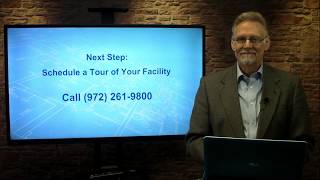
Glen Springfield presents a five-part system for professional cleaning: zero-deviation processes, high-productivity tools, trained personnel, quality controls, and removing staff who resist the system. He walks through implementation steps including a 70-video training program, service verification forms, and weekly surveys to monitor compliance.
Questions this video answers
Well over 40 years.
70 video training program (team leaders must complete and pass a competency test).
Three options: great, good, or bad (one-question email survey each week).
Spreadsheet uses time-and-motion studies compiled by the International Sanitation Supply Association (ISSA).
Zero-deviation cleaning system; high-productivity tools and technology; trained cleaning personnel; quality-control tools and systems; intolerance of system‑resistant personnel.
Chapters
Hi. A clean, well maintained facility is like good hygiene for a business. And that's equally true for schools, churches and medical clinics. Now, we know from experience that while good hygiene may go unnoticed, bad hygiene leaves a lasting impression. And we've all experienced neglected maintenance that made us feel uncomfortable and made us question the competence and the management ability of the business we were visiting.
You see, good management understands the value of good cleaning. And that's why janitorial decision makers have the job have the responsibility of achieving and maintaining the cleaning goals of their company. Now, the problem is bad cleaning. We know that bad cleaning is a sign of neglect. Dirty offices, dusty offices, dirty restrooms. They take away confidence and eventually they cause a loss of customers.
So cleaning, good or bad, determines where we decide to do business as well as where we decide to work. Now, if you just think of your last road trip, there were gas stations along the highway that had clean restrooms and some that had dirty restrooms and dirty stores. Now, if you've never been to Buc EE's, they have amazing restrooms. They also have a very large, well maintained store with everything in the world to buy. They are the top shelf of highway gas stations. And their management understands the value of good cleaning. And because of that, their business flourishes. Because nobody wants to have to use a dirty restroom. And when that dirty restroom is where you work, it's even worse.
With that said, trying to deal with an unresponsive janitorial service that's making your business look bad, it can be very frustrating, especially when it's affecting the health and the productivity of your staff. After all, everyone deserves a clean and healthy workplace. And it's hard to demand grade A work in a grade C or grade D environment. And nobody wants to listen to legitimate cleaning complaints from people who deserve better or be embarrassed if an unexpected guest comes by when our office isn't looking its best.
Now, that's why we use a program called the Ultimate Janitorial Success System. Now, my name is Glenn Springfield, and I have been in the janitorial business for well over 40 years. And in that time, I have seen what works. The things that make a janitorial program successful. And I've seen the things that make janitorial programs fail. Now, there's five reasons that janitorial programs fail. And see if you can relate to any of these. Number one is the cleaning processes that are not defined or enforced. Number two is cheap cleaning tools and products. Number three, untrained cleaning personnel. Number four, no quality control program. No tools, no Strategies in place to maintain quality. And number five, system resistant cleaning personnel who want to do things their own way rather than following specific cleaning procedures. Now, there's five causes for failure. Well, there are also five elements of a managed janitorial program. The first one is a zero deviation cleaning system that is specified in the scope of work. Now, we've all eaten at fast food restaurants and we know that the products that they produce, even though they may not be gourmet, they are the most consistent products across, across locations, across states, countries. It's amazing how consistent these products are. And it's because everything within the franchise is completely systemized. Now, here is copy one of the pages in our scope of work. And what you'll notice that's unusual is that in our scope of work, we not only describe what we're going to do, we describe the how we're going to do it. So all the processes are put into the scope of work.
The second element is high productivity tools and technology also specified in the scope of work. So you can see here that we have all the tools, all the products, everything that we use are specified in the scope of work along with the actual process used to do the cleaning. Now, in the janitorial industry, it's kind of a backwards industry in that we have a lot of people cleaning with the same tools, strategies and processes that they did 30 years ago. But believe it or not, there's been a lot of technological innovations that have been introduced into the market that make cleaning a lot easier, a lot faster, a lot more thorough.
So here's five pages. These five pages will be in your information folder. But the five pages describe the unconventional tools that our cleaning teams carry with them at all times. And along with the tools, it has a list of advantages that each tool brings so you can see how it cleans better and faster and speeds up the process, makes it easier for the cleaning teams to do a good job.
So the third element to a managed janitorial program is trained cleaning personnel who will follow the cleaning plan without deviation. Now, the key here is follow the cleaning plan without deviation. Now, cleaning personnel can't do that unless they're properly trained. And so we have a 70 video training program that our team leaders have to complete. Then they have to pass a competency test to make sure that they understand all the whys behind the watts and the hows.
The fourth element is quality control tools and systems. And as you may have experienced, many, many janitorial companies have almost no quality control program in place. So the first Tool that we use is called the service verification form. And this is what it looks like. One of these documents is filled out every time that we service a facility. So this is the front of the page, and this is the back of the page. This is for dry areas, and this is for wet areas. And what our team leader does is he puts the date and the time we come into the facility, the time we leave the facility, the number of people that are on the crew, and then they check off all the work that was done in the various areas where the work was completed. Well, at the end of the cleaning, at the end of the service, the team leader will fill us out and he will also sign his name. Now, when the team leader signs his name, he's taken ownership of the work that was done, taking accountability. It's a big element in creating ownership for the team leaders. And then this document is left at the facility so that it can be checked. If one of our clients is curious about what time were they here, how long were they here, what got done, it's all there for them to see. So we have complete transparency for the services we provide.
Number two is we send a one question survey email every week. Now, what this says is, how was your service last week? And then there's just three options. You just click a button so it's either great, good or bad. If you click great, nothing happens. If you click good, then you get an email back that says, how could we be better? Because we want all of our clients to have great service. If you click bad, then we're immediately going to get on the phone and give you a call, find out what's going on, send somebody out to do a facility inspection. And then the third tool we use is periodic facility inspections. So even if you're delighted with the service, cleaning crew is doing great. Periodically, a client care specialist will come out and they're going to do a punch list on your building and they're going to be looking for things, detail work that you may not have noticed. Now, it's important because first of all, we want our cleaning personnel to know that we're check in. We're not just trusting.
Service verification forms only. We want to get an eyeball on it. But second, cleaning crews, even if they are very dedicated and trying to do their best, they can get dirt blind. And so we want to go pick up the details and give them a punch list of things to work on, even if everything's great.
And the fifth element of a managed gentle program is intolerance of System resistant personnel. Now, what I'm talking about is if we've given somebody the processes, the cleaning processes, we've given them high tech tools to use, we've given them training so that they know and understand how and why everything works the way it does, and then we've given them regular feedback, then if they're still not system compliant, then they're probably just not right for this line of work. And so system resistant personnel have to be replaced. They have to be taken out of the program or the program will fail.
So there are four simple steps to a managed janitorial program. This is how you bring a managed program into your building that will get rid of bad cleaning forever. Number one, clearly define your cleaning and company image goals. Now, we do this by just taking a tour of the facility and you show us what you like, what you don't like, what you wish it looked like, and then we get an idea of what your goals and objectives are.
Number two, we construct your cleaning plan, which is putting together all the processes, the tools and the products, and the frequencies that it will take to achieve your cleaning goals. This next, we determine how many cleaning hours will be required to implement your plan. And we're going to just take a wild guess. We use a spreadsheet that uses time and motion studies that were compiled by the International Sanitation Supply Association. So we run everything through the spreadsheet. We give each element a difficulty factor because a building that's got a whole lot of glass and chrome is going to take longer to clean than a building that has regular office furniture and regular low pile office carpet. If there's a lot of mopping, a lot of traffic, that's going to take longer. And so we hit difficulty factors to kind of nail it down so that easy to clean places are not paying too much and difficult to clean places are not paying too little.
Number four is after we get the spreadsheet done, then we show it to you, of course, and then we tweak your cleaning plan to balance your budget with your cleaning goals. So if you look at this and you look at the hours per day cleaning, you look at the hours per month cleaning and the dollars per month, everything looks good, then we're finished. On the other hand, if we've exceeded your budget, then we got to figure out, okay, what elements can we knock off to get the cleaning hours down to meet your particular budget and still achieve your goals. So our guarantee of our managed genitorial program is that this is what we promise we'll do, is we'll deploy your janitorial cleaning program with the defined cleaning system, the tools, products and trained cleaning personnel.
We'll monitor service verification forms and we'll send one question survey emails to make sure your janitorial program is on track. We'll perform periodic inspections to resolve challenges and verify compliance to the janitorial program. Zero deviation is our goal. We'll be available to quickly respond to customer service questions and requests.
We'll replace system resistant personnel with system compliant personnel to your complete satisfaction and we'll charge you only for work that was completed to your satisfaction. Now your managed Genitrol program will give you here's your takeaways is you'll have a grateful staff, managers and customers giving you credit for the win. You'll have a healthier, more productive workplace that's attractive to customers and staff and you'll have good cleaning that positively impacts people and your business. Allowing your business to serve better helps you avoid the frustration of dealing with an unresponsive janitorial service. Avoid the lost time micromanaging a bad cleaning program or having to get your staff to clean helps you avoid lost business due to poor customer experience.
And helps you avoid a poor work environment that may contribute to illness, miswork or negatively impacting recruiting and staffing retention. And it helps you avoid the embarrassment having to listen to legitimate cleaning complaints from people who deserve better. Now inside your information package we're going to include a copy of our quality control policy which is how we interact with our cleaning personnel to correct issues. And so you can see, you know, how just we make it transparent to you. We make it transparent to our cleaning personnel. You know, this is about how far we can be pushed before you're going to lose your job. There's also a certificate of liability insurance. There's a list of references so that you can see how well our program is working for other clients.
So the question here is how would better cleaning impact your business, your school, your church or your clinic? Would better cleaning make any difference? Would it make things better? If so, then do you think these five core strategies are important for janitorial program success? Zero Deviation cleaning systems High productivity tools and technology Trained cleaning personnel Quality control tools and systems like our one Question Survey and our Service Verification Checklist Intolerance of System Resistant Personnel.
If you think all five of those are actually important to the success of a janitorial program, then do you think our four step process is a good place to start? Number one, clearly define your cleaning and company image goals. Number two, construct your cleaning plan. 3. Determine cleaning hours required to implement your plan. Number four tweak your cleaning plan to balance your budget with your cleaning goals. If you think that's a good place to start, then the next step is to call 972-261-9800 to schedule a tour of your facility so that we can begin with step one. Our goal is to learn about you, your company, make sure that you understand what a managed program janitorial program will do for you, and then implement that so that bad cleaning is gone from your facility forever and ever. Give us a call. We look forward to hearing from you.
More from Glen



Restroom Disinfecting, What You Should Know - https://DeltaJanitorial.com | (972) 261-9800

Did You Know That A.D.H.D. Has Been Linked To Cleaning Products? - https://DeltaJanitorial.com

Why Allergies, Asthma and Cancer Are On The Rise | https://DeltaJanitorial.com | (972) 261-9800

Breast Cancer Linked to Cleaning Products | https://DeltaJanitorial.com | (972) 261-9800

Is Your Janitorial Service Dangerous to Your Health? | https://www.DeltaJanitorial.com |

Do you use "Green Cleaning" in your office? This is why you should | https://www.DeltaJanitorial.com

Systemized Cleaning is so Important to Client Satisfaction | https://DeltaJanitorial.com