"Airplane" Movie Creators - Industry Secrets and Stories—SPECIAL GUEST
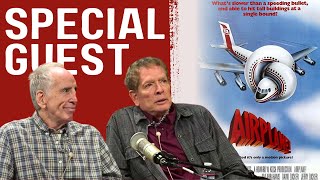
In this YouTube interview hosted by Dennis Prager, the three creators of the classic comedy Airplane!—David Zucker, Jerry Zucker, and Jim Abrahams—discuss the film’s origins, production, and lasting cultural impact while promoting their new illustrated memoir, Surely You Can’t Be Serious: The True Story of Airplane! The conversation weaves personal anecdotes (their Milwaukee upbringing, family business ties, and early theater work), the creative spark from the 1957 disaster film Zero Hour, and the five‑year odyssey to get the script financed and green‑lit at Paramount under Michael Eisner. They recount casting choices, the decision to shoot in color on a jet rather than black‑and‑white on a propeller plane, the role of dailies in convincing studio executives, and the film’s box‑office success (approximately $160 million worldwide). The hosts also explore critical reception (including Pauline Kael’s negative review), the film’s influence on later comedy, and how its jokes—especially the “Don’t call me Shirley” line—still resonate with younger audiences on platforms like YouTube. Throughout, Prager frames the discussion as a light‑hearted antidote to world‑news darkness, emphasizing the power of humor to combat “bad guys.” The interview ends with reflections on why making people laugh is harder than making them cry, and gratitude for the luck and collaborative spirit that birthed the movie.
Chapters
You have to do what you can do to fight what is bad, and you also have to laugh. Otherwise, the bad guys win. That's a very big lesson in my life. If I despair, the bad guys win. I'm a big believer in that. So, uh, I really— I couldn't think of a better detour from sadness than having people I adore on with the 50th anniversary of one of the truly iconic American films, Airplane! And I have all three. Are you the three writers? Are you— is that, is that the title?
Writers and directors.
And directors. That's, that's fascinating. That's a lot. That's a lot.
The—
so the, the You know, you three— and I'll say who these three are in a moment— you three are as iconic as your movie. I just, just wanted to say that. The three are the Zucker brothers, David and Jerry Zucker, and Jim Abrams. The three of them— you guys got together originally in Milwaukee. Was that true? Well, all of you are from Milwaukee.
We were all from Milwaukee.
And by—
you want to go? Go, go.
Jerry and I were brothers. And we were at the time.
We outgrew that.
Nothing lasts forever. So, and we got together with Jim Abrams, and the Abrams family and the Zucker family were really close friends. Our fathers were business partners in Abrahams and Zucker Real Estate.
No kidding.
Our mothers were close. Our sisters were college roommates. And so the Abrams family used to come over for dinner, and then Jim and Jerry and I would end up in our basement rec room playing ping pong and, and, you know, joking.
So did all three of you think of each other as funny?
Yeah.
Yes, you did. All three of you?
Yeah.
Yeah. Who's the funniest?
Jim.
I am.
No, you know, it's, uh, uh, the interesting thing is—
wait a minute, wait, I just want for the record to be known Jerry said Jim and David said he is.
Yeah, David is.
I just, just for the record, I just thought people should know that. Jim, wait, Jim didn't even answer the question.
Well, I think we know what he has to say now.
Uh-huh. By the way, so they have, they have a book out. When did it come out, guys?
October 3rd.
God, you really picked a bad week. Yeah, but, but it's, it's so, it's so worthy of all of you are having. We, we need this in life more than ever. Surely You Can't Be Serious: The True Story of Airplane, David Zucker, Jim Abrams, Jerry Zucker. And it's, uh, the beauty is it's filled with illustrations.
I mean, we wrote it with you in mind, Dennis.
Yeah, I have no doubt about it.
I'm sure you—
yeah, no, no, the pictures are helpful. That's entirely accurate. I, I—
it's important. Yeah, it's important to read on the back next to the pricing label. There's a, there's a, I don't know, in the back cover here.
Oh yeah, go on. Best if— oh, that is hilarious.
Best funny.
Best if read by, like you, best if used by food, right? Like a food. March 2035.
We're giving people a lot of time.
Yeah, so there's like Even that, even the barcode is funny. I'd say this, if the barcode is funny, people should get the book. I mean, that pretty much summarizes it. Is there, I know this is an absurd question, but I'll ask it anyway, 'cause by definition you sort of can't answer it, but I do mean it seriously. How much did you forget? It is 50 years.
That's why it was a good thing to have 3 of us, because we did forget a lot. And there were certain things that one of us would say, oh, this thing happened, don't you remember? And the other 2 would say, no, you know. And there are also times when we would have conflicting memories. But then we, you know, kind of finally said, oh, yeah, yeah, no, it did happen this way.
And it's an oral history. So actors are contributing, crew, even studio executives, and they're telling stories that we never knew before.
Oh, I see. So that, that worked out. Yeah.
And often they're hilarious stories. No idea.
If there was ever a doubt, we always went with the version that made us look better.
Yeah.
Yeah. No, no, no. Knowing David.
Yeah, right. It's quite— yeah. I wasn't quite the genius behind the whole thing, but you know, I mean, whatever you, you know, take from the book is up to you.
Whose idea was Airplane?
It was just the three of us did it.
Really?
It happened. So it wasn't, it wasn't like one day, oh, let's do Airplane. We, we, um, when we were doing the theater, uh, we used to, uh, record these late night movies because the commercials between these old late night movies were funny and we could spoof them and use them. And we're looking at all these commercials and we see this movie between them called Zero Hour. And it was basically the plot of Airplane. We actually bought the rights to it. And we said, wait a minute, this would make a great comedy.
Well, it's— Jim, Jim, go ahead.
Yeah, there's a line in Zero Hour, kind of the iconic line that says, we need to find someone back there who not only can fly this plane but who didn't have fish for dinner. We just— we got literally from the Zero Hours and put it in the airplane.
How long did it take you to write and direct and produce it?
The first version we wrote took about a year, and then we tried to get financing for it. We couldn't do it. And so, uh, John Landis, who saw the show, suggested that why don't you do a movie based on your show? So we did Kentucky Fried Movie, right? Sketches. And that turned out to be a good thing because we actually learned how to direct by watching John on the set. And then we went back, rewrote the Airplane script, and then we started to taking it around to studios. Again, turned down by everyone except for one, one guy, the president of Paramount, whose name was Michael Eisner. And he said, well, maybe this could be a good idea. And so he had us into the studio for a meeting, and we, we were at Paramount.
But that was years. That took years before we finally got to Paramount.
Yeah, it took years.
5 years. It was 5.
You had a script for 5 years?
Yes.
A script that turned into one of the most successful movies ever made, and nobody would touch it. Did they ever give a reason? They did. It's not funny, guys.
You know, you have to understand, you can see a movie that's great or terrible and you say, why did the studio do this or not do this? But it's much harder to tell at the beginning when you're just looking at a script and the cast. And of course, nobody got the idea of casting you know, casting this with straight actors and who would pretend that they didn't even know they were in a comedy. And that was a really hard thing for studios to understand, and that was our driving principle. That's why we loved— why we insisted on directing it, because we wanted that the way we were going to play it. And but it's in general There's tons of movies in Hollywood that people are surprised that did great or surprised that failed. It's not easy.
Were you confident it would succeed?
Yeah, we were.
All three of you?
Yeah, all three of us, every minute.
So were you frustrated for five years?
I was the most frustrated.
Is that true?
Yeah, and Jerry and Jim talk about it in the book.
I kept trying to hang myself or whatever, you know, because we were reading the lines. Unsuccessfully.
And Jerry and Jim were saying, well, You know, look, Jim was living on the beach and Jerry was having fun doing the theater.
But, uh, well, what did you do for an income for 5 years?
We ran the theater. We had Kentucky Fried Theater.
And was that here or Milwaukee?
That was in Los Angeles on Pico Boulevard. And we did a show called My Nose. And we called it that because— so our LA Times weekly calendar listing read, My Nose Runs Continuously.
Oh God. After 3 years, did it occur to any of you this may never be a movie?
No, not— no, we didn't. We, we thought— we just thought people didn't understand it, one thing or another, but we're gonna do it because we knew it was like, you know, we had machine guns in the Civil War.
We were—
we had—
we had the goods. We had something that was so new and different, and we believed it was going to be funny and it was going to be successful. And that's why people ask us, were you surprised when it was a hit? Well, we weren't because we kept telling— trying to convince people this is going to be a big hit. What was surprising—
all right, tell us in a moment. I want to tell everybody the book is up at DennisPrager.com. We're taking a break from the world news. Surely You Can't Be Serious is the name of the book about Airplane! They say Jerry Zucker, nothing happens.
I just want I don't— I'm not so sure about that.
Oh, that's a good point.
After this book, then maybe people will sit up and listen.
Yeah. Dial PAL 250, say Dennis Prager and save a lot on your phone bill. I decided that we need a break from the darkness of the world, and I can't think of a better one. I know the Zucker brothers many years. I adore them. And it's— it's a— It's really a joy to have you. I don't know Jim as well. Jim Abrams, Jerry Zucker, David Zucker, they both wrote and directed the film. It took them 5 years. So when I say the film, so everyone of your generation, my generation knows Airplane! I mean, I, it's maybe the most famous film of the last 50 years. There is an argument to be made. You don't even have to assent or differ. What would you say, Alan?
It's definitely up there. I mean, Godfather, a few others.
Oh yeah, Godfather. Okay, that's fair. No, no, no, you're right. That's true. Which was hilarious. Yeah, I mean, Godfather's, you know, you're just rolling in the aisle during Godfather. But on comedy, certainly.
You know, when the studio wanted to do a sequel to Airplane! and we really didn't want to do another movie in an airplane, but then we thought What if we do Airplane! to The Godfather? We really pitched that to Paramount. And, you know, the idea is Bob and Julie come home from having, you know, landed this plane and done a great thing, and their family is like the Mafia, you know? And then we do a whole Godfather thing. Paramount loved it, wanted to do it. Francis Coppola said no.
Oh, well, I have to admit, I understand. I have some sympathy for his viewpoint.
Well, he wanted to do Godfather III. So we say in the book, you know, everyone probably would have been better off had we done Airplane II: The Godfather.
Uh-huh. Given Godfather III. I see. So the— again, it took 5 years to finally sell it. Was it an instant hit?
Yeah.
Yeah.
It isn't— it wasn't something that like over time caught on?
Well, in those days, movies didn't open at $50 million or $20 million. And it opened well and then it just kept— it kept going, you know, and ended up to be— I think it was the second highest grossing film of the year.
But domestic and international combined, it was on its first release was $160 million.
$80.
Go ahead, Jim. Oh no, Jim is breaking up, guys. I'm sorry to say.
Even Paramount— are you hearing me?
Yes.
Yeah. Okay. Even Paramount, even though they greenlit the picture and we started shooting, they weren't sure of what they had. And The first day's dailies was actually a scene, a couple scenes from the cockpit where Leslie Nielsen says, I am serious and don't call me Shirley. And really, it wasn't until they actually saw that scene filmed with a serious actor that Paramount really got what we were doing. And at first, people were reluctant to come the dailies. But as the shooting progressed, more and more people came and were told that, you know, you could barely get a seat in dailies as the filming progressed because everybody wanted to see it. So it even took them, the financiers of the movie, a while to understand exactly what we were doing.
How long? So in those days— it's so funny for us to say in those days because we were all alive in those days, but All right, in those days, what I recall, which— and I know the least of all the people in this room about movies— but the movie, a movie would come out, and I remember I grew up in Brooklyn and there was a theater near our house, and my mother would say, if you want to see this movie, you better see it now because in 2 weeks it's gone. That's the way it worked. Is that the way it worked? Including with Airplane? Did it stay in theaters?
There was— they would do an initial release and then they would do a secondary release maybe 5 months later, which didn't do— it never did a lot of money. But that was it until it came out on videocassette.
And which was how many years later?
When did that— did videocassettes come in? I can't—
well, they, they had them with Airplane, but it was a year later. But Airplane kept playing. I mean, if a movie did well, it kept playing week after week.
Oh, so that's what I'm asking.
Yeah.
Oh, so yours did.
Ours did.
We stayed because, you know, the studios had what they called 90/10 deals. Was it 90% for the theaters the first week and then it kept—
No, 90% for the studios and 10% for the studios. But I don't know if they had those deals then. I'm not sure. But then as time goes on, it shifts in the theaters.
Did anybody give you a bad review? Yeah.
Who was it? Pauline Kael gave us a—
was that The New Yorker?
Yeah. And said there's not a comedian in the bunch in the whole movie.
And that is precious. And in fact, I'm sure she regrets writing that.
You know, we're big fans of Woody Allen, and I actually had the privilege of meeting him in New York back in the mid-'80s. And I ran into him at a Knicks game. And so I kind of gushed about how we loved his movies and, you know, he was our idol.
He—
all he wanted to talk about was Airplane! And he said that the first time he saw it, he saw he was sitting next to Pauline Kael and she hated it. And Woody Allen's going, no, no, don't you see?
This is brilliant.
This is great. It's funny. So— and she just said, no, I don't get it. What is this, a bunch of puns?
That is— so it's funny, I— talking about Woody Allen and not getting it, I saw one of his great classic early movies. I was touring New Zealand in my, in my 20s, so I went to a new Woody Allen movie, and I realized after about 20 minutes I was the only person in the theater laughing. I was so self-conscious.
Bananas?
It might have been bananas. And New Zealand— this was not New Zealand humor. Yeah, but Airplane apparently was international.
Well, it did cross those lines because everyone worldwide shared the references of those old movies and airliner-in-trouble movies. So they got it.
Well, to this day, people will say to me as a joke, don't call me Shirley. That is part of the lexicon of the English language.
Yeah. And David Letterman says in the book, he says he's driving in New York with his son and, and, and his son says, Dad, move over a lane. And Letterman said to his son, okay, I'll move over, but don't call me Elaine.
We'll be back in a moment. The book on Airplane, Surely You Can't Be Serious, is up at DennisPrager.com. Very pleased that these guys just signed a copy to me. Surely You Can't Be Serious: The True Story of Airplane. David Zucker, Jim Abrams, and Jerry Zucker, the Zucker brothers and Jim Abrams. Okay, so everybody who has seen the movie has a favorite scene. Or 2 favorite or 3 favorite, but favorite. And it's inevitable. So mine might be when— what was it? Was it the one of the women passengers was a bit hysterical?
Goes hysterical.
Goes hysterical because there's airplane— what is the turbulence? Right. So passengers line up to smack her. Now to say that that is politically incorrect is to give new meaning to the word politically incorrect. So how did you come up with that idea? They told me to ask you, Jim.
Well, it was largely based on many experiences I had myself on airplanes.
No, that's not Not true, not true, right?
The, uh, there was actually— we patterned, as I think we've played, a lot of the movie from a 1957 movie called Zero Hour. And there was a scene in Zero Hour where a woman goes hysterical like that and they actually push her a little bit. And so we wrote that scene into Airplane! but just enhanced it some.
Yeah, it does look enhanced.
So in Zero Hour, there's—
they—
a couple— just, I think, the one passenger comes and shakes her and says, you know, calm down, it's okay. But we had 3 people shake her and saying— and then the lady who played this hysterical woman suggested Why don't you have them slap me? And so Jerry and Jim and I said, all right.
I love her. I love that.
She came up with that.
That was a great— that did it.
So the first two slapped her and went on. And Leslie Nielsen, when he slaps her and then when he's tapped on the shoulder to say, Doctor, you're wanted up front, he slaps her again before he leaves. And I don't know who— if Leslie came up with that.
It was Leslie. That was actually Mel Brooks's favorite joke in the movie, the second slap.
Why didn't you put that in the book? Yeah, why didn't you put it in the book? Volume 2, the 50th anniversary of the book, you'll do that.
Yeah, I thought it would be socially inappropriate.
One of the few things that was improvised in the movie was when we saw how well that worked, we thought, well, wouldn't it be fun to extend the line of people who are waiting to slap the woman? And so we said to the prop guy, do you have any props that these people could— and he ran out to the prop truck and he got a whip and a bat and a gun. And we extended the line of people who were waiting to hit her.
That's what I remember. So that's it. Do you— so I'm so curious, do you remember that actress?
Yeah.
Yeah, Lee Terry.
Lee Terry.
Really?
No, no, no.
Lee Bryant.
Lee Bryant.
Lee Bryant.
And she— I think she actually did the commercial on TV about Jim never has a second cup of my coffee.
She was—
and we spoofed that, you know, in Airplane!
Did you get friendly with any of the actors?
How do you mean, Dennis? I mean, that certainly in those days you could get away with that kind of thing.
And Jerry usually did.
You're serious? That's an issue today? No, I'm not being cute. You mean because— why is it a form of harassment when you do?
Well, no, in general, the whole MeToo movement, and they're very careful now, even in a sex scene, they have to have someone— what do they call it? There's some name for someone who has to be on the set and—
Breast wrangler.
Who supervises or whatever. It's just people are more, are much more sensitive to touching. You know, and so yeah, it has. I don't think it's made a huge difference in making a film. It's not like everybody has to— I mean, Hollywood tends to be a very huggy, you know, physical group.
I would think though, did they enjoy making the film? The actors loved it.
Yeah, everybody had a good time.
Yeah.
Yeah. So, Jim, I have a question. This is really— it's almost gnawing at me. Humor is very hard— or let me put it in better English— it is very hard for humor to transcend generations. So when we come back, I want to know if you guys know how young people react to Airplane! Back in a moment. The book is up at DennisPrager.com. I decided we'll leave the darkness of the Middle East and frankly much of the world aside and talk about something that can give you a tremendous amount of joy through humor. I had the question right before, how does the younger generation view it? Because it's so hard for humor to transcend generations. And so let's deal with that for a moment. Any thoughts on that? Are young people— and I don't even expect them to do it, I just don't know what the answer is. Jim, do you know?
Well, I confess that on those days, on YouTube today, you can see a bunch of people watching Airplane! for the first time and reacting. And I confess that On a day like when I'm not feeling that good about myself, I'll tune in some of those channels and watch. And the amazing thing is that the movie holds up as well today as it did 50 or 43 years ago when it was released. And many of the same jokes— people, it's kind of interesting, they'll say, well, wait a minute, were you really allowed to smoke on airplanes back then?
Oh God, that's right. Oh my God.
The joke of the smoking ticket, and people laugh as hard today as they did back then. So it's kind of— and these people weren't alive when we made the movie, and yet the jokes seem to hold up as well as they did all those decades ago.
Jerry and David, you, you agree with that?
Yeah, the, the, uh, those open luggage compartments that I see in airplanes, did they really— were they really just open then?
We, we Originally—
Oh, that's funny. I didn't realize that.
Oh, there's all kinds of them on people's heads. We actually originally wrote the movie to be shot in black and white on a propeller plane because that was what was in our mind. Zero Hour and all those old flying movies. And thank goodness Michael Eisner at Paramount said, no, if you want to do it here, it's got to be in color on a jet plane because he wanted it to be also—
he was right.
He was absolutely right. No, no, we, and we've thanked him, say that in the book many times, and in the, and in the book. And, and, but we did get a little bit of, of revenge by putting this— this— if you listen to the, to the film, the sound of the engines are propeller engines, not jet engines.
Interesting.
Yeah. Which gives it— one of the reasons we didn't really do it for any kind of a tweak We really did it because that sound was just more dramatic. It just felt better to us. And so we did it. And some people notice, a lot of people don't.
What was the— okay, go ahead, Jim. Yeah.
Yeah, I think one of the reasons that it's held up so well is that we were just doing parody. In other words, we were doing stuff that enabled people to laugh at themselves. And that thought of laughing at yourself is as valuable today as it was back then, as it's ever been. And so, if you look at most of the jokes, it's like, don't call me Shirley. Oh, gosh, I took that line seriously. Shirley, you must be kidding or something. I used to take that seriously. And they point out that that's not worth taking seriously. And I think many of the jokes in the movie are that simple and yet that profound because they get you to laugh at yourself.
So, "Don't call me Shirley" is based on— I never remembered the line before it. "Shirley, you must be kidding." "Shirley, you must be kidding." "Shirley, you can't be serious." "Shirley, you can't be serious.
Don't call me Shirley." And someone actually said that line, "Shirley, you can't be serious," in one of the old movies. We used to watch old movies, flying movies and others too, and we'd be watching this tape and all of a sudden would say, "Stop!" You know, "How about putting in this punchline or this visual?" And it really was, you know, just the idea of doing like a movie just the way you see it, only then putting in our punchline or our gag.
The old movies always gave us the setup lines or set up moments. So, uh, when the air controller in Zero Hour says— he actually says, looks like I picked the wrong week to quit smoking— and then we just put in the next three, you know, drinking, amphetamines, and finally sniffing glue at the end. And so, and it was— that was— and then there were other things.
The, uh, well, even the, you know, the kid coming up to the cockpit and Joey Have you ever seen a cockpit before? You know, been in a cockpit before? No, sir, I've never been in an airplane before. That's all from Zero Hour. And then we just, you know, added, have you ever seen a grown man naked? Yeah, etc.
Zero Hour even was— we didn't appreciate it at the time, but laid out a perfect story, 3-act story that we could follow and just hang our jokes on. We mentioned the one of the lines earlier, but the whole boy gets girl, loses girl, gets girl back is laid out in Zero Hour for us too. There's a line at the beginning of Zero Hour when the girl says, I can't live with a man I don't respect. And for many years, people thought that David wrote that line based on his relationships with any number of women. That was actually from Gerald.
That's all in the past, Gerald.
Yeah, really. And all the illegal things that—
How about saying, let me tell you, I know here, I know see, I know—
Sergeant Schultz.
I know speak. Yeah. Well, I— one of the reasons I love Airplane is that I love the humor of the absurd. That's my favorite humor, where you just take life one step beyond what is, what is normal. And that's one of the gifts that you guys had. By the way, you both went on and I don't know Jim's career as well as I know yours and happy for Jim to comment on, on his own. But I know you, you two have gone on to illustrious successes after that as well. Jerry, I had you on for Rat Race, which I consider simply hilarious.
You're much smarter than I ever even thought.
There you go. Right. That was— and that's the giveaway. Yeah, there's no—
that's—
that is— that's right.
Jim did a bunch of movies, too. He did the Hot Shots movies.
Oh, cool. So you all went on.
Yeah, we all went on.
You could have theoretically— you could have retired. Seriously. And, but you love this. You love making people laugh. Yeah. With our final segment, we ought to talk about that because why I think that's so important. The book about the movie is up at DennisPrager.com. So as I've said, we've taken a break from the darkness of the hour in the world. And that leads me to my final questions and the final segment of this really wonderful hour with Jerry Zucker, David Zucker, the Zucker brothers, and Jim Abrams, the authors, the writers, and the directors of Airplane! I keep saying 50th anniversary. It's the 50th anniversary of their coming out to Los Angeles. It's the 43rd anniversary of film, to be precise. Although, had Places Taken it when you started, it would be the 48th anniversary. I mean, just for the record.
But it wouldn't have been as good a movie.
No.
And no one would remember it.
That's interesting.
No, that's absolutely true. No, I'm—
thanks to Paramount.
Thanks to both Paramount, definitely, but also just every month or week or day, whatever we would tinker with it.
Oh good, that was a blessing.
Yeah.
So here is my big question. I believe, and, and this is— I may be 100% wrong, and that's fine. I always tell guests it's not an issue to differ with me.
I believe that wouldn't be unusual for you.
That is correct. I agree with you. But I believe the hardest thing to do is make people laugh. It is easy to make people cry. You just show a kid with cancer in a film and people cry. But to make people laugh, I have to believe that is the hardest. Is that a fair assessment?
Well, it wasn't hard for us because I think we lived it. We just kind of lived this. We, we laughed at ourselves. And so it was natural.
Yeah, it's, it's hard to, it's hard to say, but I would, I would think so. Yeah, I, what was it, Michael Douglas? Once he was arguing to have a comedy director direct some movie, and he suddenly, he screamed at this guy or something that he was talking to, and he said, okay, I scared you, now try to make me laugh. You know, and making the point that—
So that is the point.
Yeah, and I actually, I mean, I always feel it's maybe arrogant, but I think it is, it's just a different and talent and it's something that—
Ron, which you three have, but I'm just saying, Jim, go ahead.
I think, and hopefully we get this across in the book, but I think we all feel incredibly grateful for the blessings in our lives, and one of the blessings in our lives was we had this instinct about not taking things seriously. And we— and all the pieces kind of fell together, and we wound up working together and creating the theater and eventually making Airplane! But at the heart of it was this very good luck.
Well, you are gifted, and you gave your gift to the world, and I thank you. David Zucker, Jerry Zucker, Jim Abrams, congratulations. The book The Memoir of the Great Film Airplane. Surely you can't be serious. It's up at my website.
More from Dennis



Life, Legacy, and a Dangerous Mission in the Soviet Union | Sunday Fireside Chat





