Alan Dershowitz On: Israel, Censorship, & The Democrat Party
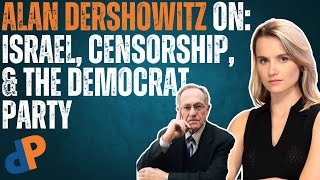
In a lengthy interview with host Solomon, Harvard Law emeritus professor Alan Dershowitz discusses his new pamphlet, The 10 Big Anti‑Israel Lies and How to Refute Them with Truth. He explains that the pamphlet is a concise, truth‑based counter‑argument to the dominant anti‑Israel narratives on college campuses, aimed at open‑minded students who can use it to challenge faculty and administrators. Dershowitz contrasts the campus climate of the 1950‑70s—where anti‑Israel views were rare—with today’s pervasive “woke” anti‑Israel sentiment, attributing the shift to the Soviet Union’s and American Communist Party’s turn against Israel in the 1960s, which cascaded through left‑wing intellectuals such as Noam Chomsky and Lawrence Tribe. He recounts personal experiences of being censored and “canceled” by Jewish institutions and liberal organizations, and laments the Democratic Party’s drift leftward, expressing regret over his 2012 vote for Obama and disavowing the party after the 2024 convention. The conversation also delves into Dershowitz’s early life—his poor high‑school performance, Yeshiva background, a staged suicide stunt, and rapid academic ascent to Harvard—along with reflections on missed career choices, advice he would give his younger self, and a whimsical wish to have tried out for the Boston Celtics. Throughout, he emphasizes the importance of free speech, the First Amendment, and the responsibility of Jewish students to defend Israel in the marketplace of ideas.
Chapters
We have on the line Professor Alan Dershowitz, who is the Felix Frankfurter Professor of Law Emeritus at Harvard Law School, and we're discussing his pamphlet. I call it a book, you call it a pamphlet, a concise summary, if you will, of the 10 big anti-Israel lies and how to refute them with truth. Welcome back, Professor Dershowitz, and please continue.
Well, thanks. You know, it's so important to respond to lies, not with censorship, but with truth, to enter the marketplace of ideas and to confidently understand that if all the facts come out, you can't be pro-Hamas, you can't be against Israel. And the goal of this little pamphlet, much like the goal of the book I wrote 20 years ago called The Case for Israel, which gave all the arguments that were being made against Israel, responded to them, that became a big bestseller on college campuses and on the New York Times bestseller list. This is a mini version of that, responding to the current 10 big lies on college campuses. Now, you know, the people who are marching, they're not gonna be influenced by this. They're so bigoted, they're so biased, it would be like sending a pro-Jewish book to Hitler Youth to prevent Jews from entering universities in Germany in the 1930s. The goal is open-minded students, students who really want to know the truth, or students who are pro-Israel, ammunition to respond to their professors. Because the big problem on campuses today are the professors and the administrators. I get so many calls from administrators, including presidents of universities, who whisper to me on the phone saying, you know, we're so supportive of what you're saying, but we can't say it out loud because, you know, it will turn people against us. And so the purpose of this book is to give the students the ability to respond to what the faculty members and administrators want. In fact, the back cover of the book is a message from me to young students saying, you are the luckiest generation of Jews. Why? You can do what the Jews couldn't do in the 1930s. They couldn't respond. They couldn't get into the marketplace of ideas. You have freedom of speech. You have the First Amendment on your side. You have the courage. Sure, you'll be graded down, you'll be attacked, you'll be booed, but you have to stand up and do what your older colleagues, faculty members, and administrators aren't doing. So the heavy burden is on young students, and this is an attempt to, to help them. Look, I'm 86 years old, so, uh, you know, I'm not going to be listened to by, uh, 19-year-olds or 20-year-olds, but at least I can help give them the ammunition that allow them to re— re— respond. I mean, people like you at your age, you went to Harvard, you know the problems, you know the situation. We need your voice. I wrote the book for you essentially.
Well, I've read it and I love it. I, that back cover that you referenced where you say that Jews are the luckiest generation because they have the freedom to fight. It was a, a very moving assertion you made. You know, Professor, you've been at Harvard for decades. I'm curious, how do you compare the students when you were a student and then when you were a young professor to the students today? And similarly, you brought up the professorship and administration. How would you compare them now to, let's say, 4 or 5 decades ago?
4 or 5 decades ago? I started my career in universities 70 years ago in 1950. '45, I went to Brooklyn College, and I fought for Israel then. Then I went to Yale Law School, and I've been at Harvard 60 years. Everything has changed. Back in the day, students were either pro-Israel or Israel was not high on their agenda, but it was rare to meet anybody who was anti-Israel. You'd occasionally meet, you know, somebody who had grown up as a red diaper baby, a communist, a hardline anarchist who would follow the attempts to, you know, delegitimate Israel. But that would be very rare. You'd never find a faculty member who was anti-Israel today. You know, take, take an example of my former colleague Lawrence Tribe, a professor at Harvard Law School, hard, hard, hard left. He used to be pro-Israel. Now he says that Israel is engaged in ethnic cleansing. Israel essentially, he claims, is engaged in genocide. He knows that to be welcomed into the woke hard left, You have to become virulently anti-Israel. So Tribe, not somebody who's ever been a man of principle, goes with the flow and now becomes anti-Israel. Of course he's going to be anti-Trump. That's expected. Of course he's going to be anti-Republican. But it's shocking that people like him and others like him have turned against Israel only because Israel is seen now as somehow a conservative cause. And if you're pro-Israel, you can't be a member of the woke aggressive AOC generation. And that's what's happening on college campuses today.
When did that change though? And why?
I can tell you exactly when it changed. It changed when the, remember the Soviet Union supported Israel when it was first established up and through the early 1960s. And when the Soviet Union turned against Israel, the American Communist Party turned against Israel. And Noam Chomsky turned against Israel and other leftists turned against Israel. So it's when the Soviet Union and the Communist Party turned against Israel that people on the hard left began to turn against Israel. Take the National Lawyers Guild. Used to be— it's the second largest bar association in the United States, and many of my students are in it. They blamed October 7th on Israel. They blame everything on Israel. They're pro-North Korea. They're, you know, they're extreme, extreme hard left. And they have branches on every major law school in the United States. And when I tried to speak at Cardozo Law School, they picketed me and attacked me personally. And we see the hard left, the anarchist used to be called communists, now they call themselves, you know, socialist democrats, but they're still, you know, totalitarians in their view. They have turned universally against Israel, and that happened when the Communist Party and the Soviet Union turned against Israel just before the '67 war.
Professor, you have been a lifelong Democrat. You cast your first vote for a Democrat in 1960, voting for John Kennedy. Knowing what you do now, especially as a fervent supporter of Israel, do you regret any of those votes?
I do. I regret my second vote for Obama. Obama sat me in the Oval Office, called me, asked me to come meet with him, looked me in the eye. He said, you know me, you know me for a long time. He was a student at Harvard Law School. I got to know him very well. He said, you know I would never lie to you. I have Israel's back. We will never allow Iran to develop nuclear weapons. He just lied to me and deceived me. And I should have voted for Romney in that election. I didn't. The other votes I don't really regret, but I cannot any longer be associated with the Democratic Party after what the Democrats did at their convention. They had all these anti-Semites speaking at the convention. Gave them a platform. People like the Reverend Sharpton, people, you know, like Bernie Sanders, a Jewish anti-Semite, people, you know, Liz Warren. People like AOC. Um, and, and, uh, I couldn't identify with that party. So I no longer call myself a member of the Democratic Party. I'm not a Republican, I'm an independent. And, uh, um, you know, I, I, I, I, I think the Democratic Party is moving to the left and if they win this election and, uh, then I think they will move even further to the left.
We only have about a minute left before we have to go to break, but you are wired into people who are wired into to the progressive establishment. By the way, as am I. Do you think they can be reached?
I think some. There are some people who in their hearts are supportive of Israel, but they don't have the courage to say it. They can be reached. My colleagues, former friends on Martha's Vineyard who used to come and hear me speak all the time, now they won't even allow me to speak. I mean, for example, the Martha's Vineyard Hebrew Center. Jews are a big part of this problem. I have been canceled by the Martha's Vineyard Hebrew Center. I've been canceled by Temple Emanuel in New York. I've been canceled by the 92nd Street Y. I've been canceled by the, by the Ramaz School. Um, and, and these are people who welcome, uh, Israel haters like Peter Beinhart, who doesn't believe that Israel has the right to exist. So, you know, Jewish anti-Zionists, or even some Jews who consider themselves Zionists, are really, really part of the problem. And, you know, thank God for your show and some others like it that are standing up strong for Israel. But don't count on the left today. If you want to be welcomed in the left today, you have to assert your anti-Zionism, anti— you have to at the very least say that, you know, the worst person in the world is Benjamin Netanyahu. If you say that, maybe you can be welcomed. If, if you say anything positive about Benjamin Netanyahu, you're out, you're out completely. And if you say anything positive about Israel, you are probably out.
That's right. Well, let's hope that your book can combat it. Again, it's called The 10 Big Anti-Israel Lies and How to Refute Them with Truth. You can pre-order it now. It's coming out next month. Professor, it was so fun to read about your early years and you seemed, forgive me if this is a bit impertinent, but a bit like a wayward youth. You faked your own suicide, for instance, which was just staggering to learn. If 86-year-old Alan Dershowitz could go in a time machine and give 3 sentences of advice to 26-year-old Alan Dershowitz, what would you say to him?
First, it's amazing that Solomon was able to do this. He came to me when he was 19 years old. He had written a couple of little books. On Lincoln and others, and he said he wanted to write a biography of me. I just kind of laughed at him. I said, you mean this like a term paper for a school assignment? He said, no, I want to publish biography. I want to be the definitive biographer, and, um, will you cooperate? I said, look, I'm not going to read the book, or I'm not going to approve or disapprove it, but happy to talk to you. And so I talked to him about it. I don't think I was a wayward youth. I was I went to yeshiva as a kid, a yeshiva similar to the one that Dennis Prager went to. And I didn't get along with the rabbis. And so, you know, the suicide thing is they threw me out of class. And so I pretended I was going up to the roof and I threw down a stuffed shirt of mine and pants, and I threw it on the floor, making, making the rabbis believe I had jumped just to get even with them. But, you know, I was, I was, I was a terrible student. Graduated like 39th in my class out of 47 in high school, but I was always a leader. I was the president of every group I belonged to. I was captain of the debate team. I was a color war general. So, you know, I was successful by my own standards. I was not successful by the standards of the school. Barely made it to Brooklyn College, but then I finished first in my class. Barely made it to Yale Law School, finished first in my class. Then I became the youngest professor in Harvard Law School's history. And so, you know, I identify very much with Solomon because I was kind of a young prodigy too as a lawyer, but certainly not as a student. And, you know, I think he found the interesting things about my life and put them together in a very provocative way. He's also a great writer. He's a terrific writer for a young kid. And he got most of it right. I mean, I would write a few paragraphs differently from the way he did, but it's not my autobiography, it's his biography of me. So he's entitled to be critical. And he, you know, he quotes Noam Chomsky and he quotes many of my enemies, but that's okay. And it gives a full picture of how I was. I mean, you know, the greatest moment in my high school career is when I played basketball in Madison Square Garden. And the person on the other side of the team was a kid named Ralphie Lipschitz, who changed his name to Ralph Lauren. And we were both young, you know, high school varsity basketball players. That was my big achievement, to play in Madison Square Garden. Mostly sat on the bench. But, you know, I was a very good debater, very bad student, and then I became a very good student.
So I want to go back to this question. What advice would you give to your younger self? What do you wish you knew then?
Well, I had no plans for my life. I didn't know whether I was going to be a professor, I think maybe I would be more strategic about what I wanted to do next. I just did things as they came along and I did them very well and I succeeded. Um, and so I wouldn't do very much differently than, than I did back then. Um, but I think I would have been more strategic, more calculated. I also had no role models. I was the first person in my family to go to college.
Wow.
So I didn't know what, you know, law school was about or college was about. I didn't know how to plan for the future. I was lucky things worked out, uh, okay. Uh, and you know, I always knew I was going to be a lawyer because I always argued with everybody about everything. And everybody always told me, from the time I was 7, oh, you're going to be a lawyer. But my grades were so bad that my mother took me to this educational consultation firm in New York City And my mother said, "He wants to be a lawyer." And the woman said, "No, he can't be a lawyer. You have to go to college to be a lawyer, and he's not college material. He should be an advertising or maybe a funeral director because he's very articulate." So, but I managed to squeeze into college. I had to take a test to get into college. I didn't get in on my grades. And you know, I did fine. You know, I'm happy with the decisions I made in my life. You know, I've led a very contentious life. As I said, I'm 86. I should be now, you know, retired and just walking the beaches. But with what's going on in Israel, what's going on in the world, I can't retire. I have to be in the battle. And so, you know, I'm going to continue to fight as long as the good Lord gives me the strength and the intellect to do it.
Well, we're very thankful to you for all that you've done. We have about 2 minutes left. Just a final question. Is there anything that you didn't do in your career or in your personal life that you wish you had done?
Well, I would have loved to try out for the, you know, Boston Celtics and be a point guard, but I don't think I was ever going to make it. Although my son kind of took off that. My son became one of the founders of the Women's National Basketball Association, and he's been instrumental in the success of the WNBA. No. You know, I was offered a judgeship when I was in my middle 30s. My mother wanted me to take it. I knew I wouldn't be happy as a judge. I'm not an umpire. I'm a player. And so, you know, I think I've been relatively satisfied with my decisions. I have a great family. I have a wonderful wife. You've met her. And, you know, I'm happy in my life. I wish I wish that, you know, there'd be better things happening to Jewish students and to Israel and to America. But with my own personal life, I'm relatively happy.
Professor Dershowitz, thank you so much for your time today.
Thank you for a really interesting interview. It was great meeting you, and I wish you good luck. And you too are a prodigy, and keep doing great things and standing up for what you believe in.
Oh, well, thank you. That means so much to me coming from you. Take care. I hope to see you soon.
More from Dennis



Life, Legacy, and a Dangerous Mission in the Soviet Union | Sunday Fireside Chat





