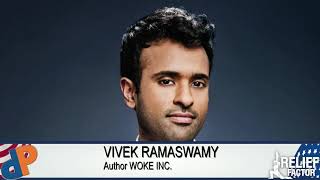
Vivek Ramaswamy argues that corporations like Nike use progressive messaging to mask exploitative labor practices and avoid criticizing China. He says younger generations, lacking patriotism and faith, seek identity through commercial causes instead, and that fear of being labeled racist silences most Americans from speaking out.
Chapters
How would you explain it? I find his explanation, in addition to cowardice, effective. It's a smokescreen for all the bad stuff that they do. So I'd like to develop that theme, Vivek, and we'll begin with the example of Nike, which, if it didn't begin the current wave of anti-American hatred from corporate America, it certainly was one of the big starters of it. What animates Nike?
Yeah, look, I think it is in large part the same theme with one additional nuance that I want to get to. The same theme is that they're using woke smoke to cover up their actual business practices, because I'll tell you, Dennis, it is a lot easier to verbally criticize slavery 250 years ago than it is to reduce your reliance on slavery today. And I will tell you, they source their shoes from slave labor in Asia to sell $250 sneakers to Black kids in the inner city who can't afford to buy books for school, all in the name of serving Black communities and donating tens of millions of dollars to Black Lives Matter, a Marxist organization that professes to care about Black lives while calling for the decimation of the nuclear family structure. And I think for Nike, that allows them to sell more sneakers, it allows them to build a better brand with the community to whom they are selling those shoes, while deflecting accountability from actually relying on not slavery 200 150 years ago when the United States was born, but slavery today in the year 2021 in the present without being held to account for it. And there's two more dimensions to this on Nike where they criticize the United States to no end, but they do not say a peep about true human rights atrocities in China where you have over a million Uyghurs in concentration camps subject to forced sterilization and communist indoctrination. And Nike CEO John Donahoe goes earlier this summer to China and says, We are a brand of China and for China. Those are his words, not mine. But I also think that in some ways consumers in the United States, yet in order to be, you know, what would Nike say? They're saying the consumers demand this for us. So for to evaluate that argument, I think there's some truth to it, if I'm being honest. But I think that reveals a different issue, Dennis, which is the cultural vacuum at the center of our nation's soul, where I'm a millennial and people my age and younger We're hungry for a cause. We're hungry for purpose, and we're hungry for identity. And we live in a moment where patriotism and faith and hard work, the kinds of things that used to fill that void, have disappeared. And we have instead turned to commercialism to fill that moral hunger. It's like the equivalent of satisfying our hunger with fast food. What we really need is a more rich shared identity to fill that vacuum instead. And that's really the solution to all of this woke agenda that I talk about in the book.
Well, well said. How are you regarded in the— you're in New York, the— in your world, how are you regarded?
Well, I live in Ohio now. That's where I was born and raised, and it's where we moved back to raise a family a couple of years ago because I knew I didn't want to do that in New York. I know I'm something of a traitor to my class, right? I mean, I didn't— I wasn't born into elite America, but I've lived in it for the last 15 years or so. I went to Harvard, went to Yale. I've worked in elite hedge funds at a pretty young age. I founded a multi-billion dollar company that I led as CEO in the biotech world. And this is not what you're supposed to do. You're supposed to shut up and play along. You're supposed to go to fancy ski towns on a private jet to preach about the racially disparate impact of climate change or whatever it is you do in Davos on a given day. And you know, I think that I'm viewed as a little bit of a defector from that class. That being said though, I think a lot of people, share my perspectives. I was on a call last week with one of the most prominent venture capitalists in Silicon Valley who said that he was— I would have never guessed him saying this because he's a very prominent person. He said, I'm envious of you because I can't say what you're saying in public. And I thought that that was a real shame where, you know, I know everyday Americans are shackled from being able to speak for fear of losing their job, and that's bad enough. But even if people who occupy seats of power in our capitalist economy still feel threatened by the threat of being tarred with the label of being a racist, where there's no greater damnation in modern America than to be called a racist. And you're called a racist if you disagree with anything the woke movement has to say. That really shows how far our culture of fear has come in supplanting our culture of free speech in this country. And I felt the only way to address that, Dennis, was to start talking openly again. And frankly, I wasn't free to do that as a CEO of a prominent company myself. And so that's why in this January I actually publicly stepped aside as CEO. I still remain chairman, but I said that there's a new CEO and my voice is different from the voice of the company. But now I'm going to speak and I'm going to speak in an unrestrained way. And that was part of my mission in writing this book is why can't this—
why can't this man you spoke to speak out?
Well, if he's afraid of social castigation, our culture—
Right, okay, wait, wait, wait, so forgive me, wait, so he is afraid and you're not?
I think that's accurate. That's accurate.
Okay, so my cowardice explanation, well, you didn't deny it, you just said there was a bigger one.
Oh, I didn't deny it. It's a part of the story. It's a part of the story. There is a culture of fear in this country, and it's almost like a law of physics in the social universe, Dennis, and it works like this. Fear spreads more quickly than courage. And I think that that is what's happening in America today, is courage can be infectious, but fear is even more infectious. And that's why I think it takes extraordinary demonstrations of courage to really revive that culture of being able to speak freely without fear of retribution. And I'll tell you, I have lived the full arc of the American dream, so I don't want to claim that I'm some sort of courageous hero. I don't have a job to lose because thankfully I've lived the full arc of the American dream and I don't have to worry about putting food on the dinner table. And so for me, it was a lot less heroic to do it than for a lot of other Americans who do take a risk of losing their job when they speak out, who do take a risk of their kids getting a bad grade in school or even getting kicked out of a private school if they speak out against what their kids are being taught in the classroom. And I really salute those brave Americans who are actually taking even bigger risks than I had to take. Yes, I had to step aside as CEO of my company, And it wasn't easy, but compared to the risks that a lot of other Americans are asked to take every day to fight this new ideology, I actually salute them far ahead of me. Writing a book was easy by comparison.
Right. But the guy in San Francisco wouldn't even do that with his billion dollars. The book is Woke Incorporated, Vivek Ramaswamy, and the book is up at my website.