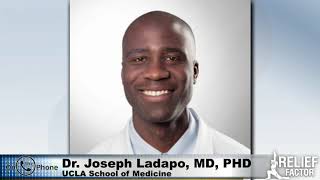
In this interview on the Dennis Prager Show, Dr. John C. Ladapo discusses the backlash he has faced at his medical school for his public stance on COVID‑19 mask policies, framing it as a free‑speech issue. He argues that the intense passion for masks stems less from pure medical reasoning and more from personal liberty concerns and political dynamics. Ladapo acknowledges that pre‑pandemic studies show mixed evidence on mask efficacy, noting that while some data support filtration benefits—especially for N95s—overall scientific consensus is inconclusive, particularly in community settings. He recommends mask use primarily for individuals at higher risk and in indoor environments with poor ventilation, citing anecdotal observations. Regarding air travel, he points to higher air‑exchange rates on planes and the low probability of encountering an asymptomatic, contagious passenger as factors that likely reduce transmission risk. Throughout, Ladapo emphasizes uncertainty, the politicization of science, and the need for nuanced, risk‑based recommendations rather than blanket mandates.
Chapters
Dr. Ladapo, welcome to the Dennis Prager Show.
Hey, thank you. And I'm happy to, happy to join. Thanks for inviting me.
So before the mask issue, and I know we really have one segment here, uh, but before that, I am very curious, how has the reaction been to you at the medical school?
Oh, sure, Dan. Um, well, first I just want to say that I'm speaking for myself and not on behalf of the university, right? So that might give you a sense of how the reaction has been. You know, it's been mixed. I mean, I've gotten, I've received a lot of supportive messages and communications, both from within the university and outside. But, you know, in terms of the general thinking of the university, its general position on issues, it tends not to fit in with that. And, um, so I've gotten quite a lot of pushback, um, from, uh, from some of my colleagues, which is absolutely their right to do. Um, so, so that's how it's been.
Have there been any calls for you to be fired?
I'm sure there have been. I'm sure there have been. Um, uh, uh, yeah, I'm sure there have been. Uh, but, uh, you know, yeah. And that's, as you know, that's kind of, that's where we are right now as a country and there's nothing special about me. And that was Unfortunately, dissenting opinions have not, at least not in any time in history that I can think of, ever been so, you know, so suppressed in the United States.
This is unique. That is correct. It's a point I make every day. We have never undergone such an assault on free speech. One final thing before the mask, but it's partially about the mask. Why Why is there such passion for masks? It isn't purely a medical answer. So what do you think is behind it?
Yeah, and that's the million-dollar question. And I'm so happy to hear you ask that because for so many people it's missed on them. They think that it's just an issue of science or, you know, it's just the mask. Why don't you wear the mask? And, you know, at its root, it's actually for some people, it's a really personal issue. And because it's so personal, it also involves a personal part of the body. It absolutely rouses, you know, very strong passions about, you know, liberty and civil liberty. And they're not unfounded passions at all. And, you know, it's been kind of amazing to me that so many people can't under— even if they think that everyone should wear a mask or whatever they feel, however they feel, I've been surprised that people, so many people seem to not be able to recognize that it really is a very, you know, very personal issue for many people. It touches, you know, it touches a place that is right.
But the passion to believe— I see a chart here in addition to your article The Federalist today has a chart of states and countries when they invoked the mask mandate and how the cases simply went up. It seems to have had no impact. So why would doctors support something that doesn't seem to have scientific credibility?
Yes, so what I would say to that is that I don't Personally, I don't believe that it has no scientific credibility. There is some evidence for it. Even before the pandemic, there was some evidence for it, but there was also quite a lot of evidence against it, arguing against any benefit, which is why that's just not been a recommendation. You know, I think that what's happened now is that we have a— there's a big political component that is, that's sort of steering the science instead of the other way around. So the political component has to do with, you know, it has to do with political power. It has to do with fear and just how transformative this pandemic has been and how so many people have felt loss of control. So I think that's all feeding into the kind of a passionate support for them. And I get those, you know, those videos that show droplets spraying here and there. I totally get it. But, you know, but that doesn't give us the answer to whether they are— the mask mandates are effective or not.
And does it matter what type of mask?
So the studies that have looked at that do seem to have found differences in how much droplet activity is how much droplets are released. So it seems to matter. I mean, it's kind of the theory supports it mattering. The question of whether in actuality it matters is basically— there's actually a little bit of data on that also, but it's mostly in healthcare settings, not in the community setting. And then in terms of protection and filtration, There's data on that too, you know, with the N95s and that sort of thing being more effective at filtering out particles.
Where would you recommend someone, if anywhere, someone wear a mask?
You know, it's really interesting. So I'd say two things. The first thing is that there's a researcher, it is an infectious disease specialist at UCSF, I think her last name's Gandhi, and she has, You know, she's sort of supported and others have supported this theory that the masks may actually be protective for the wearer in terms of reducing the viral load and how sick people get. And who knows, she may be correct. So I think it's reasonable for people who are at increased risk to, you know, to consider wearing them. You know, that's different from a mandate. Particularly given the uncertainty, but I think that that's a reasonable suggestion until we know more. Indoor settings are the other place. There seems to be anecdotes. You got to be careful with them, but there seems to be enough sort of anecdotal evidence that indoor places with poor circulation, there might be— there's probably a benefit on average with mask wearing in those situations. And that is probably Probably the extent to where the evidence is strong.
So indoor with poor circulation, poor ventilation, like a phone booth.
If you can fit more than one person in a phone booth and one of them happens to be COVID-19 positive, sure.
You're a good man. I'm glad you went along with me on that one. I'm actually surprised you know what a phone booth is.
You sound very young to me.
So how do you, how do people explain, uh, that, uh, and I, I have flown a fair amount during this lockdown, so while we eat, we're inches away from strangers. So for a prolonged period of time during eating, and if you nurse your drink, it's really prolonged, You— I'm referring to coffee. But if you nurse whatever drink you're drinking, we're talking about a serious period of time, and we are hearing nothing about people getting sick from airplanes.
Yeah, absolutely, you know, and thank goodness, that's, you know, thank goodness for that. So, you know, I mean, a couple of things with the planes. One thing is that My reading is that they actually have the amount of air exchange in planes tends to be greater than buildings. So I'm not certain, but that's what I've read. So that's one piece that may be contributing. I mean, another piece that's relevant is that, you know, you got to imagine, right, that someone, at least one person has to have the virus. If, if, um, the number of people that have the virus, and then even if that person has the virus, they have to be at some point, they have to be, they have to be asymptomatic, right? Cause you're not going to get a flight on a plane these days if you're symptomatic. So that's bringing the numbers down further. And then they have to be in a, in a stage where they're actually contagious. And that window is, is, is for most people not that long. So, you know, even though again, it's part of like, uh, it's part of the hysteria. That has, you know, been our— that's the word— through this pandemic.
Well, okay, I gotta take a break and I know you have to go. I would love to do a part 2, and if you smoke cigars, I would love to have a cigar with you.
Okay, well, I can— if you— if you're gonna take a break, I can stay on.