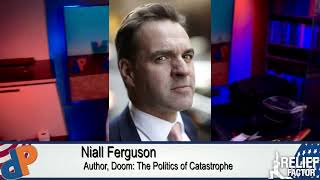
In this interview segment, historian Niall Ferguson discusses the paradox of massive 2020 protests against police violence occurring amid a severe COVID‑19 pandemic. He argues that the protests contradicted public‑health guidelines and were tolerated despite the risk to the public. Ferguson critiques the United States' response, labeling the decision to allow such gatherings as a major mistake. He then evaluates Sweden’s pandemic strategy, acknowledging its shortcomings—particularly failures to protect the elderly—but noting that Sweden avoided full lockdowns, resulting in less economic damage. Ferguson contrasts Sweden with the more successful approaches of Taiwan and South Korea, highlighting their effective, privacy‑preserving contact‑tracing systems. He rebuts the claim that such tracing would violate civil liberties, emphasizing that limited, anonymized data collection can coexist with liberty, and that forced home confinement is a greater liberty loss. Throughout, Ferguson frames these issues as matters of policy consistency, civil‑rights trade‑offs, and the importance of evidence‑based responses to the pandemic.
Chapters
Right, and one of the stranger episodes of 2020 was that in the midst of a pandemic, certainly one of the worst since the 1950s, we suddenly had vast nationwide protests in hundreds of different locations against police violence. Now, the Latin expression non sequitur comes to mind. It seemed like a strange time to have that debate in the midst of of a public health emergency, but we did. And then what was even more surreal was that people who had been previously opposed to any kind of gathering, even quite small gatherings, were suddenly entirely fine with very large gatherings of people protesting against the police. And by the way, protesting on distinctly spurious grounds, given the relatively small number of incidents in which the police use lethal violence against unarmed black suspects. But we'll leave that aside. I think it's fair to say that it made no sense to encourage or at least tolerate those protests, given the guidelines that had already been issued and which seemed to apply to everybody else except the Black Lives Matter protesters.
I wrote in April of last year that this was the greatest mistake in world history. I made it clear I wasn't saying the greatest evil. Clearly there were, there were greater evils, but I, I thought it was the greatest mistake. And I want you to comment on Sweden. Do you think Sweden was the one country in the West to have handled it more properly?
I think it would be wrong to say that Sweden did a brilliant job because a number of the mistakes that were made in other countries were made in Sweden too. For example, they didn't protect the elderly in care homes, and so they got a significant number of avoidable deaths there. However, they were right, I think, to say that you could control the disease with less drastic measures than, than lockdowns. That's to say, what in Sweden happened was that public gatherings were limited, concerts and that kind of thing, and there was social distancing, but there wasn't a lockdown. So the economic impact was distinctly less. I don't think the poster child is Sweden though, because ultimately I think the real success stories were countries that I mentioned already, Taiwan and South Korea, which dealt with this problem in a smart way. And I wanna just address one issue often comes up when one discusses this, you know, their use of technology and particularly their use of contact tracing so that they were quickly able to find out when an infected person had been in contact with other people. I heard again and again last year from the big tech companies as well that we couldn't do this in the United States because it would be a violation of our civil liberties. I thought that was wrong for two reasons. One, because in Taiwan they've been very careful to make sure that the kind of data that they used, was anonymized, and couldn't be used for any other purpose. I mean, they have thought about this issue because they care a lot about their liberties in Taiwan. After all, they are threatened by the People's Republic of China on a daily basis. But also because being locked in your own home under house arrest, as people in California, New York, and many other states were, is hardly a triumph of civil liberty. And if the choice for me is between having some contact tracing that works and being locked in my own home, I'll take the contact tracing. That's a very interesting point.
Back in a moment. A Moment with Neil Ferguson. The book is up at my website.