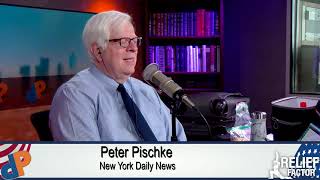
In this interview on the Ultimate Issues Hour, Dennis Prager speaks with Peter Pischke, host of The Happy Warrior podcast and author of a New York Daily News op‑ed, about the unintended consequences of the U.S. opioid crackdown. Prager opens with a personal story about his stepson’s father, a man who, after a severe accident, could not obtain a prescribed opioid for his pain and ultimately died by suicide; Prager says he would have done the same in that situation, underscoring the human cost of restricted access. Pischke explains the multilayered pressures that deter physicians from prescribing opioids: formal forces such as DEA enforcement, the 2016 CDC prescribing guidelines (often treated as law), state medical board sanctions, and hospital administration metrics that reward reduced opioid counts; and informal forces including fear of litigation, media criticism, and a legal industry that treats the opioid crisis as a new “big tobacco.” The conversation highlights the scarcity of pain‑specialists, long wait times, and the case of Dr. Forrest Tint, a renowned pain doctor who was forced to close his practice despite retaining his license, illustrating how systemic pressures push even willing providers out of practice. Throughout, the speakers argue that the current regulatory environment creates a de‑facto opioid crisis of undertreatment, leading to suffering, illicit drug use, and suicide.
Chapters
He will be my guest on the Ultimate Issues Hour, speaking to a man who is doing his country a service, Peter Pischke, P-I-S-C-H-K-E. He has a podcast, The Happy Warrior, has written this very important piece for the New York Daily News, the number of people dying from getting street drugs because they can't get them legally for the horrible pain they're in. It hit my family directly. You can again read my piece. Um, the father of my stepsons, man who loved life, had a terrible accident, was in horrific pain, could not find a doctor to prescribe a painkiller. And then finally killed himself. At his memorial, I spoke, and I said— because people are very ambivalent about suicides— and I said to all those present, I would have done the same thing if that were my circumstance. And I was later told by his immediate relatives how much that meant to them. So you were saying, Peter, that one of the reasons that people cannot— good, decent people could not get these drugs is doctors are afraid of losing their license.
Yes, very much so. Yeah, no, it's— there's a— there's very much a formal pressure on physicians and those who can prescribe, and pharmacists, and there's also a informal pressure that's almost even worse. So formally, you have law enforcement, particularly agencies like the DEA, took what the CDC put out in 2016 as a justification to try to, as the old saying goes, arrest their way out of the crisis. At the same time, doctors have to be worried about the state legislatures and what laws they've made limiting prescriptions, and their state medical boards, which have huge pressure on them to come down hard on doctors and to get this in whack. And then to top it off, you have your health system. So the hospital, the hospital or the clinic you work in, there's a huge incentive for the CEO to have good numbers showing we're reducing our opioid prescriptions by this much every month. Look how great we're doing. And it's a ton of pressure on doctors. And either doctors, I have a family member that's right now is going through medical school and the sacrifice to go through that process. I mean, it's a gigantic amount of hazing for years. And so they are deadly scared, even to the point of abandoning patients, which by the way, I'm not saying is morally justified in the least, but it is understandable why they do it.
Okay, so let's keep going up the ladder. So the doctor is afraid of losing his license. He knows the patient is in horrible pain and needs opioids, but he won't prescribe it because he fears losing his license. Now, who takes away the license? The medical board of that state?
Um, yeah, actually the number of doctors that have lost their license that we know on record is relatively few, especially if you take out like the ones that are pill mills in Ohio and Appalachia. But the fear is there, and many doctors are under the impression that the 2016 CC guidelines was law because that seems to be what everyone is telling them. And at the same time, you know, there are of course true believers There are people who are very suspect of traditional pain medication in general, and so there aren't a lot of people who advocate for traditional pain care. And the idea that we're going to try to meet the person's pain even if it requires opioids, there are fewer and fewer of those guys around each day. Famously, Reason covered this. There was Dr. Forrest Tint, who I have interviewed, and he would have patients coming from all over the country. They would travel thousands of miles by plane to go to his clinic because they could could not find a specialist in their area to take them. And look, when people are told by their primary and they're saying, I can't do it anymore, often they blame them and say, you have an addiction problem. You have to go to a pain specialist. They go to the pain specialist and either have to get in line and wait 2 years or more, or the pain specialist will just tell them point blank, sorry, I know you're in pain. I know this is really real. My own doctor told me this, but I just can't do it. I just cannot do it. If I do that, then not only are you going to be without someone to give you some care, all the rest of my patients are. It's just an impossible standard that we're trying to ask the specialists to live by and the generals, they just don't want to have any part of it.
Did the doctor you mentioned who people, whom people travel to thousands of miles lose his license?
Yeah, I believe, I believe he still has a license, but they forced him to close. So he no longer practices medicine, but he does run, um, uh, an advocacy organization. It's been a while since I Dr. Forrest, can you—
So, so ultimately, so I'm trying to understand, unless we've entered the world of ether, which we may have, the real threat to the doctor comes from medical boards, medical state medical boards. The medical boards, you said, are under pressure from, from the politicians. Is that correct?
That is correct.
And the politicians?
And the media, and Big Litigation. They, there are plenty of lawyers that put this pressure on because there are, Big Litigation for the last 4 years or so has been trying really hard to turn the opioid crisis into their new big tobacco.
So who was trying, wait, who was trying to do that?
Big Litigation, so the lawyers that, you know, that went after like asbestos, Or are now going after opioid doctors? Yes, yeah, they met together and they believe that their best target was—
Unfortunately, you're just feeding my conviction that no group has done more harm to this country than the legal profession in my lifetime, and there are many wonderful lawyers, but it's irrelevant to my point. The fear of litigation has created a great deal of evil in the United States of America. Please read his piece up at the New York Daily News. People— the compassion crowd has no compassion for people in horrific pain. I'm not shocked.