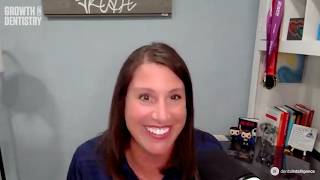
SOPs That Scale Dental Practices with Laura Johnston of My Dental SOP

Laura Johnston of My Dental SOP explains how detailed, step-by-step procedures protect dental practices from risk, free up office managers, and enable scalable hiring. SOPs reduce reliance on tribal knowledge and let practices grow to multiple locations without losing consistency. She warns against using AI to write them, saying customized, human-crafted procedures work better.
Chapters
A checklist doesn't really tell you how you do it, what that conversation looks like, you know, how to communicate with the interdepartmental pieces of that, right? So you do need to get a little bit more specific than a checklist, but, you know, it can feel very overwhelming to go, I have to document my whole job or my whole practice. So, you know, really identifying those workflows that cause the biggest pain points. And just start there.
This is Growth in Dentistry, a Dental Intelligence podcast where we ask the question, what does growth in dentistry mean to you? I'm Steve Jensen, a data dental nerd and your host. Welcome back everyone, super excited about today's episode. Now before I jump in, a quick highlight and thank you to the marketing team at Dental Intelligence for sponsoring this podcast week after week after week. You've heard it a million times from me if you're a repeat listener that a lot of work goes into making these podcast episodes and I'm super grateful for the work they do on the backend to get this content out to the industry. Now for our listeners, they have an awesome offer. If you haven't checked out Dental Intelligence in a long time or it's been a minute, they're giving you a $50 gift card just for checking out the product. They released some cool new things like an AI assistant on the scorecards. You can say, hey, like, I have this scorecard that tells me my production and collections and new patients and a bunch of these metrics, but you're not much of a numbers person. You can just ask it like, what's going on? Am I getting better or worse? Is there anything I need to be worried about as a practice owner or as an admin? Super cool. There's also some cool new releases with like a quick fill scheduling feature where if you have a hole in the schedule, you can just click on that hole in the schedule in Dental Intelligence and it will give you a suggested list of patients. You can send it out to them And as soon as the hole is filled, it will let the patients know that spot's already been taken. So there's some cool stuff that's been coming out. And if it's been a minute, definitely go check out a demo and get a $50 gift card. All right, with that being said, I wanna introduce our guest for today. I've got with me Laura from My Dental SOP, Laura Johnson. Laura, welcome to the show.
Thank you, Stephen. My pleasure to be here. Thank you for having me.
And I think I said, I think I said Johnson, Johnston. Gotta make sure I get that T in there. So Laura, Laura has been in dentistry for over 23 years, a big fan of this space, and about 2.5 years ago started a company called My Dental SOP. So first, Laura, you have to tell us what SOP means, and then I want to hear like, why did you build this company? Like, what, what's the story behind My Dental SOP? But first, tell us, for those that don't know what SOP means, what does SOP mean?
Well, so SOP means standard operating procedures, but that's not very sexy.
No, it's not.
Yeah, they immediately turn me out if I start talking like that. But it's essentially just the recipe for how you do what you do in your practice, in what order, so that you get a predictable, consistent result no matter who's doing the job, right? Like, if somebody needs to be out for the day, who can step in and do the job? And so, yeah, that's— at the end of the day, it's just that recipe of how you do it. And, you know, our patients are expecting a consistent experience, you know, kind of like that chocolate cake that they want perfectly, their favorite chocolate cake. So how do you have that perfect result every time? Have instructions.
And I'll say this, you know, for those that are listening, as leaders, it can be hard to step back and think like, how do you act? What actually, like brass tacks, what has to happen for this job to go really well? I just had an experience where I took 1 month of paternity leave. You know, I'm, I'm in my late 30s, had my last child, and I've never taken more than a week off of work. And so this was like a new thing for me. And I had to think through, okay, like, if I'm going to be gone for a month, what are all the things that have to happen to keep the team running smoothly? Who can I assign to do those things? And I need to be detailed enough that they know, like, exactly how to do the job normally. And then I also had to think through, okay, what if there's like an escalation, if something goes wrong? Who are they going to go to and how do they think about resolving it? And that's like, it can feel like a lot of work, but I will say once you go through the thought process of documenting like what's the job to be done, who's responsible for what and why, and then what happens if things go wrong, you know, or like how do we do this in an excellent way? Like if we really, you know, go above and beyond, what does that look like? It makes all the difference. So I was able to step away as a leader And all of a sudden I had like mental peace and clarity that, hey, the team's gonna be able to do this and they've got all the instructions they need for success.
So, uh, yeah, for a typical practice, they have, you know, a checklist of things to do, right? And they think that that's their SOPs, but a checklist doesn't really tell you how you do it, what that conversation looks like. Um, you know, how to communicate, uh, the interdepartmental pieces of that, right? So you do need to get a little bit more specific than a checklist, but, you know, it can feel very overwhelming to go, I have to document my whole job or my whole practice. So, you know, really identifying those workflows that cause the biggest pain points and just start there.
So tell me, let's start. I want to hear how you even, like, why did you build My Dental SOP? A lot of times there's a lot, there's some fun in the creation story, so talk us through your thought process where you thought, hey, dentistry needs a better tool than a binder with a bunch of pieces of paper in it that are our standard operating procedures, like workbook. Like, we need a software tool that can really help align our teams around best practices in dentistry. Talk us through that.
Yeah, well, yeah, the dusty binder on the shelf is not how I want it done. So I— the Really, I've been in the industry a long time, mostly with pediatric practices, right? My husband was a— is a dental anesthesiologist. I worked a lot with pediatric practices. And so when I, when I first, um, was exposed, I could see that there was a lot of lack of leadership and team alignment, things like that. So when I first started, I was really excited about the leadership piece of it, and it kind of grew. I was working with some clients, and I recognized that when I stopped working with them, like if they had a single person leave their office, it was like starting over again. And even though I had left them with a, you know, a Google Drive full of all the things that we worked up on, it was not in a way that a new onboard could actually follow it through a training path. And so I initially just created it for my own clients. I wasn't planning on taking it to, you know, the masses. But guess what, Stephen? Everybody needs it, and everybody, every kind of business needs it. So I'm in the dental space, we're very dental specific, um, but, uh, yeah, that's where it started. And I just, um, started building it out for my own clients, and now here we are where we get to work with lots of practices because they all need it.
Yeah, I, I, I agree with you because, you know, one of the things, um, that I've noticed in my career when when companies are really small, um, you can get away with not having systems. Like, you can get away on like just sheer grit and will as a leader and a practice owner. But if you really want to think about scaling— and scaling is really just about putting in good systems— you have to rely on systems and processes. And then— excuse me— that will give you way more freedom, like I mentioned, kind of with my story, mentally. So tell me, tell me, I'd love to hear some— maybe start with some stories. Tell me about, like, do you have any practices that you're like, hey, like, we went in and really helped them document SOPs, get them in the system, and here's what happened on the other side? Like, like, what are the main problems you guys are typically solving within these practices?
So let me tell you a couple horror stories first.
Yeah, there we go.
Kind of to this as well. So um, one of the practices that I was working with, they had an office manager. She clearly did not know the full scope of her job, um, so we started putting together some things for her. She left, right? If you— if she leaves— well, the reason she left was, turns out, all of this chaos, she was actually embezzling too. So setting this— these systems up are really important for just protecting your practice. Of course we want the patient, you know, to protect the patient experience. Of course we want to protect the team experience and make sure that our team members are happy. But it also is a layer of, you know, a protection and, you know, against the liability that you carry, risk and compliance, risk and potential embezzlement, you know, really defining your roles and systems. So, I mean, every part of the practice, we've experienced all of those things. So To me, setting up is, you know, it's a great leadership kindness, A, for the expectations, but B, for just feeling like you're set up for success. And so in our offices that are using them, that's what we're hearing. Like, they have a place where they can go that you're not going to remember all of your training that you go through, right? And if you're not using it on the daily, well, then where do you go? That dusty binder on the shelf? Okay, then I have to dig through the pages. No, and even if it's on a Google Drive, finding, I don't know about you, but when I have stuff on my drive, re-finding it again can be a real pain in the rear. You know, what's the naming of a glacier again? So we set it up into a way where it's actually a training path based, you know, training and SOPs. So you have a place you can go back to it. So that's the success stories. But yeah, we have, A client that we're working with right now, when we came into their office, they had one front office person. So she was the office manager, she was the treatment coordinator, she was the billing specialist, she was all of these things. And when she stepped out of the office for a doctor's appointment or something, everybody's terrified what's going to happen. So being able to work with them and start documenting that, freeing her up, I know a lot of Office managers can feel, you know, kind of unintentionally shamed, right? Because they may not know all of the role. That is not the idea behind this. This is really to set them, everybody up for success. And we don't want anyone feeling, you know, unintentionally shamed, but we also don't want them feeling like the one reason that they have job security is because all of that tribal knowledge lives in their head. So we want to be able to get that documented, free them up, and really, to me, it's terrifying to think that one person knows how to do everything in your practice. And if, I mean, forget about the fact that she may choose not to come back, but what if she can't come back, right? So, um, you know, it's really just about, I think, freeing everybody up, getting some of that clutter out of your minds so that you can actually support each other. I mean, that's another response we get is that they know how to support each other And by the way, going through the process is about a mindset change, right? You're now talking to your team members about, okay, well, what would be helpful if I had to step away for you to know? Okay, where would you want— so you can discuss it as a team. The more the team's involved, and not all of our practices choose to do this, but the more the team is involved, the better, because it's their experience. And even if you choose to outsource a lot of those things, which many of our practices do, now you know even what that relationship looks like with that, what you outsource. So for instance, with Dental Intel, we actually partner with you. And so we're able to include some of that, like why we use Dental Intel and what does it look like to get up to speed quickly and connecting Dental Intel with the internal SOPs creates a little bit of stickiness even for that solution, right? So, um, wow, I just went off on a tangent. You just wanted a few stories.
No, it's so, it's so interesting just to listen. Like, one of the things that I locked into personally, I think this is really common within the office manager role, the thing you mentioned was that sometimes office managers will feel like my job security has to do with everything living up here in my mind And that's such like a scarce way of thinking. I think when someone starts to realize, hey, actually that's not a marketable skill, a market, like if you want to have like, you wanna grow in your own career and your job and your skill is, hey, I can put a lot of stuff in my brain and tell nobody else about it. Like that's not great. You know, like I'm just gonna say that kind of back out loud, but man, what is a way I can level myself up as a leader? Well, Really good leaders can go and think through their job and say, hey, how do I document this and put a system in place so that I can create a bunch of mini-mes? If I can take my knowledge in my head, document it, and then train others up to be just as successful as me and maybe more successful as me, that is a killer leader. And if you want to level your— if you're an office manager listening to this and you want to like level up your career, If you can prove that you can do that, I'm telling you, there are a bajillion businesses on this planet that would love to have you come and join their team if that is a skill that you have. And so I love the way that you guys are thinking about that. Laura is saying, hey, like maybe let's do a paradigm shift around job security. And if we can, if we can make ourselves, we can level ourselves up by using a tool like this where it's like, hey, I'm going to go work with my dental SOP. I'm going to document the things in my business so I can create a bunch of mini me's. I don't know if that's the best way to put it, but that's how I think about it. Then it's gonna level everybody up, right? And that's gonna allow me as a leader now to have more time. If I can create that system, now I'll have more time to think about the business, think about how you can grow it, think more strategically to help my practice and the doctors. And I think—
Well, yeah, I mean, leadership and management are very different, right? You're talking about a lot of kind of combining them a little bit, that leadership, being a good leader, being able to delegate, being able to nurture your staff into, you know, being the best they possibly can be, then from the management standpoint, yeah, you absolutely free yourself up. When you're micromanaging people and you can't delegate and you can't— it's just a big circle of frustration. But being able to give some of that away and release your brain for, like you said, that strategic thinking. There's, with all the changes going on in the dental industry, you better be prepared to take, you know, on what's next and be able to see, you know, and that takes some freeing up of the bandwidth too, right? So I feel like documenting this, getting it out, being able to share with your team and support each other, it just frees up everybody.
So tell me, the other thought that I had was, you know, I imagine as I'm thinking through creating SOPs as a practice owner or as an office manager, I'm thinking through my different types of employees. So as you guys think about it, how do I structure that? Because I have like assistants that are doing their jobs, the front desk, depending on how many team members we have, could be a lot of different— I mean, it's the same, same jobs across all dental practices, but different people might do them. I've got the dentists who might not want SOPs, but they need them. Okay, we think through that. So how do you guys think through creating almost like a— in my mind, I need to have almost like an onboarding flow because also in dentistry, I have turnover with assistants. There's been a hygiene shortage. So, you know, a lot of practices are probably having to deal with turnover in the hygiene department. So can you kind of speak to like where's the best place to start? Or, you know, how do you guys think about helping dental practices getting started on this path? Like, do I start with my assistants? Do I start with hygienists because there's turnover there? Do I start with the front desk because that's like very task-oriented and critical? Talk me through that.
Well, in our onboarding process, the first thing we do is we find out if they have SOPs, anything documented now, right? And then we help them to organize, you know, digitize them, organize them. We've had—
yeah, almost like taking our old paper charts and like putting it into the modern age and putting it in digitally.
Yeah, similar, right? We've had clients actually send us their binders. They're like, you know, because our team does that. So we'll scan it in, we'll put it into the platform so that now they can go, okay, that's what I have. Where are the gaps? So we help them fill the gaps. We identify what their roles are first, you know, and if they're a smaller practice, what they want to grow into, right? Like someone might be wearing multiple hats. Does that necessarily mean we want to put that into one training path? Probably not, because at some point, we're hoping to grow our team and we want to be able to have a division of responsibilities. So, but we, I mean, it's all customizable, right? So the titles you use for your employees, what that training path looks like is very specific to the office, including the services, the equipment they use, who they outsource with. Like, it's a full package that we go through with them. Them as part of the discovery process, just to be really clear on what their practice looks like and what they're hoping. Now, having said that, I used to think that, man, because I worked with dental practice owners, I wanted them to be involved in the process, right? It's like, you say you want your practice to run like this, well, you should be a part of it. I no longer believe that unless they really, really want to be because they can be the bottleneck. So who is that? That super organized SOP champion, and it doesn't even have to be the office manager. I mean, I've worked with treatment coordinators who had the time and loved that kind of stuff. And so they helped, they were that champion in the office. So it's really about getting started too, right? We can do a lot just from the checklist. And I mean, with AI, we don't want AI writing your SOPs, right? Because who knows where they're taking that information from? But it's not a horrible start, right? Like you can— You can identify some of your SOPs and then custom— customize them, right? That's at the end of the day, that's, that's the important part, is customizing them to the experience that you're trying to create for your patients and your team.
Yeah, so I love, I love that. So I think through— I think I've got a good answer there. If I have SOPs, we're going to digitize them, we're going to put them in Paths. How do I think about— how do I— do you guys have a way to like confirm that my team knows that's the SOP, like, like I create users for them, but then I like want this, like, hey, meeting of the minds. As a leader, that's so critical. Like I shared the expectations with you, you're confirming to me that you know the expectations and now we're off to the races. Does that make sense? Is there a way I can—
Yes, that totally makes sense.
Track kind of their progress.
So we do have that. So everybody has their own login. Every— we can see their course progress through their training, like where they're at. You can assign some assessments. We have it gamified, we, you know, where you can kind of assign some KPIs associated to Did they do their training or other KPIs within the practice? Right. So like, what does that dashboard look like of how we're doing as an employee and how do we make it fun? Can we assign some points to it? Can we assign some monetization to it? Can we, you know, so there's some fun ways to— we don't want it to be torture, right? Like the word alone, SOP, is like we were talking about standard operating procedures, like kill me now. But making it fun, making it interactive, and really at the end of the day, setting them up for success, not expecting them I, I had a practice who hired a new office manager, a new front desk person, and he hired her because she had hospitality background, assuming that she would just be great at customer service. But you still got to train them as to the services that you have, like what you want that experience to be like. Like there still is some training that goes along with that. So, um, and, and frankly, having this in place really opens up your candidate pool because then you can, um, hire from different industries that might have you know, or just for great work ethic or wonderful attitude, because you have those training, that training specific to your practice dialed in.
Yeah, I love, I love, I don't know if folks can like, if you're like picking up what she's putting down, but the way I love the way you're thinking, Laura, where you're thinking, how can I take, we have an opportunity in dentistry to bring more people into the fold, right? Like a lot, My dad always joked, I grew up in like the carpet space. My dad was a carpet, like a carpet and flooring sales rep and then owned a flooring store for a lot of years. And there was always a joke that like, once you're in the flooring business, you can never get out. And I think there's the same thing with dentistry. It's like, once you're in, once you're in, you can never get out. But doing something like this also gives us the ability where just like you said, like I've heard some great suggestions from, from other folks where they say, hey, like if you're out at dinner and you have like a killer experience with a server where like that person gets customer service, like ask them if they're looking for a job, you know? Like there are cool people everywhere and having thought through kind of the onboarding process, what does someone need to know and do to be successful can allow you to take those amazing people and plug them in, um, successfully. So that's also super cool. I like what you were just saying there, like, hey, we can bring people from outside the fold. It doesn't have to just be, you know, dentistry only, the people that are here that are stuck for the rest of their lives. We can get more people in here from outside the space.
Yeah, and like you said, a lot of the roles are very similar, so, uh, from practice to practice. So, yeah, like 80% of that training, that onboarding training, could be done automated so that you're not sitting there shadowing someone and they're having a crappy day. And so now this new person is subjected to the poor quality of training they get from, from someone who has their foot halfway out the door, right? Or, you know, that's just a common scenario. So, I mean, we use it internally for us too. Like, when we hire, we have, of course, have SOPs. So we hire to our SOPs. They, they get to know our company and, and our services and what the expectations are. All before they really even start their first day.
I'm going to ask the question. I just thought about this. If I'm listening and if I'm listening and I don't have a binder with a bunch of SOPs and I like don't have a good system, do you guys have any like prebuilt stuff, any like industry best practices? Like, hey, here's a really good starting point that, that folks can see and use.
Yeah, we have a fantastic library of templates and resources. So yeah, if you have nothing, and we do have clients who have nothing, um, and that's okay.
Even just like limited, like maybe they have it for one role but not another.
Yeah.
Or there might be gaps, like it's like, hey, like, can you just tell me, like, am I missing out on anything here? Okay, cool.
Yeah. And we actually have a— I mean, depending on if they're open to it or what their team looks like, you know, where we take their team through the process of, okay, what do you have? What's What workflows cause the most daily confusion? And of course, these are things that should be happening in their huddle or in their staff meetings anyway, but actually getting them to some kind of implementation is hard. Like oftentimes we kind of complain about these things like, oh, this sucks, this is hard. And you know, there's misalignment here, but then actually having a resource where you're just like, okay, I can take that out of my head and I can actually put it into practice and we can come together as a team on that. How awesome would that be? It is awesome.
Yeah, one of the things that I say, I say all the time, I say it to my wife and to my team here at Dental Intelligence, is that when expectations don't meet reality, that's when we have conflict, right? So like with my wife, if she thinks I'm gonna take the boys to basketball practice, but I don't think I'm planning on that, and we've never like set the expectation, if it doesn't happen that way, then then we're both frustrated with each other. It's like, no, I didn't never say I was gonna do that. Or at work, if I just like have this expectation as a leader, like, oh, my front office team is— when someone calls and asks if we're, you know, in network with United Concordia and we're not, I have an expectation they're going to try to still get them to come to the office and not just be like, no, we're not, um, good luck, see ya, you know, and just hang up the phone.
Thank you for saying that. It's so true. It's like That scripting is so important, but go ahead.
Yeah. But you know, the point I'm just trying to make is a lot of times as leaders, we have an idea in our head of like what expectation should be, but we don't take the time to really document it and then share that with the team. And when we do that, now all of a sudden expectations and reality will be obvious. So there's never a situation where like I'm, I'm feeling contempt towards a team member because they're not like doing what I think they should be doing. Like they know what they should be doing. And so if they don't do it, then it's really easy to have the conversation where it's like, hey, I set this expectation, it's not happening. Let's talk about, you know, leveling up or leveling down.
Well, and if you don't document it, even having that first conversation, like you said, I thought I communicated that. Oh, you thought you communicated it and maybe you did, but maybe they didn't accept it in the way that, you know, they, that you meant it to be heard. So there's, How many times have you heard, I was never trained that way, or at our other office we did it this way, or, you know, all of— we're all coming from these, a variety of experiences, a variety of personalities, a variety of, you know, of expectations of our own, right? And perceptions. So I don't know how a business runs without it, quite frankly. And especially in a dental practice where there's so many things, the compliance, the insurance, the, you know, they're just the clinical And the multi-department, I mean, I feel like dentistry is, and I've said it before, is one of the most complex small businesses. And now you start growing it. Now these multi-locations you've taken and you're just scaling chaos. So yeah.
And not even as multi-locations. One of the things I'll say too is, you know, 10, 15 years ago, the average dental practice was just one doctor and one or two hygienists. And across DI, we've got just over 10,000 practices we work with. And that trend has started to shift dramatically. So like our average practice has over 2 dentists. It's like 2 point something dentists per practice. And that's becoming increasingly the trend of having more dentists, more hygienists, more assistants all in one location. And as that trend continues, we put more dentists in one spot, then like you said, the complexity increases.
Yeah, and your SOPs can reflect that. I love that you said that because we have clients who have multiple dent— doctors who have their own way that they like things done. So they actually have SOPs for their dental assistants that work with them. And the other doctor has his SOPs for the assistants that work with him. So I definitely think that even under one roof, and then the communication piece too, it's not just about your SOPs, how are you communicating? I recently had a doctor, he's like, oh yeah, we don't really have a communication system. We just kind of holler down the hallway. I'm like, I'm not kidding you. So, you know, our platform, of course, has all of those components. So it's not just a training platform. It's like, how do we use it on the regular? How do we, how do we make our, our mission, our values, our SOPs, how we communicate all a part of, you know, our, the way we do business here. So bringing all of those parts and pieces together are important too.
I love that. Now we're coming up on the end of time here, Laura. I ask all of my guests the same question, and this is actually good because we're talking about multi-location growth and doctor growth. I want to ask you the question, what does growth in dentistry mean to you as the founder of My Dental SOP?
Yeah, I think with the constantly changing landscape of dentistry with, you know, software solutions, and frankly, we just know so much more, like, you know, the analytics that come from from all of the things that you do. Um, leadership is a huge one. I just, I hope that if nothing else, our practice owners are under, you know, make a commitment to leadership. That's what true growth looks like. All of these things we just talked about don't matter if you have poor leaders. Um, but aside from that, of course, you know, the technology changes, AI, all of the things you guys are adding, all of the things that we're adding from an AI, just being— I think growth looks like being really, um, agile, and part of the agility is documenting these things so that when you make a change, it can be easily communicated and a part of how you do business. So as much as you have to be agile, you have to be able to, you know, communicate what that looks like in your location or, you know, in your business.
Yeah, I very much agree with you, Laura. It's been an absolute pleasure to have you on the show today. Thank you for joining, and thank you to the guests for joining. This has been another episode of the Growth in Dentistry podcast. My name is Steve Jensen, your host and fellow data nerd, and we will talk to y'all soon. And once again, thank you, Laura. We'll see you guys.
Thank you, Steven.
More from Sean





Growth Through Patient Retention with Michael Dinsio and Paula Quinn of Next Level Consultants




Creating a Profitable Practice using Fee Negotiations with Kelsey Porter of Beacon PPO Solution