How to teach your dog to find your wallet (or anything else)
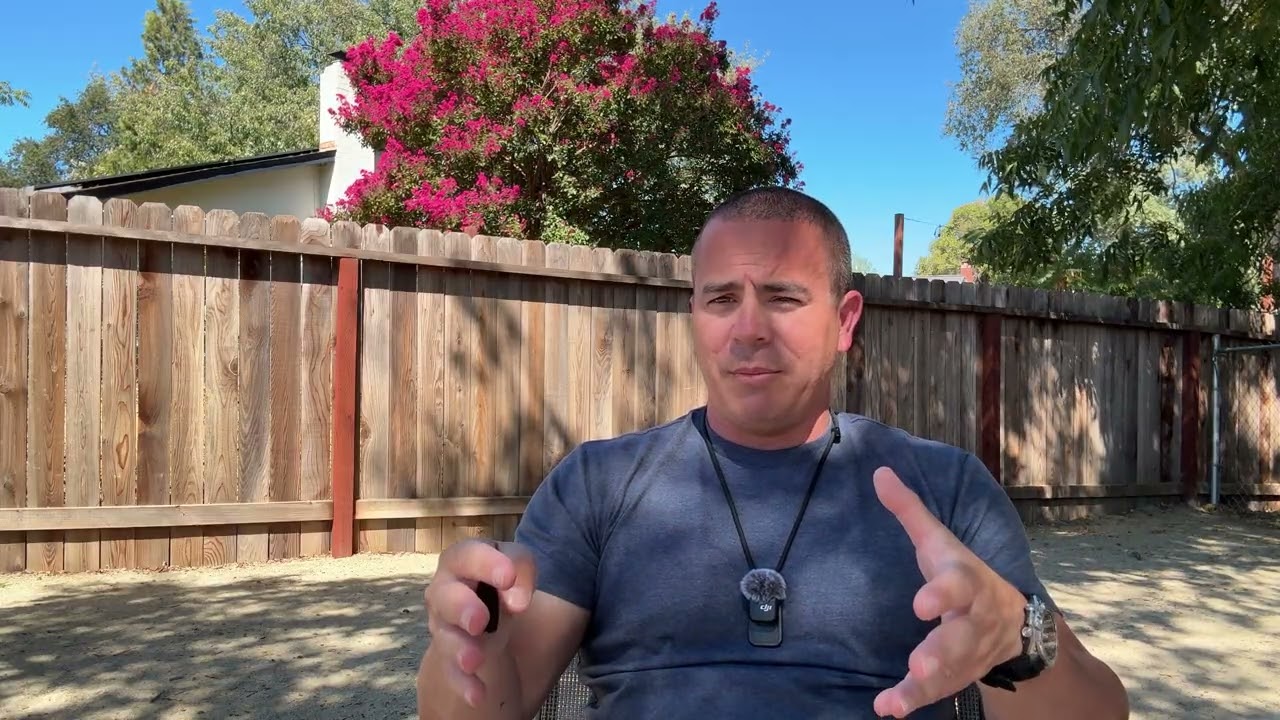
Derek Weaver teaches his border collie Kira to find a wallet using scent work. Start by training a hand touch for treats, then introduce the target object and name it. Most dogs learn in 10 to 15 reps, though 50 to 250 is typical.
Chapters
I do a lot of things on Instagram with scent work because I love it. I think it's fun. I think it's great for the dogs. Really good for those reactive dogs too. Give them an outlet, give them somewhere to put that energy. So I'm gonna do a quick crash course today on how to start teaching your dog how to find things for you. So this could be more sport-oriented where we search for scented Q-tips that are hidden in specific areas. Not known to us or the dogs. Or it could be your wallet, your keys. I'm gonna show her, you know, have her start finding my wallet today. Your phone, your sunglasses. Once we know how to do this and we get enough repetition with the dogs, most of these dogs can do this. It's easier with some breeds, definitely, but every dog scents, every dog has some drive.
Yeah.
To search and find things. So to do this, you need a dog. I have my border collie, Kira. It's gonna help to have food that they like. I would encourage you to use some kind of an essential food. So whether it's their kibble or something like this, these are, um, Ziwi Peak. It's a, um, a dried dog food. It's very expensive, so I use it as a treat. And then you're going to need a couple of things like a marker that tells the dog that they're successful, an item that they can find. And then in some cases, we'll use something like a literature mailer or an Amazon box or a shoebox, something like that, that can help to contain the item and the odor that the items give off. And I'll explain that in a little bit, even though we're not going to use that today. So there's one other bonus skill too, and I'll show you in a moment.
Okay.
So first, we've got our food. She already knows all of this. And we've got our marker.
Yes.
And then I like to teach this— yes— where we move, because it means the dog's done. So they're successful and they're going to get paid.
Yes.
So when our dogs are good and happy and moving quickly—
yes.
And you'll see your dog will give you a little twitch of the eyebrow, their ears, they make Some dogs hop up and get really animated.
Yes.
This dog is very animated for toys, less so with food. Yes. And then in the beginning, we're going to start with the food in our hands.
Yes.
In order to get this kind of charged up. Then as the dog starts to get it.
Yes.
And show that they're starting to understand it, then I want to go.
Yes.
And then reach. The reason for this is I don't want my dog performing because the food is present. I want them to think, how can I get you to produce that? So this may be something your dog gets in a handful of repetitions, just a few minutes. It could be that they need some time to do this. So most dogs will pick up a new skill, uh, or, or talent in something like 50 to 250 repetitions. Which means you can get that done in a week at mealtimes. 10, 15, 20 reps here and there. Yes, present.
Right.
Yes. Keeping my hand— yes, straight, protecting my hand. If you have a dog that's very, um, rough with food, you're definitely going to want to make sure you get this right where the food is deep in your hand like this. See, I've got all this stuff in my yard that I'm working on, but I wanted to get this up. Yes. So that's step 1. Make sure your dog knows that they're successful. So eventually, just how we tend to use our markers—
sit. Yes.
See how she comes out of that? She knows she's done and we can party. So we can make this very, very exciting for most dogs. Instead, this dog is more food— or sorry, toy-oriented than food.
Good.
So from there, it can be useful to have something like a hand touch, because occasionally we'll actually use like a target stick to show the dog what it is. But again, it's not how we usually go.
Touch. Yes.
That's all it is. So if you've already been doing this a little bit and your dog has that, that white yes.
Touch. Yes.
Then your dog's gonna want to investigate your hand. They touch their nose to your hand, you say yes, they go, oh, I'm successful, and they get paid. So from there, it can be helpful to teach the dog how to go find things. So I'll toss. Yes, good. She comes back. She may not be staying on camera.
Yes.
Right, and, and throw it just far enough the dog actually has to go look for it. Yes, good girl. And, oh, second one.
Yep, good. Yes, good girl.
Checking to make sure she didn't miss. All right, so when you have that down, you're ready to move to the next step. And again, take the number of repetitions that you need, 'cause you're building.
Yes.
To a certain set of skills. If you can skip this step, go for it, I guess.
Yes.
But it can speed things up down the line, right? You can find yourself getting stuck. So what we do next, as I get some of the dog spittle off my hand before I handle my wallet, is I then would get my front pocket wallet here. Yes. So she touches her nose and then she gets paid. Yes. And so you may notice that with a dog who doesn't have the experience that Kira does—
Yes.
That they don't quite know what to do with it. I don't want you to speed this up by repeating yourself over and over. I want you to give the chance, to give the dog the chance to do this. And if you have a hand touch, then you can say, "Touch. Yes." And the dog will start to generalize that skill of touching to the item itself.
"Touch. Yes." You're a good girl. "Touch.
Yes." And part of why I'm doing this back here in my yard that needs a little bit of work is because this dog is in heat and I don't want her out in public right now.
Touch. Yes.
Gotta be careful with those boy dogs out there. So again, 50 to 250 repetitions potentially, but once your dog starts having some skills, they tend to generalize those over. So now that we have our dog touching and in going for this item, I can name it.
Wallet. Yes.
Wallet. Yes. And because this is in my pocket, it smells like me. I can't smell it.
Wallet.
Yes. But your dog's nose is at minimum 10,000 times better than the best human nose. Wallet.
Yes.
Notice I'm changing this presentation of the target.
Dropped one. Wallet.
Yes. So because my hand's a little scuzzy from her, I'm just feeding off my right.
Wallet.
Yes. Notice my timing too. So now the dog knows what the wallet is. Again, how many repetitions? Probably getting towards the low end of that number, if not much, much lower. You may not need 50 to 250 reps. Maybe you need 10 or 15.
We don't know.
So I toss it, "Walnut, yes!" Walnut! Yes!
Good.
Walnut!
Yes!
So she's finding short. Toss this out here.
Walwit.
Yes. So this is now teaching her how to find that item. But we can make this a little bit better and actually start to get the dog to indicate for us.
Walwit. Hey.
She thinks there's food down there.
Kira. Hey.
Walwit.
Yes.
There may have been a critter in this yard.
Wallet! Yes!
Good girl. And so now if we want to make this interesting, we can move her away from the area for a second.
Come here. Sit.
That's a half sit. We'll stay. And then I can do something like put it in a slightly hidden place. Most dogs won't realize this, but a Border Collie typically will. So I'll fake like I'm doing something here and around, and then we'll see if she can find it. It's over on a platform. Over here, and I'm actually gonna pick the camera up this time. And, uh, and now we're gonna send her—
Wallet!
Yes! Good girl! And on this one, I'll feed her right at the source. And that's how you get that started. So take your time, have fun, and then start teaching them how to find everything for you.
Okay.
More from Derek


Three simple steps to take to start helping your dog be less frustrated, conflicted, and "reactive."