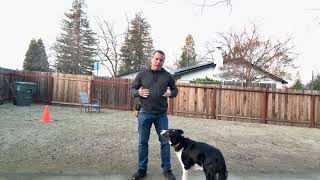
Derek Weaver argues that leash reactivity isn't a real diagnosis but frustration and conflict rooted in four things: entitlement, social frustration, fear, and insecurity. He explains how structure, breed-appropriate outlets, and owner composure can address the actual problem instead of treating the symptom.
Chapters
What if I told you that leash reactivity isn't a real thing, at least not the way that people describe it? And yes, I do know that it's the common use term, and that in my own marketing materials, even my program that is specifically geared towards this particular common issue, we use the term reactivity, but it's not the correct way to look at it, and it tends to hamstring our results and limit our ability to work with a broader range of dogs. Because reactivity is simply noticing things in the environment. It doesn't mean that you're having a full-on outburst if you're the dog. But what we're really seeing is that the dog is in a state of frustration and conflict. Those 2 are almost always going to go together. I actually couldn't tell you the last time I saw a dog that wasn't experiencing some degree of conflict, either with the environment, its owner, and/or its owner, and then frustrated by the barrier that the leash represents. Because most dogs that are leash reactive will also be fence fighters, will also be dogs that like to bark in the window at the UPS guy or that whatever delivery driver. People walking by, you better keep moving, right? The dog is frustrated by the barrier. So that frustration is only gonna be fueled by typically 4 things: entitlement, social frustration, or sociable— the sociable nature of the dog that's kind of unlimited, fear, and insecurity. Those are not always gonna go together, but they do typically overlap. And some of these can overlap with each other. They often do. So if we start with entitlement, think about the kid who doesn't have any limits put on them. They can go and grab whatever they want out of the fridge, as sugary as it may be, turn on the TV, play the video game, and nobody ever tells them no. Grandparents may spoil them. Friends don't really tell them that they don't like what they're doing. That usually catches up with them. But when they do start having limits put on them, they will often act out because they're not used to accepting that there are limits in life. So I see this as probably the The most common underlying and/or overlapping issue with dogs, because we want to bring them home, make them feel safe and like it's their house, even though it really isn't. Because I've never had a dog write a check or scan their credit card for my services. And as far as I know, there's no dog in the, in the country that is on the mortgage or on the, on the rent agreement. But we do tend to develop a sense of entitlement with our dogs, and we'll cover each of these in, in combination in future videos. So make sure you subscribe and don't miss the next one, because we're going to break this down and show you how to start Fixing it. Social frustration. If a dog has been unfortunate enough to be exposed to too many puppy playdates or maybe kept with its puppy, with its littermates for too long, we usually like to see them. In my opinion, they should be there with their, with their littermates and their mom until they're a minimum of 8 weeks old, but no later than 10 weeks old. It's just my opinion on it. I'm open to discussion on that. But dog parks, daycares, excessive social situations, again, with no limits. Social frustration. So the dog becomes very centered or centric towards other dogs, and now they're frustrated by the leash, so they have a tantrum. They want to go say hi, they want to make a new friend, and they're not allowed. So what do we get? A tantrum. And then if we have fear dogs or insecure dogs, we'll talk about those more or less together. That the dog may be genuinely fearful of another dog or a person, or they may be insecure with their owner's ability to handle a situation that can be difficult. If the owner isn't fair, if the owner is overly punitive, if the owner is also having their own meltdown, they're freaking out, they're getting tight, they're yanking on the leash, they're getting stiff in their own posture, the dog will feel and notice all of those things. And now the dog has been confirmed that what they were unsure of is now something that they need to act out on. Those are the dogs that more likely than not are going to be the ones that have an aggressive response. Any dog in this reactive kind of paradigm can make a display that looks like they're aggressive, but the first 2 are usually acting out in more tantrum, and fear and insecurity are usually going to be acting out more with what looks like an aggressive response. And in some cases, this frustration can boil over into reactivity. So when we start breaking these things down, it gives us an idea about where we want to invest more of our training time and resources. Every dog should benefit from better structure, which I would say typically is just being consistent about how we do things around the house. Having some limits put on them, those are good and healthy. It's good for your relationship with your dog to sometimes say no, not right now, it's not okay. Doesn't mean that you have to be hard on them. It just means you need to be guiding them. If they have appropriate outlets, so things that make sense to that dog and who that dog is by breed, Or personal temperament and interest. A Border Collie is typically going to be much better when it comes to things like chasing a ball and/or playing tug than a Husky, where we may want to put the dog on a long line and lunge it out as a reward, because Huskies like to run and they do their job by turning their back to you and taking off across the tundra. And if we can give them the appropriate skills through our obedience training, then we're going to have a dog that has a better relationship with us and That has a better level of fulfillment, knows where the limits are, and reactivity becomes much, much easier to deal with. Sometimes we don't even see the reactivity if we do the background work appropriately. But if we do still have reactivity left, which we often do, it's much easier to work through. So we want to make sure that we are not developing an entitled kind of spoiled dog, that we are putting some limits on them, that we're not— Just making it willy-nilly dog time all the time. Dog parks are in fact quite dangerous, both in terms of disease as well as the types of situations that your dog can find themselves in where they may end up needing to defend themselves due to an attack. Not every dog gets along with every other dog, no matter how much fun they typically have. And then if a dog is fearful, we need to be careful about our exposure and we need to be fair. We don't want to have an insecurity where they feel like they have no option. There's too much pressure coming from owner, too much pressure and strain they're feeling from the Trigger that is making them feel fear or afraid. And now they have no other option. They're either going to blow up on that other dog or in some cases redirect towards the owner, maybe go up the leash. Those are things we obviously don't want. Those can be a little bit harder to work on. But when we think about reactivity, let's make sure that we're not just saying reactive, because if we try to go one, one size fits all, we're going to end up not helping as many dogs as we could. We're not going to give them and their owners their lives back or ever let them get to the life they thought they were getting when they get the dog. It doesn't mean that we want to just work with no system at all, but it does help us to break down the issue, have a better direction, and get much better results on a more regular basis. So think about it— frustration or reactivity? Conflict or reactivity? I think it's pretty easy.
More from Derek


Three simple steps to take to start helping your dog be less frustrated, conflicted, and "reactive."