Devin Bhushan, CEO of Squint, built an AR platform that guides manufacturing workers through tasks step-by-step. He walked through Sequoia's ARC program: seven weeks of speakers and workshops, mentorship from partner Brian Schreier on go-to-market strategy, and a final presentation designed as a storytelling exercise, not a pitch. He rates it 11 out of 10.
Chapters
Thanks, Devin, for joining me today. To kick us off, do you want to spend maybe a minute just introducing yourself?
Yeah. So, hey, my name is Devin Bhushan. I'm the founder and CEO of Squint. Squint is a product that gives superpowers to industrial workers. So, you know, right now there's a boom happening in manufacturing where it's kind of coinciding with a lot of the current industrial workforce retiring. So we're in a spot where really we're hiring more than ever and into like these positions and the traditional like learning methods are really not effective enough to support that scale. So what Squint does is it uses augmented reality to guide the user through their space and then show them exactly what they're supposed to be doing and how to do it. Um, so it's really easy to set up taking, you know, less than a minute for any process in any space. And I think what we're really trying to do is bring a consumer-grade experience to the enterprise. So especially industries like manufacturing.
Awesome overview. And you participated in Sequoia ARC, I think in spring 2023. Is that correct?
Correct. It feels like it's been so much longer.
And why did you, I guess, like want to apply to Sequoia ARC in the first place? What stood out about the program?
Yeah, so I think, I mean, there's different ways to get in. So you can apply directly or you can be invited after Sequoia invests in your pre-seed or your seed. So I think like from their end, their side, they're trying to work with good founders as early as they can. And so in our case, I had actually worked with Jess, Jess Lee, she's our partner. So I'd worked with her at Yahoo several years ago, so we knew each other. And so she reached out earlier this year and floated kind of this idea of like working with Sequoia for our seed. So, you know, once we started talking, then I pitched a group of partners and then ultimately, you know, received a term sheet along with an invitation to participate in ARC. And for me, that was like, you know, this huge opportunity to not only raise our seed, but also go take part in this amazing program.
Nice. And had you raised money before that, or was that like your first? Financing round?
Yeah, so we had raised a pre-seed prior from Menlo Ventures, actually working with the Menlo Labs, also like an early stage program that they had around validation of ideas, very, very early stage pre-product. And then we were at a stage where we kind of now had our revenue and we were getting ready to raise our seed.
Gotcha. And I guess just like thinking about your own cohort, do you have a good sense of how many people went the route that you did, which which was like a traditional seed investment and then an invitation to Sequoia Arc versus just like applying directly to the Sequoia Arc program?
Yeah, I think, let me, you asked for how many I'm trying to think. Yeah, I think probably like there was a good mix of, there are definitely a handful of companies that were raising a seed or like, you know, a later stage round where they kind of had a product, had revenue, were were in the midst of it. And then there were also a handful of companies where, in fact, a couple of companies that literally started on day one of ARK. And so they were so early that they at the time had an idea and the founders.
Yeah. Cool. And then, so you mentioned you knew Jess from Yahoo and you were already working with her and then you also met with, I think Sequoia Partners before you you finalized your seed round and got the invitation. Can you talk more about, I guess, just like your version of the admission process for Sequoia Arc?
Yeah, so I mean, for me, again, it was more of like a pitch to raise our seed round, right? So for, in terms of what the process looked like, it was a conversation with Jess and she was interested. We did a couple more, you know, Jess is very like product oriented. So we got into it with like, Here's how the product works. Here's what our customers are kind of looking for. Um, gave her all that context. She set up another conversation with a group of partners, which is more of, um, like more of like a, you know, holistic pitch of the company, uh, you know, long-term vision, uh, what the product was, the team, why we're kind of positioned to work in this space and pull this thing off. Um, and then after that, you know, then They came back and standard, like some due diligence, some customer stuff, and we moved on. And from there it was the term sheet and done.
Gotcha. And then we'd love to transition more towards like the actual program. So Sequoia Arts Program covers 7 topics across 7 weeks. Can you describe more in detail, I guess, just like what happens during the program and how they structure the curriculum?
Yeah, so I think, I mean, I think you nailed it. Basically every week is a different section. And so every week there's a few guests that kind of host and sometimes, you know, it's a mix of people. So usually I would say it's Sequoia partners. Sometimes there's also featured like, you know, Sequoia-backed founders or someone that maybe is helping out in the program based on the specialty for that week. So if it's design, like design folks and basically people who will help to deliver kind of this mini lecture on the subject. And then each week there's also like a workshop portion for, for the topic. So the companies break up into like these small groups and you work on it in the context of your company and maybe you're paired with like 1 or 2 or 3 other founders that are doing it in the context of their companies and you're kind of doing this thing together with kind of the foundation and the scaffolding provided for that workshop. And then I think what's worth calling out is 3 of the weeks are also in person. So that first week is like the kickoff and then that there's a week in the middle, which is kind of this like field trip to like a surprise destination, which is usually like a really amazing company and you get to spend some time with them. And the final week we do kind of the final presentations and wrap up the program.
Cool. And what was the, I guess, most valuable aspect of the program for you?
I think the most valuable aspect was really learning from the leading experts in the world on specific topics. So like for example, I got to work with Brian Schreier. He's a partner at Sequoia and we were making our first go-to-market hire. And he shared stories about how like Qualtrics and Dropbox thought about it for their first hires and kind of learnings that might apply to Squint. And then, you know, after that, as we kind of progressed through that process, he even reviewed like the 30-60-90 plan for like for Squint and helped tweak things just to make sure we were like thinking about things properly. So things like that, like really invaluable.
Can you share maybe more? I think, I feel like that'd be really valuable information. Like what advice did he share? For those first hires, I guess, that maybe you applied to your own hires?
Yeah, I mean, different styles, right? So like for us, I think different types of products, B2B versus something else. We were kind of targeting an interesting industry that like in manufacturing, it's not necessarily something that, you know, our team had a background in, but we had a background in the technology that we were bringing. Thinking through kind of the composition of that go-to-market team, should it be folks who have a background in manufacturing? Should it be folks who have done B2B SaaS? How do we kind of set the structure up so that we can be successful? But I would say it's like highly custom to, you know, what problem statements you present and all the partners are really just there to help you like find the right answer for your company.
Nice. And you mentioned Sequoia Arcs last week, there's like a final presentation, which is sort of like their version of the Demo Day. I guess like what do startups cover in their final presentations? Is it just a pitch about like your company and your progress that you've made? And I guess like who is the audience for that pitch?
Sure. So I will say like, you know, I've never done YC Demo Day, but I don't think they're totally similar. So like the final presentation at Arc is not a pitch for fundraising. It's more of a pitch to kind of, so the one thing I didn't mention is like Arc, maybe the overlying, overarching, overarching theme of the whole thing is storytelling. So I would say the, that final presentation is a pitch to share that storytelling that you've developed about your company. And kind of the prompt for it is what would you tell a candidate that you were trying to hire? So how would you convince a candidate to join the company? And kind of the, you know, the audience is composed of Sequoia partners, other Sequoia founders, potential new hires, industry experts in each like field for the company that's presenting. But it's a really like supportive atmosphere with no really end goal of fundraising. So it's more networking and Q&A.
Yeah.
That kind of thing.
Makes sense. And then Sequoia Arc advertises that they invest between $500,000 and $1 million into companies accepted to the program. Can you talk about like what Sequoia Arc's standard terms are and I guess like how they handle future financing rounds?
Yeah, I think every fundraise is unique to match the needs of the company. So like I think the pre-seed investments are usually $500K to $1 million. I won't go into specifics, but like, And for us, like we raised a seed and the terms are totally fair. And I think, you know, just like all early stage investors, they're going to have a chance to invest in future rounds, but I think it'll be just different for every company.
Gotcha. And then you mentioned you're working with Jess Li, your partner at Sequoia Arc or Sequoia Capital. Do all the startups work with her during the program or are other people on the Sequoia early stage team assigned to different companies?
Yeah. So I mean, well, Jess is really amazing, so she happens to be our partner. So I think we're really lucky, but there are several partners that are involved with Arc. It's really just like whoever on the early stage team was your partner for that investment will continue to be involved. So nothing really changes in that sense, but There's also just a bunch of people part of the Arc team that are part of Arc specifically. And so they're all also participating and kind of joining in different workshops and sessions and stuff, but they're all really amazing and super talented in their own fields. So like throughout the program, there's office hours, there's like networking opportunities, but you get to kind of work with everyone who's part of the Arc like family of, folks.
And then what advice would you give to someone applying to Sequoia Arc?
Yeah, I think Sequoia is really looking for what they call outlier founders. And so I would recommend being confident in what makes you yourself and then knowing kind of what your superpowers are so that during the pitch you can make sure to highlight those things that are unique about you and kind of bring those superpowers out so people see it. See that when you pitch.
Yeah. Can you maybe share your own example? Like, I guess, like, what did you share about yourself?
Sure. Yeah, well, it's like embarrassing, right? But I think I know augmented reality like really well and I think that's one of them. And then the other kind of superpower I would say I have is being really good at mapping technology to problems. In a way that kind of creates this intuitive product.
Awesome. And then for founders that actually like get into the Sequoia Arc program, I guess like what advice would you give to them to make the most out of it?
I think it's gonna be what you kind of make of it. So I would recommend going all in, investing a lot of time and effort into meeting everyone. There'll be a lot of optional and like, you know, opportunities that you don't have to take. I would recommend take all of them, approach all those conversations and workshops with an open mind and really try to make the most of this opportunity to work with like the most brilliant minds in Silicon Valley.
Awesome. And can you give maybe a general sense of like how much time you were committing during the program? I think on their website they list like 8 hours, but yeah, were you spending a lot more? How much were you spending per week?
Um, it probably depended on the week. So I would say like in terms of required time or together time, um, that's probably close or maybe even less than that in terms of the time you're together. Um, but then for us, for instance, like we were really focused on go-to-market. So the things during those weeks, like sales and marketing weeks that applied to us, we spent a ton more time kind of workshopping those and going outside of those hours. I think it's up to you. For us, we kind of focused on the content of the week and tried to put in as much as we could spare. But there's also like everyone's gonna have— everyone has a business to run too. So yeah, you know, it's flexible. Yeah.
And then now that you're finished with the program, I guess like how do you engage with the Sequoia community?
Well, they have this really cool ampersand app. So it's for all of the founders that are in the Sequoia portfolio and see there's a bunch of things that are always going on there in terms of networking, like meetups, things like that. Also a bunch of resources. I think for us, they have a, something called a builder's program where they connect you to kind of experts in the space. And so we've used that pretty extensively. For help on the design side as well as over the months, like pricing, different kind of like packaging things that we were thinking about, just talking to people who are like in industry who have done this for years. So different ways, but yeah.
Yeah, that sounds super, super valuable. And then is there, last question, is there anything else that I didn't ask about that you think's important to know for someone considering? Sequoia Arc?
Um, no, I think, I mean, I think you covered it all. I think, um, I would definitely recommend it, like 11 out of 10 experience. Everything Sequoia does is super thoughtful, and I think it's kind of like when you go to Disneyland and you like look at the little like intricacies and thought that went behind things, you're— it's like a marvel. Um, that's what the Arc program is like. It's very carefully designed.
Love the comparison. Thanks so much, Devin Bhushan, for joining me today.
Yeah, thank you.
More from Devin

What If Your Factory Could Think for Itself? Featuring Devin Bhushan of Squint
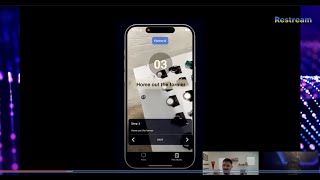
L129 - Squint CEO Devin Bhushan Shares His Journey Creating an AR Platform for Manufacturers